This video demonstrates the art of ASMR Foley, where a sound designer recreates realistic horse step sounds using coconut shells and various ground textures to produce authentic walking, trotting, and galloping sounds for relaxation purposes.
Horse Footsteps Foley with Coconuts: A Sound Design Study
Added:Deep Dive
Understanding the basic definition and history of Foley art in film and post-production.
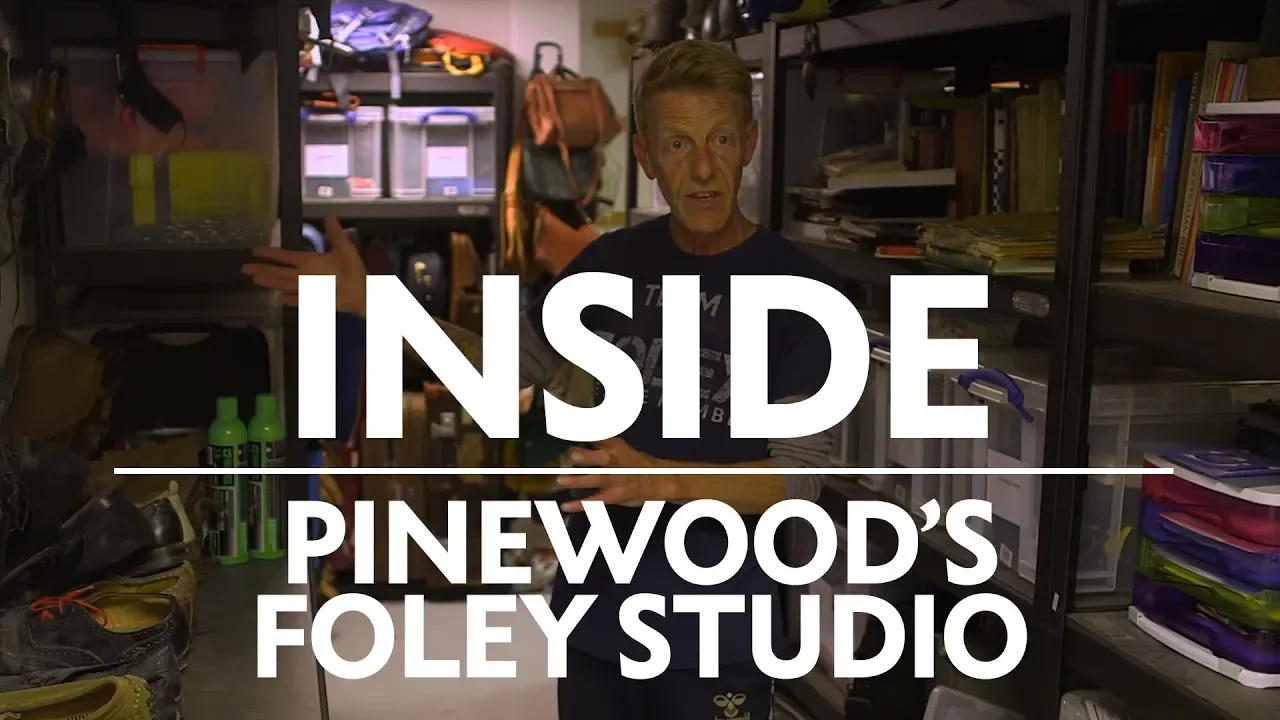
Inside the Pinewood Foley Studio | BAFTA Guru
94.4K
Foley art is a specialized post-production craft where sound designers physically manipulate props and objects to recreate realistic sound effects for films, as very few sounds are fully recorded on set; the process involves categorizing sounds into feet (footsteps), moves (clothing and fabric movements), and spots (prop interactions), with Foley artists building extensive mental libraries of object sounds and developing dexterity to creatively manipulate everyday items to match the visual narrative of films.
Click to watch →
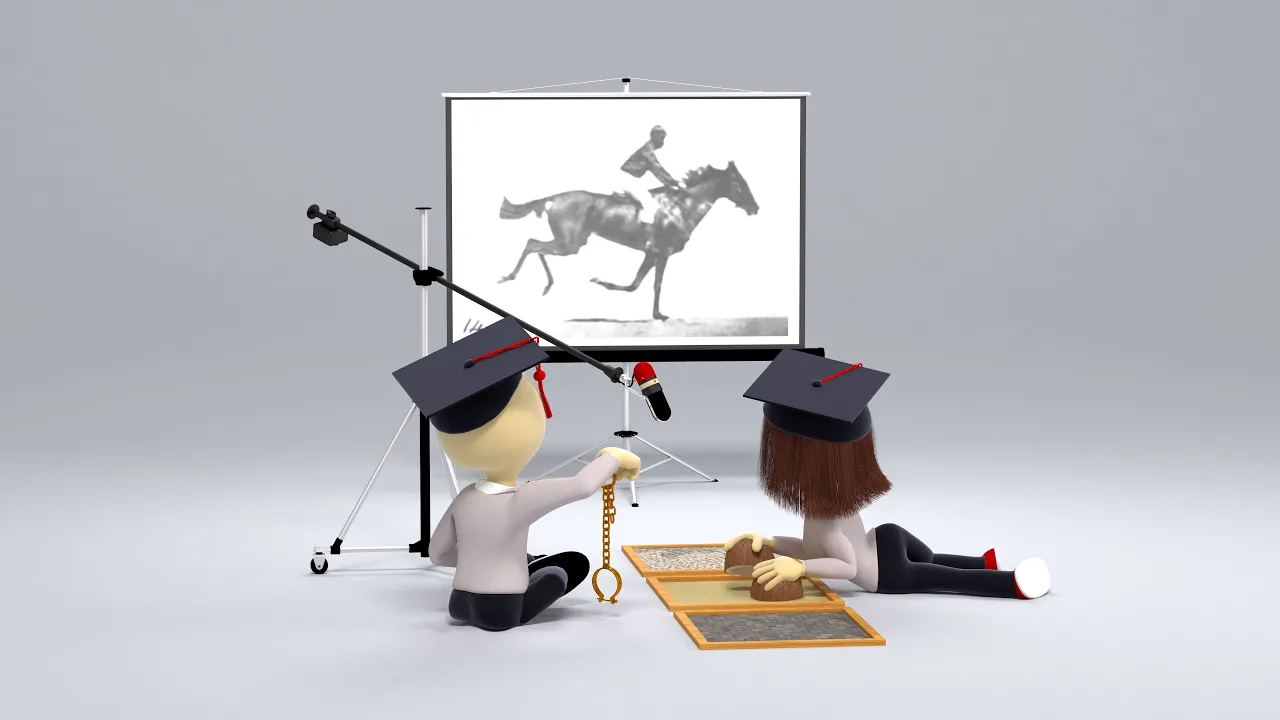
Foley Art and Sound Effects: A Comprehensive Film Guide
336.4K
This comprehensive lesson covers the complete history and practice of foley art in modern cinema. It begins with the fundamental principle that almost all movie sounds are added in post-production, explaining why production microphones cannot capture subtle everyday noises. The narrative traces the historical evolution from vaudeville theatrical traditions, featuring live orchestras and sound effect drumming, through radio's influence on creating visual imagery through audio, to the pivotal moment in 1928 when Universal Studios developed the revolutionary technique of watching films and recording live sound effects to match visual gestures. The section details Jack Foley's unconventional career path—from baseball player to assistant director—and how his technique became foundational to modern filmmaking. It examines the traditional studio workflow with three mixing specialists and contrasts historical constraints (single-track recording) with modern digital audio workstations offering unlimited simultaneous tracks. Practical demonstrations show how modern tools enable precise punch-in recording for specific moments. The lesson concludes by emphasizing that while technology has advanced, the core principle remains: achieving natural-sounding results matters more than perfect synchronization, as timing can always be adjusted in post-production. Sound quality ultimately elevates a picture from home movie to true cinema.
Click to watch →
CASA GEOPOP Ep. 2: puntata integrale della prima serata di Geopop
237.3K
Foley art originated in 1891 in New York with Jack Foley, who initially worked as a cartographer. He became fascinated with the emerging world of cinema. During the silent film era, Foley developed methods to recreate sounds for films, addressing the limitation that early sound-on-disc technology captured voices well but lost environmental sounds like footsteps, clothing movements, and environmental noises.
Click to watch →

Jazz Emu Edit: 8 Out Of 10 Cats Does Countdown S24E04 feat English Language & My Brothe
150.1K
Foley art is a specialized profession in film and television production where artists create and record everyday sound effects to enhance movie realism. Artists use creative techniques, such as knocking coconut halves together to create horse hoof sounds or manipulating objects in unexpected ways to produce authentic audio effects. This craft requires both technical skill and artistic creativity to transform simple materials into compelling cinematic sounds.
Click to watch →

Ch-Ch-Ch-Ch-Tables - The Headgum Podcast - 211
10.6K
Foley art is a specialized craft in film production where artists create and record all non-dialogue sounds for movies, such as footsteps, door slams, rustling clothes, and other everyday sounds, which are added after the main filming to enhance the audio experience; this process requires creativity, attention to detail, and the ability to replicate realistic sounds using various props and techniques.
Click to watch →
Deep Dive
Fundamental knowledge of digital audio workstations (DAWs) and the concept of multi-track audio layering.

What to look for in a DAW for beginners.
412
A Digital Audio Workstation (DAW) must provide multiple tracks to work with simultaneously. This enables multi-tracking, where you can record a track, return to the beginning, and record another track on top of the previous one. This is essential for creating complex music arrangements and is a fundamental concept that distinguishes professional music production from simple voice recording.
Click to watch →

Demystifying DAWs: Introduction and Overview (Digital Audio Workstations) | Simon Hutchinson
1.2K
A Digital Audio Workstation (DAW) is a device, software, or combination of both used for recording, editing, and multi-tracking audio files, commonly used in music, film, TV, radio, video games, and podcasts; a basic DAW setup includes a computer and DAW software, with additional components like audio interfaces (which handle analog-to-digital and digital-to-analog conversion), monitoring equipment, and various control surfaces, where the choice of software should be based on understanding fundamental digital audio concepts rather than specific brand preferences.
Click to watch →

ಸ್ಟುಡಿಯೋದಲ್ಲಿ ಹಾಡು ರೆಕಾರ್ಡಿಂಗ್ ಹೇಗೆ ಮಾಡ್ತಾರೆ ನೋಡಿ..| Palani D Senapathi Studio Tour | E Maaye
318
A digital audio workstation (DAW) is a computer-based system for recording, editing, and mixing audio. It can accept hundreds of audio tracks (1000+ tracks mentioned). Each musical element in a song gets its own dedicated track: flute, tabla, violin, voice, chorus, and guitars. The DAW functions like a kitchen where different ingredients (audio tracks) are combined to create the final dish (finished song). Engineers listen to each track individually to determine what adjustments are needed, then mix them together to achieve the desired sound quality.
Click to watch →

UNBOXING AND REVIEW AUDIOBOX 96 Aprende a grabar en 10 minutos
24.1K
Multi-track recording enables musicians to capture layered performances by recording each instrument or voice on separate tracks within DAW (Digital Audio Workstation) software. Despite having only two physical inputs, DAW software provides multiple virtual tracks for individual recording and mixing. Professional DAWs include built-in audio processing tools such as compressors, equalizers, and effects processors. The software interface features keyboard shortcuts for efficient workflow, buffer size settings for balancing latency and system performance, and automatic device detection upon connection.
Click to watch →

Recording and Production DAW Software Comparison
438.1K
A Digital Audio Workstation (DAW) is software for recording, producing, arranging, mixing, and mastering music. Essential hardware includes a computer with adequate processing power and RAM, an audio interface with I/O connections, and studio monitors for accurate mixing. DAWs serve two primary user groups: recording artists/bands needing multitrack capabilities, and electronic music producers using them as composition tools. All DAWs share core components including a timeline/arrangement window, multi-track editor, inspector/channel strip, browser, piano roll, sample editor, and plugin support for effects and instruments.
Click to watch →
Deep Dive
Basic microphone physics, including proximity effect, polar patterns, and transient response.
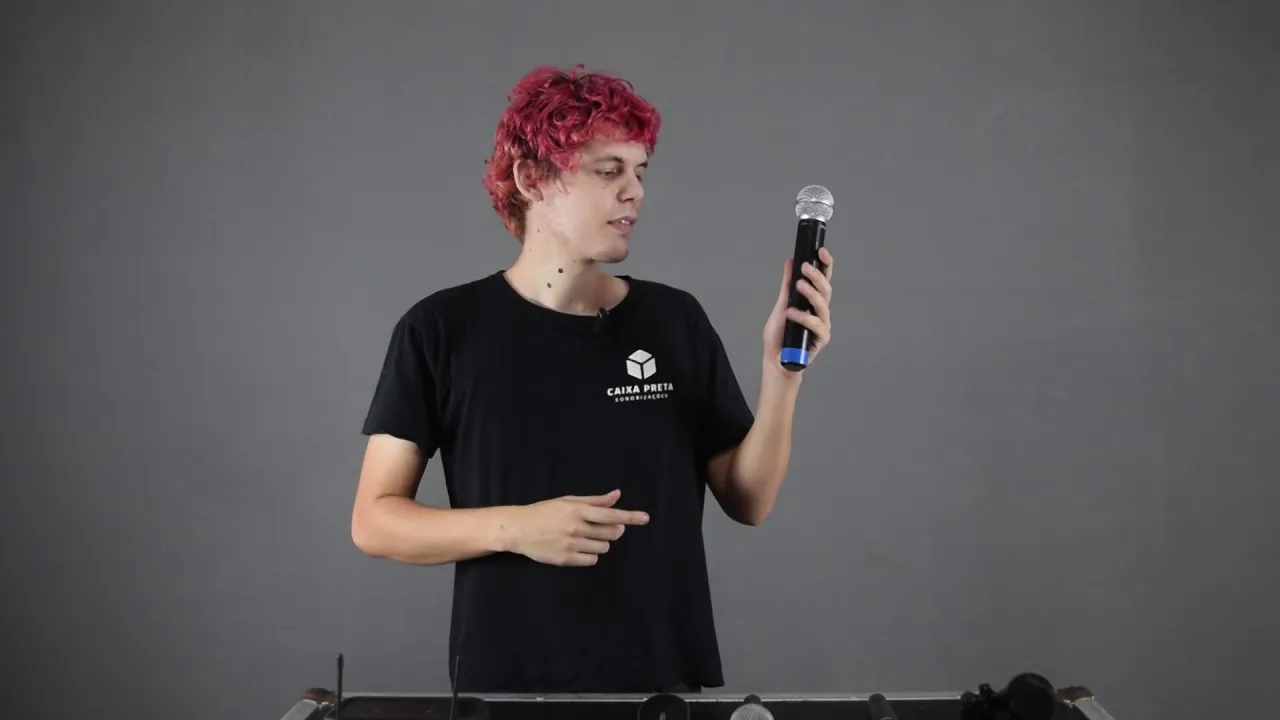
Oficina Básica de Sonorização - Aula 4: Microfones - captando áudio
15.9K
Microphones are transducers converting mechanical sound energy into electrical signals. They are classified by capsule construction: ribbon (rare, studio-only, sensitive), condenser (high sensitivity, detailed capture, requires phantom power, feedback-prone), and dynamic (most common in live sound, durable, handles high SPL). Polar patterns define directivity: omnidirectional captures all directions equally (picks up noise), bidirectional captures front and back equally (studio stereo), cardioid captures front while rejecting rear (most common in live sound), and shotgun has extremely narrow patterns for film production. Selection depends on isolation needs, SPL handling, and frequency response. The proximity effect causes increased bass when unidirectional mics are positioned closer to the source. Proper handling (holding by body, not capsule) preserves frequency response and polar pattern.
Click to watch →
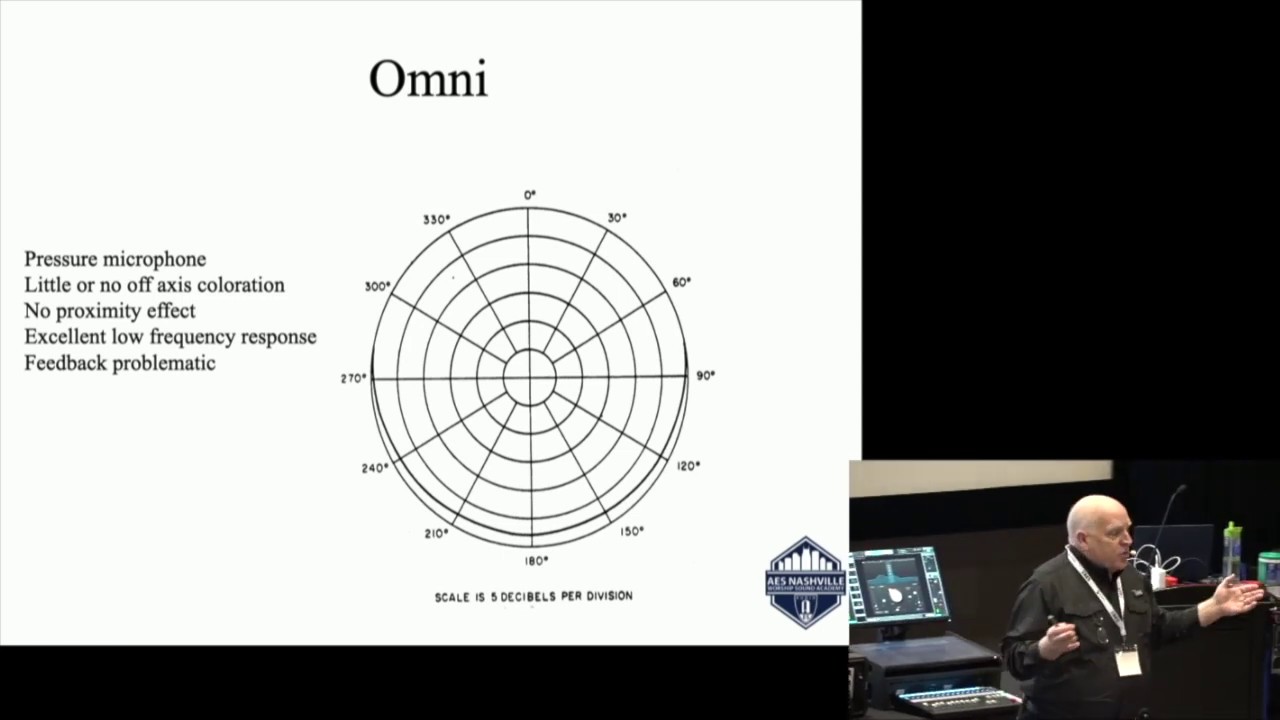
Microphone (very) Basics – Care, Feeding and Handling (AES Worship Sound Academy Nashville 2020)
520
Microphones convert sound into electrical signals through three main transducer types: ribbon (electromagnetic, bi-directional, fast transient response), dynamic moving coil (electromagnetic, rugged, high SPL handling), and condenser capacitor (electrostatic, flat frequency response, requires power). Polar patterns determine directional sensitivity: omnidirectional captures all directions, bi-directional (figure-8) captures front and back, cardioid captures primarily front, and super/hypercardioid offer varying degrees of rear rejection. Proximity effect causes low-frequency boost when microphones are placed close to sound sources. The microphone is the foundation of the audio chain, with proper selection and placement accounting for approximately 50% of overall audio quality.
Click to watch →
Mic Shootout: WARM AUDIO WA87 vs NEUMANN TLM103
98.7K
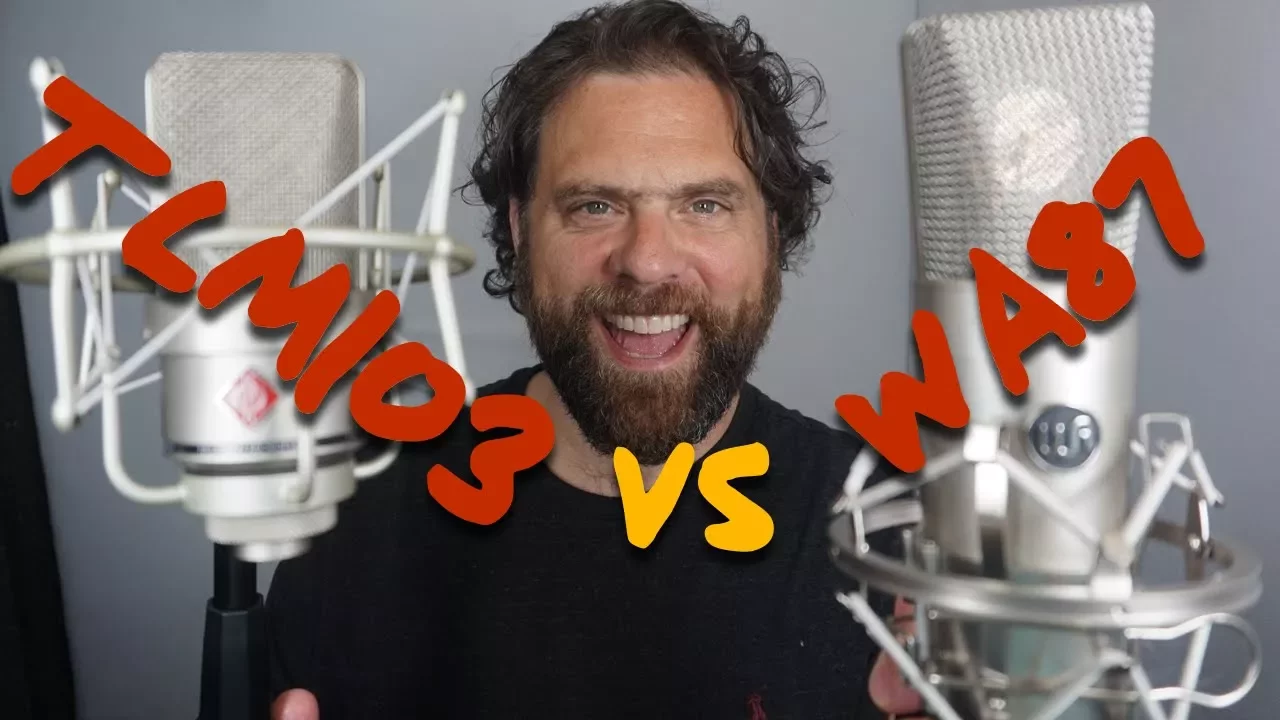
The proximity effect causes microphones to produce increased bass response when the sound source is positioned very close to the microphone. Both the WA87 and TLm103 exhibit this effect, allowing voice artists to change tonality by adjusting distance. A cardioid polar pattern is heart-shaped, with maximum sensitivity directly in front and reduced sensitivity from sides and rear. As patterns become narrower (super cardioid, hyper cardioid), rear sensitivity increases. Figure-eight patterns have the narrowest front sensitivity but most rear sensitivity. Voice artists must maintain consistent distance (4-5 inches) for consistent tonal quality.
Click to watch →

Basics of Microphones
310
A microphone converts sound waves into electronic current for transmitting or recording sound, functioning as an internal transducer. Applications include telephones, hearing aids, public address systems, motion picture production, audio engineering, two-way radios, megaphones, broadcasting, and computers for voice recognition. Frequency response measures output spectrum in response to a stimulus, quantifying magnitude and phase of output as a function of frequency compared to input. For linear systems, doubling input amplitude doubles output amplitude. A nearly flat linear plot with variations of plus or minus 3 dB is acceptable. For good frequency response, headphones and microphones should be within 1 dB at the most. Polar patterns indicate sensitivity to sounds from different angles, defining how much signal is picked up from different directions. By selecting the right pattern, unwanted sound sources can be avoided, the mix between dry and room sound adjusted, and proximity effect influenced.
Click to watch →

4. 근접 음 효과(proximity effect)
295
Microphone quality depends on high frequency capture without obstruction. Sound waves interact through reflection, diffraction, and scattering, with outcomes determined by wavelength-to-object-size relationships. At 90-degree angles, high frequencies experience pressure doubling from reflection. The proximity effect causes low frequency amplification in pressure gradient microphones when placed close to sound sources, varying by frequency and distance. Sound pressure follows the inverse square law: doubling distance reduces pressure to one-quarter. These principles explain why microphone placement and orientation significantly affect frequency response characteristics.
Click to watch →
Deep Dive
The acoustic differences of impact sounds on various physical surfaces (e.g., concrete, dirt, gravel, wood).
Exploring Ultrasonic Sound Design & Recording
304
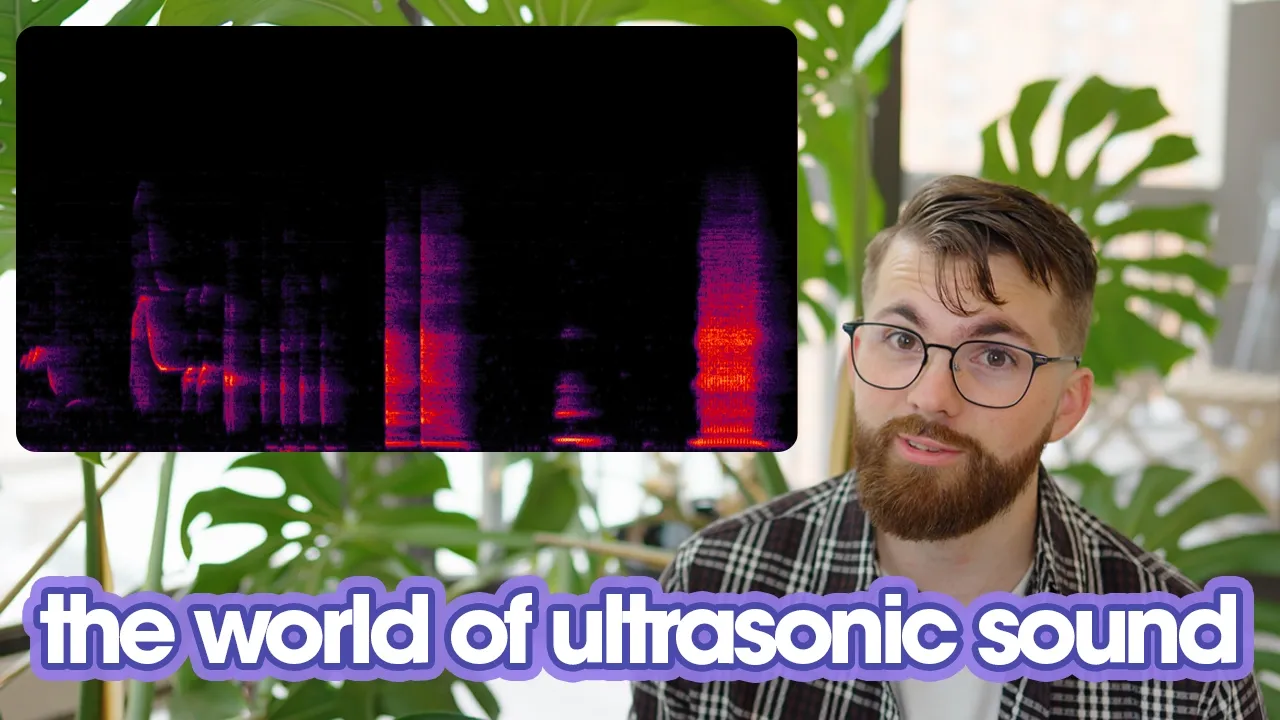
Different surface materials significantly alter the acoustic properties of impact sounds. Wooden bass blocks produce more reverberant and hollow sounds. Ceramic surfaces amplify overtones and harmonics of the specific material being struck. Metal surfaces also amplify overtones but add their own characteristic tonal qualities. These material differences arise from how each surface absorbs, reflects, and resonates with the energy from impacting objects, creating distinctly different sonic signatures for the same object impacting different surfaces.
Click to watch →

Festbetoneigenschaften
791
Concrete provides different levels of sound insulation for airborne sound (luftschall) and impact sound (trittschall). Airborne sound (like voices) is effectively blocked by massive concrete walls because sound waves reflect off the surface. Impact sound (like footsteps) is transmitted through the concrete structure as vibration, making massive concrete a poor insulator for this type of sound. To reduce impact sound, elastic materials like underlayment are used beneath flooring.
Click to watch →

Sound Farm: Inside an Ontario studio of a renowned movie sound-effects team | W5 INVESTIGATION
13.5K
Different surfaces dramatically affect how sounds are recorded. In a single Foley room, artists might find wooden surfaces, concrete, and formica—all producing distinctly different acoustic qualities. The choice of surface directly influences the character of sounds like footsteps or impacts. Foley artists must understand these material properties to select appropriate surfaces for recreating specific sounds authentically.
Click to watch →
Questions, What can Audio Analysis Tell Us?
104
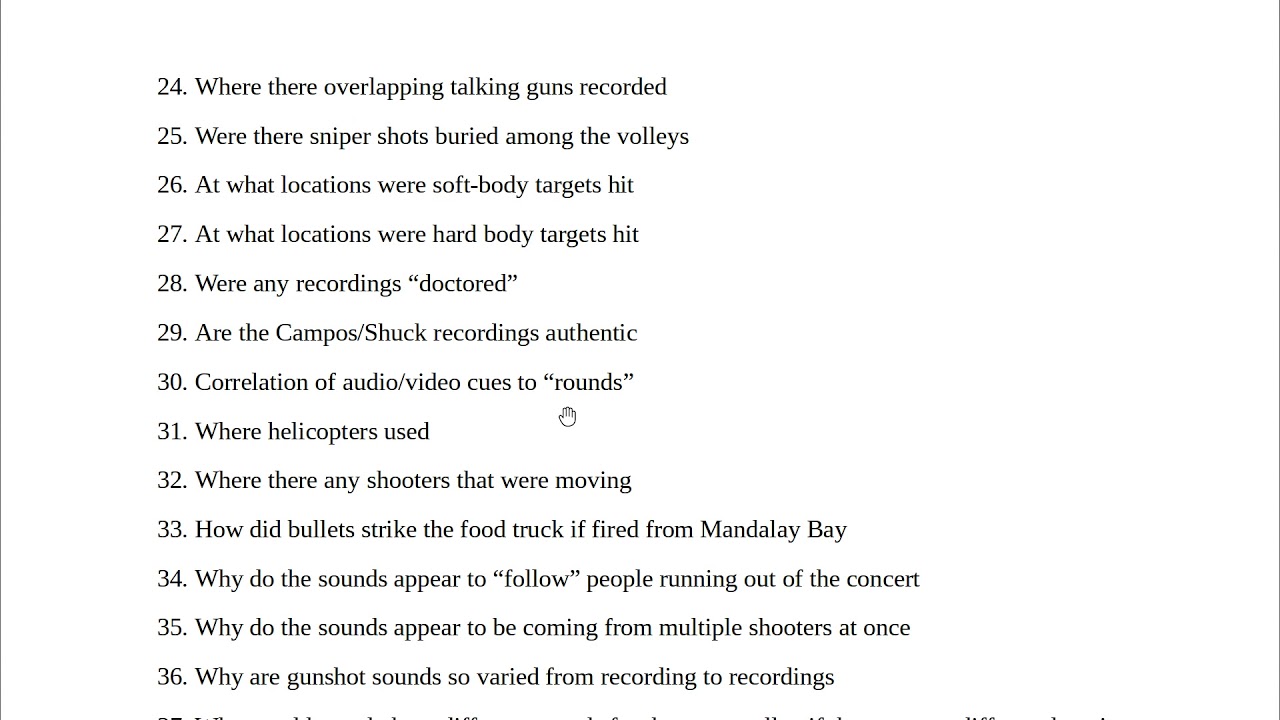
Different target materials produce different impact sounds: hitting wood produces a different sound than hitting a soft body, and hitting a metal post produces a distinctly different sound. Going through tin produces yet another unique sound. Each type of substance a bullet hits produces a different acoustic signature, allowing analysts to identify what materials were struck during a shooting event.
Click to watch →

11 Audio Tips You NEED To Know In Escape From Tarkov! (Patch 0.14 Update)
59.1K
Different surfaces produce different audio signatures for movement sounds. Metal surfaces are quieter than regular ground, ranging from 13 meters with the best headset down to 11 meters without. Wood surfaces are louder than regular flooring, ranging from 16 meters with the best headset down to 13 meters without. Glass produces identical audio distances to wood. When overweight, these ranges increase: metal becomes 18 meters with the best headset, wood becomes 16 meters with the best headset, and glass matches wood at 15 meters without a headset.
Click to watch →
Deep Dive
An introductory understanding of ASMR (Autonomous Sensory Meridian Response) and the audio characteristics that trigger it, such as high-frequency detail and close-mic intimacy.

Unsound Presentation: Listening To (the ASMR of) Sounding Things (David Toop)
520
ASMR (Autonomous Sensory Meridian Response) is an online YouTube phenomenon representing a relatively recent model for shared microaudio listening. The tingling sensation associated with ASMR is linked to intimacy and the comfort feeling that comes from close proximity to particular kinds of sensations involving objects and their surfaces, patterns, textures, and histories.
Click to watch →

first time ASMR // (gentle whisper)
560
ASMR (Autonomous Sensory Meridian Response) is a phenomenon where specific sounds trigger physical sensations. High-quality ASMR microphones are super sensitive and crisp, capturing details like breathing that normal microphones miss. When listening through headphones, sounds enter the auditory system completely differently, creating immersive experiences. The core sensation is 'tingles' traveling down the spine, often accompanied by goosebumps. People vary greatly in sensitivity—some experience tingles quickly while others find it difficult. Different triggers work for different individuals, such as rain sounds or specific voices. ASMR is commonly used for relaxation and sleep, potentially reducing reliance on sleep medications.
Click to watch →

Scott Nelson Doctoral Recital | LSU PhD Experimental Music & Digital Media
100
Anecdotal evidence from interviews suggests that high-frequency sounds and low-frequency sounds are most commonly associated with triggering ASMR experiences. Mid-range frequencies appear less likely to produce ASMR responses. High-frequency content creates sharp, attention-grabbing sounds that surprise listeners, while low-frequency rumbles create a sense of proximity and presence. This pattern is observed across multiple ASMR content types including mukbang videos and natural sounds.
Click to watch →

Most Interesting Videos From Chill Dude Knowledge (pt. 34)
1.1K
There's something objectively creepy about stranger whispering into microphone looking like human ear while tapping hairbrush. Yet millions find it hypnotic. This is autonomous sensory meridian response (ASMR)—tingly, euphoric sensation that feels like brain is being petted. Evolutionarily, these triggers (whispering, grooming, slow movements) mimic safe space behaviors of close-knit tribe. We're drawn to weirdly intimate sounds because they trick nervous system into thinking we're being cared for by very quiet, very obsessive friend. It's biological hack that turns social grooming into digital sedative.
Click to watch →

ASMR con cosas RANDOM
330.1K
ASMR (Autonomous Sensory Meridian Response) is a neologism derived from the English term 'autonomous sensory and meridian response.' It refers to a real experience characterized by a static sensation or tingling feeling that typically triggers from auditory or visual stimuli, and less commonly from intentional attention control. Common triggers include soft voices, whispering, and soft repetitive sounds from someone performing a task.
Click to watch →
Prerequisite Knowledge
- Concept 01Understanding the basic definition and history of Foley art in film and post-production.
- Concept 02Fundamental knowledge of digital audio workstations (DAWs) and the concept of multi-track audio layering.
- Concept 03Basic microphone physics, including proximity effect, polar patterns, and transient response.
- Concept 04The acoustic differences of impact sounds on various physical surfaces (e.g., concrete, dirt, gravel, wood).
- Concept 05An introductory understanding of ASMR (Autonomous Sensory Meridian Response) and the audio characteristics that trigger it, such as high-frequency detail and close-mic intimacy.
Subsequent Learning
- Step 01Advanced synchronization techniques to align recorded Foley footsteps with complex animal gaits (walk, trot, canter, gallop) on screen.
- Step 02Binaural and spatial audio recording techniques to create immersive, 3D soundscapes for ASMR and virtual reality.
- Step 03Synthesizing organic sounds by blending Foley recordings with digital synthesis for hybrid cinematic sound design.
- Step 04Implementing dynamic, procedural footstep systems in game engines like Unreal or Unity using audio middleware like Wwise or FMOD.
- Step 05Spectral editing and audio restoration to isolate clean Foley transients from ambient room noise and unwanted reflections.
Opening
Key Point A
Key Point B
Case Study
Application
Advanced Solution
Common Errors
Best Practice
Final Recap
Opening
0:15Playing Section
- 1
Introduces core concepts and sets the stage for the discussion.
- 2
Establishes the central question or problem to be addressed.
- 3
Outlines the overall structure of the video's main argument.
Acoustic Realism and Authentic Hoof Field Recording
While the "coconut clack" is a classic, nostalgic Foley trope, critics in modern sound design and acoustic ecology argue that it lacks the physical realism and anatomical accuracy required for high-fidelity immersion. Coconuts produce a uniform, hollow, high-mid frequency sound that fails to capture the complex, multi-layered acoustics of an actual horse. A real horse hoof impact involves distinct phases—including the heel strike, the shock-absorbing frog contact, and the release of debris—all modulated by a 1,000-pound animal's shifting weight and skeletal resonance. For ASMR and high-quality soundscapes, purists advocate for authentic field recordings of actual horses on genuine substrates. They argue that coconut Foley is a stylized caricature that can disrupt immersion, whereas real hoof-beats offer a richer, low-frequency warmth, organic unpredictability, and authentic micro-textures that are far more effective for deep relaxation and spatial realism.
Deep Dive
Advanced synchronization techniques to align recorded Foley footsteps with complex animal gaits (walk, trot, canter, gallop) on screen.

Making the Believable Horses of 'Red Dead Redemption II'
82.6K
Canter and gallop are three-beat gaits with syncopated front leg strikes followed by a third back leg strike. Traditional foot-phase synchronization doesn't work well for these gaits. Instead, developers introduced SyncV tags that look at the extension and compression of poses rather than specific footfalls. This approach saves having to exactly match footfalls across all assets and prevents mushiness when there are large intervals between footfalls.
Click to watch →

Animals Gaits for Animators Tutorial part-01 -- INTRODUCTION
2.4K
Animal gaits are the fundamental patterns of limb movement that animals use when moving across solid surfaces, and they vary based on speed and natural efficiency; the seven main gaits include Walk (slowest), Amble (faster than walk but slower than Trot), Trot (faster than Amble but slower than Canter), Pace (faster than Trot but slower than Canter), Canter (a three-beat gait), Transverse Gallop (a four-beat running gait), and Rotatory Gallop (the fastest run), with each gait having a distinct footfall pattern that animators must understand to create realistic creature animation.
Click to watch →
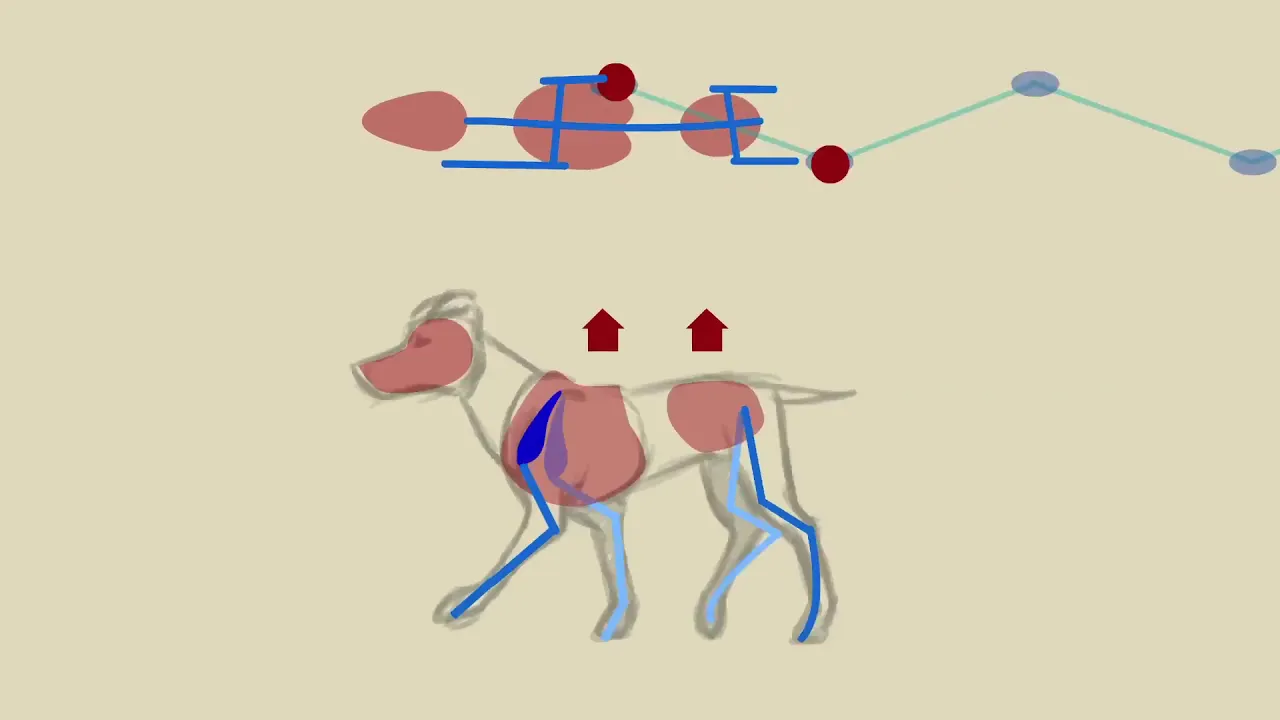
quadruped locomotion
197.9K
Quadruped locomotion involves coordinated patterns across three primary gaits. In walking, front and rear legs are quarter-cycle offset, reaching opposite low and high points; the head echoes the rear end. Key positions include front-left contact, rear-right passing, front-right passing, rear-right contact, front-right contact, rear-left passing, front-left passing, and rear-left contact—requiring eight drawings per cycle. The trot involves both feet leaving the ground briefly at high points, with front and rear ends half-cycle offset so contacts coincide. Both limbs reach low and high points simultaneously, with the head slightly delayed. The gallop features asymmetrical patterns: front legs follow left-right sequences with variable ground contact times (3-4), while rear legs follow 1-2-3-4 patterns. Different species exhibit distinct footfall patterns—dogs typically go left-right-front then right-left-rear, while horses use right-left-right-left for both front and rear.
Click to watch →

Intro To Quadruped Animation Course
40.5K
Advanced techniques elevate walk cycles from good to great: (1) Side-to-side animation should be subtle, emphasizing impact moments when weight transfers to a leg; (2) Leg swing mechanics include stomping down at landing (not full swing back) and swinging outward to prevent leg crossing, then inward at landing; (3) Elbow jiggle—elbow tucks in during passing, swings out as leg prepares to land, jiggles in/out as force travels up; (4) Toe splay—animals start spreading toes in anticipation of landing, not just at impact. The toes should be more closed right before contact, then pop open on impact frame with noticeable difference. These subtleties create sharper, more realistic foot placement. In realistic animation, clean, evenly spaced curves don't occur naturally—real movement has irregularity and subtlety. Chest and hip animation should be nailed early in the process before polishing legs, as legs inherit problems from incorrect chest or hip animation.
Click to watch →
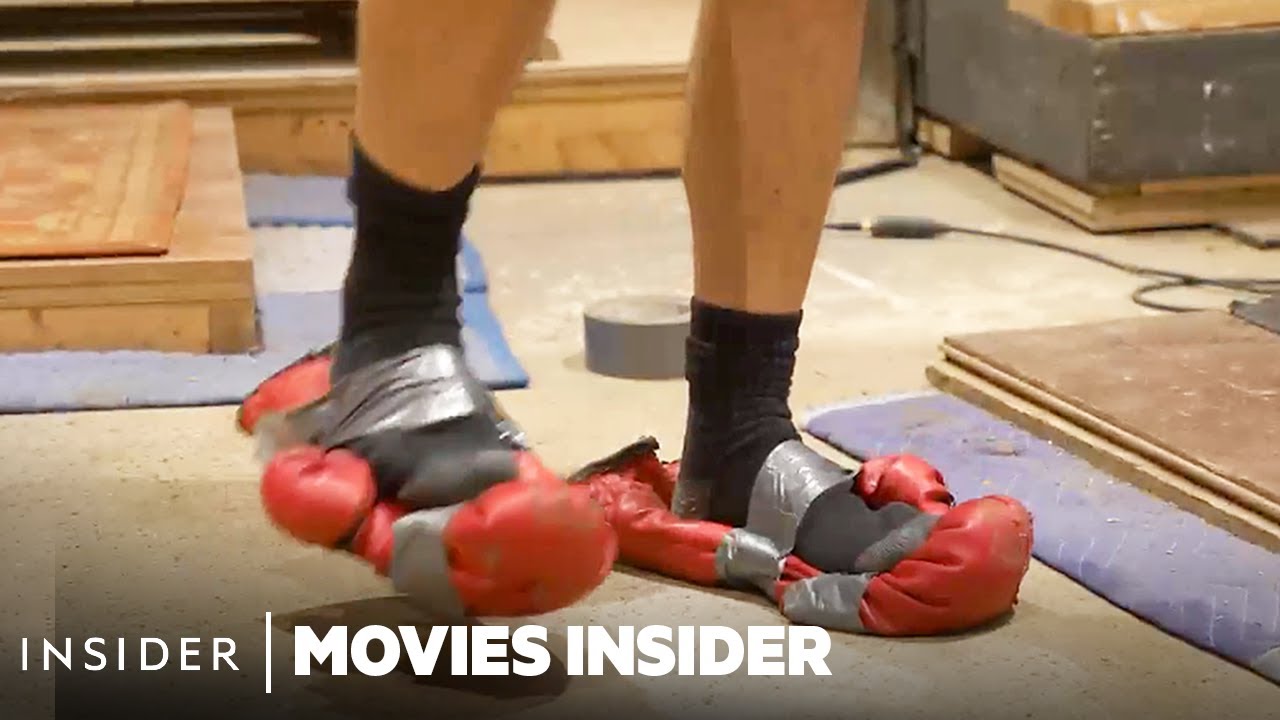
Why It’s So Hard For Foley Artists To Make Footstep Sounds | Movies Insider | Insider
2.6M
Foley artists face significant challenges in synchronizing footsteps with on-screen action. Key techniques include starting on one foot for better control, recognizing that adults use heel-toe patterns while children are flat-footed, and adjusting weight distribution for different effects. The distinction between upstairs (slidey) and downstairs (impact-y) walking requires specialized attention. For light-footed characters like dolls, artists remove their own body weight by sitting. Animal footsteps use beanbags with attached buttons to simulate paws, while tap-dancing sounds may require hand-based techniques with tap shoes. The fundamental principle is that feet generally produce more natural sounds than hands, though exceptions exist based on scene requirements.
Click to watch →
Deep Dive
Binaural and spatial audio recording techniques to create immersive, 3D soundscapes for ASMR and virtual reality.

ASMR Ear to Ear Whisper - BINAURAL - Playing with Your EARS
1.5M
Binaural ASMR recording uses specialized 3Dio microphones to capture audio with a 3D spatial effect, creating an immersive ear-to-ear listening experience that enhances relaxation and triggers the ASMR response through realistic sound reproduction.
Click to watch →
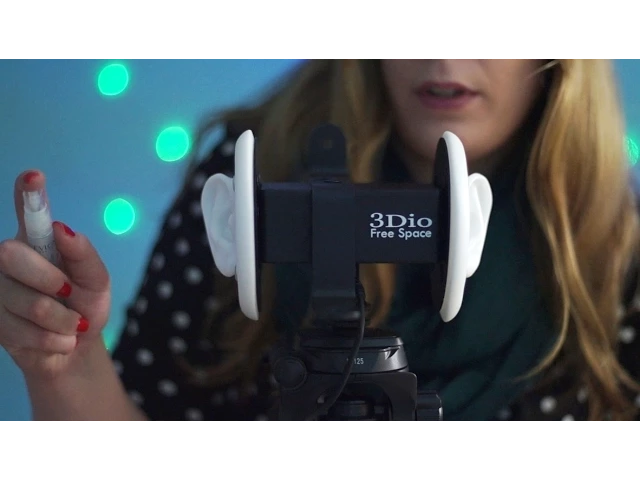
Binaural ASMR. All Around Your Head (3Dio Free Space Mic Test)
364K
This video demonstrates a binaural ASMR recording technique using a 3Dio Free Space microphone, where the creator walks around the viewer's head while producing various sounds including whispering, spray bottle, glass tapping, toy slime, packing beans, and rubber gloves to create an immersive 3D audio experience that triggers the Autonomous Sensory Meridian Response (ASMR) tingling sensation.
Click to watch →

The most realistic 8d ear cleaning asmr on the internet 2
358.3K
This video demonstrates how binaural 3D audio creates immersive ASMR experiences by using spatial sound placement to simulate realistic scenarios, such as a medical examination and a pirate ship adventure, which triggers relaxation responses in listeners when experienced through headphones.
Click to watch →

Binaural ASMR: Unboxing Your Tingles
238.8K
Binaural ASMR (Autonomous Sensory Meridian Response) audio production uses specialized binaural microphones, such as the Free Space Pro II, to capture spatial audio that creates a 3D sound experience when listened to through headphones. This technique allows the ASMR content creator to produce sounds that appear to come from different locations in the listener's environment, enhancing the immersive and relaxing effect of ASMR videos.
Click to watch →

ASMR RASCANDO MICROS DE OREJA A OREJA
45K
Binaural audio recording captures sound as it would be heard by human ears, creating immersive 3D audio experiences. The video demonstrates stereo sound effects where sounds appear to move between ears, creating a sense of spatial presence. The creator explains that if one earbud doesn't work properly, the stereo experience is compromised. This technique is essential for ASMR content, as it allows listeners to experience sounds as if they are in the same physical space, enhancing the relaxation and sensory response. The spatial audio design creates an illusion of sounds moving around the listener's head.
Click to watch →
Deep Dive
Synthesizing organic sounds by blending Foley recordings with digital synthesis for hybrid cinematic sound design.

CINEMATIC SEQUENCES WITH A TWIST
91.6K
Effective cinematic sound design requires layering three categories of sounds: ambience (background sounds like street noise or wind that hold the edit together), foley (obvious sounds matching visual actions like car wheels or slurping), and edit sounds (swooshes, risers, and base hits that emphasize transitions). The key to creating natural, organic audio is combining all three layers at appropriate levels, as using only one type creates an unnatural, distracting experience. This technique works especially well for high-frame-rate footage (like 120p) where no audio was recorded during filming.
Click to watch →
![Samplifire - Serum Supply Vol. 1 [INSIDE LOOK]](https://i.ytimg.com/vi_webp/Cp3HrjSI3nc/maxresdefault.webp)
Samplifire - Serum Supply Vol. 1 [INSIDE LOOK]
10.4K
Cinematic sound design combines orchestral elements with synthetic techniques. Noise through resonant comb filters creates organic textures that surpass pure wavetable synthesis. Animated wave tables produce subtle pitch variations mimicking human imperfection. Real flute samples played back and forth simulate authentic articulation. These techniques bridge the gap between acoustic realism and electronic manipulation, providing tools for cinematic intros, emotional strings, and atmospheric textures.
Click to watch →
Glitch-Hop Sound Design | Au5 In The DAW | Swordfish
30.2K
Foley sounds—recorded everyday objects like pretzels, jewelry, cloth, and telephone signals—create visceral connections because they trigger subconscious cultural associations. Pitch-matching foley sounds to the key creates seamless integration while maintaining their unique character. White noise fills strategically enhance arrangements when other sounds lack sufficient presence. Percussive bass elements add seriousness and weight, particularly when combined with sustained bass tones. Grain stretching transforms source sounds through unconventional granular manipulation. Sub boom elements provide non-melodic texture without competing for melodic attention. These techniques collectively expand the sonic palette beyond traditional synthesis, creating organic connections that purely electronic sounds cannot achieve.
Click to watch →

How To Make A Cartoon (Blender Grease Pencil Tutorial)
589.8K
To add foley sounds (sound effects) to animation, record sounds in Audacity (or another audio program). For example, record footsteps by tapping your phone on a surface. Cut out the desired sounds and export as a wave file. Drag the audio file into Blender's timeline to add it to the animation.
Click to watch →

War Games: The Sounds I Made For The Film
54.7K
Effective modern music production benefits from combining digital FM synthesis with analog instrumentation. FM sounds offer transparency, width, and clarity, while analog instruments provide authentic attack characteristics and dynamic articulation. Adding live drums, bass, and guitar to digital arrangements creates a richer, more organic feel. This hybrid approach allows producers to leverage the precision of digital tools while maintaining the warmth and human feel of acoustic performance.
Click to watch →
Deep Dive
Implementing dynamic, procedural footstep systems in game engines like Unreal or Unity using audio middleware like Wwise or FMOD.

Dynamic Footstep System | Different Sounds On Different Surfaces - Unreal Engine 4 Tutorial
61.4K
This tutorial demonstrates building a complete dynamic footstep system in Unreal Engine that plays different sound effects based on the surface the player walks on. The process involves: importing WAV 16-bit sound effects for different materials (grass, concrete, wood); creating sound cues with randomization using Random and Modulator nodes; configuring physical surfaces in Project Settings; creating and assigning physics materials to static mesh materials; adding notifies to animations at foot contact frames; and implementing line trace logic in animation blueprints to detect surfaces and play corresponding sound cues. The system automatically selects and plays appropriate footstep sounds based on terrain, creating immersive audio feedback.
Click to watch →

How to Create a Dynamic Footsteps Audio System in FMOD & Implement It in Unreal Engine 5 | Tutorial
3K
A dynamic footsteps audio system in FMOD and Unreal Engine 5 adapts footstep sounds based on surface materials and movement types by creating labeled parameters in FMOD for surfaces (e.g., concrete, wood, metal), implementing line trace detection in Unreal Engine to identify physical materials beneath character feet, and mapping surface types to FMOD parameters through event triggers in animation notify assets, enabling realistic audio feedback that changes based on terrain and movement.
Click to watch →
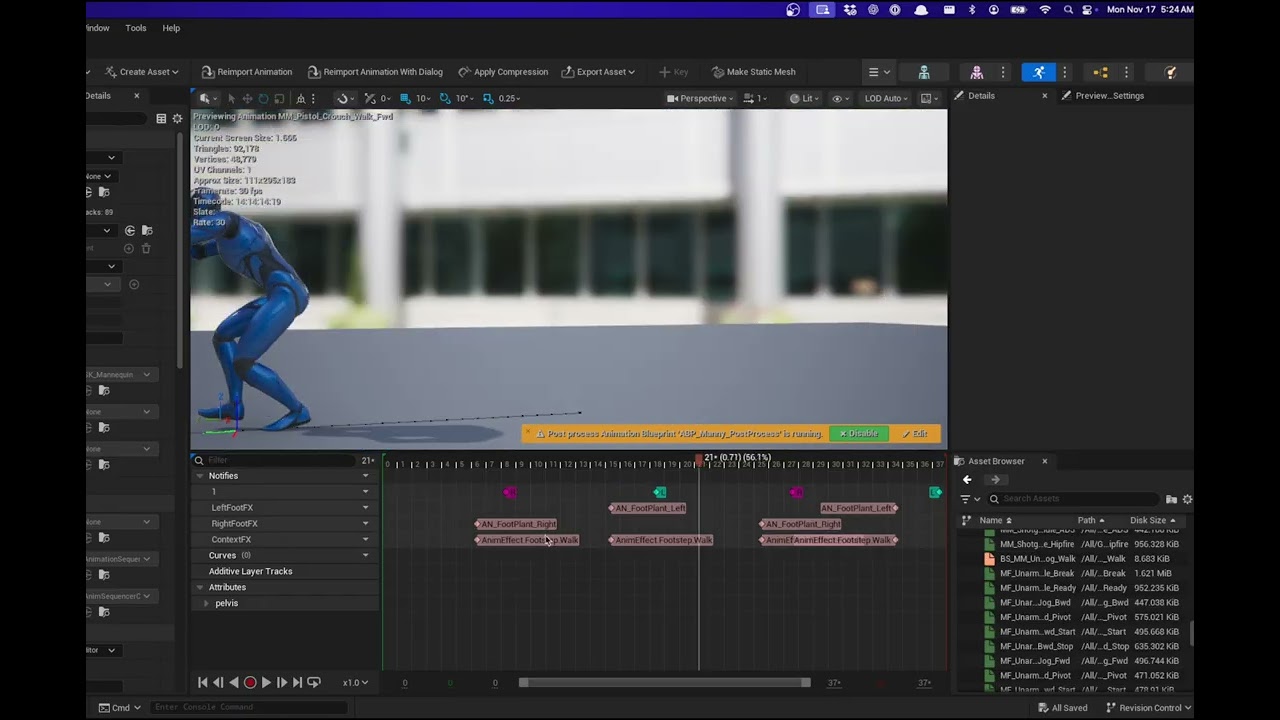
Implementing Dynamic Footsteps in UE5 Lyra Starter Game using Wwise
157
This video demonstrates how to implement dynamic footsteps in the UE5 Lyra Starter Game using Wwise audio middleware. The process involves creating a game feature plugin to attach an actor component with audio logic to the hero character, using Reaper's Reaw Wwise extension to transfer assets with markers as switch containers and regions as child containers, and implementing the Context Effects Interface to access animation events. The system detects surface types through hit results and identifies left/right feet via bone socket names, then triggers appropriate audio switches based on these parameters to create realistic, context-aware footstep sounds.
Click to watch →

Wwise & Unreal Engine 4 | Adding Game Sounds | Part 3 | Dynamic Footsteps That Change On Materials
7K
This tutorial demonstrates how to create a dynamic footstep system in Wwise and Unreal Engine 4 that automatically changes footstep sounds based on the surface material the player walks on. The system uses Wwise switches to control different audio containers for tile, grass, and wood surfaces, combined with Unreal Engine's line trace functionality to detect the physics material of the ground surface. The implementation involves creating surface types and physical materials in Unreal Engine, assigning them to game objects, and using animation blueprints with line traces to detect which material the player is walking on, then triggering the appropriate footstep sound through Wwise events.
Click to watch →
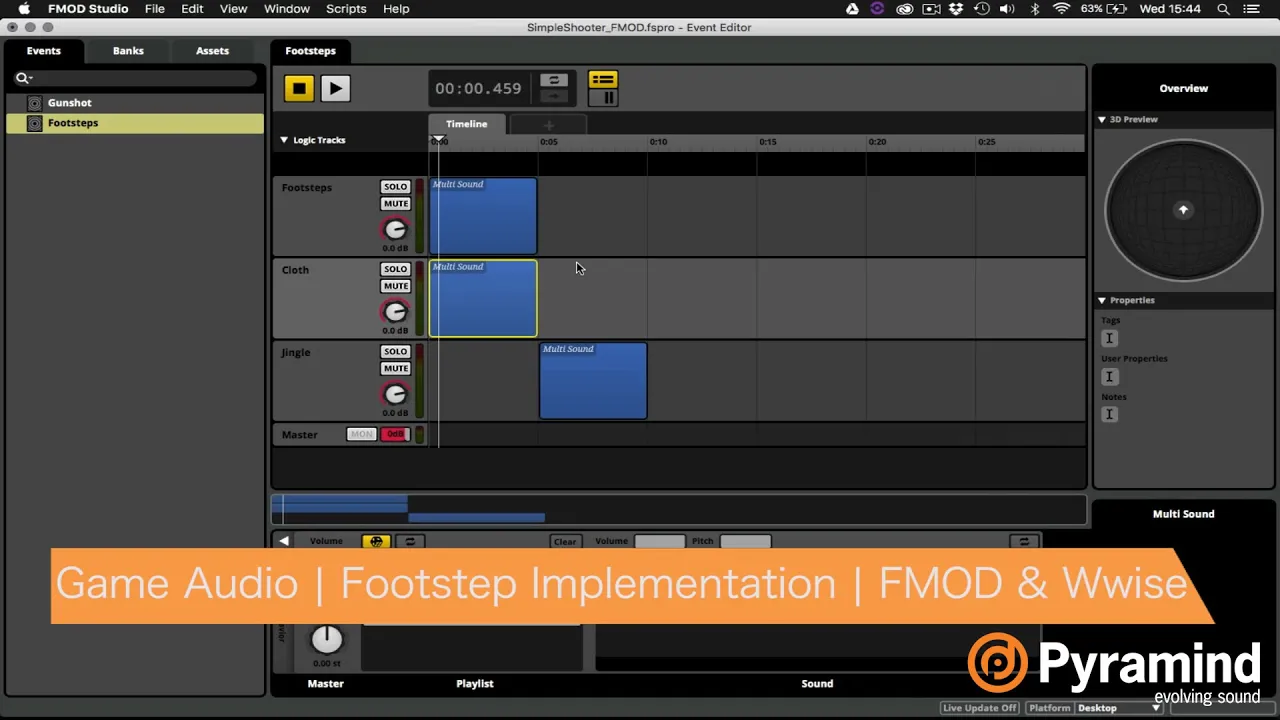
Game Audio | Footstep Implementation | FMOD & Wwise
24.9K
This tutorial demonstrates how to create layered footstep audio events in both FMOD and Wwise for game development, covering the essential techniques of importing multiple sound layers (footsteps, cloth movement, and jingle sounds), applying pitch randomization to add variety, configuring playback delays between sound layers to prevent overlap, and implementing these events in Unreal Engine 4 for realistic player movement audio.
Click to watch →
Deep Dive
Spectral editing and audio restoration to isolate clean Foley transients from ambient room noise and unwanted reflections.
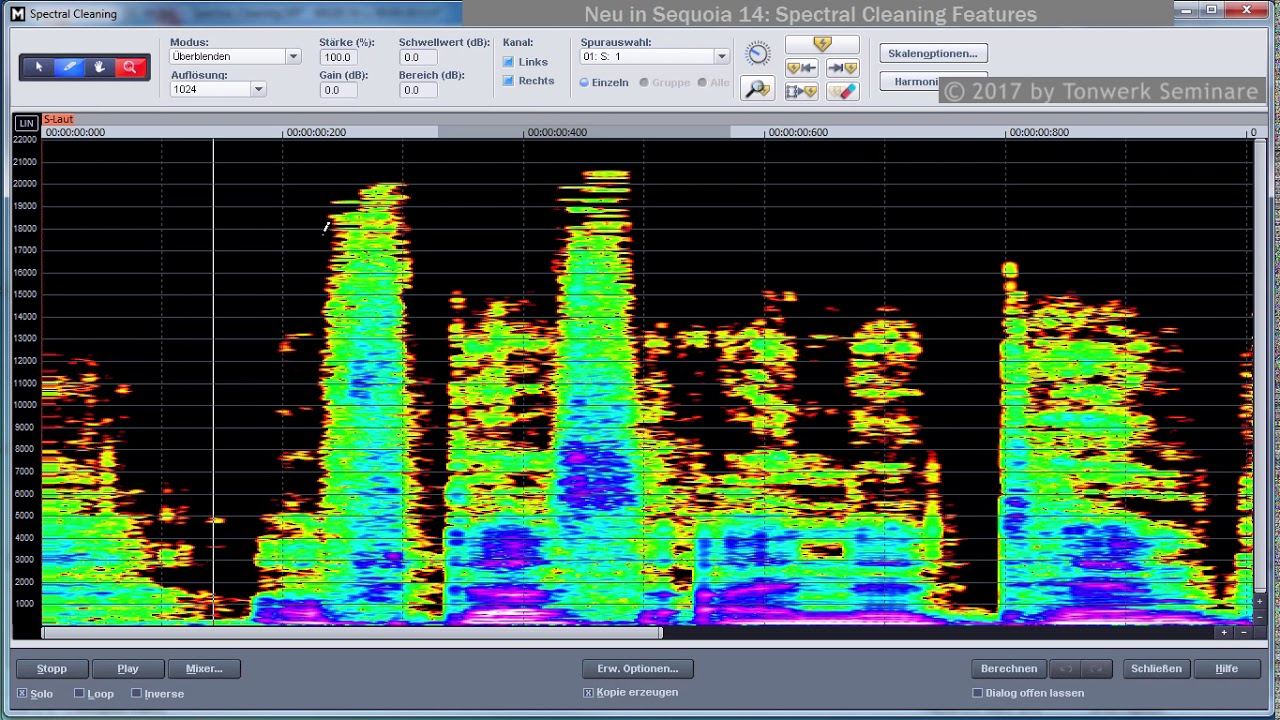
Neu in Sequoia 14: Spectral Cleaning Features
2K
Spectral Cleaning is an audio restoration tool that allows users to identify and remove unwanted noise such as sibilance, hiss, feedback, and harsh vocal qualities by selecting the problematic frequency areas in a spectral display and applying the cleaning algorithm, with the software creating a non-destructive copy of the original audio.
Click to watch →
CEDAR Audio - Real-time Audio Restoration | Podcast
816
Spectral editing emerged from recognizing that unwanted sounds occupy limited frequency ranges rather than the entire spectrum. By representing audio on spectrograms and selecting specific spectral regions, retouch enables surgical removal of isolated incidents like car horns, dropped batons, or background noises while preserving desired signals. This technology, patented by CEDA, transformed audio restoration by allowing precise, non-destructive editing of specific audio events.
Click to watch →

Audio Post 201: Pro Tools AAF Opening / Dialogue Edit
11.4K
Stubborn transients require manual spectral repair with precise 2D selections, targeting specific frequencies while preserving context. Attenuation thresholds below 1.0 prevent audible artifacts. Copy-pasting successful repairs accelerates repetitive fixes. Manual intervention complements automated tools, addressing cases where algorithms miss subtle artifacts. This hybrid approach balances efficiency with precision.
Click to watch →
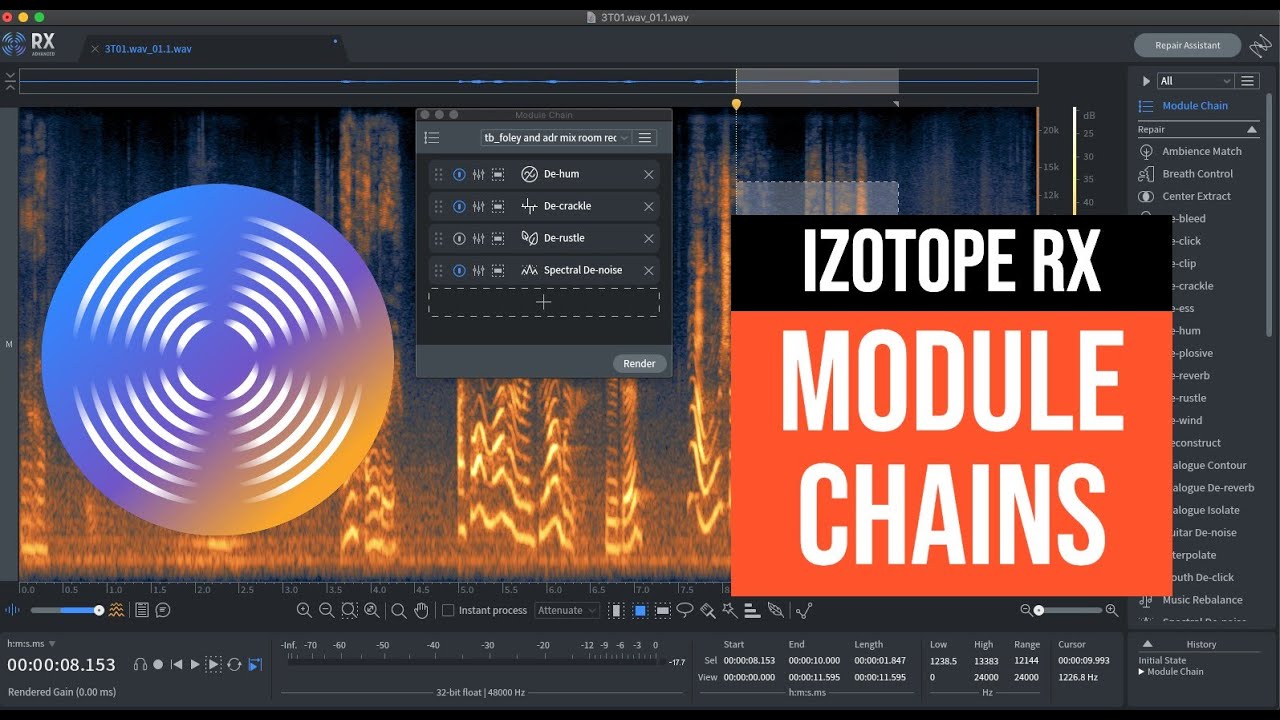
iZotope RX Advanced Dialogue Cleanup Tutorial - Module Chains
9.3K
Different recording scenarios require specialized module chain configurations. Low frequency noise removal uses dehum with 0-100 Hz selection for hum and crackle. Wind noise removal uses very low settings to address cloth bumpiness and wind gusts. For lav mics, chains include dehum, de crackle, deive, and de russle with conservative settings. The plastic bag module removes crinkling sounds from props. Foley and ADR mix room chains address room hum and transients, with spectral noise reduction for fan noise. Each chain is tailored to the specific challenges of its recording environment, from studio to on-location production.
Click to watch →
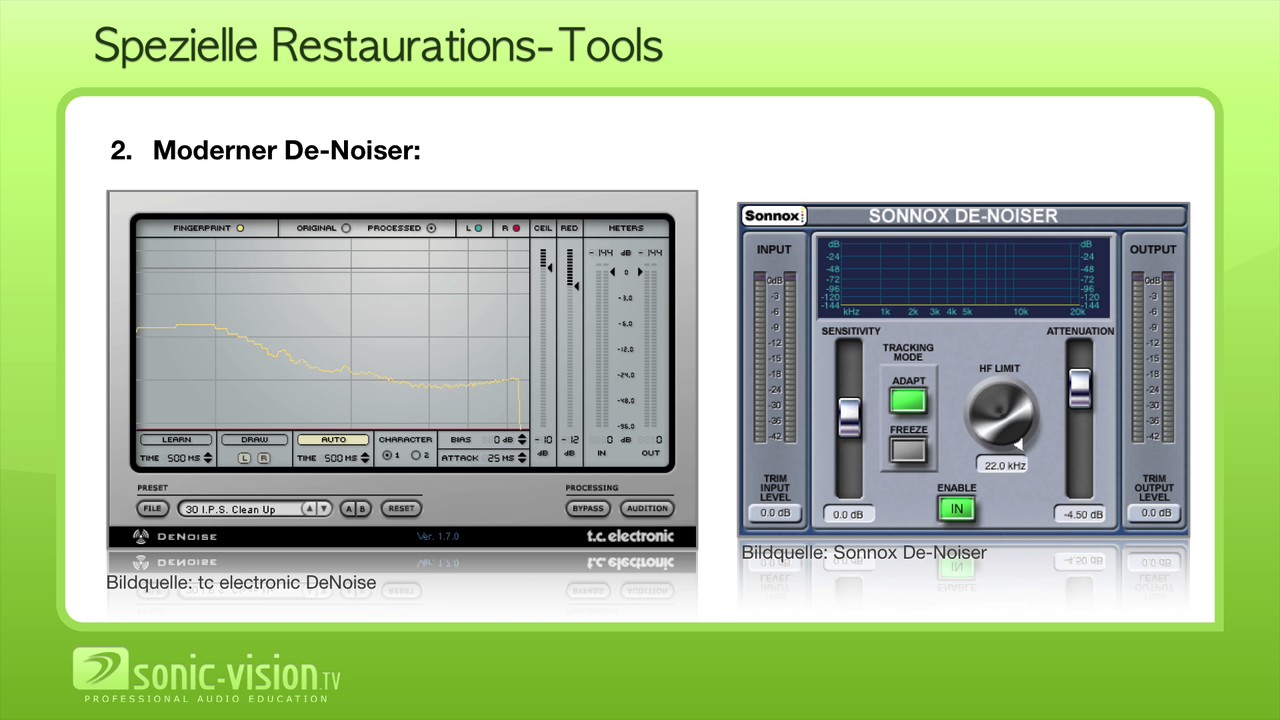
27.13 Restauration
2.2K
Audio restoration involves restoring recordings to their original state by removing noise, clicks, and unwanted sounds. Basic techniques include: (1) Editing through cutting and pasting noise-free sections, (2) Copying channels to eliminate mono noise, (3) Using frequency domain editing in tools like Waves, (4) Removing pop sounds with high-pass filters at 100-120 Hz, (5) Eliminating clicks using 20 Hz high-pass filters or DC removal functions, (6) Reducing background noise with high-pass filters at 15 kHz and reducing 2-4 kHz frequencies where white noise has most energy, (7) Using dynamic expanders for noise reduction, and (8) Applying narrowband expansion in the 2-4 kHz range using multiband compressors.
Click to watch →
Opening
Key Point A
Key Point B
Case Study
Application
Advanced Solution
Common Errors
Best Practice
Final Recap
Opening
0:15- 1
Introduces core concepts and sets the stage for the discussion.
- 2
Establishes the central question or problem to be addressed.
- 3
Outlines the overall structure of the video's main argument.
Acoustic Realism and Authentic Hoof Field Recording
While the "coconut clack" is a classic, nostalgic Foley trope, critics in modern sound design and acoustic ecology argue that it lacks the physical realism and anatomical accuracy required for high-fidelity immersion. Coconuts produce a uniform, hollow, high-mid frequency sound that fails to capture the complex, multi-layered acoustics of an actual horse. A real horse hoof impact involves distinct phases—including the heel strike, the shock-absorbing frog contact, and the release of debris—all modulated by a 1,000-pound animal's shifting weight and skeletal resonance. For ASMR and high-quality soundscapes, purists advocate for authentic field recordings of actual horses on genuine substrates. They argue that coconut Foley is a stylized caricature that can disrupt immersion, whereas real hoof-beats offer a richer, low-frequency warmth, organic unpredictability, and authentic micro-textures that are far more effective for deep relaxation and spatial realism.
Understanding the basic definition and history of Foley art in film and post-production.
Fundamental knowledge of digital audio workstations (DAWs) and the concept of multi-track audio layering.
Basic microphone physics, including proximity effect, polar patterns, and transient response.
The acoustic differences of impact sounds on various physical surfaces (e.g., concrete, dirt, gravel, wood).
An introductory understanding of ASMR (Autonomous Sensory Meridian Response) and the audio characteristics that trigger it, such as high-frequency detail and close-mic intimacy.
Advanced synchronization techniques to align recorded Foley footsteps with complex animal gaits (walk, trot, canter, gallop) on screen.
Binaural and spatial audio recording techniques to create immersive, 3D soundscapes for ASMR and virtual reality.
Synthesizing organic sounds by blending Foley recordings with digital synthesis for hybrid cinematic sound design.
Implementing dynamic, procedural footstep systems in game engines like Unreal or Unity using audio middleware like Wwise or FMOD.
Spectral editing and audio restoration to isolate clean Foley transients from ambient room noise and unwanted reflections.
162.2K views5.8Klikes24:32@MadeInFranceASMROriginal Release: 2022-06-05
you you you i do do you you [Music] you you so so so so you now you you so you so you
Up Next
15:40
Foley Art and Sound Effects: A Comprehensive Film Guide
@FilmmakerIQ
336.4K views•2014-11-17

12:54
Triumph of Orthodoxy Icon: Byzantine Art & History Explained
@BenCallan
2.1K views•2024-08-06

9:49
FastAPI vs Flask vs Django: Choosing the Right Python Web Framework
@TechWithTim
302.5K views•2024-05-26

1:42
Game of Thrones Opening Credits: A Cinematic Analysis
@gameofthrones
46.3M views•2011-04-18
Related Study Plans & Knowledge Roadmaps
Structured learning paths in General & Interdisciplinary Studies
general-studies
Elevator Engineering: History, Physics & Cities
01From Hoists to Safety Brakes: The Dawn of Vertical Lift
02Hydraulic vs. Traction: The Engineering Physics of Elevators
03Modern Speed, Safety, and Algorithms
+ 2 more learning modules
12h5 modules
Explore Roadmap
general-studies
Rubber: Material Science, History & Geopolitics
01Origins of Natural Rubber & Mesoamerican History
02The Chemistry of Natural Rubber & Vulcanization
03The Geopolitics of the Rubber Boom & Colonization
+ 2 more learning modules
12h5 modules
Explore Roadmap
general-studies
Containerization: Evolution, Logistics & Trade
01Ancient Trade & Bulk Cargo: Amphorae to Barrels
02The Industrial Revolution & Cardboard Packaging
03The Containerization Revolution: Malcom McLean
+ 2 more learning modules
12h5 modules
Explore Roadmap
general-studies
Textile Tech: Evolution, Labor & Global Impact
01Pre-Industrial Textiles: Handloom & Cottage Industry
02Mechanization: The Spinning Jenny to the Power Loom
03The Factory System & Global Labor Transformation
+ 2 more learning modules
10h5 modules
Explore Roadmap