













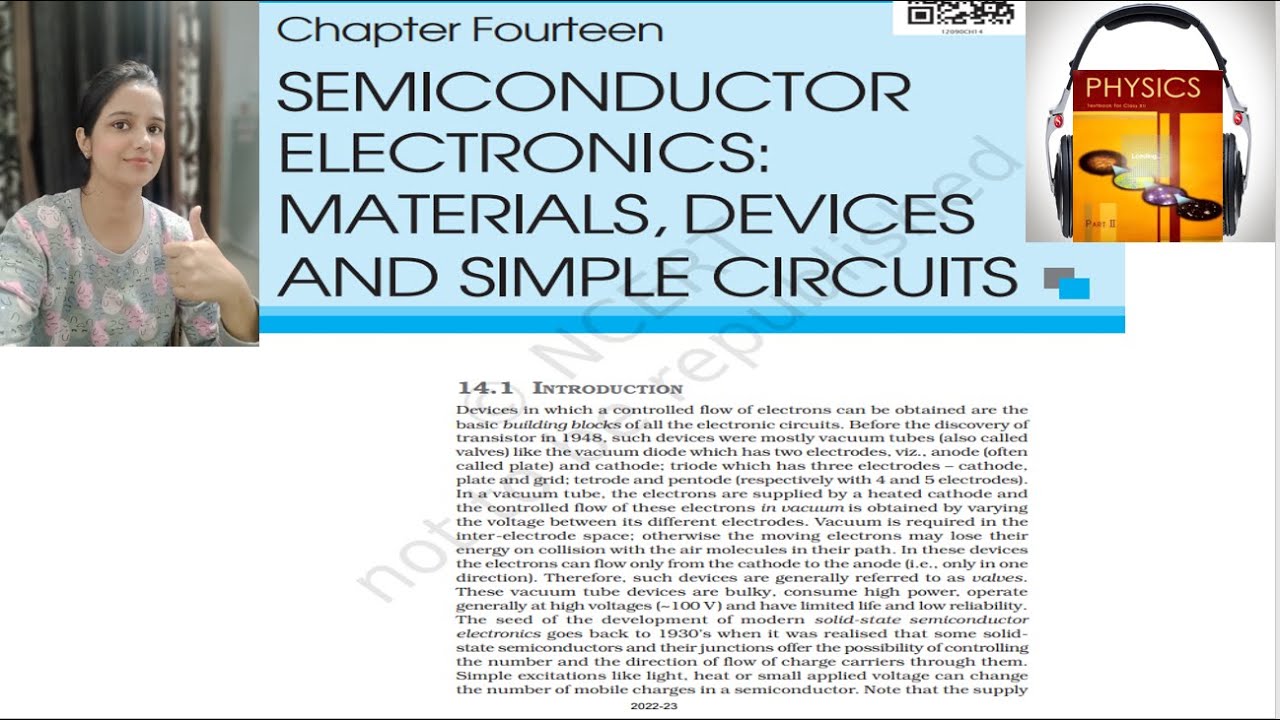














Energy bands are ranges of energy levels that electrons can occupy in materials, consisting of the valence band (where bound valence electrons exist) and the conduction band (where free electrons move), separated by a forbidden energy gap where no electrons can exist; the number of valence electrons determines whether a material is a conductor (less than 4 valence electrons), semiconductor (exactly 4 valence electrons), or insulator (more than 4 valence electrons).
Energy Bands in Solids: Valence, Conduction & Forbidden Gap
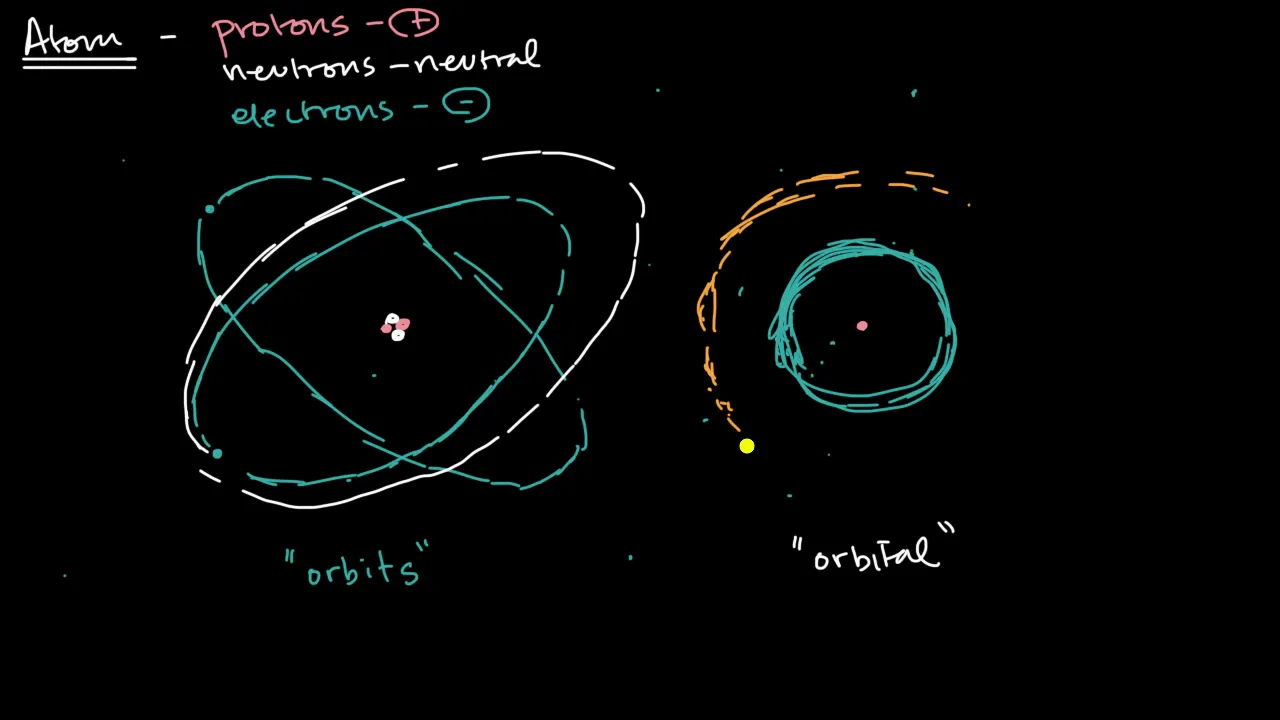
Added:Bohr's atomic model and the concept of quantized energy levels in isolated atoms.
The Pauli Exclusion Principle and how electrons populate atomic shells and subshells.
The basic electrostatic forces (Coulomb's Law) governing the attraction between atomic nuclei and electrons.
A foundational understanding of electric current and the macroscopic differences between conductors, insulators, and semiconductors.
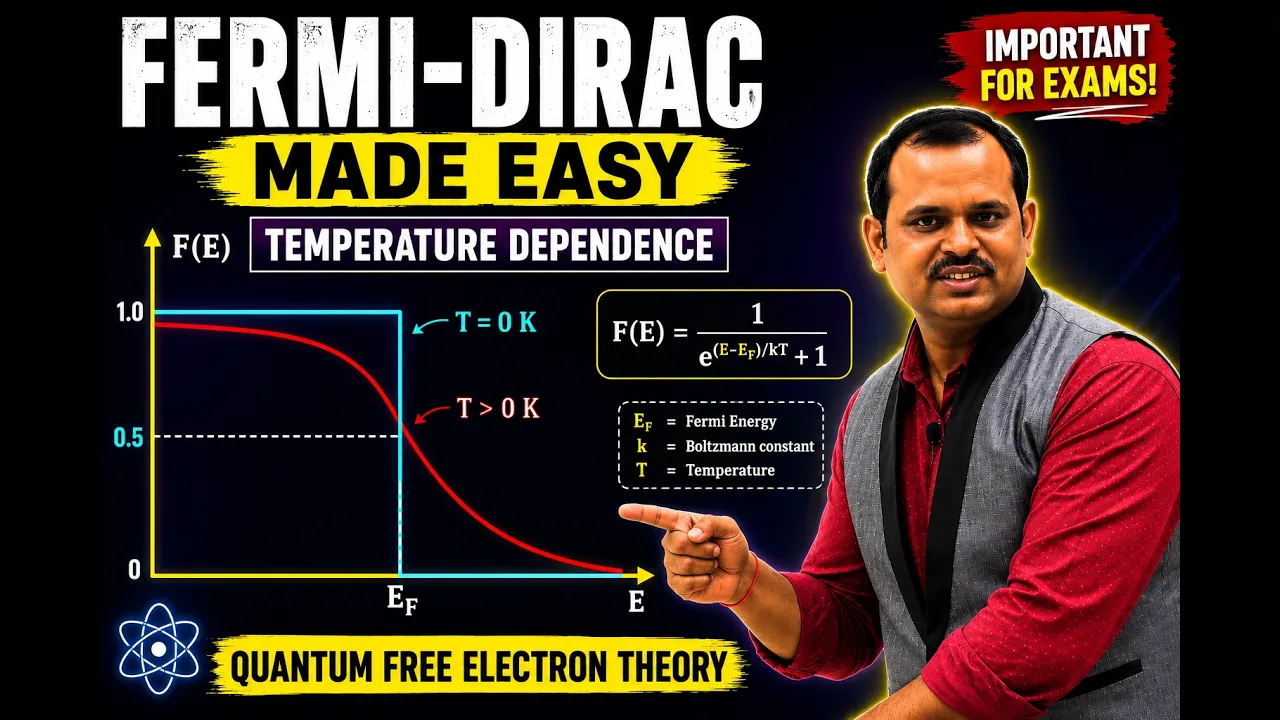
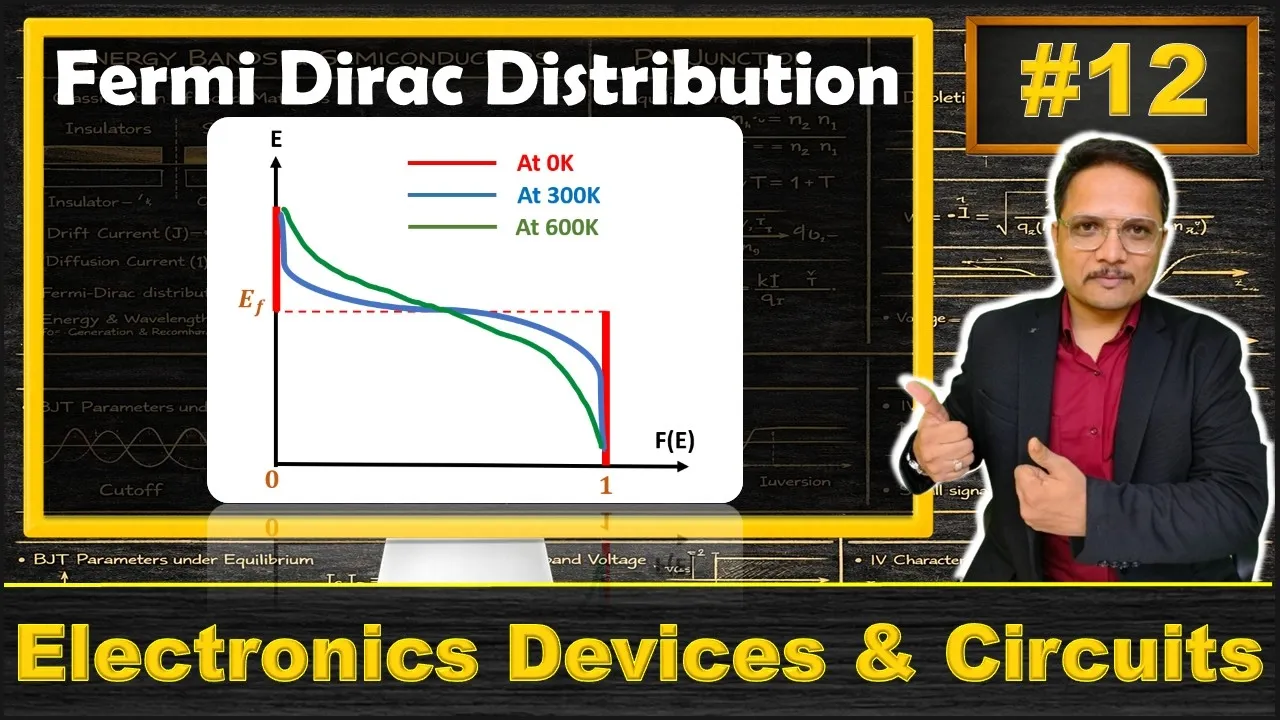
The concept of the Fermi Level and how Fermi-Dirac statistics describe electron distribution in bands at various temperatures.
The principles of semiconductor doping (n-type and p-type materials) to intentionally alter band structures and electrical conductivity.
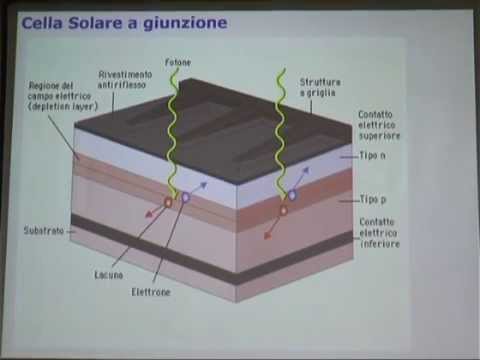
The physics and operation of p-n junctions, which form the basis of diodes, transistors, and solar cells.
The concept of 'holes' as positive charge carriers and the dynamics of electron-hole pair generation and recombination.
The optical properties of solids, specifically how the bandgap energy determines light absorption and emission in devices like LEDs.
2K views70likes11:47Original Release: 2022-02-07
hi all welcome to simple engineering engineering simplified i am neetu rahul today we are going to discuss about energy bands if you are new to this channel please consider subscribing let's move to the video [Music] energy bands in case of a single isolated atom an electron in any orbit has definite energy so when atoms are brought together it is influenced by the forces from each other atoms so electron in an orbit can have a range of energies rather than a single energy and the range of energy levels are known as energy bands so within any material there are two distinct energy bands in which the electrons may exist that is valence band and conduction band so balance electrons that is in the valence band so electrons in the outermost orbit of an atom is called as valence electrons so in the outermost orbit it has it can have a maximum of eight electrons so the valence electrons determine the physical and chemical properties of that material when the number of valence electrons of an atom is less than four the material is usually a matter or a conductor the examples are sodium magnesium aluminium which have one sodium has one electron valence electron magnesium has two valence electrons and aluminium has three valence electrons when the number of valence electrons of an atom is more than four the material is usually a non-metal and an insulator we can take the example of nitrogen which is having five valence electron sulfur which is having six valence electron and neon is having eight valence electron and when the number of valence electrons of an atom is four the material has both metal and non-metal properties and is usually a semiconductor so carbon silicon germanium are examples of a semiconductor free electrons the valence electrons of different material possess different energies so greater the energy of the valence electron the lesser it is bound to the nucleus so in certain substances particularly if you take metals the valence electrons possess so much energy and they are very loosely attached to the nucleus so this new loosely attached valence electrons that move very in random within that material and are called free electrons so the valence electrons which are loosely attached to the nucleus are known as free electrons so coming to the energy band the range of energies possessed by the valence electrons is called valence band and the range of energies possessed by the free electrons is called the conduction band so valence band and conduction band are separated by an energy gap in which there is no electrons exist in this gap and that is called forbidden energy gear so ah this is your valence band and this is your conduction band so uh in the conduction band there will be free electrons that is in balance band the electrons that will move up to the conduction band so that is energy is increasing the range of energy level is high in the conduction band and between this valence band and conduction band there is a gap energy gap that is called forbidden energy gap so coming to the concept of shells and subshells each of the allowed electron orbit is assigned a quantum number principle quantum number that is n which can be 1 2 3 etc or a letters we will assign that is k l m etc so if 1 or k that is the starting so that will be close to the nucleus in each shell there may be sub shells corresponding to different rate of rotations orientation and spin of the electrons so the angular momentum quantum number it describes the shape of the orbital and it is associated with the angular momentum of the electrons and it tells which sub shells are present in the principal quantum number so it divides the shells into subshells so it is denoted as i it has values from 0 to n minus 1 and there are four different sub shells that is s p d f where s is spherical p has three orbitals along x y z and s has the lowest energy and f has the highest energy so each subshell can hold a maximum number of electrons so s can hold two electrons p can hold 6 electrons d with 10 electrons and f with the 14 electrons so the shell number is equal to the number of possible subshells so shell if we are taking first shell or k that is a starting it can have only one subshell namely that is 1s similarly we have 2s 2p then 3s3 p3d and so on like that it will go like spherical uh which is having 1s 2s then p having three orbitals so like that it will go from s p d and f so each subshell has a number of orbitals and the orbital is the region of space where an electron can be found only two electrons are possible per orbiter so three rules that determine the structure that is rule one which is lowest energy orbitals fill the first filling the pattern will be like 1s after that 2s 2p 3s 3p like that so here in this figure you can see that the first orbital it is 1s then 2s and 2p then in 3s 3p 3d then 4s 4p4d 4 4f in 5th orbital you have s p d f g like that it will go so rule two is polys exclusion principle that is only two electrons are permitted per orbital with opposite spin so two electrons with opposite spin in same orbital is said to be the paired one and rule three is hunts rule where most stable arrangement of electrons in a subshell is when the maximum number of unpaired electrons exist it's possessing the same spin directions so here you can see when n is equal to 1 you have s orbital only when n is equal to 2 you have s and p when n is equal to 3 you have s p d n is equal to 4 you have s p d and f like that it will go that is the shells and the subshells so next is linear combination of atomic orbitals which is denoted as lcao the isolated atoms are brought together to form a solid various interactions occur between the neighboring atoms including those described in the process in the previous session about the spd and of shell subshells so the forces of attraction and repulsion between the atoms will find a balance at the proper inter atomic spacing for the crystal the atomic orbital is a wave function which describes how the electron is distributed around the nucleus so in the first video where we have seen each orbital and how the electrons are allocated in that orbital so all this we have already seen so the conditions for effective linear combination of atomic orbitals is the combining atomic orbitals it should have same or nearly the same energy and the atomic orbital should have same symmetry about the molecular axis the superposition of two orbitals are of two types bonding and antibonding orbital so bonding orbital where the amplitude of the two atomic orbitals they interfere with one another and antibonding orbital it take the difference of the two atomic orbitals so ah this will be the linear combination of atomic orbitals where you can see that the atomic orbitals will be having a wave function 5 1 and phi 2 and here you have two types of orbital anti-bonding and bonding orbitals so bonding orbitals will be like this and anti-bonding uh energy level or orbitals will be like that so ah if n number of crystals are brought together you can see that the anti-bonding energy level and the bonding energy level so the energy level in a silicon as a function of inter-atomic spacing is shown in this figure where the atomic number of silicon is z is equal to 4 atomic number is 14 and each isolated silicon atom has an electronic structure so it will be having 1s2 2s2 2p6 3s2 and 3p6 that is 6 plus 4 10 10 plus 4 14. so atomic number will be 14 in the ground state so 1s2 so in the s you have two of two atoms are there 2s2 then 2p6 3s2 3p6 3p2 so totally the atomic number will be equal to 14. so here the relative energy of the electrons and the relative spacings of the atom is shown over here so ah inertial and this will be the middle shell and this will be the outer shell so ah outer shell will be having ah the electrons so here you can see that 16 states and two n electrons will be there and ah in this state you have two n states and two n electrons like that all this uh 14 atoms will be obtained or will be allocated in the inertial middle shell and the outer shell so the relative energy of the electrons and the spacing of the atoms it is shown over here in the diagram so hope this is clear for everyone this is about the energy bands where we have conduction band and balance band and a forbidden energy gap is also there so uh hope this is clear for everyone if you find this useful please share it with others thank you [Music] you
Up Next
27:12
Bohr Model of Atom: Quantum Mechanics Explained | Physics
@PhysicsExplainedVideos
480.9K views•2020-04-17

12:53
21cm Hyperfine Transition in Neutral Hydrogen: Radio Astronomy Basics
@AaronRobertParsons
12.4K views•2011-10-13

32:32
NMR Spin Physics I: Zeeman Effect, Resonance Condition & Larmor Frequency
@nptel-indianinstituteofsci8064
2.3K views•2024-01-17

27:14
Entropy and the Second Law of Thermodynamics Explained
@veritasium
27.5M views•2023-07-01
Related Study Plans & Knowledge Roadmaps
Structured learning paths in Physics
physics
Nuclear Physics (Decay, Fission & Reactors)
01Atomic Structure and the Binding Force
02Radioactive Decay and Half-Life
03Nuclear Fission Mechanics and Chain Reactions
+ 2 more learning modules
12h5 modules
Explore Roadmap
physics
Soft Matter (Polymers, Colloids & Rheology)
01Foundations of Soft Matter & Thermal Forces
02Polymer Physics and Macromolecules
03Colloids, Surfactants, and Self-Assembly
+ 2 more learning modules
38h5 modules
Explore Roadmap
physics
Analytical Mechanics: Lagrangian & Hamiltonian
01Mathematical Foundations: Calculus of Variations
02From Newtonian Mechanics to Constraint Dynamics
03The Principle of Least Action & Lagrangian Mechanics
+ 3 more learning modules
28h6 modules
Explore Roadmap
physics
General Relativity (Spacetime & Cosmology)
01Foundations of Relativity: Special Relativity
02The Geometry of Spacetime: Equivalence Principle & Curvature
03Einstein's Field Equations: The Mathematics of Gravity
+ 2 more learning modules
55h5 modules
Explore Roadmap