The proton-proton chain converts hydrogen to helium through a series of nuclear reactions: two protons collide to form deuterium (releasing a positron and neutrino), deuterium collides with another proton to form light helium (releasing a gamma ray), and two light helium nuclei combine to form regular helium (releasing two protons). The CNO cycle uses carbon-12 as a catalyst: carbon-12 collides with a proton to form nitrogen-13 (releasing a gamma ray), nitrogen-13 decays to carbon-13 (releasing a positron and neutrino), carbon-13 collides with a proton to form nitrogen-14 (releasing a gamma ray), nitrogen-14 collides with another proton to form oxygen-15 (releasing a gamma ray), oxygen-15 decays to nitrogen-15 (releasing a positron and neutrino), and nitrogen-15 collides with a proton to eject a helium nucleus and reform carbon-12, completing the cycle.
Proton-Proton Chain & CNO Cycle Explained | Nuclear Fusion
Added:Basic atomic structure and isotopes, specifically of hydrogen, helium, carbon, nitrogen, and oxygen.

An atom consists of a nucleus containing protons (positively charged) and neutrons (neutral), with electrons (negatively charged) revolving around it. The atomic number (Z) represents protons, while mass number (A) represents protons plus neutrons. Isotopes are atoms of the same element with the same atomic number but different mass numbers due to varying neutron counts. Examples include Hydrogen (Protium, Deuterium, Tritium), Carbon (C-12, C-13, C-14), Nitrogen (N-14, N-15), Oxygen (O-16, O-17), Chlorine (Cl-35, Cl-37), and Uranium (U-234, U-235, U-238).

Hydrogen has three isotopes: Protium (mass 1, most abundant), Deuterium (mass 2, used in heavy water), and Tritium (mass 3, radioactive). Carbon has three isotopes: Carbon-12 (most abundant, stable), Carbon-13 (stable), and Carbon-14 (radioactive, used for dating fossils).

Isotopes demonstrate same element with different neutron counts. Hydrogen isotopes: protium (1 proton, 0 neutrons), deuterium (1 proton, 1 neutron), tritium (1 proton, 2 neutrons). Carbon isotopes: Carbon-12 (6 protons, 6 neutrons), Carbon-13 (6 protons, 7 neutrons), Carbon-14 (6 protons, 8 neutrons). Uranium isotopes: U-235 (92 protons, 143 neutrons), U-238 (92 protons, 146 neutrons). All share same atomic number but different mass numbers.
The periodic table organizes elements by atomic number, which equals the number of protons in an atom's nucleus. Electrons orbit in shells, with the octet rule stating atoms seek 8 valence electrons for stability (except hydrogen needing only 2). Hydrogen is the most abundant element in the universe, comprising about 75% of all matter. It has three isotopes: Protium (1 proton, 0 neutrons), Deuterium (1 proton, 1 neutron), and Tritium (1 proton, 2 neutrons). Deuterium is the most common stable isotope, while Tritium is radioactive and emits beta radiation.

This section explains key concepts in atomic structure. The atomic number (Z) equals the number of protons and determines the element's identity. The mass number (A) equals protons plus neutrons. Isotopes are atoms of the same element with different neutron counts. Hydrogen has three isotopes: protium (1 proton, 0 neutrons), deuterium (1 proton, 1 neutron), and tritium (1 proton, 2 neutrons). Carbon has isotopes carbon-12 (6 protons, 6 neutrons), carbon-13 (6 protons, 7 neutrons), and carbon-14 (6 protons, 8 neutrons). Carbon-14 is radioactive and used in carbon dating.
The concept of nuclear fusion, including how lighter nuclei combine to form heavier nuclei and release energy.

Nuclear fusion is the process where two light nuclei combine to form a heavier nucleus, releasing enormous energy. The term 'fusion' means blending or joining together. In fusion, small nuclei like hydrogen isotopes merge to create heavier elements such as helium. The energy release occurs because the resulting nucleus has higher binding energy per nucleon than the reactants. For example, deuterium (one proton, one neutron) and tritium (one proton, two neutrons) fuse to form helium-4 (two protons, two neutrons) and release 17.6 MeV of energy. Iron-56 has the highest binding energy per nucleon (8.8 MeV), making it the most stable nucleus. Lighter nuclei like hydrogen have much lower binding energy per nucleon (about 1.1 MeV), so when they fuse, the difference in binding energy is released as energy.
Nuclear fusion is the process where light nuclei combine to form heavier nuclei, releasing energy. For example, deuterium and tritium fuse to form helium-4 and a neutron: ²H + ³H → ⁴He + n + energy. Fusion requires extremely high temperatures (millions of degrees) to overcome the electrostatic repulsion between nuclei. The sun and stars generate energy through fusion.
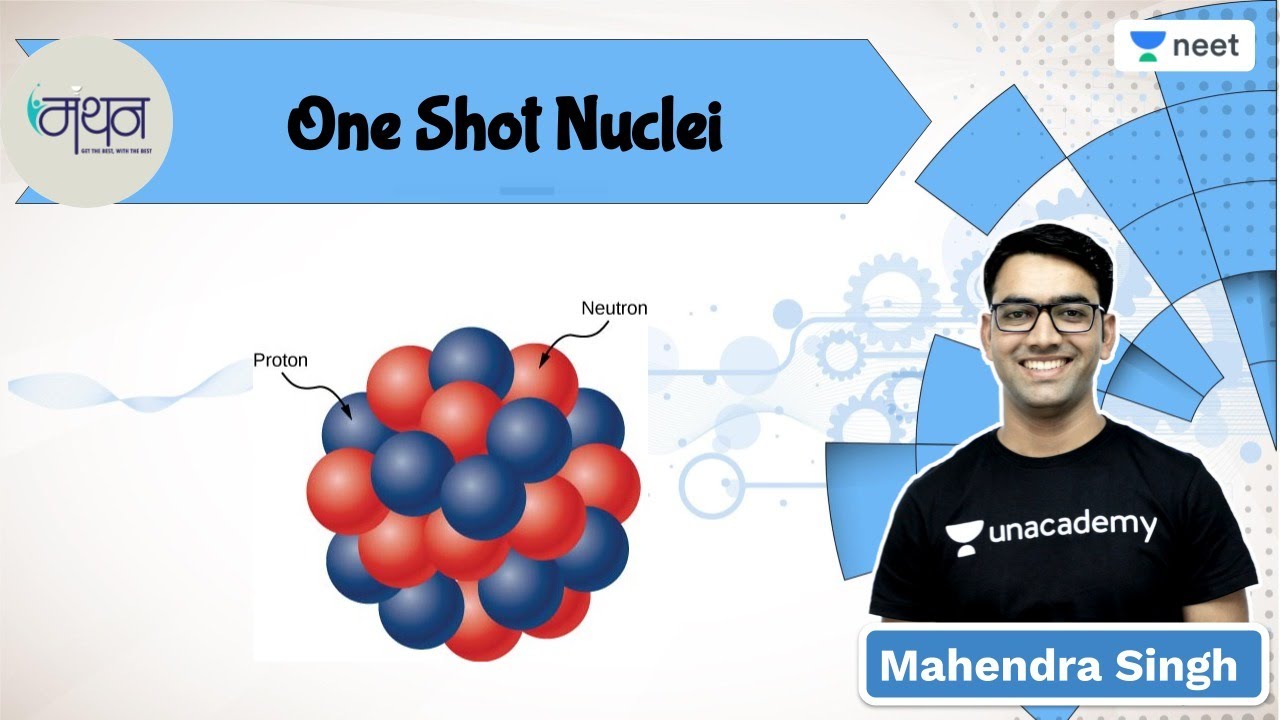
Nuclear fusion is the process where light nuclei combine to form heavier nuclei, releasing energy (e.g., hydrogen isotopes fusing to form helium). Nuclear fission is the process where heavy nuclei split into lighter nuclei, releasing energy (e.g., uranium-235 splitting into barium and krypton). Both processes release energy because the products have higher binding energy per nucleon than the reactants.

Nuclear fusion is the process where two light nuclei combine to form a heavier nucleus, releasing energy. For example, hydrogen nuclei can fuse to form helium, releasing enormous energy. Fusion occurs when the binding energy per nucleon of the product is greater than that of the reactants.

Nuclear fusion: Light nuclei (A < 30) combine to form heavier nuclei, releasing energy because the product has higher binding energy per nucleon. This is the process that powers stars like the Sun. Nuclear fission: Heavy nuclei (A > 170) split into lighter nuclei, releasing energy because the products have higher binding energy per nucleon. Both processes move nuclei toward the most stable configuration (iron-56).
Fundamental physical forces, particularly the strong nuclear force and the electrostatic repulsion (Coulomb barrier) between protons.

Protons in the nucleus do not repel each other despite having like charges because the strong nuclear force (also called the strong interaction) binds them together. The strong nuclear force is one of the four fundamental forces of nature and is much stronger than the electromagnetic force at short ranges (within the nucleus). This force acts between all nucleons (protons and neutrons) and is attractive, overcoming the electrostatic repulsion between protons. Without this force, atomic nuclei would not be stable.
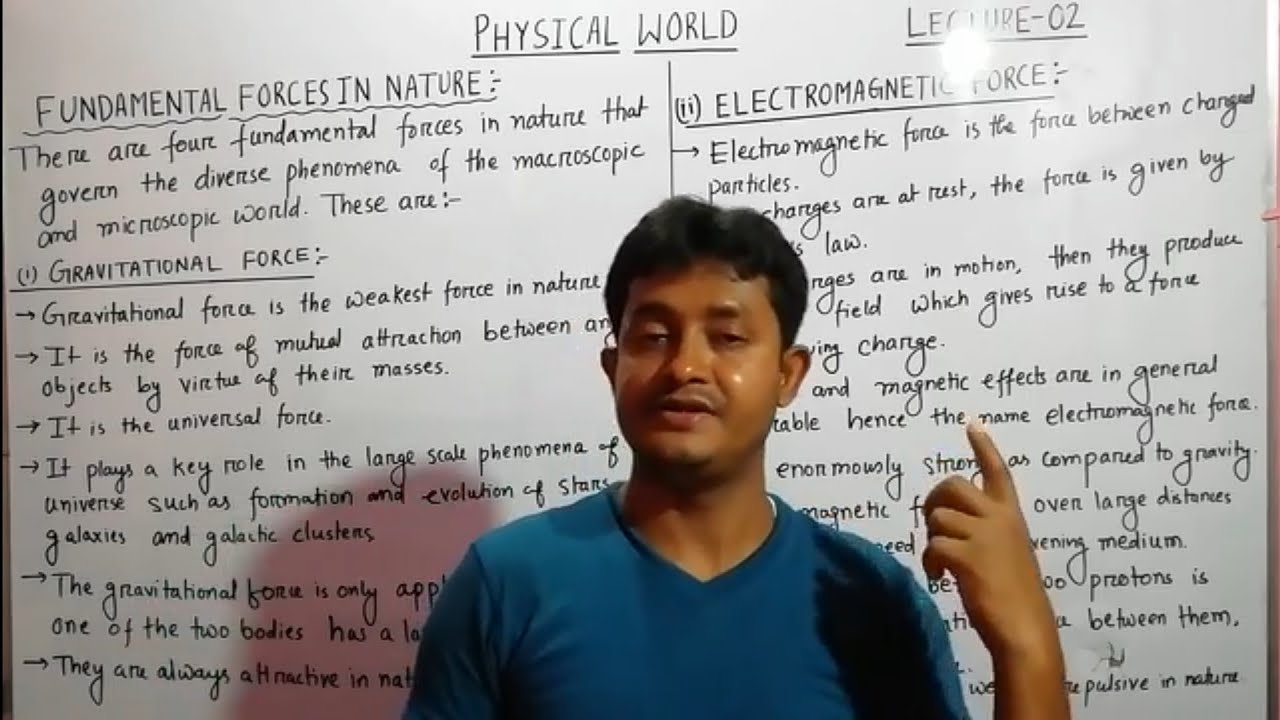
The strong nuclear force overcomes the electrostatic repulsion between protons in the nucleus. Without this force, the nucleus would disintegrate due to the repulsion between positively charged protons.

The strong nuclear force (also called strong nuclear interaction) is the fundamental force that holds protons together in the nucleus despite their mutual electrostatic repulsion. This force is much stronger than the electrostatic repulsion between protons but acts only over very short distances (within the nucleus). Without this force, the nucleus would disintegrate due to the repulsion between positively charged protons.

Protons experience enormous electrostatic repulsion described by Coulomb's law F = ke²/r². At typical nuclear separations (~2.4 fm), this force reaches ~40 N—enormous by everyday standards. The strong nuclear force counteracts this repulsion, binding nucleons together. Despite being the strongest fundamental force, it acts only over very short ranges (~1-3 fm), explaining why heavy nuclei require more binding energy per nucleon.
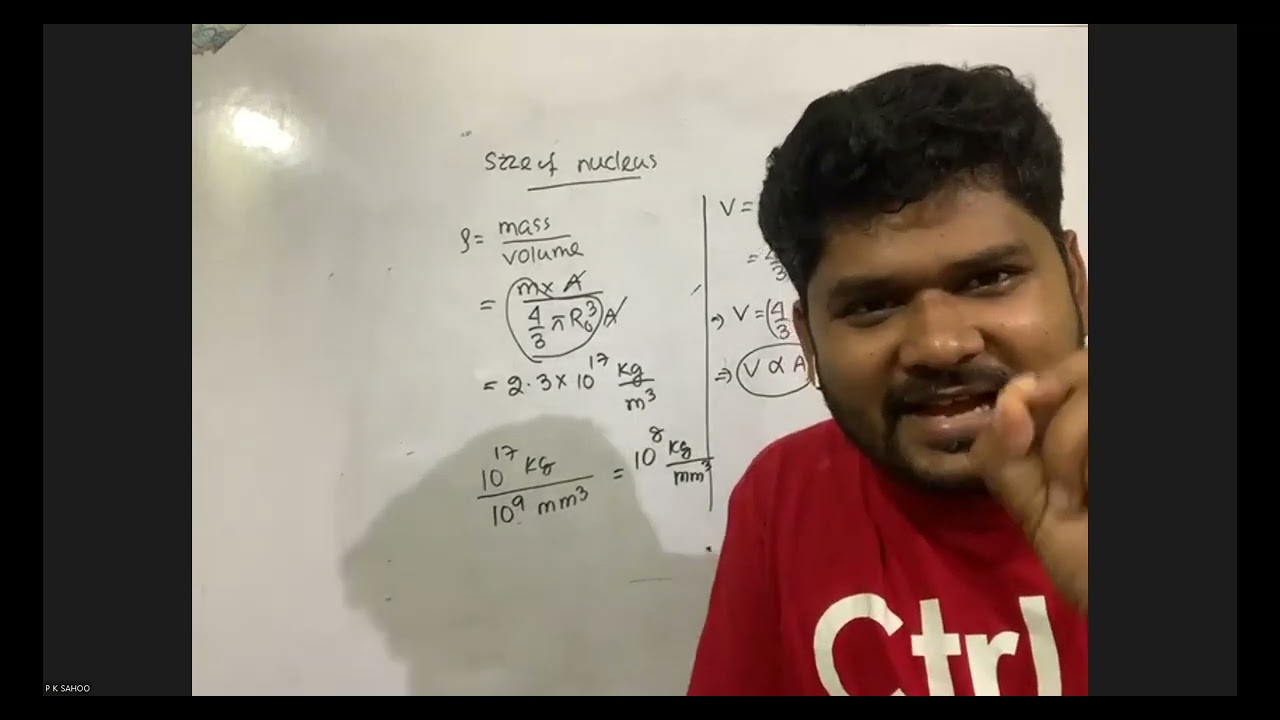
This section explains why protons remain bound in nuclei despite electrostatic repulsion. The nuclear force (strong force) provides the centripetal force holding nucleons together. It is approximately 100 times stronger than electrostatic repulsion between protons. The four fundamental forces are gravitational, electromagnetic, weak nuclear, and strong nuclear forces. The nuclear force exists between any two nucleons (proton-proton, proton-neutron, neutron-neutron) and is attractive, overcoming the repulsive forces that would otherwise cause the nucleus to disintegrate.
Einstein's mass-energy equivalence principle (E=mc²) and the concept of mass defect.

Einstein's equation E = mc² states that mass and energy are interchangeable. In nuclear reactions, a small mass defect (Δm) converts to large energy because c² is very large. Mass defect is the difference between the sum of individual nucleon masses and the actual nuclear mass. The mass defect represents the mass converted to binding energy that holds the nucleus together.

Einstein's mass-energy equivalence principle states that mass and energy are interchangeable (E=mc²). When calculating nuclear binding energy, the sum of individual proton and neutron masses exceeds the actual nuclear mass. This difference, called mass defect, represents the mass converted into binding energy that holds the nucleus together. The mass defect occurs because energy is released when nucleons combine, and this released energy corresponds to a loss of mass according to E=mc².

Mass defect is the difference between the total mass of individual nucleons and the actual mass of the nucleus. When nucleons combine, mass decreases slightly. For hydrogen nucleus: proton mass = 1.00782 amu, neutron mass = 1.00866 amu, total nucleon mass = 2.01648 amu, actual nucleus mass = 2.01410 amu, mass defect = 0.00238 amu. Einstein's equation E = mc² explains this phenomenon: the 'missing' mass is converted into binding energy. This equation, proposed in 1905, states that energy and mass are interchangeable - energy can be converted into mass and vice versa. This principle explains why mass defect occurs and is fundamental to understanding nuclear physics.

Mass defect is the difference between the sum of individual nucleon masses and the actual nuclear mass. According to Einstein's E = mc², this mass difference is converted to binding energy. The relationship is: Binding Energy = Δm × c², where Δm is the mass defect.

Mass defect is the difference between the sum of individual nucleon masses and the actual nucleus mass. When nucleons combine, the resulting nucleus weighs less than its parts. This missing mass is converted to energy according to Einstein's equation E = mc². For example, 1 kg of mass converted to energy produces 9 × 10^16 joules. This principle explains why nuclear reactions release enormous energy compared to chemical reactions.
Prerequisite Knowledge
- Concept 01Basic atomic structure and isotopes, specifically of hydrogen, helium, carbon, nitrogen, and oxygen.
- Concept 02The concept of nuclear fusion, including how lighter nuclei combine to form heavier nuclei and release energy.
- Concept 03Fundamental physical forces, particularly the strong nuclear force and the electrostatic repulsion (Coulomb barrier) between protons.
- Concept 04Einstein's mass-energy equivalence principle (E=mc²) and the concept of mass defect.
Subsequent Learning
- Step 01Advanced stellar nucleosynthesis stages, such as the Triple-Alpha process (helium burning) and carbon/oxygen burning in massive stars.
- Step 02Stellar evolution and the Hertzsprung-Russell (H-R) diagram, understanding how a star's mass dictates whether it uses the p-p chain or CNO cycle.
- Step 03The s-process and r-process (neutron capture) that create elements heavier than iron during supernovae.
- Step 04Terrestrial nuclear fusion technology, including the challenges of replicating solar fusion conditions on Earth using Deuterium-Tritium (D-T) reactions.
Proton-Proton Chain
0:14- 1
Details the initial fusion sequence of hydrogen into helium.
- 2
Explains key reactions involving deuterium and isotopes.
Dark Matter-Powered Stars (Dark Stars)
While the proton-proton chain and CNO cycle are the established foundations of stellar energy generation, astrophysicists propose 'Dark Stars' as an alternative model for the universe's earliest stellar objects. According to this theory, instead of being powered by nuclear fusion, these massive, cool protostars were heated by the annihilation of dark matter particles (such as Weakly Interacting Massive Particles, or WIMPs) at their cores. Only when the dark matter fuel was depleted would the star contract and trigger standard hydrogen fusion. This hypothesis challenges the paradigm that nuclear fusion is the exclusive mechanism for initiating stellar light and heat, offering a distinct evolutionary pathway in the early universe.
Advanced stellar nucleosynthesis stages, such as the Triple-Alpha process (helium burning) and carbon/oxygen burning in massive stars.

In more massive stars, nuclear fusion proceeds through increasingly complex stages, producing heavier elements. After hydrogen burning, stars fuse helium into carbon and oxygen. In stars of 2-8 solar masses, the core becomes degenerate carbon-oxygen, and the star evolves through the asymptotic giant branch. In stars of 8-10 solar masses, carbon burning can occur, producing neon, sodium, and magnesium. The energy generation rates depend strongly on temperature - the proton-proton chain scales as T^4, the CNO cycle as T^15-17, and the triple-alpha process as T^30-40.
The triple alpha process converts helium into carbon in stars, requiring three helium-4 nuclei to collide (or in rapid succession) to form carbon-12. This process requires temperatures of about 100 million Kelvin and is extremely sensitive to temperature changes. Massive stars progress through multiple fusion stages: hydrogen burning (millions of years), helium burning (hundreds of thousands of years), carbon burning (hundreds of years), and progressively faster stages for heavier elements. Each stage requires higher temperatures and releases energy more quickly, with silicon burning lasting only about a day before stellar collapse.

This section traces the sequential nuclear burning stages that produce heavier elements in massive stars. After hydrogen burning ends, core contraction heats the star sufficiently for helium burning at >100 million Kelvin, producing carbon-12 through the triple-alpha process where two helium nuclei form unstable beryllium-8 which combines with another helium nucleus. The process is efficient due to resonance matching. Carbon burning at ~1 billion Kelvin produces oxygen, neon, sodium, magnesium, and sulfur. Degenerate pressure from electron degeneracy (Pauli Exclusion Principle) determines which burning stages a star can undergo—objects below ~0.5 solar mass never ignite helium; those below ~8 solar masses never reach carbon burning.

Stars progress through sequential fusion stages: hydrogen to helium (main sequence), helium to carbon (triple alpha process requiring 100 million Kelvin due to beryllium-8 instability), then carbon, oxygen, neon, magnesium, silicon, and finally iron. Each stage occurs in concentric shells around the core with progressively shorter timescales (from millions of years to just one day). Iron marks the endpoint because fusion absorbs energy rather than releasing it. Low-to-medium mass stars (up to 8 solar masses) evolve through the asymptotic giant branch phase with concentric hydrogen and helium burning shells around a carbon-oxygen core.

After hydrogen exhaustion, stars progress through successive fusion stages: helium burning (triple-alpha process forming carbon), carbon burning, neon burning, oxygen burning, and silicon burning. Each stage requires higher temperatures and occurs in progressively smaller core regions. The timescales compress dramatically: helium burning lasts about 1 million years, carbon burning about 1,000 years, neon burning a few years, oxygen burning a few months, and silicon burning only days. Each stage produces progressively heavier elements until iron forms, which cannot release energy through fusion. Iron represents the endpoint of stellar nucleosynthesis because fusing iron into heavier elements requires energy rather than releasing it. As silicon burning deposits iron in the core, the core becomes progressively heavier without contributing to energy production. When the iron core exceeds approximately 1.4 solar masses (the Chandrasekhar limit), electron degeneracy pressure can no longer support it against gravitational collapse. The core implodes at about 1/4 the speed of light, with density increasing by a factor of a trillion in less than one second.
Stellar evolution and the Hertzsprung-Russell (H-R) diagram, understanding how a star's mass dictates whether it uses the p-p chain or CNO cycle.
The CNO cycle, proposed by Bethe in 1939, becomes dominant in massive stars with temperatures exceeding 18 million Kelvin. Carbon, nitrogen, and oxygen nuclei act as catalysts, facilitating hydrogen fusion through a series of reactions: proton capture by carbon forms nitrogen-13, which decays to carbon-12; subsequent proton captures form nitrogen-14, oxygen-15, and finally nitrogen-15, which decays back to carbon-12. In the Sun's 15 million Kelvin core, CNO produces only 4% of proton-proton energy. In very massive stars reaching one billion Kelvin, iron becomes the final fusion product, marking the endpoint of stellar nucleosynthesis.

The Hertzsprung-Russell diagram plots stellar luminosity versus temperature, revealing that most stars follow a main sequence. Stars under 8 solar masses evolve to red giants then white dwarfs; heavier stars become supergiants and explode as supernovae. The diagram shows stellar evolution paths and reveals relationships between mass, luminosity, and evolutionary stage, fundamental to understanding stellar lifecycles.
The Hertzsprung-Russell diagram plots stars by luminosity versus temperature, revealing that most stars spend the majority of their lives on the 'main sequence' - a band where hydrogen fusion occurs in the core. A star's position on the main sequence depends on its mass: more massive stars are more luminous and hotter, while less massive stars are less luminous and cooler. The time a star spends on the main sequence depends on its mass - more massive stars burn their fuel faster and have shorter lifetimes. The Sun will remain on the main sequence for about 10 billion years.

Stellar evolution describes how stars change throughout their lifetimes, from birth to death. The Hertzsprung-Russell diagram plots stars by luminosity versus temperature, revealing that most stars (about 90%) lie along the main sequence. This diagram shows that a star's position indicates its evolutionary stage. Stars spend most of their lives on the main sequence, fusing hydrogen into helium in their cores. The most massive stars live the shortest lives (only millions of years), while less massive stars can live for billions of years.

The Hertzsprung-Russell (HR) diagram shows how stars change position as they age. In modern theory, stars move along the diagram because they are changing their nuclear fuel source. For example, in a star like our Sun, only helium synthesis from hydrogen dominates during its main sequence phase. Once hydrogen is exhausted, astronomers argue that stars leave the main sequence and become red giants or supergiants. Their internal temperature increases, and they begin using the triple alpha reaction and other more complex nuclear processes. All motion on the HR diagram is directly linked to changes in nuclear reactions because gaseous stars have no lattice structure, so everything hinges on changes in nuclear fuel.
The s-process and r-process (neutron capture) that create elements heavier than iron during supernovae.

Elements heavier than iron are produced through neutron capture processes: (1) s-process (slow process)—neutrons are added to atomic nuclei slowly relative to decay timescales, allowing elements to build up gradually through successive neutron captures followed by beta decay; (2) r-process (rapid process)—neutrons are added extremely rapidly, creating highly unstable heavy isotopes that beta-decay into stable elements. The s-process occurs in asymptotic giant branch stars and produces elements up to lead. The r-process occurs in neutron star mergers and supernovae, creating the heaviest elements including gold, platinum, and uranium.

Two neutron capture processes create elements heavier than iron. The s-process (slow neutron capture) occurs in asymptotic giant branch stars where neutrons are produced slowly enough for beta decay to stabilize nuclei between captures. The r-process (rapid neutron capture) occurs during supernova explosions when extreme neutron flux allows nuclei to capture many neutrons before beta decay can occur, creating elements like gold and uranium. These processes explain how heavy elements are synthesized in stellar environments.

Heavy elements (heavier than iron) are formed through neutron capture processes: (1) S-process (slow neutron capture) - nuclei capture neutrons one at a time, with beta decay occurring between captures, producing elements up to bismuth and some lead isotopes, (2) R-process (rapid neutron capture) - nuclei are exposed to extremely high neutron fluxes, capturing multiple neutrons before beta decay can occur, creating very neutron-rich, unstable nuclei that undergo rapid beta decay. The R-process requires extreme conditions like those in supernovae or neutron star mergers. The S-process occurs in asymptotic giant branch stars, while the R-process occurs in supernovae and neutron star mergers.
Heavier elements beyond iron are synthesized through neutron capture processes. The slow process (s-process) occurs in red giant stars where neutrons are captured gradually, allowing radioactive decay between captures. The rapid process (r-process) occurs in supernovae where an abundance of free neutrons allows rapid neutron capture before beta decay can occur. Both processes enable the formation of elements heavier than iron.

The S-process (slow neutron capture process) and R-process (rapid neutron capture process) are two mechanisms for creating heavy elements beyond iron. The S-process occurs in the shells of giant stars with a slow neutron flux, allowing nuclei to capture neutrons one at a time with beta decay in between. The R-process requires extremely high neutron fluxes, achieved in supernovae and neutron star mergers, allowing rapid neutron capture before beta decay can occur.
Terrestrial nuclear fusion technology, including the challenges of replicating solar fusion conditions on Earth using Deuterium-Tritium (D-T) reactions.
Earth-based fusion uses deuterium-tritium reactions because these heavy hydrogen isotopes provide the most efficient energy release. Deuterium has one proton and one neutron; tritium has one proton and two neutrons. When fused, they produce helium, neutrons, and energy. This reaction compensates for the extreme conditions needed to recreate stellar fusion on Earth. The Joint European Torus (JET) is the world's largest tokamak capable of using tritium fuel, enabling experiments that simulate real fusion power station conditions.

Stars generate energy through nuclear fusion, converting hydrogen into helium via Einstein's E=mc² equation. The Sun achieves fusion at 15 million Kelvin through gravitational compression. On Earth, we use Deuterium (hydrogen with one neutron) and Tritium (hydrogen with two neutrons) because pure hydrogen fusion requires impossible temperatures. Tritium is unstable and must be manufactured. This fundamental difference between stellar and terrestrial fusion explains why replicating solar processes on Earth requires entirely different approaches and technologies.

Nuclear fusion combines light elements into heavier ones, releasing energy because binding energy per nucleon increases toward iron. Stars like our Sun achieve fusion through gravitational compression (~15 million degrees). On Earth, we need artificial confinement. The Coulomb barrier requires ~10 keV per particle thermal energy, corresponding to ~100 million degrees. The deuterium-tritium reaction is preferred because it has the highest cross-section (fusion probability) at achievable temperatures. In contrast, the proton-proton fusion powering the Sun has negligible probability at terrestrial temperatures, requiring ~10^24 times higher temperatures. Achieving fusion requires balancing extremely high temperatures with very low densities to maintain manageable pressure.
For practical fusion on Earth, we use deuterium and tritium (isotopes of hydrogen) instead of regular hydrogen. Deuterium has one proton and one neutron, while tritium has one proton and two neutrons. These isotopes have the same chemical properties but different nuclear masses. The deuterium-tritium reaction has the highest probability of fusion among all possible fusion reactions. To fuse these nuclei, they must be heated to approximately 200 million degrees Celsius so that their thermal energy overcomes the electrostatic repulsion between their positive charges, allowing them to come close enough (about 10^-15 meters) for the strong nuclear force to bind them together.

Fusion reactors on Earth use a different process than the sun. Instead of fusing single protons, they use Deuterium and Tritium, which are isotopes of hydrogen. This type of reaction is called DT fusion. In DT fusion, deuterium and tritium fuse together to create helium-4, and an extra neutron is ejected. DT fusion is used because it is easier to achieve than other fusion reactions and releases a lot of energy.
Proton-Proton Chain
0:14- 1
Details the initial fusion sequence of hydrogen into helium.
- 2
Explains key reactions involving deuterium and isotopes.
Dark Matter-Powered Stars (Dark Stars)
While the proton-proton chain and CNO cycle are the established foundations of stellar energy generation, astrophysicists propose 'Dark Stars' as an alternative model for the universe's earliest stellar objects. According to this theory, instead of being powered by nuclear fusion, these massive, cool protostars were heated by the annihilation of dark matter particles (such as Weakly Interacting Massive Particles, or WIMPs) at their cores. Only when the dark matter fuel was depleted would the star contract and trigger standard hydrogen fusion. This hypothesis challenges the paradigm that nuclear fusion is the exclusive mechanism for initiating stellar light and heat, offering a distinct evolutionary pathway in the early universe.
uh the proton proton chains begins with two helium nuclei or protons that collide releasing a positron and a neutrino and forming heavy hydrogen also known as deuterium [Music] the deuterium then collides with another proton releasing a gamma ray and forming light helium [Music] this light helium then collides with another light helium created through the same process to form a regular helium nuclei and releasing two protons the carbon nitrogen oxygen cycle or cno cycle begins with the regular carbon or carbon-12 nucleus which collides with a proton to form light nitrogen releasing a gamma ray in the process [Music] this nitrogen nucleus then decays releasing a positron into neutrino to become heavy carbon [Music] this carbon nucleus then collides with a proton releasing a gamma ray and forming regular nitrogen [Music] this nitrogen nucleus then collides with another proton emitting another gamma ray and forming a light oxygen nucleus the oxygen then decays releasing another positron and neutrino to become heavy nitrogen the heavy nitrogen then collides with a proton causing a helium nucleus to be ejected and carbon-12 is formed restarting the process [Music] authorised by the australian government canberra
Up Next

The Sun's Structure, Hydrostatic Equilibrium & Magnetic Fields (AS1010 Lecture 8)
@brendanbritton8295
532 views•2021-03-25

21cm Hyperfine Transition in Neutral Hydrogen: Radio Astronomy Basics
@AaronRobertParsons
12.4K views•2011-10-13

NMR Spin Physics I: Zeeman Effect, Resonance Condition & Larmor Frequency
@nptel-indianinstituteofsci8064
2.3K views•2024-01-17

Entropy and the Second Law of Thermodynamics Explained
@veritasium
27.5M views•2023-07-01
Related Study Plans & Knowledge Roadmaps
Structured learning paths in Physics