











![수학적으로 가장 개운하게 일어나는 방법을 알려드립니다 (feat. 김재경 교수) [취미는 과학/ 57화 확장판]](https://i.ytimg.com/vi_webp/C6N9k9HT46Y/maxresdefault.webp)













![O Que é A Higiene do Sono? 1ro Componente da TCC-i - Durma Bem Sempre [Tratamento Para Insônia]](https://i.ytimg.com/vi_webp/InYgp9yaI_8/maxresdefault.webp)
Sleep is essential for optimal brain and body function, serving multiple critical purposes including clearing brain toxins like amyloid beta, supporting memory consolidation and learning, regulating emotions, maintaining cardiovascular health, and strengthening the immune system; chronic sleep deprivation is linked to increased risks of Alzheimer's disease, obesity, diabetes, depression, and impaired decision-making, with adolescents particularly vulnerable due to biological shifts in circadian rhythms that make it difficult to fall asleep before 11 PM, making later school start times a recommended solution to address this growing public health concern.
The Science of Sleep: Why Sleep Matters for Your Health
Added:The concept of circadian rhythms, including how the body's internal biological clock responds to environmental light cues.
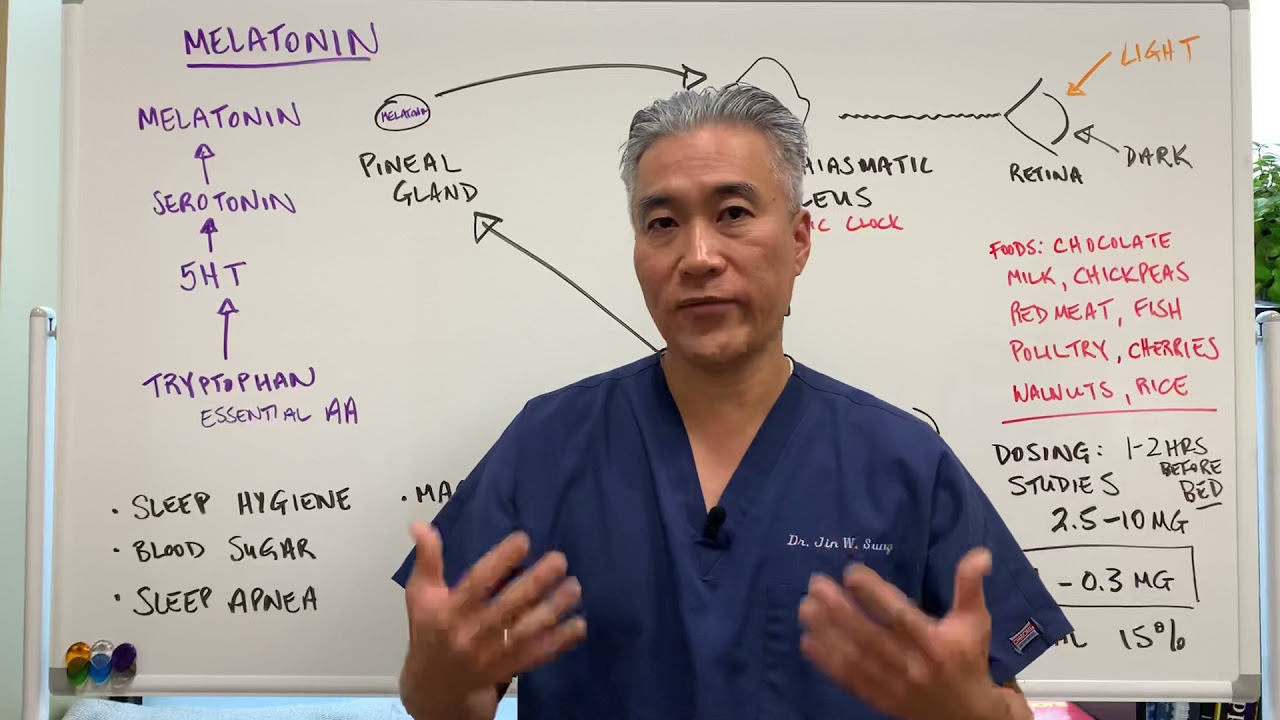
Basic neurobiology of sleep regulation, specifically the roles of the pineal gland, melatonin, and the hypothalamus.
The fundamental distinction between REM (Rapid Eye Movement) and Non-REM sleep stages and their general cycles.
The biological concept of homeostasis, particularly how the body builds up sleep pressure through adenosine accumulation.
The pathophysiology of sleep disorders such as obstructive sleep apnea, chronic insomnia, and narcolepsy.
The neurological mechanisms of memory consolidation and neuroplasticity that occur during specific deep sleep stages.
The chronic systemic effects of long-term sleep deprivation on the immune system, metabolic health, and cardiovascular risk.
Clinical and behavioral interventions for sleep improvement, including Cognitive Behavioral Therapy for Insomnia (CBT-I) and the science of sleep hygiene.
1.7M views16.9Klikes1:44:57Original Release: 2019-05-02
Good evening.
Tonight we're gathered for the last Longwood Seminar of 2019.
So welcome I'm Gina Vild.
I'm the Associate Dean for Communications and External Relations at Harvard Medical School.
And I'm just delighted to see so many people here tonight.
And tonight we're going to talk about sleep and why it matters.
And I know for certain that this is an important issue and concern for all of us because it is the most frequently requested topic of the Longwood Seminars each year.
And so we're really thrilled we were able to put together three of Harvard's leading experts to talk to you about it tonight.
The topic affects all of us because we know that without sleep, our body and mind are not at their best.
So raise your hand if you feel you need more sleep in your life.
We why you're here.
So tonight you're going to learn how to sleep better and sleep longer.
And so I wanted to first thank all of you who attended this year both in person and on our live stream.
So if you've attended all four seminars, this year, would you please raise your hand?
OK, fabulous, so I think we need to give all of you round of applause.
[APPLAUSE] And I also would like to applaud those who are watching through the Livestream.
You're among the 46,000 people who joined us and have been in this classroom this year for the first three seminars.
So that's quite impressive.
So in addition to those of you here in Boston, we have had individuals joining us from around the world-- from England, Canada, India, Australia, Brazil, Turkey, Pakistan, South Korea, and Egypt, among many other countries.
So this is truly an international event that you're a part of.
And if you've missed any of the seminars this year or past years, we invite you to watch them on our Harvard Medical School website.
So before we begin, I'd like to thank two members of our team tonight.
First, Lauren Gustafson, who make sure these seminars are available to you through our social media.
And she's the one on the Livestream who's prodding you to ask questions.
She's in the booth.
So she's not down in the front.
But I want to thank her in particular because it's her birthday tonight.
And she chose to be with us.
[APPLAUSE] Happy birthday, Lauren, and thank you.
And I'd also like to thank Barbara Lynn-- Barb, would you come up please?
Many of you may know Barb from having inquiries about the Longwood Seminars.
But she is the leader of this program.
And you may not realize that but her work for 2020 starts tomorrow.
So she's going to be starting to organize the next seminars tomorrow.
And she's done an extraordinary job this year.
And so, Barbara, I want to thank you for your hard work, ingenuity, and for your passion for the Longwood Seminars.
And so tomorrow Barbara's going to send you an email, and I hope all of you will open it.
It's a survey that will help us improve this program for future years and for next year in particular.
And one of the questions we're going to ask you is what topics you would like to see us feature.
And we take these suggestions very seriously, and we crowdsource the topics for the mini Med school.
So please take minutes-- that's all it will take to answer the survey.
And if you're watching through the Livestream, we invite your feedback as well.
So this is the link for the survey-- bit.ly/LWS_survey.
And please take a minute and tell us what you would like to see and tell us how we did this year.
So just a couple more announcements.
If you would like additional resources on sleep health or other health related topics, please visit Harvard Health Publishing's website-- www.health.harvard.edu.
And this is where you're going to find a special health report on how to improve sleep.
And for those of you who are students of the Longwood seminar, it's being offered as a discount if you use the code HMSLS.
We offer certificates for those who attend three or more seminars.
So I'm told already a hundred people have earned certificates.
And after tonight, another 200 individuals will also qualify.
So I am truly awed by your commitment.
And I honor your achievement.
Thank you for being a part of this program.
If you've attended the first three seminars, you can pick up your certificate in the table in the back.
For those who qualify tonight, we will be sending those to you by mail or email.
And also if you are a teacher, we offer professional development points for our teachers and we've had many teachers join us this year.
We will be mailing those professional development points in the coming weeks.
As you know because so many of you have been here to pass seminars, we take your questions.
And we try to get to as many of them as we can.
So our staff will be walking up and down the aisles.
Please, pass your question to a member of our team.
And if you're watching through the Livestream, Lauren is going to ask you to please post your question and note the country from which you're watching in the comments section of YouTube or Facebook.
And we get to as many of those questions as possible.
And so for the final time this year, I'm going to ask you to turn down your phone, silence them, and but do not turn them off because we're hoping you will join us for a Twitter conversation at #HMSminimed.
So now to our program.
Here's what you may or may not know.
About 70% of people get insufficient sleep and are sleep deprived.
And this audience is representative I think from the show of hands for this statistic.
1/3 sleep six hours or less, doubled the rate from 50 years ago.
So the world is moving faster.
We are running to keep up.
And as a result, we're sleeping less.
An estimated 50 to 70 million Americans suffer from chronic sleep disorders.
The Centers for Disease Control and Prevention recently declared sleep disorders to be a public health epidemic.
And research has found that lack of sleep reduces our ability to concentrate, think logically, and to remember.
So it's a very serious concern.
And for that reason, we're really thrilled to have three of Harvard's top experts on sleep health.
First, I'd like to introduce Dr. Judith Owens.
She is the professor of neurology at Harvard Medical School and serves as the Director of Sleep Medicine at Boston Children's Hospital.
Dr. Robert Stickgold is an associate professor of psychiatry and the center for sleep and cognition at Harvard Medical School and Beth Israel Deaconess Medical Center.
And, first, you'll hear from our moderator, Dr. Charles Czeisler.
Dr. Czeisler is the Frank Baldino junior professor of sleep medicine and director of the division of sleep medicine at Harvard Medical School.
He is chief of the division of sleep and circadian disorders in the departments of medicine and neurology at Brigham and Women's Hospital.
And he is a nationally recognized expert on sleep medicine.
So thank you for joining us and please join me in welcoming our speakers tonight.
[APPLAUSE] Thank you so much, Gina.
And thank you for to Ms. Berlin for organizing all of this.
It's really exciting to be here.
I'm going to encourage Dean Vild and Ms. Berlin, as you're planning next year's program, to remember that we do spend a third of our lives asleep.
So I hope you spend a third of the program on something related to sleep in future years.
So as Dean Vild mentioned we are really experiencing an epidemic of sleep deficiency in our society.
And she mentions how many people are suffering from sleep disorders and insufficient sleep.
And it's really causing problems at all ages in our society.
For example, children, over the last century, each year they get about 1 and 1/2 minutes less sleep compared to the previous year.
So today they're getting about two hours less sleep in the United States per night than they did a century ago.
Now, it's very unlikely that during that time period, we have somehow evolved to need two hours less sleep per night for those kids.
And so we're carrying around at all ages this burden of sleep deficiency.
And it affects us in many, many ways.
One of the things that I like to think about as a barometer of how sleep deprived we are as a society is just how many people are struggling to stay awake when they are driving.
So every month, about 56 million Americans admit that they're having difficulty staying awake when they're driving.
About 8 million of them lose that drug on actually fall asleep at the wheel.
And then that causes about a million crashes every year, 500,000 injuries every year, and about 55,000 of those are debilitating injuries that leave people either quadriplegic or seriously injured in some way.
And it causes nearly 7,000 deaths every year.
In fact, one out of every five car crashes is related to sleep deficiency in some way.
And so it really-- [MICROPHONE FEEDBACK] It really represents a very serious problem.
Maybe if I stand over here, I'll be less problematic.
So the question is why is it that we even need to sleep.
And sleep fulfills many different functions in the brain and in the body.
It fulfills basic biological needs in the brain in particular.
The brain uses more energy than any other part of the body.
It's only 2% to 3% of the weight of the body, and yet it uses 20% to 30% of all the energy that we use.
Professor Stickgold is going to be talking about the importance of sleep on our ability to remember things, on memory consolidation.
Sleep is also critical for us to be able to maintain our focus and attention and alertness.
So that if kids don't get enough sleep before they come to school during the daytime, then they're not going to be able to focus and pay attention in class.
One of the reasons why there are so many drowsy driving crashes is that our ability to sustain our attention at a task, like a routine highly overlearned task like driving, is going to be greatly impaired if we have not gotten the sleep that we need beforehand.
So our reaction time instead of being a quarter of a second, for example, will be three or four or five or six seconds.
And the average reaction time will be three times longer than it is if we are alert.
And so that can have real consequences.
It can have consequences at all different ends of the spectrum.
Athletes-- even top professional athletes, their reaction time will be more sluggish.
And they will get fewer-- the basketball teams will get fewer-- players will get fewer free throws in, the tennis players will get fewer serves in, and the runners will not be as fast when they haven't gotten enough sleep.
And also as Professor Stickgold will talk about, the different stages of sleep are associated with the ability to integrate what we have learned with what we knew before and provides a critical function for that.
But one of the other functions of sleep is as I mentioned there's this furnace using all of this energy in the brain, and it is during sleep that we replenish the energy that we have used up during the daytime.
And one of the sensors that tells us that the brain needs more sleep is actually located on cells in the brain.
And it represents as we begin to use up the energy and use up these energy stores, then some of the residual parts of the energy related molecules build up in the brain.
And we start becoming tired and the brain starts being capable of making an involuntary transition from wakefulness to sleep.
And, of course, if that happens when you're driving, that can be very dangerous if you're struggling to stay awake and you lose that struggle.
And late Professor Bob McCarley was the one who discovered that it is adenosine levels building up in the brain that actually make us sleepy.
And then, ironically, what many of us do in order to sort of prevent that signal from getting through is we take caffeine in one form or another.
And caffeine a blocker of that receptor for adenosine.
So it doesn't actually fulfill any of the biological need for sleep, but it blocks the receptor.
So that so that we are less likely to make that transition involuntarily.
But it doesn't prevent it altogether.
So think about that when you're sort of waking up and saying I can't function unless I have a cup of coffee.
You would function better if you actually got the sleep that you need rather than papering over that situation with something that blocks the receptors.
It would be like taking-- instead of having your furnace come on when it's too cold in the house, you just put chewing gum in the thermostat so that you don't hear the fact that the signal is not transmitted that it's getting cold in the room.
And, of course, if that's the solution, then that can lead to burst pipes and all sorts of other problems.
In the same way, in the brain, if we don't get the sleep that we need then we can't fulfill some of the key biological functions of sleep.
And you can see the changes in this diagram.
You remember that for a while that "this is your brain on drugs."
It was advertised on TV all the time.
Well, this is your brain without a night of sleep.
And you can see very specific changes.
So this is energy utilization.
And you can see in the area of the brain that's responsible for judgment, you can see that it is low on fuel.
And so it is getting stoned cold there.
And that's one of the reasons why people who are not getting the sleep that they need are often exhibiting poor judgment in the decisions that they make.
Also, this is the area of the brain that relays sensory information from our vision, touch, and other senses to other areas of the brain.
And this is the area that receives visual information.
And we miss 10 times as many signals in our visual field.
And that's one of the reasons why we have accidents when we're driving because we don't even see the things that are happening.
So we are much more likely to miss things that are happening.
That's why it's so dangerous to have, let's say, an air traffic controller who is responsible for seeing the planes on the visual field from a monitor, because they're not going to be able to pick them up as readily.
And so this is one of the-- now, another really key function of sleep that has just only recently been discovered has been the clearing of toxins from the brain.
So this high energy utilizing organ, like any other-- like any anything else that uses a lot of energy, there are some byproducts, metabolic byproducts of energy that are essentially debris in the brain.
It's kind of like in your car, you begin to build up sludge in the oil.
And you need to change the oil and get the sludge out.
Well, in the brain, we build up toxic metabolites, like amyloid beta and tau protein.
And if we don't clear those out, they can be toxic to neurons in the brain.
And that's one of the things that's associated with, for example, Alzheimer's disease is amyloid beta plaques.
And it is during sleep that these newly discovered lymphatic channels actually expand and flush out these toxins when we are asleep.
And that that turns out to be a critical function of sleep.
And once this was discovered in 2012, it began to make people realize why there was an association with both sleep disorders and with people with insufficient sleep with an increased risk of Alzheimer's disease and other degenerative brain diseases.
So one of the key functions of sleep is to help you maintain a healthy brain where these toxins are cleared out.
Another key function of sleep is-- and this has only been recognized in the last 20 years that sleep is not only important for the brain, but it's also critically important for the body.
And so the cardiovascular system depends on sleep.
It is during sleep that the heart is able to recover with a lower blood pressure and lower heart rate that happens during sleep and repair can take place during that time.
And people who don't get-- who sleep is either interrupted or who get an insufficient amount of sleep, they will begin to have higher blood pressure.
And sleep disorders, like sleep disordered breathing, sleep apnea is the leading known cause of high blood pressure.
And so anybody who is diagnosed with high blood pressure should have an evaluation to find out if they have sleep disordered breathing, for example.
But even adolescents, even teenagers, if their sleep is disturbed or fragmented or insufficient, they will have higher blood pressure than their peers.
So they are on the road to hypertension.
And sleep also turns out to be critically important for our resilience and our resistance to infection.
So the immune system is affected by the sleep that we get.
So in the fall, this past fall, we were advised to get a flu shot.
And when people get the flu shot, if they haven't had an adequate amount of sleep in the week before getting the flu shot, they have only half the antibody response than they have if they are sufficiently well rested.
Similarly, during the winter, if you're exposed to the rhino virus that causes the common cold, you'll have a 2% to 300% increased risk of actually catching a cold if you're getting an insufficient amount of sleep or if your sleep is fragmented and disturbed.
So consolidation of sleep, getting a sufficient amount of sleep are both important for your immune system to function effectively.
And that may be why-- that may be one of the reasons why sleep fragmentation is associated with an increased risk of cancer and an increased rate of growth of cancer, tumors, because the immune system is being recognized as playing more and more important role as we begin to understand it in the prevention of cancer.
Now, sleep is also critical for regulation of appetite.
People often talk about the freshman 15, which is sort of the gain in weight that occurs oftentimes when kids start college.
And that gain in weight may be associated with the decreased amount of sleep that kids get when they go to college.
You see somewhere during evolution, sleep and appetite got kind of linked.
And maybe that's because-- it's not fully understood why that's the case, but most other animals don't sleep deprive themselves spontaneously unless they're starving.
And so the big cats, if they're not getting enough food, they will stay up for 24 or 48, even 72 hours on a hunt.
And during the time when they sleep deprived themselves in order to avoid starving, their brain goes into starvation mode and releases more hormones that make you feel hungry and less of the hormones that make us feel satisfied with what we have eaten.
The problem is that we voluntarily sleep deprive ourselves when we're not starving at all.
In fact, many times we have the refrigerator right there.
And so we're sleep depriving ourselves, watching TV, watching a game, doing this, working the night shift or whatever we're doing voluntarily, and then we have a food source right there.
So when we are having these hormones being released that make us more hungry and less satisfied with what we have eaten then we are more likely to overeat when we are sleep deprived.
And then people gain weight.
And then one of the other amazing things that happens when people are sleep deprived is that, in terms of metabolism, the effectiveness of insulin is reduced and glucose levels go up to a higher amount in response to the same meal.
So now you have a situation where people are gaining weight and the response of the metabolic system to food is impaired.
And this puts many people on and may be contributing to the epidemic of both obesity and diabetes because of these metabolic changes.
And because this increase in obesity and diabetes that have happened over the last 20 to 40 years have paralleled the decrease in sleep duration in our population and the increased problem with the epidemic of sleep deficiency in our society.
And amazingly enough, even fat cells need to sleep.
So that if you biopsy fat cells in people who are well rested and biopsy fat cells from those same people when they have been chronically sleep deprived, the ability of those cells to respond and metabolize glucose is actually impaired from the individuals-- if they've been taken from individuals who are chronically sleep deprived.
So the whole body is affected when we don't get enough sleep.
And that's one of the reasons why I'm going to argue that it's important to make sleep a priority.
But it's not just the brain and the body, but even our emotions-- we become much more volatile when we haven't gotten enough sleep.
The risk of depression increases, the risk of suicidal ideation, anxiety disorders increase.
Our ability to avoid flying off the handle when we are faced with an emotionally challenging situation becomes impaired because-- and this has been studied here at the Harvard Medical School by looking at brain scans.
The amygdala is a region of the brain that is responsible for emotional responsiveness.
And so people in a scanner have been shown disturbing images and the reaction, the response of the amygdala, is 10 times greater in individuals who've missed a night of sleep as compared to those same individuals who are more calm in their response to these disturbing images if they have gotten sufficient night of sleep beforehand.
So it sets up sort of a perfect storm for situations in which we would not really want to place our children.
And so you can imagine my surprise when I was bringing out-- our daughters now 24 years old.
But when she was going to pre-K, a couple of decades ago, as nervous parents, my wife and I went to the pre-K school.
And we sat down.
You know they have you sit down in these little tiny chairs.
And for me, that's a little bit of a challenge.
So I'm sitting on these little chairs and the teacher-- we all wanted to know how do we get our kids ready to go to preschool.
And so she said the most important thing that you can do to get your child prepared for school is make sure that they get a sufficient amount of sleep before they get here.
And you know I'm looking around to see did I have something-- does she realized that my whole life is spent on sleep?
And I went up to her and she said, I can tell within the first 10 minutes after the children arrive here if you've been dragging them around to the mall and kept them up too late.
And she said I'm just going to call you on your cell phone and have you pick them up because I'm not going to deal with them if you have not let them have sufficient opportunity for sleep.
So I went up to her afterwards, and I said have you been reading articles?
Where did you find this information?
She said, no, I've been teaching for more than a decade.
And I know what it's like to deal with children who are perfectly well behaved if they've gotten a sufficient amount of sleep but our complete basket cases if their parents have kept them up before coming in-- maybe they were on a flight, maybe they were this, whatever.
To this day, I'm stunned when I go to the malls or to a Walmart or to this or that at 10:00 or 11:00 at night and see in these 24 hour stories people dragging around their kids, their young children.
I made the mistake of commenting to one of the parents at one point-- don't do that.
But in any case, I was always struck by the kindergarten teacher and what she said.
And the parents of very young children will often say Johnny or Susie's-- they're not themselves today.
They're crying, they're fussy, they're-- because they didn't sleep last night.
So parents realize that for very young children.
The teachers realize it for the 5, 6, and 7-year-old but then somehow we think that children grow out of it.
And they don't need to sleep.
But that's just not true.
The behavioral manifestations are more subtle, but they are just as serious.
So we have a situation today in which one out of five boys in high school is diagnosed with attention deficit hyperactivity disorder.
Now, the symptoms of ADHD-- the symptoms of sleep deficiency can masquerade perfectly the symptoms of ADHD.
So difficulty focusing attention-- we already see that that's one of the consequences of sleep deficiency.
Emotional lability-- that's another one of the consequences of sleep deficiency.
Difficulty keeping your anger under control-- another symptom of sleep deficiency.
So, yes, there are children with ADHD who need to be treated.
But there are many, many more children who don't actually have ADHD, but they're misdiagnosed for ADHD because they're not getting a sufficient amount of sleep.
And because it can't be that one out of five high school boys has this relatively uncommon condition.
Now, as I mentioned, there are many, many different consequences of sleep deficiency, and I've just put a few of them on this slide.
I've talked about the fact vaccination response, our distractability, the increased risk of depression and suicidal ideation.
Parents who don't set a 10:00 PM bedtime for their kids in high school, they're children at significantly greater risk of depression and suicidal ideation.
Now, one thing that sometimes motivates kids.
I was I was driving home a baby sitter, and he was about 14 or 15 years old.
He said what do you do?
And I said I do research on sleep.
And he said what a waste of time.
I try to get as little sleep as I can.
And I said OK.
I said it's during sleep that you release the hormones that turn you from a boy to a man.
And the next week his mother called me and said, what did you tell my son?
I said, what you mean?
She said well, he's become a sleep czar.
He's like mom turn off the radio.
I have to go to sleep.
You're disturbing my sleep and so on.
And sometimes, we tell-- or I tell the professional athletes.
I say if you sleep four hours a night for a week, you decrease your levels of testosterone by an amount that's equivalent to 11 years of aging.
And they're like well maybe I should pay more attention to this.
So let's talk a little bit about sleep disorders.
And one of the most common ones is insomnia.
Another very common one is obstructive sleep apnea.
It affects about one out of three men and about one out of six women.
So it's a very common condition in which snoring is one of the most common symptoms of obstructive sleep apnea.
It increases the risk of cardiovascular death by an astounding 420%.
I'm just going to show you a slide that depicts survival.
So this graph starts on the left when the participants in the study were about age 48 on average.
And it follows there the percent who are surviving.
And the ones in white are the ones without sleep apnea and the ones in red have sleep apnea.
And we're going to follow them for 18 years when they would have been 66 years old.
And you can see that at the beginning there is not a very big difference between them.
I mean, it's only about a double the risk of death.
But then you see that the risk of-- that the percent surviving is dramatically lower in those with sleep apnea.
So by the time they would have been 66, only 58% of them are still alive as compared to 94% of those without sleep apnea.
And sadly, those who survive in the untreated sleep apnea group here, they get a cognitive impairment about 10 years earlier and Alzheimer's disease about five years earlier than those without sleep apnea.
So it's a real serious condition.
And if you think that you might be at risk of it, you should really go to your doctor and have it evaluated.
Now, let's see-- there we go.
Well, Benjamin Franklin did say there will be sleeping enough in your grave.
And all I can say is you'll get there a lot sooner if you don't get enough sleep.
So what are the things that steal our sleep?
Well, one of them is a relatively new invention is this electronic device the iPad or some sort of tablet.
And it has two problems.
Not only does it distract us and keep us from wanting to go to bed because we're engaged, it also bathes us in blue enriched light that makes us more alert.
And it also suppresses the release of the hormone melatonin that helps us to go to sleep at night.
And it shifts our circadian rhythms to a later hour making it more difficult for us to wake up in the morning, and we're more tired in the morning.
Other than that, it's no problem to read from the iPad before going to sleep.
Caffeine has a six to nine hour half life.
And it does keep people awake because it's awake promoting-- people use it stay awake.
But they don't necessarily realize that it lasts so long.
So I'm always cringe when I see people ordering a double espresso after dinner.
And they say, oh, it doesn't affect me.
And it's true that there are inter-individual differences in about one out of four people have are particularly sensitive to the side effects of caffeine as compared to the others.
But it does disturb the sleep of everybody.
And, of course, the television in the room and all the electronics, they should be out of the bedroom.
You need to recharge.
They need to recharge.
So maybe it's better to have them recharge in another room.
It's just something to think about.
But, of course, the goal is to be able to get sound sleep.
And to be able to get sound sleep and get a sufficient amount of sleep, we need to make sleep a priority.
And so there are things that you can do.
When you wake up and that's when you set your alarm for waking up.
But one thing that can be very effective is setting a bedtime alarm-- figure out if you need about seven to eight hours of sleep.
Then if you set an alarm let's say eight hours-- because you don't sleep every moment that you're in bed, so 8 and 1/4 hours before you know you need to wake up-- that will help you remind you that it's time to go to bed.
But there are several features that are critical for sleep.
One is duration.
Most adults need between seven and nine hours of sleep per night.
It's critical that we get it at a consistent time.
Disrupting the timing of your sleep can have just as adverse effect as getting an insufficient amount of sleep.
So consistency in the timing of when you sleep and wake is really, really important.
And then finally the quality of sleep.
If you have a sleep disorder like sleep apnea that is making it impossible for you to breathe and sleep, for example, at the same time, then you're not going to have good quality sleep.
And that that will interfere in your ability to function as well.
If we do get the sleep that we need, then we're going to be more alert, we're going to perform better, our athletic performance, our cognitive performance will be improved.
And we will also-- just as a side note, we're actually more attractive to other people.
There is a study published in the Journal of the American Medical Association in which they took portrait photographs of individuals when they had gotten a sufficient amount of sleep and then when the hits stayed up all night.
They showered.
They were all cleaned up for each of the two portraits.
And people could tell within four seconds-- they were more attracted to the same person who was-- these were 700 images.
They've done a very systematic study.
But they found that people who had slept to be more attractive, they wanted to spend more time with them, et cetera, than the people who are sleep deprived.
So there are many pluses to getting the sleep that you need.
And I thank you for your attention tonight.
[APPLAUSE] It gives me great pleasure to introduce Professor Robert Stickgold who is going to be sharing with you his enormous body of work about sleep and memory, so thank you.
[APPLAUSE] Thank you, Chuck.
And thanks to the program for inviting me.
I'm delighted to be here.
I'm going to be talking about sleep.
Yes-- get it or forget it.
I'm going be talking about why we have to sleep and what we get from it.
Now, I saw the hands go up with how many of you aren't getting enough sleep.
So I think I'll repeat some of the things that Chuck said because you know how that helps, right?
So do we have to sleep?
Well, here's what we know.
We know that rats die without sleep.
If you sleep deprive a rat for two weeks, it will invariably die.
So rats need it.
The same is true for humans.
Now, Harvard Medical won't let us do that particular experiment.
But there is a genetic condition known as fatal familial insomnia, which says it all.
It's a prion disease-- Harvard's gotten in my way here.
Can you people see the bottom of it?
Some can and some can't.
So there's one amino acid here-- oops that's the wrong button-- back, back, back.
There's one amino acid that's mutated in this protein.
It's a prion disease like mad cow disease except what it does is it causes people in midlife in their 40s and 50s to slowly lose their ability to sleep at all.
And within one to four months after they stop sleeping, they all die.
So humans need to sleep too.
And maybe the most impressive data comes from studies of sea mammals, cetaceans, who can't afford to sleep because if they fell asleep, they would sink and drown.
And so evolution rather than simply eliminating sleep, which would have been relatively easy as a genetic fix, instead taught these animals to sleep on one half of their brain at a time.
So they'll be sleeping with just the right brain, and then they'll sleep with just their left brain.
And in that way manage to keep swimming even if it's just a rounding circles and keep themselves alive.
So they need to sleep, and you do too.
Now, I'm going to talk today about several reasons that you need to sleep.
Main one will be around memory and learning, but I'm also going to review some of the things Chuck said in terms of immune function, in terms of hormone regulation, and that clearing of toxins from the brain.
Mood regulation Chuck mentioned also and learning and memory.
So let's go through them one at a time.
And let's see if I can convince you.
If you take a bunch of individuals and give them a vaccination for hepatitis and then look at the production of antibodies over time, it turns out that the body doesn't really start manufacturing the antibodies until after a couple of weeks.
And for that time, those subjects you slept normally and those who were sleep deprived for one night after receiving their immunization shot look pretty similar.
But over the next two weeks, you see this effect.
So that by 28 days, people who were sleep deprived for one night after receiving an immunization will have only half as much of an antibody production against the hepatitis making you much, much more likely to not have sufficient immunization to protect you.
Chuck mentioned the effects on insulin regulation.
This is a study with subjects, college students, being restricted to four hours of sleep a night-- not total deprivation but four hours of sleep a night for five days.
And after that the rate at which their bodies could clear glucose out of their blood was reduced by 40%.
The acute response to insulin was down by 30%.
And they looked pre-diabetic.
So just five days of half the record normal amount of sleep is enough to make you look like your getting Type 2 diabetes.
And Chuck talked about that clearance of metabolites from the brain.
Beta amyloid is one of the two proteins that accumulates outside of the cells in your brain that is tightly linked to the development of Alzheimer's disease.
And when you are asleep, you're clearing it out of your brain twice as fast as when you're awake.
And even a single night of sleep deprivation leads to a measurable increase in the burden of beta amyloid in the brain.
So I want to talk mostly about sleep dependent memory evolution.
I call it memory evolution because we used to talk about memory consolidation.
This idea that you form a memory.
And a few hours later, it's sort of cemented into your brain.
And then it's there forever.
But if you have a spouse of any gender, you're aware of this phenomenon that as time goes, on your memories of events separate.
Usually, it's your spouse's memory gets worse.
But that sort of constant changing of our memories over years and years is what I refer to as memory evolution.
And it's not just whether you remember it or not, but the details of how you remember it.
So here's an example-- actually this is something that chuck referred to also about the impact of sleep on just your ability to remember, in this case, just words.
Here's the protocol.
Subjects either are sleep deprived for a night-- ah, too many buttons not enough time-- are either sleep deprived for a night or get a normal night of sleep before coming into the lab to be exposed to a couple of hundred words on the screen.
They're neutral negative and positive words.
They're just asked to indicate is this a positive word or negative or neutral word.
And then unbeknownst to them, when they come back a couple of days later, they receive a surprise test.
It was not unbeknownst to them here.
It was only unbeknownst to them there.
So they give them the test, and it's a simple recognition test.
They show them all 200 words that they had seen before plus another 200 and asked them, which have you've seen before and which haven't you?
And here is what we see.
In the group that slept well, the night before they encoded it, memory recognition is quite high-- both for the positive words and the negative words.
It's reduced substantially for neutral words, but that's something we know a lot about our lives that we remember the emotional parts.
But when we test them two days later-- sorry, when we test the ones who were sleep deprived-- and, again, they're being tested after two full nights of recovery sleep, so they're not tired anymore.
When we test them for their memory, their memory for the positive words is reduced about in half, the memory for the negative words is reduced about in half but their memory for the negative words is mostly maintained.
Meaning that if you were sleep deprived when you saw these words, you are twice as likely to remember the negative words as the positive or neutral ones.
So I'm in the psychiatry department.
If someone comes into the psychiatrist and says, my wife says I have to come and see a psychiatrist.
She says I'm depressed because I only remember the bad things that happen.
Truly he may be depressed, but he might also just be sleep deprived.
That's enough to give you the sense that only the negative things are remembered.
That's bad on the individual level.
It can be catastrophic on the national level.
I have the suspicion that the entire cause of the first Gulf War, seriously, now was this effect.
Because you had decision makers who were highly sleep deprived trying to decide whether we should attack or not.
And they're remembering we've got these satellite photographs of these trucks that might be biological warfare weapon development trucks.
We've got to do something about it.
And they forget they were also told that they look like falafel trucks too.
And that's kind of funny, but that's where our mind goes when we're sleep restricted, when we're sleep deprived.
And the decisions could be made on that basis of an over-remembering, an overdependence on negative memories.
Now, that's what happens when you're sleep restricted to sleep deprived before you learn something.
What my work is really focused on and what's really quite surprising to me when I found it and to most other people is that the sleep you get after you learn something is probably more important than you sleep you get before it.
I am the only lecturer whose lecture you will ever attend who will take it as a compliment if you fall asleep while I'm talking.
Because I know you're just trying to enhance your memory of that event.
Now, how big of an effect does that have?
Here's one example-- I'm going to take you to three examples altogether, but this is just a very simple test.
What you're doing here is you're trying to learn to spot these diagonal bars in the lower left quadrant of your visual field when we flash pictures like this on the screen very quickly.
And what we do when we train you on it is we see how fast we can flash that up there, and you still have 80% accuracy in detecting whether those bars or above each other like they are there or next to each other.
And then we bring you back 12 hours later and give you the exact same test and again see how fast we can go before you can't do it.
What do we find?
Well, I'm sorry, I'm saying we bring you back.
I'm assuming you're all undergraduates, yes, because that's how we did this study with.
What we find is that if we retest these subjects after 3, 6, or 9 or 12 hours there's no improvement in how fast they can do the task if they're awake during this time.
But if we let them sleep between training and testing, they're about 15% to 20% faster.
Doesn't matter how long the time interval is, it only matters whether they slept or not.
And, in fact, we can wait even longer to test them.
These are groups of subjects who were tested-- I showed you the 0 and 1 day data, but these are other groups tested after 3, 4-- 2, 3, 4, or 7 days, and they continue to get better without any practice.
So it's not practice that makes perfect.
It's practice plus sleep that makes perfect.
And the terrifying finding is that if you sleep deprived subjects for the first night after you train them subsequent sleep is of no value whatsoever.
So that after two full nights of recovery sleep, their performance here is not significantly different from baseline.
So you have to get sleep and you have to get it tonight.
There is this concept of sleep bulimia, which is a binge purge concept college students love it.
They binge sleep on the weekends and then they purge getting four or five hours a night during the week.
And they tell us that they're fine.
They make it up on the weekend.
Well, they might it up in terms of getting back to full alertness, but it's really too late to remember what they didn't remember because they didn't sleep that first night.
Now.
Sleep does much more complicated things than simply make us faster or stronger in our memories.
It can do things like enhanced verbal memory in some unexpected ways.
So we did a study and Jessica Payne was the lead on this.
I'm sorry, a lot of my slides will have my coworkers and students listed.
I should be clear that whenever I say we did something, I mean they did something.
So with that admission, let me go forward.
What the subjects in this study that is they heard on a tape eight lists of words, and we're told try to remember the words.
We're going to test you on them later.
And then either 20 minutes later or 12 hours later, we would test them.
I'm going to give you a sense of what that's like.
I'm going to show you one list.
Now, they heard it on an audio tape.
I'm going to show you the list, and I'm going to give you the same instructions as I gave them.
Try to remember these words, you're going to be tested on it.
OK, so in the actual study, there were eight lists not one.
It was auditory not visual.
And we actually just gave them a blank sheet of paper at retest and had them write down what they remembered.
That would be cumbersome here.
So I'm going to show you words and ask you to raise your hands if you remember seeing them.
Now, for those of you who aren't MDs, you might not know that there are extensor muscles in this part of the arm.
This is not raising your hand.
This is not raising your hand.
I want everybody around you to see how smart you are, OK?
So for each of these words, if you remember seeing it, raise your hand.
Oh, good.
It's always embarrassing when we get-- [LAUGHTER] OK, good, excellent, good-- What can I say?
Well, if you looked around, you know you weren't alone.
In fact, all eight lists were generated the same way.
We gave words like sleep to a couple of hundred psych students in introductory psych in college and said write down the first 10 words that come to your mind when you think of sleep.
And then we took the 10 or 12 that they wrote down most commonly.
And for each of the lists, we would show the subjects in our study those words but not the word that it was based on.
And what we see is that classically 60% to 80%, it looked like more like 90% of the subjects here, will mistakenly respond that they remember seeing the word.
And that's because our brain is always extracting gist.
When you go home and tell your family and you call your friends to talk about my great talk, you'll say he showed us all the words related to sleep.
And it doesn't matter what the words were, right?
It's just the gist that's important.
And our brain is very good at identifying those just and holding onto them.
So the question that Jess Payne asked was the following-- what happens to that memory over time?
So we had four groups of subjects-- some were trained in the morning.
Two groups in the morning and two trained in the evening.
In each condition, one group was tested after just 20 minutes to give us a sense of how well they formed these memories.
And the other group was tested after 12 hours.
And we can look at the difference to see how much are they forgetting across 12 hours.
Now, the ones who were trained in the morning and tested that evening were awake for the 12 hours.
We told them no naps.
Whereas, those trained in the evening tested and next morning got a full night's sleep in between.
And what do we see?
Well, first of all, for those in the wake group, across the day, they forget about 40%, 45% of the words that the 20 minute group could remember.
And even have to sleep, they're forgetting about 25% of those words.
That's the words that they actually saw.
But when you look at the words that weren't shown, those are just words that the brain came up with, they're still forgetting about 20% of them across a day awake.
But across the night, the brain holds on to them tenaciously.
It's holding onto the memory of what it thinks is most important.
So that when you wake up in the morning you have a memory that might be less accurate but more useful in understanding what had happened.
Now, you could imagine this happening for evolutionary reasons.
In the previo-- no, wrong talk, sorry.
Sleep deprived?
So there are even-- yeah, I need more sleep, it's true.
There are even more sophisticated and impressive things that the brain does with our memories while we're asleep.
And here's an example.
In this study subjects were shown 1, 2, or 3 of these cards on each of 200 trials.
And asked to predict whether it was going to be sunny or rainy in this simulated world which might not seem obvious to you.
But, fortunately, on these 200 trials, we gave them feedback.
So, for example, on the first trial, they might see this card.
And it turns out to be sunny.
And if they're undergraduates they say, "whatever."
And then in the second trial they might see these two cards together, and it turns out to be rainy.
And one of the fun things about the human brain is that it's always making models and coming up with hypotheses and trying to understand.
So most of you at this point have probably sort of said to yourself-- OK, that one means sunny.
And these two mean rainy.
And I don't remember what the fourth one was but that one probably means sunny too.
So we build these models.
And then across 200 trials, we test them.
And so indeed along comes, the third trial and they say, OK, I've got this one.
And it turns out to be rainy.
And now they're totally confused.
In fact, they think I must not have remembered correctly what happened here.
But the gimmick in this study is that each of the cards has a certain probability of being associated with sun or rain.
So 80% of the times you see the triangles, it's going to turn out to be rainy.
But only 20% of the time you see the squares would be rainy.
And although no one can quite grasp this all, they get a good model of it.
It's a kind of learning that we call probabilistic learning and humans are horrible at it.
But they get the gist.
So that after these 200 trials always with the feedback of the correct answer.
We give them 100 trials with no feedback, and ask whether they're guessing the optimal choice.
And they get 70, 80 of them out of 100 correct.
They're doing really well.
Nobody's getting 100.
Nobody really understands the rules fully, but they're pretty good at it.
Then we send them away for 12 hours and do the exact same test, same 100 words-- sorry, same 100 stimuli.
And in the subjects who were trained in the morning and tested that evening without sleep, they get a couple of extra cards correct but not significantly more than they were at baseline.
It's impressive that they remember what they learned, but they certainly aren't getting better.
After a night's sleep, they're 10% better.
They're doing better on this task after a night of sleep than they were right after they learned it.
In a very real sense, these subjects when they wake up in the morning have a better understanding of how the world works than they had when they went to bed the night before.
And that's what sleep is giving them.
So you do need to sleep or rather you need to sleep.
You need to sleep to maintain alertness and optimal cognitive functioning, to optimize your immune defenses, to maintain hormonal regulation and weight, to prevent beta amyloid buildup and Alzheimer's, to permit sleep dependent learning and memory consolidation, and, as Chuck pointed out, just to be happy.
Or to put it another way, if you don't get enough sleep, you'll end up stupid, fat, sick, and unhappy.
The choice is yours, thank you [APPLAUSE] I'll introduce you.
It's now my pleasure to introduce Judy Owens, she's the director of sleep medicine at Boston's Children's Hospital and a professor of neurology at Harvard Medical School.
I was going to point to that one more time and just say the need for sleep in children just can't be overemphasized.
I've always said that the phone call from hell is when a parent gets the call that says, hi, I'm bringing Timmy over for his play dates.
Oh, and he didn't nap today.
Judy.
Well, that's a great segue.
So my task in this last 20 minutes or so is to take some of the wonderful information you've already learned from Dr. Stickgold and Dr. Czeisler and put it into the lens of the teenage brain.
And we know that there is a lot of drama in adolescence and there's just as much drama when we talk about adolescent sleep.
So the first thing I'd like to do is cover some common myths and misconceptions that I hear all the time from folks like yourselves that come to hear folks like myself talk about sleep in teens.
Number one-- teens would go to sleep earlier if their parents just made them do it.
So it's all a matter of bad parenting, lax parents who are just letting their kids get away with stuff.
Some teens might need nine hours of sleep but mine does just fine with six.
And, as a matter of fact, so do I.
Take the cell phones, the laptops, the television, et cetera away and kids will fall asleep.
If school starts later, they'll just stay up later, and they won't get any more sleep.
Teens can make up for lost sleep by sleeping in on the weekends.
So that's the solution.
And kids need to learn to get up earlier, that's real life.
They're going to have to do that as adults.
And what's the harm anyway?
OK, let's look at some basics.
So this is what we call the two process model of sleep regulation.
And it's important to understand, particularly when you're thinking about adolescent sleep, because it kind of explains why we feel relatively more awake or more tired at any given time of the day.
So the first thing that regulates sleep is what we call the sleep drive.
And Dr. Czeisler mentioned that the accumulation of adenosine in the brain, as well as other neuro chemicals called somnogens, which essentially make you sleepy.
And that builds in a fairly linear fashion throughout the course of the day and then is dissipated over a normal night's sleep.
The other process that regulates sleep is what we call the circadian rhythm or the circadian drive towards wakefulness.
The biomarker of which is melatonin-- the hormone of darkness.
And so circadian rhythms are essentially a 24-hour predictable peaks and troughs of relative alertness and sleepiness throughout the 24 hour day.
So that, for example, around 3 to 5 o'clock in the afternoon, we all feel a little bit sleepy.
And we might reach for a Diet Coke or for a Starbucks.
That's a natural trough of circadian alertness.
But we also have something called the forbidden zone or the second wind phenomenon, which is the surge of circadian based alertness that we all feel in that hour or so just before our bodies are ready to fall asleep which kind of allows us to stay awake in the face of a mounting sleep drive.
And then, finally, there's the circadian nadir round 3:00 to 5:00 in the morning, which is the lowest point of alertness in the 24 hour day.
Now, I want you to keep this graph in mind and imagine it shifting two hours later when we talk about what's going on with sleep in adolescence.
This was mentioned by the previous two speakers a bit, but the importance of recognizing that it's not just how much you sleep but when you sleep that is important.
Because we now recognize that in addition to this master clock in the brain that determines when we sleep and wake, there are also circadian clocks in all the cells in the body and all the different systems, physiologic systems in the body.
So that misalignment between these internal circadian clocks and the external environment can result in some of the profound health impairments that have already been discussed.
So that leads to this concept of what we call deficient sleep, which acknowledges that both short sleep in relationship to the amount of sleep that you need and misalignment of the circadian system are equally important and both contribute to the behavioral and cognitive impairments and poor health outcomes.
So when we talk about what happens to sleep in adolescence there is really this aspect of the perfect storm.
So what we have first of all is all adolescents experience a normal shift or delay in their fall asleep time and their wake time in association with the onset of puberty.
So they develop more of what we call an eveningness chronotype or a night owl tendency.
So this results in a shift of two hours or sometimes more of the time that they're able to fall asleep and wake up.
And also the sleep drive slows during adolescence so they are able to stay awake later.
And on a practical level, due to that forbidden zone-- that surge in alertness before a bodies are ready to fall asleep-- it's very difficult for the average teenager to fall asleep much before 11 o'clock on a regular basis.
Teens can not make themselves fall asleep earlier.
Now, of course, there are environmental influences on all of this.
All the competing priorities for sleep like extracurricular activities, homework, after school employment.
And this issue of electronic.
Devices the blue light of which as Czeisler mentioned actually suppresses your body's release of melatonin in the evening and makes it more difficult to fall asleep.
And we know that many teenagers consume caffeinated beverages, particularly energy drinks.
And that also may be exacerbating their difficulty in falling asleep at night.
And I'll talk a little bit at the end about the role of early start times.
I just want to talk a little bit more about this electronic devices issue.
Because in a study that we recently conducted in adolescence, we looked at whether self-reported use of these electronic light emitting devices, like smartphones or laptops, just before bed, how that impacted sleep duration in these students?
So what we found as you might expect is the students who were more likely to use these light emitting devices got less sleep than the students who did not use them.
However, and the reason for this study was to look at the impact of delaying school start times, is that the students who use these devices before bed and those who didn't both got more sleep after the school start times change.
Implying that even using these light emitting devices doesn't alter the potential benefits of changing school start times.
So it's very important to eliminate this use of electronic devices at bedtime, but school start time change can have an even more powerful effect.
There's also a phenomenon, which we call social jet lag.
So what a teenagers do on the weekends?
They sleep until noon or 1 o'clock in the afternoon.
But this doesn't really, as a Dr. Stickgold clearly showed, this doesn't really reverse the impairments that they experience during the week.
And it further exacerbates this tendency to sleep, fall asleep later, and sleep later in the morning.
So if you fall asleep-- if you sleep until 1 o'clock on Sunday afternoon, there's no way you're going to build up enough of a sleep drive in order to be able to fall asleep at a decent hour come Sunday night.
And that results in this situation of social jet lag.
So you may know that lag for each time zone crossed, it takes one day to recover.
So these kids are essentially in a permanent jet lag because they shift on the weekends.
And then they try to shift back during the week.
And they shift again in the weekends.
And think about what you feel like when you have jet lag.
It's not just you're sleepy, but you're irritable.
You may have all kinds of physical complaints.
It's not fun.
And that's the way these kids feel most of the time.
So these changes, these biologically based changes are in direct conflict with earlier school start times.
Because essentially you're asking these kids to wake up at that circadian nadir, that lowest point of alertness in the 24 hour day.
It's like asking all of us to wake up at 3 o'clock in the morning and go to calculus class.
How would that feel?
And not only that, but REM, a rapid-eye movement sleep, is concentrated in the last third of the night.
So if you have to wake up too early, what you're going to get robbed of is your full complement of REM sleep.
And as you've heard that has a critical potential effect on learning, especially learning of new tasks.
And, furthermore, for optimal health, safety, and achievement-- and that's what we all want for our kids-- the average middle and high school student needs 8 to 10 hours of sleep a night.
We'll see how close we get to that.
So you've heard a lot of this already.
I'm just going to go really briefly over this.
But as it relates to the teenage brain, sleep restriction and deficient sleep have selective effects on this area of the brain called the prefrontal cortex, which is intimately involved in the genesis of symptoms of ADHD but affect really important higher level functions, like decision making and problem solving and monitoring and modifying your behavior.
And furthermore, these executive functions are undergoing their most rapid development during adolescence.
So at this period when the brain is most vulnerable, you're subjecting these kids to a situation that is going to negatively affect these particular brain processes.
You've also heard about the affect of sleep on emotional regulation.
So essentially what you have is sort of the classic teenage scenario-- a heightened emotional response to everything but with less sort of control over that emotional response.
So maybe it's not all due to hormones.
Maybe a lot of emotional reactivity in teens is related to not getting enough sleep.
And, finally, sleep also affects areas of the brain that are important for reward related function.
And this area of the brain the striatum is also undergoing some important developmental changes during the teenage years.
And studies suggest that insufficient sleep is linked to changes in reward-related decision making so that people take greater risks because they assume less in the way of negative consequences for their behavior.
So how does this all play out in teens?
Just a grim reminder that the first and third cause of death in adolescence in this country are number one accidents including car accidents and number three is suicide.
So how does that relate to teens and sleep?
Well, for example, in one study, very large study of high school students, almost 40% overall got insufficient sleep.
And it got worse as they went up in grades.
So the percent of students who are getting less than or equal to six hours when they were in eighth grade was about 20% but increased to over half to 56% by the time they were in 12th grade.
And minority students were more likely to get insufficient sleep.
40% of the teens in the study who got six or less hours of sleep reported depression symptoms.
And almost three times as many students getting less than six hours of sleep reported alcohol use in the past 30 days compared to those getting more than nine hours.
So this risk taking, this emotional regulation, this poor decision making plays out in some very important health and safety outcomes.
Motor vehicle crashes-- two-thirds of accidental injury fatalities in adolescence are related to road crashes.
And study after study has shown that adolescent drivers are more likely to report drowsy driving.
And that is clearly a risk factor for becoming involved in car accidents.
You've heard about the relationship between sleep and certain neurohormones that control appetite.
But there are lots of other reasons why people who are sleep deprived may gain weight.
They tend to eat more food, higher calorie and higher fat content food.
If you're getting up late, you may skip breakfast and have most of your calorie intake in the evening, which is a contributor to the development of obesity.
If you're too tired to exercise, that's going to add to the problem.
And you have these effects of sleep loss on cardiovascular function added to the effects of obesity on cardiovascular function and insulin resistance and metabolism.
And in addition to that, people who are obese are more likely to have sleep apnea.
And that adds another dimension to the risk for cardiovascular and metabolic health problems.
So I wanted to leave you with a little bit of optimism about all this and offer one potential solution to the epidemic of insufficient sleep and deficient sleep in adolescence.
And that is healthy school start times.
I was privileged to be the lead author of the 2014 American Academy of Pediatrics policy statement advocating for start times of 8:30 or later as being in the best interests of our nation's youth.
And this concept has been endorsed by many organizations, including the American Medical Association, the American Psychological Association, the American Thoracic Association, the NEA, and the national PTA.
So there are lots of people who are on board with us.
Because some of the outcomes that have been shown in the studies that have looked at the impact of delaying school start time for middle and high school students found that bedtimes remain approximately the same or may even shift earlier.
But because they're sleeping in later in the morning, these students obtain significantly more sleep, particularly that critical morning sleep, the REM sleep that I mentioned.
The later the start time, the greater the sleep amounts but even relatively small amounts can result.
In significant improvements.
And students report being less sleepy.
And it really does seem like that 8:30 or later is the sweet spot both in terms of allowing students to get the sleep they need but also to get it at the right time that is in concert with their circadian rhythms.
In terms of school performance, tardiness rates go down, absenteeism goes down, dropout rates decline, graduation rates increase in schools that have delayed their start times.
and grades overall improve, particularly in the morning classes as you might imagine, but in core subjects, like English, math, science.
And there's some evidence to suggest that disadvantaged students, students who are at the lower end of academic success and minority students, may benefit even more from school start times change.
Standardized test scores improve and delayed school start times are also associated with improvements in mood.
Every single study shows that self-reported symptoms of depression go down.
Less visits to the health center and, perhaps, most importantly, now there is evidence to suggest that changing school start times can decrease the risk of students being involved in car crashes by as much as 65% to 70% in some studies.
Now, as a public health person, it's hard for me to imagine another strategy that could affect mortality, could affect death rates from car accidents, as much as this could.
And, of course, we can't absolutely draw a cause and effect from these studies, but the evidence is accumulating that there is this association between later school start times and fewer accidents in general, but particularly car accidents.
And, finally, if you just want to talk dollars and cents, there was a great study published by the RAND Corporation that looked at-- they used an economic modeling of what would happen state by state if the whole state changed their school start times to 8:30 or later.
They did that in 47 states.
And the way that they calculated this was to look at, well, it's going to cost about $150 per student per year, and that's largely related to transportation costs as buying more buses, et cetera, plus $110,000 for infrastructure, maybe lighting playing fields so athletic teams can play later in the afternoon.
But then they balanced that looking at projected lifetime earnings based on improved graduation rates and improved standardized test scores plus what you would gain by having fewer students involved in car crashes.
And looking this out-- modeling this out for 15 years, as examined by the study, the average annual gain based on those parameters to the US economy would be about $9.3 billion per year.
In some states like Massachusetts being one of them would break even in terms of the cost of changing start times in just two years and then start to actually make money.
So this study really suggests that delaying school start times is a cost effective population level strategy, which could have a significant effect on the health of our nation's youth as well as the US economy.
Thank you, very much.
[APPLAUSE] Wonderful to see all the people who are coming home to bed.
That was was terrific, Judy.
Oh, thank you.
There's so much new data.
I know, it's really exciting.
Fantastic, yes.
It's just the evidence is so irrefutable.
All right.
Well, thank you all for coming.
For those of you who have to leave and for those of you who are staying, we're happy to take questions.
So we have a few questions.
Actually, many more than we could possibly answer.
I've tried to kind of group them together..
And why don't we start with Bob's got some questions about napping.
There are a whole bunch of questions about napping.
I'll just give you a sense of them.
Efficacy of naps to meet the body's need.
Is it better to stay-- oh, that's not one.
Oh, these are the new ones you gave me, Chuck.
How often should we nap?
Can we catch up on missed sleep?
Is it possible to make up lost sleep by napping during the day?
So some napping is wonderful, isn't it?
I sort of personally believe I should nap every chance I get.
They are effective in terms of meeting our sleep need of eight or nine, seven to nine hours of sleep a night.
Naps are hour-for-hour just as effective as sleep at night.
But when it comes to memory processing, it turns out that a 90 minute nap gives as much benefit as an eight hour night.
This is something that has stunned us, actually.
And we've seen it time and time again, that, in fact, a 90 minute nap in the afternoon produces more memory benefit than a six hour night.
So there's something special about naps.
Someone asked how often should we nap?
There is no how often you should nap.
You should not probably count on naps to make up for lost nights, although you can use them that way.
Preventative napping is something I wouldn't recommend.
I wouldn't recommend trying to nap so that you can not sleep as much as night.
But when you need to nap and when you do nap, it seems to be very effective.
Now having said that, we don't have data for issues like immune function endocrine function, hormonal function, clearance of toxins from the brain.
We don't have nap studies for those.
And so the issue of how well they work compared to a night of sleep, that information we don't know.
One thing I would just clarify.
Naps are not a substitute for sleeping at night.
So I once had a police officer come up and I was talking about the benefits of napping.
And he said, well, doctor, I just want to let you know that that's exactly what I do.
I nap in the afternoon.
But then he explained to me his schedule.
He didn't sleep at all at night.
So he was sleeping two hours a day.
So that's certainly not a good plan.
That's a very bad plan.
And again, the time that you nap is important also.
Because if you nap later in the afternoon into the evening, then you're reducing that sleep pressure and it becomes much harder to fall asleep at night.
So optimal time for naps is probably early afternoon.
I mean, at the classic siesta time.
And Professor Owens has some questions about sleep.
Yeah.
So I have several questions about how much sleep kids at different ages need.
And I think there's-- the American Academy of Sleep Medicine has optimal sleep amounts posted on their website for kids of different ages, as does the National Sleep Foundation.
But what I would say about that-- and it happened today that I had a patient, a family come in with a 3-year-old boy.
And the parents were concerned that the child wasn't getting enough sleep because they didn't fit the numbers.
And first of all, there's always a range.
So this particular question was about a 10-year.
How much sleep does a 10-year-old boy need?
Somewhere probably between 10 and 12 hours.
But it's always a range.
And there were three questions that I asked this family.
Does your child wake up by themselves at the time when they need to wake up in the morning?
If the answer is yes, then that means they've probably gotten enough sleep.
When given the opportunity, do they sleep longer?
So on the weekends, do they get 10 hours of sleep during the week, but then they get, when able to, they take 12 hours of sleep?
That probably means that their weekday sleep is not enough.
And finally, how is your child functioning?
Are they happy?
Do they wake up in a good mood?
Are they paying attention in school?
Are there any concerns on the teacher's part?
And if the answer to that is no, then don't worry so much about the numbers.
If that makes sense.
One of the questions we got is are there negative health effects to sleeping too much?
Because we talked a lot about the adverse health effects of sleeping too little.
Now epidemiologic data does indicate that people who sleep more than 10 hours a night have increased risk of death.
So you could conclude from that that sleeping too much is bad.
But that is not generally-- first of all, the number of people in those groups when they do the epidemiologic studies who are slipping 11 or 12 hours a night are very small compared to the overall population, because that's very uncommon in our society.
Secondly, sleeping a lot could be a symptom of a disease.
I mean, when I was in college, I had toxoplasmosis.
Anyway, I was sleeping like 20 hours a day.
Not because-- because I was ill.
And many times, you don't even know the cause of the illness at that point.
So the general interpretation of the data indicating that people who sleep a lot are at higher risk of diseases, they may not realize that they have a disease.
But they may have some early manifestation of an illness that later comes to light.
And why is that the view?
Well, if you take healthy people and bring them into the laboratory and have them spend 14 hours a night in bed in the dark, instructed to sleep for a month-- you might think this is the ideal job.
All you have to do is go into the lab and sleep every night for 14 hours.
And it turns out, the first-- if you just take people who are sleeping seven to eight hours, the first night they might sleep 11 or 12 hours.
And then next night, 10 or 11 hours, and so on.
But it's not like eating.
We can't really oversleep.
So after the first week, the second week, by the end of the fourth week, they're sleeping on average about 8.2 to 8.4 hours per night, even though they're in bed 14 hours a night.
So we can't really-- it's not like overeating where we can gain weight.
We can't oversleep continuously and somehow build up some sort of adverse effect.
So in fact, the sleep system, once it is satiated and once we have paid back the sleep debt that we often carry around-- and Bill Dement, who was my advisor in college and who was critical in the understanding and development of concepts behind REM sleep, he often would say that the sleep debt, the national sleep debt, is greater than the national debt because we are so chronically sleep-deprived as a society.
And the average person in that study didn't get to the 8.2 hours per night until they paid back about 30 hours of sleep debt that they were carrying around by sleeping a couple of extra hours.
Now many people sometimes feel more groggy if occasionally they sleep in.
And that's probably a reflection-- because we all experienced a phenomenon called sleep inertia where the deeper we sleep, the more groggy we are when we wake up.
And probably if you pay back a lot of the sleep debt in one go, you may feeling a little groggy when you wake up.
But that's only because you're beginning on the road to recovery.
Not because sleeping too long is detrimental.
So Bob, you have another question?
Are geniuses-- writers, artists, scientists-- disproportionately sleep deprived?
Question.
If we solved the sleep crisis, would the pace of human advancement appreciably slow?
There is this concept that people who burn the candle at both ends are more productive than other people.
In fact, Bill Gates once famously said that when his teams have a deadline to get a product out there, they can program 72 hours straight without sleep.
And my response is yes, but the product is Windows.
[LAUGHTER] So I don't-- there's this belief that the number of hours you work is a measure of your productivity.
And it's not.
I mean, great advances by writers, artists, scientists, those breakthrough discoveries, those brilliant insights, don't come from long hours.
They probably come from well-rested brains.
In fact, I'm convinced that the reason that Newton came up with his theory of gravity was not because the apple hit him on his head but because he had been napping under that tree.
There you go.
[LAUGHTER] And there's actually lots of evidence of major creative discoveries, the scientists reporting it themselves occurring during sleep.
Because it is that insight that is gained during particularly REM sleep that helps us to, as Bob so eloquently describe, bring together the information of the individual things that we have learned, integrated with everything that we have previously known.
And it's duly noted, most of your REM sleep comes at the end of the night and not the start.
And one of the related questions is, many successful CEOs say that they get very little sleep.
And that is-- Thomas Edison, he had a little bit of a vested interest in this because he didn't want his employees to sleep.
And so he was always extolling the virtues of staying awake.
But in fact, many CEOs, present day CEOs like Jeff Bezos, they talk extensively on how important it is for them to get the sleep that they need.
And that they spend at least eight or nine hours in bed every night.
And Tim Cook at Apple is also famous for talking about the importance of getting enough sleep.
So I think that many times-- you know, when we hear people who claim that they don't sleep at all or whatever, when they actually come into the laboratory, that usually doesn't bear out.
In fact, we had one individual who claimed that he needed so little sleep that he had a second job, and that he was-- and he felt sorry for people who needed to sleep eight hours a night.
So we brought him to the laboratory.
He didn't know what time it is.
No clocks, no radios, no information source of the time of day.
And immediately, he expanded his sleep.
And he said, you know, I've never felt better in my life.
This is great.
What's happening here?
And so on.
And I told him, well, you're sleeping almost eight hours a night.
And he said, well, maybe I was exhausted.
[LAUGHTER] So I have a couple questions about special populations of children.
First, kids with ADHD and kids with autism.
Special populations.
Special populations, yes.
Sorry.
So I would say a couple things about that.
Many, many of kids both with ADHD, particularly with autism spectrum disorders, have significant sleep problems.
I think there's no question about that.
With kids with ADHD in particular, they tend to have problems falling asleep.
Kids with autism oftentimes wake up during the night.
They may have relatively short sleep duration.
And I think the jury is still out a bit as to whether they actually need less sleep than typically developing children.
But I think-- a couple of points about that.
One is that if children within those populations have sleep problems, that many of the same behavioral interventions that we use in typically developing children also work really well in those populations as well.
There is some evidence, there are a number of studies now which have suggested that children with ADHD and with autism both may have changes in the release of melatonin in the evening that may impact on their ability to fall asleep at a sort of regular, appropriate time.
And there is also some data to suggest that the use of artificial melatonin may help these children.
But I would add a very large note of caution to that in saying that any time you use any kind of sedating medication-- and this goes for adults as well as children-- you have to couple that with the behavioral interventions.
Because otherwise, when you stop whatever medication it is, whether that's over-the-counter or prescription, the problem is still going to be there unless you've instituted the behavioral strategies that really result in long term improvements.
I ran an ADHD clinic for 25 years.
And I don't-- all-in-all, and the studies kind of bear this out, is that ADHD medications during the day, because they wear off relatively quickly-- most of these medications are out of your system by dinnertime-- for the most part, don't directly affect sleep onset in kids with ADHD.
But I think what happens more frequently is they're unmedicated.
In that time between dinnertime and bedtime, they're ADHD symptoms come back.
The impulse control, the hyperactivity, et cetera.
And that contributes to their problems settling rather than it being a direct effect of medication per se.
But in terms of addressing sleep problems, particularly in kids with autism, I very often refer parents to the Autism Treatment Network website, which has wonderful resources, particularly about sleep, and has one of the most well-balanced summaries of the pros and cons of using melatonin in children that I have seen.
So that's a great resource for parents who are struggling with these kinds of issues.
You want the name of the website?
It's Autism Treatment Network.
Two more questions.
Two more questions.
And we have so many.
I know.
I'm going to break your rule right away by answering two YouTube questions very shortly.
To what extent does daytime activity levels affect the required sleep time at night?
In terms of physical activity, I think the answer is just about zero.
Your heavy labor doesn't particularly need more sleep time.
Is this right?
Chuck, you agree?
I agree.
Than your college professor whose greatest physical activity is clicking a mouse.
At the same time, emotional work, emotional distress, might lead to a need for greater sleep and might produce greater sleep.
And a lot of exercise might increase the depth-- That's the second one.
How does the timing of exercise affect sleep?
Do you recommend workouts in the morning or evening?
So anything that raises your core body temperature, your body temperature deep inside, will facilitate your sleep.
So exercise or hot tubs can make it easier to fall asleep and deepen your sleep.
But you don't want to get it too close to the onset of sleep.
So up to an hour before bedtime is probably optimal.
Both from YouTube.
And for the second group of questions.
[LAUGHTER] You can't shut us up.
[LAUGHTER] I'm going to group together two.
It's a bit of a stretch to call these a group.
But one is about the work schedules of resident physicians, which are appalling.
And we've just taken a step backwards in which, notwithstanding all the evidence that was produced showing that resident physicians who work these extended duration shifts are at increased risk of car crashes, increased risk of making serious medical errors in the care of the patients that they're treating, increased risk of stabbing themselves with needles.
Nonetheless, the restrictions which were in place for a few years have been lifted.
And so now they're again able to schedule them to work these very extended duration shifts much-- which I think is a major mistake.
And then they wonder why so many physicians are burned out.
And so on.
And the correlated question is why do they keep waking patients in the hospital if sleep is so important for health?
And I don't know the answer to that question.
It can be a little bizarre in the hospital.
And the final series here is all about inter-individual differences in sleep need.
Yes, there are inter-individual differences in the need for sleep.
And yes, the amount of sleep that we get as we get older-- a lot of questions about sleep and aging-- the amount of sleep that we can get decreases.
And the depth of sleep also decreases.
It doesn't really answer the question of whether we need less sleep.
It's just maybe that we are not able to get as much sleep as we get older.
And the number of awakenings during the night increases.
But I just want to say one thing about awake-- and there are inter-individual differences in the time that people spend in bed.
But the number of people who need five hours or less of sleep per night, expressed as a percent and rounded to a whole number, is 0%.
So if you're getting that little sleep, you're undoubtedly getting an insufficient amount of sleep.
And that's a quote from one of my colleagues, Tom Roth, who expressed it beautifully.
But a lot of people think that their sleep is perfect if they never wake up during the night.
And in fact, it's normal for us to wake up during the night.
We may get up, go to the bathroom, this, that.
And if we're getting, the ones who-- going back to the resident physicians-- the ones who never wake up are those who are severely sleep-deprived.
So when we study resident physicians sleep and they're only getting four or five hours of sleep at night, they sleep solidly.
The moment they go to sleep, they go to bed, they're asleep.
The moment they wake up, they're up.
So people who say I'm a champion sleeper.
I can fall asleep anywhere, anytime.
On a bus, on a plane, anywhere.
They actually probably are chronically sleep-deprived.
And because it is normal-- so in individuals back a couple hundred years ago before the advent of artificial light, probably people had segmented sleep.
There's evidence from historians that they slept deep sleep in the beginning of the night.
Woke up, tended the animals.
Some people think that most children were conceived then in the middle of the night awakenings.
And then people would go back for the sweet sleep, the REM sleep of the morning hours.
And then finally get up out of bed.
So we have medicalized the concept that if you wake up a time or two during the night that you need a drug.
But actually, it may be quite normal to awaken during the night.
And that may be a sign that you're actually getting enough sleep.
[APPLAUSE]
Up Next

13:57
Huberman's Sleep Protocol: A 7-Day Science-Based Self-Experiment
@ShervinShares
568.2K views•2022-11-05

48:47
Graphic Medicine: Comics for Collaborative Healthcare Communication
@nationalpatientadvocate
189 views•2023-12-04

10:28
Neuroanatomy: Central and Peripheral Nervous System Divisions Explained
@AKLECTURES
136.2K views•2014-09-20
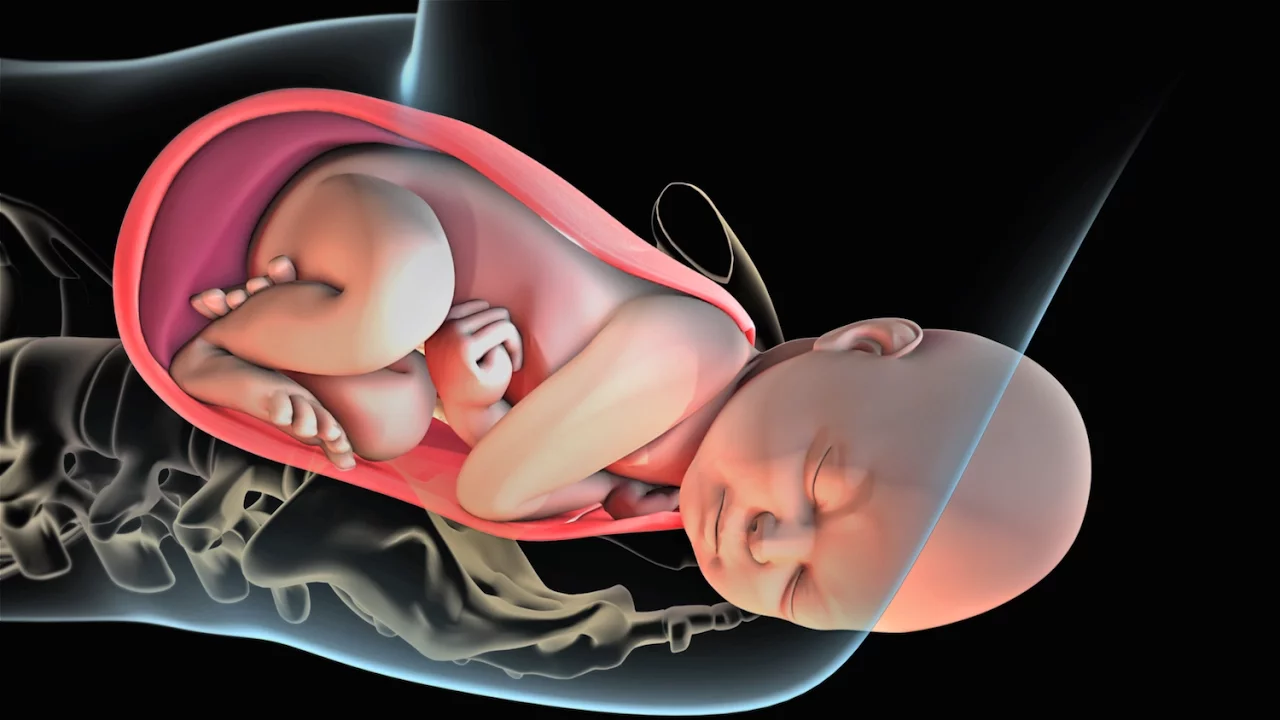
3:05
Stages of Labor and Vaginal Birth | Childbirth Animation
@nucleusmedicalmedia
52.1M views•2017-08-18
Related Study Plans & Knowledge Roadmaps
Structured learning paths in Medicine
medicine
Abnormal LFTs: Diagnostic Workup & Pathology
01Liver Anatomy and Basic Physiology
02Introduction to Liver Function Tests (LFTs)
03Hepatocellular vs. Cholestatic Patterns
+ 3 more learning modules
12h6 modules
Explore Roadmap
medicine
Analyzing Blood Smears: RBC, WBC & Platelets
01Introduction to Blood Components & Smear Preparation
02Normal Morphology of Blood Cells
03Erythrocyte Pathologies & Morphological Variants
+ 2 more learning modules
12h5 modules
Explore Roadmap
medicine
Mechanical Ventilation: Waveforms & Alarms
01Anatomy and Physiology of Breathing
02Introduction to Mechanical Ventilation & Core Modes
03Ventilator Settings and Waveform Interpretation
+ 2 more learning modules
12h5 modules
Explore Roadmap
medicine
Neuro Exam: Localization & Stroke Syndromes
01Foundations of Neuroanatomy and Vascular Supply
02The Neurological Examination: Step-by-Step
03Principles of Neurological Localization
+ 3 more learning modules
18h6 modules
Explore Roadmap