ROV (Remotely Operated Vehicle) teams use wet testing in large tanks to verify and adjust buoyancy, with calculations guiding the design process to achieve optimal underwater performance.
SeaPerch ROV Wet Test at Grainville School | Engineering Challenge
Added:Deep Dive
Archimedes' Principle and the physical concepts of positive, negative, and neutral buoyancy in fluids.

物理基礎 浮力と運動方程式 浮きが水から出ている長さを求めよう
2K
This video demonstrates how to solve buoyancy problems by applying equilibrium conditions and Newton's second law. The instructor shows how to find the submerged length of a floating object by equating gravitational force (mg) with buoyant force (ρ_water × g × submerged volume), then derives the acceleration when the object is released by applying F = ma with the net force being the difference between buoyant force and gravitational force.
Click to watch →

【NOSTALGIC TRAIN】雪花ラミィと田舎町でお散歩します【獅白ぼたん/ホロライブ】
288K
溺水救援涉及基本的物理原理,包括浮力、水流速度和人体密度。浮力是物体在流体中受到的向上力,与物体排开流体的体积有关。溺水者在水中会因身体密度大于水而下沉,但通过抓住漂浮物(如浮力圈),可以利用浮力保持头部露出水面。救援者需要克服水流阻力,快速接近溺水者并将其拖至安全地带。
Click to watch →
Deep Dive
Fundamentals of basic electrical circuits, specifically how DC motors are powered and controlled via tethers.
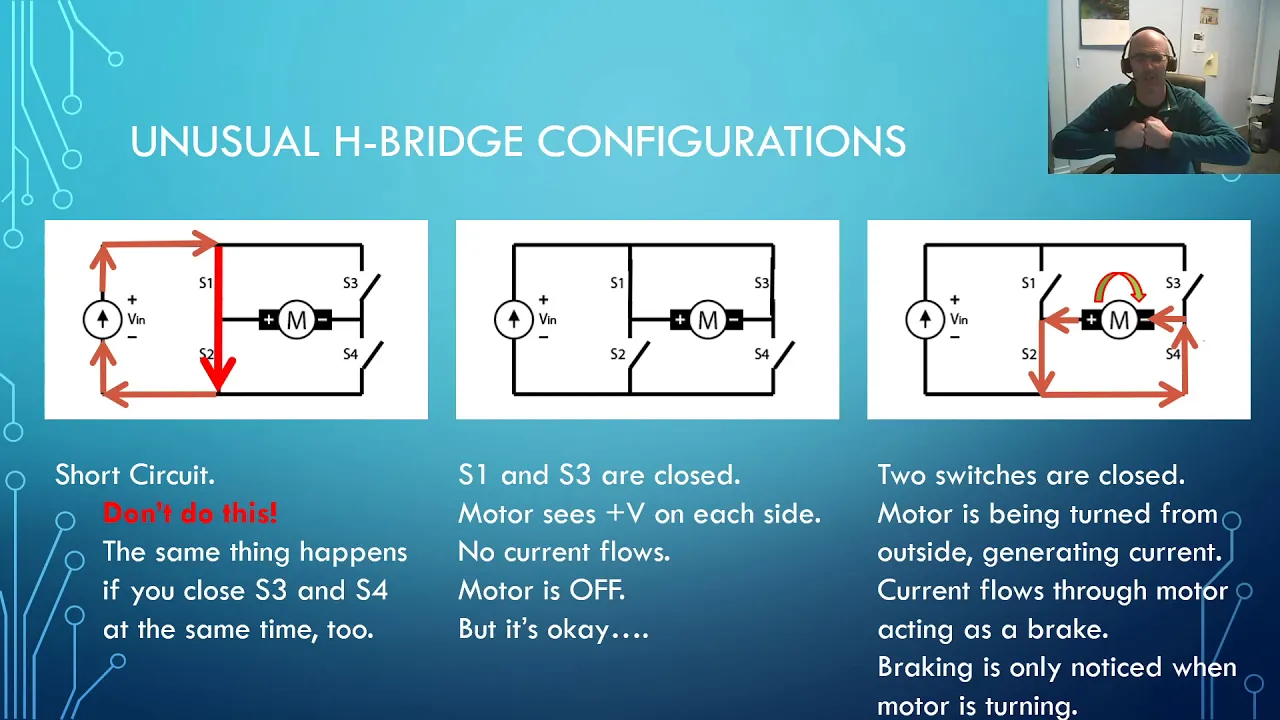
TTED5060 H Bridge Motor Control Part 1 Manual Switches
450
An H bridge is a circuit with four switches that controls a brushed DC motor's direction by reversing the polarity of the voltage applied to the motor; for manual control, a DPDT (Double Pole Double Throw) momentary switch can be constructed from scrap steel strapping material, where pressing the switch in one direction connects positive to one motor terminal and ground to the other (forward rotation), and pressing in the opposite direction reverses these connections (reverse rotation), allowing students to build inexpensive motor controllers for tethered mini sumo robots.
Click to watch →

Can We Revolutionize Travel with Levitation? Dr. Max Fomitchev-Zamilov, Dr. Weiping Yu Explore
131
Tethered drones can be powered using Tesla coil transmitters on the surface. A single hair-thin wire can transmit power through a quarter-wave standing wave, powering an electrostatic DC motor on the drone. This enables payload maneuvering without tethering problems, leveraging static electricity for efficient power transmission over distance.
Click to watch →
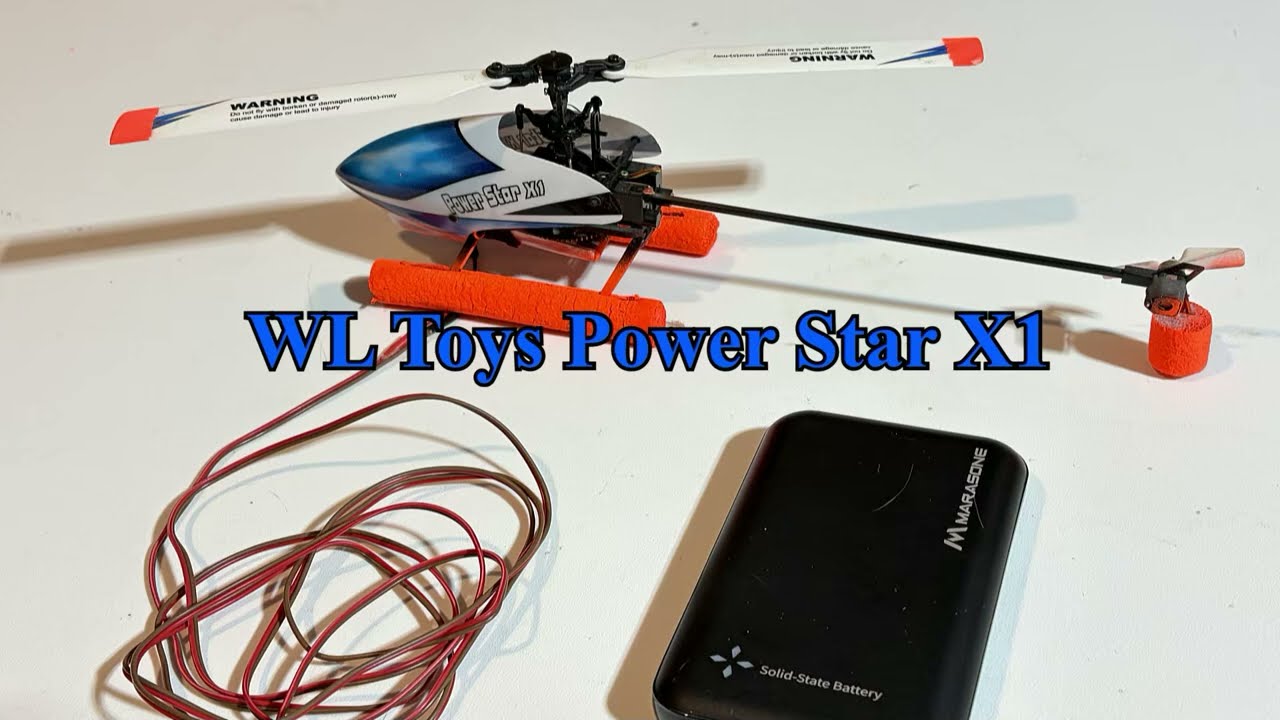
Tethered “flying wires” demoed using WL Toys Power Star X1 Brush-less helicopter.
245
Tethered RC helicopter flying offers enhanced safety and efficiency by eliminating battery weight, reducing motor strain, and enabling longer flight times; the appropriate wire gauge and length must be matched to the helicopter's power requirements, with larger units requiring bigger wires and batteries to handle increased current flow efficiently.
Click to watch →

Tethering 101 Webinar with Wes Maggio
3.1K
Tethered photography involves connecting a camera to a computer or tablet via cable or wireless transmitter to display images on a larger screen, enabling real-time collaboration with subjects and team members to evaluate focus, lighting, exposure, and composition before finalizing shots, thereby improving workflow efficiency and providing immediate backup protection for captured images.
Click to watch →
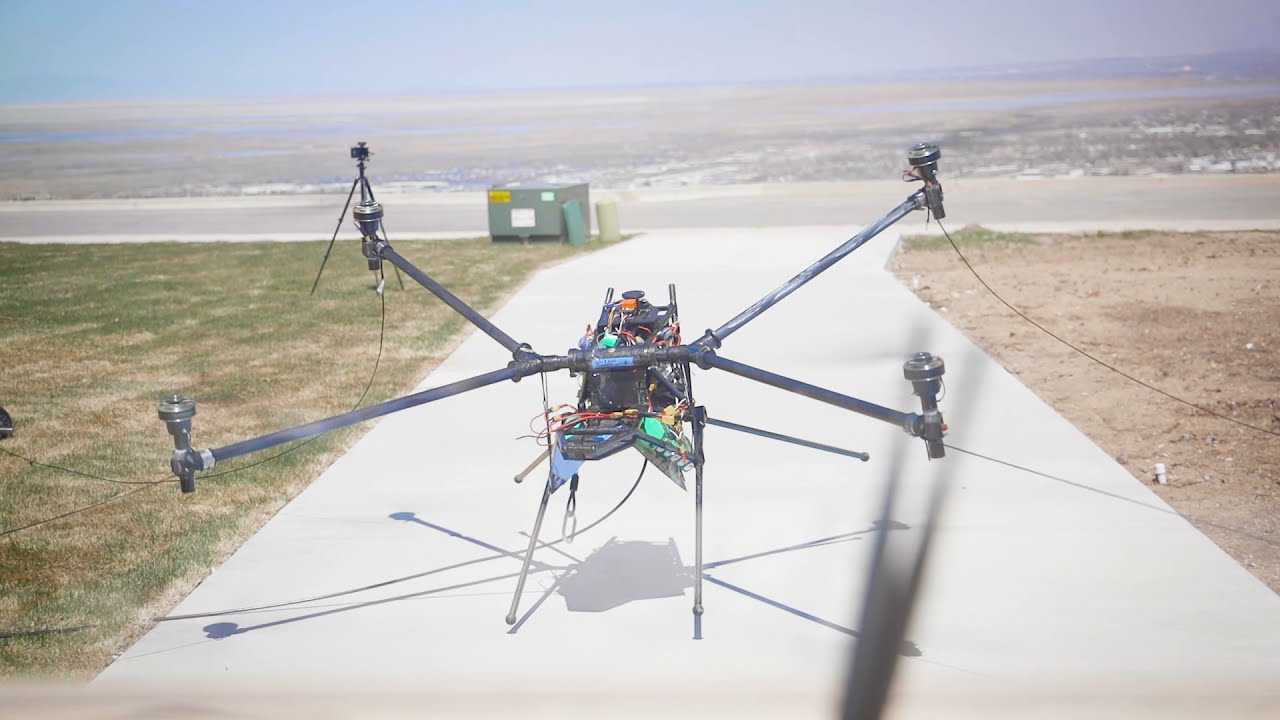
Final May the 4th!
477
Tethered motor runs represent the first step toward legitimate flight and actual flight control tuning. During this phase, the aircraft is still tied to the ground with ropes attached to each arm. The purpose of tethering is to prevent the machine from falling over on either side or causing damage during initial testing. This controlled environment allows builders to test motor performance and identify issues before attempting free flight.
Click to watch →
Deep Dive
Basic principles of hydrodynamics, including fluid resistance (drag) and how vehicle shape affects underwater propulsion.

HCISD H.S. at HESTEC
219
In underwater robotics competitions like SeaPerch, teams design robots by applying hydrodynamic principles (such as streamlined shapes like footballs to reduce drag), internalizing cables to prevent snagging, and creating compact, maneuverable designs through iterative brainstorming and testing processes.
Click to watch →

1 - Introduction to SeaPerch
16.9K
The SeaPerch Challenge is a Navy-sponsored competition where students design, build, and operate underwater Remotely Operated Vehicles (ROVs) to learn engineering principles through hands-on experience with robotics, science, mathematics, and technology.
Click to watch →

ED Games Expo 2021 Event - Naval STEM Engage Students in Problem-Based & Experiential Learning
121
The SeaPerch challenge is a Navy-sponsored program where students design and build underwater ROVs (Remotely Operated Vehicles). ROVs are used by the Navy for tasks that are dull, dirty, or dangerous—anything impractical for humans to perform. Students learn to operate their vehicles through cables and compete to see who performs best. The program serves as an entry point for students of all ages, providing hands-on engineering experiences that may not be available in regular academic curricula.
Click to watch →

SeaPerch Showdown! — 2024 ROV Challenge with the US Navy and SeaPerch Student Competitors (LGE005)
129
SeaPerch is a Navy-sponsored underwater robotics program where high school students design, build, and compete with remotely operated vehicles (ROVs), learning fundamental STEM principles through hands-on engineering challenges that involve understanding buoyancy, thrust, and underwater physics while fostering teamwork and innovation.
Click to watch →
Introduction to SeaPerch (1/5)
2.5K
SeaPerch is an underwater ROV (Remotely Operated Vehicle) competition where student teams design, build, and operate their own remotely controlled underwater robots using PVC frames, thrusters, and waterproofed motors, competing in challenges like mission courses and obstacle courses while developing engineering skills through hands-on innovation.
Click to watch →
Deep Dive
The core components of a basic Remotely Operated Vehicle (ROV), including the chassis, thrusters, and tether.

WK TODAY 1.20.12
1.5K
Kettering's engineering program successfully completed its first annual Sea Perch ROV (Remotely Operated Vehicle) challenge, where students designed, built, and tested underwater robots to complete three tasks: collecting ducks from the surface, retrieving diving rings from the pool bottom, and navigating through the pool. The event emphasized teamwork, hands-on learning, and practical engineering skills including creating control boards, waterproofing motors, and designing robots, demonstrating how extracurricular engineering competitions can enhance student learning beyond traditional classroom settings.
Click to watch →

2026 Louisiana 4-H SeaPerch Challenge Webinar
118
SeaPerch is a STEM robotics program where youth teams build underwater remotely operated vehicles (ROVs) to complete challenges. The program is purely engineering-based with no coding, teaching practical skills like soldering and pipe fitting. Teams need a SeaPerch kit (free with training attendance), build manual (free PDF online), and basic tools including soldering irons, desoldering pumps, clamp-on vices, PVC cutters, wire strippers, nut drivers, pliers, screwdrivers, and a digital multimeter. Practice space can include cow troughs, large trash cans, portable pools at least 5 feet long, or community pools. The 2026 competition is held March 7th at Crawfish Aquatics in Baton Rouge with the 'storm response' theme. Stock classes are Middle School (grades 8 and below) and High School (grades 9+), with mixed-age teams converting to the higher class. Both classes allow modifications up to $25 including 3D printed parts, but no machining or 3D printing of frame parts. The limit is three thrusters per ROV. Registration is $35 per team, closing February 16th. The Technical Design Report (TDR) is crucial for scoring, with page limits that teams must follow. The team interview is a 5-minute session where every team member must speak. The pool competition consists of two components: the obstacle course and mission course, which together form a single lane. Teams have 20 minutes total to complete both courses. The obstacle course requires navigating through five hoops in random order, starting and ending at the surface vehicle, with 4 minutes per attempt and a second attempt allowed. The mission course involves completing tasks on two platforms with a maximum of 8 minutes. Task 1 (Bridge Inspection) involves retrieving and attaching a red marker float (4 points), sliding a pipe cover over a bridge section (2 points partial, 10 points full), and releasing a green float marker (4 points). Task 2 (Dam Survey) involves removing a red marker plug and placing it in a green hole in the dam (4 points removal, 12 points placement), plus closing a floodgate by rotating a piece of red corrugated polypropylene (8 points). Task 3 (Debris Field Clearing) is particularly challenging because standard SeaPerch ROVs cannot lift the heavy debris without variable ballast. Teams can adjust ballast during a run by removing the ROV from the water. Subtask 3.1 requires removing marine life from the back platform (4 points) and placing it on the front platform (8 points). Subtask 3.2 requires removing heavy submerged debris and hooking it to the surface vehicle (6 points removal, 20 points hooking). Task 4 (Water Quality Sampling) involves using a two-piece pipe device to sample water (4 points removal, 8 points placement).
Click to watch →

Field test of our first SeaPerch ROVs
270
Six high school students from Woodbridge School successfully conducted a field test of their SeaPerch underwater remotely controlled vehicles (ROVs), deploying them from the Woodbridge Jetty to obtain live video feeds despite challenging conditions including wild storms and murky water, demonstrating that ROVs can operate effectively in real-world underwater environments to observe marine features and wildlife.
Click to watch →
1 - Introduction to SeaPerch
16.9K
The SeaPerch Challenge is a Navy-sponsored competition where students design, build, and operate underwater Remotely Operated Vehicles (ROVs) to learn engineering principles through hands-on experience with robotics, science, mathematics, and technology.
Click to watch →
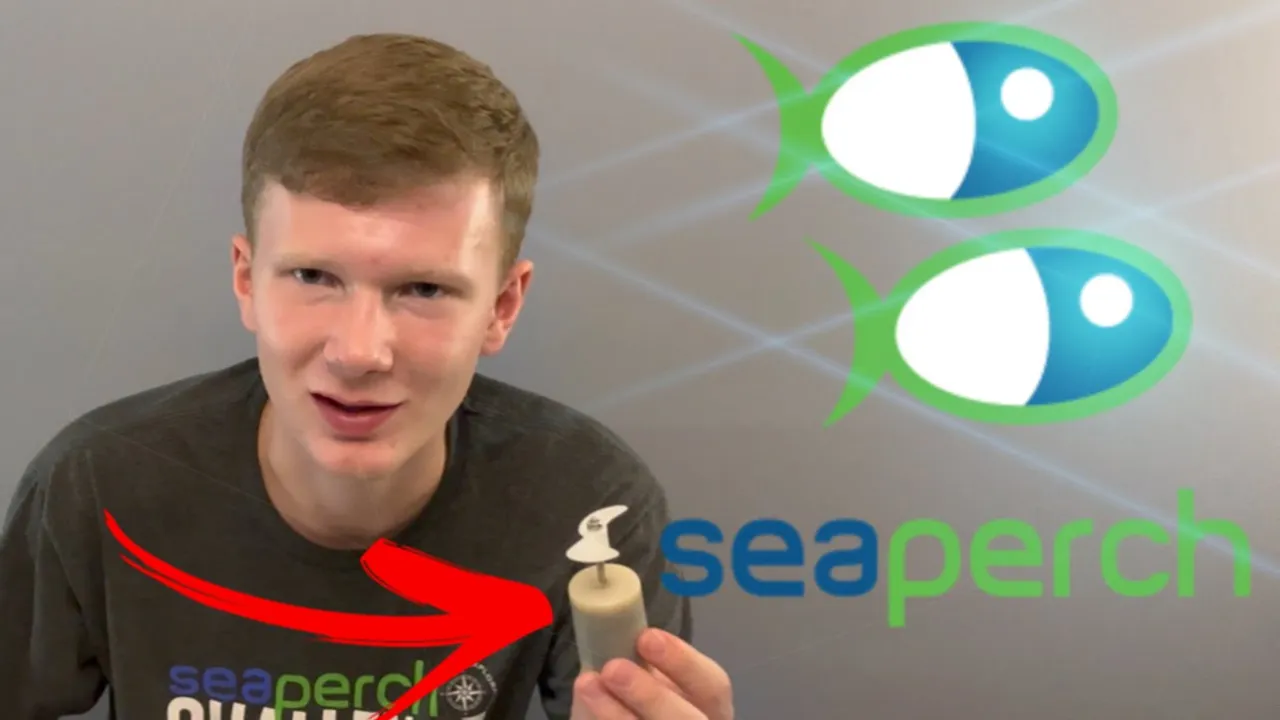
How to Make your Thrusters for your SeaPerch ROV (3/5)
2.1K
This video demonstrates how to waterproof three 12-volt SeaPerch ROV motors using electrical tape or stickers, solder wires to motor terminals, prepare 35mm film canisters with wax for motor housing, and assemble propellers using threaded couplers, T-nuts, and hex lock nuts, then attach propellers to motor shafts using super glue after roughening the surface.
Click to watch →
Prerequisite Knowledge
- Concept 01Archimedes' Principle and the physical concepts of positive, negative, and neutral buoyancy in fluids.
- Concept 02Fundamentals of basic electrical circuits, specifically how DC motors are powered and controlled via tethers.
- Concept 03Basic principles of hydrodynamics, including fluid resistance (drag) and how vehicle shape affects underwater propulsion.
- Concept 04The core components of a basic Remotely Operated Vehicle (ROV), including the chassis, thrusters, and tether.
Subsequent Learning
- Step 01Advanced ballast and trim engineering, including active buoyancy control systems used in professional marine vessels.
- Step 02Integration of payload electronics, such as underwater cameras, environmental sensors, and mechanical grabber arms.
- Step 03Transitioning from tethered ROVs to Autonomous Underwater Vehicles (AUVs) utilizing microcontrollers and sensor-based navigation.
- Step 04Industrial applications of marine technology, including deep-sea exploration, offshore infrastructure inspection, and marine biology conservation.
Initial Dive Tests
Buoyancy Tweaks
Second Visit
Team Impresses
Unique Build
Initial Dive Tests
0:03Playing Section
- 1
First wet test in large tank.
- 2
Buoyancy initially almost perfect, slightly positive.
- 3
Maneuverability proved excellent during testing.
Limitations of Kit-Based STEM Education
While hands-on programs like SeaPerch are highly engaging, some educational theorists and engineering educators argue that highly structured, kit-based challenges can inadvertently limit student creativity. Often referred to as 'recipe-following,' using standardized components (such as pre-cut PVC pipes and specific motor kits) can shift the student's focus from open-ended problem-solving to mere assembly. Critics advocate instead for 'maker-centered' or 'design-thinking' frameworks, where students must define the problem themselves, source diverse materials, and navigate ambiguity without a pre-determined blueprint. This alternative approach is believed to better mirror real-world engineering, where solutions are rarely pre-packaged and resources are highly variable.
Deep Dive
Advanced ballast and trim engineering, including active buoyancy control systems used in professional marine vessels.

DON'T buy a HUNTER.. Everything you need to know - Ep 109 - Lady K Sailing
292.8K
Advanced ocean-going sailboats incorporate active ballast systems that allow sailors to pump water into strategically placed compartments to adjust the boat's stability characteristics during rough ocean conditions. In the Hunter HC50, water ballasts are located in the quarter sections on either side of the boat. When sailing in heavy weather with excessive heel, water can be pumped into the high-side ballast compartment, reducing heel angle by up to 7 degrees. This adjustment serves multiple purposes: it increases boat speed by reducing drag from excessive heel, improves stability against capsizing, and enhances passenger comfort during rough seas.
Click to watch →

Calling Global Adventurers! Bluewater Research Sailboat for Sale! 64' Schooner - $189K EP26
148.1K
Ballast systems use weighted materials (such as lead) distributed along the keel to control a vessel's trim and stability. An I-beam structure running the length of the keel, combined with distributed ballast totaling approximately 13,000 pounds, provides excellent stability characteristics. Exposed ballast systems require periodic painting but offer easier inspection and maintenance.
Click to watch →

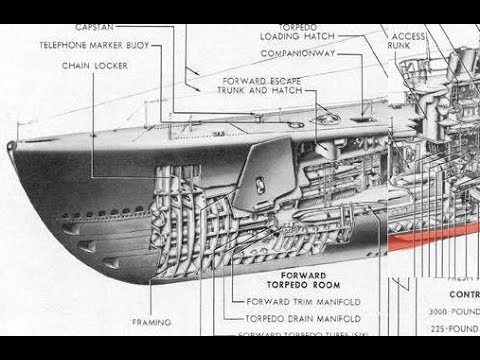
How a World War II Submarine Works (720p)
692K
Ballast tanks control submarine buoyancy and are fitted around the pressure hull. Main ballast tanks are completely flooded when submerged, with flood ports open to the sea. Main vent valves control air escape during flooding, with emergency vents for damage prevention. Since tanks are open to the sea when submerged, outer skins are not as strong as the pressure hull. Air under pressure blows water from tanks to surface. Variable ballast tanks control trim and buoyancy, including forward and after trim tanks, auxiliary tanks, and torpedo tanks. Special purpose tanks include the bow buoyancy tank for up angle, safety tank for quick positive buoyancy, and negative tank inside main ballast tanks for rapid depth changes. The negative tank is flooded as the boat approaches desired depth, then blown to restore neutral buoyancy. All these tanks are strongly constructed to withstand full submergence pressure.
Click to watch →
HOW IT WORKS: Submarines
1.5M
Submarines control buoyancy through interconnected ballast tank systems. Main ballast tanks completely flood during submersion and are vented for air escape, with emergency vents providing backup protection. Variable ballast tanks control trim and buoyancy through partial filling and water transfer between tanks. Special purpose tanks include the bow buoyancy tank (for upward angle), safety tank (for rapid positive buoyancy), and negative tank (for rapid depth changes). The negative tank floods as the boat approaches desired depth, then blows to restore neutral buoyancy. All tanks withstand full submergence pressure. This multi-tiered ballast system enables precise depth control and trim adjustment essential for safe submarine operation.
Click to watch →
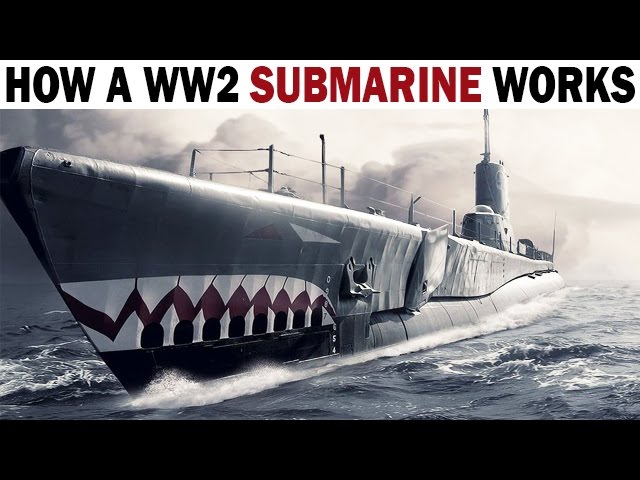
How a WW2 Submarine Works (Diesel-Electric Submarine / Balao-Class Submarine) US Navy Training Film
279.5K
Variable ballast tanks control submarine trim (fore-and-aft balance) and fine-tune overall buoyancy. These include forward trim tank, after trim tank, two auxiliary tanks, and forward and after water round torpedo tanks. Unlike main ballast tanks, they are only partly filled, allowing seawater to be pumped between tanks or overboard. This system enables precise depth and angle adjustments during submarine operations.
Click to watch →
Deep Dive
Integration of payload electronics, such as underwater cameras, environmental sensors, and mechanical grabber arms.
WK TODAY 1.20.12
1.5K
Kettering's engineering program successfully completed its first annual Sea Perch ROV (Remotely Operated Vehicle) challenge, where students designed, built, and tested underwater robots to complete three tasks: collecting ducks from the surface, retrieving diving rings from the pool bottom, and navigating through the pool. The event emphasized teamwork, hands-on learning, and practical engineering skills including creating control boards, waterproofing motors, and designing robots, demonstrating how extracurricular engineering competitions can enhance student learning beyond traditional classroom settings.
Click to watch →
2026 Louisiana 4-H SeaPerch Challenge Webinar
118
SeaPerch is a STEM robotics program where youth teams build underwater remotely operated vehicles (ROVs) to complete challenges. The program is purely engineering-based with no coding, teaching practical skills like soldering and pipe fitting. Teams need a SeaPerch kit (free with training attendance), build manual (free PDF online), and basic tools including soldering irons, desoldering pumps, clamp-on vices, PVC cutters, wire strippers, nut drivers, pliers, screwdrivers, and a digital multimeter. Practice space can include cow troughs, large trash cans, portable pools at least 5 feet long, or community pools. The 2026 competition is held March 7th at Crawfish Aquatics in Baton Rouge with the 'storm response' theme. Stock classes are Middle School (grades 8 and below) and High School (grades 9+), with mixed-age teams converting to the higher class. Both classes allow modifications up to $25 including 3D printed parts, but no machining or 3D printing of frame parts. The limit is three thrusters per ROV. Registration is $35 per team, closing February 16th. The Technical Design Report (TDR) is crucial for scoring, with page limits that teams must follow. The team interview is a 5-minute session where every team member must speak. The pool competition consists of two components: the obstacle course and mission course, which together form a single lane. Teams have 20 minutes total to complete both courses. The obstacle course requires navigating through five hoops in random order, starting and ending at the surface vehicle, with 4 minutes per attempt and a second attempt allowed. The mission course involves completing tasks on two platforms with a maximum of 8 minutes. Task 1 (Bridge Inspection) involves retrieving and attaching a red marker float (4 points), sliding a pipe cover over a bridge section (2 points partial, 10 points full), and releasing a green float marker (4 points). Task 2 (Dam Survey) involves removing a red marker plug and placing it in a green hole in the dam (4 points removal, 12 points placement), plus closing a floodgate by rotating a piece of red corrugated polypropylene (8 points). Task 3 (Debris Field Clearing) is particularly challenging because standard SeaPerch ROVs cannot lift the heavy debris without variable ballast. Teams can adjust ballast during a run by removing the ROV from the water. Subtask 3.1 requires removing marine life from the back platform (4 points) and placing it on the front platform (8 points). Subtask 3.2 requires removing heavy submerged debris and hooking it to the surface vehicle (6 points removal, 20 points hooking). Task 4 (Water Quality Sampling) involves using a two-piece pipe device to sample water (4 points removal, 8 points placement).
Click to watch →
1 - Introduction to SeaPerch
16.9K
The SeaPerch Challenge is a Navy-sponsored competition where students design, build, and operate underwater Remotely Operated Vehicles (ROVs) to learn engineering principles through hands-on experience with robotics, science, mathematics, and technology.
Click to watch →
Field test of our first SeaPerch ROVs
270
Six high school students from Woodbridge School successfully conducted a field test of their SeaPerch underwater remotely controlled vehicles (ROVs), deploying them from the Woodbridge Jetty to obtain live video feeds despite challenging conditions including wild storms and murky water, demonstrating that ROVs can operate effectively in real-world underwater environments to observe marine features and wildlife.
Click to watch →

3 - SeaPerch - Properties
4K
Engineers select materials based on their properties—mechanical properties like strength and flexibility, and electrical properties like conductivity—to design effective ROVs. Buoyancy, governed by Archimedes' principle, determines whether an object floats or sinks: objects less dense than water experience positive buoyancy and float, while denser objects experience negative buoyancy and sink. The center of gravity (where mass is concentrated) and center of buoyancy (center of displaced water) determine stability, with lower centers of gravity providing greater stability. Ballasting—adding weight—helps achieve neutral buoyancy and prevents excessive buoyancy that would require more energy to submerge or cause the ROV to capsize.
Click to watch →
Deep Dive
Transitioning from tethered ROVs to Autonomous Underwater Vehicles (AUVs) utilizing microcontrollers and sensor-based navigation.
O Mundo Submarino dos Microcontroladores PIC - eletrônica embaixo d'agua
642
Microcontrollers, particularly PIC devices, are essential components in ROV (Remotely Operated Vehicle) systems used for deep-sea oil and gas exploration, handling critical functions such as audio intercommunication, video multiplexing, and serial signal processing; these systems integrate multiple technologies including hydraulics, mechanics, high-voltage electricity, and advanced electronics, with microcontrollers serving as the intelligent control core that enables autonomous operation at depths of 4000 meters where human divers cannot safely operate.
Click to watch →
Multi Robot Cooperation for Remote Inspection and Intervention Subsea | Dr Sen Wang 5.07.21
219
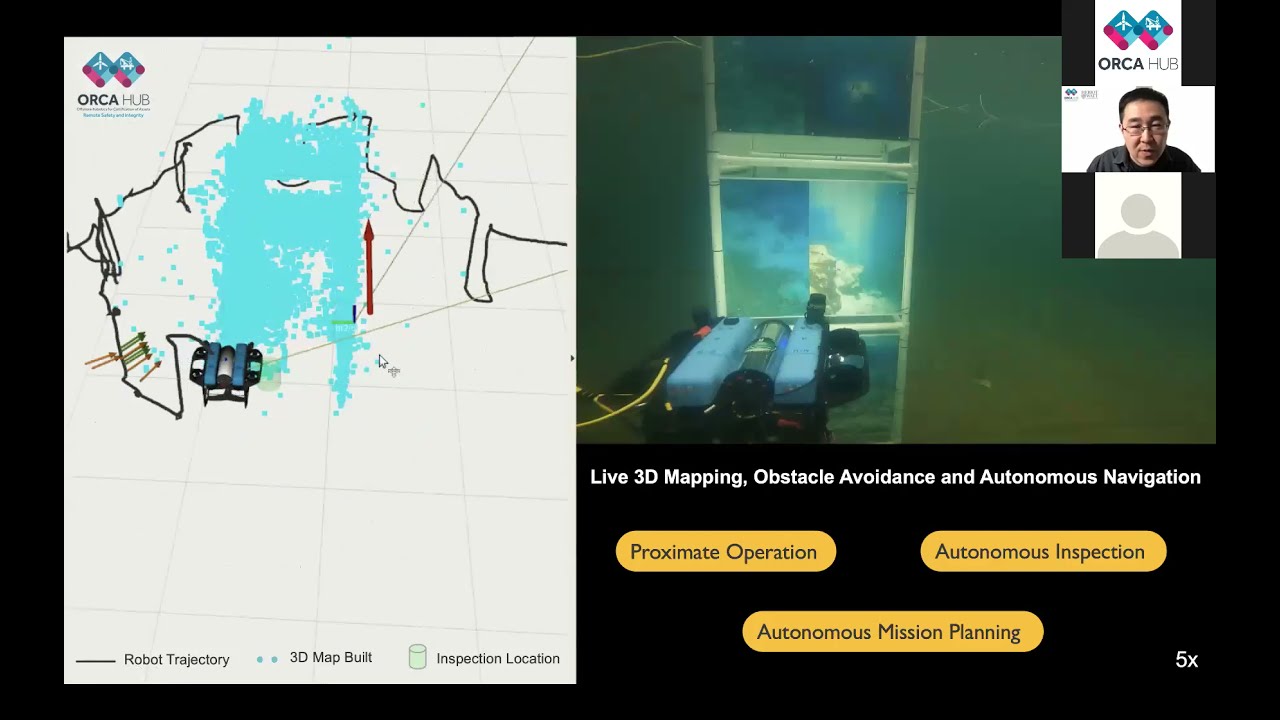
While Remotely Operated Vehicles (ROVs) are currently preferred for initial development due to their tethered power supply and continuous real-time data transmission capabilities, the long-term roadmap includes transitioning to Autonomous Underwater Vehicles (AUVs). AUVs offer greater operational flexibility without tethers but face challenges including limited communication bandwidth and reduced real-time data availability. The transition strategy prioritizes developing robust autonomous algorithms first on ROVs, then gradually migrating these capabilities to AUVs as the technology matures and communication constraints become better managed.
Click to watch →

TITANIC SUB SEARCH | Are noises a distress signal or just ocean sound? Oceanographer weighs in
583.4K
Remotely Operated Vehicles (ROVs) are controlled via tethered cables and can transmit high-resolution images (6K-8K) in real-time while moving at approximately 1 mile per hour. Autonomous Underwater Vehicles (AUVs) operate independently but cover ground more slowly. Both types have limited visibility ranges of only 10-15 meters due to light limitations.
Click to watch →

Marine Autonomous Systems
370
Autonomous Underwater Vehicles (AUVs) periodically make their own decisions about navigation and actions, while Remotely Operated Vehicles (ROVs) maintain constant human control via tether or virtual connection. Although ROVs have human operators, there is growing interest in providing autonomy even for ROVs to handle mundane joystick tasks during long missions, reducing operator fatigue.
Click to watch →
Carlie Wiener On WSL PURE | One Ocean presented by Outerknown
1.1K
Remotely Operated Vehicles (ROVs) are tethered to ships via cables that provide electricity and communications, allowing pilots on board to control them and perform sampling and video operations. Autonomous Underwater Vehicles (AUVs) operate independently without tethers. Falkor's ROV Sebastian can reach 4,500 meters depth with two robotic arms that can be adapted with different tools for various scientific tasks, including delicate sampling and core sediment collection from the ocean floor.
Click to watch →
Deep Dive
Industrial applications of marine technology, including deep-sea exploration, offshore infrastructure inspection, and marine biology conservation.
1 - Introduction to SeaPerch
16.9K
The SeaPerch Challenge is a Navy-sponsored competition where students design, build, and operate underwater Remotely Operated Vehicles (ROVs) to learn engineering principles through hands-on experience with robotics, science, mathematics, and technology.
Click to watch →
They Entered a Sealed Compartment on the Titanic — What the Camera Captured Was Heartbreaking
3.8K
A new mission used a small robot submarine (ROV) that never left its cable to the surface. The ROV was built with a steel and alloy frame, thrusters for multi-directional movement, and cameras in clear domes. Every opening was sealed with thick rings and bolts, and every penetration point was pressure tested. The ROV could live in pressure that would crush a battle tank, slip through gaps only a few feet wide, and send clean pictures back to the surface.
Click to watch →
ED Games Expo 2021 Event - Naval STEM Engage Students in Problem-Based & Experiential Learning
121
The SeaPerch challenge is a Navy-sponsored program where students design and build underwater ROVs (Remotely Operated Vehicles). ROVs are used by the Navy for tasks that are dull, dirty, or dangerous—anything impractical for humans to perform. Students learn to operate their vehicles through cables and compete to see who performs best. The program serves as an entry point for students of all ages, providing hands-on engineering experiences that may not be available in regular academic curricula.
Click to watch →
Field test of our first SeaPerch ROVs
270
Six high school students from Woodbridge School successfully conducted a field test of their SeaPerch underwater remotely controlled vehicles (ROVs), deploying them from the Woodbridge Jetty to obtain live video feeds despite challenging conditions including wild storms and murky water, demonstrating that ROVs can operate effectively in real-world underwater environments to observe marine features and wildlife.
Click to watch →
SeaPerch Showdown! — 2024 ROV Challenge with the US Navy and SeaPerch Student Competitors (LGE005)
129
SeaPerch is a Navy-sponsored underwater robotics program where high school students design, build, and compete with remotely operated vehicles (ROVs), learning fundamental STEM principles through hands-on engineering challenges that involve understanding buoyancy, thrust, and underwater physics while fostering teamwork and innovation.
Click to watch →
Initial Dive Tests
Buoyancy Tweaks
Second Visit
Team Impresses
Unique Build
Initial Dive Tests
0:03- 1
First wet test in large tank.
- 2
Buoyancy initially almost perfect, slightly positive.
- 3
Maneuverability proved excellent during testing.
Limitations of Kit-Based STEM Education
While hands-on programs like SeaPerch are highly engaging, some educational theorists and engineering educators argue that highly structured, kit-based challenges can inadvertently limit student creativity. Often referred to as 'recipe-following,' using standardized components (such as pre-cut PVC pipes and specific motor kits) can shift the student's focus from open-ended problem-solving to mere assembly. Critics advocate instead for 'maker-centered' or 'design-thinking' frameworks, where students must define the problem themselves, source diverse materials, and navigate ambiguity without a pre-determined blueprint. This alternative approach is believed to better mirror real-world engineering, where solutions are rarely pre-packaged and resources are highly variable.
Archimedes' Principle and the physical concepts of positive, negative, and neutral buoyancy in fluids.
Fundamentals of basic electrical circuits, specifically how DC motors are powered and controlled via tethers.
Basic principles of hydrodynamics, including fluid resistance (drag) and how vehicle shape affects underwater propulsion.
The core components of a basic Remotely Operated Vehicle (ROV), including the chassis, thrusters, and tether.
Advanced ballast and trim engineering, including active buoyancy control systems used in professional marine vessels.
Integration of payload electronics, such as underwater cameras, environmental sensors, and mechanical grabber arms.
Transitioning from tethered ROVs to Autonomous Underwater Vehicles (AUVs) utilizing microcontrollers and sensor-based navigation.
Industrial applications of marine technology, including deep-sea exploration, offshore infrastructure inspection, and marine biology conservation.
390 views7likes0:58@PortsofJerseyOriginal Release: 2021-11-24
today we've been doing wet testing it's the first time that the device has been a large tank we've discovered got the buoyancy almost exactly right slightly positive when it first went in fantastic maneuverability i've been lots of calculations done to try and get the buoyancy right and that's clearly worked we've adjusted it a little bit so it's gone a little bit negative in its buoyancy now but we can tweak that again afterwards we've just got to tidy up really it's working well this is our second time up at greenville and what we're doing is we're getting their rov that they've built and they put it into the water and see how their buoyancy is and see if it works i'm quite impressed with this visit because they were talking about they've been calculating the buoyancy out beforehand they've done really well we're really impressed with the level they're at this one's a slightly different design than the others we've seen myself and darren were interested to see how that would work in this little pool here and it's done really well we received from precedent [Music]
Up Next

11:42
Psychology of Isolation in Simulated Mars Missions
@Vsauce2
2.3M views•2016-11-10

12:54
Triumph of Orthodoxy Icon: Byzantine Art & History Explained
@BenCallan
2.1K views•2024-08-06

9:49
FastAPI vs Flask vs Django: Choosing the Right Python Web Framework
@TechWithTim
302.5K views•2024-05-26

1:42
Game of Thrones Opening Credits: A Cinematic Analysis
@gameofthrones
46.3M views•2011-04-18
Related Study Plans & Knowledge Roadmaps
Structured learning paths in General & Interdisciplinary Studies
general-studies
Elevator Engineering: History, Physics & Cities
01From Hoists to Safety Brakes: The Dawn of Vertical Lift
02Hydraulic vs. Traction: The Engineering Physics of Elevators
03Modern Speed, Safety, and Algorithms
+ 2 more learning modules
12h5 modules
Explore Roadmap
general-studies
Rubber: Material Science, History & Geopolitics
01Origins of Natural Rubber & Mesoamerican History
02The Chemistry of Natural Rubber & Vulcanization
03The Geopolitics of the Rubber Boom & Colonization
+ 2 more learning modules
12h5 modules
Explore Roadmap
general-studies
Containerization: Evolution, Logistics & Trade
01Ancient Trade & Bulk Cargo: Amphorae to Barrels
02The Industrial Revolution & Cardboard Packaging
03The Containerization Revolution: Malcom McLean
+ 2 more learning modules
12h5 modules
Explore Roadmap
general-studies
Textile Tech: Evolution, Labor & Global Impact
01Pre-Industrial Textiles: Handloom & Cottage Industry
02Mechanization: The Spinning Jenny to the Power Loom
03The Factory System & Global Labor Transformation
+ 2 more learning modules
10h5 modules
Explore Roadmap