




























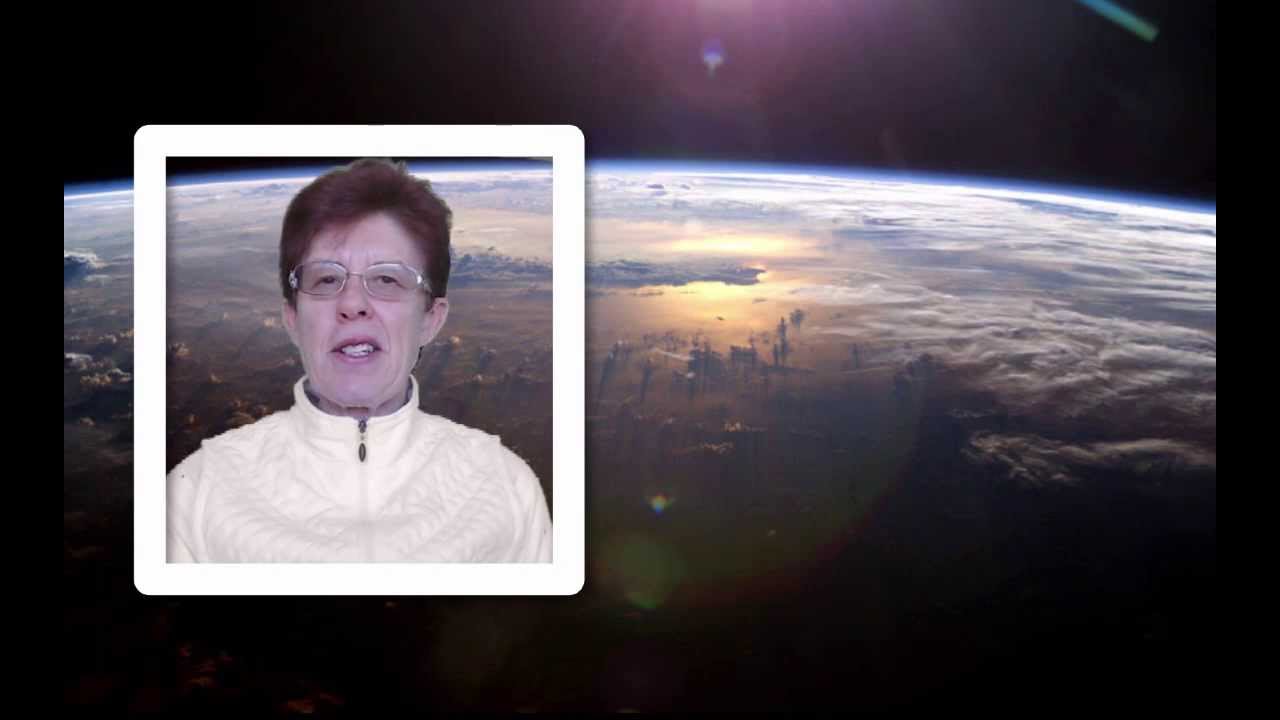
Long-duration space missions require careful psychological preparation because isolation, sensory deprivation, and separation from Earth can cause time perception distortion, mental breakdown, and dissociation, as demonstrated by studies of solitary confinement, Antarctic expeditions, and the HI-SEAS Mars simulation, where 146 days were lost in a year-long isolation experiment.
Psychology of Isolation in Simulated Mars Missions
Added:Understanding of basic psychological stress responses and the physiological effects of chronic stress on the human brain.
Familiarity with the concept of space analogs (such as HI-SEAS or Mars500) and why simulated environments are used in aerospace research.
Basic concepts of group dynamics, interpersonal compatibility, and conflict resolution in high-stakes, confined environments.
An introduction to environmental psychology, specifically how physical architecture and confined spaces impact human behavior and mood.
In-depth study of the 'Third-Quarter Effect' and other temporal psychological phenomena observed in long-duration isolation.
Exploration of technological and psychological countermeasures, such as virtual reality therapy, autonomous mental health apps, and circadian lighting.
Analysis of selection criteria and psychiatric screening protocols used by space agencies (like NASA and ESA) for long-duration crew members.
Application of space-isolation research to terrestrial extreme environments, such as polar research stations, submarines, and deep-sea exploration.
2.3M views65.9Klikes11:42Original Release: 2016-11-10
Vsauce!
Kevin here!
On planet sMars.
Simulated Mars -- an eerie and otherworldly corner of the world located on the barren slopes of the Mauna Loa volcano in Hawaii.
National Geographic's upcoming show "Mars" details the realities of colonizing the Red Planet, and I partnered with them to talk about the future of living in a place like this.
After 12-months of seclusion, six scientists, not quite astronauts but lavanauts, have emerged from studying what life on an inhabited Mars might be like.
How do we keep our bodies functioning in a place not meant for us?
More importantly, 140 million miles from Earth’s oxygen, gravity and family -- how do we keep our minds functioning?
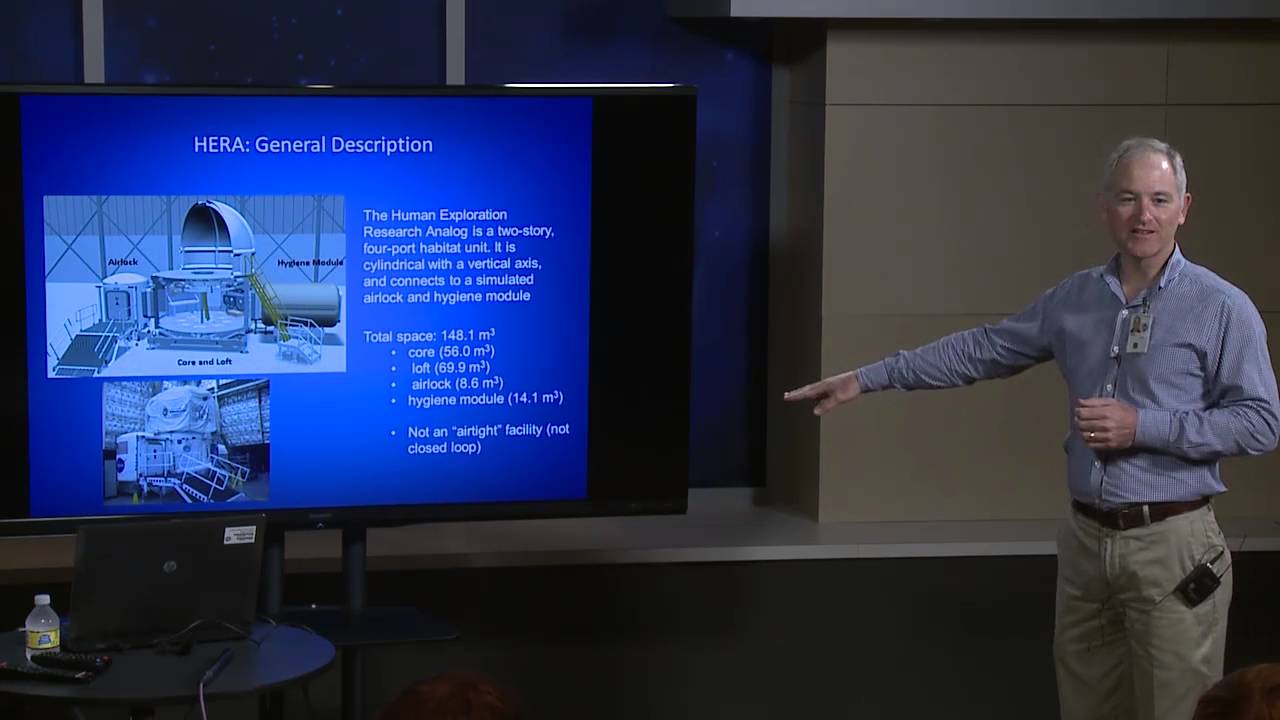
The Hawai’i Space Exploration and Analog Simulation, or HI-SEAS, is a geodesic dome with around 1,300 sq feet of livable space designed for six scientists.
A two-way software-imposed 20 minute time delay on communication mimics the speed of light message restriction between Mars and Earth.
Amenities includes a dining area, a kitchen, a bathroom, an exercise area and six bedrooms.
Leaving the habitat, or hab for short, requires a Hazmat suit which simulates the encumbering spacesuit needed for performing geology-related tasks on Mars.
On actual Mars, astronauts will need spacesuits for warmth and oxygen, as well as pressure.
The thin atmosphere on Mars would cause Earthling eyeballs, lungs and skin to dry out.
Like a lot.
Since it costs $10,000 per pound to blast things into space, survival items are kept to a bare minimum.
Everything needs to be recycled.
Filtered urine waters plants, and lights of optimal wavelength help them grow.
A day’s worth of sun charges batteries for a day and a half of power.
There's composting toilet, a pedicycle charges small devices like iPads, and the clean water used for their 30-second showers becomes grey water used to mop the floor.
Primary funding for HI-SEAS IV came from the NASA Behavioral Health and Performance Element -- they want to find out how crews adapt to each other under such stressful, confined and isolated environments.
Board games help bonding and mental stimulation.
Musical instruments like Andrezj’s guitar and Shey’s didgeridoo help the lavanauts stay connected to culture.
Plush animals like Raspberry and Trouble can substitute for real pets and bring moments of levity to a serious situation.
They act as a social bridge, a comfort-object-conduit for bringing people together.
Every little way to boost morale is vital because once humans leave the planet, even things that bring joy can also bring sadness.
Astronauts frequently cite being able to see the Earth as one of their most rewarding, beautiful experiences, but seeing Earth as a tiny, insignificant dot can increase sensations of distance and loneliness… and this ‘Overview Effect’ can also inspire crews to focus on the importance of protecting their planet.
Exploring is complicated -- we don’t know what’s beyond the horizon, but like that one kid in kindergarten -- someone’s always willing to taste the crayon.
The word Pioneer comes from the Old French ‘paonier,’ meaning “foot soldier” -- the first people to face danger.
From pre-historic times to Paradise, Nevada - humans have constantly pushed their boundaries.
But while over 90% of the ocean remains unexplored, we are enchanted by life among the stars.
In 1865, Jules Verne’s “From the Earth to the Moon” suggested we fire men out of a huge cannon to launch them into space.
We developed rocket propulsion instead -- and the challenge now is to figure out how to live beyond Earth’s atmosphere.
That starts with finding the right people.
The kind of person that on the day of being the first human launched into space was calming everyone else down.
On the day of the launch, the head of the Soviet space program said of space pioneer Yuri Gagarin, “During the days of preparation of the launch, when everyone had more than his share of concerns, apprehensions, and anxieties, he alone seemed to keep calm.
More than that: he was full of good spirits and beamed like the sun.” Yuri was in space for an hour and forty eight minutes.
An unbelievable accomplishment at a time when scientists weren’t sure whether eyeballs would warp in zero gravity and make astronauts blind -- but it’s not even enough time to watch Star Wars.
And 1969’s Space Race-winning manned moon-landing mission Apollo 11 took just over eight days total or 96 viewings of Star Wars Episode IV A New Hope...the point is... The current record for longest consecutive time spent in space is held by Valeri Polyakov aboard the space station Mir - clocking in at 437.7 days.
Mars could be a three year trip.
It’s roughly nine months each way if we launch when Earth and Mars are closest in their respective orbits.
Add in time spent on the surface and it’s about three years living in the most unnatural and isolated environment ever attempted by humans.
And we’re no stranger to making ourselves...strangers.
Searching for new lands requires a fearless portion of the species to venture out into unknown territory -- to be curious and to take action.
Clara Ma, a 12 year old girl in Kansas, gave the Mars rover “Curiosity” its name, saying that, “curiosity is the passion that drives us through our everyday lives."
And those of us who stay behind revel in hearing the stories of the curious.
Tales of great adventure date back to one of humanity’s oldest stories - Homer’s Odyssey, an 8th century BC epic poem documenting Odysseus’s ten year journey home after the Trojan War, which includes having a Cyclops toss half a mountain at him, contending with the lure of the Sirens, and fighting off the six-headed monster Scylla.
Despite all that - he made it home.
And with Greek monsters behind us we look forward to conquering a planet named for a Roman God.
Baby steps from leaving the atmosphere to walking on the moon to entering Mars - informed by what we've learned from the solitude of pioneers and prisoners.
The 1862 Homestead Act granted settlers 160 acres of land -- about twice the size of Disneyland -- separated people from each other and long, harsh winters seemed to erase all plant and animal life.
“Prairie madness”, caused depression, increased violence, and even total mental breakdown.
Things got really lonely in the little house on the prairie.
On sea, things get even lonelier.
Calenture was a feverish delirium afflicting sailors in the Tropics that could manifest in picturing the water as a grassy meadows and diving overboard.
Traveling to Earth’s most remote reaches of Antarctica reveals solitude that hurts.
Australian Meteorologist Morton Moyes, who spent 10 weeks alone in Queen Mary Land wrote in 1912, “The silence is so painful now that I have a continual singing in my left ear, much like a Barrel Organ, only it's the same tune.” If the sound of silence is painful -- what happens when you’re cut off from your own senses?
A 1951 study at McGill University, that would never be approved today, looked at the effects of solitary confinement - a method of punishing prisoners.
It was scheduled to last six weeks; it was abandoned after one.
In a room with only a bed, subjects wore goggles and earphones to limit their senses.
They reported being unable, “to think clearly about anything for any length of time.” Those who could think became mentally trapped, hallucinating about things like eyeglasses and dogs.
In a tiny room, in controlled conditions, monitored by researchers - they were lost.
In themselves.
Seemingly simple tasks can go haywire in isolation.
When French geologist Michel Siffre resurfaced after 8 weeks under a glacier in the French alps, it took him five minutes to count 120 seconds.
And sociologist Maurizio Montalbini spent a full year inside a cavern designed by NASA to study isolation.
He thought it was only 219 days.
Somehow in that cave, 146 days were lost.
Without social and environmental cues, time begins to stretch and warp.
So for space travel we’re working on ways to preserve the mind.
A dinner table was requested by Astronauts on the International Space Station so they could build camaraderie and be comforted by eating together.
Music is so important to combat cultural isolation that since Apollo 15 in 1971, NASA has beamed songs into space as wake-up calls.
We need to share jokes, songs, and struggles with others to keep a connection to Earth and to ourselves.
Otherwise we could become like Mr. Bedford in H.G. Wells’ 1901 book “The First Men In The Moon” whose journey into infinite space included experiencing, “... a sort of idea that really I was something quite outside not only the world, but all worlds, and out of space and time, and that this poor Bedford was just a peephole through which I looked at life” The basic survival elements on Earth -- air, food, shelter -- can be recreated in Space.
We can science our way to life on Mars, but only if our humanity arrives intact.
The Break-off Effect, first documented in a 1957 study of high-altitude pilots, is defined by a profound dissociation from reality that can occur high above Earth.
18 of the 137 pilots freaked out with intense feelings of fear and anxiety.
But the majority reacted with a previously unknown sense of euphoria -- a newfound understanding of the oneness of the planet, humanity and all creation.
When Alexei Leonov returned to Earth after being the first human to float freely in space during a 12 minute and 9 second spacewalk in 1965, he responded to concerns for his mental health by saying, “As for the so-called psychological barrier that was supposed to be insurmountable by man preparing to confront the cosmic abyss alone, I not only did not sense any barrier, but even forgot that there could be one.” Conquering our mental space is crucial for surviving in outer space.
The journey to Mars starts with the planet behind your eyes.
And as always - thanks for watching.
Special thanks to National Geographic for sponsoring this episode and supporting Vsauce.
Be sure to check out their global event series - Mars.
Up Next

18:09
Human Culture in Space: Why Astronauts Need Art and Connection
@TEDx
8.8K views•2017-10-30

12:54
Triumph of Orthodoxy Icon: Byzantine Art & History Explained
@BenCallan
2.1K views•2024-08-06
15:14
The Elusive History of the Color Blue in Human Culture and Language
@Vsauce2
3.4M views•2017-08-10

1:42
Game of Thrones Opening Credits: A Cinematic Analysis
@gameofthrones
46.3M views•2011-04-18
Related Study Plans & Knowledge Roadmaps
Structured learning paths in General & Interdisciplinary Studies
general-studies
Elevator Engineering: History, Physics & Cities
01From Hoists to Safety Brakes: The Dawn of Vertical Lift
02Hydraulic vs. Traction: The Engineering Physics of Elevators
03Modern Speed, Safety, and Algorithms
+ 2 more learning modules
12h5 modules
Explore Roadmap
general-studies
Rubber: Material Science, History & Geopolitics
01Origins of Natural Rubber & Mesoamerican History
02The Chemistry of Natural Rubber & Vulcanization
03The Geopolitics of the Rubber Boom & Colonization
+ 2 more learning modules
12h5 modules
Explore Roadmap
general-studies
Containerization: Evolution, Logistics & Trade
01Ancient Trade & Bulk Cargo: Amphorae to Barrels
02The Industrial Revolution & Cardboard Packaging
03The Containerization Revolution: Malcom McLean
+ 2 more learning modules
12h5 modules
Explore Roadmap
general-studies
Textile Tech: Evolution, Labor & Global Impact
01Pre-Industrial Textiles: Handloom & Cottage Industry
02Mechanization: The Spinning Jenny to the Power Loom
03The Factory System & Global Labor Transformation
+ 2 more learning modules
10h5 modules
Explore Roadmap