



![[UFMS Digital] Fundamentos das Mídias Sociais Digitais - Módulo 2 - Unidade 1](https://i.ytimg.com/vi_webp/tQhdc3lEcvE/maxresdefault.webp)





![WEB SCRAPING PYTHON [TUTO PROGRAMMATION COMPLET] (DÉBUTANT À AVANCÉ)](https://i.ytimg.com/vi/HCV6nEACQo4/maxresdefault.jpg)





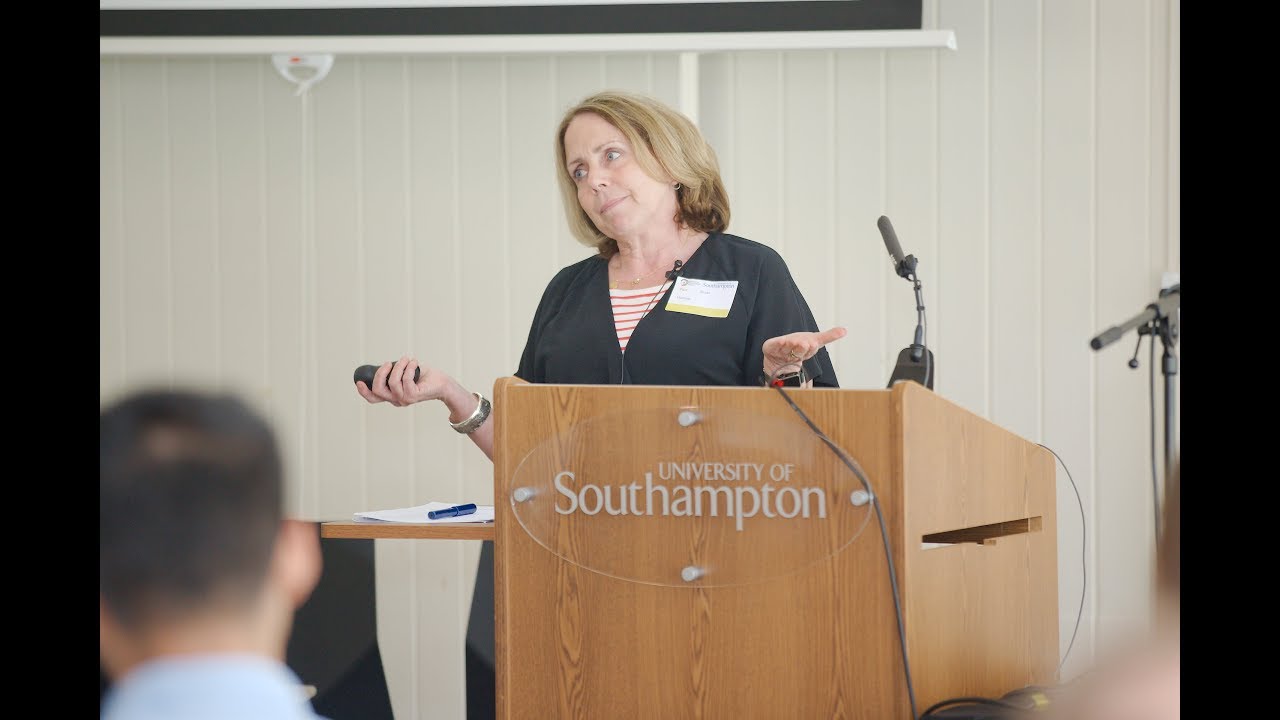
This webinar presents two complementary approaches to studying social media platforms: Francisco Zanartu demonstrates how evolutionary algorithms and graph analysis can optimize user diversity testing to detect security vulnerabilities in large-scale platforms like Facebook, while Dr. Kim Barbour argues for small data qualitative methods that prioritize participant agency, informed consent, and ethical considerations in researching online personas and identity performance.
Digital Humanities Lab: Social Platforms Small & Large Scale Research
Added:Introduction to Digital Humanities (DH) paradigms, including how computational tools are integrated with humanities inquiries.
Basic knowledge of social media platform architectures, specifically how user data, metadata, and feeds are structured.
Fundamental research ethics principles, particularly regarding human subject research, consent, and public versus private online spaces.
Understanding the general distinction between qualitative (close reading) and quantitative (distant reading) research methodologies.
Advanced computational text analysis and Social Network Analysis (SNA) techniques using tools like Gephi, Python, or R.
Practical execution of API data harvesting and web scraping methodologies while navigating platform-specific limits and legal terms.
Critical Algorithm Studies, exploring how machine learning and ranking algorithms shape the data collected by researchers.
Applying professional ethical frameworks (such as Association of Internet Researchers guidelines) to complex social data case studies.
325 views2likes56:03Original Release: 2022-08-11
Good morning everyone. Thank you very much for joining us today for the University Library's Digital Humanities live webinar. This is the first in our five-part series for 2022. I'm very pleased to see a number of you attending. My name is Alexis Tindall, I'm the manager of Digital Innovation here at the Library and first up I just wanted to mention I live and work on the lands of the Kaurna people and before I start I would very much like to acknowledge and pay my respects to them as the traditional custodians whose ancestral lands we gather on, even virtually. I acknowledge the deep feelings of attachment and relationship with the Kaurna people to country and respect and value their past present and ongoing connection to the land and cultural beliefs. Given that this is an online session I understand there's people probably joining us from other parts of Australia so I extend that respect around the communities and especially to any Aboriginal and Torres Strait Islander people who might be joining us today. I'm really pleased to welcome you to this session, very excited to kick off for 2022 and I encourage you to visit the University Library website to look into the program ahead. The University Library's Digital Humanities Lab webinar series is designed to inspire and inform Humanities researchers and their potential collaborators who are interested in using digital approaches in their work, and by potential collaborators I'm including other researchers, other disciplines, students, representatives of the galleries, libraries, archives and museum sector and industry anyone who wants to attend. In these webinars. We showcase real projects and researchers that are using data digital tools or other digital research methods to drive, enrich, complement or communicate their research and our intention is that these sessions are approachable, enjoyable and thought-provoking. The Library started this series in 2020 as a response to our researchers' interest in showcasing their digitally innovative work and in raising awareness of new tools and support that is out there, perhaps stimulating a bit of peer learning and in the best cases facilitating networking could lead to interdisciplinary collaboration. As you have registered for this webinar I'm going to add you to my circulation list for future sessions and please feel free to opt out of any time by replying to me. And just a bit of a housekeeping about how today will work we have the lovely Matt from our Academic Liaison team on board, he will be monitoring our chat window for questions or anything that you want to mention there. Please feel free to introduce yourself in the chat as well. Today's session will be recorded and it'll be shared after the event on the University of Adelaide Library YouTube page and you'll be sent a link to that recording after the session. Feel free to share it with anyone. If you have any questions please look to the bottom of your Zoom window and you can find a chat icon and you can ask questions in the chat window; they can be sent through at any time during our presentations today and i will post those questions to our two speakers at the end of their presentations. So today we're going to hear from two researchers in really different research disciplines who are both researching social media. As our social, working and creative lives depend ever more on online platforms these environments are of enormous research to researchers from a number of different angles. They're exploring how we engage and interact in these environments and all the positive and negative impacts those interactions have on our lives in our community. Effort is being put towards not only saying, not only understanding and advancing technical environment, the security and integrity concerns, how information spreads and how users create their online identity, their intentions and agency in this space. So with that i would like to perhaps introduce our first speaker Francisco Zanartu who is a researcher from our School of Computer Science who's working on a Facebook or Meta funded project to consider integrity and privacy issues through social testing. Francisco is a former Chilean broadcast television executive, he was involved in the development of major productions as well as an intensive digital transformation process that positioned the media holding as the country's undisputed ratings leader. He's joined us and completed a master's degree in Data Science where he studied state-of-the-art methods for automatically classifying GitHub repositories and with that Francisco I'd invite you to share your screen and I look forward to hearing what you've got to say today, thank you. Okay thank you for your introduction and I'll share my screen one sec please.
Okay can you all see my presentation?
Yes that looks great thank you. Cool thank you. Well my name is Francisco and I will be presenting about socials a Facebook found research project that I'm working on along with professor Christoph Treude from the School of Computer Science of the University of Melbourne and Marcus Wagner from the University of Adelaide. Well, as you may know Facebook is a social network for you to connect with friends and family but to give a bit of context to this project the first idea that i want to install is that Facebook is massive. So it's almost 3 billion users worldwide on average each user spends half an hour on the on the platform and that usage generates 4 million gigabytes per day. So that is Facebook and Meta a Facebook owner has deployed a Facebook scale simulator to detect harmful behavior in his network and provide better security a standard for his users. So this this simulator is called a Web Enabled Simulation or WES and it has three main attributes: it uses machine learning to train bots and WES is able to automate the interactions of these bots and it's also able to deploy this bot and test them on the actual, on the real Facebook the the one that we all use. But there are many challenges in building a platform like WES so in order to speed the progress Meta is seeking input from others in the research community inviting academic researchers and scientists to contribute with new ideas and that's where we came in.
So WES can simulate user behavior but what behavior should it simulate? This is a research question that motivates our project.
Social times a diversity to find the user behaviors that will allow us to find new problems so the idea is to diversify the user behavior to help WES finding this problem. I will explain this in more detail later but what challenge here is that we don't have access to WES in in our project so we will build our project with data from GitHub. We have it's an online platform as well and here we come with the expertise of professor Christoph Treude, he's a recognized world leading researcher for mining interaction from repositories and also with the expertise of professor Marcus Wagner on diversity optimisation. So the first thing is like we will capture the data from users on GitHub we will characterise this data and we will test this useful that we found in in GitHub with some abnormal or random behavior.
But you might be wondering what is GitHub right, so GitHub is a big community of 72 million users and around 233 million repositories. It has the largest host of open source code on the internet, is a cloud platform where software developers build and maintain the project and it have integrated kits, a person control tool to keep track to change to the code.
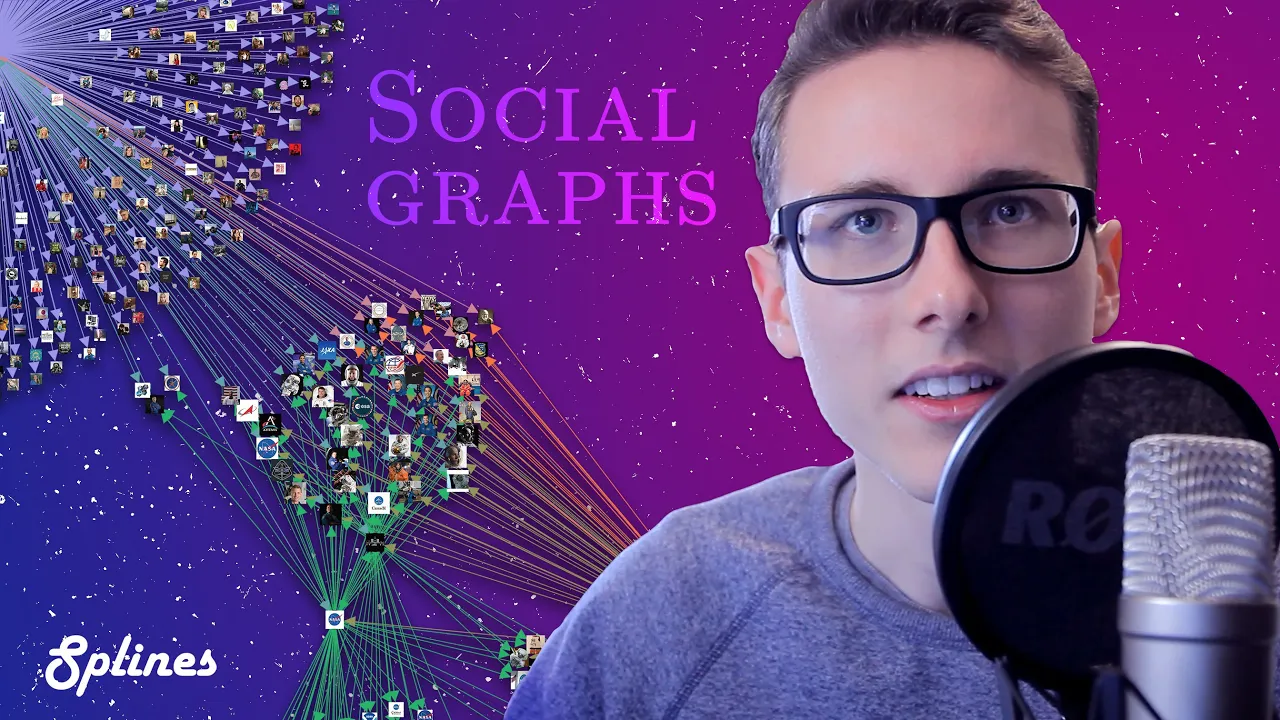
You can think about these repositories as folders in your computer that contains code or text files basically and the users here contribute to each other improving those text files with new ideas or better implementation of the codes. And GitHub also allows you to create bots that automate tasks in the platform so let's say that for it change in the code, you have to perform some tests you can create a board that make that test for you and GitHub recently released copilot that's an artificial intelligence that autocompletes code helping develop solutions faster right. And to be more specific a typical workflow might be as follows: so let's say here let's say you're using a GitHub code and you found a problem with that code, so you log in into GitHub, you go to the repository that contain that code and submit an issue. So this would be an event inside the GitHhub network and the next thing that will happen is that the owner of the code or some someone that is contributed to that repository will fork and clone that repository in his own computer and he will modify the code and submit a full request. And from here let's say another person in this project, in this folder, will review and test the code the new code and will merge it with the original code right. But how can we analog this to Facebook? Well we can think on this event as Facebook events right so for instance a fork event will be similar to giving a like to a public profile page on Facebook and we can build a graph data structure that in our case is a set of nodes, these big blue dots here that represent users on repositories on GitHub and edges that are the actual events that occurs in the network and that will allow us to explain how users interact.
And so how we are capturing this behavior, we're taking the GitHub database that is publicly available on Google Cloud and building our own custom graph data structure with the list of events that are registered there and among other things we are calculating the centrality metrics that indicate the relative importance of a node in a graph so let's say for instance this graph here with the highest degree of centrality is the user that has participating more events inside the network and also we're calculating some other thing like profile similarity metrics. That would be for instance how many attributes you share with some other profile in the network if you have the same name, the same picture, the same location on all that sort of information that we fill when we sign up for for a network of these characteristics or some anomaly scores based on how abnormal an event might be for a user depending on the time that such event happens.
Okay so here i will introduce the concept of evolutionary algorithms and that will allow us to understand how we are optimizing the device diversity of GitHub users. So these algorithms are inspired by the biological evolution and use operation operators such as selection mutation and reproduction to find candidate solutions for optimization problem. So let's say let's have a practical example of this, let's say you want to climb a hill right now draw it here.
And you start, you you don't know the landscape and you start at a random point so this will be x and y coordinates right. You just start here and keep random steps at an unknown direction and on each step you elevate your altitude right. So if you work here they say okay I'm in a higher attitude I'm here, here, so the higher up attitude means that you're getting closer to the optimal point right.
So this is an example of how diversity algorithm helped us finding a diverse distribution of users in the network. We are using the so-called star discrepancy score as our evaluation metric this star discrepancy measures how well the data points are distributed in our space and here we we're calculating the star discrepancy based on centrality metric and and on the degree of each node just an example okay. And so for instance this is the an initial set of actual users that we grabbed from GitHub they seem to be clustered in these two groups here and after our evolving process they now look very well distributed in the plane right. So is how they look now is the same amount of user and this is how they look now they are and they are distributed with our evolutionary algorithm.
So here is a practical example of this, let's say we have a popular user this red node in the graph that has reached the maximum number of friends in the network so for instance for the case of Facebook that would be 5,000 users and let's say also that to avoid the spamming this network has set a limit of the maximum number of messages that you can send into a period of time so that in Facebook will be like 150 messages in this period of time. But let's say also that this user has been victim of some sort of hacking thing, his account has been phished so you can clone his profile after you can, you get access to this victim account and access to his entire network and spam his friends but you still have the this limit that the network is imposing.
So a diverse set of clones could be created to bypass the network security mechanisms, and violate these spam rules and so this is our work in progress and we will continue from here developing new experiments and installing our local version of GitHub or a GitHub server to study what would happen from the server side of the network with this diverse set of users.
So in conclusion we are aiming at diversity to find new behaviors that could potentially lead to new issues and therefore simulation should focus on this behavior in order to fix these issues. So what Facebook would expect from our work is we plan to develop a framework for testing user interactions and potentially detect these bugs or this harmful behavior that we took.
So that is for me, I'll leave you with Alexis. Thank you very much Francisco that's great thank you. So what we'll do is if you have any questions please feel free to post them in the window and we will put them to Francisco and Kim at the end of both of the presentations. And with that I would like to introduce Dr Kim Barbour who is a qualitative new media scholar and Senior Lecturer in the School of Humanities department of media. Kim's research looks at online personae, the strategic production of identity for digital media, particularly the domestic use of social media. Kim teaches in our Bachelor of Media and supervises post-graduate research. She's published articles in Celebrity Studies, oh hang on I've got acronyms here and she's published articles widely and has chapters in a number of edited collections. She's also the managing a founding and managing editor of Persona Studies journal and has co-authored a book, Persona Studies, and introduction which was released in 2019. And with that I'll invite Kim to take the stage thank you. Great thanks so much Alexis and thanks to Francisco as well for a really really interesting presentation. Algorithm stuff always feels a little bit like magic to me and I think that demonstrated clearly that that's still the case but to begin. So as Alexis mentioned I'm a qualitative new media researcher and I study personas which are the strategic performance of a version of self for an audience. Often that self is constructed on or performed through social media that's most frequently where my interest lies, so my focus is on media types personas produced and enacted through media technologies. I usually avoid researching high status folks such as celebrities as I'm more interested in everyday and banal uses of these spaces. I have a media communications background which means that there is an influence in cultural studies and considering the role of power, personal, political, financial, platform, audience power, that sort of thing, along with sociological and underpinnings and the interest in how socio-cultural norms and kind of historical constructions of identity influence persona development now. So that's a whole lot of words to say that i research what people do on social media, how this contributes to their sense of self and how others see them. So my research methods utilize online listening to build a deep familiarity with the habits and voice of a small number of participants and often include one-on-one interviews where we talk through the way that they use social media and what they intend to achieve through that use. So social media platforms are my field sites. Using small data allows me to get deep into experiences that may not be generalizable but do add depth and richness to our understanding of the ways that people use social media and the range of ways that this new ubiquitous software has produced ways of negotiating the self. While small data research is limited and its capacity to tell us trends across populations, what it can tell us about is people and a little bit about why things happen or, just as importantly, don't happen. So in this presentation I'm going to talk through some of the challenges and implications of small data research and where opportunities for insights lie. So this will be framed by three key constraints that guide human research and all social media research is human research so ethics law and institutional policies. Okay so the default position in academic research since the introduction of ethics frameworks has been that protecting participants from harm means obscuring their identities. Large portions of ethics applications are devoted to privacy security and anonymity; this is undoubtedly important but also has set up expectations that anonymity or pseudonymity is best practice. So this is an area where there is actually now alignment in terms of the increasing nuances that need to be taken into account when thinking about doing social media research and small data research when you're looking at individual people and where there's alignment between legal frameworks around privacy and copyright, around I guess institutional expectations of researcher and behaviour and around ethics as well. So firstly when we are considering social media sites there are significant differences in the use of their identifiers. So some like 4chan are anonymous sites, your identity is not noted there and I put "anonymous" in closed quotes because there's always ways and means if you're clever enough. Reddit has persistent handles which are not a real name but can be identifiers across sub-Reddits or within a thread or can also be discarded just as easily. Others like Facebook profess to using real names but there are plenty of workarounds for that policy including just lying. I think that we often discount this idea that people just lie, but people just lie sometimes. So all of this has to be considered when we're thinking about how we identify participants in these spaces and how we think about these ideas of anonymity and pseudonymity and obscuring identities by default or not doing that, because participants may well be comfortable with their existing methods of identification depending on how close or far those are from their identity and in human and in other spaces. So the second component here is that participants might not want to be anonymized so this default to anonymity that stems from medical research and some really really important things needs to be considered as well. So for some people they could gain status or credibility by being included in academic work, by being featured and named as contributing and having their work I guess connected to them and being able to point to that. And other people may want credit for the labor that they put into their posts and that's fair and it ties as well into the third point here which is that the alignment of the law ethics and policy moment is that under Australian law social media posts are automatically copyrighted as creative work. So this means that as researchers we need to respect people's moral rights to their creative labor including when that creative labor is posting online. And I think that's something that often goes under the radar with social media researchers and researchers more generally as well. Okay so a couple of case studies to put this in the context of a few pieces of work that I've produced, I realize they're very difficult to see here but they are linked down the bottom as well. So there's two case studies. The first case study here is where i was using Twitter to explore public audiencing; so that was looking at tweets that were sent during the live broadcast of Love Child which was a show on Channel Nine. The tweets used the official hashtags, tagged the official accounts associated with the show and the channel, and also actors as well who were performing within the shows, and generally position themselves as part of a public discussion on this site. But they weren't media commentators, they were small accounts and so in terms of the people whose tweets I was capturing through this process. So to avoid surfacing those accounts I used the tweets verbatim but I excluded the handle and the publication. What that means is that the user is able to claim their tweet if they wish, they can point back to it, but if they delete it then there's no real easy way to connect that tweet to the person or the account that tweeted it because it's not listed, it's not named in the publication. So that was the the kind of choice there. So the second study that I'm addressing today is my doctoral research which was a longitudinal study that also used interviews, so I spent between 18 months and two years following eight participants who were, to explore the way that they performed artistness on social media so to look at the artist persona. I was checking their accounts at least daily, they lived rent-free in my head and some still do, I still think about these people on a regular basis quite a few years on now. So the participants themselves had kind of varying profiles in terms of their level of public visibility but they all perform all provided informed consent and they elected how they would be identifiable and they all elected to be identifiable in a way that connected them to the accounts that I was studying them through. So what this allowed is it allowed me to use screenshots although I did need to be careful to make sure that I obscured any identifying information from other people who engaged with the post. So that's this idea of where there is alignment between law, policy and ethics. The next one is an area that's kind of in negotiation, there are areas of these three kind of spaces which depending on their interpretation would come into conflict. So this is around ideas about profile and size of profile and also around when we do and don't name people and when we do and don't need informed consent. So there's a tendency to collapse all types of social media content in quite unhelpful ways, either it's on social media and so therefore it's private because it's where people connect with family and friends or it's on social media and therefore it's public and I can use it because I can access it. So there are you know difficulties in making practical and ethical decisions around who's contributing to public discourse, who's a public figure and how much of what they say is reasonable to research. So making those choices is complicated or making those determinations is complicated. Follower numbers by themselves are not necessarily a useful metric particularly when the same somewhat arbitrary figure, so numerical figure like a thousand or ten thousand or whatever it might be, when those numbers are used across platforms. Because ten thousand subscribers on YouTube may mean something very different to ten thousand followers on Instagram. So this is an area which is currently under negotiation within institutions including this one as Legal and Risk and human research ethics committees and researchers work to find best practice approaches particularly around if and when it's appropriate to consider issues around waiving consent. So here's a hypothetical case study for you: a researcher wants to study the way that different types of masculinity is performed on Instagram to explore the way that high profile men role model different ways of being men in contemporary society. So in order to do so the researcher wants to study those who have influence and power in particular realms and select a number of highly visible politicians and high-profile successful footy players. So having reviewed the methodology and the methods and the data collection plan and so on HREC determined that there's a good case to waive consent pending Legal and Risk approvals. Okay so Legal and Risk, and I'm actually kind of paraphrasing here from advice received although I am not doing this project, state that informed consent is required for research that includes data from social media sites on the basis that the project will collect both personal and sensitive information. So names and other identifying or potentially identifying information is considered personal sensitive information as a subset of that and includes but is not limited to information about a person's political opinions, philosophical beliefs, sexual orientation or practices and it's determined that studying masculinity and looking at masculinity and naming the people who you're analyzing falls into both of those categories. So taking this very strict line which as I say is kind of under negotiation at present this project they say you you must get consent so you have to contact all of the footy players and the politicians and say I want to study your, the way that you perform masculinities on social media and please give me permission to do that. Right so sorry there is more there. Okay so similarly taking a kind of very strict interpretation of this would mean that researchers who study for example terrorism or gangs or white supremacist organizations would also need informed consent to look at how these folk use social media. And I probably don't have to unpack why those kind of examples are problematic and you know the the profile and the status is not given as a reason for waiving consent and so this kind of very strict interpretation becomes quite problematic quite quickly but as I said it's kind of under negotiation at the moment. All right so the final topic I want to kind of introduce here today is where i think there is a direct and to date unresolved conflict around social media research that is worth quickly unpacking.
So this is the the role of platform terms and conditions and the way that we plan and execute research into social media platforms. So as users of a service we are bound by platform terms and conditions; we see the implications of breaching these when people are de-platformed for repeatedly breaching terms and conditions, when people get what's called zooped from Facebook and have to serve 30-day or 60-day bans for mentioning names of medication or being reported for obscenity for posting breastfeeding pictures or whatever the latest thing is I'm not getting into those discussions today. But as researchers we are also bound by University policy and by law to abide by the terms of conditions of these sites. I argue that allowing platforms to determine how they are researched creates an ethical and moral conflict. These are immensely powerful organizations whose influence on everyday society shouldn't be ignored and yet they determine the conditions under what research can like can be done and how that research is done. So again I think there's there's some quite obvious conflict here in terms of thinking about research. Putting aside big issues here's a more approachable one: Twitter is the easiest platform to scrape data from, it's the most accessible for research, it's the most researcher friendly and therefore it's massively over represented in internet studies research. This leaves other sites critically understudied and it puts too much emphasis on the impact that a site has on a comparably small site, it's got a comparably small user base for internet, the social media platforms, and they are quite a specific group of people as well, the Twitter sphere. For fairly obvious reasons I'm not going to connect you to a piece of work that demonstrates that breaching terms and conditions results in ethical and moral good because Legal and Risk have my phone number but I'm just kind of thinking this through as we go and thinking about how we can address this conflict I think is really important. Okay so that's the kind of main part of my presentation I hope that these provocations have sparked some thoughts in terms of what it's possible to do both in social media research without that kind of in-depth computational and big data research methods but instead with data that you can hold in your head or in your hands. Both approaches and all of those in between add to our understanding of the world and the impact of these new new technologies on the people who use them. If you're interested in thinking about some of the ethical issues around social media research or if you are a social media researcher yourself I really encourage you to start with the Association of Internet Researchers Ethics Guidelines and they're available on the AOIR website. It's a really great community of scholars who if you're working with research and online spaces you should definitely connect with. The most recent version of the ethics guidelines from 2019 includes specific guidance depending on your research approach and method so it's got sections on machine learning and AI, partnering with industry, feminist research ethics and an impact model. And from the 2012 version i really like the chart which introduces a range of prompting questions to guide your research design, so these are not rules, they're guidelines so they're ways of thinking about conducting research ethically online. So thank you very much everybody and that's my bit.
That's great thank you Kim. I was just looking up the Association of Internet Researchers isn't that right but yeah I'm just popping that in the window for anyone who's interested, it's worth having a look at there. Thank you for both of your presentations, I found that very interesting I mean at the most basic level I find it interesting that you're sort of studying the same thing from completely different directions.
But I think that's actually really actually part of the point of bringing the two different disciplines here together because obviously you know this is a, this is a social sphere an interactive a creative sphere and it's you know there are as many different angles to take on it as there is on angles on the real world and you know where does the distinction lie these days anyway. It is the real world we are still doing things we're still making stuff yeah still people behind all the data. Yeah one thing that I found interesting I did like your comment early in the piece Kim that algorithmic work feels like magic and I just reflected on the fact that Francisco and I caught up the other day and I found the evolutionary algorithm section quite interesting and I said can I can you tell me more about that and he said it gets very complicated very quickly. Which I think is the point but I do think that actually was the point of using the algorithm to blur the people's interactions in that way I have a thought sort of going around my head as I listen to you both but these platforms, people use each of these platforms for a purpose, so the celebrities that you're talking about, the politicians, the footy players Kim are using it for the creation of a kind of profile which would probably be using it for a different purpose than, you know my auntie who wants to share photographs of Christmas on Facebook and uses it for a different use of social platforms for a different reason from the GitHub companies that you're talking about Francisco, who are there sort of collaborating on code and sharing code. And I'm wondering whether you have any comments about how the objective of what the person is trying to do would change your methodological approach in how you research them. It was that it, it feels to me, I'm going to answer my own question, it feels to me like that's a bit of a slippery point when you're trying to research these platforms because it's difficult to ascribe that objective as a researcher.
Yeah well I think I'm sort of using the the data that is publicly available on GitHub in a very abstract way. I'm not revealing any of the details of any developer on GitHub I'm not telling you which are the events that they were in building I just, we're just building this graph data structure that is a very abstract thing right and from there it's very hard to to read some kind of private information of any use there so I'm very glad as well of been using GitHub data instead of Twitter and not being over representing the more studies there right. But yeah I think I never heard of GitHub before completing my Masters and when your coming into this world you it's a really fascinating platform to contribute to other projects so I would encourage everybody here in this session to have a look at GitHub and understand how it works and how you can interact with other users there and how they stated that there's publicly available and it's hosted on Google right and how you can wrap this data and build beautiful things for researchers and this kind of studies. Yeah it's interesting isn't it because intent, so my work's at the opposite end, so Francisco takes the data and abstracts it to the point that individual people are no longer actually at the center of what's happening it's looking at the connections between them yeah. Whereas I'm looking at a person and then the connections come from that person and so intent is really important and that's one of the reasons why my research often includes those interviews as well because I can't judge intent without talking to a person. I can only judge what I'm what I'm seeing, I can only analyze and interpret what I'm seeing and so you do have to get that kind of actually talking to people and even online listening you can get a sense of passions and rhythms of behavior and interactions and those kinds of things. But I still can't see if that's counted as successful for that person unless they write a post saying I tried to do this thing and it didn't work and you know very few people do that when they're talking about what they're doing online. But also GitHub as a site as well as the level of kind of data analysis and abstraction that Francisco and his team are doing there is also other work that's being done on that space which was really interesting so from from my perspective there's some great work that's been done on levels of participation and engagement with women and the way that women software developers and coders interact on GitHub, the types of questions that they ask, the number of responses that they get and those kinds of things which are quite, which are I guess visibilizing the way that this field of software engineers internationally interacts at a level of kind of a gender where it's determined where it's identifiable and the way that the different types of coders operate and how that also feeds into different types of projects. And that can help address some of the larger structural issues around women's participation in computer tech. So as a space it's really really intriguing there's some great work being done there yeah so intent's what I'm all about and it's really hard to determine if you don't ask.
I'd love to, I feel like even the graphical representation that Francisco shared of users I almost feel like I wonder whether there's a, I'm someone's surely done it, what the graphical representation, how different it might look for these different types of users and whether you could almost identify you know whether someone is a just random punter versus corporation versus celebrity, whether they're operating their own account or not, whether you could tell that from the data I don't know, I'm just, maybe someone's looking at that. Francisco do you have any thoughts on that. I mean yeah it's very hard to to answer that from from the sort of data that that we are grabbing here but if you look at this sort of graph data structure you might realize that normally bots are the actual user that tends to have the more interaction with with other users and that's sort of natural right because every time that something happens that triggers an action for the bot and the bots don't sleep right they they're awake all day and they're keep working, and I don't know developing this action, these events inside the networks. And I don't know and how they work on for instance on Twitter or on Facebook but I think they're, they act in a similar way right. Every time some somebody is talking about something that this bot is particularly interested in he will be there answering and publishing comments on that, on the topic and that of course will increase the the activity inside the network. That would increase their centrality? Well although different metrics that they all sort of refer to the same thing, it depends what are you looking at but all those metrics look how how important and all is where it's a relatively important you know in the network.
If you are looking about what might have the the highest degree because some other common metrics, I don't want to dig into the details here but some other some other common metric for social networks is the let me back to the, between the centrality, so that is how many times a node or a user acts as a bridge connecting two groups of people inside the network and those users are very important right because the messages tend to travel through them. Yeah so that's that's really interesting as well that that's one of the things that is looked at because what's often looked at from my perspective is, yes those connections and and how those connections work but and and how strong they are, so looking at kind of the strength of Dyer's theories from the '70s and stuff and going are these people that are, that you interact with a lot who you're close to, do you get more value or or a connection out of the I guess those people that you connect to online who are more distributed in your network because the people that you're close to are, you engage with them all the time so you're not necessarily learning anything new from them. And so that's that's really it's interesting to see it mapped at scale as well as looking at it kind of the individual level and this is why I think it's so important that all of these types of research continue on and that we find new directions to think about this stuff because you know the maps tell us some things about patterns but like you say Alexis that intent question can sometimes get lost in that process. But I think that's one of the strengths of Francisco's teams' project is that actually in that in the objective which is testing integrity and privacy you're actually removing with that evolutionary algorithm stage of obscuring what the interaction of the event is, you're removing that intent. And because yeah if you the researchers interpretation will always go well if I'm trying to try and find people spreading this information or I'm trying to find people using the platform for commercial purposes that it is allowed then you'll sort of skew the research in some way whereas taking the base level of users and making them weird through that algorithmic process.
Finding those weaknesses and sore spots and the exploitable points and networks to allow us to be able to continue to use them with a degree of safety whatever that's called and looks like and i think really really disputed, how safe these places are anyway and that I'm as somebody who you know kind of depends on them for my livelihood you know these are these are questions that we need to to dig into and I think this level of abstraction really helps with that I'm just going to mute all this. You're being, you're being suppressed Kim. I'd just like to remind the audience feel free to ask a question in the chat window if you're, if you're interested in doing so. Francisco, the people who are using GitHub, it seems like it was fairly easy for you to get that data set, so the data for GitHub users and interactions is sort of hosted on google did you say? Yeah you still need some technical skills because it's, it's a really huge database I mean it's for years you can have like four terabytes of data so that it's hard to download everything and work with that on your computer. So we're building with the small pieces of data that will be scalable in the time so we're sort of developing a prototype for a project with the expectation to find something and from there develop something bigger. But if somebody knows how to deal with really big data that is Facebook right, if they found some interesting thing in our project they will certainly know how to deal with this amount of data. I mean what it takes GitHub a year in terms of the weight of the data for Facebook it's just one day. Yeah do you think that, the I'm wondering whether the hosting of that data and making that discoverable is part of the terms and conditions of the GitHub site like that the users know that, do you think the users know that their interactions are available for downloading or do you think they don't care? Presumably is it safe to assume that GitHub users will be slightly more data and technically confident or literate in terms of those terms and conditions environment or is that just is that suggesting too much for them? Well I guess that is one of the most magical things of GitHub that people know that this is an open source platform and by the open source that means that you can actually publish your code and you know that somebody could download your code and use it in his own benefit without your consent. I mean you are implicitly giving your consent to the other person to use your code. What developers do is they share a license for the code so sometimes you have to, the most common thing is like if you use open source code to to develop your solution your solution also has to be open source. That's the most common license in GitHub. So yeah Kim do you think it would satisfy your privacy concerns or your sensitivity consent?
Look I think the level of abstraction that we're dealing with here is I guess to a point relieves those concerns anyway it's certainly there's no kind of informed consent thing going to happen in this space when you've got the number of users and the level of data that you're scraping and like that's a functional boundary right for this kind of research if you insist and this is why as well I think it's really important to think about when the impacts are on smaller cohorts or on smaller pieces of research to think about how that could be scaled up if people decided to be super strict in terms of their interpretations because I think what's most actually most core here is that people, as researchers we're thinking about the implications of the work that we do. What happens as a result of that work both to individual people whose data that we're using and for example that might be that there is no impact on them other than potentially that they could gain if the results of the research lead to changes that are positive but also thinking about flow-on effects and I think this is so core in the tech industry as well that so many things including social media itself have had really significant impacts which were not anticipated because people didn't look far enough ahead right. And yes we can't predict the future and and all of that kind of thing but there are times when it's, when things like real name policies that were introduced and then nobody went oh wait there's a whole lot of people who obscure their identities for really really important reasons and maybe we shouldn't insist on seeing a driver's license in order to verify somebody's name like these are these are questions which, that's like quite a small one, but we can think about you know platform-wide changes even changes of hands in terms of ownership and those kind of structural issues as well to do least harm and and not just break things right just because it's possible but go okay well what happens if this breaks and does that mean that our society becomes more polarized, does it mean that our relationships become more challenging, does it mean that you know our education system shifts in ways that we're not necessarily going to see a benefit from and I think that when we're dealing with these larger structural issues that's when we need to think about those flow on effects and I think that starts with ethics at the beginning of the research for us and I think it starts with ethics with the companies as well. Rant over!
Thank you Kim.
We're getting close to the end of the hour and so I think I might wrap up discussion there unless either you have any final comments that you would like to make.
Thanks very much for the opportunity to take part. Thank you for joining us today, I think that was a really interesting discussion I think you actually really both did a very very good job of bringing together quite different projects and seeing finding some commonalities there and I appreciate that. Thank you very much to all of our speakers, thanks to Matt for holding down the fort behind the scenes and being there ready to be poised in case it all falls over. Just in winding up I'd just like to point out that our next installment in our webinar series is already promoted on our University Library website and I will send you a link when I send you the video afterwards. We're going to be looking at a few different research projects that are using digital technologies to explore musical instruments including 3D scanning and digitization of historic musical instruments both for preservation and understanding the relationship between space and sound and also looking at how we can use 3D printing to adapt instruments or build completely new instruments that work with the needs of professional musicians with disabilities Really looking forward to that one it's going to be Wednesday August the 24th at 10 a.m, as I said I'll email all attendees details on how to register. So thank you very much to our audience your time today, to our speakers for some really thought-provoking presentations. Thank you Alexis. Yes thank you I look forward to seeing you next time. Bye bye.
Up Next

20:17
Vector Search Explained: AI's Role in RAG Systems
@Computerphile
62.2K views•2026-03-11
87:26
Introduction to Secure Multiparty Computation with Yehuda Lindell
@fhe_org
7.7K views•2021-02-04
4:55
HTTP Requests Explained: GET, POST, PUT, DELETE
@codecademy
103.1K views•2021-10-07

19:25
Enigma Machine Mechanics: WWII Encryption Explained
@JaredOwen
13.2M views•2021-12-11
Related Study Plans & Knowledge Roadmaps
Structured learning paths in Computer Science
computer-science
Container Runtimes: Namespaces, Cgroups & Go
01Linux Systems & Go Programming Foundations
02The Core of Isolation: Chroot and Filesystems
03Linux Namespaces: Process Isolation
+ 3 more learning modules
32h6 modules
Explore Roadmap
computer-science
Building a CHIP-8 Emulator: Rust & CPU Basics
01Computer Architecture Foundations (Bits & Bytes)
02Rust Programming for Systems Development
03CHIP-8 Virtual Hardware Specifications
+ 2 more learning modules
32h5 modules
Explore Roadmap
computer-science
Building BitTorrent: Go, P2P & Concurrency
01Go Fundamentals & Concurrency
02Networking Foundations & P2P Architecture
03Bencode Parsing & Torrent Metadata
+ 3 more learning modules
26h6 modules
Explore Roadmap
computer-science
Actor Models (C++ Concurrency & Lock-Free)
01C++ Multi-Threading Foundations
02Thread Pools and Task Scheduling
03Atomics and Lock-Free Queue Design
+ 3 more learning modules
45h6 modules
Explore Roadmap