

















This lecture explores two competing philosophical perspectives on time: presentism, which holds that only the present moment is real while the past and future exist only as memory and prediction respectively, and eternalism (the block universe theory), which argues that all moments in time—past, present, and future—are equally real and exist simultaneously as a four-dimensional spacetime continuum. The lecturer explains that while presentism aligns with our intuitive experience of time flowing forward, eternalism emerges as the more scientifically consistent view based on the laws of physics, which allow prediction of future states from present conditions and reconstruction of past states from present conditions, suggesting that all moments in time are equally real rather than only the present being real.
What Is Time? Presentism vs. Eternalism Explained by Sean Carroll
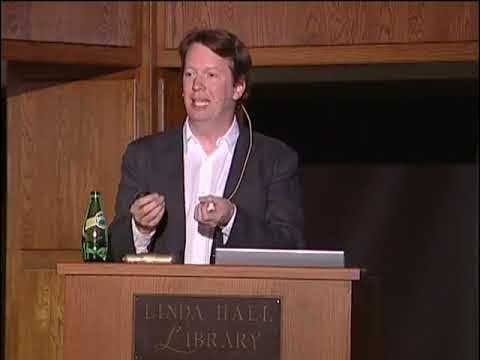
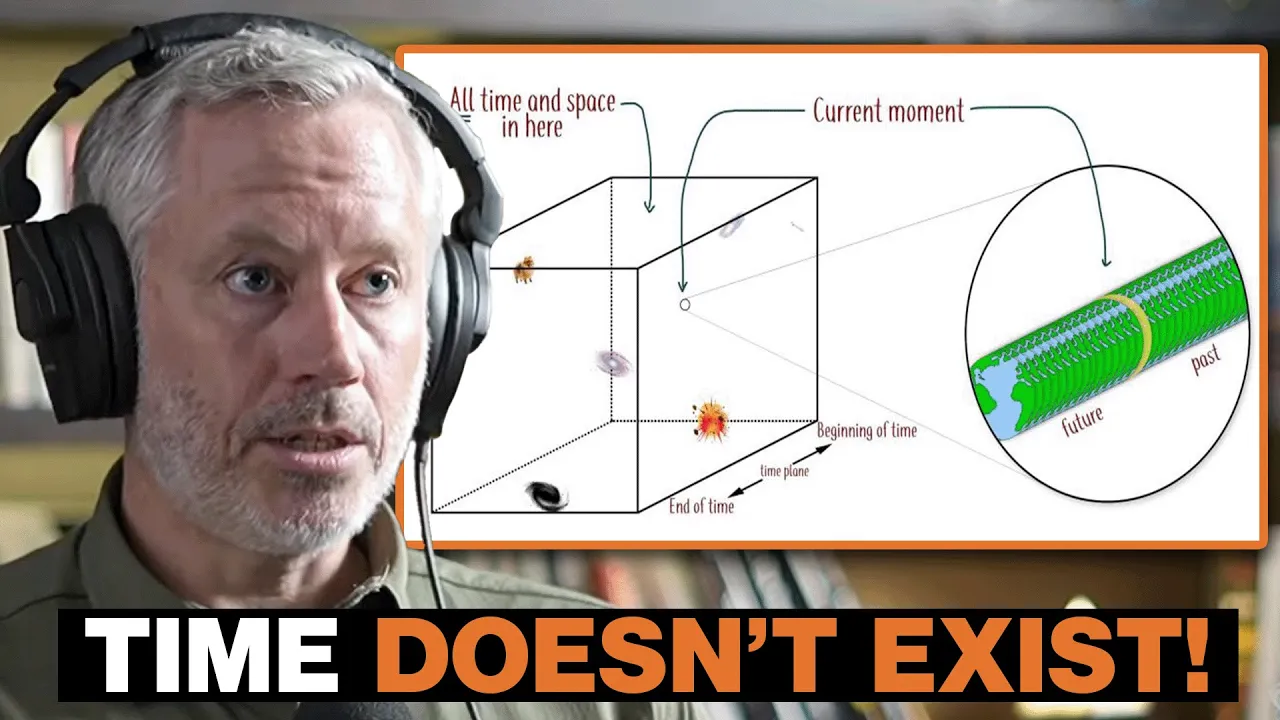
Added:as we ponder the mysteries of time this is the one lecture in which we'll allow ourselves to get a little philosophical and by that i don't mean we'll just sort of sit back and ponder how awesome it all is and reflect upon the majesty of time and space what i mean is we're gonna think about the problem from a philosophical perspective from the rigorous academic discipline of philosophy now there is of course a long-standing relationship between physics and philosophy or between science and philosophy more generally there is let's say a usually friendly rivalry the two disciplines are a little bit different they have absolutely different aims but their subject matters often overlap and the study of time is one where the philosophical perspective is absolutely helpful even to physicists like myself what philosophers try to do is to really understand the logical inner workings of something physicists like myself are often very happy just to get a theory that works a theory that makes sense is a little bit too much to ask sometimes and you might think this is not possible but we have it all the time quantum mechanics is a great example of a theory that doesn't completely make sense to us but it works so for a physicist that's fine for a philosopher they would like to do a little bit better the same thing is true with time we have an understanding of how time works in a physical way in certain well-defined circumstances but there are still philosophical questions so in this lecture we're going to sort of lay out what some of those questions are and that will help us understand the scientific aspect that we'll uncover as we go on through the rest of the lectures so what do we mean when we say time especially as opposed to space what do we mean when we say the whole universe when we think of the universe we generally think of space we think of not just space as outer space as planets and stars and galaxies but the space around us the location of things in the world the world the space that defines everything around us and the stuff in the world that's what we think of as the universe but we think of that universe as happening over and over again so we automatically right from the start treat time and space differently we treat space as somehow more important or relevant to what the universe is whereas time is just a label that tells us which moment of the universe we're talking about already in lecture one we discussed this analogy of thinking about the universe as a movie reel or a film strip a series of frames a series of moments and what i'm trying to say here is that both each frame and the whole series of frames the whole movie reel define what we think of as the universe it's this four-dimensional thing both space and time and i have to caution when we use that analogy it's very tempting to wonder whether or not like a film strip moments of time are discrete as far as we know nothing in physics tells us that time is discrete as far as we can tell time is perfectly smooth and continuous people sometimes wonder whether or not a future reconciliation between quantum mechanics the theory that happens at the very small scales and relativity einstein's theory of gravity maybe someday that will tell us that time really is discrete after all quantum mechanics comes from the word quantum meaning coming in discrete packets so maybe when you quantize space and time itself they will become in discrete packets but as far as we know that's not true their best understanding right now of time and space has time being absolutely smooth and continuous that's not to say that we will not get a better understanding of it in the future but right now i'm not trying to use the filmstrip analogy to say that time comes in discrete packets just that the universe is both each frame of the movie and the series of all the frames together so already the way that that film strip of the universe works involves a fairly subtle notion the continuity of the universe from moment to moment in time we said before the universe doesn't rearrange itself unlike space so let's sort of interrogate that concept a little bit more closely in space what happens at this point right here seems more or less completely disconnected from what's happening at this point right here now it's true that in the real world things do not completely change from point to point in space here is the air in the room here is the air in the room also but i could put you know my hands very close to the ground and then you would have air here and the ground right next to it there's nothing to stop me in principle from having absolutely empty space at this point and some incredibly dense or incredibly hot or incredibly interesting object right next to it space the stuff around us and the stuff inside space doesn't have any rules about what comes next to everything else time on the other hand has rules about what comes one moment after the other that's how the laws of physics work that's how we think of the laws of physics in the modern world and this is not at all the only possible way the laws of physics could work this is a really interesting profound feature of the real world laws of physics namely that the way they work is the following you tell me what the world is doing right now or at some other moment of time but you tell me everything in the world at one moment in time and the laws of physics will tell you what happens next and then from that next moment the laws of physics will tell you what happens the moment after that so the laws of physics start from a moment start from a state of the universe at one instance in time and they tell you using the patterns using the physics the equations that are the laws of physics what happens at each subsequent moment that's completely different than space obviously in space the laws of physics are not able to tell you just because something is happening in this place what will happen in the place next to it even when it comes to time it could have been different remember aristotle discovered laws of physics that worked in terms of the future things have goals and to understand what will happen next need to contemplate what the future conditions could be we could contemplate different laws of physics that involve the past in some important way that knowing the universe right now wasn't enough you needed to know how it got there but as a matter of fact the laws of physics that we use whether they're from galileo or newton or einstein or schrodinger or superstring theory that we talk about today they all have this feature that what happens at one moment of time is enough to predict what will happen at the next moment of time and after that you can just keep predicting all the way toward the future so to really get our brains wrapped around this think about the difference between time and space later on we'll talk about relativity and how they're related to each other but let's for right now just accept the ordinary notion the time and space are completely different uh we move through space as we like we can choose to go to some other location in space we can't choose to go to some other location in time we inevitably move through time at the rate of one second per second time is relentless whereas space is sort of up to us how to move in it that gives us a certain perspective on what the world is we think of reality as one moment in time we think that uh location far away 20 feet away or 20 miles away or 20 million miles away it might be inaccessible to us right now but that doesn't mean it's not real we think of different locations in space as absolutely real whether or not we are there but now think about time think about the past and the future are they real and this is a question where as soon as you start thinking about it you begin to suspect that the answer is just this is not a good question to ask nevertheless it's important to understand why we think of different times differently than different spaces we think of the universe right now as existing but we think of the past as over with we don't think of the past as real in the same way that the present is and we certainly don't think of the future as just as real so the important thing is not to figure out what is real and what is not real the important thing is to wonder why do we treat the past and future so differently why are we thinking of them in such a different way as we think of the different parts of space so to answer that question we should think about how we use these concepts how we actually go about describing space and time let's imagine you want to meet someone for coffee you say let's be at a certain cafe at 6 p.m what you're really doing is giving them coordinates in the universe what a physicist would call an event you need to specify space where you're going to meet and also time when you are going to meet them now fortunately we live in a world where we're basically stuck to the surface of the earth so giving someone a coordinate in space is giving them you know an address or two numbers let's say what street you're on and which number you are on that street but if you were to meet them anywhere in space you need to give three numbers space is three-dimensional you have length breadth and height time is another dimension on the universe we can marry together the three dimensions of space to the one dimension of time to make something called a four dimensional space time that space-time is the collection of all the different elements in the universe now you might think that the notion of space-time is something that einstein gave us but it's just as important to think that newton who preceded einstein could have talked about space-time he had space he had time newton knew as well as einstein did that to locate someone to meet them somewhere in the universe you needed to give four numbers three locations in space and one number for what time you would meet them the difference is that to newton's space and time were just so different that there was no temptation to marry them together you could have done it it wouldn't have been against the rules but there was no benefit to doing it either einstein as we will see showed that what counts as space versus what counts as time will be different to different people so you need to think of them as space time once you start thinking about the universe in that way you hit upon a different possible way of thinking about the world our everyday way of thinking about the world the philosophers would call presentism presentism is the idea that what exists what is real is the three-dimensional universe at some moment in time and everything in that universe the past and the future those are not real the present moment is real the past is memory the future is prediction but physics suggests a different point of view physics says that if i knew the universe exactly right now i could predict what the future would be and i could also reconstruct what the past was the laws of physics connect the present moment to the future moments and to the past moments so from that perspective we begin to think that the past the present and the future maybe are all equally real this is a point of view called eternalism as opposed to presentism that says the present is real and the past is a memory of the future is a prediction eternalism says all of the moments in the history of the universe are equally real there's nothing special about the present moment except that you are experiencing it right now you might think that there's a difficult way of thinking about the world and it is difficult because it's not our usual way of going through life sometimes the point of view of eternalism is called the block universe perspective because you try to imagine stepping outside of the universe and seeing the whole four-dimensional thing as one block of both space and time this is sometimes called the view from nowhen the view from not any one moment in time but outside the whole shebang kurt vonnegut once wrote a novel called the sirens of titan where he had characters aliens called trouth midorians and the trophy midoriyans had a special feature that they lived outside time they experienced the block universe just as you and i would experience three-dimensional space they could choose to you know go to the year 1600 or go to the year 2500 after breakfast that day now when you think about it carefully which i know is not the job of a satirical science fiction novel but if you were to think about this very carefully you'd realize the tralphamadorians don't quite make sense we can talk about the four-dimensional universe but if you imagine an alien species that could decide to go and visit the year 1600 then clearly they have a personal notion of time they weren't visiting the year 1600 yesterday they will be visiting it tomorrow so really you're just adding a whole new dimension of time to the universe it's a it's something you can imagine doing but it's not the universe in which we live for us the task is to take ourselves outside our everyday experience and imagining looking at this four-dimensional block universe to treat the past present and future on an equal footing this seems to be the right way of looking at things as suggested by the current laws of physics i should be honest in saying that it's a controversial point of view many philosophical stances are controversial there's certainly philosophers out there who don't believe in eternalism to me it seems to be the logical consequence of the physicist's way of looking at the universe but it should be kept in mind that there are other ways to do it what does it mean if it is true that the past present and future are equally real we certainly think of them very differently we treat the future very differently from the past another way of thinking about our sort of folk traditional everyday way of thinking about the universe is the growing block universe model so i said that presentism treats the present moment as real the past and future are not real so a slight twist on this idea is to treat the present and the past as real but the future not yet this fits in very well with our notion that we get to make choices about the future we don't get to make a choice about what to have done yesterday but we get to make a choice about what to do tomorrow so the past is fixed it's in the books it's real we might not be living there but it happened it's settled whereas the future is up for grabs so maybe we should treat them very very differently this seems natural to us as human beings but it has no reflection in the ultimate laws of physics it is not something that we get any warrant for from our best understanding of the universe the better way to say it i believe is to understand that the reason why we treat the past and the future so differently is because of the arrow of time in other words it's not time itself that treats the past and present and future differently it's the arrow of time which is ultimately as we will see depending on the stuff in the universe on our macroscopic matter in the configurations that it's in in the entropy of the stuff in the universe that started out low and is growing and will continue to grow toward the future it's the arrow of time that gives us the impression that time passes the time flows that we progress through different moments so from that perspective we understand that it's not that the past is more real than the future it's that we know more about the past our memories access moments in the past and when i say memories i don't just mean the actual memories in our brains i mean any record any fossil anything that we can look at that we believe gives us reliable knowledge about the past we live in a world where memories exist where there are history books there are no history books written about the future that's the difference between them which can ultimately be traced to the arrow of time so it's not that the past and the future don't exist is that we have different access to them we were in the past and the memories of that past are still reflected in the present day but that's ultimately because of entropy growing we'll discuss that in great detail but it bears on this question of what is real and what is not real the answer is that all moments of time seem to be real but some we understand better than others that's something we're going to be developing when we get to the reflection of the arrow of time and how we think and about how our brain processes information so all this is a little bit philosophical as we promised so let's get more concrete about how it plays out in the everyday world we mentioned that one way of thinking about time is that time is what clocks measure we live in a world full of clocks and an important thing about clocks is that time doesn't simply pass it's not just that there's earlier and now and later but that we can measure it we can say not only has time passed but a certain amount of time has passed one second is shorter than one minute which is shorter than one day there is a amount of time that we can quantify using clocks so what a clock is is something that does the same thing over and over again in a repeatable way and then you might ask isn't this whole thing circular isn't it that we're defining time as what clocks measure and we define clocks that as things that do the same thing over and over again as time passes so i want to take the opportunity to say that it's not a circular definition there really is some substance to the claim that time is what clocks measure a clock is something that does the same thing over and over again but the existence of things that do the same thing over and over again in a predictable way is not taken for granted we might have lived in a universe where everything that repeated itself did so unpredictably the important feature of clocks is that there is more than one clock in our universe we're lucky enough to live in a universe that is full of clocks i mean of course that by clocks something with which we can measure the passage of time the earliest clocks were not on our wrists or on our computers they were in the sky the earth rotates around its axis it also revolves around the sun these are two different things that the earth does and they do that in a predictable way they are comparable to each other roughly speaking the earth rotates 365 and a quarter times every time it revolves around the sun and the nice thing about that is that it is predictable it's not a different number of days per every year it's the same number year after year after year that's what makes the motion of the earth give us reliable clocks and it's not the only one of course we have the moon we have the other planets we have the stars in the sky the sky gives us repetitive phenomena that we can use to measure the passage of time so you might ask what are the other good clocks in our universe other than those that we get in the sky it's certainly not our memories you know we experience the passing of time but we all know that that experience is not very reliable sometimes we think a lot of time has passed other times we're not so sure we think that very little time has passed what we're looking for in a good clock is something that can be relied on that does the same thing over and over again obviously the rotation of revolution of the earth is an obvious choice another one is the rocking of a pendulum back and forth that is why we put pendulums in our grandfather clocks these days on our wrist watches the best clocks will be in the form of quartz crystals you can actually make a certain quartz crystal in the shape of a tuning fork that is guaranteed to vibrate back and forth exactly 32 768 times per second the reason why that number is chosen is because it is 2 to the power of 15.
so you can take 32 768 and divide it by 2 15 times you can divide the time periods up as finely as you want to quartz is both reliable and predictable it won't matter what the humidity is what the temperature is that quartz crystal will tell you the time to very high accuracy this search for reliable clocks isn't always an easy one let's go back to the idea of the pendulum rocking back and forth it turns out to be true that the rocking of a pendulum is a pretty good clock but it's certainly not obvious you might think that if the pendulum was just moving a little bit maybe it goes faster than if it's moving a lot this was actually shown not to be the case all the way back in 1583 by none other than galileo he was a young boy he was going to church like all young boys in pisa in italy did at that period of time but occasionally he would get bored sitting around in church and because he was galileo he did little mental science experiments so galileo noticed there was a chandelier hanging from the ceiling of the cathedral in pisa which is still there you can visit it today and the chandelier rocked back and forth and sometimes it was only rocking a little bit sometimes some air had disturbed it and it was rocking a little bit more and galileo got the idea in his head that it seemed that the amount of time it took the chandelier to go back and forth was the same no matter what the amplitude of the rocking was the time was approximately the same the question is how would he check this idea he was an empiricist he wants to do an experiment to figure out whether this idea is on the right track and again because he's galileo he realized he could compare the rocking of the chandelier to the beating of his heart galileo calculated that he could count his pulse while he was watching the chandelier go back and forth and what he realized is that his conjecture was correct that no matter what the amount of rocking was the frequency the time it took the pendulum to go back and forth the chandelier hanging from the ceiling it was going to be the same this is the basis we have for pendulum clocks even today it's not the absolute most reliable way of telling time we have but for the 16th century it was a very very good step forward we still use that way of timekeeping today you can imagine like we said a different world a world in which there were no regularities that there were no such good clocks anywhere in the universe there were things that happened over and over again but they happened at unpredictable rates compared to each other this would be a very strange world to live in it would be completely crazy from our point of view it's a world in which you couldn't measure the passage of time there would be no reliable clocks there would still be time there could still be the idea that there was a moment before some other moment but you could never say how much time had passed from one moment to the other so in a way we're very fortunate at least scientists are very fortunate that we live in a world where time can be measured a world in which clocks exist and we can build them and they will tell us how much time has passed the reason why clocks are so important when we think about time is because they give us an operational way of thinking about time you can easily get yourself mixed up thinking about the fundamental nature of time and clocks help us because they refer to things that really happen not just to abstract concepts so questions like are the past and the future equally real may or may not be interesting questions but you can ask what would a clock do that's an interesting question that gives you an answer one way or another so consider for example a favorite thought experiment what if time were to simply stop what if time ceased passing everywhere in the universe or alternatively but just as well what if time slowed down everywhere in the universe what would that mean i'll give you time to think about it the answer is it would mean absolutely nothing if time stops everywhere for everything in the universe there would be no way of knowing you would stop the processes in your brain would stop your pulse would stop your breathing would stop so you would not experience any time at all because time has stopped but at the same time all of the clocks would stop the earth would stop rotating the pendulum would stop rocking back and forth so when you compared the amount of time felt by any one object in the universe to the amount of time experienced by any other object in the universe time stopping everywhere leaves no trace whatsoever while i am lecturing to you right now you might imagine the time has stopped and you'd never know but then you realize that if time has stopped you can't even say well time has stopped for one century that doesn't mean anything because time has stopped so when you get lost in these questions about the meaning of time what is real and what is not real it always is helpful to go back to what do clocks do there's a story that illustrates this very well there's a novel written by nicholson baker called the fermata it's about a man who can stop time he just has a magical ability it's not explained it's not hard science fiction or anything like that here is just a person who can decide to stop time whenever he wants to but obviously he's not stopping time everywhere in the universe he himself keeps time going if you read the novel which is a good read it's interesting and thought-provoking the man himself is not an admirable character he mostly uses his ability to sort of make people look foolish in different ways he's not saving the world but we as scientists can ask we're philosophers what would it mean for someone to be able to stop time well how would that really work forgetting about could you do it forgetting about the technology problem of how you would build a time stopping machine what would actually happen if you could stop time for the rest of the universe while you yourself kept going well you would quickly realize that even if you grant the possibility of such a thing it doesn't actually work like it says it would work in the novel for one thing if you stop time for the rest of the world let's say everything more than three feet away from you time stops suddenly you can't see anything more than three feet away from you there's no light coming to you from any of those things that are outside your time stopping zone because time has stopped you cannot breathe anymore if the air in the room has stopped moving if you started to move through the air and these other air molecules are absolutely stationary they would be a brick wall to you you could not even walk in such a room so when you actually sit down to think about what it means to stop time or even for time to move at different rates for different people it's actually a very very slippery notion we will later see when we talk about relativity that there is a well-defined scientific sense in which different people can measure time moving at different speeds but the only way they can do that is by being in different places in the universe or moving through the universe at different rates of good old-fashioned velocity if you're stuck near a black hole or if you're in a spaceship moving very very close to the speed of light then the amount of time that passes on your wristwatch will be different than the amount of time experienced by someone who stayed back at home but if you're looking at your wristwatch it will seem to move at the absolute conventional rate because you and your watch any clocks you bring along with you all are traveling together you all experience the same passage of time i think that in some ways in the modern world time has a bad reputation we feel that we are slaves to the passage of time that there's a clock there is a calendar we have to get things done there are deadlines and they get in our way but if you think about it all of these aspects of time are social the reason why time presses on us is because we are trying to coordinate with the outside world we have a clock someone else has a clock we agreed to meet for coffee at the same place at the same time time is only pressing us when we want to match our actions in the world with the actions of somebody else i would argue that it's not fundamentally a bad thing we should not blame time for this we should be grateful we live in a world that lets us coordinate and be social [Music] creatures [Music] you
Up Next

Metaphysics of Time: McTaggart's Argument Explained
@lukefenton-glynn7133
127 views•2020-03-18

John of Damascus on Holy Images: A Theological Defense
@BannedBooks
139 views•2026-04-25

Should We Destroy the Machines? Big Tech Surveillance Critique
@TheStoriesWeTell303
167.9K views•2025-11-30

The Myth of Sisyphus: A Greek Legend of Eternal Punishment
@TEDEd
8.6M views•2018-11-13
Related Study Plans & Knowledge Roadmaps
Structured learning paths in Philosophy