











![52.MUNDELL-FLEMING MODEL | FLEXIBLE EXCHANGE RATE REGIME |Macroeconomics Detailed discussion [Part1]](https://i.ytimg.com/vi_webp/EasUTFTpreA/maxresdefault.webp)








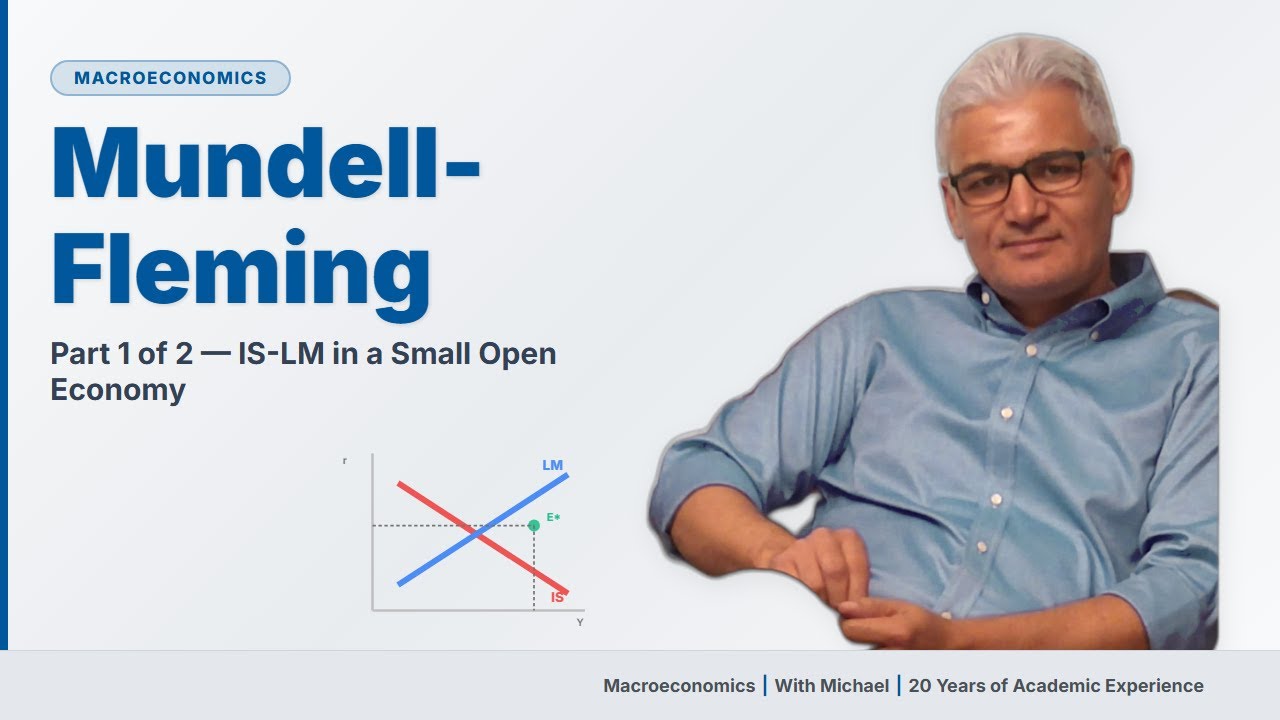
In the Mundell Fleming Model for a small open economy with fixed exchange rates, when the equilibrium exchange rate is greater than the fixed exchange rate (Case 1), arbitrageurs buy domestic currency in foreign markets, forcing the central bank to reduce money supply, shifting the LM curve backward until output decreases and equilibrium is restored; conversely, when the equilibrium exchange rate is lesser than the fixed exchange rate (Case 2), the LM curve shifts forward. This framework helps analyze fiscal and monetary policy effectiveness under fixed exchange rate regimes.
Mundell-Fleming Model: Fixed Exchange Rate & Small Open Economy Case
Added:Understanding of the standard IS-LM model in a closed economy, specifically how the goods market (IS) and money market (LM) interact to determine interest rates and output.
The concept of a 'Small Open Economy' and the assumption of perfect capital mobility, which dictates that the domestic interest rate must equal the world interest rate (r = r*).
The operational mechanics of a fixed exchange rate system, particularly how central banks must buy or sell foreign currency reserves to maintain the peg, directly affecting the domestic money supply.
Familiarity with the definitions and relationships of macroeconomic variables in open economies, such as nominal exchange rates (E), net exports, and aggregate output (Y).
Analysis of fiscal policy shifts (IS curve movements) under a fixed exchange rate regime in the Mundell-Fleming framework.
A comparative study of the Mundell-Fleming model under a floating exchange rate regime to see how policy effectiveness flips.
The 'Impossible Trinity' (or Policy Trilemma), which demonstrates the structural trade-offs between choosing a fixed exchange rate, capital mobility, and monetary policy autonomy.
Case studies of historical currency crises and speculative attacks (e.g., the 1992 European Exchange Rate Mechanism crisis or the 1997 Asian Financial Crisis) through the lens of the Mundell-Fleming model.
1.2K views7likes13:10Original Release: 2022-12-06
who is the equilibrium change rate is greater is smaller lesser than fixed Exchange so let us consider this now so let's say that I have my exchange rate here this is my e by space this is my alien star this is my IES card and my equilibrium is attained here at this e and this y now what is happening is that this is my equilibrium but my fixed exchange rate said by the government is here this is fixed Exchange so let's take one example let's say that um the fixed exchange rate is one dollar as 70.
and the equilibrium exchange rate is a depreciated one so let's say it is one dollar as 75.
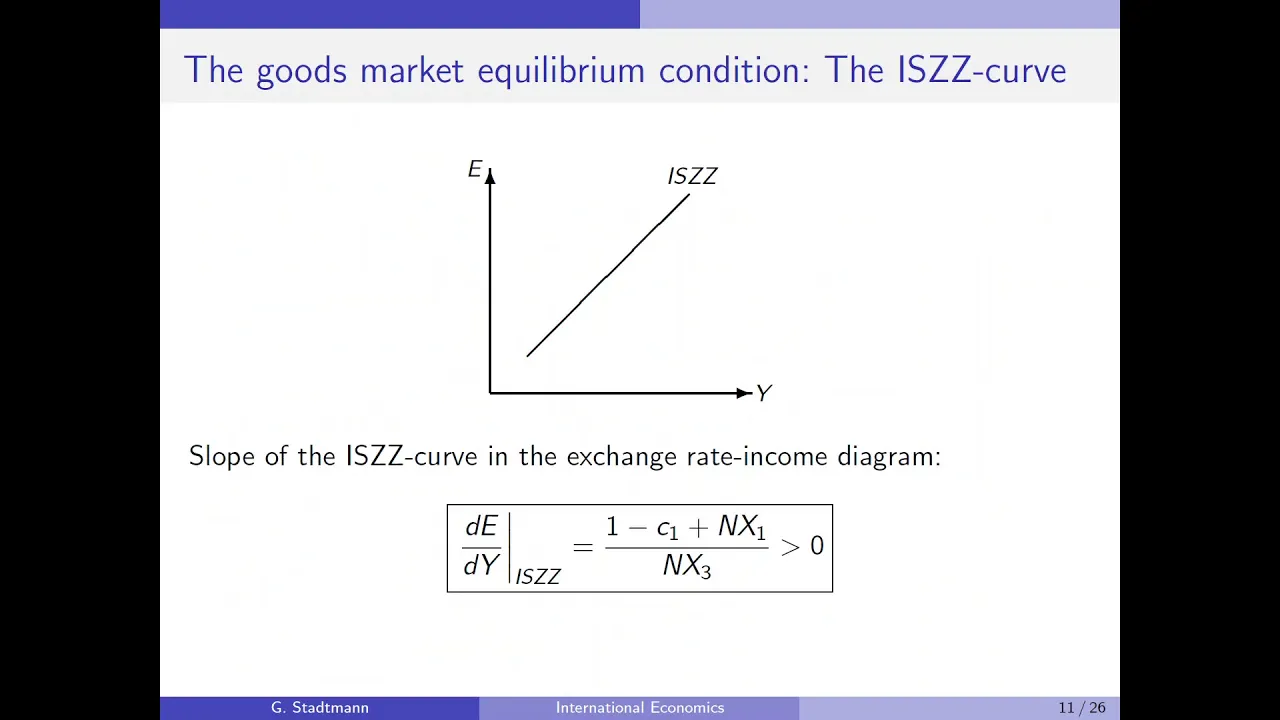
so if I have to write this here equilibrium exchange rate is 1 by 75 because I am writing it in terms of rupee so 1.75 rupees means one rupee one by 75 dollars 1.70 rupees means one rupee one by seventy dollars so one by seventy is higher than 1 by 75 so that is up and this is blue fixed exchange rate is an appreciated currency we think the same thing now what will happen reverse I can go ahead and I can buy the currency here I can spend one dollar so I can spend 70 rupees buy one dollar here so what will an Indian do he will spend 70 rupees using those 70 rupees he will buy one dollar in India and then using this one dollar he will go to U.S sell this one dollar and get rupees 75 in exchange so he spent 70 he is getting 75 in exchange and the gap that is his Arbitrage profit foreign so just think about this if I am going ahead and spending my rupees giving it back to the central bank and asking for dollars in return if all people start doing this if they start giving their currency back and if this asking for dollars in return what is going to happen the supply of Rupees is going to decrease nobody is demanding rupees they're giving these rupees in return and they're going ahead and getting dollars so the central bank is getting all the rupees back so it is going to go ahead and decrease the supply of money in your country and decreasing the supply of money would mean the Ln star curve will shift backwards at which point till when will it shift backward it will shift backward till the point that all your Arbitrage profits are restored there is no Arbitrage profit left so what is going to happen the NM star curve keep shifting backwards till you attain here and your output decreases so you will get a restoration here at this point where the new equilibrium exchange rate fixed exchange rate is equal to the floating exchange rate this will start increasing here which means appreciation of the currency will take place even in the foreign market if the fixed exchange rate is higher so just keep just write one line here that arbitrologers Arbitrage years will Buy INR in foreign market and use INR you buy dollar from the central room money supply will be reduced such that element curve shifts backwards and profits are related these are the two possibilities that we have seen so you have to remember case one is if your equilibrium exchange rate is greater than fixed exchange rate if that is the case the LM curve shoots to the right these cases are very important this will help me Define fiscal monetary and trade policies so this is case one and case 2 is where the equilibrium exchange rate is lesser than the fixed exchange rate so LM shifts to the back now let's define different cases based on this so case one foreign let's say that I am currently here this is my Elementor this is my is good and I told you right initially you will not have any Arbitrage profits so basically whatever is the equilibrium exchange rate it must be at the same place where the fixed exchange rate was there you cannot have um equilibrium and fixed separate in the long run you have to maintain an equilibrium between the two so we are saying that this is actually nothing but the fixed exchange rate and this is the equilibrium also they cannot be separate initially to begin with so this is my equilibrium Exchange and this is my fixed exchange rate now let's start thinking about the process it says that there is fiscal expansion if there is fiscal expansion we see that the is Curve will shift to the right so this is if the is curve shifts to the right do you notice that this is where my is in LMR meeting this is here at E1 if you now go back and see the two cases that we have done we see that in this case the moment you reach E1 fixed is this only even is just the foreign exchange rate it is the equilibrium in the market where is and NMR meeting government has fixed this only so what we see is that the floating exchange rate is greater than the fixed exchange rate so what we see is which case it's the case one in case one my equilibrium exchange rate was greater than the fixed exchange rate and this is exactly what has happened here and what was the solution to it we saw that in these cases wherever the equilibrium is above the fixed exchange rate the LM curve shifts to the right so let's shift that we know the mechanism behind that so I will shift my LM Curt so initially my economy is moving from point A to point B but at point B I am not at fixed exchange rate I am at floating exchange rate it's a fixed exchange rate scenario I can't appreciate or depreciate my currency so currency has to fall back to this point and this is a case of case one so if you refer this in top it was case one where whenever e was greater than the fixed exchange rate you will increase the money supply and the LM will shift to the right so we shift this LM to the right and when that happens you move to point so you move from point A to B and from B to restore the same exchange rate but did the output increase it did it went from y to Y dash so is the fiscal expansion effective yes it is because the level of output is increasing right so let's try it out when the is curve shifts to the right the equilibrium exchange rate increases this is I'm not going to explain this you're going to just write this is synonymous in case one above where e was greater than fixed exchange rate so the level of money supply increases causing who should to the right so the LM curve shifts to the right and the new equilibrium is restored with the higher level of output now if we want to go ahead and understand what happens in the background you can always write this down yourself that initially when the is curve shifts to the right it causes exchange rate to increase if the exchange rate has to decrease then the correspondingly supply of money should increase should shift to the right the second thing that we have to do is the monitor equals
Up Next
26:45
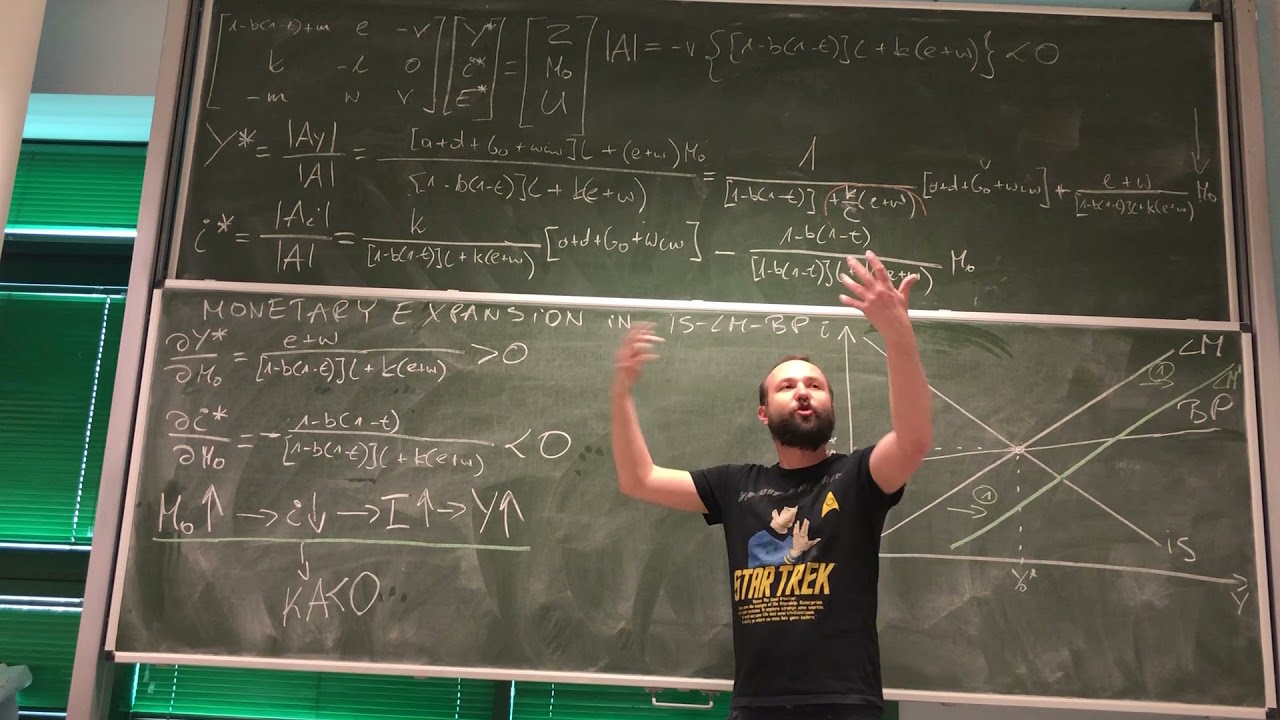
Monetary & Fiscal Policy in Open Economy IS-LM-BP Model
@lazarskiopencourses4059
559 views•2021-04-11
5:07
Impact of Yuan in Indo-Russian Trade Amid Sanctions
@WION
261.9K views•2022-07-01
10:33
Behavioral Economics Explained: Rationality, Nudges, and Risk
@crashcourse
1.1M views•2016-03-12

113:18
The Age of Easy Money: Fed & Inflation | Full Documentary
@frontline
21.2M views•2023-03-15
Related Study Plans & Knowledge Roadmaps
Structured learning paths in Economics
economics
Sovereign Debt: Defaults, IMF & Restructuring
01Introduction to Sovereign Debt & Government Bonds
02Debt Sustainability & Credit Ratings
03Anatomy and History of Debt Crises
+ 2 more learning modules
12h5 modules
Explore Roadmap
economics
Market Design: Matching Theory & Gale-Shapley
01Introduction to Market Design and Price-Free Markets
02Two-Sided Matching & The Gale-Shapley Algorithm
03School Choice Systems and Mechanism Design
+ 2 more learning modules
10h5 modules
Explore Roadmap
economics
Impossible Trinity: Forex, Capital & Policy
01Introduction to Monetary Policy and Central Banking
02Exchange Rates and International Capital Flows
03The Mundell-Fleming Model
+ 2 more learning modules
8h5 modules
Explore Roadmap
economics
Healthcare Economics: Market Failures & Systems
01Introduction to Healthcare Markets and Market Failure
02Asymmetric Information and Adverse Selection
03Moral Hazard and Insurance Design
+ 2 more learning modules
12h5 modules
Explore Roadmap