






















The murder of Betty Shanks in Brisbane, Queensland in 1952 remains unsolved despite extensive police investigation and a $50,000 reward; the case demonstrates how forensic evidence, witness testimony, and multiple competing theories (including a taxi driver's account, a military gator theory, a motorcycle accident theory, and a family member's confession) can be analyzed to investigate cold cases, while highlighting the challenges of solving crimes decades after they occur.
The Unsolved Murder of Betty Shanks: Brisbane's Cold Case
Added:The historical and social context of post-World War II Australia, particularly the societal norms, urban landscape, and policing capabilities of 1950s Brisbane.
The limitations of mid-20th-century forensic science, specifically the lack of DNA profiling and the reliance on rudimentary fingerprinting and blood-typing techniques.
The operational definition of a 'cold case' and the systemic challenges investigators face when a case stalls, such as evidence degradation and witness memory fade.
Fundamental concepts of criminal investigation, including the establishment of timelines, the collection of circumstantial evidence, and the process of elimination regarding suspects.
The evolution of forensic technology, focusing on how modern tools like familial DNA searching and genetic genealogy are applied to solve decades-old cold cases.
The systemic impact of the Betty Shanks case on Queensland's legislative history, law enforcement protocols, and public safety awareness.
Criminological theories related to unsolved murders, such as geographic profiling and Routine Activity Theory, to analyze offender behavior.
The ethical implications and investigative role of true crime media, investigative journalism, and public crowdsourcing in modern cold case advocacy.
522.8K views15.2Klikes31:00Original Release: 2021-09-28
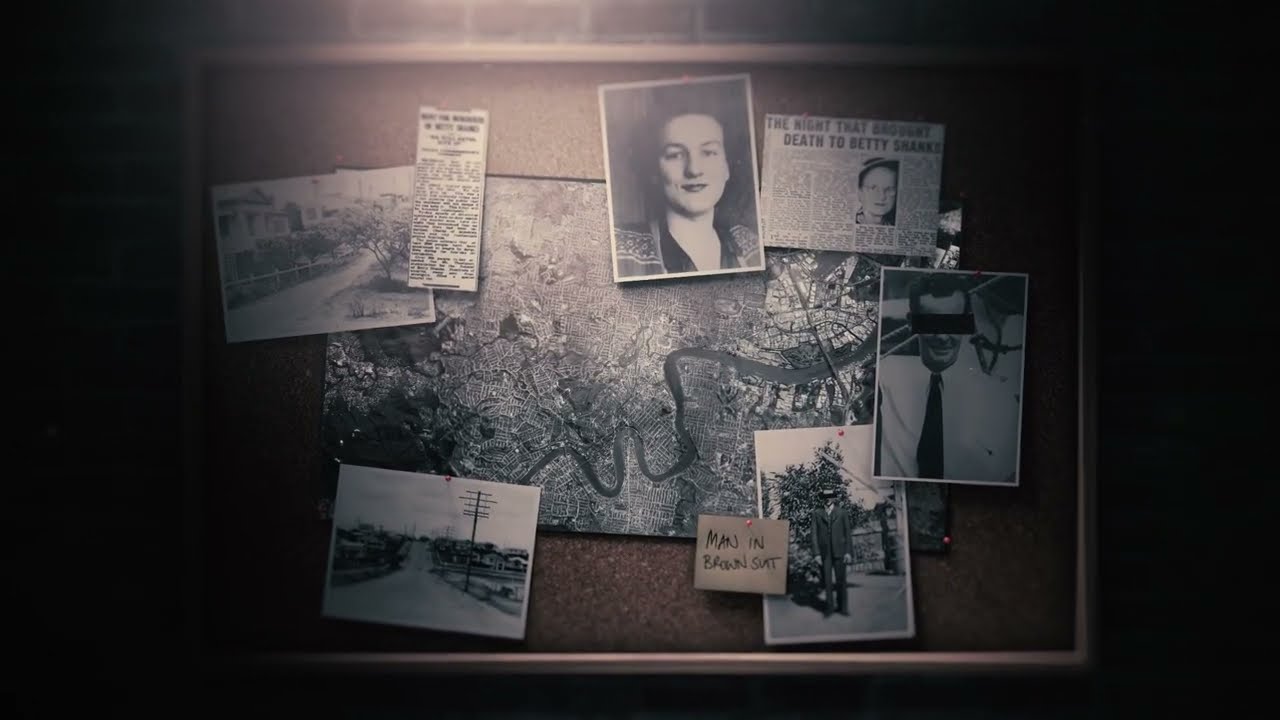
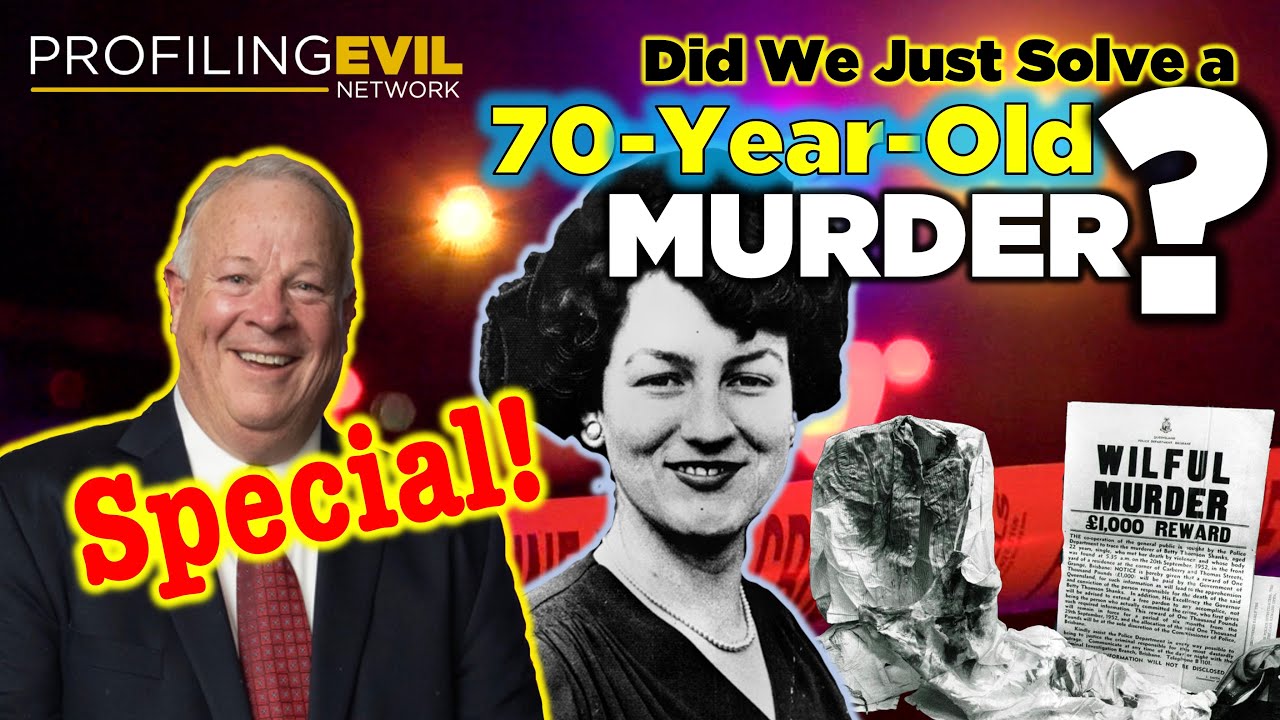
Hey guys, it's Bella. Welcome back to my channel. I hope you guys are all having an amazing day today. So, in today's video, we're going to be covering another Mystery Monday case, and we're going to be talking about Brisbane's longest running cold case. This was a super interesting one for me to research because obviously I live in Brisbane, but I had never heard of this case before. And it's really interesting, but weird when you recognize a lot of the places that these crazy things have happened. This case took place in 1952, so it's been almost 70 years now. and the Queensland police are still offering a $50,000 reward for any information that leads to the conviction of the person responsible for the murder. Over the years, there have been a ton of theories and even confessions, but despite widespread media coverage and an extensive police investigation, there has never even been so much as a prime suspect. Before we get into the case, I just want to quickly thank today's sponsor, NordVPN, for making this video possible. If you don't know what a VPN is, it basically helps to protect your online privacy by hiding your IP address, which helps to protect your data and prevents third parties from spying on your online activity. And it can also allow you to access content that may not be available in your country, which is honestly the whole reason I signed up for NordVPN. I've been using them for years now and the reason that I originally signed up was so that I could access content that wasn't available in Australia because it always takes a million years for things to become available here. And you know, sometimes it just it feels like we're not in on the inside joke when we can't watch things that are available literally everywhere else. And we see everybody watching these shows that we can't get and that's why I got a VPN.
You can access platforms that aren't even available in your country and you might even be able to get a sneaky little discount because sometimes streaming services are cheaper in different countries. It is so easy to use NordVPN as well. All you have to do is click one button and it's on. Or you can also set it up so that it autoconnects every time you turn your computer on. And to change a location, all you have to do is open the map, click a location, and voila, you'll be connected in seconds. So, if you guys are interested in trying them out, you can go to nordvpn.com/bellafiori or you can use my code bellafiori to get a 2-year plan plus an additional 4 months for a huge discount. I will leave all of the information for that in the description box down below. And let's go ahead and get into today's case. So, today we're going to be talking about the murder of Betty Shanks. She was born in 1930 and by 1952 she was 22 years old and living with her family in Wilston, which is an inner northern suburb of Brisbane. She had a very close relationship with her family and her younger brother Alan was actually inspired to go to university himself because of Betty. She had graduated from UKQ with a degree in arts with honors in psychology and she was working in the Commonwealth public service as a traininee personnel officer and as part of her job she had to attend personnel practice night classes on Wednesdays and Fridays. Betty was described as an intelligent, happy young woman who was wellliked by pretty much everyone she met. She kept a close group of friends and had one or two close girlfriends, but she didn't have a boyfriend or any male friends really. And according to her close friend, Betty McDougall, she hadn't for the past 12 or so months before her murder. I mean that her friends and family knew of. In early 1952, she said to her dad, "There must be something wrong with me. Men just don't seem to be interested in me." On the 28th of April in 1952, Betty was actually a joint winner of the Golden Casket lottery and she won £3,000, which today is worth about $250,000 Australian. So quite a large chunk of change. And because of that, her name and the details of her lottery win and stuff like that was posted in the newspaper. She used some of this money to pay off her parents' mortgage and also gave her parents a little bit extra so that they could do some renovations around the house. Betty also had a crooked spine which caused a bit of a hunchback. So, she used some of that money as well on a corrective surgery for that. After the operation, she had to wear a heavy corset, suspenders, and stockings. And one of her friends said that there was a lot of speculation in the town that her corset is actually what prevented her from being sexually assaulted when she was murdered just 5 months after her lottery win. On Friday the 19th of September in 1952, Betty had work just like any normal day. As I mentioned, she worked as a traininee personnel officer in the Commonwealth Public Service, which was located at Interior House, which was on An Street in Brisbane City. And so, she would catch the 434 tram to and from work.
After work, because it was a Friday, she had night classes. So, she and her supervisor, John Ducey, drove from work to what is now QT Gardens Point, where the personnel practice night classes were held. These classes started at 5:30 p.m. and ended at 8:50 p.m. There were nine other students in the class, and the lecturer was Edward Milikin. And Edward lived in Wulawin. And he would sometimes drive some of the students, usually Betty and two other students, a lift home or partway home if they lived in his direction. So that night, he drove Betty to tram stop 19 on Lwitch Road where she called the 434 tram to Graange, arriving in Graange at 9:32 p.m. When she arrived, her friend Jane Osborne saw her leaning out of the tram about to step down onto Thomas Street to walk home, and that was the last time she was ever seen alive. The next morning at 5:35 a.m. on the 20th of September, Alex Stewart, an offduty police officer who lived on the corner of Thomas and Carbury Street, went to grab the morning paper from his front yard when he discovered Betty's battered body in the front yard of his next door neighbor, Mrs. Hill's house. Her body was discovered just inside Mrs. Hill's fence. And based on blood spatter, it was determined that Betty had likely been walking down Thomas Street when her attacker either pushed or threw her over the fence where she was then murdered.
It was determined that she had died between 9:32 and 9:53 p.m. the night before, and her watch had actually stopped at 9:53 p.m., which a watch maker said could be caused by a good bump. Her body was found face up, and her arms were stretched out from her body, and it was clear that she had taken quite a beating. She had been kicked with such force that one of her teeth had actually been forced through her cheek and was found meters away from her body. Black shoe polish was found on her face and on her legs, which likely came from the attacker's shoes as they repeatedly kicked her. She also had this very specific patented mark on her head where the shoe polish was, which consisted of small round and square dots of hemorrhage, which were about 1.38 mm apart. She had also been strangled, had a fractured jaw, had a gaping wound to her mandible, and a badly lacerated tongue and pallet. The straps of her bra were disconnected at the front, and the V of her bra was all frayed as if it had been pulled or stretched. Her underwear had been removed and were laying between her body and the fence, and her slip had also been pulled up above her waist, exposing her genitals. Her blouse had been untucked from her skirt, and the buttons of the blouse had been torn off, leaving it wide open. Despite this, though, she hadn't been raped or sexually assaulted. It seems as though the attacker did these things to try and throw police off and make it seem as though it was a sexually motivated crime. There were also two large bloody handprints on the railing of the fence.
And based on the size of these handprints, it was determined that her attacker was likely a male. An investigation into the murder got underway immediately and police set up a special communications room in the criminal investigations office. It was one of the biggest manhunts in Queensland's history and had an unprecedented police response and police were working around the clock. This case was widely considered to be the end of Brisbane's innocence because before this people would sleep with their windows open, with their doors unlocked. People were friendly. But afterwards, people started locking their windows, locking their doors, and young women were afraid to leave their house at night in case they were the next victim. So, there was definitely enormous pressure on police to solve this case. Police started off by questioning her friends, her family, and her work colleagues, all of whom said that she hadn't spoken to any men in the past 12 months and wasn't the kind of person who would respond to random men that approached her. They found from Betty's colleagues that she had received a call 2 days prior to the murder, which had visibly upset her, but they didn't know who the call was from or what was said on this call. Police conducted a large-scale doornock investigation and around the area that Betty's body was found, and they found that seven witnesses had heard two distinct female screams at 9:39 and 9:40 p.m. A few of these people went and had a look out of their window, didn't see anything, and just went back to whatever they were doing. One elderly lady told police that she heard somebody screaming and it sounded like they were dying and then she just went back to reading her book. None of these people reported this to police until police came around in their door knock investigation. And like I guess Brisbane seemed safe at the time, so it was probably so far out of the realm of possibility that they didn't even think it could be a murder.
But to describe it as sounding like somebody is dying and then just being like, "Well, I'm just going to go back to reading my book." just not reporting.
It seems crazy to me. But anyway, as I mentioned, these screams were heard at about 9:39 and 9:40 p.m., meaning that Betty was likely attacked 8 minutes after she left the tram, but she was attacked only 2 minutes from the tram terminus. Because of this, it was theorized that Betty actually met her attacker at the tram terminus. They spoke for a few minutes before beginning to walk down Thomas Street together. On Thomas Street, there were these behunia trees which created a lot of shade even at night. So, it's believed the person she was walking down Thomas Street with waited until they passed under one of these trees before attacking her. And this would also explain why those who looked out of their windows after hearing a scream didn't see anything because they may have been in the shade of one of these trees. In February of 1953, an inquest was held into the murder. And one of the witnesses at this inquest was 17-year-old Marie Patton.
She had caught the same tram as Betty.
She had gotten off at the same stop. And after getting off the tram, she had walked down Thomas Street to Primrose Street where her house was, which was about 350 meters from the tram terminus.
On her walk, she didn't hear anybody walking behind her. She didn't hear any screams, and she got home at 9:38 p.m., so just a minute or two after the screams were heard by all of those other witnesses. So, this account is definitely consistent with the theory that Betty had stopped to talk to somebody at the tram terminus before walking down Thomas Street. Otherwise, she would have been walking right behind Marie. During the police investigation, they also heard from several other witnesses who reported seeing a well-dressed man who was waiting restlessly at the train terminus from about 8:15 p.m. This man was described as being in his 30s. He had his hair like pushed back from his face. He was wearing a brown suit, a fancy tie, and had polished shoes on. Now, to be honest, that's pretty much the bulk of the information on this case. Despite police efforts, there really weren't that many leads. There wasn't that much to go on, but there was a lot of theories. So, let's talk about them. The first theory is that a doctor from Ipsswitch was involved. He did die of suicide just 2 days after Betty's murder. And it hasn't been proven that he was in any way involved. And to be honest, I don't think he was involved, but let's talk about it anyway. So, as I mentioned, he died from suicide just 2 days after Betty's murder. There was no note and there was no reason given for his suicide. He also fit the description of the man who was waiting restlessly at the tram terminus. One of the detectives on this case, Detective Sergeant Ted Chandler, claimed to have discovered that this doctor had met Betty at one of her nightclasses, and Chandler tried unsuccessfully to establish a relationship between them. Allegedly, when he approached another officer about his suspicions, the other officer told him to mind his own business. Despite Chandler's suspicions, there was no evidence ever found that the doctor and Betty knew each other. And in 2005, the cold case investigations team took DNA from the doctor's two sons and compared them with DNA from the crime, and there was no match. Within this theory though, there was some speculation that Betty was mistaken for a doctor's secretary and that somebody killed Betty in order to get the keys to the doctor's office, whether it was to get some illegal prescription drugs or to get some patient files or whatever the case may be. And speaking of mistaken identity, this brings us to our second theory that Betty wasn't the intended murder victim and that she was actually mistaken for another woman named Ena. It's believed that Ena may have been witnessed to the sexual assault of a young woman by an Australian army soldier that took place on the Gold Coast in 1952 just 3 months before Betty's murder and that this soldier wanted to kill Ena so that she couldn't testify against him. Ena apparently sort of looked like Betty and she also had a very particular routine.
So on Monday, Wednesdays, and Fridays, she worked at a doctor's office in Graange. She normally left very punctually at 9:30 p.m., but on Friday the 19th of September, she left between 9:16 and 9:20 p.m. After leaving work, she walked down Thomas Street toward her house on Daisy Street, and she was already home by 9:39 p.m., which was around the time that Betty was attacked.
Because her movements on Friday nights were usually pretty predictable, supporters of this theory believed that the soldier went and waited under one of the Bahuni trees for her at about 9:35 p.m., not realizing that she had left work early that day. And so when Betty walked past and she walked past at around the time that Ena normally walked past, he mistook her for Ena and attacked her instead. To further this theory, the marks that were found on Betty's forehead were consistent with the weave of a canvas military gator worn by Australian soldiers at the time.
So, some believed that Betty was kicked in the head by a soldier wearing these gators. In 2007, the Cororean Mail released an article titled DNA the key in Notorious Murder. And in this article, they spoke about the fact that police were looking for this now 78-year-old former soldier. He was allegedly living in a retirement village. And this article actually came out before police could go and request his DNA. So when police did go to request his DNA, this soldier had disappeared and they never found him.
Now the thing about this theory is that this soldier was actually questioned back in 1952 about the sexual assault and he couldn't be charged. And if he wasn't charged, then there's no reason he would want Ena dead. There's also no evidence that Ena was even actually witness to this crime. And even if she was, I mean, how would he track her down? As far as I'm aware, she was just a witness. So, he wouldn't have known her name. He would have just seen her face and then based on her face would have tracked her from the Gold Coast over an hour away to Brisbane and specifically to Graange Tram Terminus.
It just seems really unlikely to me. I feel like the only thing that really connects this is that the marks on Betty's forehead may have been made by a military gator and this guy was an Australian Army soldier. The third theory is that a suspicious man in a taxi was responsible. Taxi driver Murray Templeton spoke at the 1953 inquest into the murder, and he said that at 10:40 p.m. on the 19th of September, that he picked a man up from the taxi stand on Ashgrove Avenue in New Market, which was about 2 and 1/2 km from the murder scene. He described the man as being about 30 to 35 years old and around 5'9 and said the man had blood on his face and clothes and had been wearing a suit.
The man first asked to be taken to Ashgrove, but then changed his mind and decided he wanted to be taken to the Red Hill post office. So, it's believed that Ashgrove was his intended address, but that he updated his address and decided to go to Red Hill to throw police off just in case. Supporters of this theory believe that this man may have been the one who called Betty at work 2 days before her murder. The call that I mentioned visibly upset her and that he called her to demand money from her lottery win because as I mentioned her name and her lottery win were published in the newspaper. It's believed that she refused his demands over the phone. So on the 19th of September, he went to the tram terminus to wait for her and once again demand some of the lottery win and once again she refused. So then he attacked and killed her and then walked the 2 and 1/2 km to New Market where he hailed the taxi. Police appealed for this man to come forward, but he never did, which some people thought was sketchy because they thought if you didn't do anything wrong, why wouldn't you just come forward and be like, "Hey, it wasn't me, I was the guy." But on the other hand, maybe he was involved in something else that was sketchy. Or maybe he was scared that the police would falsely accuse him, so that's why he didn't come forward. The next theory is that an offduty police officer hit Betty with his motorcycle, threw her body over a nearby fence, and then returned an hour later to kill her. The officer in question died in 2012 at age 85. So, even if he is guilty, and this theory is true, who knows if police will ever be able to look into it to confirm or deny it. So, this theory was presented by historian Lyall Reed, who claims that Betty was almost across the Carbury intersection, like only a meter from stepping onto the footpath when she screamed as an oncoming motorcycle headed towards her. He believes that Betty was hit with such force that she was thrown back onto the grass, landing on both knees, and was immediately rendered unconscious. And this force could be what forced her tooth through her cheek, and why it was found meters away from her body. It's believed the motorcyclist then dragged Betty's body under the covers of a behunia tree, picked her limp body up, and threw it over the fence of Mrs. Hill's property.
An hour later, at 10:40 p.m., he was panicked. He came back to make sure that Betty was dead, and he started removing her underwear, lifting her skirt up, opening her blouse to make it look like it was a sexually motivated crime and to throw police off. And as he was doing so, Betty let out a groan and he realized she was still alive. So, he put his hands around her neck and strangled her to death. Reed believes that Betty's injuries to her face and her legs weren't caused by somebody kicking and hitting her, but rather from her being hit by a motorcycle and being thrown onto the grass. Bri believes that a sharp object like a clutch lever of a motorbike pierced her jaw, which fractured her mandible in two places, dislodged her mer, and badly lacerated her tongue and pallet. He claims that there was no bruising to the laceration around the mandible because the sharp object would have just gone straight through it. Whereas if a kick or a hit caused it, then there would have been a hematoma that would have developed. Reed also claims that he showed pictures of Betty's injuries to a doctor and that this doctor said that he believed that the injuries were caused by being hit by a motorbike or a vehicle. He also claims that the imprint on Betty's forehead was caused by the rubber knee pads on the fuel tank. He did a demonstration where he put some shoe polish on a knee pad from 1952 and applied it to an A4 piece of paper. And the knee pad had hundreds of little pins or rubber needles on the inner border, which when pressed to the paper were about 1.38 mm apart, just like the imprint on Betty's forehead.
When asked about the black shoe polish that was found on Betty's legs, he said that he believes that this was caused by the saddle bags of the motorbike. He claimed to have spoken to a now 88-year-old former traffic constable who was a traffic constable back in 1952 and he said that apparently they used to use black shoe polish to make the saddle bags have a sheen to them. To further this theory, Reed claimed he spoke to a woman who told police back in 1952 that she heard a loud scream at 9:39 p.m. and then heard the sound of a vehicle speeding away at the 1953 inquest.
Apparently, some of the witnesses also said that they heard screams followed by the sound of a motorbike driving away.
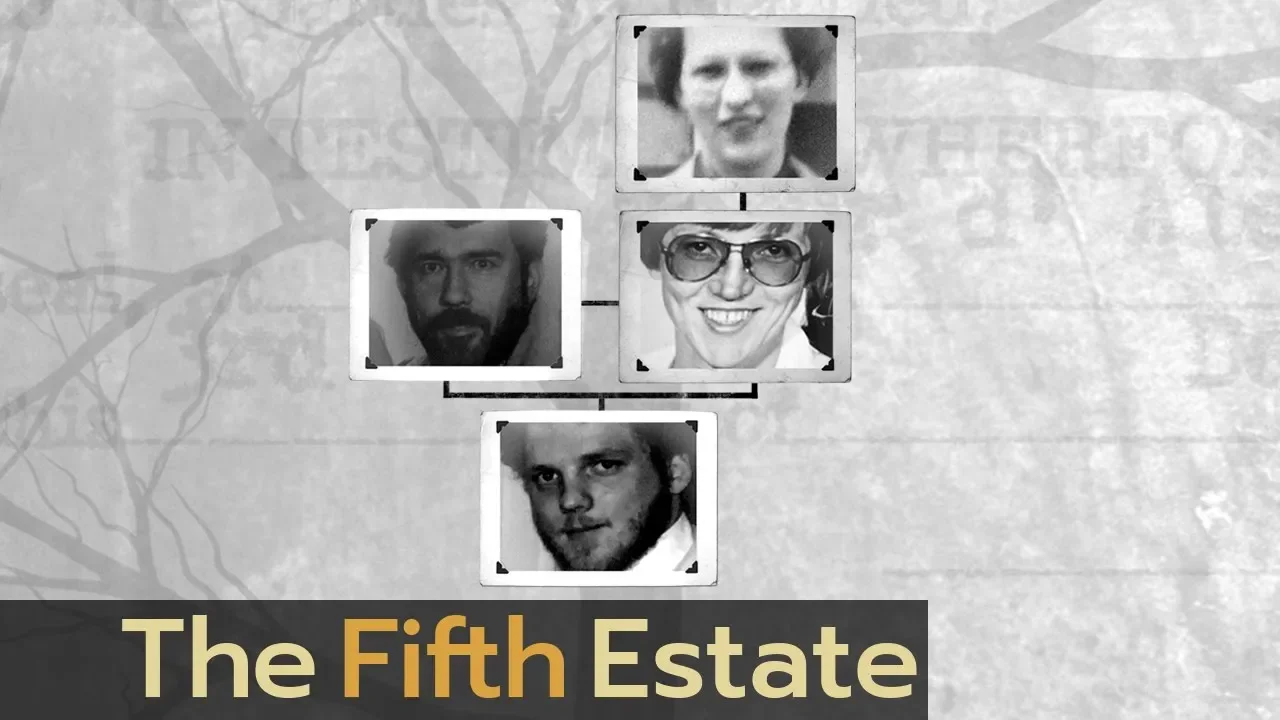
The last theory is that a man named Eric Sterry murdered Betty Shanks. This theory came about in 1999 when Eric's daughter Deutsch Burles, who was 8 years old at the time of the murder, came forward and accused her father. The story was on the front page of the Corer Mail on the 1st of April in 1999 and the title was Dad Killed Betty Shanks and it caused a massive stir with the public.
Deutsch said that her father was a violent man who raped and beat her almost daily. She also claimed that he wore brown suits and flashy ties, which matches the description of the man who was waiting restlessly at the tram terminus the night of Betty's murder.
So, let me tell you a little bit about Eric. On the 20th of January 1943, he enlisted in the Royal Australian Air Force in World War II. And when asked what area he had work experience in, he said vehicles and motor transport, which was recorded on his like application. In December of 1943, he took 3 days off so that he could marry 20-year-old Bernardet, who was pregnant with their unborn child, Deutsch. And turns out during this time, he actually gave Bernardet and unborn Deutsch scabies, which caused some pretty fullon arguments at home. In January of 1944, it was recorded on Eric's medical profile that he had developed severe anxiety, which was believed to have been caused by his domestic issues at home.
Due to these anxiety problems, Eric had to undergo an intensive examination at the Royal Australian Air Force Command Hospital from the 24th of August to the 27th of September. I'm going to read you what the psychiatric report from the examination found just a little bit.
There's a lot more than this, but it basically said he suffered from neurosis, impulsive actions, blackouts, that he becomes violent at home and is afraid he might hurt someone. He has no interest in anything, can't accept responsibility, had anxiety hysteria, is potentially psychotic, and is in a chronic state of anxiety. And that's just like half of it. And then in November of 1944, another psychiatric report said that he might present a danger to his fellow servicemen. So on the 26th of March in 1945, he was discharged as permanently medically unfit for further service. Deutsch also spoke about Eric's episodic attacks at home and said he would be fine one minute and then the next he would be totally angry and violent and aggressive. And in early 1952, police were called out to Eric and Bernardet's home three separate times for Eric's violent behavior. On one of these calls, an officer asked 8-year-old Deutsch to walk down the hall past the kitchen where her father was, and he said that he would follow her. He'd be right behind her. It was fine. So, she starts walking down the hall. Eric thinks she's alone, sees her, grabs her, throws her to the ground, and kicks her so hard in the stomach that she slid into another room. Then, just as he was about to kick her again, this officer came up and grabbed Eric from behind. And Deutsch said that if the officer wasn't there, she believed that her father would have killed her that night. I mean, I've just got to chip in here, though, and say, why didn't the cops do anything? He kicked an 8-year-old girl in the stomach right in front of him, and there were no consequences. I mean, if he was the one responsible for Betty's murder, I think it just makes the whole case sadder to know that it could have been prevented if he did see some consequences for the things that he was doing at home.
Anyway, Deutsch believes that her father believed that he was in a relationship with Betty and apparently her mother told her that he had met Betty Shanks at work. After Eric was discharged from the army, he got a job at the state department of public works and their depot was based in Alice Street in Brisbane City, which is less than 1 kilometer from where Betty worked on An Street. Eric worked as a carpenter and a locksmith, and his job was to fix and change locks on government buildings.
Part of Betty's job was to organize building and maintenance work on Commonwealth buildings. So, it's possible that he had to change the locks for one of her buildings and that's how they met. Now, Deutsch claims that in winter of 1952, her father drove her and her younger brother Daryl to the Graange tram terminus to meet Betty for the first time. She said that her father Eric parked under a large tree on the intersection of Thomas and Primrose Street and then went to the terminus to meet Betty and brought her back to the car. He told Deutsch and Daryl to go to bed in the back seat and he and Betty had a quiet argument in the front seats until Betty eventually got out and started walking the short distance home.
Eric got out and met her at the hood of the car, put his hands around her neck and started strangling her. And as that happened, Daryl woke up in the back seat. It was dark. He was sleepy, probably a little bit disorientated. And he believed that Eric was strangling his mother. So he got up and he yelled out, "Mom." And that's when Eric let Betty go. Deutsch also claims that Eric took her and Daryl again to meet Betty on the night of the 19th of September, the night that she was murdered, and that he was wearing a brown suit. He drove them to the Grange Tram terminus and parked on English Street just outside of Wilston State School, which is just across from where Betty was murdered.
She said her father left them in the car and was gone for a long time. Supporters of this theory believe that while he was gone, he went to the Grange Tram terminus to meet Betty and bring her back to the car. It's believed that they may have been on bad terms by this point and that that call she received 2 days prior was her trying to end things with him and that's why she seemed visibly upset after the call. So, the reason he went to the tram terminus was to try and persuade her to continue seeing him.
This also lines up with the timeline that Betty stopped to talk to someone for five to six minutes before starting her walk down Thomas Street. It's believed that as they walked down Thomas Street, Betty ended things with him. He got mad and in a fit of rage, he killed her. A woman named Jessica Lee allegedly got off the Graange tram at 9:50 p.m.
and walked down Thomas Street to her house 20 minutes after Betty had walked down Thomas Street and she didn't hear anything. So, it's believed that Eric heard her approaching, hid in the shadows, and then once he was sure she was gone, he decided to bolt. He ran and jumped over the fence, leaving his bloody handprints there, he ran across Thomas Street, across the school grounds, and back to his car. This is also consistent with a statement from a taxi driver that was published in the newspaper. This taxi driver claimed that at around 10:30 he saw a man in his 30s to 40s who was between 5'8 and 5'10 emerge from the murder site and run away. Deutsch said that Eric was gone from the car for a long time that night and when he got back he drove them back to their home in Bowen Hills and he stayed outside for a period of time and then came back in naked smelling like smoke and she believes that he burnt his suit. The next morning, Eric asked her to clean his car. And he also asked her to clean his shoes and to specifically get all of the little bits out of the groove where the leather meets the sole.
And she said she was picking all of these like little like brown bits off the shoes that she thought was mud, but then later realized that it was actually like skin and tissue and stuff like that. Deutsch also recalled her father taking her to the annual Brisbane crime display and showing a morbid interest in the Betty Shanks exhibit. And she said that he would squeeze her really, really hard, like so hard that it hurt, and tell her, "Don't say anything or you'll end up like Betty Shanks." On top of this, Eric also kept a photo of Betty Shanks in the family photo album, which is weird in and of itself, but then on the back it said Betty Thomas Shanks, murdered 1952. And Deutsche's husband believed that Eric wrote this and kept the photo as a momento. In the years following the murder, Deutsch also claims that her father said to her that the police will never find who did it.
When asked why she didn't come forward sooner, Deutsch said that she actually did on two separate occasions. She first approached the police in 1960 when she was 16 years old because she was like trying to move out. She didn't want to live with her father anymore. And to do so, she had to prove she wasn't in any immoral danger. And so she would go and report her whereabouts to police so that her father couldn't report her missing.
When police asked her why she wanted to leave home, she told them about the beatings and about the sexual abuse. And she told them that she was scared that her father would murder her like he murdered Betty Shanks. And when she said that, the officer interviewing her said, "You shouldn't say things like that about your father because he's a good man and he changes the locks around here on the cells." Years later in 1991, Deutsch saw a TV program about unsolved murders and she started having flashbacks and she was in counseling at the time for all of the things that she had to go through at the hands of her father when she was younger. And both her counselor and her husband encouraged her to contact the police. And so she did. She contacted the number from the TV program. And all she received in response was a letter telling her that they would look into it. So after another eight years with no action from the police, she approached the Korea Mail and went live with the story in 1999. After the story went public, the police then reached out to her again and came to interview her and she actually provided them with some of her father's hair for DNA testing, but she never heard back from them. So she has no idea if it was ever tested or not. Eric Sterry passed away in 1997, 2 years before the story went live. So, the police concluded that because he was dead, nothing from Deutsche's story could be checked out. They also said that they were unable to find evidence that he had a driver's license despite like the application for the Royal Australian Air Force where it speaks about his driving experience and also the multiple photos of him literally driving cars, which I will put on the screen now. But that is all of the information that I have for this case.
As always, I would love to discuss your thoughts in the comments down below, and I would love to know what theory you guys think is the most likely. I feel like there's so many little things and witness statements that tie in the last theory. I feel like every time I looked into one theory, I'd be like, "Okay, that's it. It was Eric." And then I would look into the theory that she got hit by a motorbike, and then I'd be like, "No, she definitely got hit by a motorbike." I feel like pretty much everything lines up with the motorbike theory as well, except for the shoe polish. and the shoe polish can be explained. Not to mention her tooth being forced through her cheek and being found meters away from where her body was. Definitely seems like something that would happen if you were hit at high speed by a vehicle. Not to mention, if Eric was the one who murdered her, that does not explain the weird like pattern she had on her forehead. The only things that really explain that is her being kicked really hard with a military gator or her being hit by the rubber pad of a motorbike. I feel like I do lean a little bit more toward the theory of her being hit by a motorbike, but I would really love to know what you guys think in the comments down below.
Let me know which theory you believe. I hope you guys have a wonderful rest of your day and hopefully I will see you in my next video. Bye guys.
Up Next

11:27
Forensic Analysis of Human Remains in the Chad Daybell Case | Court TV
@CourtTV
249.4K views•2020-06-11

12:54
Triumph of Orthodoxy Icon: Byzantine Art & History Explained
@BenCallan
2.1K views•2024-08-06

9:49
FastAPI vs Flask vs Django: Choosing the Right Python Web Framework
@TechWithTim
302.5K views•2024-05-26

1:42
Game of Thrones Opening Credits: A Cinematic Analysis
@gameofthrones
46.3M views•2011-04-18
Related Study Plans & Knowledge Roadmaps
Structured learning paths in General & Interdisciplinary Studies
general-studies
Elevator Engineering: History, Physics & Cities
01From Hoists to Safety Brakes: The Dawn of Vertical Lift
02Hydraulic vs. Traction: The Engineering Physics of Elevators
03Modern Speed, Safety, and Algorithms
+ 2 more learning modules
12h5 modules
Explore Roadmap
general-studies
Rubber: Material Science, History & Geopolitics
01Origins of Natural Rubber & Mesoamerican History
02The Chemistry of Natural Rubber & Vulcanization
03The Geopolitics of the Rubber Boom & Colonization
+ 2 more learning modules
12h5 modules
Explore Roadmap
general-studies
Containerization: Evolution, Logistics & Trade
01Ancient Trade & Bulk Cargo: Amphorae to Barrels
02The Industrial Revolution & Cardboard Packaging
03The Containerization Revolution: Malcom McLean
+ 2 more learning modules
12h5 modules
Explore Roadmap
general-studies
Textile Tech: Evolution, Labor & Global Impact
01Pre-Industrial Textiles: Handloom & Cottage Industry
02Mechanization: The Spinning Jenny to the Power Loom
03The Factory System & Global Labor Transformation
+ 2 more learning modules
10h5 modules
Explore Roadmap