


















Forensic experts can identify skeletal remains through multiple methods including mitochondrial DNA analysis (which is particularly effective for skeletonized bodies because mitochondria contain multiple DNA loops), dental examination (analyzing dentition, fillings, and dental repairs), and bone fracture analysis; however, determining cause of death becomes increasingly difficult as decomposition progresses and soft tissue is lost, while manner of death may still be more determinable for young children who are unlikely to die of natural causes.
Forensic Analysis of Human Remains in the Chad Daybell Case | Court TV
Added:Understanding the biological difference between nuclear DNA and mitochondrial DNA (mtDNA), including its maternal inheritance patterns and presence in degraded samples.
Fundamental concepts of forensic anthropology, specifically how osteological analysis is used to establish a biological profile (age, sex, stature, and ancestry).
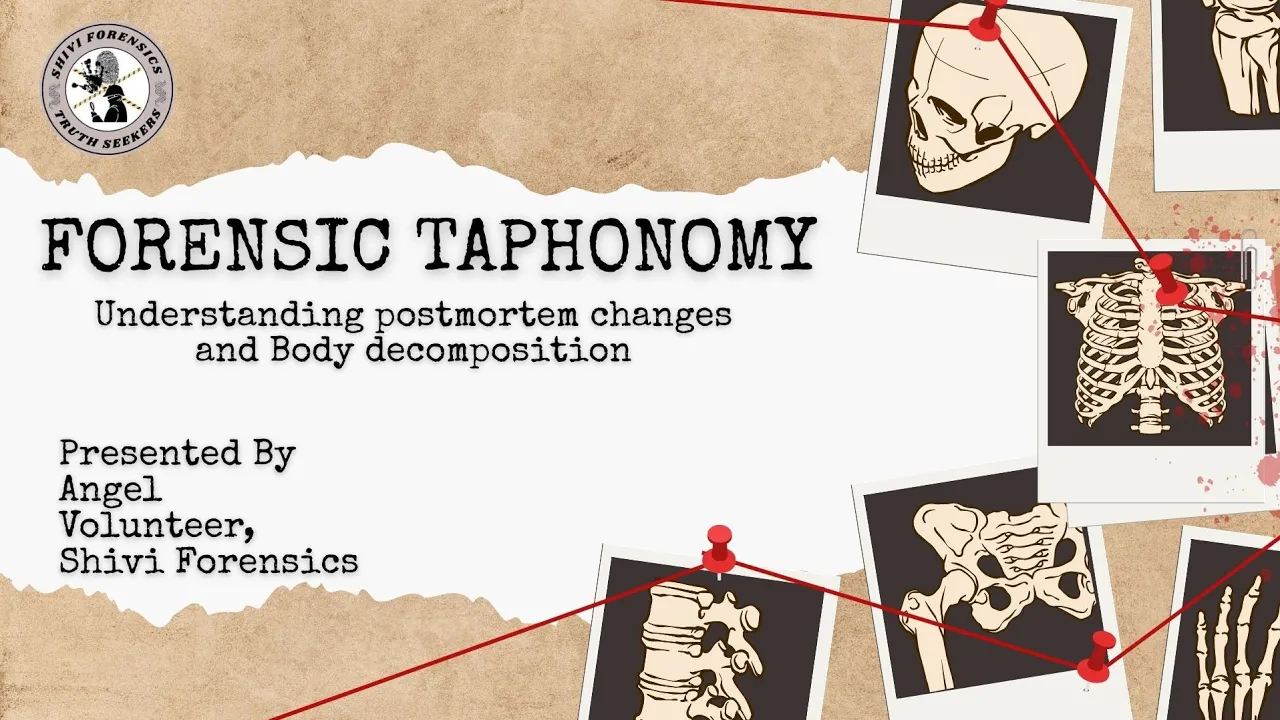
Basic knowledge of forensic taphonomy, which studies what happens to human remains after death, including decomposition and skeletal preservation.
The legal distinction between 'cause of death' (the physiological mechanism) and 'manner of death' (homicide, suicide, accidental, natural, or undetermined).
Deepening knowledge in Forensic Genealogy and how investigative genetic genealogy (IGG) is used alongside traditional DNA profiling to solve complex cases.
Investigating advanced bone trauma analysis to differentiate between antemortem, perimortem, and postmortem skeletal damage.
Studying the evidentiary standards (such as the Daubert and Frye standards) required to admit forensic DNA and anthropological expert testimony in a court of law.
Exploring the effects of extreme environmental factors, such as soil acidity, moisture, and thermal damage (cremation), on the preservation and extraction of mitochondrial DNA.
249.4K views4.6Klikes11:27Original Release: 2020-06-11
Ashley I know you spoke with the good friend of ours who's been a friend of Court TV for years and knows a lot teaches this stuff I called dr. kay yeah dr. Larry kolinsky he really is sort of the encyclopedia of all things forensic he teaches at John Jay College of Criminal Justice in New York City and you know this obviously was a day where we've got so many questions that all center around the remains because I'll tell you what Vinnie every body tells a story and right now we need to know the story of how Jay Jay and Ty Lee died and more importantly we need to know who did it to them sometimes those stories are held in that forensic evidence so with that in mind I had a whole lot of questions for dr. Kaminsky what exactly goes into the process of trying to identify children what we are talking about the remains of two children and so we need to know what the condition of the body bodies are in are they completely skeletonized I would assume after several months of burial that they would be skeletonized so there are limitations on what you can do upon autopsy and clearly the main goal is to identify the remains what is their condition are any of the bones fractured is there any indication of how they died a lot of questions come about and the autopsy is the first place to go for answers and it's such an uncomfortable topic but it is so critical as these could yield some of the most damning charges that jurisprudence even offers can I ask you about the length of time that these remains may have been buried we don't know the charging documents are suggesting a very big window September to June but we also know that Idaho is extremely cold can you factor in some of those metrics yes I sure is one of the most important factors in the rate of decomposition of a body humidity is a factor are they buried below ground how deep how cold how humid a lot of these factors will determine the rate of decomposition because bacteria like it nice and warm so that they can do their their jobs as decomposer so yes that is a major factor in determining what the remains look like upon autopsy obviously the more decomposition that has set in on remains the more difficult your job becomes as an Emmy can you explain some of the things we can still determine and some of the things we can't well a forensic anthropologist and an odontologist the forensic dentist would be looking at the remains assuming that you have complete skeletonization you can determine things such as the age of the individual by looking at the dentition and examining the skull there are things you look for are there any fractures because fracture evidence could help identify the individuals if they someone has broken an arm and been treated that will be identifiable you know in remains correct and the same for any kind of repair to the dentition or the teeth of each of the individuals by looking at repairs amalgam fillings and again comparison to x-ray evidence that would require that there were dental appointments that there were actual dentists during life and those records might be tricky to also ascertain especially if people live in many locales that is absolutely correct and in addition to the autopsy there needs to be some chemistry done some analytical work and in skeletal remains the best thing to do is a mitochondrial DNA analysis because mitochondrial DNA are present in huge numbers in every cell so there's a lot more DNA that one could look at even in the skeletonized body that's very typical of forensic analysis of skeletal remains would be to do mitochondrial DNA each mitochondrion has more than one loop of DNA so there's a lot of DNA that remains in skeletal remains so what you need to do is a comparative analysis first of all compare each of the two children look at their DNA to see if they match if it does match they could be siblings and then to determine a maternal relative whether it's a mother a grandmother who would share the same mitochondrial DNA that would help determine the identity of the children and so what you're saying is that even if remains have decomposed to a point where they are just skeleton and there's no soft tissue you can still retrieve that mitochondrial DNA absolutely correct you also touched on something critical and that is that it is the maternal connection that's most critical so in order to determine who these children are officially it is the mother and her relatives that will be critical and if for instance you are in custody that DNA should be very easy to access yes absolutely and again you're comparing one child against the other because if they are siblings at least on the maternal side they would share the same mitochondrial DNA profile and if they're half siblings with the same mother same story same story yes then the most critical issue would become cause of death how difficult does it become the longer a body has decomposed it's very difficult if there's no soft tissue when you're only looking at skeletal remains you may not have a cause of death so obvious there may be no knife marks or bullet trauma to the skeletal remains there may be no physical evidence of the cause of death and so it's a very difficult analysis can I ask you if there's say some sort of chemical agent or poisoning or drug overdose would that be evident in the skeletal remains at all it's it's possible to pick up some poisons and/or toxins but again you'd have to eliminate environmental contamination to the remains as a potential source of whatever the substance is like arsenic or something of that sort the main focus is on identification and second focus of course and manner of death cause and manner would be extremely difficult again the more the decomposed decomposition has done away with critical evidence right correct I would think manner of death would be a little bit easier to determine rather than cause a manner of death you have to and I'm gonna say relatively young children because we don't know precisely what the autopsy results have found but you know you would expect young children to be somewhat healthy and not having died of natural causes so manner of death I think would be a little easier for a medical examiner to decide upon rather than coarse skeletal remains are very very difficult to pin a cause of death on and how willing are juries to accept this sort of arcane and and complicated science when the remains are so decomposed well I I think in the hands of somebody who knows how to explain properly these things I mean this is part of life jurors or you know average laypeople and they do understand that over time you know bodies decompose and so I don't think there's anything difficult to grasp they don't have to know the technicalities of the DNA work they need to have faith and trust in the person delivering the testimony describing the ins and outs what's possible what's not possible what other critical information might the discovery of these remains yield there may be evidence buried with the bodies that we don't know about the children may have been buried in clothing for example or there may be evidence on the clothing if in fact they were buried in clothing that could be a another piece of important evidence so we have to actually see what we've got and read that autopsy report very closely and question the medical examiner what did he see he what did he do what did the anthropologists say what did the odontologist say there's a lot of factors coming to play on these two remains and so you got to put all the pieces of the puzzle together so many that puzzle is hopefully going to be put together by the Ada County Idaho medical examiner once that office gets the remains if they don't already have the remains that was the process today and I think what's really critical here is that the stories that those bodies will tell the medical examiner will likely end up being told in affidavits and warrants and court filings in the way of charges because as you and I both know cause of death is critical it's very very important you don't always get it you have it in Casey Anthony's child's death that's what hung that jury up so hard but you know what you might yeah just might and I wouldn't I wouldn't be the least bit surprised if you see some movement on charges against Lori and Chad in the not-too-distant future yeah I would think so so what happens next now in this process well that's exactly what what happens those remains are on their way to the Ada County examiner the official cause of death and then that the official release of the identities will happen that actually hasn't happened yet but it did come from the families obviously the families are a very integral part of this I can tell you that that the grandparents of JJ you see pictured here Larry and Kay Woodcock were travelling today couldn't get confirmation as to where they were traveling but if I were a betting man they're probably traveling to Idaho and so obviously families are told things a lot faster than the public but I expect that you will probably have a positive identification on these children publicly you know look I don't know how fast they work in Idaho I don't know how covetous affected their offices at cetera and the prosecutor's office will be chomping at the bit to get those results and hopefully have some kind of cause and manner of death on a document so that they can go forward with their very difficult work and then you and I go forward with our difficult work to covering cases to hopefully find justice for these two kids absolutely Ashleigh Banfield thank you so much
Up Next

113:18
The Trial of Ratko Mladić: Genocide & Justice | Documentary
@frontline
573.7K views•2023-11-08

12:54
Triumph of Orthodoxy Icon: Byzantine Art & History Explained
@BenCallan
2.1K views•2024-08-06

9:49
FastAPI vs Flask vs Django: Choosing the Right Python Web Framework
@TechWithTim
302.5K views•2024-05-26

1:42
Game of Thrones Opening Credits: A Cinematic Analysis
@gameofthrones
46.3M views•2011-04-18
Related Study Plans & Knowledge Roadmaps
Structured learning paths in General & Interdisciplinary Studies
general-studies
Elevator Engineering: History, Physics & Cities
01From Hoists to Safety Brakes: The Dawn of Vertical Lift
02Hydraulic vs. Traction: The Engineering Physics of Elevators
03Modern Speed, Safety, and Algorithms
+ 2 more learning modules
12h5 modules
Explore Roadmap
general-studies
Rubber: Material Science, History & Geopolitics
01Origins of Natural Rubber & Mesoamerican History
02The Chemistry of Natural Rubber & Vulcanization
03The Geopolitics of the Rubber Boom & Colonization
+ 2 more learning modules
12h5 modules
Explore Roadmap
general-studies
Containerization: Evolution, Logistics & Trade
01Ancient Trade & Bulk Cargo: Amphorae to Barrels
02The Industrial Revolution & Cardboard Packaging
03The Containerization Revolution: Malcom McLean
+ 2 more learning modules
12h5 modules
Explore Roadmap
general-studies
Textile Tech: Evolution, Labor & Global Impact
01Pre-Industrial Textiles: Handloom & Cottage Industry
02Mechanization: The Spinning Jenny to the Power Loom
03The Factory System & Global Labor Transformation
+ 2 more learning modules
10h5 modules
Explore Roadmap