
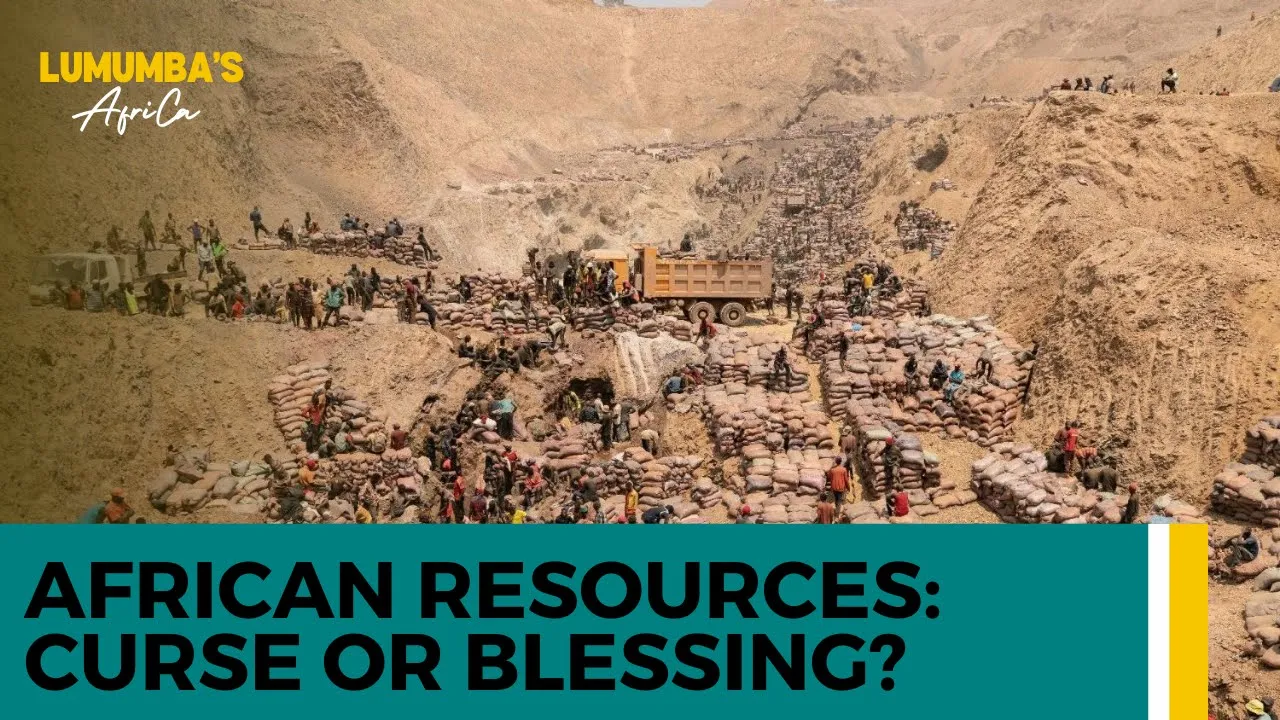























Africa possesses vast mineral resources, including approximately 400 years of coal reserves in South Africa, yet the continent remains economically disadvantaged because it lacks control over these resources and the global systems that determine their value. The speaker argues that African nations should leverage their mineral rights to develop domestic manufacturing, create economic value, and potentially establish a sovereign currency backed by their own minerals, rather than allowing foreign entities to control supply and pricing through scarcity-based economic systems.
Women in Mining: Challenging Climate Change Narratives
Added:Understanding the socio-economic reliance of many African nations on mineral extraction and the economic theories surrounding resource wealth.
Basic concepts of feminist economics and the systemic barriers to women's economic empowerment in male-dominated industries.
Familiarity with mainstream global climate change narratives, international climate policies, and the push for a global green transition.
An overview of post-colonial political economy in Africa, particularly regarding resource sovereignty and foreign investment.
Critical analysis of the 'Just Transition' framework, examining how to balance environmental urgency with economic survival in developing nations.
Investigation of 'green neocolonialism' and how global climate mitigation demands can conflict with local economic autonomy in the Global South.
Study of policy reforms and grassroots initiatives aiming to formalize and secure land and mining rights for women in Africa.
Comparative research on alternative, gender-inclusive development models that integrate ecological sustainability with mineral wealth management.
7.9K views194likes1:15:11Original Release: 2023-08-09
because I'm not buying I mean in Africa and South Africa you can't buy the climate change argument you just can't because we are not emitting enough nearly enough we are not even a player in emissions but there are clean Technologies why are they not being pursued why is everything have having to be run by IP holders and IP holders get get these things from innovators from entrepreneurs from you know Tech guys who are Junior and young and are inventing amazing things [Music] [Music] thank you [Music] I'm very excited I think the first thing that I'd like to say is that guys starting from the first week of September that is the first Monday of September we are going live so 12 o'clock Mondays 12 o'clock Wednesdays 12 o'clock Fridays so three times a week moving forward you must know we own 12 o'clock noon we're gonna be live here we're gonna meet here we're gonna comment here as the episode is playing we're all gonna gather here just like we do as um chillers on podcasts and chill and people you guys have been complaining all along smuda what are you making this thing live so we all congregate here yes we like watching it our own time whatever but it's always nice for us to meet at a certain time where we can comment live as the show is going on so I'd like to promise you guys starting from the first Monday of September 12 o'clock in the afternoon we are going live episodes Mondays Wednesdays and Fridays at 12 o'clock in the afternoon and um yeah she's back uh last week's episode was quite interesting I saw a lot of your comments there and you know men were catching Strays since Monday I'm humbled and I'm excited to have you again we're actually excited to have you here and I think as much as we record on version cuckoo um it seemed like um they like you more on last week's episode here on the Hustler's corner so we're gonna have to record more also on this side of the podcast you know what I mean yeah yeah no problem lovely how have you been I've been fine I've been fine I've been fine I um this fell out of my pocket earlier remember and I was telling you that it was given to me by a friend so this is real gold yeah it's real and it matches your advert it's a crystal and it's yeah it's a crystal because gold is quite down it's a crystal but so I normally buy crystals like I'm sure people have noticed I wear quite a lot of crystals these are crystals they're not diamonds they're crystals crystals are relatively cheap because they're semi-precious gems so gold is a metal and it's gold it's real gold it's not really the same as these crystals yeah it's gold and it's actually very nice I mean um it's it has gold dust in it you can you know so it's still pretty on off yes it's a row they got it obviously from a trunk but this friend of mine sells crystals and I thought it was quite a nice idea to bring it to the show because you know what gold does I mean you have it in your phones it's a product of energy so I carried with me when my energy feels low and flat just to lift me up just to get you know pretty much like the sun so yeah don't say you don't say you carry it on your purse because I just remember some criminals who once told shout outs to my brother mandoza my soul rest in peace oh I used to love Mendoza ah me too in that he used to wear this like leather jacket like a what do you call it like a short bunny leather jacket yeah like burgundy and bronze Coast type of thing one of these big newspaper companies and I had a friend big name against him in the public broadcaster yeah so we used to always get invites to things and we had a crush on Mendoza sorry I'm over sharing it's okay yeah and then she had tickets she was like I got tickets I don't know what Mendoza was doing in Hyde Park Subway yeah it's like yo I finally got them we became such groupies I also wanted the same thing to uzola we just bought a new car we're driving to Soweto on the M1 South yeah I have such a bad crush on him she's like what do you mean because like we've done that kind of crap before yeah it's like up to where it's like up to the point where he notices we're following him then he has to pull over then we pull him over then he has to talk to us and then he tell him you know what's going on yeah and then maybe we get a number we'll see but let's start and we did we followed him I think he pulled over at a garage I don't know if he'll ever remember me so life you're out there and you remember this girl Chasing You Now call for a cold or whatever you want to remember and people come you remember me man it was 2007. it was a record sometimes great to see you in a while you have to otherwise you spoil their movies yes you know I felt like you know Mendoza probably felt harassed but in a pleasant way maybe because I mean we were such like [Music] they were never they're always nice to people [Music] yeah you always have time for them that's cool that's chai tea I make my own chai tea so the reason why product man does I wanted to say that um I can just imagine the conversation that happens foreign [Music] [Music] I actually didn't ask my friend because initially I didn't believe her I was like she was supposed to sell me some other Crystal and then she sold it somebody else and she's a friend of mine and she's she's like you know what I like you so much I've got this piece of gold and we've had it for such a long time just take it they were they were refreshing their stocks as well so I came in on the day when she's busy you know reorganizing her crystals and her stones and she's like you know I just have this one I had bought a silver one before yeah because they sell them quite reasonable is it yeah I use them for grounding and all of that clearing energy I get you this is incredible man this is beautiful it's always a nice man to see raw gold like just especially precious yeah yeah yeah you know because you always just hear about them it makes you feel good we don't really see them there was also a trending video I don't know which country it was or it's not cotevoir or it was not like yes then they give you electricity yeah immediately so all you need now is to capture the electricity and put it into a cable again in some way and work but that's that's the thing this is the thing the cause of all the problems we have in Africa and it's not the cause of them [Music] saying the problem we're sitting with today yeah you know it's like also when when as Africans like we we are not I think we have as black people we have sort of distanced ourselves as well from who we are like gold is who we are yeah because it's us it's part of we indigenously come from here I'm indigenously from Africa well yeah of course I've got other pollutants but indigenously mostly African and I think my relationship with the minerals should be real should be tangible I think all of us should have a piece of gold or I agree that that's what I mean you know like in our houses or or platinum and yeah another friend of mine was in mind and gave me a I've got another black very heavy Rock it's Titanium or okay so iron off with titanium okay yeah from from Northwest yeah Titanium Ore is like amazing it's what they make I think maybe aircraft and you know yeah stuff like that aircraft spacecraft you know to make it really solid so that when it goes out into the stratosphere it doesn't melt and whatever so we have all of that stuff yeah so I've got I've got Titanium Ore a smaller rock that a friend of mine gave me because he's in mining and yeah I'll always feel like we must participate with not only the top part of the land but also the bottom part the minerals yeah that's why I mean I do not and I understand what by law it's wrong to have zamazamas right but for me I kind of feel we are Africans and these minerals are ours we should have artisanal Mining and big large-scale professional mining scale it according to the market needs and demands but we should also be preserving we can't exploit everything we should be preserving because these are not renewable they build in the soil in the earth over I don't know is it thousands or million years how long does it take for gold to form and be the cold that we need that we use that we love that we want that we you know and I would imagine the Earth also needs that we can't dig all of it out it doesn't really even make sense because by and large the people who are trading in cold weather what are they doing with it except for making jewelry and stuff what's the bulk of it doing it's sitting in safe somewhere being preserved and stockpiled yeah so that you know they can trade in the value while holding on to it yeah creating scarcity and that is the real wealth though how do you create scarcity or something you didn't create what with the reason why Qaddafi was killed was pretty much the same reason right let's create one currency in Africa yeah that will be backed up by our own minerals yes you know what I mean and and when you look at what um these guys have done all over the world in just printing money and just controlling all these different economies with their dollar based system it has been ludicrous you know but right now when I look at some this is beautiful it's shine did you watch that um gold Mafia documentary the three was it three-part the Zimbabwean one yeah I watched I watched yeah I think I watched maybe the first part I watched it up to a certain point and then it just did get to that point where I got annoyed Nam because um I get the whole argument about how the global economy works right now that obviously with dollar controlled and gold based however we don't have any control and ownership of the actual gold and we don't even determine the value of the gold and I mean like it's so ridiculous absolutely ridiculous I get it but I firmly believe that all of us especially our Sovereign countries Estates even Nami as a human being as an individual when I'm in a state of what I Define as collapse in my life I am bankrupt I've got nowhere to stay I'm homeless I've got you know I feel like my career is on the slump and I can't revive it my business has just collapsed I've got all these days and my life is just in a big mess I think that's when the opportunity is just so much bigger so when when what transpired with Zimbabwe transpired with the land question and they grabbed land of course because they also admit that they did grab land and chased away so-called former white Farmers that they wanted away and ignored the historical facts of how they even got to that situation you know what I mean um in relation to the agreement that they signed with the UK uh the Lancaster Lancaster agreement yeah which was supposed to manage it was sort of like their land restitution program and of course Britain didn't meet their side of it I'm not sure you know what options we had to retaliate but they then got to where they got that was for me a perfect opportunity to to rebuild nicely create value for ourselves yes I do understand it's difficult to fight existing currencies in the capitalist system but you know I actually don't think it's as difficult as all of that I think the difficulties in our Collective programming over the last say 200 years of the current capitalist framework and how it works and how the rules have been designed and created for us to operate within the rules of scarcity holding back so that I can stockpile and when I stockpile I can increase the price because I can control Supply and therefore control demand and then become and remain I'm pretty sure it should be relatively easy for us within our sovereignties in Africa to actually create an economy that is operating not parallel or in any particular relationship to the mainstream capitalist economy but something that will become a a push factor and and it's simple it starts with consumer goods etc etc yes there are the global markets that you know we feel that we cannot operate over or underneath one but there are things that we can do for instance I don't think that the World Trade organizations are trade uh regulations a global trade regulations that often all our countries are pressured to operate under actually prevent us from creating our own products and even if it does they couldn't be a law that is just that could exist or a trade regulation globally that is just enough that could exist that could stop us from producing our own consumer goods precisely because we have all these minerals and in the South African case for instance all mineral rights are with the state people often confuse this mining thing the rights to the mineral itself with the state on behalf of us the people yeah and the mining companies that come in coming to operate and then of course to sell what they are allowed to mine but we give them those Mining rights as per you know I don't know how the quantities are worked out but as per whatever capacity you're allowed to take out and process and sell so the at the point where we have the mineral rights is exactly where the control is and so we should be able to work within that framework and and start funding our own manufacturing capacities manufacturing critical Goods like you can leave the luxury goods to the periphery for a bit critical Goods like infrastructure related stuff that we need to build our infrastructure to build our we've got all the iron all the all nothing could stop us from putting up a railway line across Africa as it has been spoken about so many times and building a transport infrastructure because you understand the economy starts with energy then transport water and of course your your your sanitation lines that go along often along the lines of the water so what is it that stops us from just getting to that point because you can't imagine taking over the capitalist system in one move you can imagine it probably but it's not feasible in one move I'm saying yeah and these guys obviously it requires it requires planning to stabilizer and it requires value yes you can't do that crazy you know yeah I'm chasing you out of the land and then then you don't even have a backup plan what was the backup plan with the land grab as much as we want to agree with it on a Sentimental notion but come on I mean you see the signs of this in artisanal you were speaking about zamazamas earlier yeah but because Amazon is now mining artist now mining is something that comes into play in the formal economy in countries like Australia after mainstream mining has decided they've taken out as much of the bulk as what they wanted and it's no longer feasible for them to keep on digging operationally then at least now mining comes in right cute as that might be it's something in South Africa that should have happened long ago Australia is doing it I know it's skewed because we're giving bulk of the minerals to the big producers who are manufacturing all these engines and everything it could be you know transport everything that the world basically needs that requires Metals right keeping the west and the East more competitive than us because we can't manufacture any of these things and we don't even have eyepiece for a lot of the designs and the technology because that's what you need to drive your manufacturing as well so my point is yes we can be radical we can do all of these things we can even be crazy and imagine situations that can drive us into a whirlwind of trauma but we can also be systemic they are artists now miners they are autism is not people are making products out of their kitchens and selling them in markets or is that the rose Bank Market the other day it was a friend of mine it was lovely hadn't been there in a while um yes of course it's not like it was wow wow back things should change but this beautiful um trade as this some are making their own stuff most of them are selling you know stuff that they've gotten like uh a retro stuff I can't remember what's the right term for it but as much as we have an SMB Market we should be able to have a strategic economic Focus I spoke about this a little bit I think before about investing in areas where land is basically for free like in the traditional authorities yeah and coming in with formal investment proposals privately organized and mobilized I'm not talking about State this state that can I please have one I'll be the most happiest man I want the dry Limbs and let's talk about coal Coal has been the biggest conversation over the past couple of years so the stories that we've got coal reserves in the area where my parents settled uh with bank a little bit area that area um or South Africa as a whole there's a there's a I I can't remember where I I read this but we've got about 400 years of coal reserves if you take the call that we're producing now for our electricity and whatever else we're doing I think part of it goes to the export Market of course it's a mineral it's going to go to exports I was talking to you the other day and almost shouting at you about this East and West fight that there's no such a fight where Africa is concerned from an African perspective there's no East and West fight there's just an African you know uh Pursuit that we need to grab by the horns so if we can and already they are I have a friend who's an electrical engineer who's in core in energy production electricity production there are already methods to produce electricity using coal clean no can I please have the dry lemsa not the ginger Ubuntu I'm pretty sure that Ginger one is actually nice it's nice I actually like this one but for now I think I should taste it yeah despite my despite my sugar but don't worry I'm dropping yours this summer [Music] oh sugar here I come my body forgive me mama don't take sugar the only two sugar I take is from more fire how's that oh I like that one so it is so apparently thank you oh no I hear you oh this is very nice so I understand there's about 400 years worth of coal like contemporary yeah [Music] electricity clean yeah using coal which means reducing their emissions to whatever is acceptable Etc over and above the fact that Africa has the biggest industrial country being South Africa producing is it less than four percent or zero point four percent of global emissions so this whole I know sorry I'm taking it from coal to this conspiracy no it's okay it's okay this conspiracy of um climate change and I know it's real because we see the weather patterns and all of that but here's the argument we need to investigate the claims around bioengineering apparently there's an acronym for it called harp not sure what the Hub stands for but we can pick it up AARP yes isn't that an American Organization no no there's a there's a there's a there's a uh the the I don't know whether that's the group of technologies that talks about all these various technologies that they use to generate certain weather patterns yeah climatic conditions change them so that I mean we were right about covid and all the crap around it despite being narcissistically labeled and now nobody wants to talk about the side effects and all the trauma that people are going through that boosted and all of that because then it's like you you're rubbing it in their faces and we're not we need to learn from this lesson so this is climate change claims need to be investigated I mean this is not something that's that's happening in a vacuum it's happening whether in space or on Earth but these are people that are actually doing these things there were all these claims around Iran uh during the Gulf War there's other many other areas where apparently this bioengineering is being weaponized against populations in the interest of whatever whether it's bigger profits smaller populations can't more controllable populations we don't know but it's there it exists it needs it deserves time and I don't see mainstream media you know um even mentioning it it's like they want to perpetuate this conspiracy thing it's like when you mention certain phrases like bioengineering all Technologies by the way that were invented for good causes like if an area was depressed it was in drought and really was depressed and needed rain you know there are I don't know whether they are responsible enough whether there's toxic chemicals involved but they can manipulate the clouds to produce rain and reduce um droughts that's why there's been a lot of conspiracy theories as well around some of the things that have been happening in South Africa some people have been saying Columbia um we are manipulating our weather I mean they've been um around the world um allegations of some earthquakes not having been naturally occurring yeah and apparently they can do that any in any way so where are the people who invented those things why are they not speaking up you know like like Robert Malone you know you spoke up yeah a lot of them yeah IPS get taken I suppose but even the doctors just during covert I mean 100 not even 100 I think almost over 200 doctors died mysteriously oh wow globally globally yeah even the one doctor that we interviewed here on the Hustler's Corner during covert in 2020 yes guys Google Dr Rasheed bhutar Hustler's corner he died a few months ago he just died we were talking about him in one of the episodes yeah I forgot yeah and he did say after that I see an interview that went viral he did say after this interview they're going to kill me and by the way I know how to train myself I'm not going to commit suicide and I'm not frail I'm healthy as it comes but if they kill me you know that I've been killed if I die just know that I've been killed and he literally died hardly two weeks later after that you say the agenda to drive the globe economically through the Contemporary capitalist imperialist uh economic framework to towards a them and us is very I mean it's very Vivid it's very clear I mean you have a country like South Africa that is really really struggling um you know throttled a small population of 60 million struggling to bring its economy to employ everybody in its economy how ridiculous is that it's ridiculous when you have Indonesia you know Indonesia is like the fourth biggest popular most populated country in the world I think of fifths so it's China Russia India right America uh Indonesia Nigeria yeah so so I'm I'm just mentioning the top most populated countries in the world that I know in no particular order yes so India China Russia the USA Indonesia um and Nigeria I don't know in which order but I think they're in the top six if not the top ten Indonesia is one of them about 200 and oh Am I Wrong 280 million people apparently 17 000 Islands belong to Indonesia we know Bali right most of the time very important so that's Indonesia so if a country if let's say a nation or people like Indonesia can pull themselves out of poverty post-war to the extent that they've done China did the same Singapore did this India is busy Singapore just did it in 20 years Singapore Rwanda as well actually a perfect example in the African continents so we have 60 million people and you're telling me that there is we we don't have people altruistic enough which is smart because being smart doesn't really necessarily mean your intelligence is going to benefit anybody else just altruistic like just logically kind enough for me altruism is just logical kindness It's Not Just kindness because kindness sometimes can be a bit stupid I know I'm a kind person I can be very stupid with my kindness but just some altruism from an economic point of view economic players government players to say we can remove this unemployment but it's almost as if there's a concerted effort to keep the inequality at the level that it's at so that relations are constantly strained and when people are strained and they are you know constantly living in a trauma or a fear those who have ever fear those who don't have trauma you know it's a trauma either way and you traumatize each other and abuse on another and so you want to tell me that we can't get around all these stupid conspiracies debunk them technically officially why why is it only us the the so-called quacks who are talking about this stuff doesn't government have a geology Department I'm pretty sure we have we even have a state entity it's geology in South Africa called the what is it geoscience so we have a geoscience agency yeah we do we do have yeah we do and every country has entities like that we have the massive telescopes and we have people looking at whether the climate all of that various expertise why are they not doing something about what is the real cause of all this sudden because I'm not buying I mean in Africa and South Africa you can't buy the climate change argument you just can't because we are not emitting enough nearly enough we are not even a player in emissions but there are clean Technologies why are they not being pursued why is everything have having to be run by IP holders and IP holders get get these things from innovators from entrepreneurs from you know Tech guys who are Junior and young and are inventing amazing things you were just talking about that video that was going around with you know the tickets just literally sparking two pieces of metal together to produce a lightning bolt which which is evidence that you know we are in an energetic Universe you can almost manifest energy from many many things yeah it's because we're in a war you know yeah and just these other people will not allow that to happen and just recently I just heard something and I'm like why didn't I hear this before the John's DNA is an interview and I would have asked him that question and I just heard about it on social media by the way you interviewed John Cena yeah I did and actually some of the things before I had a conversation with him I gave me a call I was like okay I'm gonna go speak to you yeah yeah Mr Stan Hazen do you have any couple of questions I must listen to it was a good interview it was very kind to me his office they were really nice to me got into Parliament it was just great to be in that building they had me show me that side that in the burnt part yeah I saw that side that is burnt but uh but then I also got into that building and just you know just that how many hundreds of years hey you know what's crazy about that Parliament burning thing yeah um I need to remember these guys names but I haven't gotten their permission to talk about them but I think I'm gonna I'm gonna have to there's a group of business people who offered to buy all the materials everything that is required to because you know also the few companies that can renovate old buildings like that yeah so and to bring their expertise and pay for the materials and then for Parliament to just pay I don't know maybe the labor I don't know because you obviously need Specialists building companies and Architects and all of that so what did they do they refused yeah why did they refuse though they offered this to the speaker of parliament I don't know which one because they've been changing speakers a lot so between the time the building burned and today there's a group of companies out get the name these you know I don't know whether they're philanthropists but one of you know wealthy representing quite wealthy companies to say we'll give as far as we can the expertise The Specialist expertise for free we don't then you don't have to go out and to tend rather suppose you can go to Tender for the actual building itself or whatever components will cost money that's fine but we'll give you the materials for free you want to give out a tender for someone who's going to give the materials and they can't breathe without them but Cape Town is interesting with its rules so what I wanted to say with what I've just heard is man I hope I I wish I could have heard this before I interviewed him I would have asked him about it it looks like oh foreign apparently they found some loophole in the law where they used Cape Town as collateral just like how our South African government would take American dollars millions of dollars and millions called Sovereign guarantee yes Sovereign currency is what it's called right that crazy word I found that out that's just the word that we couldn't rely on during covet guys give me factual information go research if you know anything about this I'm not that informed about it I just heard about it I think it was last night or today I didn't give myself some time to go research it but I just I just saw two different videos from different people I was like is this true I'm gonna give myself some time today so it it could very well be true and most probably is but there's a political party funding act that compels all political parties to declare any donation above I think a hundred thousand Rand I could be wrong on the amount but there were various amendments in that act so that we could have transparent you see remember but but you can't use a country is his collection I'm coming there okay because they are a political party yeah so their financial um governance needs to follow regulations in their space in the political space so there's various acts one of them is the political party funding Act that governs this how do you receive money because remember before they could get money in secrecy so that money could have been laundered straight from National treasury or provincial treasury directly into a political party's account and you couldn't do nothing about it yeah so now you need to but I don't know how it's going to work because it's not like they account to people they account to themselves in Parliament so they are their financial statements are submitted to IEC to the legislature first who then to IEC because remember that money comes through IEC yeah through the Electoral act because it has to come through some Act now ngos okay so that's one discussion we need to tie them together afterwards that's the one aspect within the ngos ngos have been Melinda and Bill Gates Foundation is right down the road they all these um imperialist randoms globalist run ones of the open society as long as it's a non-profit company yeah uh they Channel a lot of money through our governments already that you don't know about so if DA has taken money it would be illegal in as far as FDA is not one reporting it publicly and publicly disclosing two if that Foundation doesn't have a clause that says they can fund parties and maybe other components as well could come into play but those are the two that I that I can think of off the top of my head that's the second component right then then if those two things at least as far as I know are not upstanding then there's a problem but then there's another component that I was alluding to earlier these ngos already fund your government go to any Department Department of Health would be a good one Department of Social Development would be another good one Department of Education which would be another good one start nationally and maybe go to the provinces and ask them have you received any donations through a public access of Information Act regulation uh that make gives you the right because the Constitution guarantees your right to have access to information from government that you need so use that act and you ask maybe write a letter to The Minister's office and say I want to know how much money you've received in this and that Financial year or this quarter of the financial Year from not for profit uh public benefit organizations or some other entity like that NGO that funded you from domestically in Africa or anywhere around the world that is funded and which programs have they founded you will be shocked so that's why I wanted to answer it that way it's very interesting but I mean anyway you guys will do the research and I'll go dig down in it um I see you brought some books interesting books yeah and I was asking you if you've read all of them and you told me you've read only this one and it was a while ago I'm reading this one now okay Paradise by Kevin rashby it's basically he okay it literally says a history of the idea that rules the world how all of us have got this thing about Paradise whether it's heaven or Paradise where Adam and Eve came from from a Christian perspective but this guy is really going into the concept of the cosmos philosophy all centered around Pythagoras whom I know you have a lot of devotion around um and so I'm I think I've just started reading it I think I'm like finished I think I'm on chapter two or something thank you so I'm not yet fully equipped to speak to it but because I you know I'm a proponent of Pythagoras and all of that I really wanted to read it because I wanted to get a deeper understanding of the era in which Pythagoras formulated his famous Pythagoras theory in Geometry but we all know that's not his theory but that's not what's hot anyways but now when you go to this history yeah and and I'm surprised you that's where a lot of these questions are Unearthed about when he moved from was it was it Greece or whatever with his parents with his father and they moved into another area closer to the Middle East and when he started encountering the the indigenous and I think at some point they passed through Egypt as well and all of that and and and for me they saw the books it's so interesting how all of that is now coming up uh a stolen Legacy by George G James but that's exactly what I'm uncovering right so it's a book that I'd encourage people to read because the author funny enough yes of course is a Pythagoras fan but unknowingly here and there he gives you Snippets of information that tells you that he's basically you know conquering with the fact that Pythagoras found his geometrical theories and the rest of it the philosophy the concept of the cosmos and you know vibrations in the universe and um and the movement of energy etc etc and how everything in the cosmos balances while in the air that he those concepts are not his originally it does I'm hoping and praying that as I delve deeper into it it it tells the truth a lot more instead of diplomatically hiding it but yeah that's very interesting it says sorry no yeah I want to give him a bit of a uh the synopsis yeah the path to Heaven and Hell three thousand years of paradise seeking post September 11 I wanted to know more about this curious Blissful place that could Encompass vastly different dreams I wanted to know where my own ideals come from and those supposedly murdered killers and where if at all they connected Paradise uncovers the history of an idea and in doing so reveal some of the key events and characters that have shaped our Notions of perfect happiness from its earliest Origins via an assortment of cataclysmic events and a vast array of characters particularly from within Christian Christian and Islamic cultures Kevin rushby traces one of the most powerful human motivators here's the ambition that gave rise to the Delights of botanic gardens and utopian dreams he had also seated in the horrors of the Holocaust than modern religious extremism why after almost 3000 years of divine Quests for Paradise and for the perfect ability of this world do we stand on the brink of a war between civilizations and ecological meltdown rushby perspectively notes the link between the ideal of perfection and reality of violence he traces an Illuminating continuity impressive historical detail and interludes of fine travel travel writing enjoyable and informative I can't wait to check this one out okay it's and it's a nice read it's a very light read lovely it just requires time but yeah I want to come to the point where there's some admission there because it's already starting to show um that there's some admission to Pythagoras having found the so-called Pythagoras Theorem and then just I don't know how he uh basically manipulated it to come to the theory that we all studied in Geometry as the Pythagoras Theory but that is not his theory it's not so that's the library of Alexander they stole a lot of books but a lot of books also they burned with the library but you know that they burnt more structures across Africa and also what made it successful for the colonial the Western and I suppose also the Roman Colonial Congress is that a lot of our structures were biodegradable and not very heavy on steel and metals right so because we're biodegradable people as Africans we believe in the cycle of life so we build our houses in a biodegradable way when we move for whatever reason with change of weather patterns or whatever whatever reason that makes us move when we leave that area those structures can either be used by others if they're still um you know in good standing or they can just be collapsed into the Earth and they go in biodegrade because the straw there's mud there's you know if they still they still there's nothing synthetic there's um wood but look at what we did to the pyramids and our and what we used to tie you know we we processed metals of course that's a fact but we also used a lot from nature in terms of the trees and plants because they're biodegradable and when they die they go back and re-nourish the soil and you know not much has been lost and so Humanity can continue to enjoy the same quality [Music] duck duck what's wrong what happened [Music] I don't know you've got all these political friends I don't really wish friends they're your friends [Music] we must talk to everybody exactly also you can't have you know okay yeah there are certain people that you'll talk to I won't be around but whatever mindset is why I know anything when it comes to matters that are for the country of that matter I'm a podcaster I must speak to people give them their chance to add their views you know what I mean and you may sometimes you bring the worst of people and it's okay sometimes you bring them sometimes you bring the best of people and it's okay but that's really really that's our judgment now come on it's my judgment which is toxic and wrong of me to say the worst of people there's no such but whatever I'm thinking while I'm sitting there on my keyboard thinking but then and these people feel like that's right pluralism yes but let's listen to what people have to say we have to Namaste so what you need to do with using right yeah you need to bring him back for like a 10 minute conversation and just ask him that one question and quote the Paya act the public access of Information Act and say to him please can you share with us all your funding since you have been the head of the TA he has to buy laws but don't speak about political party refunded but I didn't go deeper I didn't poke him more on it thank you sweetie to follow up on this question what are their intentions I mean a lot of them come with prescribed conditions so when they give money to government they'll say uh we represent this and that ethos and ideology as a non-profit entity and in terms of the work the good work that we do in various communities or countries if they're big and they're Global and so we'll give you 10 million US dollars but they'll also be very specific so it's conditional so there are these conditions these prescriptions this money must be spent on APC and then they also prescribe what it must not be spent on should you spend this money on these lists these exclusions you're out they might even say you must vaccinate your people okay what's this vaccine most of them are from Big Pharma big Tech big fan you know all the big globalized sectors do you think all these big billions of dollars that came in during 2020 they came with those conditions effects conditions firstly during that time there was no law all laws were collapsed because we are under Emergency Loans which is the thieving time so who was was running things World Health Organization yeah yeah they would then deciding okay if we give you funding to go you know to to there were actually there were some monies that were allegedly donated during the time for um public I mean barking protection protective equipment people here yeah uh and I think vaccines there's some vaccines that were donated I like how Nigeria dealt with those donated vaccines just lost them one patch got lost they eventually got 500 million people always forget to celebrate that no no go and research it anyway they eventually got 500 million people around the world there's close to what eight billion of us sure that's a victory you know what I mean they didn't get all of us look 500 million is a lot of people but they didn't get all of us anyway so yeah they basically you know would give money and say give us a report update which is um and then Nigeria I think I think three times I can't remember wearing this article Nigeria was like ah you know you know our country you know African country sorry for that people can't say that I know it but that's why no I'm but you know so we have a lot of rampant crime here camping you're the Pirates right yeah I'm gonna get into this right now so they said one ship Got Hijacked then this guy sent another batch but yeah you know our guys are on the ground they misdirected the load so we'll be looking for it for a month there was one load like literally they even kept on giving updates would he say by Tracy eventually when they found it they said all the stuff expired generation so all their [ __ ] kept on getting missing in action he killed him and replaced him with some woman there who just agreed to everything are you trying to tell me she didn't have money in the sofa also given to her the one percent and the rest of us a political economy of dominant ownership I want us to clean up with this one because this one is the most emotional intelligence so this one is the one percent and the rest of us a political economy of dominant ownership check this one out guys was this man is her brothers the son is all to recommend for you I really quickly Tim dimuzio he debunks the radical anti-social believe that wealth is the sole result of individual efforts and talents his contribution is novel and original but it is also significant part of a growing claim of change and um it says here while the while the Occupy Movement faces many strategic and organizational challenges one of its major accomplishments has been to draw attention to the massive disparity of income wealth and privilege held by the one percent of the population in Nations across the world in the one percent and the rest of us Tim demisio explores what it means to be part of a socio-economic order presided over by the super rich and their political servants incorporating provocative and original arguments about philanthropy social wealth and the political role of the super rich demisio reveals how the one percent are creating a world unto themselves in which the accumulation of ever more money is really a symbolic drive to control society and the natural environment have you read this one yeah long ago I've had it for a while for some years I can't remember when it was actually published when I buy books I always gift myself with them I bought it in 2015 and read it uh when was it published it was published in Twin wow this was I think I suppose a second yeah it was published in 2015 it was published and is it amazing a lot of the stuff that's in here it describes basically the conglomeration of imperialism how now we have these globalists who have individual power and have amassed the world's largest reserves to their individual private rights ownership and how basically we've all been dispossessed economically and whether we like it or not and kovid was just an an epicent Tower like climax of the strategy of the one percent to keep holding on to their reserves when they basically threw kill me at the end extracts and quotes and reference points because this guy is a psychologist this one is by Daniel Coleman right emotional that plays a major role in thought decision making answer self-awareness impulse assistance motivation foreign thank you this is the one book that if I'm struggling with my confidence levels if I'm struggling with self-esteem I'm struggling with maybe self-perception you know how I view myself in relation to the world or to others or my surroundings a lot of I find myself um you know giving more than you know receiving I find myself doing things for people in other situations that really drain me and I benefit very little from those things I find myself struggling with love I find myself struggling with how to engage with love in relationships with others I find myself struggling with different types of love I find myself like and you are you may have hidden traumas um but reading this book almost like helps you to self-discover I get you South Hill and then it also helps I think somebody like me especially another many people can relate I don't know it helped me with understanding that intelligence my technical intelligence my ability to understand intellectually and logically certain things my ability to be rational my my my my ability to learn fast technical information apply to stuff my my meritocracy my ability to do things is actually much much less important then how I do those things I get you when I do them who I do them with to what extent I contribute towards doing things solving problems finding Solutions Etc it's yeah I think if there's one book that I I swear by you're the emotional intelligence and this is the first edition so I think it does have a follow-up you know um Goldman does have a follow-up to this one but this was the very first edition so when I when I lost my first copy I I can't remember somebody I think somebody took it um where I had all these markings and all these critical learning areas that were very important to my own development I was in my 20s no one recommended it to me I had a habit of going to a Bookshop so when I was young from when I was in school really of even I had a problem I had to go to the library I even raised my child that way part one talks about the emotional brain what are emotions for they are not to me of an emotional hijacking part two he talks about the nature of emotional intelligence when smart is dumb know thyself passions slaves the master aptitude the roots of empathy the social Arts part three he speaks about emotional intelligence applied intimate enemies managing with heart mind and medicine and the last part which is part four the windows of opportunity the family Crucible the trauma and emotional relearning which we always talk about the temperament is not Destiny I'm looking forward compared to anger and anger how often people she'll say both I mean what you know vibrant Dynamic industry out of it it could do so much for our levels of happiness our well-being you don't have to believe in what Creator mucho was explaining yeah because the great technologically he teaches us that is the holiest place in the continent probably in the world I would argue and of course many places will argue because there's a tourism competition yeah and building a tourism product that could co-exist ecologically and spiritually um and commercially and economically around our assets our natural assets and what they do for us spiritually uh we just bring about so much not just economic and Commercial Success in the sector but created a lot more happier people a lot more aligned people people understand self-healing who understand spiritual connection and it could just do wonders so I think we just need to be patient with ourselves I think the concept did draw a lot of attention by the way yeah we did a great job last year A lot of people are interested I saw a lot of government people wanting to now they want to emulate it but they don't know how to and then and I'm just thinking but you've got the asset it's a natural asset there's still that property development component because you know people need to go there because it's still an amazing space we can have regular tours it doesn't have to be that can just be the New Year celebration you know what I mean like New Year's celebration can even move a bit far away from the concept if it wants on the on the fan side but you know and have that pilgrimage that various people will do whether it's a Giza you know because he's basically made it popular and reminded everybody about how amazing this knowledge was and we could have various groupings coming to another space you don't have to believe in a certain thing or be a certain religion and be inclined Etc I just think that the tourism sector it invites everyone we [Music] and there's this cold breeze of oxygen trash and then there's these eagles flying that breeze is not cold it's just cool and proper and right and but then there's also the investment that needs to go into the place so that we can have proper walkway because you know we struggled a lot with the movement up the hill there's a lot of you know there's sand B we need to engage Sandy we really need to engage the Envy if pumalanga tourism want to come on board they really need to come on board as many partners want to come on board as possible should come on board and make that experience wonderful camping people should come on board you can have camping you know unless it rains you know and it is during a very rainy season but I I think in future years to come it will really grow for now it will remain as basic you know as it was but there are many partners that that showed an interest the guy from the coach you know the the famous coach in the Sabi area no it's a big tourist attraction ran and owned by a black guy okay um and he yeah he wanted to partner I don't know at what level but I just think people Partners need to broaden their minds I get you they need to broaden their Horizon around us yes because yes it's it's a spiritual pilgrimage tour but it does have a great potential uh not just for us but for all partners that come on board to actually create a sustainable tourism product yes I get you sustainable when you don't just go on the 23rd or on a specific day where the state has a role to play through San B and the people who are running such assets on behalf of the state of course on behalf of us the people some infrastructure structure upgrades there's just a lot a lot of potential if you didn't get a chance to check it out last year I'll put a link in the description that'll take you to a video of our experience that we had last year was really really beautiful um it's about to be women's month uh anything that is happening over the next couple of weeks on your side yeah I don't know I mean I've heard a few people talk about tea parties and stuff my you know I don't know I I've said this many times the whole woman's man thing in May it's the international women's day in August is a South African one I don't know like we give birth to people on Earth and we have months and days okay it doesn't sound like a maybe jaded or something maybe I am I don't know but my thing is can we get over this Woman's Day Women's man and and just as women be part of this Earth specialist campaigners for women's issues women's issues is this economy we need to really wrestle this economy out of the hands of men whether they are white or black my thing is let's stop having the months and the days let's do economic beautiful stuff of his girls they need you've got energies you know we've got you know a whole lot of stuff going on but we are just not shifting the tide as women constantly crying and complaining hey woman's man come and talk I've got nothing to say I am here to contest to the space now but this Lisa and I know that sounds horrible but yes in contestation we collaborate and if men don't want to collaborate and they want to continue this 300 year dominance then it's clear we need to contest and our capacity and our incapacity to be corrupt women have been biologically proven to be very difficult to corrupt when they eventually become corrupt they become extremely corrupt because we're super smart but we are generally not we are nurturers we take care we give birth by the way you guys the same [ __ ] you're doing you know there's Cooper like literally we need to pop those babies out raise them to everything and still be good to you and so be a shoulder for you to cry out no we need shoulders to cry on so for me this woman's messaging and then you know work with the people I'm working with to push other things so that next year this time you're not moaning like this we deliver a more paparizing and all these products and all these amazing things that we need to do that we are doing that it grows and Blossoms that's the only woman's mouth for me fluke Riza and Sparkle grow and Blossom something like that you know what I mean ladies and gentlemen I'm looking forward to um we said we're gonna have the tax conversation no sister Natasha you're gonna bring Natasha right I'm gonna bring Natasha Kulu I can't get hold of it but I'm gonna find a Natasha find me let's find each other so the text conversation is coming and the Constitution we've been promising the Constitution conversation there's a lot to learn on the South African Constitution I think we're gonna have to have that one as well yep I mean people can read and can get audio books but it's okay we can also do it all right have a great week we'll see you guys in the next video Danko yeah foreign
Up Next
6:13
Cox's Bazar: Rohingya Refugee Camp Health Crisis
@doctorswithoutborders-apac
7.7K views•2022-08-29

26:22
Walking in the City: Urban Rituals and the Flâneur in Contemporary India
@PSBTIndia
1.9K views•2016-08-02

9:49
FastAPI vs Flask vs Django: Choosing the Right Python Web Framework
@TechWithTim
302.5K views•2024-05-26

1:42
Game of Thrones Opening Credits: A Cinematic Analysis
@gameofthrones
46.3M views•2011-04-18
Related Study Plans & Knowledge Roadmaps
Structured learning paths in General & Interdisciplinary Studies
general-studies
Artificial Light: History, Tech & Human Impact
01The Pre-Electric Era: Fire, Oil, and Gas Lighting
02The Incandescent Revolution and Grid Electrification
03Gas Discharge and Fluorescent Illumination
+ 3 more learning modules
14h6 modules
Explore Roadmap
general-studies
Elevator Engineering: History, Physics & Cities
01From Hoists to Safety Brakes: The Dawn of Vertical Lift
02Hydraulic vs. Traction: The Engineering Physics of Elevators
03Modern Speed, Safety, and Algorithms
+ 2 more learning modules
12h5 modules
Explore Roadmap
general-studies
Rubber: Material Science, History & Geopolitics
01Origins of Natural Rubber & Mesoamerican History
02The Chemistry of Natural Rubber & Vulcanization
03The Geopolitics of the Rubber Boom & Colonization
+ 2 more learning modules
12h5 modules
Explore Roadmap
general-studies
Containerization: Evolution, Logistics & Trade
01Ancient Trade & Bulk Cargo: Amphorae to Barrels
02The Industrial Revolution & Cardboard Packaging
03The Containerization Revolution: Malcom McLean
+ 2 more learning modules
12h5 modules
Explore Roadmap