



![[수면다큐]《우주는 왜 모든 것을 둥글게 만들까?》잠잘 때 들으면 시간순삭!](https://i.ytimg.com/vi_webp/aoSu6h8_mPY/maxresdefault.webp)



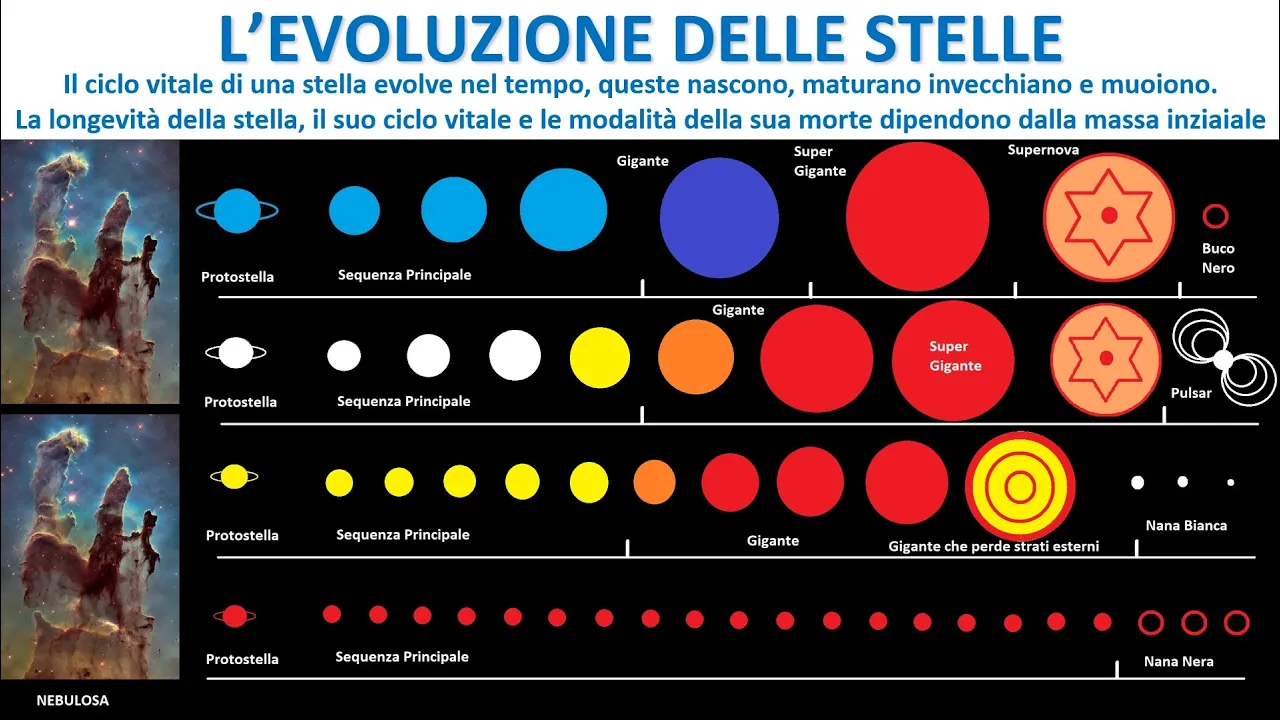


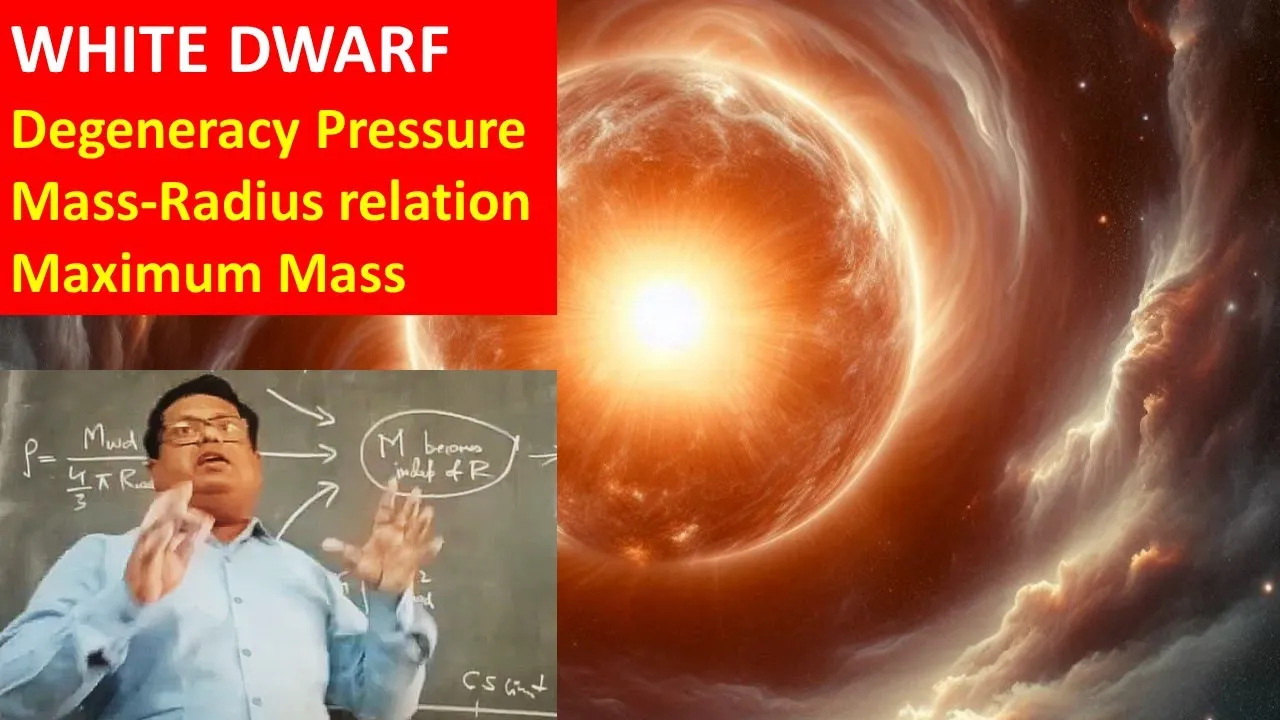












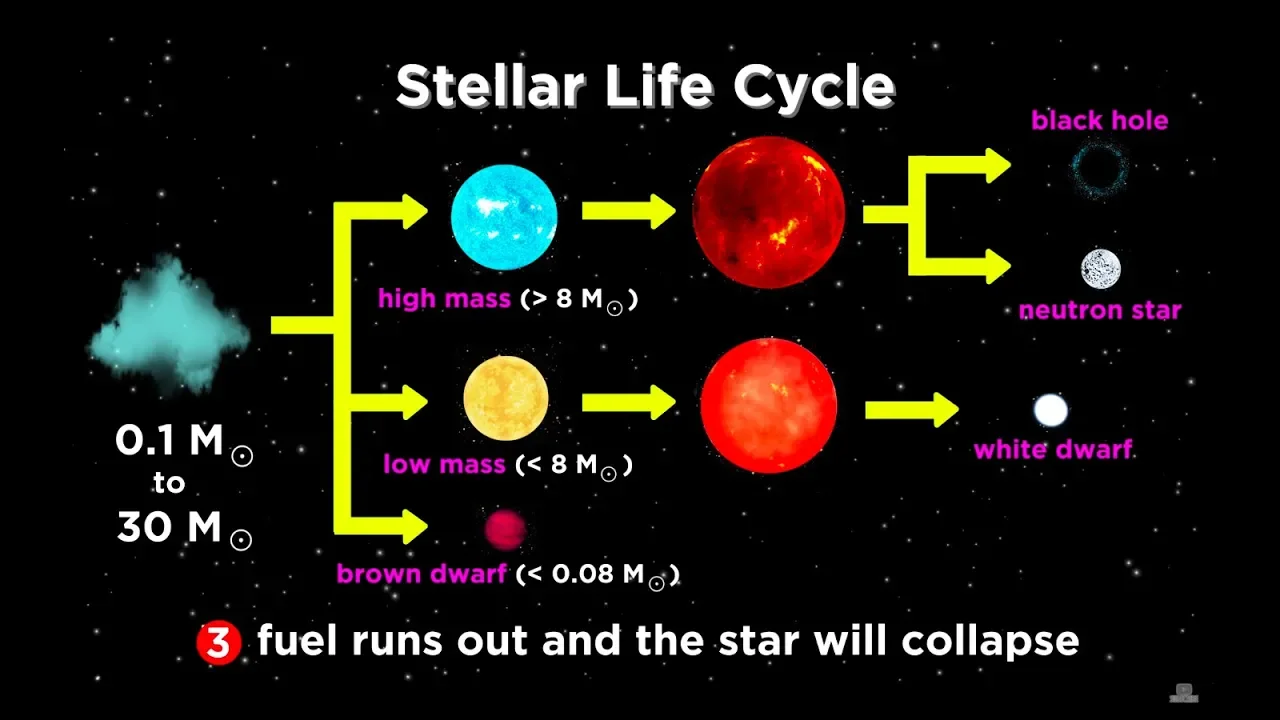
When low-mass stars like the Sun exhaust their nuclear fuel, they shed their outer layers and leave behind a dense, Earth-sized core called a white dwarf, supported by electron degeneracy pressure; this intense radiation from the hot white dwarf ionizes and illuminates the expelled gas, creating planetary nebulae—colorful, intricate structures that last only a few thousand years before dispersing into space.
White Dwarfs & Planetary Nebulae | Stellar Evolution Explained
Added:The basic stellar life cycle, specifically the concept of the 'Main Sequence' where stars spend the majority of their lives fusing hydrogen into helium.
The concept of hydrostatic equilibrium, which is the balance between inward gravitational pull and outward radiation/thermal pressure.
The fundamentals of nuclear fusion, particularly how stars transition from fusing hydrogen to fusing heavier elements like helium.
The classification of stars by mass, understanding that a star's initial mass dictates its entire evolutionary path and ultimate fate.
The quantum mechanics behind electron degeneracy pressure, which is the state of matter that prevents a white dwarf from further gravitational collapse.
The Chandrasekhar Limit, which defines the maximum mass (approximately 1.4 solar masses) that a white dwarf can support before collapsing.
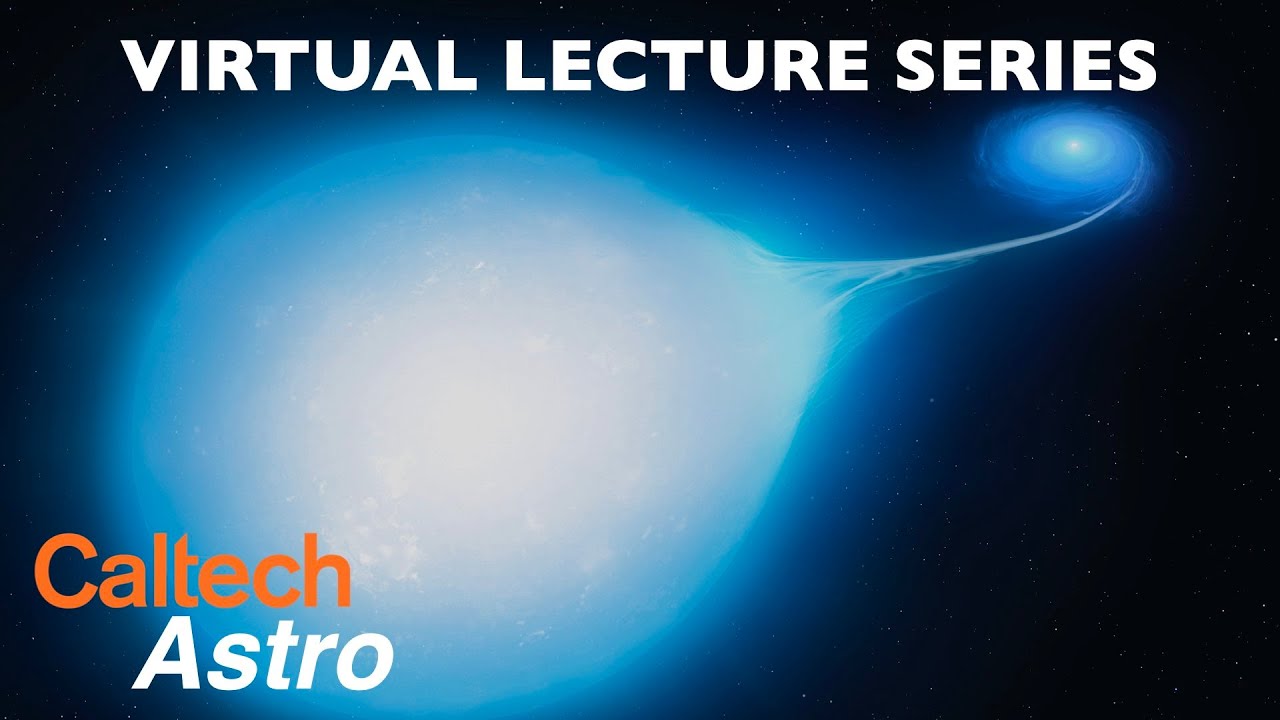
Type Ia Supernovae, which occur when a white dwarf in a binary star system accretes too much matter from its companion star, triggering a thermonuclear explosion.
Cosmic chemical enrichment, exploring how the outer layers shed during the planetary nebula phase distribute carbon, oxygen, and nitrogen into the interstellar medium to form new star systems.
The contrasting fates of high-mass stars, including core-collapse supernovae, neutron stars, and black holes.
1.2M views15.3Klikes11:10Original Release: 2015-08-27
Hey folks, Phil Plait here. In the last episode of Crash Course Astronomy, I talked about the eventual fate of the Sun, and other low mass stars like it. After a series of expansions and contractions, they blow off their outer layers, become white dwarfs, and fade away over billions of years. The end.
Except not so much. First, white dwarfs are pretty awesome objects, and worth investigating.
And second, when a star becomes a white dwarf it produces what is, quite simply, one of the most gorgeous objects in space.
To recap, when the Sun ages, it undergoes a series of changes in its core. It’s fusing hydrogen into helium now, today, and will eventually fuse helium into carbon, and it’ll make a dash of oxygen and neon too. But when it runs out of helium to fuse, it’s in trouble.
It doesn’t have enough mass to squeeze the carbon nuclei together, so they can’t fuse.
Fusion is the Sun’s energy source. Once the core is nearly pure carbon, that power is switched off.
By this time, nearly 8 billion years from now, the Sun’s outer layers are gone, expelled by all the shenanigans going on in the core. What’s left of our star is just its core, exposed to the dark of space. Over the next few billion years it’ll cool and fade to black.
That might seem like the end of the story. But I skipped a step, and it’s a beauty.
When helium fusion stops, the Sun’s core will have about half the mass of what the Sun does today; the rest will have blown away into space around it. What remains is basically composed of electrons and carbon nuclei, mixed with a small amount of a few other elements.
So what kind of an object are we left with here?
You may know that like charges repel; electrons have a negative charge and repel each other.
The tighter you squeeze them, the stronger that pressure.
There’s also a second force, called electron degeneracy pressure. It’s a result of some of the weird rules of quantum mechanics (for you QM nerds, it’s The Pauli Exclusion Principle).
This describes how sub-atomic particles behave on teeny scales. One of these rules is that electrons really hate to be squeezed together, above and beyond simple electric repulsion.
This resistance is phenomenally strong, and becomes the dominant force in supporting the core of a star once helium fusion stops.
By the time this electron degeneracy pressure balances the core’s immense gravity, the core is only about the size of Earth, 1% the original width of the Sun.
And it’s called a white dwarf.
Listing its characteristics is enough to melt your brain. Ironically, everything about it gets amplified as its size shrinks. It becomes ridiculously dense; a single cubic centimeter of it, the size of a six-sided die, has a mass of a million grams — one metric ton.
An ice cream scoop of white dwarf material outweighs 60 cars.
Because it’s so dense, the gravity at the surface of a white dwarf screams up, easily topping 100,000 times the Earth’s gravity. If you have a mass of 75 kilos, you’d weigh 7,500 tons if you stood on the surface of a white dwarf.
Not that you can. Stand there, I mean. You’d be flattened into a greasy smear.
But not for long. Newborn white dwarfs are hot; they can glow at a temperature of upwards of 100,000 degrees Celsius. If you were on the surface, you’d be a vaporized and ionized smear.
Their intense heat makes them white, and they’re small. Hence their name.
They’re so hot they also glow in the ultraviolet, even in X-rays. Weirdly, though, because they’re so small, they’re actually quite faint. The closest one to us, Sirius B, can only be seen with a telescope even though it’s nine light years away, one of the ten closest known stars! Over 10,000 white dwarfs have now been found in our galaxy.
Still, any gas near a newly formed white dwarf is likely to be affected by the intense radiation pouring out of it.
And hey, wait a sec. When a star like the Sun is in its final death throes, it expels its outer layers as a gaseous wind. You don’t suppose…?
Yup. By the time that white dwarf forms, the gas blown off hasn’t gotten very far from it, at most a light year or two. That’s plenty close enough to get zapped by the white dwarf radiation, causing that gas to glow in response. What does something like THAT look like?
Why, it looks like this.
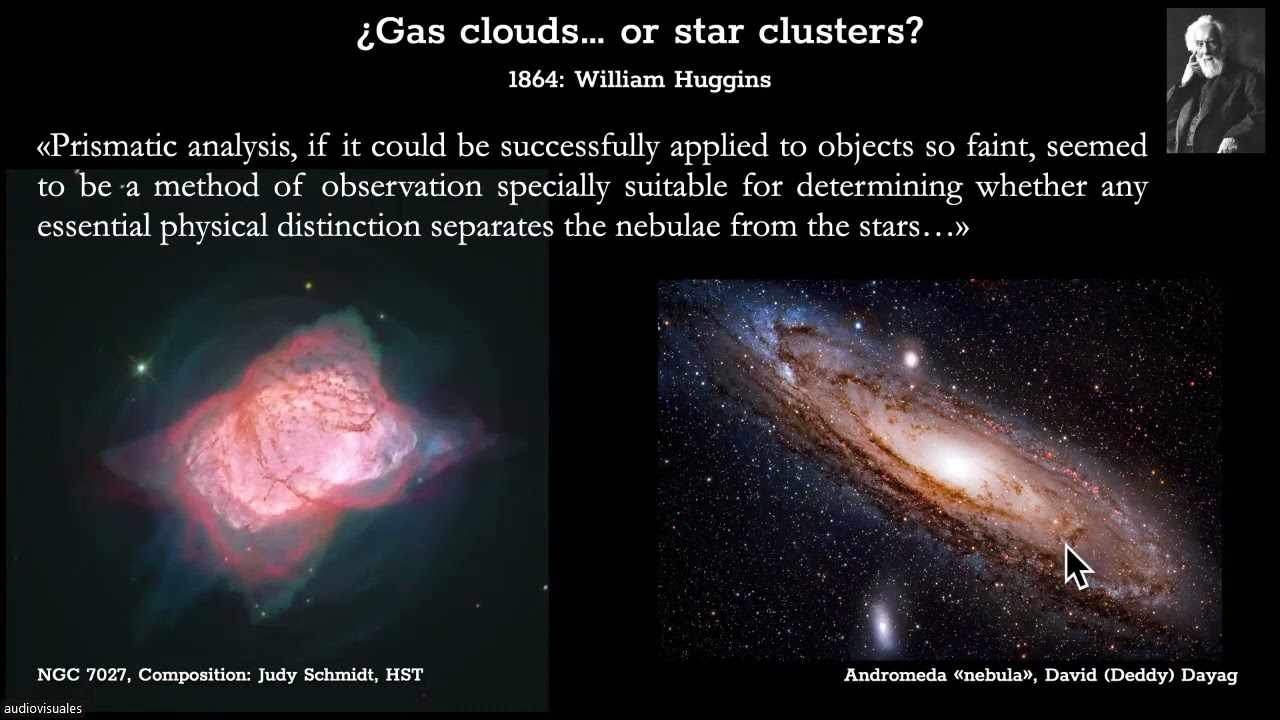
This object is what we call a planetary nebula. It’s a funny name, and like so many other names it’s left over from when these objects were first discovered. The astronomer William Herschel — the same man who discovered infrared light and the planet Uranus — gave them that name, because they appeared like small green disks through the eyepiece.
The first planetary nebula was discovered in 1764 by the French astronomer Charles Messier, who spent years scanning the skies looking for comets. He kept seeing faint fuzzy objects that he mistook for comets, so he decided to make a catalog of them, a sort of “avoid these objects” list. That list is now a staple of amateur astronomers, because ironically it contains some of the best and brightest objects to observe.
Among them is M 27 — the 27th object on Messier’s list — one of the biggest planetary nebulae in the sky, and one of my favorites; I love seeing it through my telescope when it’s up high in the summer.
Planetary nebulae can be a bit tough to observe; most are small and faint. On film, even with long exposures, they can appear to be little more than disks. For a long time, they weren’t thought to be terribly complicated; when a star becomes a red giant and blows off its outer layers it’s rotating very slowly, so the wind should blow away in a sphere surrounding the star. Many planetaries (as we call them for short), are round and look like soap bubbles, pretty much what you expect when you look at an expanding shell of gas.
But with the advent of digital detectors, their fainter structures became clearer, and the true beauty of these phenomenal objects was revealed. Some are elongated. Some have spiral patterns.
Some have jets shooting out on either side. Some have delicate tendrils streaming away from them.
In fact, only a handful of the hundreds known are actually circular!
Clearly, there’s more to planetaries than meets the eye.
If the wind from a star blows off in a sphere, how can planetaries come in all these fantastic shapes?
It turns out the real situation is more complicated. As usual.
When a star is a red giant, it spins slowly, and blows off a dense but slow solar wind.
If there’s nothing else happening to the star, then that wind will blow outward in all directions, spherically. However, as those outer layers of the star peel away, they expose the deeper, hotter part of the star. The star starts to blow a much faster, though far less dense wind. That wind catches up with and slams into the slower wind.
When that happens, you get that idealized soap bubble nebula.
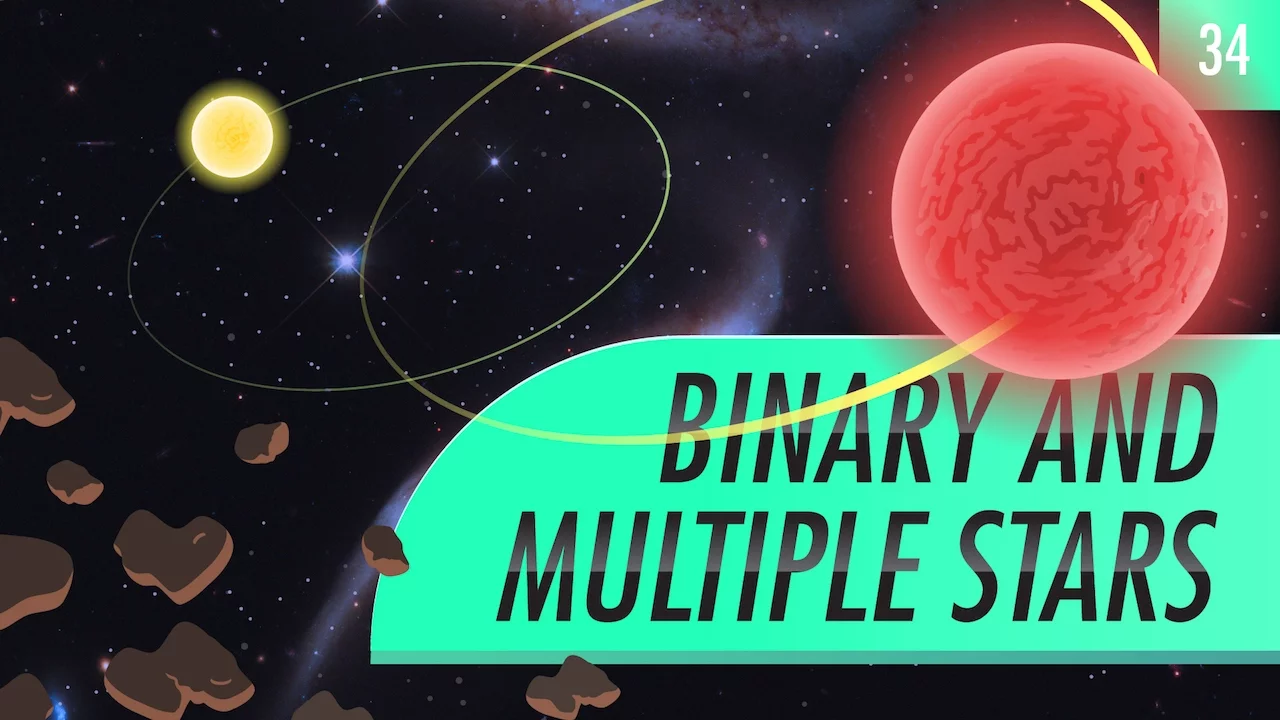
But some stars are binary; two stars that orbit very close together. We’ll go into detail on them in a later episode, but, if the dying star has a companion, they may circle each other rapidly. That will shape the wind, forcing more of it outward in the plane of the stars’ orbits due to centrifugal force.
The overall shape of the expanding gas is flattened, like a beach ball someone sat on.
When the fast wind kicks in, it slams into that stuff in the orbital plane and slows down.
But there’s less stuff in the polar direction, up and down out of the plane. It’s easier for the wind to expand in those directions, and it forms huge lobes of material stretching for trillions of kilometers. That’s a very common shape for planetary nebulae.
But to explain the shapes we see, the two stars would have to orbit improbably close.
Most binaries aren’t that tight. So what can cause these shapes?
When I was in graduate school, my Master’s degree advisor, Noam Soker, came up with a nutty idea; maybe the stars had planets, like in our solar system. If the star expanded into a red giant and swallowed them, it would take millions of years or more for the planets to vaporize. And for all that time they’d be orbiting INSIDE the star, moving faster than the star itself. Like using a whisk to beat eggs, the planets inside the star would spin it up, causing it to rotate faster… fast enough to explain the shapes of planetaries.
That was in the early 1990s. A few years later, the first exoplanets were found, and we saw that massive planets orbiting very close to their stars were common. I suspect this is why we see so many weird and fantastic shapes in planetaries; their progenitor stars swallowed their planets.
So planetary nebulae really may owe their existence to planets! And we come… full circle.
The glow in a planetary nebula is due to the hot central white dwarf exciting the gas.
Most of the gas is hydrogen, which glows in the red. However, a lot of the gas is oxygen.
There’s not nearly as much oxygen as hydrogen, but kilo for kilo oxygen glows more brightly than hydrogen due to the atomic physics involved. This oxygen glows green, giving planetaries their characteristic hue.
Funny: When this green glow was first analyzed spectroscopically, astronomers couldn’t identify the responsible element making it. They dubbed it nebulium, but eventually figured out is was just extremely tenuous oxygen.
Other colors can be found, too. Nitrogen and sulfur glow red, and oxygen can emit blue as well, all adding to the beauty of these celestial baubles. But these aren’t just pretty pictures: The structure, color, and shape of a planetary nebula tells us about the life of the star that formed it. We learn even more about stellar evolution by studying how stars die.
Mind you, the gas in a planetary nebula is still expanding, cruising outward from its initial momentum of being thrown off the star. Eventually, the gas expands so much it thins out, and it stops glowing. That takes a few thousand years, so when you see a planetary nebula you’re seeing a very short snapshot of the life, the death, of a star. And that’s why we don’t see many; though there are billions of stars in the galaxy that die this way, this phase is very brief. Enjoy looking at them while you can. And what of the Sun?
Will it, one day in the distant future be at the center of a planetary nebula it expels as it dies?
Ehh probably not. When the Sun becomes a white dwarf, it most likely won’t be energetic enough to make the surrounding gas glow; most planetaries start off as stars more massive and hotter than the Sun. When our Sun dies, it’ll go quietly and without a lot of visible fanfare.
Alien astronomers, if they’re out there in 8 billion years, may not even notice.
But more massive stars do make quite the spectacle. And if they’re really massive, more than about 8 times the Sun’s mass, they really and truly make a scene when they die. They explode.
But that’s for next week. Mwuhahahaha.
Today you learned that when low mass stars die, they form white dwarfs: incredibly hot and dense objects roughly the size of Earth. They also can form planetary nebulae: huge, intricately detailed objects created when the wind blown from the dying stars is lit up by the central white dwarf. They only last a few millennia. The Sun probably won’t form one, but higher mass stars do.
Crash Course Astronomy is produced in association with PBS Digital Studios. Why don’t you head on over there and check out their YouTube channel -- they have lots of great videos there. This episode was written by me, Phil Plait. The script was edited by Blake de Pastino, and our consultant is Dr. Michelle Thaller. It was directed by Nicholas Jenkins, edited by Nicole Sweeney, the sound designer is Michael Aranda, and the graphics team is Thought Café.
Up Next
13:37
Starstuff: The Cosmic Origins of Elements and Supernova Chemistry
@pbsspacetime
480.3K views•2016-04-06
61:17
First Billion Years of the Universe with the Square Kilometre Array
@iaaudc
121 views•2022-05-26

58:12
The Universe Becomes Visible: Cosmic Dawn and Reionization Explained
@crashcourse
81.5K views•2024-06-05
6:10
Gamma-Ray Bursts: Cosmic Snipers Explained | Astronomy
@kurzgesagt
15M views•2016-07-31
Related Study Plans & Knowledge Roadmaps
Structured learning paths in Astronomy
astronomy
Reionization: Pop III Stars, IGM & 21cm Line
01Foundations of Cosmology & the Early Universe
02Population III Stars & Cosmic Dawn
03Physical Mechanisms of Reionization
+ 2 more learning modules
17h5 modules
Explore Roadmap
astronomy
Planetary Rings: Dynamics, Roche & Resonances
01Foundations of Gravity and Orbital Mechanics
02Tidal Forces and the Roche Limit
03Structure, Composition, and Collisions
+ 2 more learning modules
10h5 modules
Explore Roadmap
astronomy
Asteroseismology: Stellar Waves, Ages & Cores
01Foundations of Stellar Astrophysics & Wave Mechanics
02Stellar Oscillation Modes: P-modes and G-modes
03Mathematical Framework of Asteroseismology
+ 2 more learning modules
35h5 modules
Explore Roadmap
astronomy
Adaptive Optics: Physics, Engineering & Control
01Foundations of Wave Optics and Wavefronts
02Atmospheric Turbulence & Optical Distortion
03Wavefront Sensing Technologies
+ 3 more learning modules
35h6 modules
Explore Roadmap