
![Is the RTX 4080 12GB Actually a 4070? AMD Eco Mode, A Must Test Feature! September Q&A [Part 1]](https://i.ytimg.com/vi/Jx3cnXVevb0/maxresdefault.jpg)
![Infinite Bridge Builder! [AFK] (only 20 blocks) | Minecraft [STILL works]](https://i.ytimg.com/vi/5JG15Tzea8E/maxresdefault.jpg)














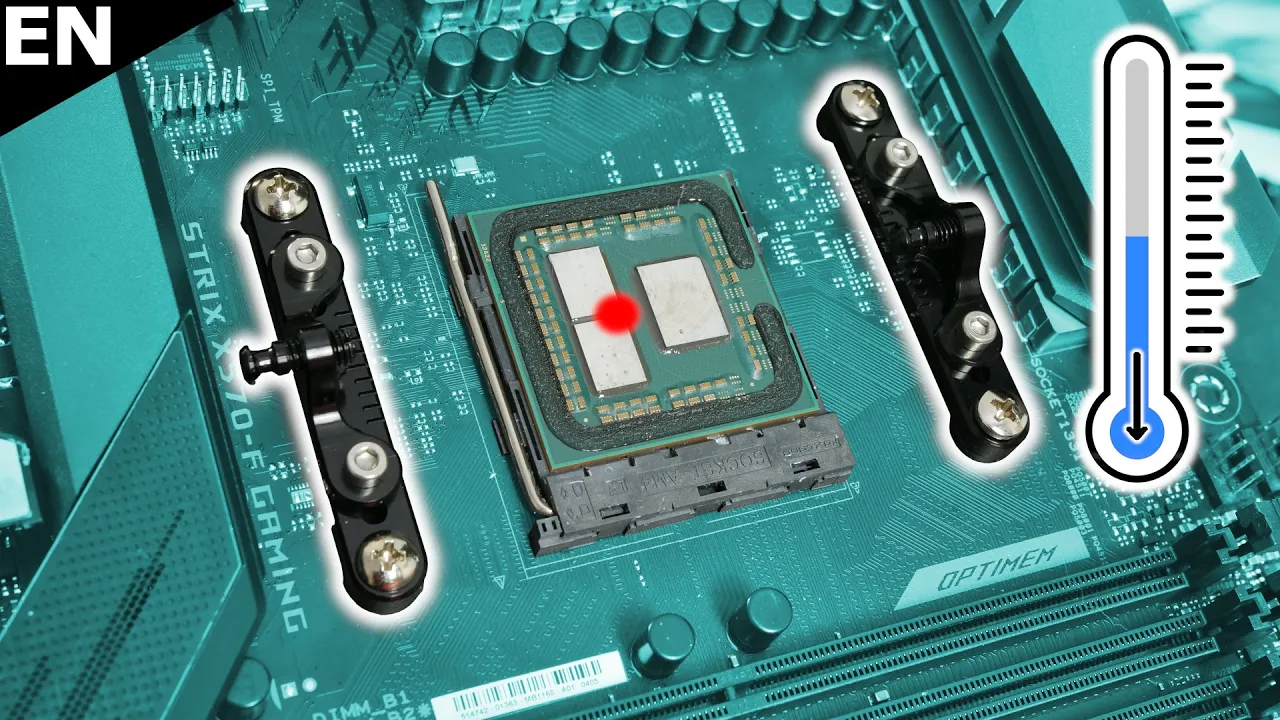

In a comprehensive water cooling block comparison, Alpha Cool Core 1 achieved the lowest average P-core temperature of 77.11°C, outperforming established brands like Aqua Computer (77.76°C) and EK Water Blocks (81.22°C), demonstrating that smaller manufacturers can compete with industry veterans through innovative slotting designs that maximize surface area contact; however, the EK Magnitude's performance issues stemmed from its convex cold plate design (2000-micron radius) rather than manufacturing defects, as a flat cold plate improved temperatures to 79.13°C, highlighting how surface flatness significantly impacts thermal performance.
CPU Water Block Comparison: Alphacool Core 1 vs. EK Magnitude
Added:Fundamentals of Liquid Cooling Systems: Understanding how a custom loop operates, including the basic functions of the pump, radiator, coolant, and water block in heat dissipation.
CPU Thermal Architecture and Delidding: Knowledge of the Integrated Heat Spreader (IHS), thermal interface materials (TIM), and how CPU modifications (like delidding or direct-die frames) affect thermal transfer.
Water Block Internal Mechanics: Understanding how micro-fins, jet plates, and cold plate bowing/geometry influence coolant flow restriction and heat absorption.
Thermal Benchmarking Metrics: Familiarity with key performance indicators such as Delta T (temperature relative to ambient), flow rates (L/h), and thermal resistance.
Direct-Die Cooling and Liquid Metal: Exploring the advanced application of liquid metal interface materials and mounting blocks directly onto the bare silicon die.
Loop Hydraulics and Pump Curves: Analyzing how water block flow restriction interacts with different pump types (D5 vs. DDC) and affects overall system thermal efficiency.
Material Science and Galvanic Corrosion: Investigating chemical reactions between different loop metals (copper, nickel, aluminum) and the selection of specialized coolants and inhibitors.
Mounting Pressure Optimization: Studying how mounting bracket designs and socket deflection (e.g., LGA 1700 contact frames) alter contact pressure distribution across the CPU.
126.3K views4.8Klikes33:40Original Release: 2023-08-20
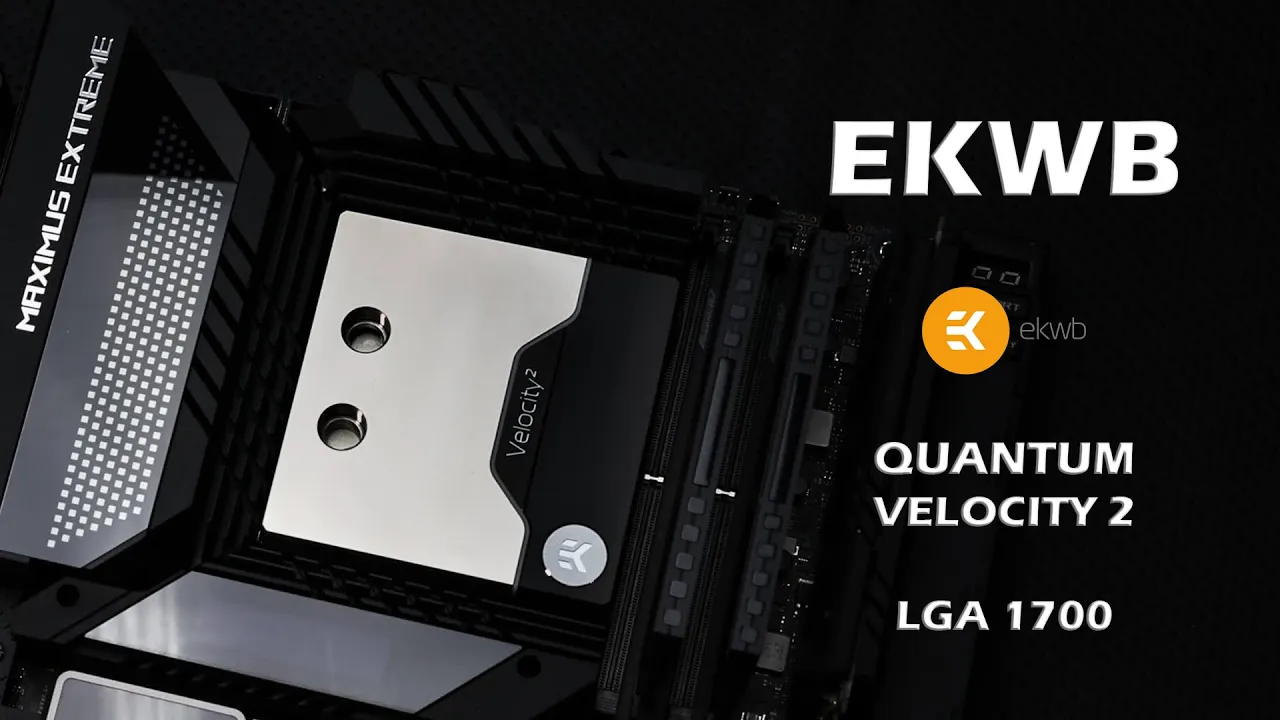
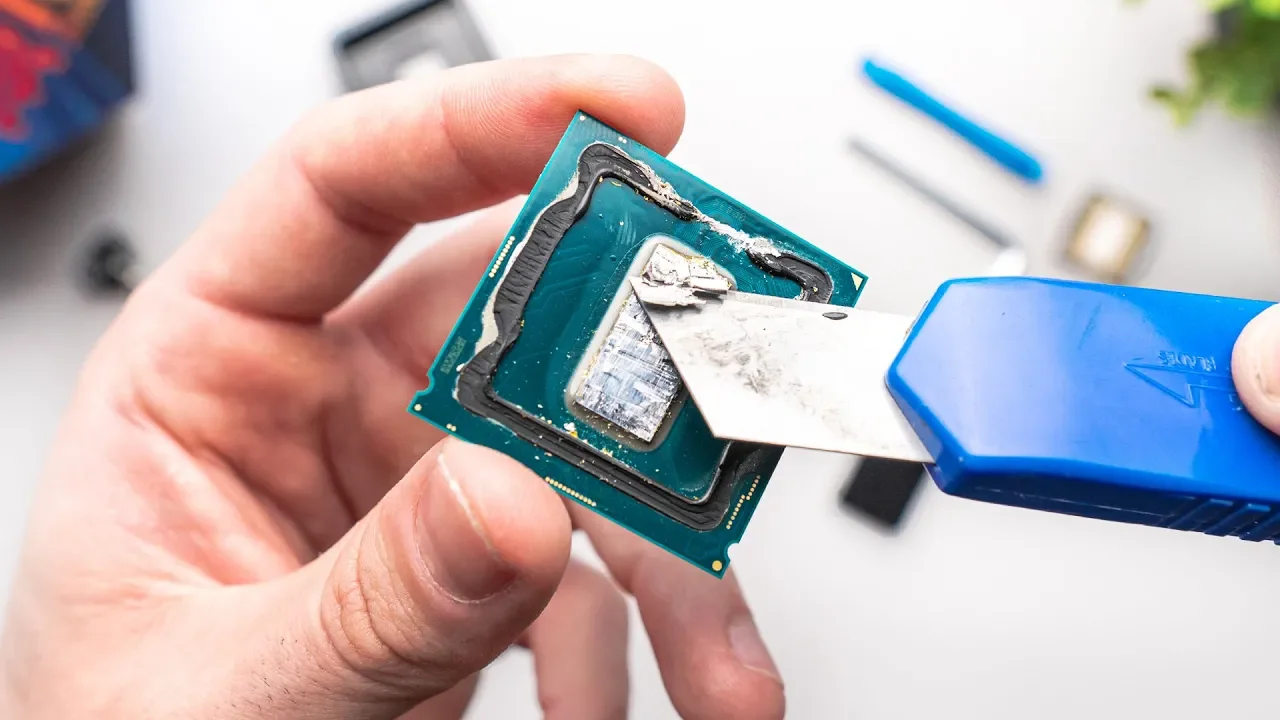
foreign back to another video I recently talked to Igor from Igor's lab and we were discussing one of his recent articles well he didn't test it but it was published on his website about the alpha cool core I guess core one block it's called and in his test or in the test on his website this block was delivering an amazing performance like outstanding liquid performance mind-blowing better than expected and then I was thinking about I definitely also have to check this out then I also had some other reconciliation with Inno 3D and they also provided some Alpha cool gear for a different video which will be coming soon so I decided I'm just going to buy all the recent and high quality water blocks to compare them to each other and see how they will turn out when it comes to Performance so I also have an aqua computer next block I have one from Barrow I have a water cool heat killer I have the Corsair xc7 and also an EK magnitude and my plan for today's video is simply to check how will these blocks perform from personal experience most of the recent high-end blocks all perform extremely good which also makes it very difficult to find differences between these products so the test scenario in your test equipment how you test definitely also impacts the results and that's why I also made some interesting decisions I would say and we will quickly talk about that I'm going to test this with Intel and also a 12900 KS which is this one it's also a slightly modified CPU as you can see has a tiny hole in the side of the IHS and I'm going to use this in combination with a 13th gen contact frame that's also slightly modified you can see there is a small Groove in the side which allows that I can mount the CPU from the side and at the same time also add this temperature sensor from the side this way I can measure the Delta from this point basically it's just above the core to the water temperature and I will measure the water temperature with a sensor that's going to be attached on the board and there is going to be a sensor right above the CPU water block on the Inlet Point of course I will also track the CPU temperature apart from this sensor because they're also not the most accurate but having two information pieces as a base is better than only relying on either the CPU core or just the sensor itself in this regard I will have two pieces of information and then I will detect this from the water temperature because it could be if I perform one of the tests in the morning then maybe this room is like half a degree celsius colder than in the evening and this way I will even out the water temperature out of those results obviously the performance out of those blocks will also be depend on the pump speed and the flow rate but I will not perform testing with 100 flow rate I will do it the same way as I have it in my personal system I have a D5 in there that's running at 30 pump speed at this level I can barely hear it I can hear it slightly but it's in a region where it's acceptable and the flow rate is still high enough to get a decent performance but even like 50 pump speed is just too loud and too annoying so that's why I will not perform these testings it should be something that you will also repeat and experience at home it will be cooled by Amora that's sitting underneath this table and this is equipped with nine times 120 millimeter fans so that should have enough cooling capacity to make sure that this will not be the limiting factor and the most important part for you out there if you are looking at videos like this or reviews is to check multiple of them because for example right now I'm mounting this with a CPU contact frame so the CPU is mounted down all the way and we're with a defined mounting pressure and also with a defined Bend or not the band and that is going to have an influence on the achieved temperatures which also means that a different reviewer that is different testing differently might also have different results and it's definitely important to check out what these people are doing and what kind of red solid was achieved and if there is a result out of line doesn't necessarily mean that it's wrong but it means that there is a different result which you also have to check out and maybe see what was the difference and how was this difference achieved and that's how it would look like a mounted I also added a strip of tape across the sensor on the side to make sure I don't change position and that I don't accidentally pull it out we start with this cooling block from Barrow this block was only 50 Euro and if you keep the price in mind the manufacturing quality is pretty decent it's a nice nickel plated copper surface on the bottom also the acrylic looks good it has RGB and also structure inside looks promising not sure why Barrow is doing this I just noticed when I was trying to connect RGB that this is not an RGB connector a normal one but rather a three pin fan cable and then on the sticker it says that you should not connect this to a typical 12 volt fan header which is something you would usually do if you look at this I don't get it what's the point on the thermometer I have two values the first one on top the 27.9 degrees Celsius that is the water temperature which I'm just taking off this fitting with a little bit of thermal paste on top I have another sensor that's like built in here which is an aqua computer sensor the aqua computer sensor read out in BIOS reads 28 degrees Celsius but you can see it doesn't read like 28.1 or something so it's not really accurate enough but it's a good indication to see that this one is correct with 27.9 so I will follow this value and the one on the bottom the 29.5 that is our heat spreader temperature which is pretty close right now because the CPU is also sitting in BIOS in idle it's not doing anything this is just to show how I'm going to test so I overclocked this 12900 KS manually to 5.3 across all of the P cores with a stable core voltage it's a fixed v-core simply so I don't have any kind of voltage fluctuation whatsoever and at the same time making ensure that the clock does not throttle or fluctuate and then I'm going to run a cinebench R23 10 times recording the temperature with Hardware info and then taking the data from the CSV document and then taking out the low temperature taking the average of the low temperature just of the P cores during load and then normalizing it to the water temperature one thing that's also always interesting is if we pay attention to the heat spell temperature now that I'm starting our 20 you can see it ramps up from about 31 to just below 40 degrees celsius which is definitely a temperature increase but keeping in mind that the cores are sitting at about 90 degrees Celsius under load that's still a drastic Delta from the course to what we actually have on the Heats better and then on the water cooler base as additional piece of information that's how the mounting pressure and contact would look like with the barrel block and I'm using the same thermal paste out of the same tube for all of the coolers to make sure there is as less tolerance as possible and if I don't spot anything unusual when it comes to the contact surfaces I will just ignore it otherwise I will let you know the barrel Intel 1700s acrylic RGB block will reach an average p-core temperature and a load of 84.81 degrees Celsius as pointed out earlier this value is already normalized to the water temperature the next cooler which we're going to check out is something probably unique it's from steel key Customs that's a tiny manufacturer in Germany and this one is called the S key SK desti predator and it's also a cheaper block which about which costs about 70 Euro and compared to the other ones doesn't have one of those like jet plates internally when it comes to the structure should be interesting to test this one as well I also want to note that this is a sample they sent me all the other blocks I bought from case King RGB also looks good on this block works well and I personally also like the design but that's probably just a matter of taste the SK desti actually surprised me because it barely beat the barrel CPU water block but considering that this CPU cooling block is not using any kind of jet plate this was actually surprising I measured 84.47 degrees Celsius continuing with the water cool and the heat killer 4 Pro which is available in all kind of different variations this one is acrylic without RGB but it also is available with RGB and different tops whatever you desire this version also comes without a back plate and we will also mounted exactly this way back plate is available in addition but it's also quite costly I think it's something between 20 and 30 Euro which is definitely quite a bit for a backplate quality wise as I'm used to by water cool the quality is just perfect it's like spot on every single time I buy something from them the imprint on the water cool heat killer is definitely different compared to the steel key or to the barrel block because we see a bigger focus in the center which could be due to the cold plate being slightly bent or that the acrylic is maybe standing out in the center a little bit so the block maybe focuses to have all the pressure in the center pretty much as expected the heat killer 4 Pro is setting the bar high with 77.59 degrees Celsius under load it's about 7 degrees Celsius colder and then both Barrel or steel key Customs continuing with the Corsair xc7 RGB Pro which is from what I can tell right now I think the only skived heatsink or water Block in today's test that's certainly a difference because it's not fully CNC milled I think the structure should be skived which is a different process but allows very fine and thin fins let's see what a performance looks like with the Corsair xc7 we can see an even more intense imprint on the center of the CPU and also if we check out in the center of the cooling block corsair's xc7 RGB Pro is on average about 2 degrees Celsius worse than heat killer from water cool but at the same time it's still a good performance overall I would say and the P cores are staying on average 79.8 degrees Celsius now we are taking a quick jump into Material Science to explain why skived heatsinks will always be worse than a traditionally CNC cut heatsink when it comes to the small structure this video you can see right here shows skiving process of a different copper heatsinks so you have this sharp knife the Skype that goes in from the side cuts into the copper part and then moves the fin upwards and during this process you're basically like cutting into the material and then moving the fin upwards and what happens during this process is that you're not only like cutting into the surface but you're also deforming the entire material this might become more clear if we take a look at this video where you can see a deformation of the aluminum fins that occurs during the skiving process so you can clearly see that you don't only cut into the aluminum but you also deform the aluminum at the same time and this leads to a different organization in the grain structure of the aluminum or of the copper it's the same for all kind of metals and that's what typically happens if you do some kind of forging to the metal so for example if you have some Metal Sheets like some steel sheets and you roll it to increase the tensile strength what happens is that you to decrease the grain size which then makes the material stronger like increases the tensile strength but at the same time it decreases the electrical and also the thermal conductivity and that's exactly what happens during the Skyping process because you don't only cut into the material but you also deform the material at the same time which typically leads to a decrease of thermal and electrical conductivity by about 10 to 20 percent so no matter how fine you're trying to skive a heatsink it will always be worse than a traditionally cut like CNC cut heatsink where you have a very organized grain structure of copper like as a base material now continuing with aqua computer and the complex cryos next water Block it's also a German vendor that's also well known for very good quality unfortunately Aqua computer is using their own connector set for RGB which means that if you want to attach it to a normal RGB header of your memory for example then you need a special adapter which I don't have which is also not included I missed this fact I should have read about this before I didn't and that's why I cannot show you the RGB unfortunately very similar to heat killer 4 Pro also the block by Aqua computer which was called the kuplex crews next is also performing extremely well which is probably a reason of their year-long experience and also manufacturing quality with the result of 77.76 degrees Celsius it's only 0.2 degrees Celsius words in heat killer and is also delivering a very solid performance now we're getting to the EK magnitude which I would say is somewhat of a controversial water cooling block simply because of the price of 250 euro cheek I absolutely love how the block looks like just from the visual appearance it's a beautiful block but how does it perform and from the reviews that are already public for a long time we know that it's pretty much on par with coolers that cost less than half of what this block costs one thing I can straight highlight though is that I'm not a big fan of this back plate especially compared to the price of the block of 250 euro I think there should be something with a higher quality included because the threads are usually not that great and the edges are a little bit sharp generally the surface quality of the back plate also it just doesn't fit the block itself just doesn't fit the price as you can see the mounting contacts I'm not sure if it looks off or not on the left side at least this is not that great I'm not sure if this is related to the fact that the magnitude uses a rather Big Radius like the curve on on the bottom of the cooler it's also available in different kind of radios depending on what kind of contact you want to achieve not sure but I think I will just Mount this again and double check to make sure I didn't make a mistake as already guessed from just looking at the imprint of the thermal paste the performance of ekwb magnitude was not that well especially considering that this was priced at 250 euro with 81.22 degrees Celsius under load from the second measurement because the first one was actually 81.46 this is still much worse than I expected and the two values 81.2 and 81.4 that is just the mounting variance but we will get back to this topic in a second now here we have Alpha cools core one water block which is interesting in several different aspects first of all this is a sample which I got sent to by Eno 3D which was meant for a completely different video but then it turned out to be so interesting that I decided to make this video which we're just doing right now but then because I also noticed some stuff about this cooling block I decided to also order a retail block simply just to be sure that I have retail quality which I'm testing at least this way you can also see right now that's how you would mount it on Intel 1700 socket you have those two mounting brackets that you slide in from the side mounting wise you just have a back plate that's going to go underneath the motherboard some standoffs then you put the cooler and on top of the standoffs and fix it with four small thumb screws and that's it so it's pretty simple to mount one thing I want to highlight is that first of all if you pay attention to the cold plate on the bottom and it's always good to use some Reflections on the side you can see that it's not fully even which is usually a bit intended to make sure that the main point of contact is in the center and what I'm not sure about if you can see it in the camera is that the remaining part of the material that is not being cut out is so thin so the area underneath the structure that you can kind of a little bit see the structure shining through but I'm not sure if you can even see that on the camera and the sample I got was the RGB version and the one I bought is non-rgb version the internals themselves are actually not that special they're pretty common I would say um we have this injection molded part this piece of plastic that is Distributing from the inlet the water through here and then just accelerating the water a little bit through this tiny slot then we have this piece of rubber which is just a gasket to seal off this plastic part to our structured surface that's just so the water is forced to go through all those tiny slots and just to make use of all the surface area that is available and my guess the reason why this block performs so well is because the slotting is so deep that the remaining material between the bottom of the slot and this surface is just extremely low and that's usually an indicator why this or like why blocks generally perform really good so now there are two things I noticed on this specific sample which is why I ordered also the retail one so first of all there are some M4 threads in here which just don't make any kind of sense if you pay attention to how this is mounted on here it will just go on here like that the cold plate and then it's mounted with M3 screws just going through and the M3 screws also go through here so I don't see why M4 threads are in here but that's also nothing negative like it doesn't matter if there are M4 threads in there it was just a personal thing that I was wondering why they are in here and if this is just a sample or if they also exist in the retail one and this could be for example for manufacturing reasons so they could have a specific part in manufacturing where they have to clamp down this piece of nickel plated brass inside the mill for example and then use some threads to hold it down so that could be a very simple explanation is definitely nothing negative I was just curious about that but then if we pay attention to the cold plate and if I move it around you might be able to see copper shining through which is not ideal so there could be also different explanations for this first of all this is a piece of copper that is nickel plated for nickel plating you have usually two different processes one is chemical nickel and the other one is electroplating for chemical nickel you have the chemical fluid and that's very simplified now but a chemical fluid will basically plate the copper with nickel particles and then you have the electroplating WHERE and voltage is applied to this piece and then you have the nickel particles being attracted to the voltage and this usually leads to different effects so for example if you have a hole then it will not go through the hole or basically inside the hole because it will always go to the edge first it will not reach deep down that could be an explanation so if they're using electroplating that would not be ideal should be chemical nickel and if they use chemical nickel they should maybe adjust their process to also make sure that inside the structure is also fully nickel plated because I've seen structures like this on other cooling blocks and they also manage to have nickel inside we also did stuff like this before so it's definitely possible so that's something they could try to adjust to improve for the future and now I want to see if the same thing is in the retail one or if that was just a sample Alpha cool indeed managed to beat both heat killer and aqua computer and is performing extremely well with 77.11 degrees Celsius after seeing this weird imprint on the ekwb magnitude I decided to Simply put put this cooling block into my CNC mill and just even out the surface in total I moved away about 0.25 millimeter of material and thus resulting in removal of the 2000 millimeter radius of the ekwb magnitude and this way it should just be more even and maybe have a better contact with the CPU surface and we will just try again we will Mount again our EK block now modify it with the cold plate flat and see if it changes anything to the temperature just judging by the imprint this looks better to me than previously but what about the temperature I first have to check myself right now I don't even know myself we can now see a clear benefit of the CNC adjustment of the EK magnitude and we now measured a temperature of 78.8 degrees Celsius so it's still about 1 to 1.5 degrees Celsius behind the top performers now we're switching to the final chart which is sorted by performance or temperature the Alpha cool Core 1 is performing the best with about 0.4 degrees Celsius lower temperature than the heat killer 4 Pro and about 0.6 degrees Celsius lower than the aqua computer caplex Creos next I also want to highlight though that probably if you would use any of these three coolers you wouldn't be able to tell a clear difference because they basically all perform very good and similar I think in the end it more comes down to the rest of the features such as RGB price or simply what kind of look you prefer let's get to the conclusion I will try to be as quick as possible but I also want to say a few things here and there about some of the cooling blocks first of all the barrel block is the cheapest one in this test and for about 50 Euro especially because it includes RGB price performance wise pretty decent I was surprised though that it performed not as good considering that it's also using some kind of jet plate structure I expected this to be performing better but that was not the case and surprisingly the steel key Customs which is from this small tiny German company block performed tiny bit better even though it's not using any kind of Jet Jet plate structure and with the slightly higher price I think that's also something to consider but it's probably more for the German audience um because I'm not even sure if this is like internationally available I also want to highlight that this was an engineering sample which didn't have the retail mounting kit so I had to improvise here and there but it's definitely on the way to be something interesting the water cool block as expected the heat killer 4 Pro delivered because they have a very long experience or I expected the structure to be on point and definitely also delivery performance which is what they achieved the only thing I would wish to see is that it would include a backplate because I don't feel comfortable applying a high mounting pressure load without having a back plate on the back without supporting the board and with a bigger amount of mounting pressure not so sure I would like to see a backplate included the Corsair xc7 Pro was good when it comes to the performance but also as expected this is a skived heatsink so it's not CNC milled like the others well some part for sure but not the structure and it seems like that CNC milled structures are still the best way to achieve a good temperature overall but it's still delivered when it comes to temperature one thing I would like to highlight though is that good and maybe also negative is that you could include this into your IQ system so if you use IQ then it might be a good thing but if you don't want to use IQ it's a bad thing because it has a proprietary connector but also I mean there are some adapters out there you can probably find on Amazon or somewhere where you can adapt those connectors to a normal RGB connector that you can actually also plug directly to your motherboard darker computer block as expected it's also another German manufacturer they have also very long experience and also well known for delivering High Performance Products and this product also delivered very good in high performance just on par with the heat killer they had 0.2 degrees Celsius difference which is neglectable I mean that could just be like mounting tolerance few things I would like to highlight about this block though I don't like the mounting system so you have the back plate and you put it behind the board and then you have some standoffs that you have to screw down through the board holes and those standoffs are quite tiny and especially on those high-end boards you have a huge amount of like capacitors and inductors and stuff around those holes so just accessing those tiny holes with the standoffs with your fingers is not convenient and that's why I don't like how you mount those blocks it's just not convenient I had to use some pliers to tighten it down definitely not the way to go one more thing I'm not a big fan of but that just depends on what kind of ecosystem you use it's the same thing as with maybe being tied to the Core Series software is that it has a proprietary connector for RGB so if you want to include this in a normal RGB system you need some adapter but apart from that if you want to use some aqua computer ecosystem like the aqua Aero and there are RGB stuff then that's or that could be a good thing for you now getting to the EK water block magnitude and I have to be fully honest here that I was quite disappointed by this block first of all it has a very good build quality it's also quite unique in the way you can assemble the block so that's definitely a part why this block is also so expensive because you can select different type of aluminum frames and just the fact that this is also a custom like CNC milled aluminum frame is going to be much more expensive than for example with a heat killer where you just have a laser cut yeah steel sheet so that's going to make the block more expensive but not 250 euro that has to be clear apart from that I mean the build quality is good but I was disappointed by the cooling performance with the radius of 2000 which was the stock for this block it didn't perform well compared to the other high-end blocks and I'm not sure if like this type of radius was a good decision by EK to do or not but I also want to highlight that this specific scenario is also probably better for a flat surface because I'm running a contact frame and also a lapped CPU which is like probably ideal flatness and maybe if you run a setup without contact frame where the CPU could be slightly bent the radius might perform better but that's something I did not verify and I'm not planning to do because I don't want to run this again this already took me two days so because I also think that if you're an Enthusiast and if you're looking for the best like Intel temperatures you can get it's very likely that you're running a contact frame because the contact frame no matter which one you're getting starting from probably 10 to 40 dollar all of them can get you like a temperature reduction of maybe five to six degrees Celsius which is more than the temperature reduction within the high-end blocks so it's more likely that you get a contact frame than getting a high-end Block in my opinion and if you're getting a block for 250 euro it's very likely that you're also running a contact frame so I think a flat surface might be better and the flat surface performed much better so I was actually a bit disappointed in this one what I also don't like about this block again similar to the aqua computer block I don't like the mounting mechanism the mounting mechanism on both of them is the same so you have a back plate and on the back plate behind the board you attach standoffs and those standoffs are just not easy to access especially on the EK block and on on the aqua computer block they are tiny screws you have to like screw down like between capacitors and inductors which obviously depend on your board but the more high-end board you have the more likely it is that you have additional components in the way and that's why this mounting system is not for me I don't like it I also don't like the quality that's what I pointed out already of the EK backplate the threads it's annoying if you screw down the standoffs every single time I struggle with like getting the threads right should not be the case with a product of like this price range and that's the same for both Aqua computer and the EK block three weeks later I also confronted EK about our findings when it comes to the performance and also the mounting which I did not really like when it comes to the back plate first of all EK stated that the back plate was a result of quickly adapting the magnitude to socket 1700 because originally the magnitude was not built for this socket so it was kind of a DIY quick solution to make the cooler compatible but EK is also working on a newer version of the magnitude which should come out in a few months which will have a better mounting solution so that's already great news then I also asked them about the cold plate and the temperature result and they said that their design is made for not using it with a contact frame and that they expect better result or differences using no contact frame because then you might have a slight Dent because the CPU might slightly be bent then they also obviously pointed out that you have those replacement cold plates that you can still buy and they also send this flat cold plate to me which I already tested and I'm going to show you the results with this flat cold plate in a second with our replacement a flat nickel called plate the EK magnitude now performs better then with the stock convex cold plate we can now see temperatures of 79.13 degrees Celsius on average which is about 2 Kelvin improvement over the stock condition now we have to keep in mind that our modified cooler has a slightly thinner plate because we milled away a little bit this is why this still performs slightly better we also performed some measurements on the flat cold plate that EK sent to us and we now measured an unevenness of 40 microns and the stock condition was about 200 microns which was obviously also on purpose with the radius but 40 microns is definitely a good result EK then also offered to send me their velocity too which I did not include in the test so far and it's a different design it has similar Coldplay design to the magnitude so I was expecting kind of similar results but it has a completely different mechanism when it comes to the mounting and that's also what I definitely would prefer over the magnitude um it might sound a bit more complicated at first because you mount it from the back but it's pretty simple so basically you have to apply your thermal paste you put the cooler on and then mount it from the back with this EK exact mount back plate which from my experience is quite convenient and I would definitely prefer this over the magnitude so let's check the temperature results of this the EK Quantum velocity to adjust a temperature of 80.83 degrees Celsius on average and thus also beats the much more expensive magnitude in our test now we can see that the velocity 2 performs pretty much identical to the magnitude then it will be your choice if you're looking for the max performance then you might go for Alpha cool water cool whatever Aqua computer because it still will be better by about two or three degrees Celsius than this but then again it also might just come down to the price or also the design which is just very subjective it will just be your own choice but at least compared to the magnitude I personally think this is the better choice because it's also half the price now getting to Alpha cools core one and I was honestly fully surprised by this block that it actually beats the well-known like competitors especially considering that they have been in the market for I don't know 20 years and from my perspective it was not really possible or expected that somebody beats this even though it's like a small margin but still it's impressive to see that this block was performing on average better there are a few things though they should try to improve for example the mounting gear feels a bit cheap it has some quality issues here and there that for example the mounting gear on this side it's it's like straight on this Edge for whatever reason and here it's it's like with the radius rounded so there are a few things they could improve when it just comes to the to the build quality same as I have a few scratches on on here and I'm not talking about the like the normal small scratches you can have but there are also a few deeper ones which don't affect performance I want to highlight that they're not going to affect performance the thermal paste is going to take care of that and also the inside of the plate with the nickel plating is something that could be improved but overall performance wise good job Alpha cool you did extremely well so that was my water cooling Block Round up thanks for tuning in to next time bye [Music]
Up Next
3:20
How to Test a Thermocouple with a Multimeter: Grounded vs Ungrounded
@DwyerOmega
250.8K views•2019-01-02

30:32
Ultrasonic Transducers: Resonant Frequency Measurement and Horn Design
@imajeenyus42
229.9K views•2017-02-22

54:16
Polymer Environmental Degradation: Mechanisms & Stabilization
@iit
1.8K views•2012-07-10

33:39
How a Student's Question Saved a NYC Skyscraper from Collapse
@veritasium
22.8M views•2025-04-26
Related Study Plans & Knowledge Roadmaps
Structured learning paths in Engineering
engineering
Building Acoustic Levitators: Physics & Arduino
01The Physics of Sound and Standing Waves
02Piezoelectric Transducers and H-Bridge Drivers
03Arduino Programming: Generating 40 kHz Signals
+ 2 more learning modules
14h5 modules
Explore Roadmap
engineering
Building Peltier Cloud Chambers: Particle Tracks
01Cosmic Rays & Cloud Chamber Physics
02Thermoelectric Cooling (TEC) Fundamentals
03Custom Liquid-Cooling Loop Design
+ 2 more learning modules
18h5 modules
Explore Roadmap
engineering
Yagi-Uda Antennas: Modeling, Build & VNA Test
01Introduction to RF and Antenna Fundamentals
02Yagi-Uda Antenna Design Principles
03Antenna Modeling and Simulation in 4NEC2
+ 2 more learning modules
18h5 modules
Explore Roadmap
engineering
ECG Monitor Design: Op-Amps, Filters & Noise
01Electronics & Breadboard Basics
02Op-Amps and Instrumentation Amplifiers
03Bioelectricity and ECG Fundamentals
+ 2 more learning modules
18h5 modules
Explore Roadmap