




















Stand your ground laws eliminate the legal obligation to retreat when facing threats of serious bodily harm or death, allowing individuals to use deadly force in self-defense anywhere; the castle doctrine provides similar protections specifically within one's home or vehicle; duty to retreat laws require individuals to attempt escape before using deadly force, potentially leading to criminal liability if a jury determines retreat was possible; Oklahoma has adopted stand your ground legislation, meaning homeowners like Zach Peters may be protected under these laws when defending against burglars.
Understanding Castle Doctrine, Stand Your Ground, and Duty to Retreat
Added:The foundational elements of legal self-defense, including the concepts of imminent threat and proportional response.
The distinction between criminal liability and civil liability, particularly regarding affirmative defenses.
Understanding what an 'affirmative defense' is and how the burden of proof shifts during a trial.
Basic criminal law terminology, specifically 'mens rea' (intent) and 'actus reus' (the act itself) in the context of homicide or assault.
Comparative analysis of state-level variations in self-defense statutes across the United States.
The doctrine of 'Imperfect Self-Defense' and how an unreasonable but honest belief of threat mitigates criminal charges.
Standards governing law enforcement use of force compared to private citizen self-defense laws.
The sociological and statistical impacts of 'Stand Your Ground' legislation on crime rates and racial disparities.
1.4M views39.7Klikes8:13Original Release: 2017-03-30
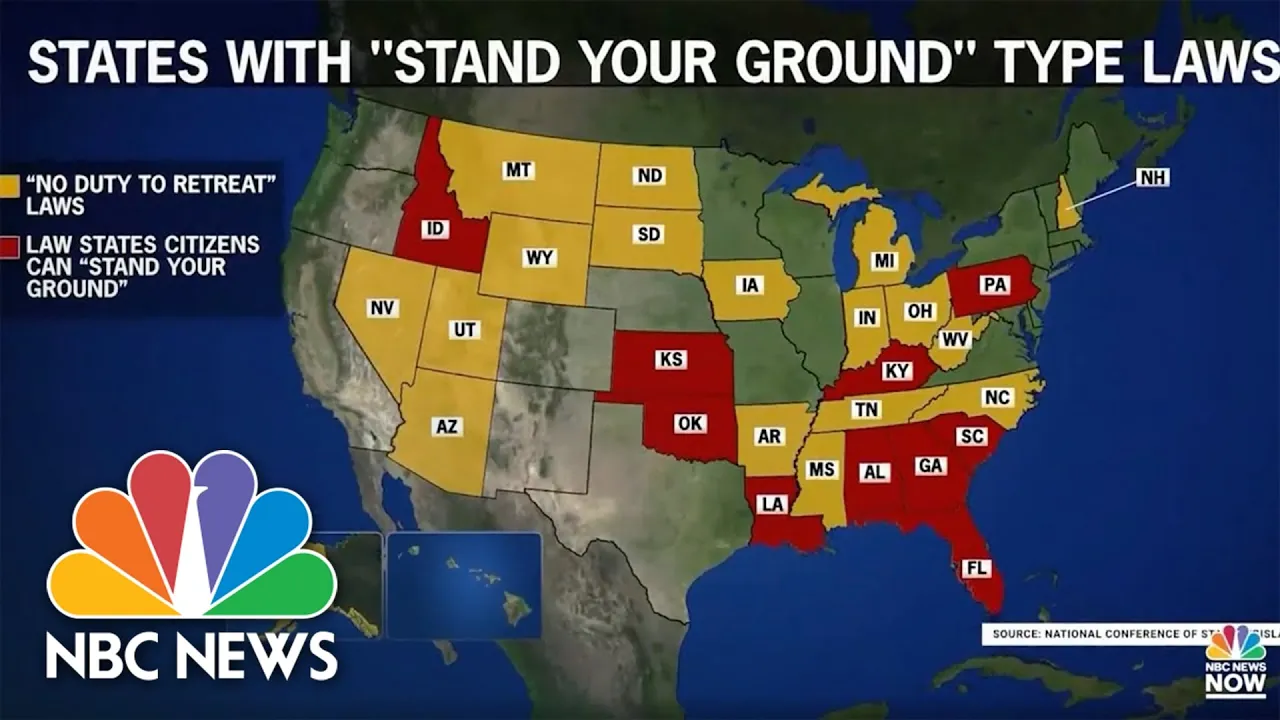
hey everyone donut here so I was gonna talk about this in my Leo recap on Friday but ABC News is being ABC News so I thought I'd discuss it with you guys now the title of the article released by ABC News yesterday March the 28th is killing of three teens during burglary May test Oklahoma stand your ground law so this must be a really really complex situation lots of legal variables involved if it's going to test the stand your ground law in Oklahoma there's got to be something screwy about this whole situation for it to test the stand your ground law so what happened between these three people right here and Mr Zach Peters who lives in the home this is ABC news reporting right here three teen burglary suspects were shot and killed Monday by a homeowner's son armed with an assault rifle in Oklahoma which has a stand your ground law authorities said they had not determined if the shooter who was armed with an AR-15 would face charges like I said there's got to be something something weird about this incident where the police have not yet decided if they would face charges now I'm going to switch over from ABC News and look at the local news source which is probably the best place to find information about this incident this comes from tulsawworld.com a local Tulsa Oklahoma news publication after The Intruders who wore black clothing masks and gloves forced their way inside through a back glass door at around 12 30 PM they encountered the homeowner's 23 year old son identified as Zach Peters who shot them with a semi-automatic rifle two of The Intruders died in the kitchen the third made his way outside and died in the driveway deputies found a knife on one of the bodies and brass knuckles on another the three people who were killed were 19 year old Maxwell cook seventeen-year-old Jacob Redfern and 16 year old Jacob Woodruff they also had a getaway driver who dropped the three burglars off and then she sped off as soon as she heard the gunshots she's being charged with a few felonies also for being a part of the incident assistant district attorney Jack Thorpe said it's too early in the investigation to speculate on whether charges will be filed against Peters the man with AR-15 who protected his home and his life it says that he could be protected by Oklahoma's stand your ground law all right we're going to Barney style this real quick uh three guys in face masks wearing gloves forced their way into Mr Peter's home two of the guys were armed one with brass knuckles one with a knife from what the reports say he met them in the hallway with his AR-15 he hit the off button on two of them in the kitchen he struck the third one from the 9-1-1 call it sounds like he didn't even know he had struck the third one but he ran outside and fell down in the driveway and died unless the news is leaving a vital piece of information out I don't see how he wouldn't be protected by stand your ground let's talk about stand your ground castle doctrine and your duty to retreat those are three different things before we talk about this I just want to say this is from a legal standpoint not from my personal opinion now the stand your ground law applies to Most states it says you have no legal obligation to retreat if you fear that your life or someone else's life is in danger it doesn't matter where you are stand your ground says that you have no legal obligation to retreat if you feel that your life or someone else's life is in danger you can use deadly force now the person who's defending themselves has to reasonably believe that there is a chance that they will receive serious bodily harm or be killed but with stand your ground and castle doctrine which we'll talk about here in a minute just because you don't have a legal obligation to retreat doesn't mean that you shouldn't Retreat sometimes so it has to be a clear danger that there's going to be serious bodily harm or death to yourself This doesn't mean like if someone across the parking lot doesn't have a weapon in their hand and they're screaming hey I'm going to [ __ ] kill you you can't pull out a deer rifle and snipe them from across the parking lot you can but the courts might look down on that same thing as if you're inside your car and maybe it's a road rage incident where someone doesn't have a weapon and they're walking towards your car if you get outside of your car and place yourself in a position where you have to use and your ground law then the courts might look down upon that also now the following states have legislatively adopted stand your ground laws Alabama Alaska Arizona Florida Georgia Indiana Kansas Kentucky Louisiana Michigan Mississippi Missouri Montana Nevada New Hampshire North Carolina North Dakota Ohio Oklahoma Pennsylvania South Carolina South Dakota Tennessee Texas Utah West Virginia and Wisconsin those are not the only states that you stand your ground laws those are the ones that have legislatively adopted it it's in law that they can help provide you immunity in certain situations some states have adopted it in practice which means either through case law or other means these states are Believe It or Not California Colorado Idaho Illinois New Mexico Oregon Virginia and Washington now there are a few things that can prevent you from using the stand your ground defense such as you can't be committing a crime if you use a firearm you have to legally be carrying it we're not going to get too deep into these we're just kind of going over what these generally mean all right so now let's talk about the castle doctrine which is kind kind of like standing your ground but there there's a lot of differences in most cases in states where the stand your ground defense can be used the castle doctrine defense can be used but there are a few stipulations to this whereas stand your ground can apply in public places under states that only use the castle doctrine you have a legal obligation in public to try and Retreat meaning that if you're faced with a threat in public but there's a way for you to safely get away you're legally obligated to do so but with the castle doctrine which derives from your your home is your castle if you're inside your own home or inside your own car most of the time in most cases if you fear that you're in danger of serious bodily harm our death then you can use deadly force now the castle doctrine gets a little tricky in each state each state has different laws outlining it some of the same rules still apply just like stand your ground you can't be committing a crime to use this defense you can't be wanted by the law things like that if you want to know more about it I suggest you look up the laws in your state this doesn't mean that just because someone steps foot on your lawn you can shoot them you can't shoot the Girl Scout standing outside your door because she spooked you when she knocked on the door you can't invite someone over to your home just to kill them and then claim the castle doctrine so just because Ted is sleeping with your wife and you invite him over and you shoot him to death in your living room you can't say that was you're using the castle doctrine again we're talking about from a legal standpoint not from my personal opinion the third and final thing that we're going to talk about which is absolutely freaking nuts in my opinion is the duty to retreat there are some states that use the opposite of stand your ground and that's the duty to retreat it means that legally you have to try to get away if there's a path of Escape whereas stand your ground States you don't have to try and get away at all if someone's threatening you with serious bodily harm or death this means that if a jury of your peers articulates that you could have gotten away from your attacker then you could be charged with a few felonies including murder like like I said this is kind of a generalization of stand your ground duty to retreat in the castle doctrine you should absolutely research the laws in your own State my point behind all this is that I don't understand how this could test Oklahoma's stand your ground laws whatsoever unless something new comes to light where Mr Peters invited them over and was like Hey wear your masks wear some gloves and make sure you're armed and break in my back door if you guys could do that that would be great unless he did that I don't understand how this could test the Oklahoma stand your ground law anyways it's a donut make sure you absolutely research the laws in your state when it comes to self-defense I've been wanting to put a video together about the legality of booby traps and we're going to do that pretty soon I'm sorry about the stream tonight I planned on streaming tonight but the Charter internet in my area is more [ __ ] up than chocolate cheese right now tomorrow's Thursday the weekend's almost here it's hump day everyone please have a fantastic night thank you
Up Next
75:04
Black Swan Trial Day 5: Defense Rests, Self-Defense Analysis
@LawyerYouKnow
109.8K views•2024-07-30

6:55
Understanding Copyright and Fair Use in the Digital Age
@techquickie
144.1K views•2016-07-22

5:27
Forensic Phonetics: Speaker Identification in Legal Cases
@nptel-nociitm9240
539 views•2025-03-19

24:42
Police Interrogation Tactics: False Confessions & Legal Reform
@LastWeekTonight
7M views•2022-04-18
Related Study Plans & Knowledge Roadmaps
Structured learning paths in Law
law
Analyzing Mergers: Clayton Act & FTC Rules
01Introduction to Antitrust Law and Market Competition
02Corporate Mergers and Section 7 of the Clayton Act
03Defining Markets and Measuring Concentration (HHI)
+ 2 more learning modules
10h5 modules
Explore Roadmap
law
Self-Defense Law: Imminence & Castle Doctrine
01Foundations of Self-Defense Law
02Imminent Threat & Reasonable Belief
03The Principle of Proportionality
+ 3 more learning modules
12h6 modules
Explore Roadmap
law
Defamation Law: First Amendment & Actual Malice
01Introduction to civil torts and the First Amendment
02Elements of Defamation: Libel and Slander
03Public Figures vs. Private Individuals
+ 2 more learning modules
8h5 modules
Explore Roadmap
law
Hearsay Rule: Trial Evidence & Exceptions
01Introduction to Trial Evidence & Courtroom Basics
02Demystifying Hearsay: The Core Definition
03Non-Hearsay: Exclusions Under FRE 801(d)
+ 3 more learning modules
14h6 modules
Explore Roadmap