


![Transmission de mouvement : Résumé [3ème Technique]](https://i.ytimg.com/vi_webp/VJXL_vLHZRA/maxresdefault.webp)

![Could EMP attack Send America Back to 'Dark Ages'? [PART 1]](https://i.ytimg.com/vi/bNYYU5u3W1o/hqdefault.jpg)






![[2022 전력계통 포럼] 성균관대학교 김철환 교수](https://i.ytimg.com/vi/boL7i_JnFTs/maxresdefault.jpg)

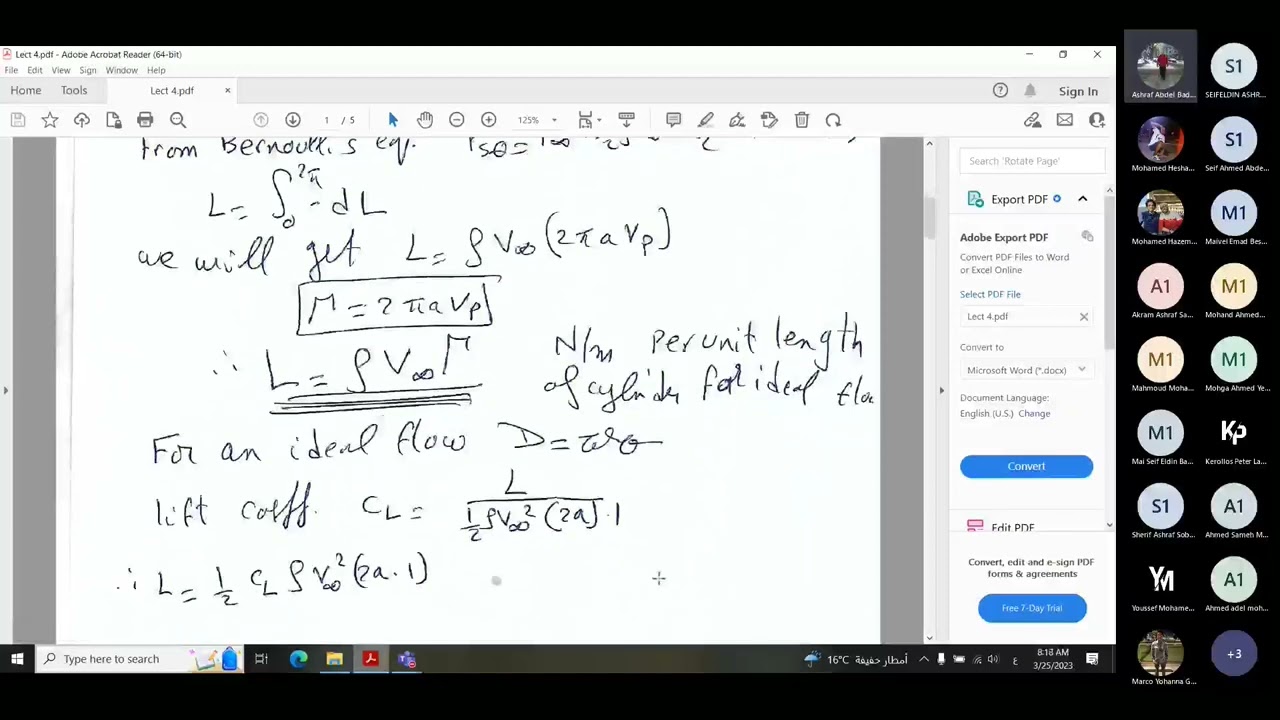




![[함께배우기] 55일차, 풍력발전 배우기 Part1. 풍력발전기와 풍력 밸류체인 분석](https://i.ytimg.com/vi/USX8dEA7VIY/maxresdefault.jpg)




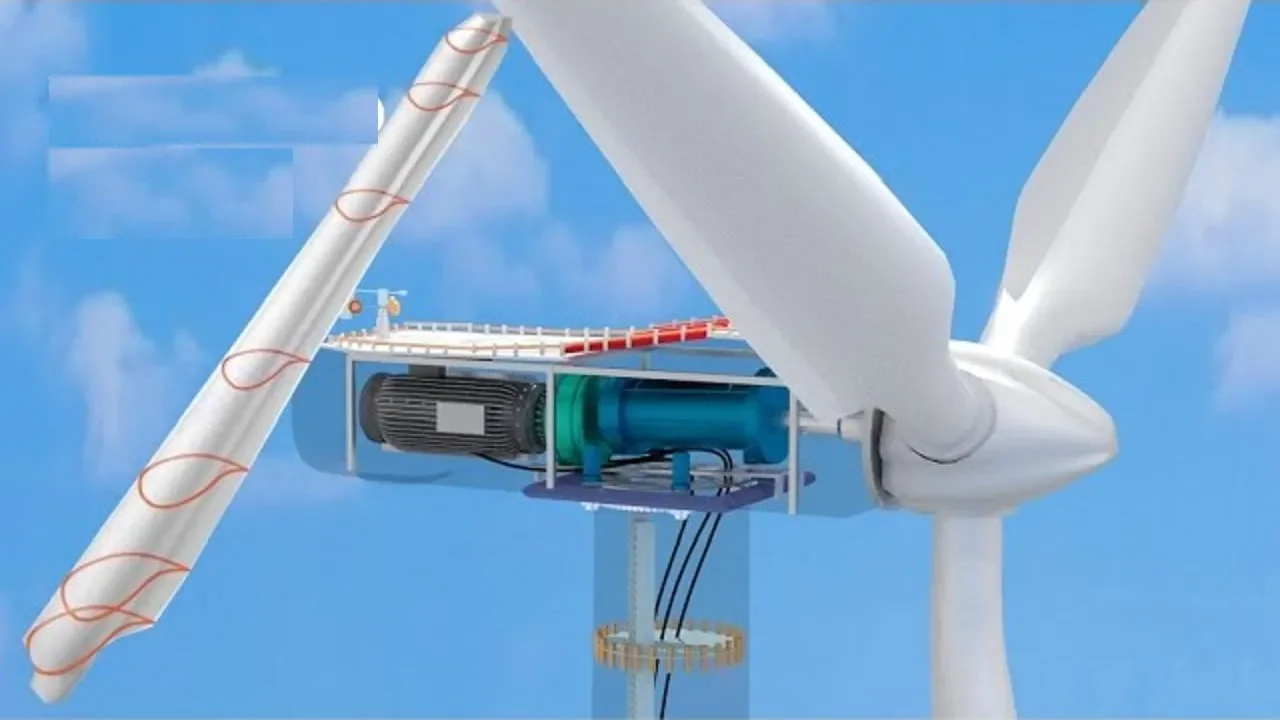
A wind turbine converts kinetic energy from wind into electrical power through a series of interconnected systems: wind instruments (anemometer and ultrasonic sensors) detect wind speed and direction to determine optimal positioning; the nacelle contains the gearbox that increases rotational speed from approximately 17 RPM to 1,500 RPM; the generator then converts this mechanical energy into 2.3 megawatts of electrical power at 690 volts, which is transformed to 33 kV and then to 132 kV before being fed into the National Grid.
Inside a Wind Turbine: Engineering and Renewable Energy Explained
Added:Fundamentals of Faraday's Law of Electromagnetic Induction, explaining how mechanical rotation is converted into electrical energy.
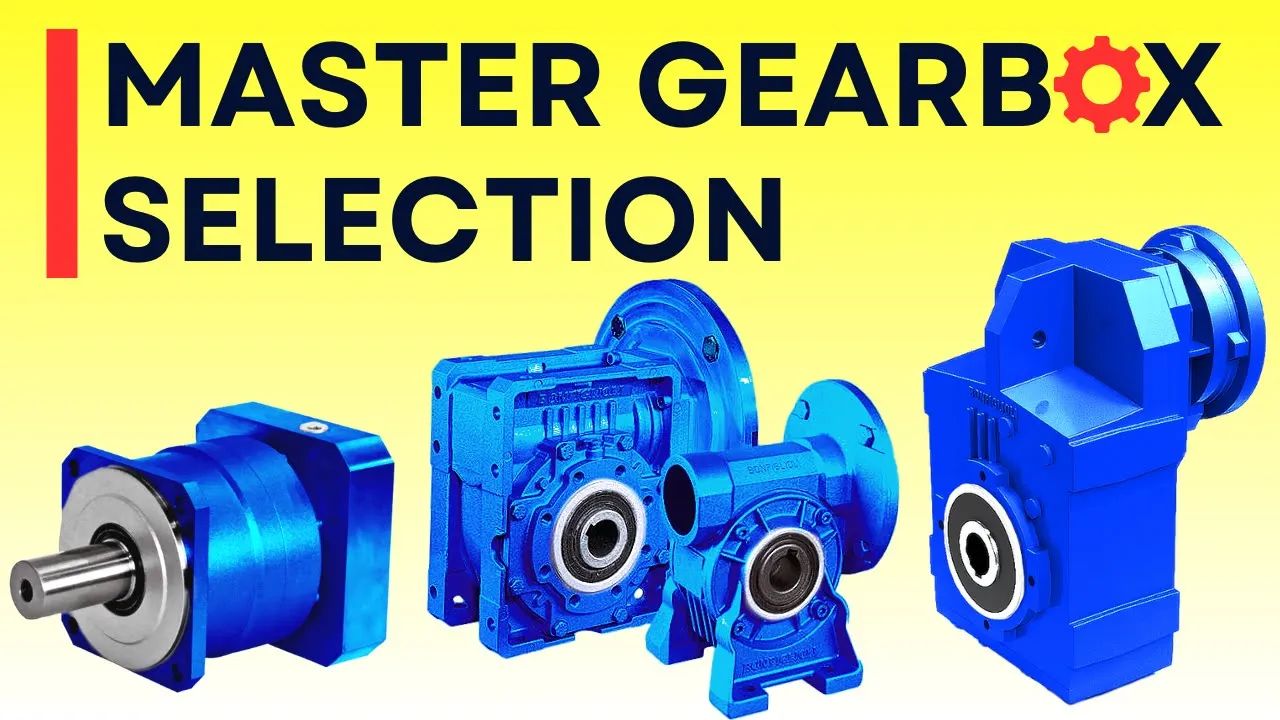
Basic mechanical principles of gearboxes, gear ratios, and torque transmission.
The distinction between Alternating Current (AC) and Direct Current (DC), and the basics of electrical grid infrastructure.
Basic aerodynamics, specifically how wind velocity creates lift and drag forces on rotor blades.
Grid integration challenges for intermittent power sources, including the role of power electronics (inverters/converters) and energy storage.
The mechanics of active control systems, such as pitch and yaw control systems used for optimizing efficiency and safety in varying wind speeds.
Offshore wind turbine engineering, focusing on floating foundations, marine environments, and subsea HVDC power transmission.
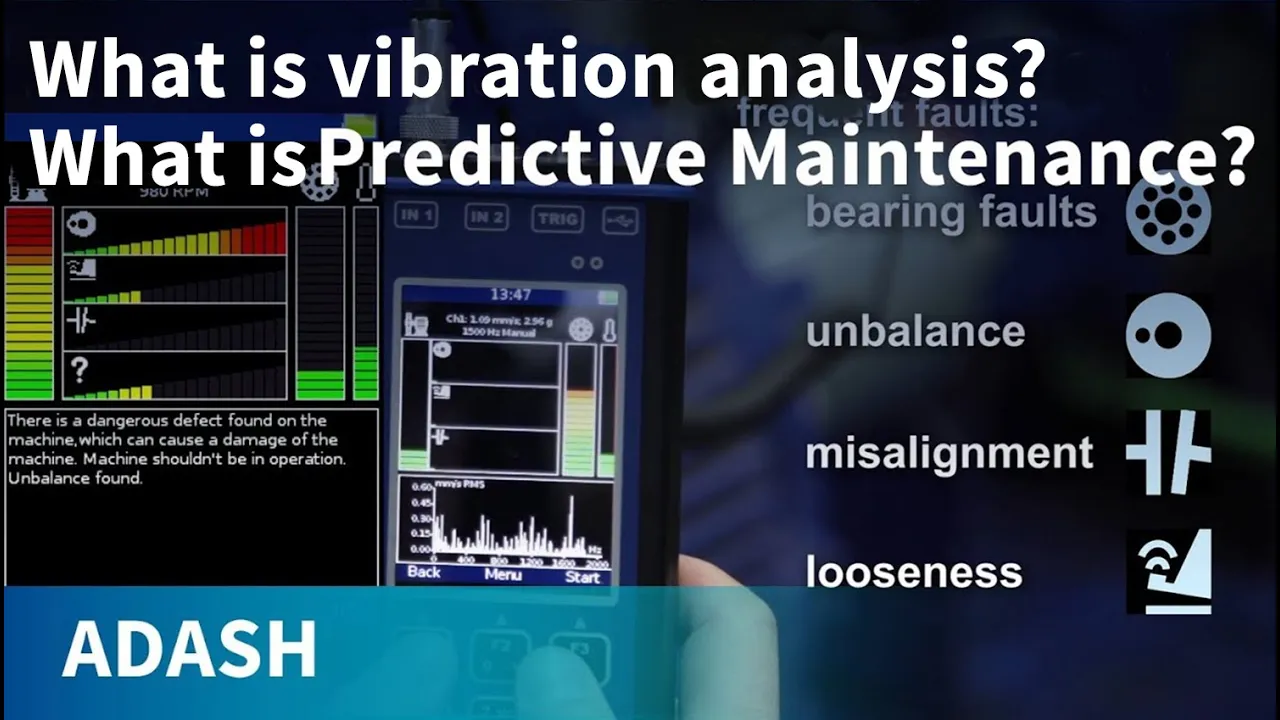
Supervisory Control and Data Acquisition (SCADA) systems and predictive maintenance strategies using sensor data and vibration analysis.
1.1M views5.2Klikes7:16Original Release: 2011-11-22
[Music] welcome to Crystal rig windfarm uh Crystal rig is now one of the largest sites uh in the UK and today we're going to take a look around turbine 9 behind me and give everyone an Insight of what goes on inside uh one of the new Seaman 2.3 variable speed wind turbines so in order to enter the turbine it's absolutely imperative that we're all suitably dressed in order to get there in addition to the helmet have a have a light in case the lights go out inside full body harness a slider for accessing the ladder for arrest system if that fails I have twin lanyards in order to access on the ladder and a manard for work positioning within the [Music] turbine so let's have a look inside then good stop I need to switch it to local control inside the cabinet the hand controller and let get into the service code simply press stop in order to top the turbine I mentioned the service code earlier on actually should now just stop into l [Music] and that's the turbine [Music] stopped climbed up to lift P can now access the lift two man which takes always to the top of the turb [Music] [Applause] [Music] [Music] [Music] unfortunately the lift doesn't go all the way to the top and the last 10 m or so are done manually this is where my slider comes in I'll have to CL the ladder [Music] [Applause] [Music] so we arrived at the top of the tower and the end of the ladder and we're in a small cramp section called the Y section see me here we've got these y claws these hold the Nel to the top of the tower and there's 22 of these substantial pieces of metal clamped here around the top underneath the Nell the export cables come through the your section and then down into the twist section before carrying on further down the side of the turbine wall where they're exported so from the your section then we go through this great above us and into an a cell we have now access to the cell and we're looking down over the gearbox towards the generator it's about 35° in here extremely humid and not a place that anyone would really want to work so to improv the environment we can open these two hatches and the cell [Music] doors sat at the rear of this Sean 2.3 turbine and the Heart of the business are these wind instruments that we can see at the back got an anom A wind vein and an ultrasonic instrument that does both the computer uses this information to work out where the wind Turman has to point and the pitch angle so it can take the energy out of the wind and put it through this generator so the power signals for the Ure are fed to these eight Motors around the top of the Nel here the power is driven through a gearbox and onto a pinion which has a a ring gear on top of the tower this will keep the Nel pointing into wind and the Nel will follow the wind for up to three revolutions when the cell will need to untwist its cables and reset itself behind me you can see the composite fiber blade it's 40 m long and it joins to a hub that's 2 m in diameter a total of 82 M diameter giving the rotor a swept area of some 8,000 square m [Music] [Music] so coming out of the Hub the main shaft input to the winnery gearbox in front of me is at about 17 RPM this converts it to about 1,500 RPM and then this AB generator here turns that into 2.3 megaw that's 690 volts it feeds that down the tower converts that to 33 KS and then out to our substation where it's turned into 132 kts and put onto the National Grid [Music] [Music] for [Music]
Up Next
4:32
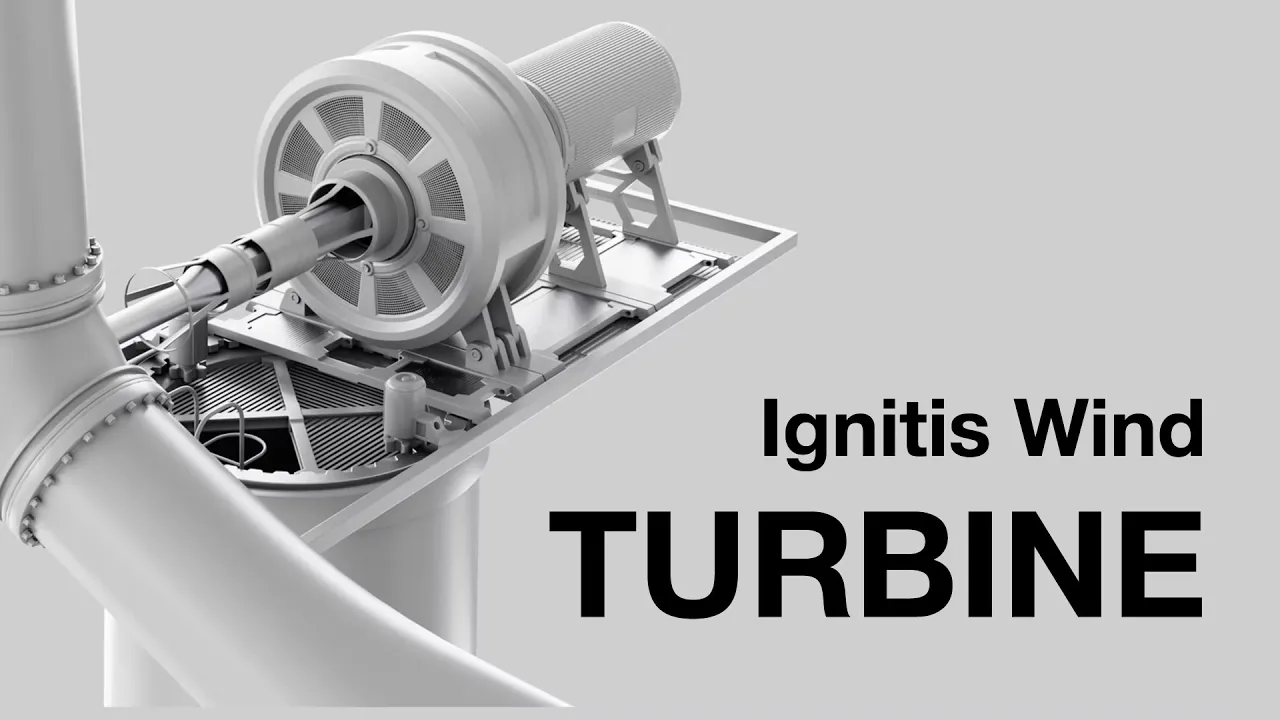
How Wind Turbines Work: Kinetic Energy to Electricity
@techanimationstudio
855 views•2025-11-14

12:54
Triumph of Orthodoxy Icon: Byzantine Art & History Explained
@BenCallan
2.1K views•2024-08-06

9:49
FastAPI vs Flask vs Django: Choosing the Right Python Web Framework
@TechWithTim
302.5K views•2024-05-26

1:42
Game of Thrones Opening Credits: A Cinematic Analysis
@gameofthrones
46.3M views•2011-04-18
Related Study Plans & Knowledge Roadmaps
Structured learning paths in General & Interdisciplinary Studies
general-studies
Elevator Engineering: History, Physics & Cities
01From Hoists to Safety Brakes: The Dawn of Vertical Lift
02Hydraulic vs. Traction: The Engineering Physics of Elevators
03Modern Speed, Safety, and Algorithms
+ 2 more learning modules
12h5 modules
Explore Roadmap
general-studies
Rubber: Material Science, History & Geopolitics
01Origins of Natural Rubber & Mesoamerican History
02The Chemistry of Natural Rubber & Vulcanization
03The Geopolitics of the Rubber Boom & Colonization
+ 2 more learning modules
12h5 modules
Explore Roadmap
general-studies
Containerization: Evolution, Logistics & Trade
01Ancient Trade & Bulk Cargo: Amphorae to Barrels
02The Industrial Revolution & Cardboard Packaging
03The Containerization Revolution: Malcom McLean
+ 2 more learning modules
12h5 modules
Explore Roadmap
general-studies
Textile Tech: Evolution, Labor & Global Impact
01Pre-Industrial Textiles: Handloom & Cottage Industry
02Mechanization: The Spinning Jenny to the Power Loom
03The Factory System & Global Labor Transformation
+ 2 more learning modules
10h5 modules
Explore Roadmap