Near Earth Objects (NEOs) are celestial bodies—primarily asteroids and comets—that orbit near Earth's path. Asteroids are rocky, metallic objects from the asteroid belt between Mars and Jupiter, while comets consist of ice and rock that develop glowing tails when heated by the Sun. When these objects enter Earth's atmosphere, they become meteors (shooting stars), and if they survive to hit the ground, they are called meteorites. NASA monitors approximately 2.4 million known NEOs to track potential collision risks with our planet.
Asteroids, Comets & Meteors: Near Earth Objects Explained | Educational Space Song
Added:Deep Dive
Basic structure and scale of the Solar System, including the Sun, planets, and gravitational orbits.

Formation du système solaire et évolution (partie 1) - par Aurélien Crida
10.7K
The solar system consists of the Sun and all objects orbiting it, including planets, moons, asteroids, and comets. The term 'planet' comes from the Greek word 'planetes,' meaning 'wanderer,' referring to objects that move relative to the fixed stars. The seven visible planets (Moon, Mars, Mercury, Jupiter, Venus, Saturn, and the Sun) give their names to the seven days of the week. Planets are confined to a specific band called the Zodiac, which represents the plane of the solar system projected onto the celestial sphere. This indicates that our solar system is essentially flat, with all planetary orbits lying in approximately the same plane. Ancient Greek astronomers made remarkable discoveries using only simple observations. Aristarchus of Samos measured the Sun's distance by observing the angle between the Sun and Moon at first quarter phase, finding it to be nearly 90 degrees, indicating the Sun is approximately 400 times farther than the Moon. Since the Sun and Moon appear the same size, the Sun must be 400 times larger in diameter. Eratosthenes calculated Earth's circumference by comparing the Sun's position at noon in Syene and Alexandria, measuring an 8-degree angular difference and the distance between cities, deducing Earth's circumference to be approximately 40,000 km. The meter was defined during the French Revolution as one ten-millionth of the distance from the equator to the North Pole, making Earth's circumference exactly 40,000 km by definition. The Moon is approximately four times smaller in diameter than Earth, with a diameter of about 3,476 km. The distance to the Moon is approximately 384,000 km, and to the Sun is 150 million km (1 astronomical unit). The Sun is 100 times larger in diameter than Earth, making it a million times more voluminous. Johannes Kepler formulated three laws describing planetary motion based on Tycho Brahe's observations. The first law states that planetary orbits are ellipses with the Sun at one focus. The second law (law of areas) states that a line from the Sun to a planet sweeps equal areas in equal times, meaning planets move faster when closer to the Sun. The third law states that the square of a planet's orbital period is proportional to the cube of its orbital distance (T² ∝ a³). This law allows calculation of planetary distances from orbital periods. In 1846, Neptune was discovered through mathematical prediction when astronomers noticed Uranus's orbit deviated from Kepler's laws, suggesting gravitational perturbations from an unseen planet. Urbain Le Verrier calculated where this planet should be, and Johann Galle found Neptune within 1 degree of the predicted position. In 1801, Ceres was discovered between Mars and Jupiter, initially thought to be the missing planet. However, more asteroids were quickly found (Pallas, Juno, Vesta), leading to the realization that Ceres is simply the largest member of the asteroid belt. Today, over 140,000 asteroids are known in this region between Mars and Jupiter. Beyond Neptune lies the Kuiper Belt, containing thousands of icy bodies. Pluto, discovered in 1930, was initially considered the ninth planet but is now classified as a dwarf planet. The International Astronomical Union adopted a formal definition of a planet in 2006: a celestial body that (1) orbits the Sun, (2) has sufficient mass for self-gravity to achieve hydrostatic equilibrium (nearly spherical shape), and (3) has cleared its orbital neighborhood of other debris. This definition excludes objects like Ceres and Pluto, which share their orbital zones with other bodies of similar mass. An exoplanet (extrasolar planet) is a celestial body that orbits a star other than the Sun. By convention, exoplanets must have less than 13 times Jupiter's mass to be classified as planets rather than brown dwarfs. The solar system is vast but mostly empty. Earth's diameter is 12,756 km, while the Sun's diameter is 1.4 million km (100 times larger). The distance to the Moon is 384,000 km, and to the Sun is 150 million km (1 astronomical unit). At this scale, if the Sun were 1 cm, Earth would be 0.1 mm (a speck of dust), and Jupiter would be 1 mm at 5 meters away. Light travel times provide another useful scale: 1.3 seconds to the Moon, 8 minutes 20 seconds to the Sun, and 4 hours 10 minutes to Neptune. Compared to the 4.3 years it takes light to reach the nearest star (Proxima Centauri), the solar system is essentially a tiny speck in the galaxy.
Click to watch →

Solar System | Wikipedia audio article
112
The solar system is a gravitationally bound system of the Sun and orbiting objects. The Sun contains 99.86% of the system's mass, with Jupiter holding most of the remaining mass. The four inner terrestrial planets (Mercury, Venus, Earth, Mars) are rocky and metallic, while the four outer giant planets (Jupiter, Saturn, Uranus, Neptune) are substantially more massive. Jupiter and Saturn are gas giants composed mainly of hydrogen and helium, while Uranus and Neptune are ice giants composed of volatiles like water, ammonia, and methane. All planets orbit in nearly circular paths within the ecliptic plane. The system contains smaller objects including the asteroid belt between Mars and Jupiter, the Kuiper belt beyond Neptune, and various dwarf planets like Ceres, Pluto, and Eris. The solar system formed 4.5-6.8 billion years ago from the gravitational collapse of a molecular cloud several light-years across.
Click to watch →
Especialidad Astronomía- Club de Conquistadores
1.9K
The Solar System consists of the Sun and all bodies orbiting it. The Sun is at the center, followed by the rocky inner planets (Mercury, Venus, Earth, Mars), then the asteroid belt, and finally the gas giants (Jupiter, Saturn, Uranus, Neptune). One astronomical unit (AU) is the distance from the Sun to Earth. The scale shows how small Earth and its planets are compared to the Sun.
Click to watch →

Nickolay Zosimovych Astronomy A Lec 1
578
The solar system consists of the Sun, a self-luminous ball of gas that generates its own energy, and its family of planets and smaller bodies. The Sun is 109 times larger in diameter than Earth but appears as a small dot in the solar system. Planets like Venus and Mercury are non-luminous bodies that orbit the Sun and shine by reflected light. The solar system spans vast distances: light from the Sun takes only 8 minutes to reach Earth but over 4 hours to reach Neptune. The inner planets (Mercury, Venus, Earth) lie close together, while the outer planets (Jupiter, Saturn, Uranus, Neptune) are much farther away.
Click to watch →

Tema 06a: Sistema solar
3.2K
The Solar System contains eight planets: Mercury, Venus, Earth, Mars (rocky inner planets), and Jupiter, Saturn, Uranus, Neptune (gas giants). The four inner planets are significantly smaller than the outer gas giants. The system includes the asteroid belt between Mars and Jupiter, dwarf planets like Pluto, and the Kuiper Belt beyond Neptune containing icy objects and comets. Saturn is famous for its prominent ring system. The Sun is approximately 110 times larger in diameter than Earth. If Earth were 1 millimeter, the Sun would be about 11 centimeters, and Jupiter about 11 millimeters. The Sun is approximately 10 times larger in diameter than Jupiter.
Click to watch →
Deep Dive
The concept of Earth's atmosphere and how objects interact with it when entering from space.

Reboot Random SML Movies 311
4.2K
The video explains that when objects enter Earth's atmosphere, they can become 'moons' temporarily. The video discusses how the new moon 'entered our atmosphere' and how this relates to the concept of atmospheric entry and how objects behave when entering Earth's gravitational field. This illustrates basic physics concepts about gravity, atmospheric entry, and orbital mechanics.
Click to watch →

Главная новость
24.6K
The speaker explains the physics of space objects entering Earth's atmosphere. When a space object enters the atmosphere, it encounters dense atmospheric layers that cause friction and heating. If the object has a narrow entry angle (approximately 3 degrees), it is highly likely to be destroyed by atmospheric friction. Objects that do not break apart during atmospheric entry are considered unusual and may indicate artificial or non-natural origins.
Click to watch →

جسم انسان بداخله اكثر من ١٠٠ بشري يتحكمون بتحركاته ومشاعره | meet dave
649.7K
Space objects can penetrate Earth's atmosphere and enter the planet's surface. The video shows a small body entering through a window into a fish tank, demonstrating how space objects can breach atmospheric barriers and interact with Earth's environment.
Click to watch →

2022개정 영1 yb박준언 5과 내용정리 (2)
260
Earth's atmosphere acts as a protective shield against space objects. The atmosphere resists objects entering from space, creating friction that generates extreme heat (up to 1650°C). This friction causes objects to burn up, protecting the planet from orbital debris that would otherwise rain down on Earth. The atmosphere's protective function is essential for survival, as objects must pass through this heated layer to reach the ground safely.
Click to watch →

UFO.18.Tempo Nulo
2.7K
Objects entering Earth's atmosphere from space experience a field force that builds up during their approach. This force is similar to the pressure experienced in front of an airplane. The field force must be shared or dissipated before the object can safely operate or land in the atmosphere.
Click to watch →
Deep Dive
Fundamental differences between rocky materials (silicates, metals) and volatile materials (ices, gases) in space.
АСТРОНОМ ЕЛЕНИН: СТОЛКНОВЕНИЕ С ЗЕМЛЕЙ НЕИЗБЕЖНО. Вопрос Когда?
672.8K
The solar system formed from a collapsing molecular cloud. Near the Sun, only refractory materials (silicates, metals) could condense, forming rocky asteroids and planets. Beyond Jupiter's orbit, where temperatures were lower, ices (water, ammonia, methane) could condense, forming comets and the gas giants. This temperature gradient explains the compositional differences between inner and outer solar system bodies. The main asteroid belt between Mars and Jupiter represents the 'construction debris' from solar system formation. These bodies never coalesced into a planet, likely due to Jupiter's gravitational influence preventing accretion.
Click to watch →

Le système solaire et les systèmes extrasolaires, différences et similitudes
6.3K
Protoplanetary disks have temperature gradients—hot near the star, cold far away. The 'frost line' is where volatile materials like water condense into ice. Inside the frost line, only refractory materials (silicates, metals) remain solid, limiting planet growth to small rocky bodies (at most Mars-mass). Beyond the frost line, ices form, providing much more solid material, allowing gas giants to form. This explains why gas giants form beyond the frost line and why our solar system's gas giants are located far from the Sun.
Click to watch →

Volatile processing on planetesimals: The story from iron meteorites
496
Earth's bulk silicate earth has volatile element ratios (hydrogen/carbon/nitrogen/sulfur) that differ from undifferentiated chondrites. This discrepancy suggests either the material delivered to Earth wasn't purely chondritic, or early differentiation processes altered volatile distributions. The noble gas data also show similar mismatches, indicating fundamental differences between planetary and chondritic volatile inventories.
Click to watch →

С. Б. Попов "Все самое важное в астрофизике за 2017 год"
35.4K
Planets form from three main types of material: rocky/iron materials, ices, and gases. Rocky planets form from the inner regions of protoplanetary disks where temperatures are high enough to prevent volatile ices from condensing. Gas giants form in the outer regions where ices and gases can accumulate. The relative proportions of these materials determine a planet's final composition and structure.
Click to watch →
Why Are the Inner and Outer Planets Different?
295.8K
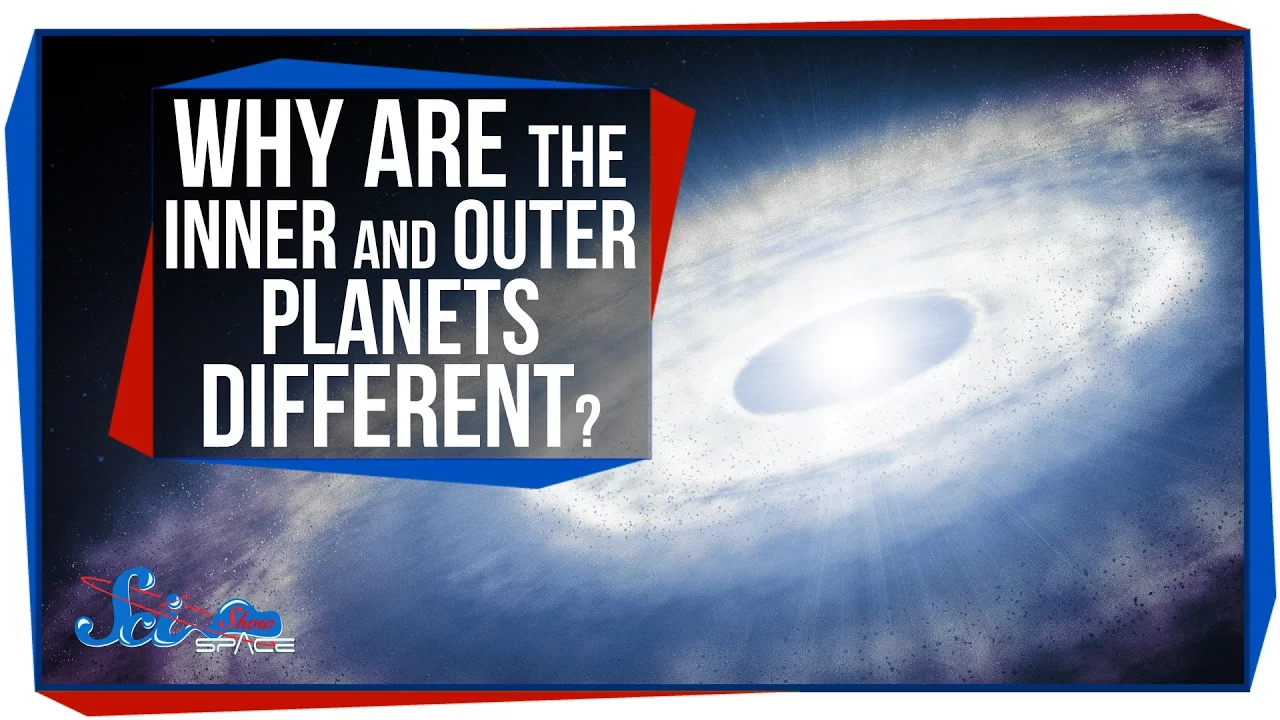
The arrangement of our solar system's planets follows fundamental physical principles rather than random chance. Approximately 4.5 billion years ago, a protostar formed from a collapsing cloud of hydrogen and helium, surrounded by a protoplanetary disk containing metals, rocks, ices, and light gases (98% of the disk). Different materials condense at different temperatures: metals and rocks remain solid near the hot protostar, enabling inner rocky planets (Mercury, Venus, Earth, Mars) to form. Beyond the frost line—where temperatures dropped sufficiently for water, methane, and ammonia to freeze—ices accumulated, providing more building material for larger planets. These outer planets grew massive enough to capture hydrogen and helium gases, becoming gas giants (Jupiter, Saturn). Beyond Neptune, the disk was too sparse for planet formation, leaving only the Kuiper belt. When fusion ignited in the protostar, solar wind cleared the remaining debris, leaving eight planets aligned in a plane.
Click to watch →
Deep Dive
The basic definition of 'Near-Earth Objects' (NEOs) and why astronomers track celestial bodies.
क्या ये धरती का दूसरा चाँद है ?America में कल्पना चावला को मिला ये सम्मान ? Unheard Science & Facts
120.7K
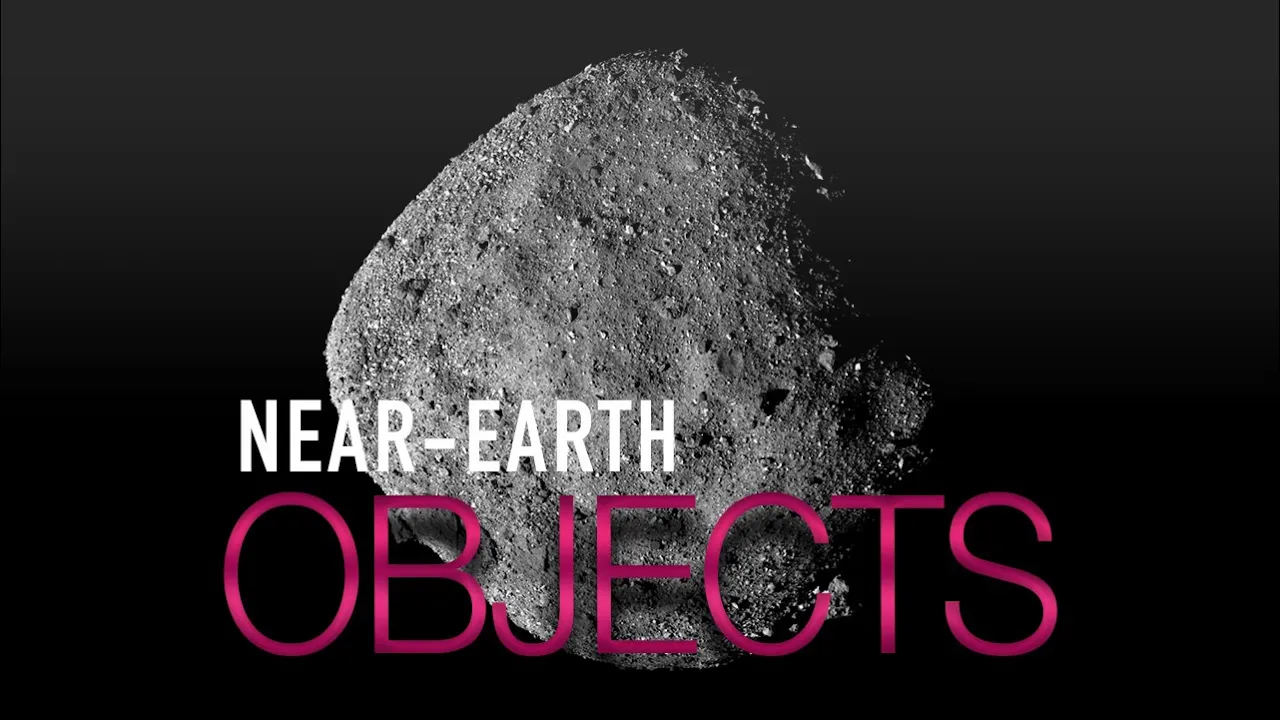
Near-Earth Objects (NEOs) are asteroids or comets whose orbits bring them within 1.3 astronomical units (AU) of Earth's orbit. An astronomical unit is the average distance between Earth and the Sun, approximately 150 million kilometers. These objects pass relatively close to Earth and are monitored by astronomers for potential impact risks.
Click to watch →
What You Need To Know About Asteroids and Other Near-Earth Objects
166.8K
A near-Earth object (NEO) is defined as an asteroid or comet that could pass by Earth within 30 million miles. This classification includes objects that come relatively close to our planet's orbit, making them potentially observable and trackable from Earth.
Click to watch →

Apophis, The Asteroid That Could Hit Earth In 2029
659.1K
Near Earth Objects (NEOs) are space objects such as asteroids or comets whose orbits around the Sun place them close to Earth. The term 'close' in astronomical terms means being less than 1.3 astronomical units from Earth, where one astronomical unit equals 93 million miles (150 million km). This distance is approximately equal to the distance from Earth to the Sun. An object classified as a NEO does not necessarily mean it will collide with Earth; it simply means scientists must monitor it carefully.
Click to watch →
La NASA monitorea los acercamientos de asteroides
171.9K
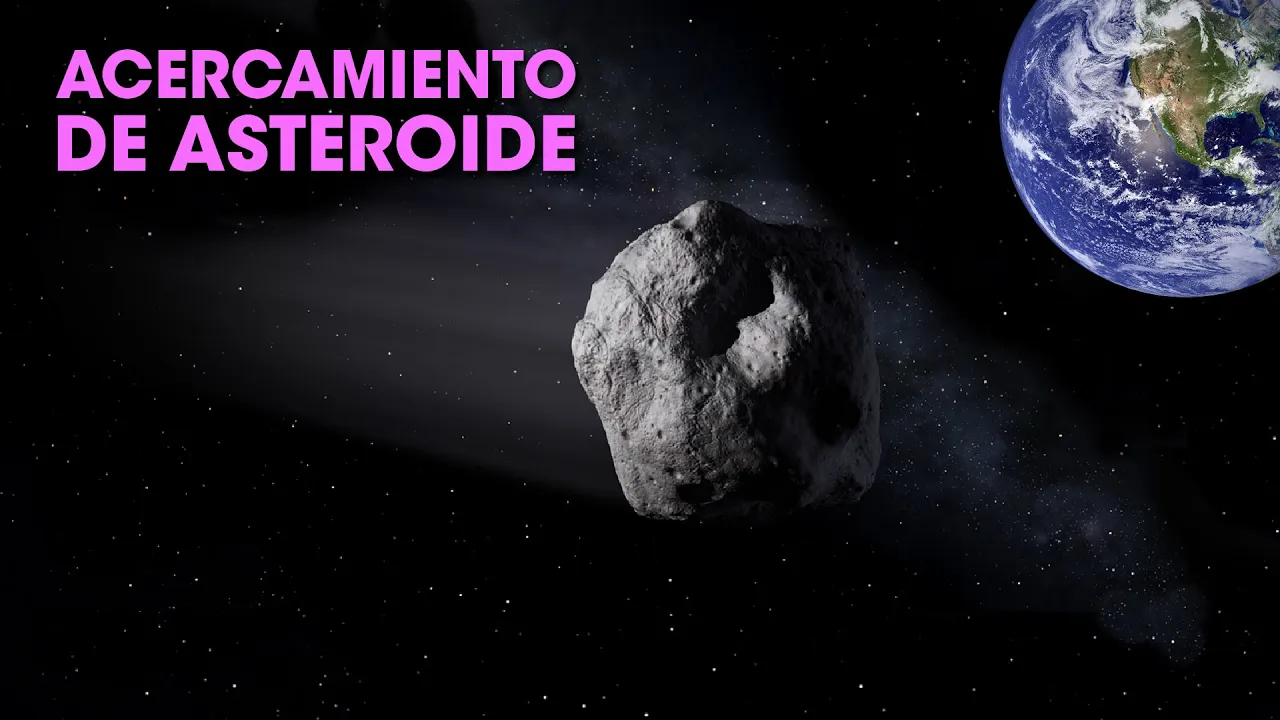
A Near-Earth Object (NEO) is defined as a celestial body that could pass through the vicinity of Earth within a radius of 30 million miles. This definition establishes the boundary for what astronomers consider 'close' to Earth, distinguishing objects that warrant monitoring from those that are too distant to pose any potential threat.
Click to watch →

Thiên thạch gấp đôi kim tự tháp Giza đang lao về trái đất | Khoa học vũ trụ - Top thú vị |
93.7K
Near-Earth Objects (NEOs) are celestial bodies whose orbits bring them close to Earth. Scientifically, an object is classified as a NEO if its perihelion (closest point to the Sun) is less than 1.3 AU (approximately 195 million km). This classification helps scientists identify and monitor potentially hazardous objects that could pose threats to Earth.
Click to watch →
Prerequisite Knowledge
- Concept 01Basic structure and scale of the Solar System, including the Sun, planets, and gravitational orbits.
- Concept 02The concept of Earth's atmosphere and how objects interact with it when entering from space.
- Concept 03Fundamental differences between rocky materials (silicates, metals) and volatile materials (ices, gases) in space.
- Concept 04The basic definition of 'Near-Earth Objects' (NEOs) and why astronomers track celestial bodies.
Subsequent Learning
- Step 01Deep-dive into the origins of these bodies, specifically studying the Asteroid Belt, Kuiper Belt, and Oort Cloud.
- Step 02The science of planetary defense, including tracking methods, risk assessment (Torino Scale), and deflection strategies like NASA's DART mission.
- Step 03Chemical analysis of meteorites to understand stellar nucleosynthesis and the early formation of the Solar System.
- Step 04Historical and geological impacts of celestial collisions on Earth, such as the Chicxulub impact event and the extinction of the dinosaurs.
- Step 05The distinction between meteors, meteoroids, and meteorites based on their physical location and state.
Space Rocks
Meteor's Fate
Space Rocks
0:05Playing Section
- 1
Asteroid and comet origins, composition, and orbit paths described.
- 2
NEO avoidance and NASA trajectory tracking highlighted with scientific basis.
The Continuum Hypothesis of Minor Bodies
While introductory educational content typically presents asteroids and comets as distinct categories—asteroids being rocky and comets being icy—modern planetary science increasingly views them as part of a continuous spectrum. The discovery of 'active asteroids' (which reside in the asteroid belt but exhibit comet-like outgassing) and 'extinct comets' (which have lost their volatile ices and appear indistinguishable from rocky asteroids) challenges these rigid definitions. Introducing students to this classification overlap reveals that the solar system's components are far more dynamic and interconnected than traditional, neat taxonomies suggest.
Deep Dive
Deep-dive into the origins of these bodies, specifically studying the Asteroid Belt, Kuiper Belt, and Oort Cloud.

Égi Vándorok | Metszéspont
4.9K
The asteroid belt between Mars and Jupiter contains approximately 1.5 million known asteroids, formed during solar system formation but prevented from coalescing into a planet by Jupiter's gravitational influence. Jupiter's migration during formation scattered asteroids into the belt, and their orbits are often in resonance with Jupiter, making them stable only because Jupiter is present. The Kuiper Belt beyond Neptune contains icy bodies including Pluto, while the Oort Cloud is a spherical shell surrounding the entire solar system, containing the source of long-period comets. Unlike the disk-like asteroid belt, the Oort Cloud is distributed in all directions. Comets originate from these regions and are occasionally perturbed into the inner solar system.
Click to watch →

Podcast Staffel 2 Episode 1: Schwindelerregend
639
The asteroid belt between Mars and Jupiter contains rocky bodies that never formed into a planet due to Jupiter's gravitational influence. Jupiter's early formation near the snow line (where water could freeze) allowed it to accumulate 300 Earth masses. The Kuiper Belt beyond Neptune contains icy bodies in a disk structure, while the Oort Cloud is a theoretical spherical shell extending to half a light year, believed to be the source of long-period comets. Orbital resonances with Jupiter create gaps and structures in the asteroid belt by clearing material at specific locations.
Click to watch →
Asteroid belt, Kuiper Belt & Oort Cloud
274
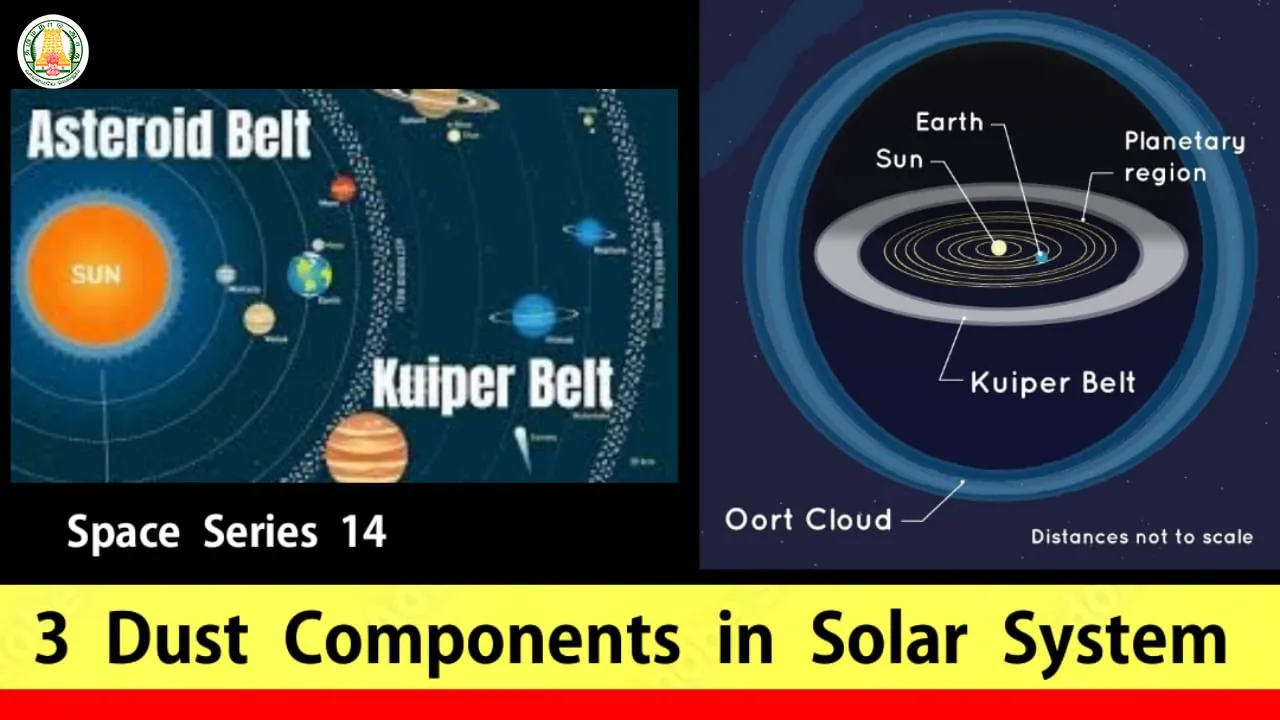
The solar system contains three major debris belts: the asteroid belt between Mars and Jupiter (22-32 AU from the Sun), the Kuiper belt beyond Neptune (4.8-7.8 billion km from the Sun), and the Oort cloud extending up to 15 trillion km from the Sun; these regions contain countless small icy and rocky bodies that provide evidence about the early formation of our solar system.
Click to watch →

CORSO DI ASTRONOMIA - Lezione 15 - PLUTONE E I PIANETI NANI
5.1K
The solar system contains three major regions of minor bodies. The asteroid belt between Mars and Jupiter contains rocky bodies, with one-third of its mass concentrated in Ceres (a dwarf planet). Jupiter's gravity prevented a fifth planet from forming. The Kuiper Belt beyond Neptune contains icy bodies composed of frozen volatiles, extending to 50 astronomical units. The Oort Cloud is a spherical shell at 50,000-200,000 AU, believed to be the remnant of the solar nebula and source of long-period comets.
Click to watch →

Todos Os Objetos Do Sistema Solar
168.1K
This section explores the asteroid belt and Kuiper Belt. The main asteroid belt between Mars and Jupiter contains millions of rocky and metallic bodies ranging from dust grains to hundreds of kilometers in diameter. It is a remnant from solar system formation 4.6 billion years ago, with Jupiter's gravitational influence preventing planet formation. Asteroids are classified by composition: C-type (75%, carbonaceous, dark), S-type (17%, silicaceous, silicates and metals), and M-type (metallic, nickel and iron). Beyond Neptune lies the Kuiper Belt, a vast region of icy bodies similar to the asteroid belt but larger and with different composition. Many short-period comets (orbiting in less than 200 years) originate from the Kuiper Belt when perturbed by gravitational interactions. The Kuiper Belt is dominated by icy objects that never coalesced into planets due to lower material density and Neptune's gravitational influence.
Click to watch →
Deep Dive
The science of planetary defense, including tracking methods, risk assessment (Torino Scale), and deflection strategies like NASA's DART mission.

Will An Asteroid Hit Earth in 2032?
3.6M
The Torino Scale (0-10) combines impact probability and consequences: Green (0-1) normal, Yellow (2-4) requires astronomical attention, Orange (5-7) possible threat, Red (8-10) certain catastrophic impact. 2024 YR4 currently rates 3 (localized event), potentially rising to 8. NASA's DART mission successfully tested asteroid deflection capabilities. International cooperation is essential for planetary defense, with countries coordinating tracking and response efforts. Improved measurements will likely reduce this asteroid's risk to zero.
Click to watch →

IMPACTO & DESVÍO DE UN ASTEROIDE EN DIRECTO - EN ESPAÑOL - NASA MISION #DART #DIMORPHOS
73.2K
Planetary defense protects Earth from asteroid impacts while advancing solar system science. NASA maintains programs to discover, track, and characterize near-Earth asteroids, with DART conducted on a non-threatening asteroid to develop deflection capabilities. The mission demonstrates planetary defense as an international concern requiring cooperation among 28 countries across all continents. Scientists study asteroids to understand early solar system history and the delivery of organic materials to Earth. The binary asteroid system selection criteria required finding an object small enough to be moved by spacecraft but not destroyed, enabling measurable deflection verification.
Click to watch →

The Closer 3I/ATLAS Gets to Earth, The More Alien It Looks
896
Planetary defense used to be science fiction—asteroids were things you read about in textbooks, not things you worried about hitting Earth. But over the past few decades, that's changed. We've mapped thousands of near-Earth asteroids, tracked their orbits, calculated impact probabilities, and realized that impacts aren't just ancient history—they're ongoing threats. Small asteroids hit Earth regularly, burning up in the atmosphere or causing localized damage. Larger ones, the kind that could wipe out cities or trigger global climate disruption, hit less often, but they hit. The question isn't if, but when. Tracking is the first step—you can't defend against something you don't know about. We've built sky surveys, automated telescopes that scan the night sky looking for moving objects. When they find one, they calculate its orbit, determine whether it poses a threat, and add it to the catalog. Interception is harder—once you've identified a threatening asteroid, you need to do something about it. Deflection, not destruction. Blowing up an asteroid just turns one big problem into many smaller problems. Instead, you nudge it—change its velocity by a tiny amount years in advance so that by the time it reaches Earth's orbit, it misses. This is what NASA's DART mission demonstrated.
Click to watch →
NASA का पृथ्वी को Asteroid से बचाने का प्लान | Planetary Defense | DART | Sciencekaari
261.3K
NASA's Center for Near-Earth Object Studies (CNEOS) has cataloged approximately 18,000 near-Earth objects by January 2018, with 40% of asteroids larger than 1 kilometer mapped. Scientists project 90% of hazardous asteroids larger than 140 meters will be identified by 2030. The 2013 Chelyabinsk meteor event, which injured over 1,500 people and damaged 727 buildings, prompted NASA to establish the Planetary Defense Coordination Office (PDCO) in 2016. This office coordinates with multiple government agencies to identify hazardous objects, assess risks, develop deflection technologies, and coordinate international responses. The DART mission, launched in 2021, tested the kinetic impactor strategy by intentionally crashing a spacecraft into asteroid Dimorphos to demonstrate trajectory alteration capability.
Click to watch →
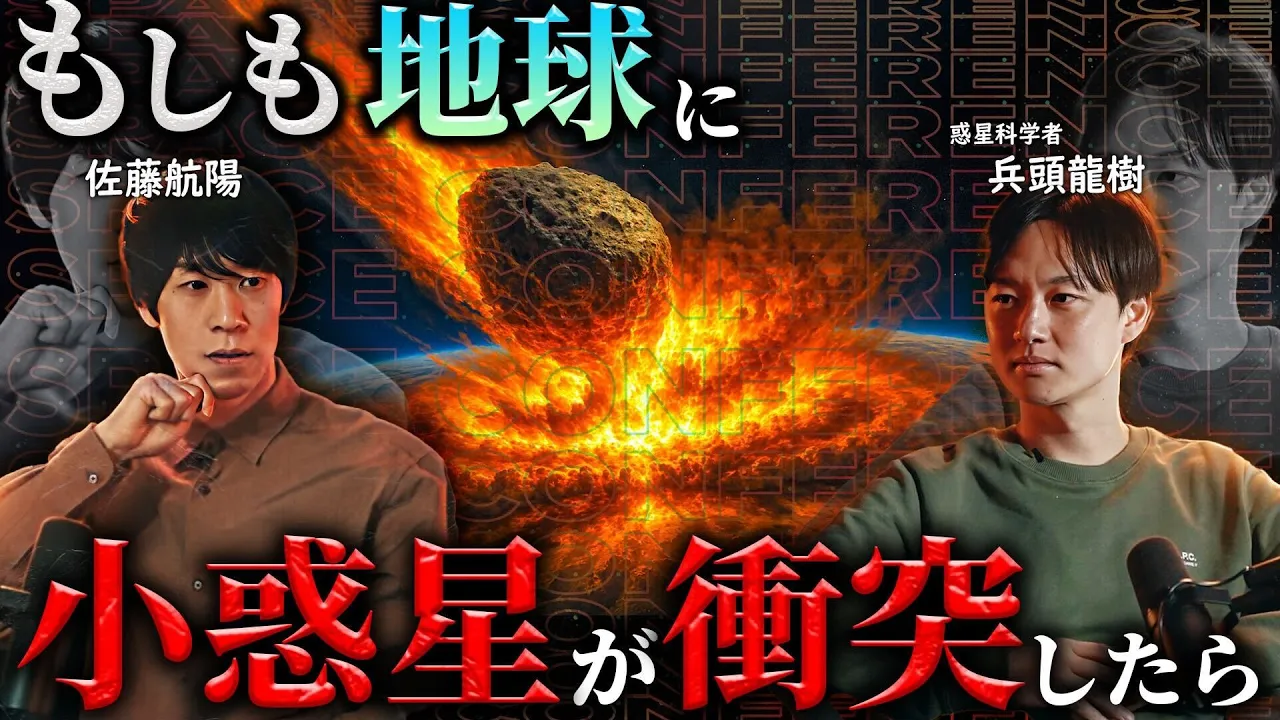
【☄️】接近中の小惑星が地球に衝突したらどうなるか惑星科学者に聞いたら、漫画『チ。』みたいになった。地球防衛、宇宙人がいる確率、隕石兵器、銀河系の開拓事情など。
312K
Planetary defense operates like health checkups: improved technology reveals previously undetectable threats. Detection coverage varies by size: 10km+ asteroids are 95% detected, 100m asteroids only 1-10% detected. NASA's new telescope aims to increase 100m detection from 10% to 90% over 10 years. Three deflection methods exist: nuclear detonation for immediate disruption, kinetic impactors (DART mission) for small asteroids, and push methods using booster rockets for gradual trajectory changes. Timing is critical—100m asteroids can be deflected if detected early, but 1kg asteroids cannot be deflected due to small mass.
Click to watch →
Deep Dive
Chemical analysis of meteorites to understand stellar nucleosynthesis and the early formation of the Solar System.

The Aliens are Winning, and I'm Losing
6.2K
Meteorites develop fusion crusts when entering Earth's atmosphere. Regmaglypha (dimples) form from escaping molten rock bubbles. Chondrites contain chondrules and show no geological activity, indicating primitive solar system material. Lower iron content indicates early-universe origins. Stars fuse lighter atoms into heavier elements through nucleosynthesis, with heavier elements forming in successive stellar generations.
Click to watch →

LES MÉTÉORITES, TÉMOINS DE LA FORMATION ET L'ÉVOLUTION DU SYSTÈME SOLAIRE
4.6K
Meteorites serve as time capsules preserving the early solar system. Scientists determine their origins by comparing chemical compositions to the Sun using spectroscopy and laboratory analysis. Most elements align diagonally on abundance plots, confirming solar-like composition, with exceptions for volatile elements like hydrogen, helium, carbon, and lithium. Lithium's destruction in the Sun reveals its original abundance. Calcium-aluminum-rich inclusions (CAIs) are the oldest solar system objects at 4.567 billion years, forming when aluminum, titanium, and calcium precipitated from cooling gas near the young Sun. Presolar grains are microscopic particles older than the solar system, formed in dying stars and preserved in meteorite matrices, containing unique isotopic signatures revealing stellar nucleosynthesis origins. The deuterium-to-hydrogen ratio correlation between carbonaceous chondrites and Earth's oceans supports the hypothesis that meteorites delivered water and organic molecules to early Earth, providing raw materials for life's emergence.
Click to watch →

#3「地球外物質の化学分析を通した太陽系の起源や進化の研究あるいは太陽系ができる前の元素の歴史の研究」—DLab Future Techscapers
918
Scientists analyze meteorites, which are 4.6 billion-year-old fragments from celestial bodies, to understand the solar system's origin and evolution; through destructive analysis of samples like Ryugu, researchers discovered that CI chondrites have chemical composition nearly identical to the Sun, indicating they formed in the outer solar system far from solar heat, while other meteorites lost volatile elements due to solar heating, revealing how the solar system's chemical composition evolved from its initial state.
Click to watch →

Куди поділися зорі, з якими народилося Сонце? Батьківське скупчення Сонця.
92.2K
Chondritic meteorites have largely unchanged since the formation of the Solar System, making them valuable records of early conditions. Scientists analyze their chemical composition to determine how our planet and system formed. They search for decay products of radioactive isotopes like aluminum-26 and iron-60. These elements cannot be synthesized by stars like our Sun; aluminum-26 forms in blue and white giant stars, while iron-60 is produced in supernova explosions. Measuring these concentrations reveals how far our Sun was from massive stars when the Solar System formed.
Click to watch →

From Dust to Planets: Clues from Meteorites
697
The elements in our solar system were forged in stars over billions of years. Galaxies began 13 billion years ago with hydrogen and helium; stars produced heavier elements through nuclear fusion: red giants made elements up to iron, while supernovae created elements beyond iron. These elements formed molecular clouds that collapsed under gravity to create solar nebulae. The solar photosphere spectrum reveals element abundances matching chondritic meteorites, confirming meteorites preserve the original solar system composition before planetary differentiation. Meteorites are classified into chondrites (primitive, unaltered materials from the early solar system) and differentiated meteorites (from planetary bodies that melted and separated materials). Chondrites contain chondrules—magnesium-silicate droplets formed by rapid heating—and calcium-aluminum-rich inclusions that date the solar system to ~4.567 billion years.
Click to watch →
Deep Dive
Historical and geological impacts of celestial collisions on Earth, such as the Chicxulub impact event and the extinction of the dinosaurs.

100,000 Years of Astronomy: The Untold Story of How We Discovered the Cosmos
157
The relationship between the heavens and Earth is not all serene guidance and elegant geometry. Sometimes, as the pocked face of our moon reminds us, cosmic debris slams into planets with catastrophic force. For most of history, humans had no idea that some shooting stars were grain-sized fragments of rock burning up in the atmosphere, or that occasionally much larger objects punched through the atmosphere and excavated craters miles wide. In 1803, a spectacular meteorite shower near L'Aigle, France, scattered thousands of fragments, leading physicist Jean-Baptiste Biot to investigate and convincingly show these rocks were extraterrestrial. The most famous cosmic collision in Earth's deep history was the Chicxulub impact 66 million years ago when an object around 10 km in diameter slammed into what is now the Yucatan Peninsula, releasing energy equivalent to billions of nuclear bombs and causing the extinction of three-quarters of all species, including non-avian dinosaurs.
Click to watch →
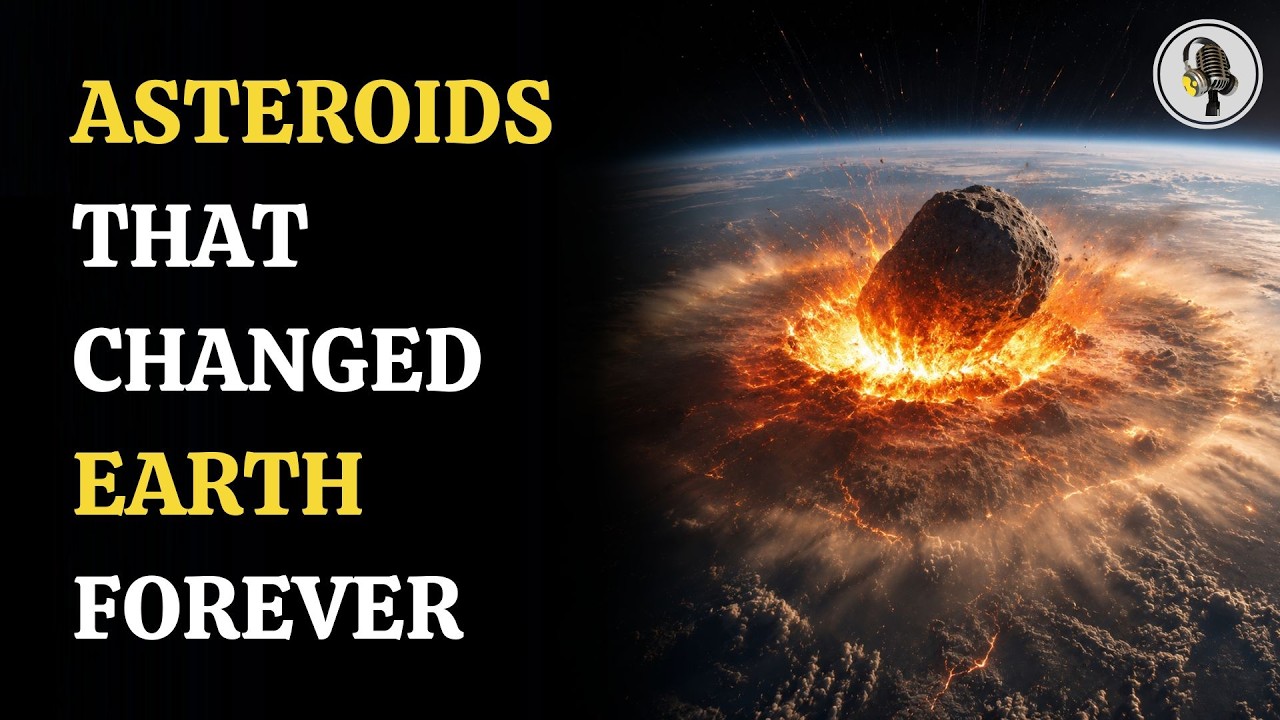
5 Massive Asteroid Impacts That Reshaped Earth's History | WION Podcast
191
Asteroid impacts have fundamentally shaped Earth's history through catastrophic events, including the Vredefort impact (2 billion years ago) creating the largest verified crater, the Chicxulub impact (66 million years ago) causing the mass extinction of dinosaurs, and the Tunguska event (1908) demonstrating the destructive power of near-miss impacts; these collisions trigger mass extinctions, create diamond fields through shock metamorphism, and permanently alter planetary landscapes and ecosystems.
Click to watch →
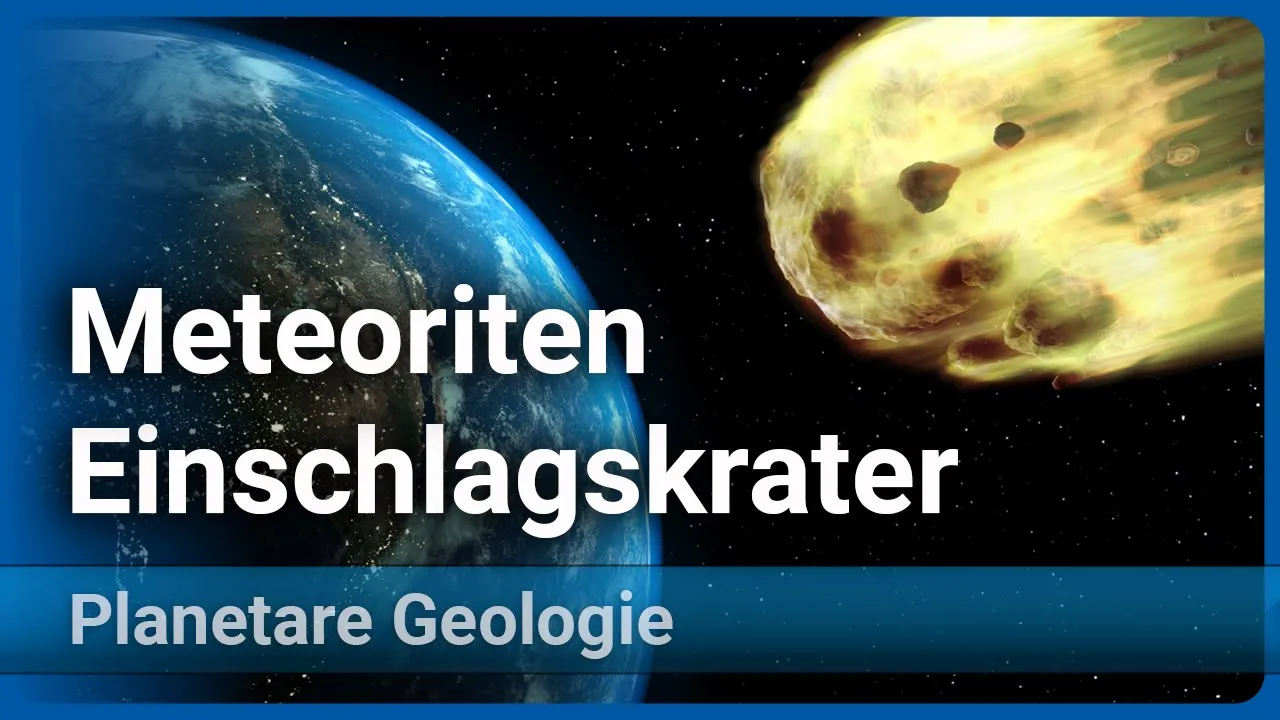
Impakte durch Meteoriten auf der Erde & im Sonnensystem • Planetare Geologie | Christian Köberl
227.8K
The Chicxulub impact crater in Mexico's Yucatan Peninsula, approximately 100 kilometers in diameter and 66 million years old, is widely accepted as the cause of the Cretaceous-Paleogene (K-Pg) mass extinction event that eliminated the dinosaurs. Geological evidence includes iridium-enriched clay layers at the K-Pg boundary, shocked quartz grains, and spherule-like particles consistent with impact ejecta. The impact triggered massive wildfires, tsunamis reaching hundreds of kilometers inland, and global climate disruption from dust and aerosols injected into the stratosphere. This case demonstrates how a single impact event can cause catastrophic global environmental change affecting all life forms.
Click to watch →

Know Everything About Earth - Evolution of Life On Earth - DocumentaryforKnowledge
15.2K
A crater more than 110 miles wide was detected off the coast of Mexico's Yucatan Peninsula, created 65 million years ago by a 10-mile wide cosmic killer that closed on Earth at more than 60,000 miles per hour. It struck with the violence of the world's entire nuclear arsenal exploding a thousand times over. The impact sent out a ferocious fireball engulfing the land for thousands of miles around. Shock waves went out from the point of impact around the world and focused at the exact opposite point in the Indian Ocean. The effects included dust and ash plunging the world into darkness, acid rain, and 75% of all living things perishing. The geological record shows impacts brought catastrophe and devastation which wiped out many species. There have been five key mass extinctions in Earth's history. Best known are the dinosaurs.
Click to watch →
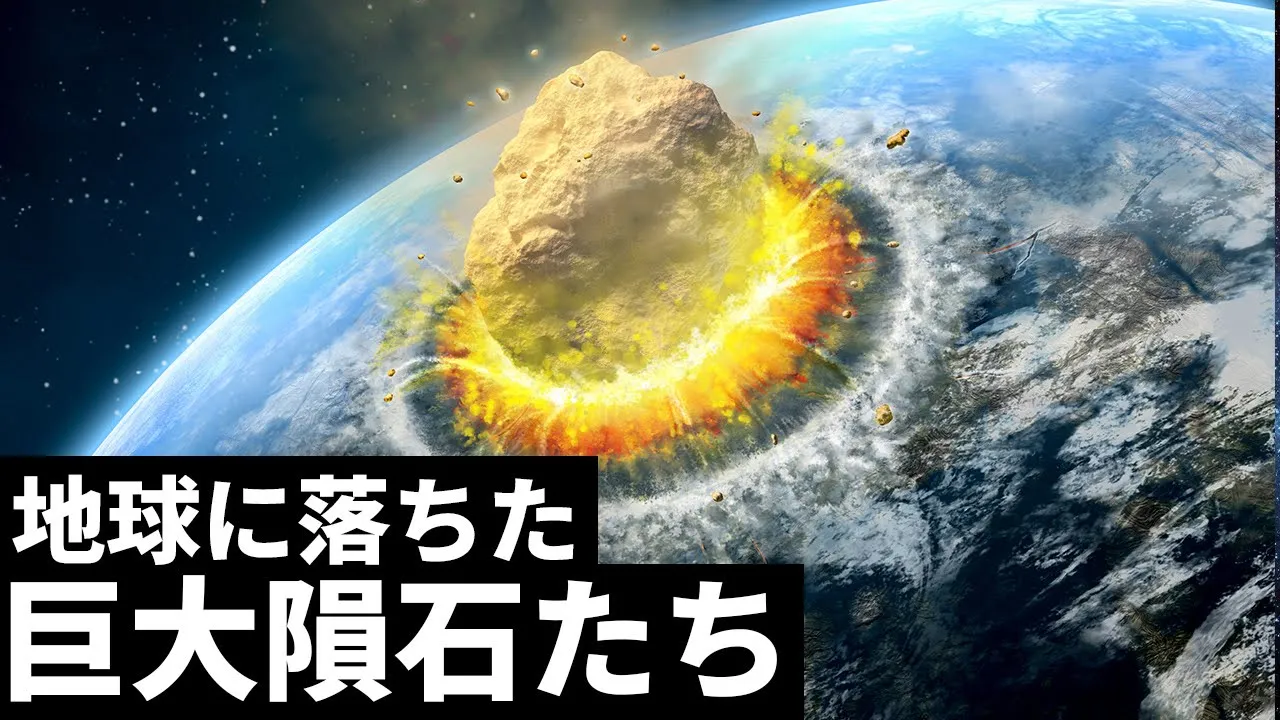
歴史上地球に衝突した最も巨大な隕石3選!恐竜を絶滅させた隕石の威力がマジでヤバい!!!!
1.7K
The Chicxulub impact 66 million years ago caused the extinction of dinosaurs and 75% of Earth's species. The 10-15 km asteroid traveling at 20 km/s released energy 10 billion times a Hiroshima bomb. The impact created a 160 km crater (third largest on Earth) with iridium deposits. Global effects included atmospheric dust blocking sunlight, causing cooling, and acidic rain acidifying oceans. Scientists study geological evidence like iridium and shocked quartz to understand past impacts.
Click to watch →
Deep Dive
The distinction between meteors, meteoroids, and meteorites based on their physical location and state.

28 April 2023 Indian Express Newspaper Analysis | Daily Current Affairs | The Hindu Analysis
18.8K
The video explains the distinction between meteor, meteoroid, and meteorite based on their location: (1) A meteoroid is a rocky particle or stone existing in space, (2) A meteor is the same object when it enters Earth's atmosphere and burns up, creating a visible streak of light, (3) A meteorite is the same object when it has landed on Earth's surface. The same object is simply called by different names depending on its position relative to Earth.
Click to watch →

La verdad detrás de las lluvias de meteoritos | Cuándo y dónde verlas
58.3K
The video explains the distinction between three related terms: meteoroids are rocky space fragments before entering Earth's atmosphere; meteors are the streaks of light produced when meteoroids burn up in the atmosphere (commonly called 'shooting stars'); and meteorites are the actual rocks that survive atmospheric entry and land on Earth's surface. The terminology changes based on the object's location and state.
Click to watch →

Perguntas de Conhecimentos Gerais | 2 anos de EAD COM DRAGBOX #23
107.2K
The difference between an asteroid, meteor, and meteorite is based on their location and state: An asteroid is a rocky body that orbits the Sun, typically found in the asteroid belt between Mars and Jupiter. A meteor is what we call an asteroid when it enters Earth's atmosphere and burns up, creating a 'shooting star.' A meteorite is what remains of a meteor that survives the atmospheric passage and lands on Earth's surface.
Click to watch →

JOANNA NEWSOM - Ys REACTION! ... time to cry !
11.9K
The presenter explains the scientific distinction between meteoroids, meteors, and meteorites. Meteoroids are space rocks that exist in the void of space. When they enter Earth's atmosphere and burn up, they become meteors (the 'shooting stars' we see). If any survive and hit the ground, they are called meteorites. The presenter notes that this distinction is about how the same object is perceived differently depending on its location and state, which may serve as a metaphor in the song for how things can appear different on the surface versus underneath.
Click to watch →
![[ASMR] Astronomy Lesson- Comets, Meteors, and Asteroids (science teacher roleplay)](https://i.ytimg.com/vi/z7e89SHdGwo/maxresdefault.jpg)
[ASMR] Astronomy Lesson- Comets, Meteors, and Asteroids (science teacher roleplay)
56.9K
A meteoroid is a small piece of dust and rock that originates from broken comets or other space sources. A meteor is a meteoroid that enters Earth's atmosphere and burns up, often called a 'shooting star.' A meteorite is a meteoroid that successfully strikes Earth's surface. The key distinction lies in their location: meteoroids remain in space, meteors burn in the atmosphere, and meteorites reach the ground.
Click to watch →
Space Rocks
Meteor's Fate
Space Rocks
0:05- 1
Asteroid and comet origins, composition, and orbit paths described.
- 2
NEO avoidance and NASA trajectory tracking highlighted with scientific basis.
The Continuum Hypothesis of Minor Bodies
While introductory educational content typically presents asteroids and comets as distinct categories—asteroids being rocky and comets being icy—modern planetary science increasingly views them as part of a continuous spectrum. The discovery of 'active asteroids' (which reside in the asteroid belt but exhibit comet-like outgassing) and 'extinct comets' (which have lost their volatile ices and appear indistinguishable from rocky asteroids) challenges these rigid definitions. Introducing students to this classification overlap reveals that the solar system's components are far more dynamic and interconnected than traditional, neat taxonomies suggest.
Basic structure and scale of the Solar System, including the Sun, planets, and gravitational orbits.
The concept of Earth's atmosphere and how objects interact with it when entering from space.
Fundamental differences between rocky materials (silicates, metals) and volatile materials (ices, gases) in space.
The basic definition of 'Near-Earth Objects' (NEOs) and why astronomers track celestial bodies.
Deep-dive into the origins of these bodies, specifically studying the Asteroid Belt, Kuiper Belt, and Oort Cloud.
The science of planetary defense, including tracking methods, risk assessment (Torino Scale), and deflection strategies like NASA's DART mission.
Chemical analysis of meteorites to understand stellar nucleosynthesis and the early formation of the Solar System.
Historical and geological impacts of celestial collisions on Earth, such as the Chicxulub impact event and the extinction of the dinosaurs.
The distinction between meteors, meteoroids, and meteorites based on their physical location and state.
210.9K views525likes3:04@ColossalCraniumOriginal Release: 2016-08-05
Whoa!
Whoa! Whoa!
Whoa! Whoa! Whoa!
Whoa! Whoa! Whoa! Whoa!
I am an asteroid orbiting in space in the belt between Mars and Jupiter.
I will collide and go spinning out of place, towards the stars or back towards Earth.
I'm made of rocks and metal.
Elemental dust that settled.
Four and half billion years ago!
Whoa!
Whoa! Whoa!
Whoa! Whoa! Whoa!
Whoa! Whoa! Whoa! Whoa!
I am a comet orbiting much farther out than Neptune or Pluto.
The path I'm on brings me towards your star, heats up my core, a tail of gas begins to show.
I'm made of rocks and frozen gas.
Looking like a shooting star as I go past.
Sling shot and then back out I go!
Ohhh!
Ohhh! Ohhh!
Ohhh! Ohhh! Ohhh!
Ohhh! Ohhh! Ohhh! Ohhh!
I’ll never be a ‘Near Earth Object‘ I’ll never be an ‘NEO’ NASA’s got my trajectory projected like the two million four thousand objects they know.
I’m a meteorite!
I killed the dinosaurs!
I was an asteroid or a comet or piece of a planet and I crashed.
I sort of bumped my head... I’m in New Mexico!!
I am an asteroid.
I am a comet.
AND I’M A METEOR!!
I know I started out the size of a VW Bus, but then I hit the Earth’s atmosphere and now I’m about the size of a microwave oven... Hey, you guys wanna hang out?
I’ll never be a ‘Near Earth Object’ I’ll never be an ‘NEO’ I’ll never be an ‘NEO’ (so thats a no?)
NASA’s got my trajectory projected like the two million four thousand objects they know.
is it a soft maybe?
Yeah, but you know where I am?
I’m in field, or a museum, or sometimes on a pretty lady’s necklace... ENJOY THE VACUUM OF SPACE!!
Whoa!
Whoa! Whoa!
Whoa! Whoa! Whoa!
Whoa! Whoa! Whoa! Whoa!
Whoa!
Whoa! Whoa!
Whoa! Whoa! Whoa!
Whoa! Whoa! Whoa! Whoa!
Up Next

81:58
Near-Earth Asteroids Threat & ESA Planetary Defence
@stefaniasoldini8951
117 views•2021-01-06
61:17
First Billion Years of the Universe with the Square Kilometre Array
@iaaudc
121 views•2022-05-26

6:25
Kepler's Laws of Planetary Motion Explained (Educational Astronomy Video)
@Peekaboo_Kidz
404.9K views•2023-02-17
6:10
Gamma-Ray Bursts: Cosmic Snipers Explained | Astronomy
@kurzgesagt
15M views•2016-07-31
Related Study Plans & Knowledge Roadmaps
Structured learning paths in Astronomy
astronomy
Reionization: Pop III Stars, IGM & 21cm Line
01Foundations of Cosmology & the Early Universe
02Population III Stars & Cosmic Dawn
03Physical Mechanisms of Reionization
+ 2 more learning modules
17h5 modules
Explore Roadmap
astronomy
Planetary Rings: Dynamics, Roche & Resonances
01Foundations of Gravity and Orbital Mechanics
02Tidal Forces and the Roche Limit
03Structure, Composition, and Collisions
+ 2 more learning modules
10h5 modules
Explore Roadmap
astronomy
Asteroseismology: Stellar Waves, Ages & Cores
01Foundations of Stellar Astrophysics & Wave Mechanics
02Stellar Oscillation Modes: P-modes and G-modes
03Mathematical Framework of Asteroseismology
+ 2 more learning modules
35h5 modules
Explore Roadmap
astronomy
Adaptive Optics: Physics, Engineering & Control
01Foundations of Wave Optics and Wavefronts
02Atmospheric Turbulence & Optical Distortion
03Wavefront Sensing Technologies
+ 3 more learning modules
35h6 modules
Explore Roadmap