












The lytic cycle is a viral reproduction method where virulent bacteriophages attach to bacterial host cells, inject their DNA, destroy the host DNA through hydrolyzation, replicate their genetic material using host machinery, assemble new viral components, and finally lyse the host cell to release new virions; this differs from the lysogenic cycle as viral DNA remains separate and replicates independently rather than integrating into the host genome.
Lytic Cycle of Bacteriophages: Viral Replication Steps Explained
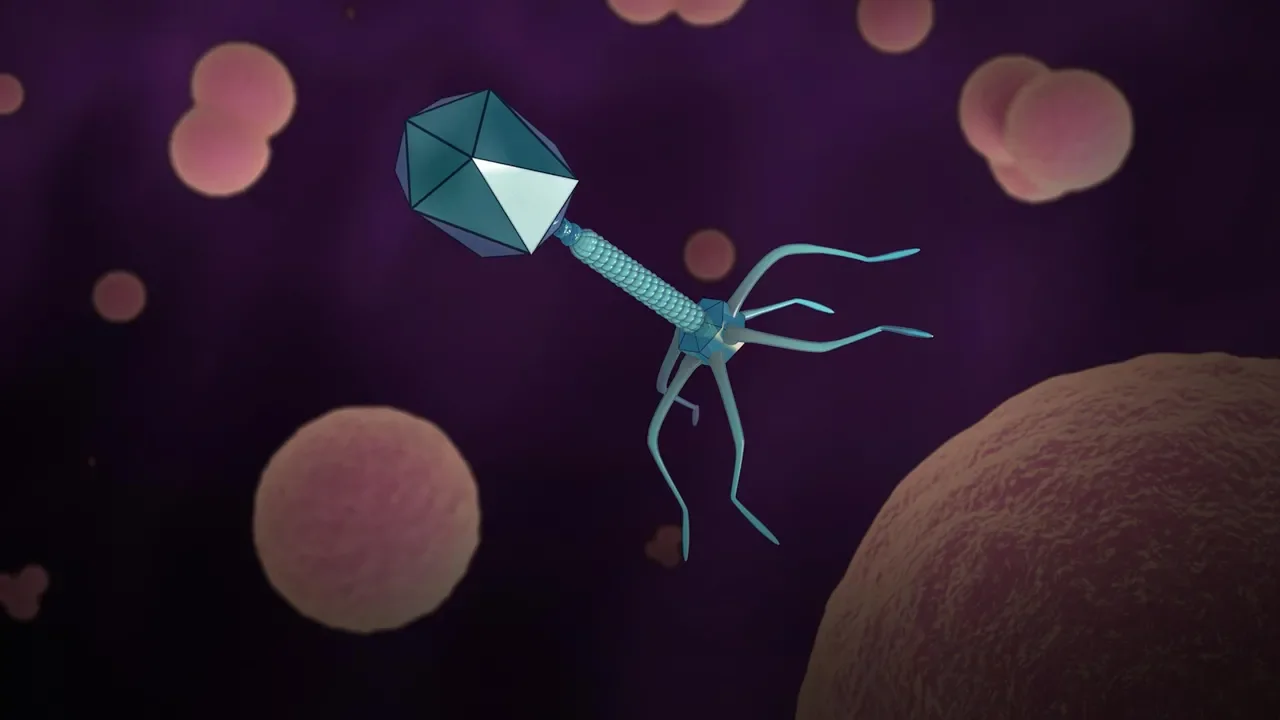
Added:Basic structural anatomy of a bacteriophage, including the protein capsid, genetic material (DNA or RNA), and tail fiber assembly.
The fundamental cell structure of bacteria (prokaryotes), particularly the composition of the peptidoglycan cell wall and outer membrane receptors.
The Central Dogma of Molecular Biology, specifically how host enzymes carry out DNA replication, transcription, and translation to synthesize proteins.
The Lysogenic Cycle, exploring how temperate phages integrate their genome into the host chromosome as a prophage instead of immediately destroying the cell.
Bacterial immune defense mechanisms against viral attacks, such as restriction-modification systems and CRISPR-Cas adaptive immunity.
Phage Therapy, including its history, mechanism, and potential as a clinical alternative to fight antibiotic-resistant bacterial infections.
Transduction, a process of horizontal gene transfer where bacteriophages accidentally package host bacterial DNA and transfer it to other bacteria.
120.6K views3.4Klikes6:17Original Release: 2017-02-20
foreign Ty cycle we know a kind of viruses that infects bacteria and replicates in them are called bacteriophage and these bacteriophage replicate in two ways it must be noted here they have two types of life cycle one is called lytic cycle and other being a lysogenic cycle and here we will be discussing about lytic cycle so let's get into it first thing we note here it's a process of viral reproduction second is here it occurs in host cell which we know is bacteria here third most important point to be noted here is this cycle is driven only by virulent viruses what I mean to say here is that viruses which reproduce violating cycle are called virulent viruses and other viruses which make use of lysogenic cycle are called temperate viruses they have the different mechanism while reproducing in a host cell you can see in the diagram bacteria Falls are of two types virulent forges and temperate forces virulent bacterial parts are those that make use of lytic cycle say for example we have a default forge on the other hand the temperate forces or the bacterial forces which make use of lysogenic cycle as well as lytic cycle or temperate forges either they go via lysogenic cycle or they choose the lytic cycle they can use both the Cycles but separately like we have in case of Lambda Falls and the last important thing these viral components which include its DNA and certain proteins are replicated by host Machinery they make use of host missionary they overtake the host missionary and replicate in the host cell and Destroy It ultimately and this lytic cycle includes first attachment where a virus attaches itself to the host cell after attachment there is a penetration of certain components from virus into the host cell after penetration there is injection of genetic material of virus into the host cell of injection this generous material is replicated in the host cell by using the host Machinery as already told you after the replication there is assembly and packaging of viral components which includes capsids and certain proteins and ultimately there is a cell license cell degradation at the end of this cycle where these viruses are free to infect the other cells now let's see this life cycle in detail first step is the attachment of wire stores host cell we have a bacterial cell here and it has got its own DNA molecule so in this step the virus lands on the host cell and attaches itself towards the bacterial cell wall by using its receptor binding protein you can see in this diagram the receptor binding protein of viruses they make use of it and this receptor binding protein interacts with ompc that's o antigen core oligosaccharide lipidsy this is the bacterial cell wall component that interacts with receptor binding protein of bacteriophages and conforms binding you can see in this diagram the bacteria Falls which is T4 fudge here that uses lytic cycle and it has got its viral DNA in its head and this viral DNA is to be inserted into the host bacterial cell for replication process so in the next step we see the tail fibers flex and by this Flex the base plate components gets penetrated into the cell wall and this T4 Forge uses energy in this step and this energy comes from ATP present in tail so this whole process is called penetration here in the proceeding step the viral DNA from the head of this T4 Forge gets transported gets injected into the host cell by using the ATP present in the tail so this whole process wire from this viral DNA gets injected into the host cell by using the atps from the tail is called viral injection after the viral injection the next proceeds with the hydrolyzation of host DNA into pieces so the host DNA gets deformed gets distracted into the pieces and the virus component that remains outside of the cell is termed as ghost because it's without the viral DNA keep this thing in mind a key difference between lytic cycle and lysogenic cycle is that in lytic cycle the viral DNA exists as separate molecule and replicates separately from the host to DNA while as in lysogenic cycle the viral DNA integrates with the host DNA and exists as a profarge so this is the main difference between these two now after all these processes there comes the phase of replication and in this phase of replication there is a DNA replication the biosynthesis of viral component that includes capsa tail tail fibers and other proteins which are used by this fudge to make the complete T4 Forge the replication is divided into three phase in the early phase enzyme involved modify the host DNA replication by RNA polymerase and in the middle phase the virus nucleic acid is produced and in the late phase the structural protein there is the viral component proteins are produced after the application there is maturation there is assembly and packaging of these viral components and we get the complete T4 matured fudge and ultimately the final step of this cycle is the cell license in the cell lyses the fog produces lysine enzyme and which has a capability to break down bacterial cell wall and after the cellulitis the T4 forces are released to infect other bacterial cells this was all about lytic cycle I hope you liked the video give it a thumbs up if you like it and also comment down into the comment section and do not forget to subscribe this channel
Up Next

1:21
Bacteriophage T4 Life Cycle: 3D Animation of E. coli Infection
@Amhaus
688.9K views•2012-03-12
50:12
Bacterial Communication: Quorum Sensing and Biofilm Formation Explained
@JHUAAP
12.6K views•2011-06-28
3:29
Autophagy and Mitophagy: Pathway and Mechanisms Explained
@hussainbiology
102.1K views•2020-03-11
7:08
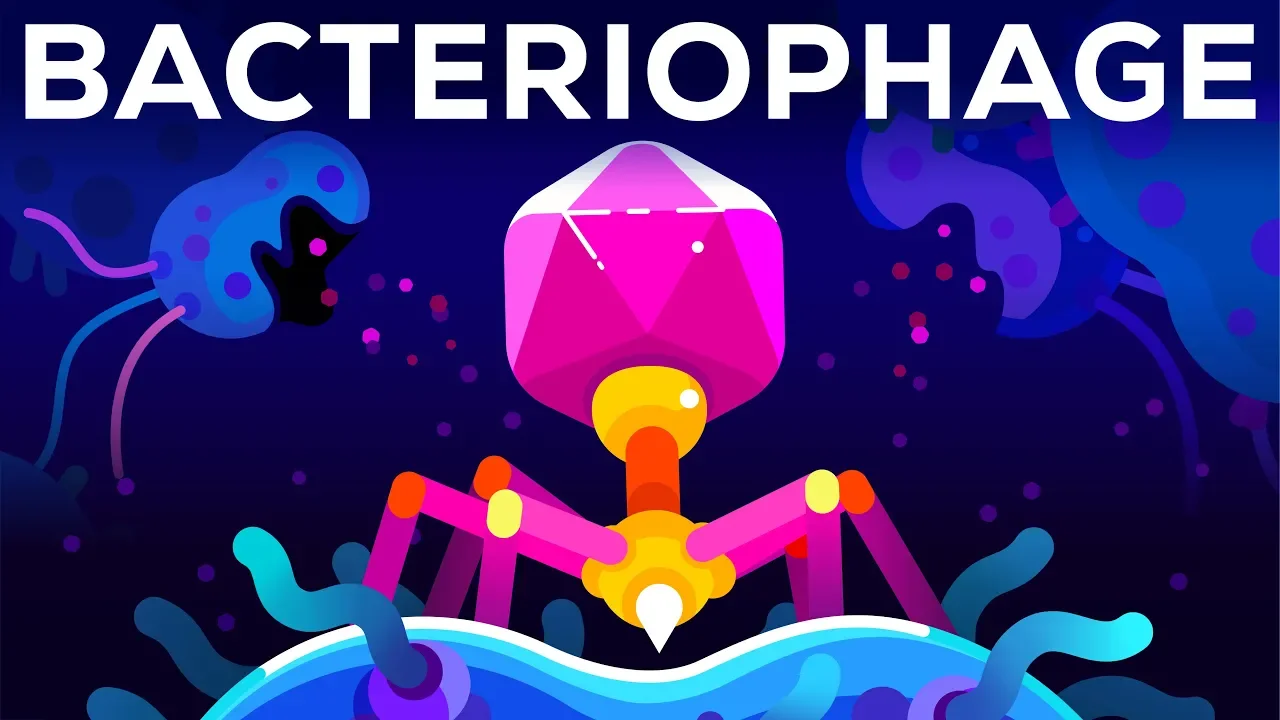
Bacteriophages: Earth's Deadliest Killers and Future Antibiotics
@kurzgesagt
34.6M views•2018-05-13
Related Study Plans & Knowledge Roadmaps
Structured learning paths in Biology
biology
RNAi: Biogenesis, RISC & Gene Silencing
01Molecular Biology Foundations: DNA to Protein
02Introduction to RNA Interference (RNAi)
03Molecular Biogenesis of miRNA and siRNA
+ 2 more learning modules
10h5 modules
Explore Roadmap
biology
Mycorrhizae: Signaling, Biophysics & Ecology
01Foundations of Mycorrhizal Symbiosis
02Molecular Signaling and Root Colonization
03Biophysics and Bioenergetics of Nutrient Exchange
+ 1 more learning modules
11h4 modules
Explore Roadmap
biology
Circadian Clocks: TTFL, SCN & Periphery
01Foundations of Molecular Biology & Gene Expression
02Introduction to Chronobiology and Actograms
03The Core TTFL: Molecular Architecture of the Clock
+ 3 more learning modules
14h6 modules
Explore Roadmap
biology
Population Genetics: Math, Drift & Selection
01Genetic & Probability Foundations
02The Hardy-Weinberg Principle and Baseline Models
03Mathematical Modeling of Natural Selection
+ 3 more learning modules
18h6 modules
Explore Roadmap