







![2023학년도 성균관대학교 모의논술 강평[인문계]](https://i.ytimg.com/vi/unS_dPSX7PQ/maxresdefault.jpg)
![[사건의뢰 몰아보기] 2022년 5월 5번째 주](https://i.ytimg.com/vi/_cWNen1N7SQ/maxresdefault.jpg)
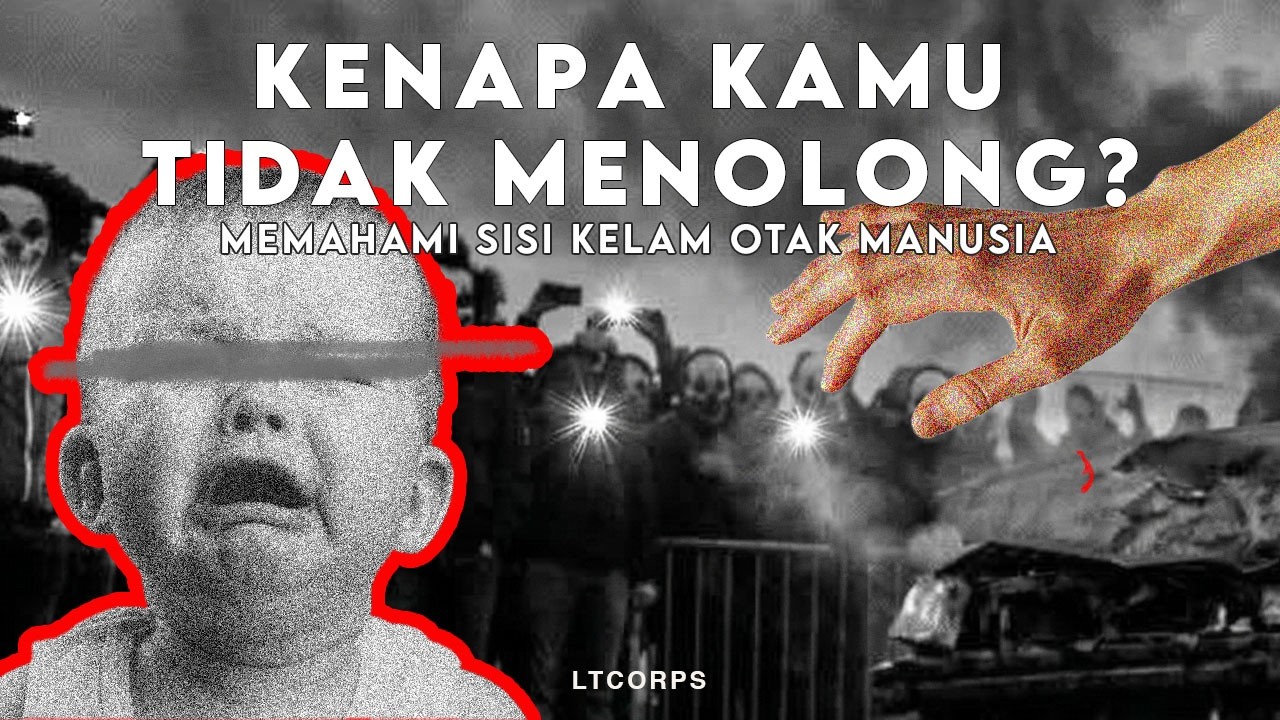









The bystander effect describes a psychological phenomenon where individuals are less likely to help someone in need when other people are present, as each person assumes someone else will take action; this concept is explored through historical analysis of Japanese American internment during WWII, examining how propaganda techniques manipulated public perception and how citizens can actively uphold human rights by choosing to be defenders rather than silent bystanders.
The Bystander Effect: ELA & Social Studies Lesson for 10th Grade
Added:Basic understanding of civic responsibility and the role of an individual within a democratic society.
Familiarity with historical examples of systemic injustice, such as the Holocaust or the Civil Rights Movement, where public apathy occurred.
Introductory knowledge of social conformity and how peer pressure influences individual decision-making.
Ability to analyze informational texts and identify central themes related to ethics and human behavior.
Advanced psychological concepts underlying the bystander effect, such as the 'diffusion of responsibility' and 'pluralistic ignorance'.
Practical strategies for transitioning from a passive bystander to an active 'upstander' in real-world scenarios.
Examination of 'Good Samaritan laws' and the legal, ethical, and moral obligations of witnesses to crimes.
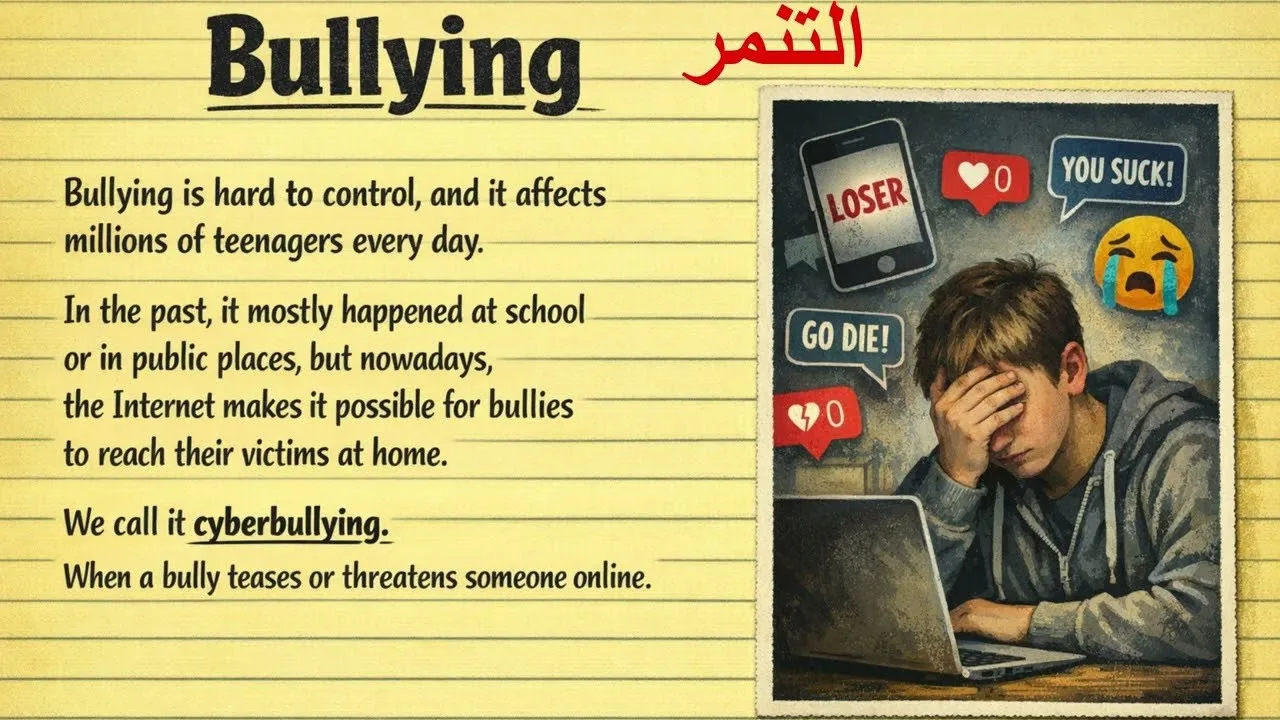
Analysis of the digital bystander effect, focusing on cyberbullying, social media dynamics, and online civic responsibility.
261.1K views1.5Klikes38:50Original Release: 2015-10-27
- Okay, so usually today is "Wordy Wednesday" right?
We usually do a word activity or whatever, but today we're going to do something a little different, okay?
So I'm gonna ask you a couple of questions and that side is "Agree", this side is "Disagree".
You need to make sure that when you go to either side that you're standing depending on what position you take, right?
So you're standing for what you believe.
You're not sitting or leaning for what you believe.
So make sure you're doing that, okay?
So the first one is, "I would be willing to make personal sacrifices, serve in the armed forces, or volunteer to assist my country if we were facing a war."
- Agree, disagree.
Go.
Agree, disagree.
You do need to choose a side.
No middle ground.
Did she give you the form?
- I never got the form.
[inaudible] - No, I didn't.
- Wow.
Gariana, are you in the middle, or are you all the way over?
- I'm over here.
- Okay.
All right, Nick tell me why.
- Because I just don't think I should have to make the sacrifice.
There's plenty of other people and I have to stay home and protect my family, work for them, and not go off and try to be a hero.
- Okay, Dominique.
- I never thought about being in the war.
So I don't think I would.
- Well, it wouldn't necessarily even mean that you have to be in a war.
It could just mean some kind of big sacrifice that you'd have to make like personal sacrifice, something that would affect you or your family.
Still disagree? Okay.
Noor, what do you say?
- I agree, because I would be fighting for my family and the people I love.
So yeah, and like all the innocent people.
- Okay, Jennifer what about you?
- Well since the war affects our country, everyone in our country, we all owe--not owe, but we should show that we care for our country and like, you know, be in the war if anything just happens to happen.
- Okay, Will what do you say?
- I think that it's kind of my duty to serve my country just because, I mean, like I'm an American citizen and if we go to war and I'm draft, like, if it's a situation where you have to be drafted I'm not going to be able to be able to say no.
And so, I would rather be for that than against it.
- Okay, Janae.
- If it was somebody else in the situation I would want them to protect the country so I would probably do the same thing.
- Okay, all right.
Thanks guys.
"Americans should be prepared to make great sacrifices to preserve their freedom and protect the freedom and rights of other countries."
Agree, Disagree.
Again, "Americans should be prepared to make great sacrifices to preserve their freedom and protect the freedom and rights of other countries."
Agree, disagree.
Still same, huh?
Okay so, you know how we sometimes we align ourselves with other countries and we go fight for them for certain situations?
Like that.
Okay, that's the latter part of the question.
All right, Gariana I noticed that you moved.
Do you wanna say why?
- Yes, because I believe that freedom is very important.
Like, I believe that everybody should have their own rights and have their freedom and what they believe in.
So that's the reason why.
- Okay. And Lauren you switched sides.
Why?
- Well, I'm kind of confused on the question, but if it's saying that we have to fight for other countries I don't want to fight with any other country.
I think that I would just sacrifice for my own.
- Okay, so keep it here.
Keep it local.
Not go out, abroad.
Okay.
That's fair.
All right, finally.
"There are certain amounts of money that can pay for an injustice."
So if you agree or believe that there are certain amounts of money that can pay for an injustice you stay on this side.
If you think that that's not true you come on over here, disagree.
Okay, I'll say it one more time.
"So there are certain amounts of money that can pay for an injustice."
So if somebody does you wrong and they say, "Well, I'm sorry.
Let me compensate you for it.
I'll give you $500 for, you know calling you a bad name" or something like that.
That's just an example, but there are bigger ones obviously.
- Really?
Everyone thinks that there are no amounts of money that can pay for an injustice?
Hmm.
Henry, why do you say?
- It's just wrong for me.
I think it's just wrong that you can pay for what you did.
You should be punished.
- Huh, Sage.
- Um, I think some things like maybe a car wreck could be paid with money, but some injustices like maybe killing somebody, I believe, definitely couldn't be paid for.
- Okay, anybody else want to volunteer?
Sedarius.
- One thing I personally believe is it's not morally correct.
You've probably taking something, that is of value to that person away from them and money can't really buy your happiness.
It can't really replace anything that you've just lost that you hold dear to your heart.
- Okay, Darius you want to add to that?
- Yeah, because I don't think that wait-- No, I don't think so because say for example, if someone is devastated over something that happened.
I don't think they should be able to like reward them or I mean not reward them, but like pay them in money to make up for it because I don't think money can buy someone happiness.
- Okay. All right, good.
Thank you guys.
You can have a seat.
All right, so you guys remember the essay we read yesterday, right?
"Uprooting of a Japanese American Family."
- Oh yeah.
- Okay, so we also kind of covered some of the nonfiction terminology that goes along with that.
So one of the things we were talking about was different types of writing or different purposes for writing narration, description, persuasion, exposition, right?
Explaining something, describing something.
Now, do you think her narrative was pretty descriptive?
Do you guys think in general... - Yes.
- Yeah, you could like taste the sausages when she was talking about putting the stuff on the, you know, plates with their fingers and all that kind of stuff.
The bread and the potatoes, and the washrooms and the lavatories, and all that kind of stuff, right.
All right, but if you think about it as a persuasion you can kind of maybe consider it to be persuasive.
If it is a persuasion, what is she trying to persuade us to believe or to think?
Casey.
- Um, she wants, the author wants us-- she's trying to persuade us and try to get the full image in our heads on how bad her experiences and just like how bad the conditions are and what she's going through.
- Okay, anybody else?
What is she trying to persuade us of if it is a persuasive essay, a persuasive memoir, anything like that?
If there's persuasion in it. Erica?
- I think it's more of her showing us what happened when she was there.
Like show us what actually happened and what she had to go through.
and her family and all that.
- Okay. Did you catch the irony at the end of the memoir?
What was the irony, Puhm?
- She won't know if her dad's alive until she actually comes to meet the family.
- Right, she didn't know if her dad was alive.
But what else was ironic about that?
It was situational irony, right?
What was ironic about the fact that her dad was not with them?
It was her mother and her family in the stalls, and all that kind of stuff.
What was more ironic about it?
Anybody want to help him out?
Where was her dad?
- In Montana.
- In Montana where?
- At preservation, I think, somewhere?
- He was in jail, right?
He got taken away because he was questioned as a suspect, right?
So the irony is he got released, and he got pardoned, but he was going where? Was he going home?
- No.
- No. He wasn't going back home.
He was going back to the camp with them.
So the ironic situation is in either place was he free or was he home?
- No.
- No, he was imprisoned in either place, right?
So she doesn't really hard hit at that topic, does she?
Does she go like hard at it and say, you know, "This is such a bad thing."
Does she really, like, make us feel that way?
Like it was such an injustice?
She kind of hints at it here and there, but it's more just, like, putting out the information.
Did you guys feel that?
Did you think that when you were reading it yesterday? Okay.
What is the tone?
That kind of leads us to the next--so tone again is attitude words.
Things that if you can describe an attitude with this, you can describe tone with this.
Sedarius.
- Sad and depressing. Not as gloomy, as melancholy as the stories of Edgar Allan Poe, but just sad and just kind of melancholy a little bit.
- You thought it was sad?
Okay, why?
- Uh, because of her descriptive words and descriptive things that she said.
Things, how they, the description-- how she described things.
Like, they had to struggle for water, they had to struggle to wash their clothes, for food.
It was all very depressing.
- Okay, you thought depressing.
Anybody else? Tone of words.
What was her attitude? Yeah.
- I think she was just trying to be more informational.
Like she was being depressing and everything, but she was just trying to inform us like--well not us, but like everyone how her situation was or how she lived, and stuff.
- Okay, anybody else?
Tone.
Will, what was the tone?
What would you say?
- What would I say?
- What would you say her tone was?
- I thought that she was--I actually found her tone to be more, almost uplifting because she was describing how she and her family made light of a bad situation and befriended their neighbors and got all their, you know, and like made furniture and started to kind of get used to it And then by the end their dad was coming to meet them.
I mean, like, I thought the whole thing was kind of like you know, building up to a more happier ending.
- Okay, showing how people make-- make the best out of a bad situation and thrive despite the hardship?
Okay, sure.
Why do you think she chose to tell the story in the ways you guys said?
Why do you think she chose to tell it from an uplifting standpoint, from a sad, melancholy standpoint, from an informational standpoint?
I'm trying to remember everything you guys said.
Sedarius.
- Well I think if she really didn't tell it from that kind of standpoint that we wouldn't really have got the point.
She wouldn't have gotten her point across, you know.
We would've had a nonchalant attitude towards it, like "It wasn't that bad because the way she's describing it."
- Okay, Jennifer you want to add that?
- I just think she was trying to get her story out and inform everyone how she was living and how her family was living.
And she just wanted to describe her, like, surroundings.
- Okay. Anybody else?
Tone, why did she choose to tell the story the way that she chose to tell the story?
Amani.
- I think she chose it because, like, she was trying to have her reader's look at her as like a heroic kind of figure.
Because like, to-- what Will said she tried to make a bad thing into a good thing.
I think that's the way she kind of said it.
- Okay, good.
Lauren.
- I think she kind of had a mix of a descriptive and persuasive tone.
Like "Believe this, this is what happened in my life."
- Okay, the combination that she said, the combination of descriptive and persuasive.
Okay. All right, Good job guys.
So this brings us to the next element, the next aspect of this.
"In general what is your response when someone's rights are challenged?"
Okay.
So you guys encounter a bunch of different situations everyday.
Some of them are minor; some of them are major, right?
Some of them you just hear on the news and you think, "Oh man, that's terrible.", right?
But in general, what do you think your response is when someone's rights are challenged.
So just think about it for a minute.
- Are you typically a defender?
Meaning you stand up for the person who is being victimized or who the injustice is happening to?
Are you a silent bystander, you just kind of stand by and let it happen, watch it happen?
Or do you kind of follow?
Do you participate in the injustice?
Okay, so think about it for a minute.
We talked yesterday, I think this was you guys, about what would you do, right?
That show, "What Would You Do?"
and how they portray all these different scenarios or whatever.
If this was happening would you step in?
Let's see how many people are going to step in.
Let's see how many people are going to help, right?
- So what would you say?
- I mean, I think I would be a defender because I've been in a lot of situations where my friends were made fun of and I'm usually there to stick up for them and stuff.
So, yeah.
- Defender.
Sedarius.
- I would also be a defender because well I have like a deep conscience and if I just wander by and let that person get hurt or get injured then it will eat away at my conscience like, "Oh I should've did something about it.
Oh, that was bad."
- Okay. Nick.
- I think most people are defenders when it comes to their friends and families than unusual situations when you're just walking down the street and you see something happening and we just stay silent because we don't want to get in the mix of it.
We try and keep to ourselves.
- We're often the bystanders.
- I'm definitely a defender because like, for example, a friend of mine put a picture of this boy on Instagram who, who doesn't have that many friends and people tease him a lot.
So I asked her, I was like, "Can you take this down?"
He goes to our school and people are going to tease him, laugh at him.
So I defend people no matter what, whether you're my friend or not.
I feel like nobody should be mistreated.
- Anybody else? Jennifer.
- I think it depends on the situation.
If it's a really important issue then yeah you should defend them and stand up for them.
But if it's something small or something they're getting in trouble for and they deserve it.
I don't think you should defend.
Just like silently watch, I guess.
But yeah, I guess just depends on the situation.
- Yeah, and that's what a lot of people would say.
But it's interesting that probably you guys are the one group that I've seen more defenders in.
Typically and statistically, actually people are more often the bystander.
Back in like the 60's, I think it was around there, there was this case where this woman was going home, and her name was Katie Genovese.
And she was being tormented.
She was being stabbed by somebody.
I don't know if she knew the guy or not.
I don't know all the details of the story, but she was outside of an apartment complex.
There were 38 people that saw this going on.
Some people looked out of their window.
Some people, you know, passed by but nobody called the police.
Nobody.
- So the suspect left and ended up coming back later on and killing her.
He didn't kill her first.
He was stabbing, stabbing whatever the situation was.
She was lying there; I think everybody else thought that somebody else was going to call.
But nobody picked up the phone to call the police.
Nobody picked up the phone to call 911.
Okay, so typically from that I think a lot of psychologists highlight that study and say, "You know we need to look at why do people just stand by and watch things happen."
Why do people stand on the outskirts?
Why do people, you know, just "let things go?"
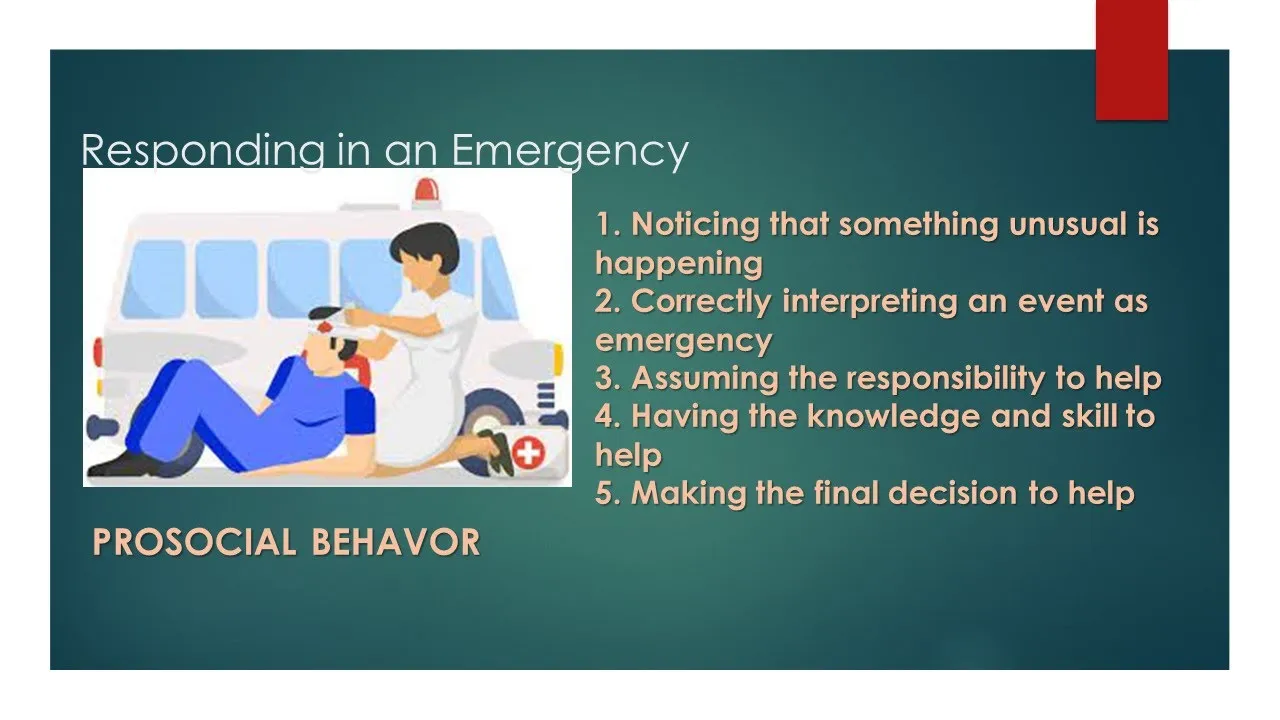
And it says basically that when there's an emergency the more bystanders there are the less likely it is that any of them will actually help.
- Do you guys, think about that or is that surprising to you?
If there are-- like for example, if there's a fight.
If there are masses of people in the cafeteria do you think any of them if masses of people are watching?
Typically not, right?
So it kind of is supported a little bit.
And they call this particular phenomenon; I guess you could say, "Pluralistic Ignorance."
So this is where everybody assumes nothing is wrong because nobody else looks concerned.
"If he didn't step in why should I?"
"She didn't do anything about it so I'm not gonna.
I'll just stand back." Okay.
So usually it's like a five step process.
- Bystanders go through this whole process and then at each point they decide, "Yeah, I'm probably not going to do anything about that."
They notice the event.
So they notice it and see it kind of maybe at a glance, but they just keep going.
Or they're in a hurry and they're just not even, you know, conscious of it.
They realize the emergency, and again, assume that because others aren't acting maybe it's not as big of an emergency.
"Maybe I don't have to do anything about it.
Somebody else will."
They assume responsibility or assume that others will take responsibility.
"Oh, I'll just let them handle that.
It looks like they've got it under control."
- They know what to do or they don't know what to do.
So, "Because I don't know what to do, I'm not gonna step in."
And then the final step is they act, but this could be worrying about the danger of the legislation embarrassment.
"If I step in what's that gonna mean for me?", right.
so the bystander effect has like a series of--a sequence of events.
When am I gonna step in? Am I gonna step in?
How am I gonna step in? All of those sorts of things.
Okay, so I want you guys to kind of consider that as you, explore everything today.
When we come back together you guys are going to be taking the bystander effect and breaking it down, unpacking it a little bit.
- Okay, but you have different various stations that you are working at today and I was gonna, I was gonna--I have you guys split up into groups because of the technology that I know you have.
So I probably will just keep it like that, but I don't know if it's going to be even.
So we'll just kind of see.
But basically, what you guys are going to be doing for this lesson, you're going to complete activities at two stations.
So there are even numbered stations and there are odd numbered stations, okay.
Basically you're going to be doing and writing things down at each station.
So why don't you guys go ahead and put your names, your MLA header on your papers if you haven't done that already just so that you have it organized.
- And for the stations where they are the even numbers those are the ones that are more multimedia oriented.
So if you have your headphones and things like that you're going to be listening to the information and looking at the information independently, but then you're gonna have points where you'll come back together and the instructions tell you that.
All right, So what I'm going to do is I'm going to say who's at what station.
So let me just point out where the stations are so that you guys know.
This is station one, this is two, three--move your notebook--six, okay four, five, and six.
Okay, and since we're missing some people I don't know that we'll, we might just move.
Let me move you first and then we'll see if we need to do some tweaking, okay?
- All right, so group one is Jennifer, Will, Henry, and Sedarius.
And you will start at station one over here, okay.
Will?
- Oh.
- Okay so when I call you in your station you can go ahead and have a seat.
All right, let's see.
Group two, Chris is not here, Janae, Nick, Greg, and I'm missing somebody.
Oh yeah, Chris is gone.
So two, you guys are here.
Janae, Nick, and Greg.
And then I might add somebody to your group.
Okay, group three is... Carlita, Lauren, and Puhm.
You guys start at station five actually, right over there.
Over here, and actually I put you guys in the wrong place.
You're starting at station three, okay?
Okay, four, that's where I am right?
Kya, Kathryn, Casey and Noor.
And you guys are starting at station six.
- Okay, Kya, Noor, Kat, and who was the fourth person?
Casey, I said.
Station six, Okay?
Group five is... Ahmed's not here, Sedarius, Gariana, and Carasina.
So two of your people aren't here.
You guys are starting at station four so we might move you with another group.
Actually, Station four.
Gariana and Dan--oh, Sedarius, station five.
I didn't call you before, did I?
- Yeah, you did.
- I'm sorry. You're over there.
And then group six, Sage, Erica, Amani, and Dominique.
And you guys are two.
You start at station two.
Okay so let's see how we can blend.
Um, this is even that's odd.
So why don't you guy's kind of-- one of you come here and one of you go there. okay?
Daniel did I miss--oh Daniel and Darius.
I missed you guys.
Daniel, Darius you're in group one.
That's what it was.
So why don't we--actually let's just put you guys at station four.
Wanna do that? Yeah, that will work perfect. Okay.
So each activity inside the envelopes at your station, each activity is in there.
It has, basically about three to four tasks.
I think the odds have three, the evens have four.
- So you guys will share materials, but the instructions, each of you will get the instructions.
Does that make sense?
So go ahead and pull them out.
Most of the stuff you'll be doing independently in terms of looking at the information, but for the other information you'll be discussing from time to time.
Okay so, if you need, if you don't have the technology to get-- to scan the codes, you guys with me?
If you don't have the technology to scan the codes you can use the computer that's at your station if you have one, okay?
Or obviously you can share as well. Okay, so this will be a time where you can have your headphones, If your phones, if you're gonna pull your phones out just make sure they're on vibrate so if they ring they don't, you know, they don't mess everything up.
- "In the face of political military and public pressure, Roosevelt accepted the relocation proposal.
The attorney general acquiesced after the War Department relieved the Justice Department of any responsibility for inflammation."
- No, no no, you're skimming.
I mean, it just shows you what happened when so you can get the big picture.
Background, big picture, video.
Here is what you guys are doing altogether.
- Patriotism and family.
- Do you think sort of in the video too, like, name calling in the beginning?
- Well, no.
I mean they called him Japanese, but I don't think that's really considered name-calling.
I don't think so.
- Okay, the next two are ways of making false connections.
Transfer device by which the propaganda's links the authority or prestige of something well respected and reserved.
- What do you mean by the social comment that you made?
- What is the comment to the society?
Maybe, it could be a message.
Okay, so what I'm gonna do is I'm gonna go to the two propaganda groups first and then also I'm gonna kind of touch on the other groups that have the cartoons and the photos and that sort of thing.
Okay, so be ready.
All right, this group over here, station one.
what did you say in terms of the video?--and again, I'm sorry that the other group can see.
We'll probably come back to that, but what did you think was a highlighted feature.
What did you guys maybe even say in common terms of the propaganda that you might have seen in this video that you watched?
- Okay, so you guys listed all different kinds of propaganda.
I see two of you had fear for example.
What did you say?
How did you explain that fear was a tactic used in the video that you saw?
- Well, um it was a little Japanese camp, or whatever.
That's not their home so it's like they're in an unknown place, they have to like--it's fearful because you have to adapt and stuff and you don't really know what's going on.
Because you're moving and their like taking you somewhere.
- Okay, interesting.
What other techniques did you guys see?
- Plain folks.
- Okay, why do you say plain folks?
- Because they're trying to, they're like, I guess like trying to get our sympathy or something.
Or, because they're like we built nurseries for the children and all that stuff.
- Yeah, okay what kind of propaganda techniques did you guys see?
- We said plain folks is one of them because they were saying, "Oh they're so happy living their normal lives."
But in reality that's probably not the case.
- Okay, what about bad logic?
Why bad logic?
- Because they were trying to rationalize thing and like make things seem fine, but they weren't fine.
Like, they were putting in words, they were like stretching.
It was kind of like stretching the truth almost.
- Okay, what about unwarranted extrapolation?
I see that on here. Why did you guys say that?
A couple of you said that. How did you pull that one out?
- Well they were sort of like making predictions for their future.
They were saying like where they're gonna go and what they're gonna do.
- And like taking extreme precautions.
- They were thinking that they, because of Pearl Harbor, that something might happen with them as well.
So they wanted to like, yeah, take extreme precautions.
- Something bigger would happen.
- Yeah, expecting something was bound to happen.
- Okay, all right, so the other stations that had more the documents.
What did you guys focus on in terms of either political cartoon or photograph that maybe really caught your attention or that you really wanted to discuss?
I'll start with station three.
Which picture possibly and then I can show it to the other groups.
- Probably this one.
- Okay, why?
They're pointing at this one guys.
- Because it makes it seem like all these Japanese were like double agents trying to attack America from the inside.
I thought it was weird that-- [inaudible].
- Mm-hmm. Everybody was a suspect.
Okay, anything else that you guys focused on?
Different ones, maybe.
You all focused on the same one?
- No, I focused on this one.
- This one. Why?
Okay the one, basically it's Uncle Sam flying through with a butterfly catcher and it says, "Enemy alien problem" and it has a bunch of other signs, keep them flying in the other direction, things like that, okay.
Why did you focus on that Gariana?
- I focused on that because the attack on Pearl Harbor.
They was like keeping their eyes on them and like trying to keep them away.
So that's why that kind of caught my attention.
- Okay, just because of the message of it, maybe?
Okay, what about you guys?
Lauren.
- I did this one where it says "Japs keep'em moving.
No, keep moving.
"This is a white mans neighborhood," Just, because it really reminded me of slavery with African Americans.
So, I know a lot about that, so I can-- - Relate? You made a connection with that?
Okay, anybody else at this table?
Anything else you guys want to add to that?
Daniel, did you choose that one or you chose a different one?
What did you choose?
- This one.
- Okay, what did you say about this one?
Or what stood out about it to you?
- That they-- they had the Japanese people as bugs flying around.
- It's a pest. They're pests like almost?
- Okay, good comment.
All right, anybody else final thoughts?
Sedarius.
- One picture I chose is the same as theirs.
It's the one about white racial--well.
I'm sorry.
The one about Japs keeping moving on this is a white neighborhood.
And like I said previously, the thing we talk about most is division in history between that of blacks and whites.
But now I'm looking at this picture and I'm seeing there was not only a hatred toward just one group of people, but it's a total division between all sects.
Like every race for themselves, basically in this time period.
- Anybody else?
Final thoughts on what you saw, read, anything?
Okay, so let's go ahead and kind of transition.
What I'll do is some of you have books at your, at your stations.
And I'll bring more.
And I do have copies of the essay as well that we read yesterday, and I'll explain what you're gonna do with this.
Just pass that, that way for me.
Actually, you know what?
How many did I give you?
Just make sure everybody has one and then pass.
- Do we need to open the book?
- You might not.
Just sit tight.
Okay, so what you guys have in front of you is something that is called the Universal, I'm sorry, the United Nations Universal Declaration of Human Rights.
Now this is the simplified version.
There's a bigger version that has, actually it looks like a constitution or something.
It has actual articles on it and things like that, but this is the simplified version for younger people, okay?
So you guys notice there are 30 articles.
All right, so what I'm gonna do is I'm just going to have you glance at these really quickly.
Just glance at them, front and back.
And maybe focus on the two that you think are most important, like for your own personal value system, for your life, whatever.
The way you operate on a daily basis.
Which one's stand out to you the most?
- Just kind of think about that, okay?
Everybody have a couple or at least one?
Okay, focus on that one.
so I'll start and then I'll just kind of, we're gonna go clockwise around and I'll just come point to you, okay?
All right, so the first one I said is, "We are all equal before the law and your human rights are protected by law."
- The one I chose is, "No one can take away your human rights."
- "Don't discriminate."
- "No slavery."
- "Freedom of expression."
- "We are all born free and equal."
- "The right to a democracy."
- "We are all born free and equal."
- "Right to a nationality."
- "Freedom to move."
- "Marriage and family."
- "The right to life."
- "The right to life."
- "We're always innocent until proven guilty."
- "Don't discriminate."
- "The right to play."
- "The right to life."
- "Responsibilities."
- "The right to privacy."
- "A fair and free world."
- "The right to education."
- "Freedom to move."
- "Freedom to move."
Okay, thank you guys for sharing that.
All right, so finally, because this is all the time we got for-- Yesterday, again, we read this Universal Declaration for Human Rights so I guess maybe now-- not because you needed to because you all seemed pretty much like you were in the defender's mode and on the defender's side not the bystander's side, specifically, But I want you to kind of take a couple of excerpts from what we read yesterday in terms of the Uchida essay.
I have copies of it and you do have books at your station, too.
So you could use either one basically.
But I want you to take a couple of excerpts showing where any of these human rights were violated.
- Okay, so with what we read yesterday, with what, even with what you saw today you could say too.
Take a couple of pieces and find where the rights were violated, okay.
I want you guys to discuss that with one another and then I'll tell you what finally to write on the paper, okay.
- Well they definitely took away human rights.
- Yeah.
- Aggressively.
- What's that? What number?
- They were just told to move into a camp without anything proving that-- - Yeah, they have like the portable house and education.
- They did, but they didn't really have the choice to, like I said, they didn't have the freedom to move wherever they wanted to.
- So basically after looking at the violations that occurred in the excerpt we read, right, how important is it that we uphold these human rights so that stuff like this doesn't happen anymore, right?
That's the goal.
So we want to make sure as responsible citizens that when we're reading about historical events and things that actually happened in literature, how can we ensure that we're not going to be bystanders that we're going to make sure these things happen?
That these things are upheld for all people, ourselves included.
Okay, so when you write your final thoughts on your paper what you're going to write down is, it's important to uphold this.
So when it says, "Create an argument about how this is important to uphold these things today."
You're going to create an argument about why we need to make sure that we uphold these specific values and these specific principles, articles so that stuff like this doesn't happen to anybody in our country, okay?
[students discussing] - Okay guys, wrap up what you're doing in the next minute.
Amani, what did you say?
How can we move forward and uphold this right so that we don't have a society of bystanders?
- I said, like, don't treat another person like they're lesser than you.
Treat them equally, like, they're like a family member.
- Okay, treat other people like you would your family?
All right, Jennifer what about you?
- I said that everyone is born free and equal so we all deserve that right.
And people come to the United States for freedom and-- I don't know, they should actually get the freedom.
- Okay, all right.
So for times sake remember you guys read the little excerpt yesterday called "The Good Samaritan Laws"?, right?
Remember that?
So you kind of see how all of this is connecting.
Wouldn't it be great if we had a society full of Good Samaritan laws or No Bystander laws that everybody would uphold these principles?
And then we'd probably have a much better society, don't you think?
I think so.
All right, so you have about a minute left.
Go ahead and make sure... why don't one person of each station collect the papers for me and I'll get those on your way out.
Up Next
9:44
Bystander Intervention When a Woman Drugs a Man's Drink | Social Experiment Analysis
@ABCNews
13.2M views•2010-12-11

12:54
Triumph of Orthodoxy Icon: Byzantine Art & History Explained
@BenCallan
2.1K views•2024-08-06

9:49
FastAPI vs Flask vs Django: Choosing the Right Python Web Framework
@TechWithTim
302.5K views•2024-05-26

1:42
Game of Thrones Opening Credits: A Cinematic Analysis
@gameofthrones
46.3M views•2011-04-18
Related Study Plans & Knowledge Roadmaps
Structured learning paths in General & Interdisciplinary Studies
general-studies
Elevator Engineering: History, Physics & Cities
01From Hoists to Safety Brakes: The Dawn of Vertical Lift
02Hydraulic vs. Traction: The Engineering Physics of Elevators
03Modern Speed, Safety, and Algorithms
+ 2 more learning modules
12h5 modules
Explore Roadmap
general-studies
Rubber: Material Science, History & Geopolitics
01Origins of Natural Rubber & Mesoamerican History
02The Chemistry of Natural Rubber & Vulcanization
03The Geopolitics of the Rubber Boom & Colonization
+ 2 more learning modules
12h5 modules
Explore Roadmap
general-studies
Containerization: Evolution, Logistics & Trade
01Ancient Trade & Bulk Cargo: Amphorae to Barrels
02The Industrial Revolution & Cardboard Packaging
03The Containerization Revolution: Malcom McLean
+ 2 more learning modules
12h5 modules
Explore Roadmap
general-studies
Textile Tech: Evolution, Labor & Global Impact
01Pre-Industrial Textiles: Handloom & Cottage Industry
02Mechanization: The Spinning Jenny to the Power Loom
03The Factory System & Global Labor Transformation
+ 2 more learning modules
10h5 modules
Explore Roadmap