


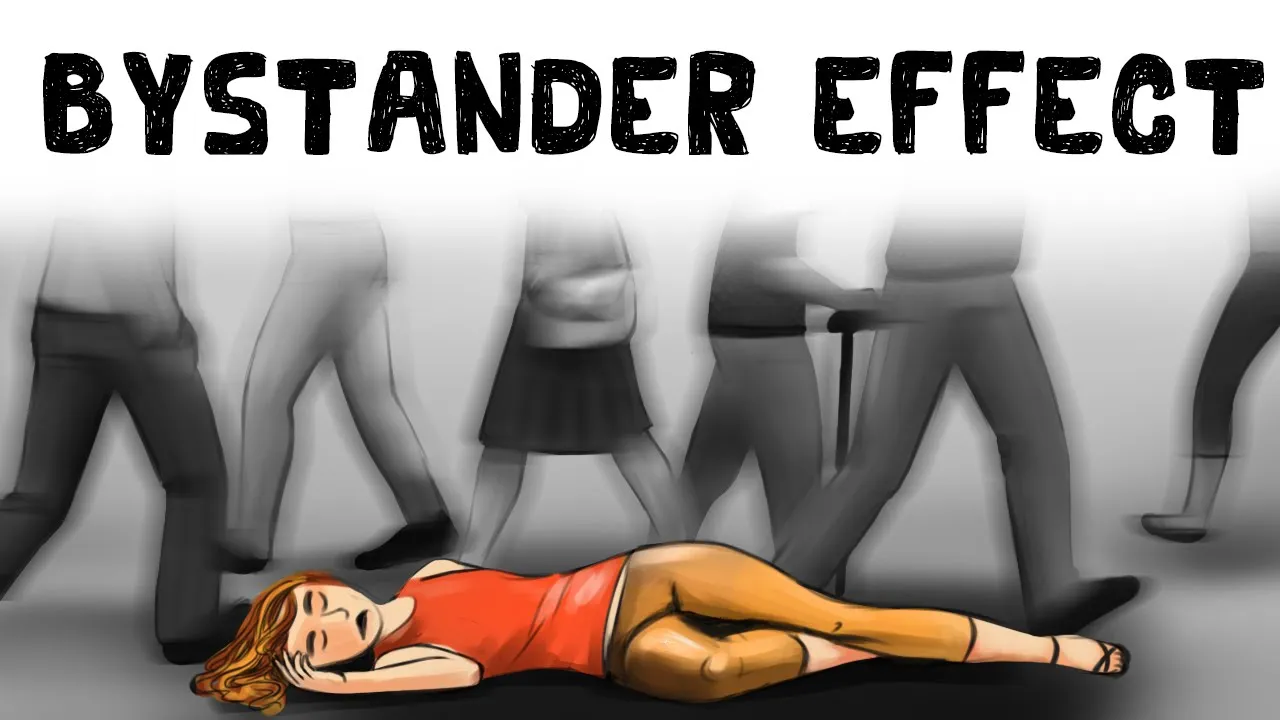















This video from ABC News' 'What Would You Do?' demonstrates that bystanders often fail to intervene when witnessing potential harm, particularly when the victim is male and the perpetrator is female, revealing how gender dynamics and social perceptions can prevent people from taking action to help those in distress.
Bystander Intervention When a Woman Drugs a Man's Drink | Social Experiment Analysis
Added:The Bystander Effect and Diffusion of Responsibility: Understanding the psychological phenomenon where individuals are less likely to offer help to a victim when other people are present.
Gender Stereotypes in Victimhood: Conceptualizing how societal expectations and biases dictate who is traditionally perceived as a 'vulnerable victim' versus a 'protector.'
Social Experiment Methodology: Recognizing how field experiments are constructed to observe natural human behavior, including the ethical considerations and limitations of these studies.
Basic Bystander Intervention Frameworks: Familiarity with the general concept of recognizing a high-risk situation and the moral imperative of taking action to prevent harm.
The '5 Ds' of Bystander Intervention: Studying and applying specific, actionable techniques (Direct, Distract, Delegate, Delay, Document) to safely intervene in real-world emergencies.
Gender-Inclusive Victim Advocacy: Exploring how support systems, legal frameworks, and crisis centers can adapt to better serve male victims of sexual assault and drug-facilitated crimes.
Intersectionality and Public Perception: Investigating how race, class, and gender intersect to influence bystander reaction times and the level of empathy shown to victims.
Critique of Media and Social Experiments: Analyzing how social experiments are framed in digital media and how editing choices can sway public perception of societal issues.
13.2M views68.2Klikes9:44Original Release: 2010-12-11
I see sure you might remember our what would you do scenario from two years ago when this guy put what looks like a dangerous drug into his date stream the reaction from most of the people at the bar was unforgettable they rushed to the rescue of a woman in distress but what will happen when the person spiking the drink is a woman and the one getting drugged is a guy the scene is set and our hidden cameras are rolling at Texas Arizona a popular sports bar in Hoboken New Jersey she may be young and innocent looking but this woman is a con artist about to drug her wealthy day and rip him off for all he's worth [Music] we're gonna go it happens more often than you think women drugging men and then taking their money what would you do if you saw it happening what would you like to drink back at our bar vodka soda all right feel better she's gonna be drinking vodka almost before noon our couple has gotten their bar mates attention many hit the restroom the guy excuses himself watch us she not so subtly gets to work emptying the contents of a pill into her unsuspecting dates drink now notice the men in the background as they turn and see the powder going into the drink which by the way is just sugar after a quick chat she does it again and that's when we tell her naive date to stroll back to the bar as the drug takes effect he begins to act ill okay and after she leaves he starts complaining this I think there was some soap or something that glass [Music] now it looks as if he's about to pass out [Music] hey do you wanna take it off maybe get a jumpstart on that day he's dazed and confused but will anyone speak up before the couple walks out the door I'm sorry nope not a word but now that they're gone listen to this this guy who says he didn't see her spike the drink doesn't believe what it's time for me to introduce myself hey boys tv-show what would you do but the guys who were laughing a moment ago now don't want to talk about it what goes through your mind when you see something like that and so we try it again [Music] hey listen I'm gonna hit the restroom I'll be right back I'm a lucky girl lucky maybe but she's after a quicker payoff notice this guy's eyes as he stops reading thanks Billy you have me for the rest of the day fantastic drink up and now we tell the villainous vixen to step away for a moment when the wealthy day pretends he's getting sick this guy directs him to a local pharmacy I'm getting a flu or something it seems he's torn about what to do but he sticks with his book even as the victims head hits the bar [Music] you want to get out of here so will he really let them leave together he watches as the couple walks out the front door and then speaks up to the bartender who's also working with us hey guys I'm John quinones and we wanted to know if you see this happen what would you do what did we do you kept reading your book Wow he says he saw pills but never saw the powder go in the drink it's a tough position to put in the restroom I remember thinking I was like if he doesn't come back in a few minutes maybe it might be passed out dead in the bathroom and he would go down what if it was a guy dragging a woman you think you're to respond any more quickly yeah probably they'd let me leave the bar sweating and we slumped over and I didn't expect that that was shocking to me we start to think no one will confront the villain all right bottoms up and then this woman shows up I'm just going to use the restaurant I'm sorry can I just ask you a question as a girl so after a little girl talk our actress goes to work on our dates great this time the reaction is immediate no you do oh my gosh looks just like the twilight zone and here something thank you okay that's cool thank you ladies me by the way hi how are you your date actually she told me you guys were on a first date so I saw something you drink and I just want you to know that you should order another drink yeah cuz you know what I'm trying to take advantage of you want to take you home and have my way with you I mean seriously you you you asked me how you look at this your first day no it's really nice you know and everything but right now you're acting like a total not true seriously what do you think I am it's true so I saw it do I are you I'm Johnny I'm from Jersey City grew up in Jersey City Hoboken and this is not what we do we need to protect our own people she goes to you anybody who knows me I have a very strong voice and I will tell people how I feel I'm sorry Mabel Olmo a petite but feisty Account Executive who believes that every now and then a man can also use a little help earlier we had a bunch of guys up here okay and they would not say a thing that's horrible I can't believe that I just you know someone sees something they should they should act
Up Next

46:06
Bystander Intervention Strategies: The 5D's Explained
@bookpassagetv
247 views•2022-06-03

12:54
Triumph of Orthodoxy Icon: Byzantine Art & History Explained
@BenCallan
2.1K views•2024-08-06

12:24
Hypersonic Missiles Explained: The New Nuclear Arms Race
@ABCNewsIndepth
484.7K views•2022-05-27

1:42
Game of Thrones Opening Credits: A Cinematic Analysis
@gameofthrones
46.3M views•2011-04-18
Related Study Plans & Knowledge Roadmaps
Structured learning paths in General & Interdisciplinary Studies
general-studies
Elevator Engineering: History, Physics & Cities
01From Hoists to Safety Brakes: The Dawn of Vertical Lift
02Hydraulic vs. Traction: The Engineering Physics of Elevators
03Modern Speed, Safety, and Algorithms
+ 2 more learning modules
12h5 modules
Explore Roadmap
general-studies
Rubber: Material Science, History & Geopolitics
01Origins of Natural Rubber & Mesoamerican History
02The Chemistry of Natural Rubber & Vulcanization
03The Geopolitics of the Rubber Boom & Colonization
+ 2 more learning modules
12h5 modules
Explore Roadmap
general-studies
Containerization: Evolution, Logistics & Trade
01Ancient Trade & Bulk Cargo: Amphorae to Barrels
02The Industrial Revolution & Cardboard Packaging
03The Containerization Revolution: Malcom McLean
+ 2 more learning modules
12h5 modules
Explore Roadmap
general-studies
Textile Tech: Evolution, Labor & Global Impact
01Pre-Industrial Textiles: Handloom & Cottage Industry
02Mechanization: The Spinning Jenny to the Power Loom
03The Factory System & Global Labor Transformation
+ 2 more learning modules
10h5 modules
Explore Roadmap