









![[형사소송법26] 공판절차(증거조사의 실시2, 공판절차의 특수문제)](https://i.ytimg.com/vi/MRdr3QYT188/maxresdefault.jpg)


In mock trial, evidence must be relevant to the case, come from competent and trustworthy witnesses, and not be unduly prejudicial; evidence can be direct (witness testimony of observed events) or circumstantial (indirect observations suggesting conclusions), and witnesses can be impeached by proving inconsistent statements, bad character, prior convictions, or contradictory statements to attack their credibility.
Rules of Evidence Explained | Mock Trial Education Guide
Added:Understanding the basic structure of a trial, including the roles of the judge, jury, attorneys, and witnesses.
Familiarity with fundamental legal terminology such as 'objection', 'testimony', 'exhibits', and 'admissibility'.
The core distinction between the prosecution/plaintiff and the defense, including who bears the burden of proof.
How to formulate and present timely objections during a live trial simulation based on these rules.
Advanced study of the Hearsay Rule and its various exceptions (e.g., excited utterances, party-opponent admissions).
Mastering witness examination techniques, specifically how to craft direct examinations that avoid objections and cross-examinations designed to impeach.
Comparing mock trial simplified rules of evidence to the actual Federal Rules of Evidence (FRE) used in professional courts.
8K views100likes13:25Original Release: 2020-03-16
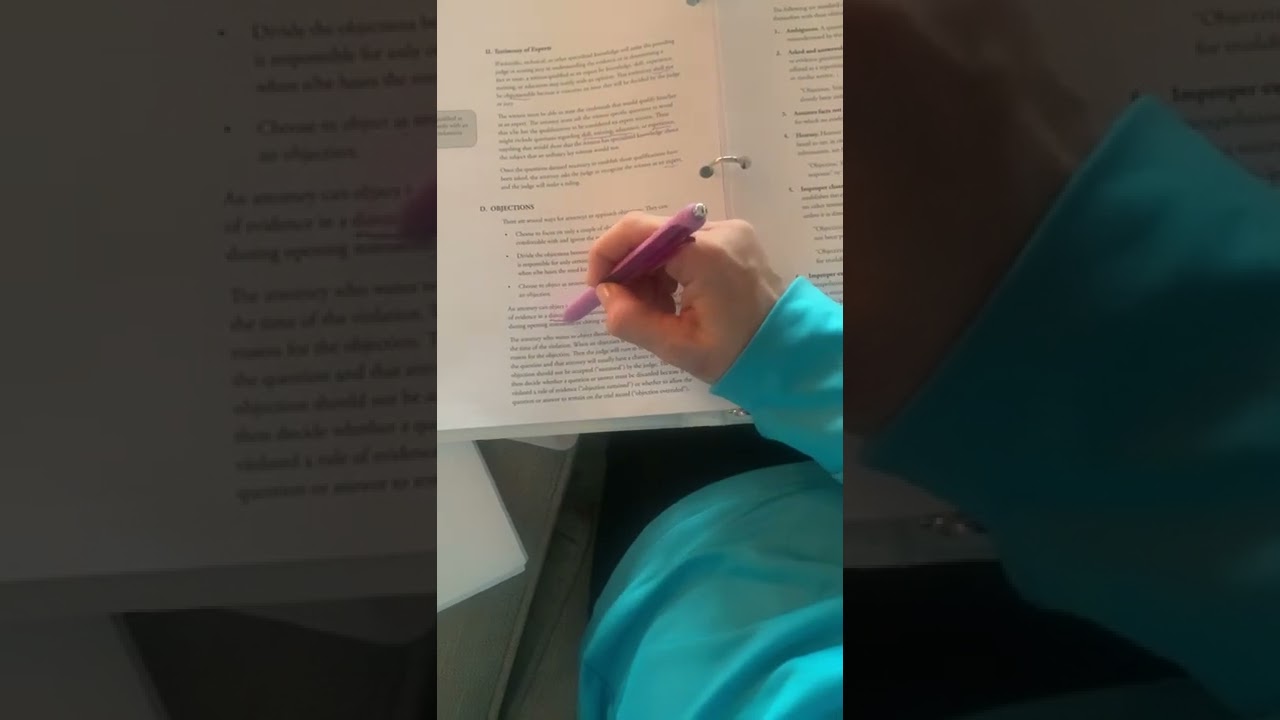
okay CC students we're gonna talk about the rules of evidence now one thing I want to talk about is that in your mock trial packet you have general rules that regulate how we conduct the mock trial talks about who may participate it tells you that you can't watch videos of previous year's mock straat mock trials those are all over the overall rules of that we've all agreed to abide by for mock trial but then while we're trying the case as we're as we're presenting evidence as we're performing the mock trial there are certain rules that regulate the behavior of how the mock trial occurs and this is the same as as it is in real trials by real lawyers we have things called rules of evidence and the mock trial rules of evidence that we use are modeled after the Federal Rules of Evidence and we'll talk a little bit about these in other videos that we're gonna do but in this video I just want to talk overall about rules of evidence and remember the parties have a disagreement about what occurred they both have varying theories they have very stories about what occurred and each trying to prove their case by testimony and exhibits so they have testimony as witnesses they also have exhibits and we're bound by these rules of evidence as we begin to prove our case so we're either gonna prove it through the testimony of a witness or along with that testimony certain exhibits that we're going to use to help prove our theory of our theme of our theory of our case which goes along with our theme of our case now evidence in other itself can be testimony can be documents can be exhibits can be physical evidence like a gun now we don't have a gun in this mock trial but it could be this and evidence can also be one to other things it can either be direct evidence or it can be circumstantial evidence or it can be both now you're probably wondering where I'm getting this information from this is from the back of your mock trial packet where it talks about the judges instructions to the jury it talks about direct and circumstantial evidence but I just want to touch on that as we talk about evidence because I think it's important concept that you would under dan so let's talk about what direct evidence is well direct evidence would be a witness coming into court and saying here's a diagram of what occurred here's what I saw here is what the testimony that's all direct evidence that comes from the witness that is evidence being heard by the jury with circumstantial evidence well circumstantial evidence is think about this if you're inside your house and you don't have any windows you can't see outside and you smell in the springtime you smell that smell of rain on concrete and you also can feel that air temperature change now you haven't looked outside the window and maybe your mom or dad comes inside and they have their hairs wet and their clothes are wet and they have that droppings on their shirt like they've just been in a rainstorm now you didn't actually see it rain but the smell is circumstantial evidence the what you saw which you observed is circumstantial evidence so you can either be direct you go outside and you see it raining and you testify about that or circumstantial evidence is I saw all these other things and all these other things there may be some other explanation for it maybe the sprinklers came on and this looks like this is how somebody got white and and I could just be mistaken but all those other things are circumstantial evidence so we'll talk more about that in the next videos but in our rules of evidence we don't allow testimony in court that is irrelevant that is incompetent that is untrustworthy or is unduly prejudicial and what do I mean by that well irrelevant evidence is evidence that's outside the scope of what our disagreement is so here's an example and and and I'm not going to lead you either one way or another let's just talk about this in general in your mock trial the defendant has been married previously okay there could be an argument made that that is irrelevant whether or not the defendant has been married previously is not relevant could be argued is not relevant for the fact of she killed her husband this time however there is an argument that could be made that that testimony is relevant and I'll leave you to your own conclusions on how to make that determination obviously if one side thinks that the testimony of the defendant being married previously is relevant and the other side thinks that it's irrelevant the judge is going to make that determination on relevance and one thing that is going to come down to is whether that is unduly prejudicial you know is it to allow it in would it be unduly prejudicial or another thing we would like to say what it confuse the jury wait so that's one thing to look at it if you stick to the facts that are in your mock trial packet and don't go outside of those all those facts are relevant because they are part of the packet so any of any other evidence that's outside the scope could be argued as irrelevant or even facts within the packet as I said about the previous marriage could be relevant and could be not relevant however that's for a judge to decide and here's the facts when we get to objections we'll talk about this if if nobody objects to it it comes in so we'll talk more about that objection so things that are relevant or allowed things that are not relevant to the case are not allowed and that's for you to determine as students what is relevant what is not relevant in confident well your packet clearly says that all witnesses are confident so we are not going to have any question about whether a witness is in competence not coaching this is just going through what the packet says untrustworthy so evidence that is untrustworthy is excluded if for some reason someone's testimony is deemed to be untrustworthy then that evidence is is not allowed or not is not giving weight to the determination and I want I'm trying to stay away from giving you examples because I want you to figure this out on your own I just want to lay out what this is and as I mentioned unduly prejudicial here's what unduly I did describe that about relevance but here's what unduly prejudicial is not if you're the defense and you don't want evidence about somebody committing murder to come in and because it's too unduly prejudicial well guess why everything that is against the defendant that is admissible is prejudicial by its very nature it's just whether it's unduly prejudicial and that's for you to make arguments about not for me to tell you so when we have a evidence questions like I said it doesn't become an issue unless the attorney objects and then the judge rules on it so everything comes in until an objection is made and the judge makes a determination about whether or not it is allowed and the judge is gonna rule three ways hopefully two but maybe a third way one is going to be they're going to sustain the objection when I say sustained the objection that means stop don't answer the question the judge has sustained somebody else has objected to the question the judge says sustained that stopped overruled means you keep going the judge says the attorney asked a question the other side of checks the judge says overruled I'm going to allow the question you keep asking the question so sustained you stopped overruled you continued sometimes the judge will take it under advisement what that means is they're not gonna make a ruling on it that's basically saying we're going to overrule the objection we're not gonna make a ruling on it this time so they don't overrule the objection they just note it so it may be they'll take it under advisement and rule on it and a couple questions later again all important for you to know sustained you can't ask that question overruled continued and advisement continue and as I said all witnesses are confident however there's two very distinct types of witnesses that we have in our mock trial we have lay witnesses and those are people that can only testify to what they observed only testimony based on their mock trial packet expert testimonies experts can testify based on their testimony or their exhibits in the mock trial packet but they weren't at the scene they have a special qualification so in order for them to come in and talk about something that they are finding as an expert you have to qualify them as an expert and we'll get into that in as we talk about how we put exhibits and I'll touch on that but they have to be qualified so and it's only to your case materials so what happens if you want to attack based on the rules of evidence a witness you're going to impeach the witness now not like the impeachment of the president impeaching the witness means you're going to attack on the credibility of a witness in other words you're saying you should not believe them and in fact I wrote down here on page 106 on page 106 in your mock trial packet where it talks about the jury instructions here's what the judge says about impeaching a witness page 106 at the bottom so impeach a witness is to prove such witnesses unworthy of belief I instruct you that a witness may be impeached by disproving the facts to which the witness testified be by proof of general bad character see by proof that the witness has been convicted of a crime involving moral turpitude D by proof of contradictory statements previously made by a witness as to matters relevant to his or her testimony in the case if an attempt has been made to impeach any witness by proof of contradictory statements previously made you must determine from the evidence first whether any such statements were made and second whether they are contradictory to the statements that the witness made on the witness stand and third whether or not it was material to the witness's testimony and to the case here's the key to this the judge says if you find that a witness has been successfully impeached by proof of previous contradictory statements you may disregard that testimony unless it is corroborated by other witnesses so wait what that means is that you don't have to listen to or believe that witness's testimony now if it's been corroborated or supported by another witness then you should then you have to believe that evidence but however if the witness if their testimony has been impeached because you prove that they said in one statement and then on the stand they said another you have impeach their testimony and by those four ways also in your meek mantra packet there's some ways that you attack them you can attack attack them by their character or conduct now this only comes up if you can only attack this yet evidence can only be to the reputation and if the reputation is called into question then you can present evidence to bolster their credibility I would not worry that about this so much in your Mock Trial packet because there are clearly other areas that you can impeach a witness on but and and really you have to decide if there's a witness you could call that could basically build up the credibility of a witness that's for you to decide but the other one is evidence of a crime that you can impeach on so remember we can impeach on inconsistent statements we can impeach based on inaccuracies we can impeach based on character or their conduct we can also impeach a witness's credibility based on evidence of a crime that they've previously convicted and your Matra packet talks about two separate ways and they say if punishable if the crime that they were convicted of was punishable by X or if the crime involved something else and you need to determine whether if you're going to impeach a witness based on a previous conviction if that conviction qualifies under this this is very high level difficult concepts even for lawyers to understand and we're gonna get into this when we get into objections but this is an overview about the rules of evidence and the rules of evidence that guide us so really we're only allowing things that are relevant that and witnesses that are confident with testimony that is trustworthy and testimony that is not unduly prejudicial so those are the things that we're going to have we're only gonna hear relevant things and things that are confident and again it's based on the rules of evidence in filing and and raising objections we'll get into those in the next two videos this is my overview about the rules of evidence saris a little longer than the others but this is a difficult concept look forward to seeing you in the next videos thanks
Up Next

2:18
Understanding the Federal Rules of Evidence: A Guide
@wendyporter5365
372 views•2016-10-06
4:27
US Secondary Sanctions Impact on EU Businesses and Blocking Legislation
@Bureauvandijk
1.6K views•2019-03-20
5:27
Forensic Phonetics: Speaker Identification in Legal Cases
@nptel-nociitm9240
539 views•2025-03-19

24:42
Police Interrogation Tactics: False Confessions & Legal Reform
@LastWeekTonight
7M views•2022-04-18
Related Study Plans & Knowledge Roadmaps
Structured learning paths in Law
law
Self-Defense Law: Imminence & Castle Doctrine
01Foundations of Self-Defense Law
02Imminent Threat & Reasonable Belief
03The Principle of Proportionality
+ 3 more learning modules
12h6 modules
Explore Roadmap
law
Defamation Law: First Amendment & Actual Malice
01Introduction to civil torts and the First Amendment
02Elements of Defamation: Libel and Slander
03Public Figures vs. Private Individuals
+ 2 more learning modules
8h5 modules
Explore Roadmap
law
Hearsay Rule: Trial Evidence & Exceptions
01Introduction to Trial Evidence & Courtroom Basics
02Demystifying Hearsay: The Core Definition
03Non-Hearsay: Exclusions Under FRE 801(d)
+ 3 more learning modules
14h6 modules
Explore Roadmap
law
Medical Malpractice: Law, Liability & Care
01Foundations of Tort Law and Civil Liability
02The Four Elements of Medical Malpractice
03Defining and Proving the Standard of Care
+ 2 more learning modules
12h5 modules
Explore Roadmap