






![Anatomical Position and Directional Terms [Anatomy MADE EASY]](https://i.ytimg.com/vi/t6-ueqFK1IE/maxresdefault.jpg)




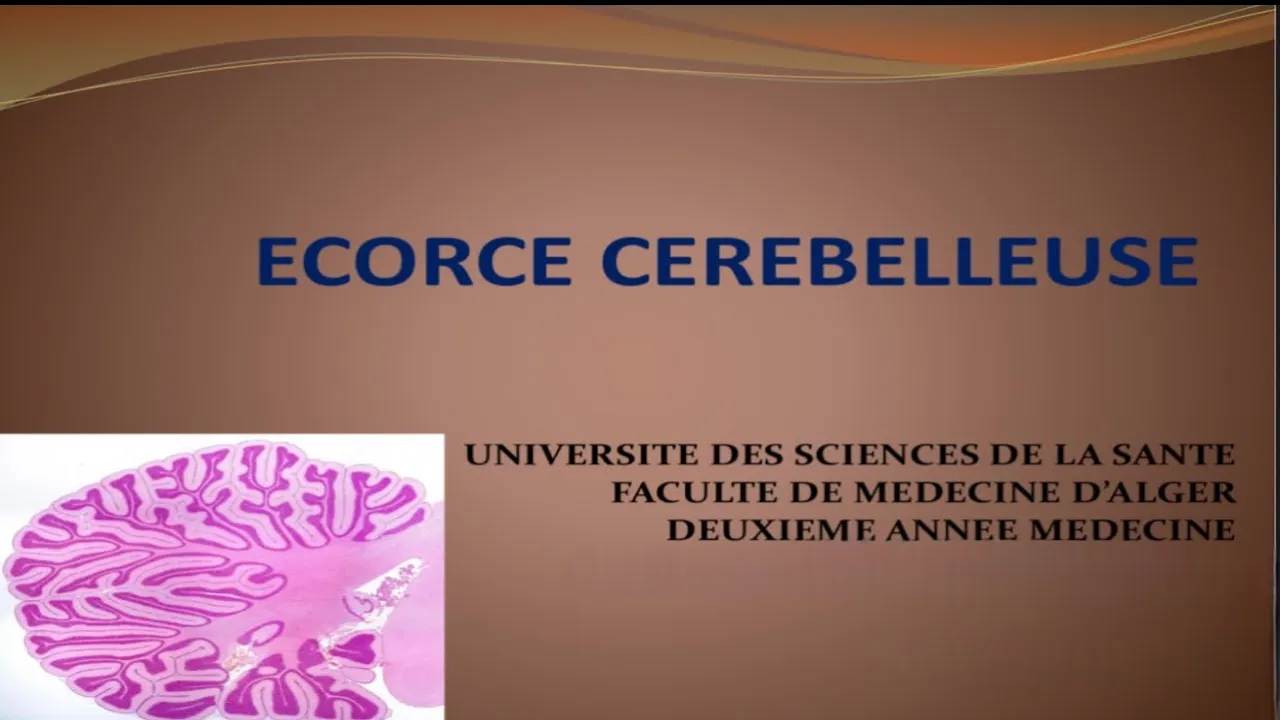


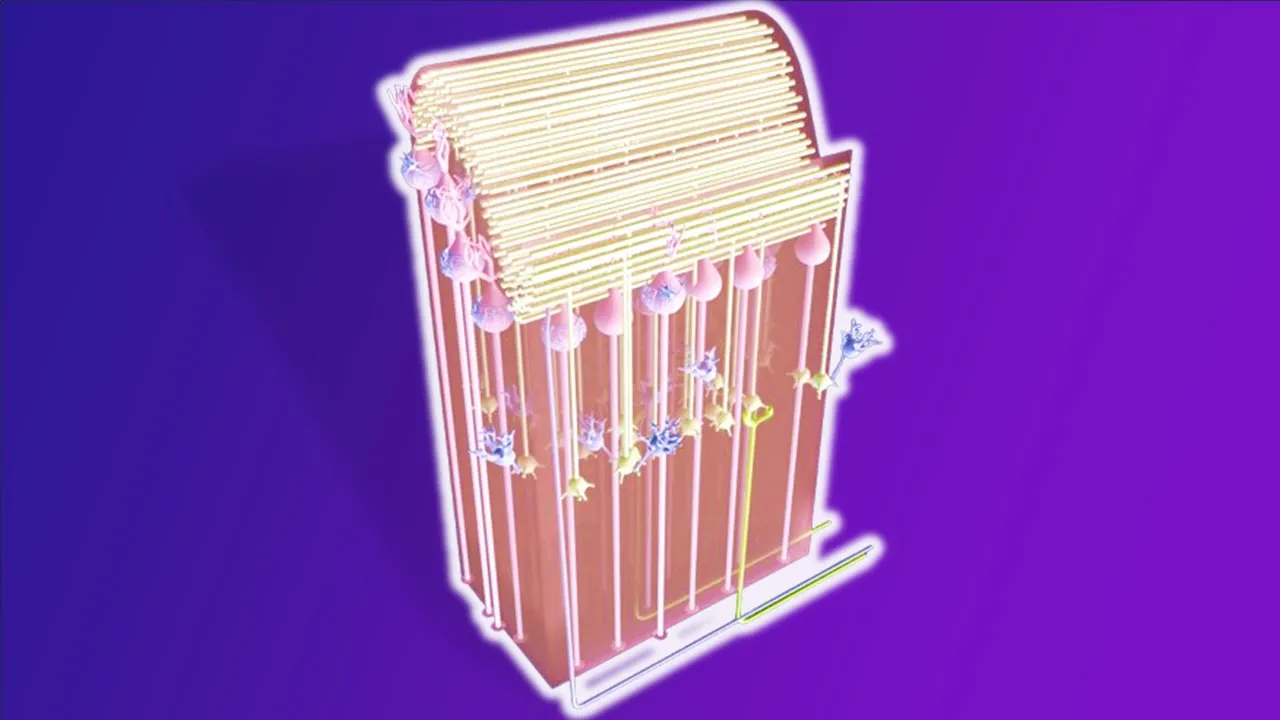
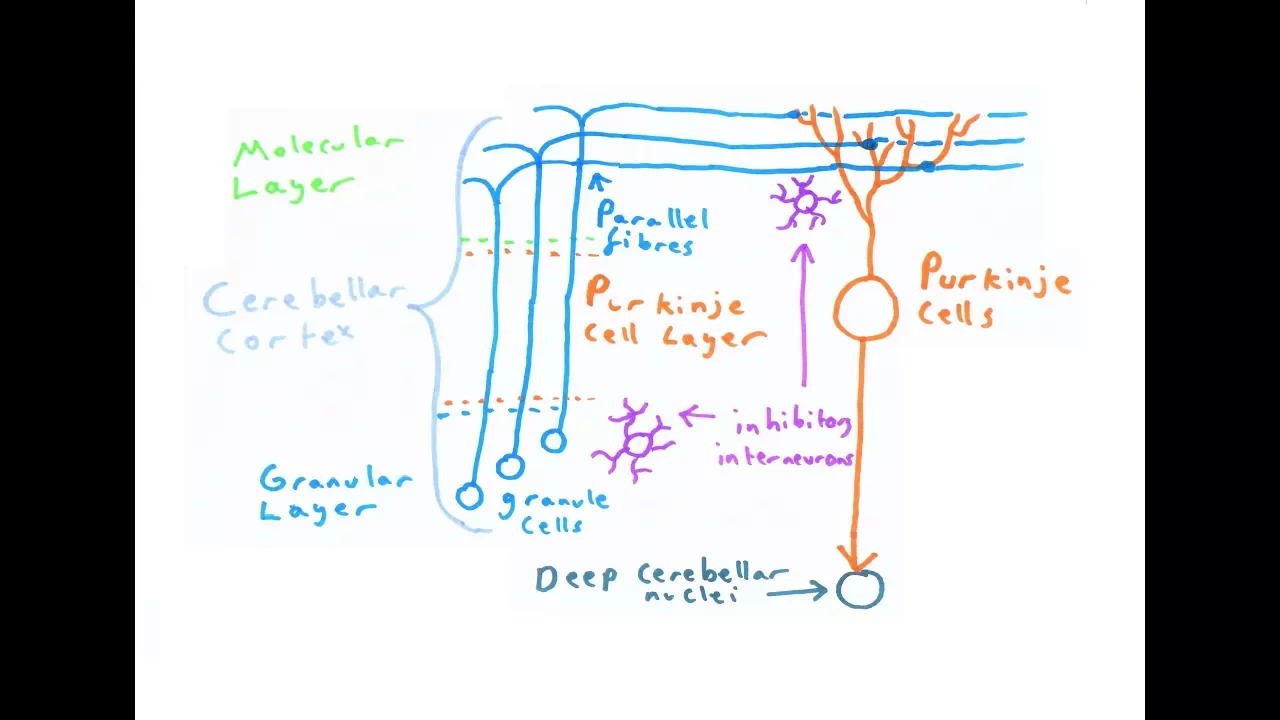




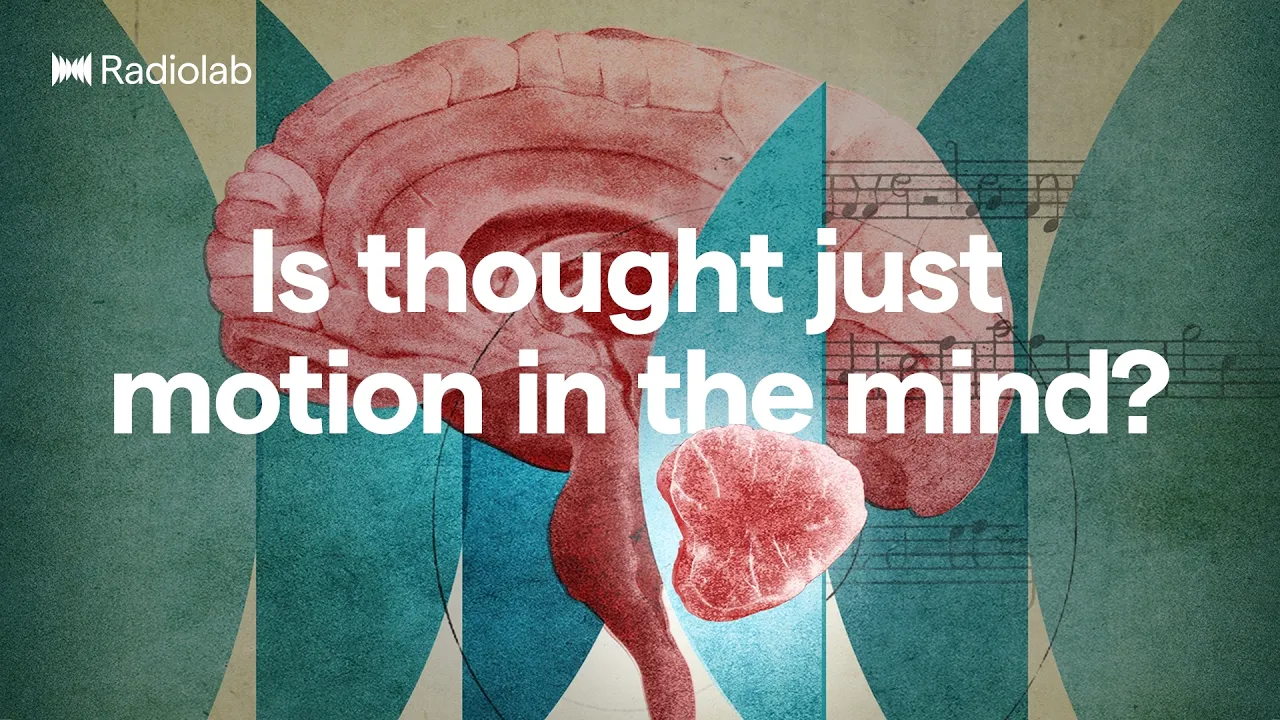

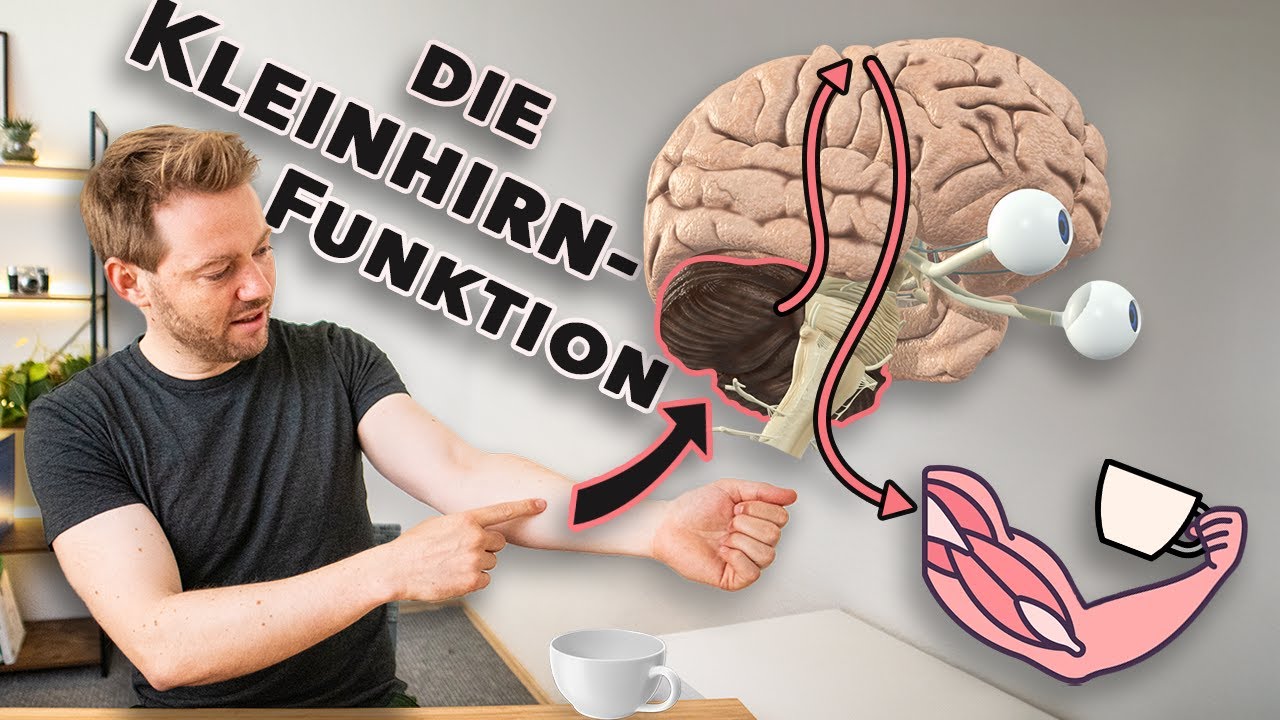
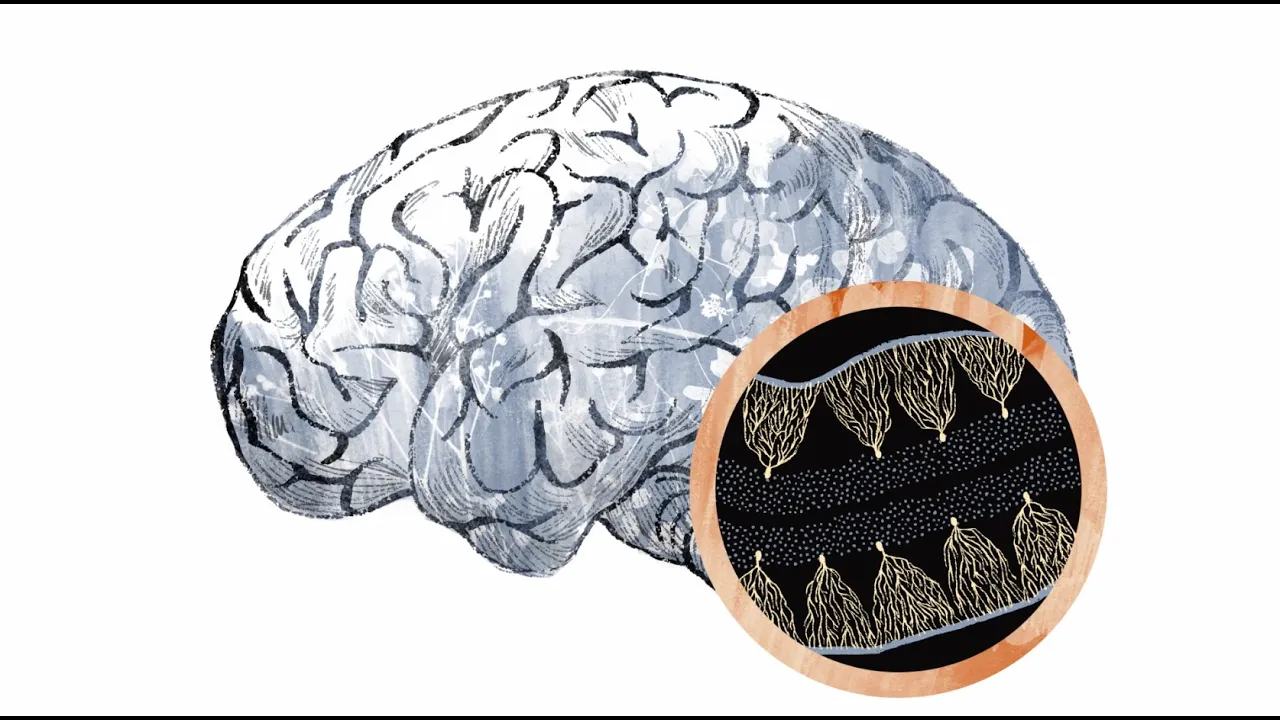
The cerebellum, located in the posterior cranial fossa and separated from the cerebrum by the tentorium cerebelli, is a critical structure for motor coordination, balance, muscle tone regulation, and motor learning. It consists of three anatomical lobes—the flocculonodular lobe (vestibular cerebellum), posterior lobe (cerebrocerebellum), and anterior lobe (spinocerebellum)—each associated with specific functional regions. The cerebellar cortex is organized into three layers (molecular, Purkinje, and granular) and contains specialized cells including Purkinje neurons, granule cells, and Golgi cells. The deep cerebellar nuclei (dentate, interposed, and fastigial) serve as primary output centers. The cerebellum integrates sensory input from proprioceptors, the inner ear, and the cerebral cortex to coordinate voluntary movements, maintain posture, and preserve balance through complex neural circuits involving climbing fibers and mossy fibers that enable precise motor control and neural sharpening.
Cerebellum Anatomy and Function: Neurology Lecture
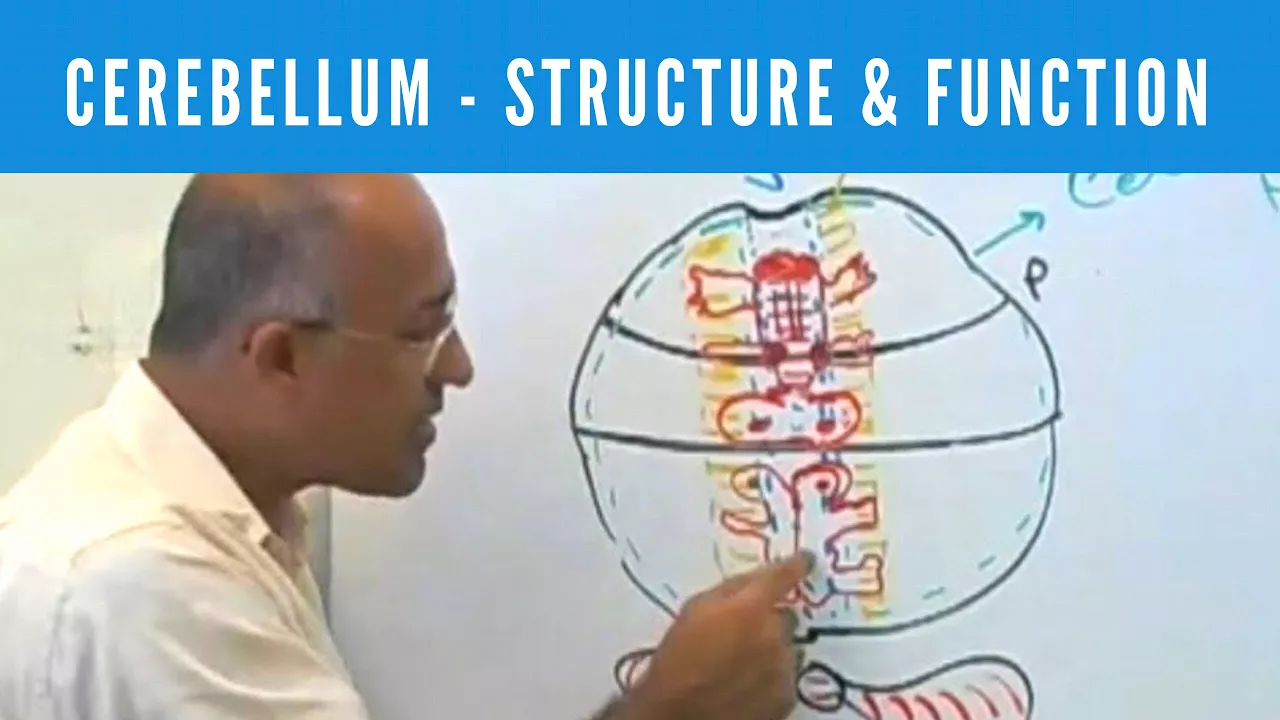
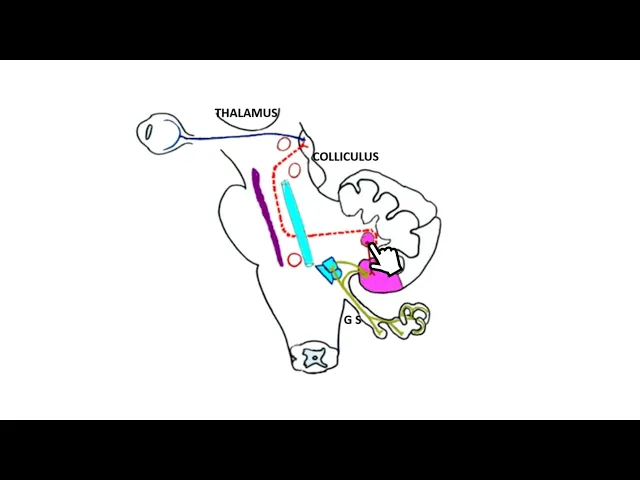
Added:I ninja nerds in this video we are gonna talk about the cerebellum so let's go ahead and dig into this alright so what we're gonna do is we're gonna start off with the cerebellum and we're gonna look at in three different views we're gonna look at kind of an anatomical lateral view then we'll look at it in a posterior view will cover the anatomy but this is gonna be more for the functional anatomy then what we'll do is we'll take a slice of the cerebellum and look at the internal circuitry of it specifically the deep cerebellar nuclei and then we'll go into a lot of the pathways associated with that so first thing just in general cerebellum it sits within the posterior cranial fossa of the skull remember that an anatomy wise it's separated from the cerebrum by a dural septa called the tentorium cerebelli another important thing about the cerebellum is when you look at it you're gonna notice that it has these things called folia Folie are just kind of like little folds that's basically what they are and what they are designed to do is to increase the surface area of the cerebellum so if you notice here I kind of made this like squiggly dark line there that is particularly that's pertaining to the outer grey matter of the cerebellum a gray matter you guys should know is unmyelinated cell bodies or dendrites and the center of this actual cerebellum we have what's called the tree of life or the arbor vitae this is important because it contains the myelinated axons of multiple fibers that are connecting the cerebellum to the brainstem to-and-fro alright so it can be from the brain stem from the cerebrum from the spinal cord from the inner ear we'll talk about all these pathways which is extremely interesting and then again we'll talk about some of the deep cerebellar nuclei associated here first things first we have two particular fissures which separate the cerebellum into their structural lobes so the first one we're going to do like right here we'll do that one that's called the primary fissure we have another one which is right here and that is going to be the posterior lateral fissure okay so we have these two fissures here primary Fisher and post here lateral fissure same thing we'll talk about it over here and we'll highlight that what I want to do is we have three lobes that are anatomically separated from one another we're going to do this first one right here this green this is going to be a particularly more of a primitive area of the cerebellum and they call this area the flocculonodular lobe okay we'll talk about its functional name whenever we get to this diagram another lobe is going to be here this is a really really big one and this is called the posterior lobe and this is more of the newer more modern part of the cerebellum we'll talk about its functional name in a little bit and then we have this other one up here and this is going to be the anterior lobe and again we'll talk about its functional term here as well so we know the outer grey matter we know the white matter the arbor vitae we have the folia separated by the dint aureum cerebellar little brain right and we know that we have these primary fissure posterior lateral fissure anterior posterior and flocculonodular lobe the next thing we need to understand about the cerebellum is just the basic thing that I want to get us started with because it's going to help us throughout the process of this entire video is what is its functions I want you to remember there's a bunch of them but I want you to remember specifically the first one is balance and equilibrium okay so we'll kind of put these separately balanced equilibrium now where does that come from we're not going to go into a ton of detail because we'll go into that a little bit later so I'll save it for that but what I want you to remember is this is connecting the cerebellum is connected with the inner ear so what we're going to do is we're just going to say here's our inner ear for right now we're not going to go over the semicircular canals and all that stuff like that but the inner ear is connected to the cerebellum and we'll talk about the actual vestibular cerebellar tract but the inner ear is carrying with it balance and equilibrium from the semicircular canals right which has a Christian Polaris and the vestibule which consists of the macula okay the next thing that it plays an important role is for muscle tone so it plays a role within our muscle tone so let's write that down so muscle tone and it also plays a role in the coordination of our movement so muscle tone and coordination and it plays a really really important role in motor learning so what do I mean here I'll explain so once you remember this balance and equilibrium muscle tone coordination motor learning these are the really important things that are controlled by the cerebellum we know the inner ear is respect to the balance and the equilibrium okay the muscle tone is particularly through specific pathways spinal pathways so if you guys remember we've gone through a lot of these this is going to be from your proprio receptors proprio receptors your Golgi tendon organs your muscle spindles your joint capsules all of those structures they're picking up proprioceptive information if you don't know what proprioception means your position of your your muscles your joints your tendons or ligaments all of those in a three-dimensional space your awareness of where you are it takes that information and sends it to the cerebellar cortex the cerebellar cortex receive information from your inner ear your appropriate receptors and here's another important thing it also receives information about the motor plan what kind of movement your cerebral cortex is going to execute so you have some specific areas here if I were to kind of highlight here we're not going to go into crazy detail but remember you have your central sulcus what's some of the big areas here around the central sulcus let's do this in this color here remember here behind it you have the primary somatosensory cortex in front of it you have the primary motor cortex you have the supplementary motor area you have the premotor cortex all of these areas are associated with the actual motor planning specifically sending down descending axons these are your upper motor neurons they'll send fibers down where look let's say that we just take it from any of these here's your upper motor neuron it'll come down go to an area of the spinal cord to the ventral the anterior gray horn activate a lower motor neuron which will go out to what to a muscle right let's draw here a muscle you go out to a muscle right so we know that the cerebral cortex is responsible for sending down these upper motor neurons down to a lower motor neuron activating a muscle to cause it to contract while it's sending these pathways down guess what it's doing it's letting the cerebellar cortex know of these things what's saying hey cerebellum I have some motor plans that I want to coordinate I want you to be aware of that so now the cerebellum is receiving information from the inner ear about balanced equilibrium it's receiving information about our proprioceptive all throughout an entire body it's receiving a pre-programmed motor plan which has already gone through another structure not just the cerebral cortex but the basal ganglia and it's sending this information down to the cerebellum he's gonna coordinate that he's gonna develop a perfect perfect calculated plan and a blueprint and then from there it's gonna say okay I think we have the perfect thing what I'm gonna do is I'm gonna let you know what I think you should do and we'll talk about all these pathways this is just a general overview of what we're gonna talk about okay so we have an idea here of what the cerebellum anatomy is we have a basic idea of its function let's go ahead and let's get into a little bit more detail on the functional anatomy of the cerebellum what we're going to do is I'm going to take the cerebellum and I'm going to unfold it and I'm gonna look at it in a posterior view so this is going to be a posterior view and we're going to cover the again the anatomical components here but what I want to do now is I want to kind of start switching over and to more of a functional anatomy so again to give you guys an idea remember we said that the anterior this is gonna be an to your lobe post here lobe flocculonodular lobe all I'm doing is I'm just unfolding it okay so here let's write these down the three lobes we're gonna coordinate it with the colors so this top lobe up here which is this top lobe that's gonna be so again coordinating this anterior lobe anterior lobe I'll write this one up here so anterior lobe okay next thing this bottom one down here is this one right here that's the posterior lobe so we'll have that in this purple color and then this last one down here which is tucked into this little area here this green that's our flock yellow nodular lobe such an interesting one that is the floc yellow nodular nodular lobe so flocculonodular lobe you know the flocculonodular lobe is actually one of the most primitive of all of them it's also referred to when talk about in a second called the vestibular cerebellum also called the art g cerebellum it's a very very primitive area of the cerebellum okay so we have the coordinating lobes and again I told you I was gonna mention those fissures so I don't want to forget about those this fish are here which is separating that one right there again same thing this is particularly the primary fissure so primary fissure separating the anterior lobe from the posterior lobe and then remember this one right here is going to be the posterior lateral fissure separating the posterior lobe from the flocculonodular lobe so posterior lateral Fisher okay good deal now that we've gotten the idea of our anatomical lobes well I want to look at them in a different way now we're gonna look at in the functional area of functional zones so we have three different functional zones coordinating respectively with the corresponding lobes here's the first thing the anterior lobe is also called the spinocerebellar so let's write this down so we talk about the anterior lobe another specific one for this functionally is called the spine Oh cerebellum now when we talk about the spinal cerebellum here's here's the tricky thing though it is particularly occupy what's called the vernal zone so you know when you're looking at the the overall anatomy of the cerebellum you have the lateral hemispheres and then you have the vermis the vernal area this is your vermis right here the central piece right here the vermis is primarily going to be a part of the spinal cerebellum so what I'm gonna do here is we'll have this part here is going to be a part of the spinocerebellar it also has some nuclei here that we'll talk about in a second when we get there going on the sides of that what I'm gonna do is I'm going to kind of make like a little dotted line here we have another area which is important for the spinal cerebellum and this is on the sides of the vermis so what does it mean when it's on the side so this is the vernal zone this area over here is the pair of vernal zone we also give it another name which is the intermediate zone so when I talk about the spinal cerebellum I want you to remember three components of this it occupies the vernal area and the para ver Mille area another name for the paranormal area is the intermediate zone now here's the important thing with this what I say spinal cerebellum does it picks up sensory information so don't like the cerebrum don't we have a sensory homunculus guess what we got a homunculus for the cerebellum so how does this generally work well what we do is we're gonna look at it from up in this top lobe and then this bottom lobe okay there's this kind of sensory homunculus and here's how it kind of goes don't laugh cuz it does look funny it looks like a little alien but in general we start off here and the vermis it's mainly for the axial part of our skeleton or axial musculature so what you'll see is you'll see the trunk you'll see the neck and you'll see the head but the head kind of also spreads out and kind of splurges over into this pair of ER malaria as well more of the temporal parts here and here let's put a little smiley face for the guy a little bit of hair alright so if you look here the trunk the neck and aspects of the head is occupying the vernal zone so the vernal area is primarily getting sensory information from the trunk the neck and the head the extremities let's put here here's his lower leg here's his other lower leg here's his upper extremity and here's another upper extremity this is going into the pair of thermal area so the pair of formal area of the anterior lobe is particularly taking sensory information from the upper and lower extremities and certain aspects of the lateral head now the next thing is for this bottom part down here in the posterior lobe there's another aspect there's another sensory homunculus but this sensory homunculus is kind of odd how it works is you have two little homunculus back-to-back with one another so now what I'm going to do is I'm going to have the head here I'll have the little nose here's like a little face we'll have another one here and then here's going to be their trunks there's his trunk and then coming out here is going to be this arm this arm this leg this leg this arm this arm this leg and this leg this is going to be this sensory homunculus for this bottom part for this virile and pair of vernal zone within the posterior lobe okay so we're looking at the sensory homunculus it is really important just to understand that within the thermal area is going to be the trunk neck and the head and then for the pair of Verma or intermediate zone it's going to be for the upper and lower extremities okay boom we beat that like a dead horse now we go to the next part posterior lobe posterior lobe is mainly going to be occupying this functionally functionally is going to be this area over here so now just take all of this and just highlight this this is going to be the lateral hemispheres so this is primarily the posterior lobe was gonna occupy the lateral hemispheres so let's write this down here lateral hemispheres so this is the functional areas of it and we'll talk about a really really important nucleus in this area called the dentate nucleus it's gonna be good alright next one we go to the flocculonodular lobe that's this little guy we unfolded him remember it's separated be the posterior lateral fissure well you have this area here so you have the nodule asst and then you got your flock ulis over here these little flock ulis this is important because it's believed to be important with respect to the vestibular cerebellum so they believe that this is particularly related to what's called the vestibular cerebellum so vestibular this is going to be picking up information from your vestibular system now I forgot to mention here with the posterior lobe member we said vestibular cerebellum for the flocculonodular lobe spinal cerebellum for the anterior lobe another really important one that we got to mention here for this posterior lobe is this is going to be what's called the cerebro cerebellum and this is gonna be connecting the cerebrum to the cerebellum now let's make sense of all this really quick before we move on spinal cerebellum it's this proprioceptive pathway right that's all it is and it's taking it from the appropriate receptors of our trunk and our extremities boom going to the vernal parivar malaria's post here lobe it's going to the lateral hemispheres but where is it coming from from the cerebrum it's this motor plan going here flocculonodular lobe the stimulus cerebellum where's it coming from in her ear isn't it cool to see how all of this stuff is kind of coordinated perfectly okay so we have an idea of the general anatomy we have an idea of the functional anatomy as well as what these general things are responsible for now what I want to do is we got to dig a little bit deeper unfortunately I'm gonna take a slice of the cerebellum and we're gonna look into the cerebellum and some of the deep cerebellar nuclei okay now when we're looking at these we're gonna look at these from the lateral hemisphere into the actual central part or the medial aspect here right I like to use a mnemonic to memorize these so I go by don't eat greasy food okay don't eat greasy food so how this works is don't eat greasy food the first nucleus here is going to be the dentate nucleus let's do this here with red so the first one is going to be the dentate nucleus and remember which hemisphere did I say it should be associated with the lateral hemisphere so I want you to remember that lateral hemisphere you'll see that this is a really important structure because it connects with the red nucleus and the thalamus the next one is these two the bluish and purplish so let's write these down we're just gonna do it in blue but realize it's the same for both of these I actually got an idea we're gonna call these the inter post look at this nucleus the interposed nucleus is made up of two components remember don't eat eat this blue one is the Ambala form nucleus so we have the Ambala form nucleus don't eat greasy globos says you want to be your globo's nucleus the globos nucleus and the Ambala form nucleus make up collectively what we call the interposed nucleus now this is gonna be primarily where the pair of Ermel and vernal area makes so much sense right so again this will be occupying the Verma land pair of our malaria let's write that here that this will be occupying the vernal and para ver Mille area okay the last one is don't eat greasy food this is for the fastidian nucleus so this last one here is called the vestigial nucleus the fastidian nucleus is located in there in the center but what I tell you the flocculonodular lobe is responsible for the vestibular cerebellum the vestigial nucleus is primarily connected with the flocculonodular lobe so I want you to write that one down that's one is associate with the flock you lo nodular just makes this a little bit nicer here for you guys nodular lobe here's one more thing though they've also found research that it's not just in the flocculonodular but it also the stitchin nucleus is in the vermis so I don't want you to forget that one but you can also write down on the side there it's also in the vermis I'm gonna put here we'll put here on the side plus vermis okay so we have our structures here and I want you to remember the mnemonic again how does this the Mon ago don't eat greasy food don't eat greasy food and this is your deep cerebellar nuclei okay so before we start going in now and looking at how these deep cerebellar nuclei connect with our proprioceptive our inner ear our cerebrum I want to do a super quick recap again cerebellum really important structure what does it do balance equilibrium muscle tone coordination motor learning how does it do all this connects with their spinal pathways be appropriate scepters connects with our inner ear via the semicircular canal in the vestibule connects with our cortex based upon the pre organized motor plan from these cortical areas takes all that integrates it in coordination with the basal ganglia and sends it back up to the cortex with the perfect calculated motor plan if we take it we have the primary Fisher and the posterior lateral fissure anterior posterior flocculonodular lobe looking at it in the functional anatomy the lateral hemispheres are going to be particularly for the posterior lobe right the cerebro cerebellum the verma and pair of vermont area is going to be for the spinal cerebellum of the anterior lobe and the flocculonodular lobe is going to be specific for the vestibular cerebellum if we dig in deeper and correlate the nuclei with these functional lobes we have the dentate nucleus with the cerebro cerebellum right but specifically the lateral hemispheres the interpose nucleus which is the interposed nucleus is the globos and Ambala form nucleus these are going to be related with the spinocerebellar and they are going to be taking into consideration the dermal and para ver malaria and the fastidian nucleus is the flocculonodular lobe which is the vestibular cerebellum which is connected with the inner ear structures so now that we have a pretty good idea of that what we got to do is we have to take and say how does these nuclei interact with these fibers coming in or these fibers going out okay so let's go ahead and do that all right so now we already said that we're gonna dive into the internal circuitry so to give you a little bit of my idea just of what we have here we separate the cerebellum particularly the cerebellar cortex remember what did I say the cerebellar cortex is consisting of what cell bodies and dendrites cell bodies and dendrites now remember I told you that there is some gray matter lodged in the center of the cerebellum what were those called again deep cerebellar nuclei don't remember the mnemonic don't eat greasy food dentate and body form globos vestigial we're gonna represent the deep cerebellar nuclei by one nuclei but just realize that this could be for all of them it's not just for dentate it's not just for any one specific one it is for all of them this internal circuitry is for all of them this green one is going to represent our a deep cerebellar nuclei what I'm going to do is I'm just gonna put the save room because we're gonna need it I'm just gonna put D C in and I want you to remember that that is our deep cerebellar nuclei then I told you that there's white matter which is going to be connecting all the way up to the cortex the cerebellar cortex now here's what I want to remember we said that the cerebellar cortex is cell bodies and dendrites look at all these what we're gonna do is we're gonna separate this into three layers the supper of the cortex is three layers going from top to bottom the first one that we have here is they're gonna have the molecular layer so this is going to be the molecular layer and we're gonna have two important cells in this area we're gonna talk about them called the stellate cells in the basket cells we're also gonna have the parallel fibers of the granule cells - the next one is we're gonna have the Purkinje layer so this is our Purkinje layer and then this one is nice and easy to remember because guess what the Purkinje layer is consisting of the Purkinje neurons so the pic in G cells and this last layer here which is going to be the most inner layer is going to be the granular layer so this is the grand lair so we got three layers of the cerebellar cortex from outer to inner molecular Purkinje granular and then if we go to the center of the actual cerebellum we have the deep cerebellar nuclei dentate and bali form globos and vestigial now what we have to do is we have to see how if we have fibers coming in to the actual cerebellum how it organizes all of these internal circuitries and determines which one is the most important signal big thing I want you to take out of all this because this is a lot the big thing I need you guys to take out of all of this is that all of this internal circuitry is important for what's called neural sharpening okay so it's extremely important for it the respect to what's called neural sharpening you're gonna see a lot of things going on here the neural sharpening is making sure that the most important stimulus is taken care of at that point in time okay so we're trying to make sure that every signal that we sent out of the cerebellum has to just perfect amount of a perfect plan for movement it's not going to be an over amount it's not going to be an under amount it's gonna be just the right amount so how does this work first thing we have to do is remember I said we have fibers coming in the cerebellum has fibers coming in through a couple different areas one important one that I want you to remember is from the inferior olives so let's write that down over here let's do this one in this blue so we're gonna have inferior olives I'm gonna put these right here inferior olives if you guys remember we have what's called the spinal Oliveri tract information is coming from propio receptors to the spinal cord crosses over comes up to the inferior all's and the inferior olive crosses over to the opposite cerebellum the olives when it sends these axons into the cerebellum it sends it into the cerebellum we'll talk about particularly what area it's gonna go into it's gonna be the inferior cerebellar peduncles but when we get into this what you'll see is as these fibers come in they give off axons that go directly to the deep cerebellar nuclei if you can give off accidents the axons that go directly to the deep cerebellar nuclei but important is it actually can ascend so it ascends up ascends up ascends up through the granular layer into the molecular layer in the molecular solid the Purkinje layer in the Purkinje layer it gives off these axons and these axons are going to act on the Purkinje fibers so we have two different areas one areas it gives off axons to go to the deep cerebellar nuclei and another one as it gives it off to go to the Purkinje cells how does this work well once it comes in it releases uh specific neurotransmitter this is going to be a sparked eight an aspartate is a stimulatory neurotransmitter that will stimulate the deep cerebellar nuclei the deep cerebellar nuclei upon stimulation will then send out axons to go to different areas maybe it's going to go to the vestibular nuclei maybe it's going to go to the reticular formation maybe it's going to go to the olives maybe it's gonna go to the cerebrum we don't know we'll get into that but all we know is that it's going to stimulate it and it's going to send out a potential all right now an action potential it also can give these axons that go all the way up here to the Purkinje cells and again what do we say it releases aspartate aspartate we said is a stimulatory deterrent neurotransmitter that can stimulate these Purkinje fibers here's the interesting thing when the Purkinje fibers are stimulated by these fibers and we're gonna give them a specific name a very particular name it activates the Purkinje fibers they send down action potentials but here is the interesting part these Purkinje fibers are they release inhibitory neurotransmitters and these inhibitory neurotransmitters is particularly going to be gaba so this is going to release GABA which if you know that stands for gamma amino butyric acid and then these ones here are going to release aspartate so we'll put a SP here okay so GABA here which is an inhibitory neurotransmitter and then aspartate which is a stimulatory neurotransmitter now here's what's interesting we said it comes in stimulates the deep cerebellar nuclei that sends out the action potential to activate other structures in the brainstem but then it comes up here activates the Purkinje fibers in the Purkinje fibers inhibited again it's to control the overshooting and the undershooting of whatever movement that we're trying to coordinate we don't want it to be too excessive and we don't want it to be not enough so it's important for neural sharpening now here's the important name for these fibers these are really important because once one thing I need you to remember is that one fiber goes for one Purkinje one fiber can go to this one Purkinje this is going to be called your climbing fibers so these fibers here are called your climbing fibers and the climbing fibers again to remember this one is it is going to be connecting from the in fear Olive sending in the information to the deep cerebellar nuclei where it will stimulate it continue to go up to the perk in cheese fibers activate them but they and release GABA that inhibits this deep cerebellar nuclei to complain roll with a neural sharpening that was an easy one the next one is a little bit harder we have other fibers let's do these ones and below this next one is going to be what we call mossy fibers now here's the thing mossy fibers come from every other sensory pathway so every other sensory pathway that you can think of so watch this comes in let's use a different blue so again we have these mossy fibers that's better these are going to come in and what they're gonna do is they're gonna give off axons that go to the deep cerebellar nuclei the deep cerebellar nuclei are going to get stimulated because guess what this guy releases he releases glutamate glutamate is a stimulatory neurotransmitter activates the deep cerebellar nuclei the deep cerebellar nuclei sends axons out to control whatever nuclear in the brainstem which plays a role in neural Shaw as well as again what maintaining posture maintaining balance maintaining equilibrium maintaining the coordination of the movement and motor learning now these are going to be coming from multiple different structures we'll go over these in more detail when we get into the pathways but what I want you to remember is that this is coming from the sensory pathways we're just gonna put that for right now so that we don't go overboard in this area we're just gonna say sensory pathways these sensory pathways are going to be coming in and what they're gonna do is they're gonna give off these action onto the deep cerebellar nuclei and again what do we call these fibers these are called mossy fibers mossy fibers will give off this stimulus activate this but here's where it gets a little interesting it comes up to the granular layer in the granular layer it gives off its axons that go and connect with the specific cells in this area area what do you what do we call this area the granular area or the granular layer what do you think those cells are the granule cells so these cells right here are called granule cells granule cells so what happens is these mossy fibers give off multiple axons multiple axons to granule these granule cells it also gives some axons off to this little weird-looking cell over here and this is called a Golgi cell so what does this cell here call that we're gonna write in pink this is called a Golgi cell so we'll write this one here this is a Golgi so these are both in the granular layer okay so what happens is these mossy fibers come up give off stimulus to the deep cerebellar nuclei continue to go up relieve off multiple axons onto these granule cells and give off axons to the Golgi cells they have a name for this structure right here I'm going to kind of highlight it like this this like tuft of interaction here where you have multiple granule cells and axon of the mossy fibers connecting this is called a glomeruli now again what do we say these fibers are releasing what kind of neurotransmitter glutamate that's a stimulatory neurotransmitter so when it releases the glutamate the glutamate should stimulate two cells the granule cells which will send axons upwards and stimulate the Golgi cells we'll get to the Golgi cells in just a second okay but we'll come back to it okay mossy fibers come up activate these guys stimulate the granule cells and they start becoming stimulated and send axons upwards now as these granule cells ascend upwards their axons come upwards they move through the Purkinje layer into the molecular area and then they spread out they make like a t formation these parallel fibers so it comes up and this one come up and it's gonna cause all these parallel fibers to move all the way across the molecular layer now here's the cool thing about these these fibers once they're in this area they can act on a couple different structures they have these two important cells in this area this bluish one is called a Stella it's L so this is called a stellate cell and then this one over here this green one is going to be called a basket cell now what happens is these granule cells when they give their axons they come up here and they can stimulate three important structures they can give off axons that go to the stellate cells and they can give off axons that go to the basket cells now what did we say once these are activated they're gonna come up and they're gonna give these axons to the basket cells when they release the hormone whenever they release these neurotransmitters onto the basket cells it actually stimulates these basket cells so the release is stimulatory neurotransmitter that activates the basket cell or can activate the stellate cell whenever these are activated these stellate cells and basket cells release inhibitory neurotransmitters okay they release inhibitory neurotransmitters and these inhibitory neurotransmitters are then going to inhibit the Purkinje fibers okay the Purkinje cells but before that happens remember we said these guerrilla there's granule cells they send up their parallel fibers into the molecular layer activate the stelae cells in the basket cells but guess what else they do they give off axons directly to the Purkinje fibers so now let's show that so it gives off axons here to the Purkinje fibers when it gives off these axons to the Purkinje fibers it actually stimulates the Purkinje fibers so what you get is you get stimulus to the Purkinje fibers that then can go down and release inhibitory neurotransmitters here all right so the mossy fibers are a little bit of a harder pathway so let's get this down to like a simple way right because I know it's a lot since your pathways come in remember this is a bunch of different sensory pathways first thing simulates the deep cerebellar nuclei second thing comes up activates multiple granule cells and Golgi cells the granule cells send up their axons into the molecular layer first thing it can do is stimulate the Purkinje fibers the Purkinje fibers can send down axons and hit with the deep cerebellar nuclei also to play a role with the neuro sharpening these parallel fibers can also give off axons to the stellate cells and the basket cells can stimulate them when they're stimulated they inhibit the Purkinje fibers when they inhibit the Purkinje fibers the Purkinje fibers are now no longer going to be releasing gaba so the deep cerebellar nuclei in that area will fire this is helping to make sure that in certain areas of the cerebellum we're having those axons fire and in certain areas where not again it's playing a role with that overall goal here neural sharpening now another thing here as i mentioned is that these mossy fibers whenever they act on the granule cells they also give off fibers to the golgi cells when the Golgi cells are stimulated guess what they do to the cranial cells they inhibit them so they can also play a role in inhibiting the granule cells and again it's playing a role within all that modification that neural sharpening activity again guess what else can happen not just these mossy fibers can stimulate the Golgi cells but whenever there's a lot of activity running through these granule cells the granule cells can also stimulate the Golgi cells and guess what the Golgi cells can do they can inhibit the granule cells so there's this constant control in this feedback in this intense circuitry here when it comes to the mossy fiber pathway okay so that is how we would describe our internal circuitry well we're gonna do now is and I know it was a lot is we're gonna go ahead and we're gonna take a look at some of the pathways associated with the cerebellum alright so let's finish up here guys talking about the pathway so if you remember go back to that first diagram we said talking about our proprioceptors our connecting with the cerebellum had the best the vestibule and the semicircular canals are connected to the cerebellum how the cerebellum is also receiving information from the cerebrum how it's sending that information out up to the cerebral cortex and how it actually sends information to the some of the nuclei within our brains than the controls are extra pyramidal pathways we're not going to go into all the pathways the reason why is is this that it'll look like a crime scene if we do that here so if you guys want to know a little bit more about some of the pathways so our are specifically the pyramidal tracts like our corticospinal tracts our subcortical tracts if you want to learn about all the ascending tracts go into our neurology playlist and watch some of those the reason why is I just want us to focus more on the cerebellum at hand then going into all of those tracts okay so how we're gonna do this is we're going to go through the connections the pathways and basic detail here with respect to the peduncle x' i think it's an easier way to celebrate them I celebrate them let's separate them okay so what we'll do first is we'll start with the the superior cerebellar peduncles and we'll talk about the relationships there with this one okay superior cerebellar peduncles here's what I want you to remember for the one it has a parent connections and efferent connections so a third and efferent connections so what do I mean so the first one we're gonna go with is we're going to talk about the efferent connections so efferent connections meaning that the fibers coming from those deep cerebellar nuclei are gonna go directly to a specific structure they're coming out of the cerebellum so that's what efferent means those deep cerebellar nuclei that we were talking about over there that big green one coming out it's gonna go to specific nuclei out here in the brain stem or the thalamus we'll talk about what I mean by that a ferrant pathways is we're gonna talk about fibers like the mossy fibers or we're gonna talk about the climbing fibers so all of this start coming and making sense what we're trying to do here 'if arrant what are the important processes here with respect to the efferent pathways and the superior cerebellar peduncles okay so let me put this up here really quick here let's write over here that this is specifically SCP superior cerebellar peduncles is what we're talking about with this one now Ethan what's coming out the first one that I want you to remember is the dentate nucleus if you remember we had the dentate nucleus I'm just gonna do it here in pink for this situation but we're gonna put here the dentate nucleus the dentate nucleus is a part of the cerebral cerebellum remember that the cerebrum cerebellum that lateral hemispheres whenever it receives signals via the afferent pathways coming from the cortex what it'll do is it can has two main pathways it can send its axons out to two areas one is it can send it to the red nucleus in the midbrain another area is it can send it all the way up here to the thalamus so it can send it to the red nucleus and it can send it to the thalamus now here's what I gotta be careful of it goes to the contralateral side so when I do this I want to show you this I'm gonna be particular it actually goes to the contralateral thalamus or the contralateral read nucleus so the dentate nucleus let's put that here dentate if we want to talk about its efferent pathways it can send axons to the contralateral read nucleus or consented to the contralateral thalamus sometimes it can even connect from the red nucleus to the thalamus so there can even be axons here that can go from the red nucleus to the thalamus what is this pathway called so we have two different pathways one is if we go dentate directly to the thalamus this is called dento thalmic pathway now what's the significance of that it's simple remember this the cerebrum was sending information down to the cerebellum about what it wants to do the dentate nucleus says okay I've done everything I've received proprioceptive information vestibular information information from what you want to do what I'm going to do is I'm going to send my perfect corrected organized calculated plan back to you guess how it does it it sends it from the dentate nucleus to the thalamus guess where the thalamus can send information to the cortex so now from here it's going to send this information to the primary somatosensory cortex to the primary motor cortex to the premotor cortex to the supplementary motor area and now it has the perfect motor plan in that beautiful now next thing you can do is they can activate the red nucleus now the red nucleus can go up to the thalamus that's just a modified pathway so we call that the dento roux bro Palomeque pathway and it's the same concept here same concept okay same concept gonna send the information of the red nucleus go to the thalamus and up what can happen is the red nucleus can also get activated if the red nucleus is activated if you go back to our extra pyramidal power what does it do the rubra spinal pathway so if the red nucleus is stimulated it can cross over it moves to the contralateral side that's important I cants pretty stressed I'm not that's important what will happen is if it's stimulated this can cross over to the contralateral side and move down into the aspect of the spinal cord and activate lower motor neurons that go to our flexor muscles particularly of the distal extremities that's called the rubra spinal pathway so again what - if a parent pathways I want you to remember is dentate - thalamus dentate - the red nucleus to the thalamus but again another pathway with this is you can also have the rubra spinal pathway okay another thing is it just doesn't have to be the dentate nucleus that receives information this is also pretty cool it can also receive information from the globos and in Bali form let's do that over here now so let's put here we're gonna have the globos and we'll have thee and bali form so we have in bali form and then over here we'll have the globos again collectively we call these the interposed nucleus we're gonna do one specific color here but they can send out axons and these axons can go again to the contralateral red nucleus if it activates the contralateral red nucleus what does the red nucleus do deca States goes down to the other side of the spinal cord activates the lower motor neurons and then goes out to the muscles right so that should be a simple concept there so that's another pathways you can also have the interposed nucleus go to the red nucleus okay another pathway that can happen it's common in both areas is you also have another one which is called the cerebellar vestibular pathway okay let's write this one down here cerebellar vestibular pathway so what happens here is this one is actually extremely weird it's kind of interesting this one here's our vestibular nuclei located in the medulla right over simular nuclei superior lateral men made it medial and inferior nuclei remember we had those Purkinje fibers those Purkinje cells it's weird because it used to be thought the vestigial nucleus was the connection the deep cerebellar nuclei that connected to the vestibular nuclei now they're finding that the Purkinje fibers actually are they directly leave they don't even go to the deep cerebellar nuclei they actually come out and they are the ones that directly stimulate the vestibular nuclei if the vestibular nuclei are activated go back to the vestibular pathway what can the vestibular nuclei do they can activate the vestibular tract can go down through the spinal cord activate the lower motor neurons and go to muscles which muscles extensor muscles anti-gravity muscles and here's the one other one I want you to remember if it stimulates it guess what else it could do it can go up and do what it can activate what's this structure here called medial longitudinal fasciculus the medial longitudinal fasciculus is connecting what particular structures the third cranial nuclei the third cranial nerve the fourth cranial nerve and the six cranial nerve what is that specifically responsible for the extraocular movements so what I want you to remember is dif'rent pathways dento thalmic dento rubra thalmic controlling the interaction with the cerebrum letting it know the premotor plan of the motor plan that it calculated cerebellar vestibular tract is connecting via the Purkinje fibers directly to the vestibular nuclei what are the vestibular nuclei do they go vestibular spinal tract or they can go up via the medial longitudinal fasciculus which controls your extraocular movements and this is your Purkinje okay okay next thing we'll go to the eighth Ference eight ferrets again we're not going to go through all of the pathways here with the eighth Ference because we've already gone over that in our cerebellar video the a sending tracks of the cerebellum but for this one I want you to remember just three important ones so one is going to be the we talked about this in the cerebellar video the ventral spinocerebellar tract okay and if you remember the ventral spinocerebellar tract we're not going to go into all the detail we did it in that video it takes sensory information from proprioceptors below what level l2 l3 so it's usually we'll put it here we'll put below l2 l3 level okay that's an important one the other one we did not talk about but again it's it's still um it's still an important one it's called the rostro cerebellar tract so we're gonna put this one here the rostral cerebellar tract this one is taking it from the cervical region so from the cervical region of the spinal cord okay so cervical and even upper extremity region of the spinal cord and that one is also going to the superior cerebellar peduncles and the last one is going to be the tac toe cerebellar tract so the other one is going to be the tac toe cerebellar tract now if you guys know what the tectum is tectum is actually has the superior colliculus and the inferior colliculus we're gonna represent with this brown little color here the tectum receives information from our visual superior colliculus is visual stimulus and then the inferior colliculus is going to be auditory stimulus that can send information also to the cerebellum so make sure that it helps us to coordinate our our eye movements and our head movements in response to visual or auditory stimulus there's not a beautiful thing so again let's put that in here that we also have the tech toe cerebellar tract here okay so that's an important one so 1/3 pathways that are going into the superior cerebellar peduncle is gonna be the ventral spinocerebellar if you remember proprioceptive information from l2 l3 below if you want to remember comes in crosses over comes up and then does what goes to the superior cerebellar peduncles and then crosses over to the opposite side remember that it's interesting rostral cerebellar just remember that it's coming in and it's also going to go through the around the dorsal column area up and then it's gonna be taking information from the cervical and upper extremity areas tactile cerebellar coming via the superior colliculus inferior colliculus sending that information based upon the visual and auditory stimulus these are the main ones that I want you to remember for the superior cerebellar peduncles okay next one we're going to go to is we're gonna go to the middle cerebellar peduncles we're gonna do this one right here so this one is going to be for the middle cerebellar peduncles so m CP now i want to mention some just because some people usually some people don't understand it completely but peduncle z-- these peduncle z' they're not little tubes they're actually the axons of these fibers going in and out of the cerebellum so that's really what's making up these peduncle so if you understand the peduncle z' like what those actually are it'll help you to really understand the connections with the cerebellum okay middle cerebellar peduncles so now I have two here it's one main thing really important the most thick biggest peduncle of all of them this one is particularly we're gonna do it here in orange because that's where we're gonna have these nuclei is this going to be related affarin it's gonna be primarily a ferrant actually not primarily all a parent okay what is this connection it is via what's called the quartic oh there's a heck of a name Ponto cerebellar fibers okay this is a really really really important one remember I told you back in the general way the primary somatosensory the premotor the primary motor the somatosensory cortex all of those areas supplementary motor they're developing a motor plan that motor plan what are they doing they're sending it down to the lower motor neuron but also what else do they do remember I told you what here in this color it's sending this motor plan down unless you say this is one of those areas of the motor cortex of the somatosensory cortex it's coming down and it comes to these pontine nuclei so here's the upper motor neuron and then this area right here where it's synapsing is our pontine nuclei same thing over here if I were to draw this one this would be coming down and this would be going to our pontine nuclei so upper motor neurons to the pontine nuclei so that's where we have cortical Ponto from here these axons cross over and this will come here and then these will come over here and isn't that insane all of these fibers pass through here and then go to the cerebellum now what is that designed to do the cortex is a coordinated with one other structure we can't forget this what are the structures are coordinated with up here in the cerebrum these are too intricate structures one is going to be the basal ganglia so it's also coordinating with the basal ganglia sending the information down motor plant goes to the pontine nuclei pontine nuclei cross over to the other cerebral cerebellar cortex salaburu cortex receives this information as well as the proprioceptive information as well as the inner ear information says okay developed a perfect plan guess what sends it back up through dentate to Salamis to the cortex or it can go dental rubra thalmic pathway in that interesting and it tells it okay I received everything I've calculated the perfect plan for you so that one's an interesting one I love that one okay the last one is the inferior cerebellar peduncles so let's put this one here this is gonna be for ICP I see P inferior cerebellar peduncles this is this is a little bit of a bigger one okay we're gonna go through a fair at first because it's primarily a ferrant but we'll talk about a couple apparent ones okay so the eighth parent once the big one is remember we said for the SCP it was ventral spinocerebellar tract I want you to remember dorsal spinocerebellar tract for the eighth parent so for this one I want you to remember dorsal spine Oh cerebellar tract remember that one comes in when it comes in it actually synapses on the neurons of the poster gray horn goes into the same side of the lateral white column ascends upwards and goes to the same cerebellum right the other one and then what is this a level this is from c8 - l2 l3 area some books will even say t1 okay but this is where the Clarkes nucleus is the next one is the Q neo cerebellar tract remember this one comes in goes to the dorsal grey hornbill dose agreement ascends up goes to the accessory cuny a nucleus right and then that goes in via the external arcuate fibers into the cerebellum that's gonna be the Kuna cerebellar and this is picking it up from the cervical region so above above c8 the next one is it's gonna be receiving information from the vestibular track the Olive Oh cerebellar track and the reticulo-endothelial the inner ear let's write that over here let's put the inner ears right here we're not gonna draw the whole structure here just want to write inner ear over here inner ear these come in all right they go to the vestibular nuclei from the vestibular nuclei work in these go they can send their axons in about the balance and equilibrium into the inferior cerebellar peduncles and then again here and then BOOM another interesting thing is there's actually been research that shows that the fibers from the vestibular cochlear nerve can actually go directly in to the actual cerebellum all of those cerebellar remember we have the in fear olives the inferior olives if you remember we have the spinal spinal Oliveri tract receives information for the proprioceptors comes into the dorsal great horn crosses over ascends goes to the inferior olives and then in fear olives they cross over and go to the other side of the cerebellum so these are also important ones and they're going to be receiving information and they're going to be sending the information to the contralateral one but it's going to be on the FC lateral side so what I mean is just to reiterate here I know that we have a video on it but let's say that you have the appropriate receptors here sends it in synapses crosses over a sense goes to this in fear Olive and then this in fear Olive will cross over and go to this side okay everything for the cerebellum should be FC lateral that's why whenever you see people who have FC lateral cerebellar like attack the cerebellar ataxia or some cerebellar disease or the be due to multiple sclerosis or b12 deficiency or whether it be due to alcoholism whether it be to do a cerebellar infarct whatever it might be whenever they have that a taxi is on the ipsilateral side okay that's important because of all the connections are ipsilateral next thing miss Davila cerebellar connects with the inner ear ala both cerebellar connects with the inferior all's which is taking information propria receptors right and this is the important one what is this pathway coming in from the entry olives the climbing fibers these are super super sensitive because remember they they interact directly with what neurons Purkinje and the last one is the reticulocyte ella and the ridiculous Arabella is important because it's receiving information about all of our sensory information throughout the entire body and it's going to be taking that and sending that into the cerebellum letting it know of what's going on in the body okay 'if errant efferent the ones that I want you to remember here is going to be the cerebellar so we'll say here let's actually keep it in green here cerebellar reticular cerebellar reticular and cerebellar vestibular and some books and some literature we'll even say cerebellar Oliveri but there wasn't a lot of research on that so I don't want to include that one in here okay so cerebellar reticular it's simple you have will go back to this one cerebellar reticular vestigial nucleus the vestigial nucleus actually connects with the reticular formation when it connects with the reticular formation go back to those subcortical tracks where the two tracks from the the reticular formation the medullary and pontine medullary is going to be for what flexion pontine is going to be for extension now if they're activated they send down those axons through the spinal cord and go and activate those particular muscles cerebellar vestibular it's gonna send information from the Purkinje fibers Purkinje fibers go directly to the vestibular nuclei they can go up via the medial longitudinal fasciculus to control extraocular movements or they can go down via the vestibular spinal tract and activate the extensor muscles or anti-gravity or postural muscles I engineers I hope you guys like this video I hope it made sense I really do that was a hard just continue to keep working at it it'll come with time this is just a lot of practice if you guys like this video just please hit that like button subscribe leave some comments down in the comments section if you guys can go check out our Facebook or Instagram so we can keep in contact with you guys also if you guys have the if you could go and donate to our GoFundMe page or our patreon we'll have those down in the description box we truly appreciate that I just want to say thank you ninja nerds for everything that you guys do we love you and until next time [Music] you
Up Next
Cerebellum Motor Learning | Long-Term Potentiation Explained
@gradschoolerasmusmc
3.4K views•2010-08-30
Deciphering Neural Circuits Controlling Anorexia in Mice | Richard Palmiter
@AllenInstitute
2.3K views•2011-10-10
Motor Neuron Lesions: UMN vs LMN - Neurology Guide
@NinjaNerdOfficial
880.5K views•2020-11-01
How Exercise Benefits Your Brain: Science Explained
@TED
11.4M views•2018-03-21
Related Study Plans & Knowledge Roadmaps
Structured learning paths in Neuroscience