





![40- المستقبلات الضوئية 1 [2] || علوم بكالوريا 2025](https://i.ytimg.com/vi/a_a-Rm4P83Y/hqdefault.jpg)







![Quantum Physics: The Laws That Govern Our Universe [4K] | The Secrets of Quantum Physics | Spark](https://i.ytimg.com/vi_webp/K5Po5R-1rgY/maxresdefault.webp)
Birds may use quantum mechanics to navigate by utilizing the radical pair mechanism, where Earth's magnetic field influences the spin states of electron pairs in cryptochrome proteins within their eyes, affecting chemical reaction probabilities and providing directional information for migration.
Quantum Biology Explained: The European Robin's Quantum Compass
Added:Basic concepts of quantum mechanics, specifically electron spin, superposition, and quantum entanglement.
The fundamentals of geomagnetism, including how Earth's magnetic field lines vary by latitude and intensity.
An introductory understanding of free radicals and how radical pair chemical reactions can be influenced by external magnetic fields.
The structure and function of photoreceptors in the retina, particularly light-sensitive proteins like cryptochromes.
The physics of quantum decoherence and how biological systems manage to protect quantum states in warm, noisy environments.
The ecological impact of anthropogenic electromagnetic noise (such as AM radio signals and electronic devices) on migratory bird navigation.
Applications of biological quantum sensing in developing novel biomimetic quantum magnetometers.
Other domains of quantum biology, such as quantum tunneling in enzymatic reactions and quantum coherence in photosynthesis.
108.9K views5.2Klikes21:01Original Release: 2020-03-13
- This episode was made possible by Brilliant.
Hi everyone Jade here.
Today's video is the third and final piece of a quantum biology series me and Pat from Coporous have put together for you guys and we've saved the best for last.
This video is about how birds may use quantum mechanics to navigate the earth.
Now what's so cool about this topic is that such tiny processes can have unbelievably huge impacts and just a warning, this topic is pretty detaily.
So if you find yourself getting lost in the details, just try and come back to the overall big picture and you should be fine.
All right, let's get into it.
How some birds might use quantum mechanics to navigate the earth.
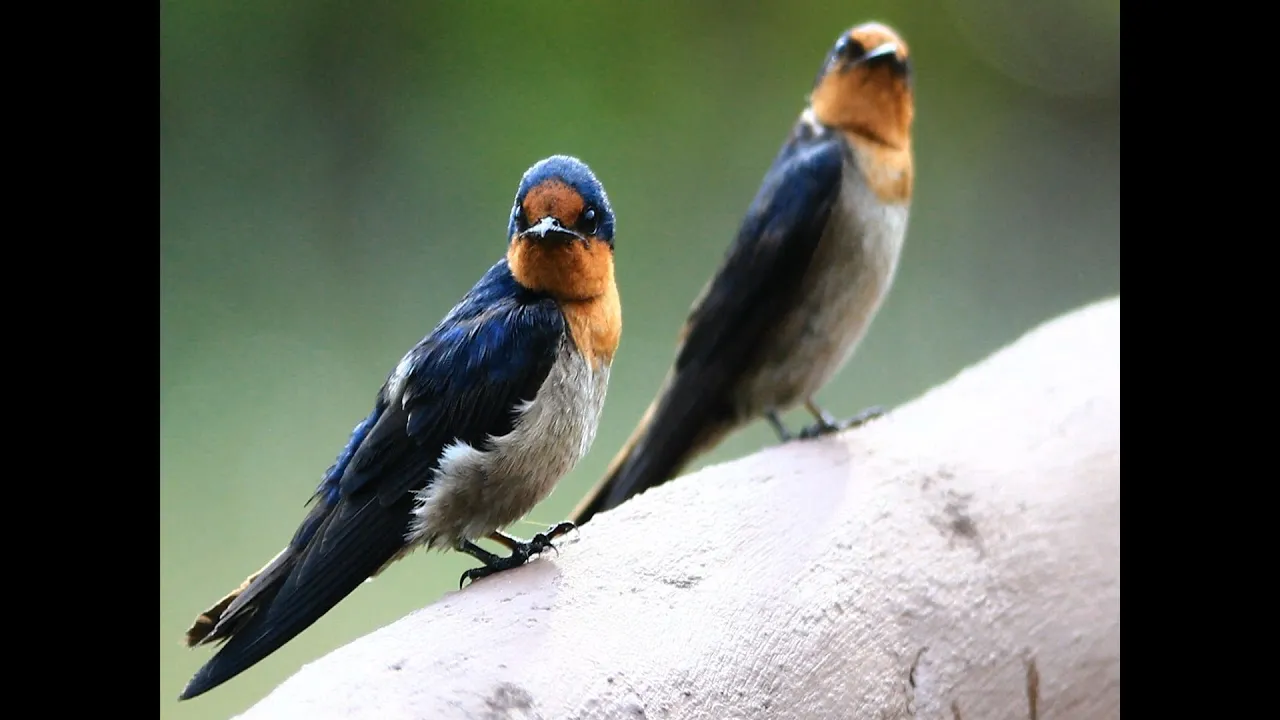
This is the European Robin.
It can fly from Northern Sweden to the South of Spain, without a map, without a GPS, and without stopping to ask for directions.
How it does this remained a mystery for a long time, but a series of experiments in the '50s and '60s indicated that it was getting cues from the Earth's magnetic fields.
This phenomenon is now known as magnetoreception and has been seen in over 50 other species.
But this just led to another question.
How is it that animals can sense the Earth's magnetic field?
This became one of the most mysterious unsolved problems in biology, and no one guessed the quantum path that would lead to.
A German guy named Klaus Schulten thought that maybe the magnetic field caused a chemical reaction in the bird, which triggered a biological signal, which told it where to go.
The second part of this isn't too surprising.
Chemical reactions dictate our behavior all the time.
When we see our favorite food, our brain releases dopamine and makes us want to eat it.
When we send something stressful, our body releases cortisol, which kicks off the fight or flight response that tells our bodies that something's wrong and we should act to fix it.
It was the first part that was a bit out there.
When Schulten talked about how he thought the Earth's magnetic field might be causing a chemical reaction.
He developed a reputation for being a bit crazy.
He was a theoretical physicist and needed somebody to help him perform an experiment, but no one would, they all thought the Earth's magnetic field was way too weak to cause a chemical reaction and they had good reason.
Now I'll admit that when I think chemical reaction, I think this.
(chemicals burbling) But at the most basic level, a chemical reaction is just the breaking and forming of bonds between atoms and molecules.
Schulten thought that maybe the Earth's magnetic field could be breaking and forming chemical bonds and therefore causing chemical reactions.
So why did all the other scientists think that this idea was so silly?
Well, all molecules have an inherent resting energy called thermal energy.
This makes them vibrate, bounce, and wiggle around.
They're never completely stilled.
So for a molecule to stick together, the bonds between them need to be stronger than the thermal energy.
Otherwise they'd just wiggle apart.
Now the energy from the Earth's magnetic field is more than a million times a weaker than the thermal energy of most molecules let alone enough to break a chemical bond.
This would be like an ant trying to pull two chinks of an iron chain apart.
That's why nobody believed Schulten.
How could such a puny force break those strong chemical bonds, but he didn't see it in terms of brute force.
He saw it as more of a balancing act.
Imagine this heavy block of granite could a fly landing on either side of it tip it over, unless there was some kind of super strong mutant fly.
The answer is obviously no.
But let's adjust the granite so that it's carefully balancing on one corner.
Now could the fly tip it over?
It's going to tip over by itself eventually anyway, but now the flight does have some influence over which way it falls.
The moral of this story is tiny energies can have significant effects if the system is in a highly influential state.
Schulten just needed to find the chemical version of a teeter in block of granite.
Then it would be possible that the tiny energy of the Earth's magnetic field could cause a chemical reaction and cue the birds direction.
So does something like this exist?
The short answer is yes.
The long answer is complicated and intricate, and we're going to dig into it in all its glory.
Allow me to introduce you to the radical pair mechanism.
(upbeat music) This is a radical.
A radical is an atom or molecule with an odd number of electrons.
To see why this is relevant, we need to know about spin.
Electrons have a property called spin, short force spin, angular and momentum, which I'm not gonna lie is very difficult to understand.
Most analogies that try to explain it are inaccurate because really it's a quantum property that isn't like anything we know in the classical world.
Here we're more interested in the relationship between spins of electrons rather than what spin actually is.
So we just gonna think about it as a property that some particles have and some don't like charge or mass.
So electrons have this property called spin.
And what it does is it makes them a tiny bit magnetic because of a phenomenon called the Pauli exclusion principle, paired electrons must have opposite spins.
We'll call them spin up and spin down.
When a spin up electron is paired with a spin down electron their magnetism exactly cancels out.
But if a molecule has an odd number of electrons, that means there's a lone electron without a partner to cancel out its spin.
So the whole molecule is a tiny bit magnetic.
This is called a radical.
A pair of radicals can be created when a molecule is hit by some energy, which breaks a chemical bond splitting the molecule in two.
Chemical bonds often consists of two paired electrons.
So when a bond is broken, sometimes one of the electrons goes with one molecule.
And the other goes with the other molecule and this creates a radical pair.
Because of the odd number of electrons, a radical pair is highly unstable.
So they don't last very long.
They'll either recombine back into their original molecule or they'll combine with another nearby atom to create a new molecule.
This situation is very similar to our bouncing block of granite, a highly unstable state, which will fall into one of two options.
Instead of falling left or right, the radical pair will fall into two different chemical reactions.
So like the fly tips the granite is there a way the Earth's weak magnetic field could tip the radical pair into one chemical reaction or the other?
And what does quantum mechanics have to do with it?
Well, to know that we first need to know what factors influence which way the radical pair cookie crumbles naturally, even before we introduced the fly, the granite was always going to fall over, which way it falls isn't completely random.
It's influenced by gravity, environmental factors, maybe some properties of its surface like bumps and grooves, the fly just alters factors that already exist.
What factors influence whether the radical pair recombines or goes on to form a new molecule?
Well, sometimes when a radical pair is formed the spins of the lone electrons can flip once they're separated.
We talked earlier about how paired electrons need to have opposite spin, but when the chemical bond is broken, they're not exactly paired anymore.
They're in different molecules.
So they're not breaking any rules if they have the same spin.
Now, here is the important part because of the Pauli exclusion principle, if the spin of one of the lone electrons flips, and they both have the same spin, the radical pair can't recombine.
Remember paired electrons need to have opposite spins and you need paired electrons to form a chemical bond.
More flipped electrons means less recombinations, which means more new molecules.
So the spin of the lone electrons has a big say in the outcome of the chemical reaction, but what decides if the lone electrons flip or not?
(upbeat music) And now we come to the crux of the video?
What decides the spin of the lone electrons is a quantum mechanical effect.
See in the quantum world, energy comes in discreet packets.
That's what the word quantum actually means discrete packet.
This is a bit hard to get an intuition for because in the macro world that we used to energy appears to be continuous and move in smooth ways, but it is a central property in quantum mechanics that energy is discreet.
One way to think about this is that atoms have discrete orbitals and each orbital corresponds to a unique energy.
Electrons can jump from orbital to orbital, but they can't exist anywhere in between orbitals.
So they can't just have any old energy.
A radical pair is a perfect example of a quantum system.
And as a whole, it has certain allowed energy levels.
One of the allowed energy levels is when the lone electrons have opposite spin.
Another allowed energy level is when the lone electrons have the same spin.
If this were all there was to it, birds would not be able to sense the Earth's magnetic field.
The next part is the crucial key.
Remember how we talked about how electrons have spin and that makes them magnetic?
Well, protons and neutrons also have spin.
And that also makes them magnetic.
The nucleus of an atom is made up of protons and neutrons.
So it's not uncommon for there to be some kind of magnetic interaction between the nucleus and the lone electron.
These are called hyperfine interaction.
These hyperfine interactions mess with the energy of the radical pit, the magnetic field from the nucleus interacts with the magnetic field of the electron and alters the overall energy of the whole system.
Now the radical pair is no longer in either allowed energy state.
Something really interesting happens when you get a quantum system in a not allowed energy state.
It becomes a super position of all of the allowed energy states and the probability of it collapsing into one state or the other changes with time.
In other words, because of these hyperfine interactions, the radical pair is now in a superposition of the lone electrons having the same spin and having opposite spin and the probability that it will collapse into one state or the other is changing with time.
That was a lot, so let's do a quick recap before we go on.
We to figure out how birds might sense the Earth's magnetic field.
A German physicist Schulten thought that it might cause a chemical reaction in the bird, which told it which way to go.
But this was hard to believe because the Earth's magnetic field is way too weak to break chemical bonds.
But if there was some kind of chemical balancing act that the magnetic field could tip one way or the other, that could be a possible option, there happens to be a chemical balancing act, the radical pair mechanism, a radical pick and either recombine or go on to form a new molecule, but can a weak magnetic fields tip the scales?
Well the key piece which decides whether a radical pair recombines or goes on to form a new molecule are the spins of the lone electrons.
This is because only electrons with opposite spins can recombine.
The spins are dependent on a quantum mechanical effect, energy discretization, but because of the hyperfine interactions, between the lone electrons and the nucleus of the atom, the radical pair is in a not allowed energy state.
So it does its quantum thing of being in a superposition of all possible allowed energy states, which are when both electrons have the same spin and when both have opposite spin, the probability of which state it will collapse into changes with time.
Superposition only last until the quantum system interacts with another atom or molecule, at which point the radical pair will collapse into one of the allowed states, which state it collapses into has a big say in the chemicals the reaction that takes place, we've now described our chemical block of granite and all the factors that influence which way it will fall.
It's time to introduce the fly into the mix.
If it weren't for the discreet energy property of quantum mechanics, this oscillation between spin states wouldn't exist.
And it's exactly this oscillation that's sensitive to the Earth's magnetic field.
When you place a magnet in a magnetic field, it will tend to align itself with or against the magnetic field.
This is how compasses work.
The magnetic needle aligns itself with the Earth's magnetic field.
Because of this spin electrons are basically iddy biddy magnets.
So we'll align themselves with or against the Earth's magnetic field.
The way the Earth's very weak magnetic field affects the direction of the electron spin is enough to alter this oscillation between spin states.
In other words, the oscillation acts differently depending on the direction of the magnetic field.
This is what the oscillation looks like without any magnetic fields.
And this is what it looks like when a magnetic field, the strength of the earth is applied.
And this is what it looks like when the magnetic field is rotated by an angle of 60 degrees.
What's important to see here is that the oscillations are in fact quite sensitive to the Earth's magnetic field.
For clarity, the X axis represents time.
So we see this escalation happening in time, what the oscillation represents of the probabilities that the radicle pair will collapse into the opposite spin state and the same spin state.
We can see that the oscillation amplitude or the probabilities are sensitive to the direction of the Earth's magnetic field.
This would make a perfect chemical compass.
In summary, the Earth's magnetic field does affect the probabilities of whether the radical pair will collapse into same spin electrons or opposite spin electrons, and therefore affects how many recombinations and how many new molecule formations take place.
The Earth's magnetic field tiny as it is, can have significant effects on the outcome of a chemical reaction.
There may be hope for Schulten's theory after all.
All right, so we have a theory that the Earth's magnetic field could cause a chemical reaction, and we have a mechanism by which this could happen, but this still isn't proof that this is what's happening in birds.
Schulten's colleagues thought it was a nice theory, but it was pretty far fitched.
So how could a process like this be happening in our European Robin here?
It's time to explore the biology in quantum biology.
And we should probably leave that to a biologist.
(upbeat music) - So how could this whole thing work in birds?
We're still kind of stuck on that part for the census that you and I are used to.
There's some kind of interface between like the outside world and our brains, like waves of sound can come into our ears, go down the auditory nerve and get processed by a specific part of our brain.
So that's what we're looking for in birds.
Some kind of sensor, a nerve for it to travel down and corresponding activity in a certain part of the brain.
You already heard Jade talk about the chemical basis for detecting magnetism.
Those radical pairs, so if we can find a piece of the birds biology that has radical pairs that are influenced by the magnetic field, then we have a possible mechanism.
Luckily, a few years ago, scientists found this big protein called cryptochrome and when light hits it just right, it creates a radical pair, which makes it our best candidate for a possible mechanism.
When light hits a cryptochrome some electrons shuffle around and you end up with a radical pair.
We've seen this radical pair respond to magnetism in a specific type of plant and in E. coli plus we've seen experiments that show that it works in live birds, not just experimental model in a Petri dish.
Now that's great that it responds to magnetism, but in order to work as a compass, it needs to show direction too.
Cryptochrome in birds eyes is only activated if light comes in and hits it at a specific angle.
So when light comes into their eyes, only some of the cryptochrome molecules will create radical pairs and get used in the compass mechanism.
Using this model, even a complete mass of cryptochrome molecules could be used as a compass and to tell direction.
If we were to draw a comparison to any of the other senses, cryptochrome would be kind of like the odorant receptors in your nose.
They're the thing that changes in response to a stimulus, in this case, magnetism.
After it's activated by light and all the electrons and radical pairs that are spoken for, the cryptochrome molecule tweaks its shape a little bit, that's the change.
But how do we know that the brain actually detected that change in cryptochrome.
Different regions of the brain process different senses.
And some scientists think that a part of birds brains called cluster N might process the sense of Magneto reception.
This region of the brain already processes some visual information, and it's been shown to be more active in birds that migrate at night.
So one hypothesis says that these birds will use their regular eyesight during the day and switch the magnetic sense at night, but there's not a ton of evidence to support this claim.
So we're kind of stuck there.
Plus there are only a few number of cells that can transmit a message from the eye to the brain.
So we still have no idea how the message from cryptochrome gets to the brain.
There's a hypothesis that the cryptochrome signal might actually piggyback on the nerve for the birds and normal sense of vision, but so far, no experiments have been able to show it.
So we have a proposed mechanism for all three components of a normal sense.
We just lack the evidence to see it through.
- So just to let you know, the current state of affairs, we have evidence that birds navigate by sensing the Earth's magnetic fields, a proposed mechanism for how this works and evidence of a protein in which this mechanism occurs found in the eyes of birds.
This still isn't proof that this is what's happening, but you've got to admit, it looks pretty promising.
So there you go.
How some birds might use quantum mechanics to navigate the earth.
I just want to say a quick thank you to Marius Weber for all his help with this video, Marius says doing a PhD in atomic physics, and he helped me understand the hyperfine interactions and how the Earth's magnetic field affects the direction of the electron spin.
So thank you to Marius, this video would not be possible without him.
Also, if you didn't get any of this video, it is PhD level stuff, so it's tough.
So I actually got pretty obsessed with this topic.
And I think one of the reasons is because this is the kind of question that a seven year old would ask, right?
Like in class when the teacher's like, some birds migrate from Sweden to Spain and the kid's like, oh, but how does it know where it's going?
And I just think it's so cool that one, it's actually people's job to answer questions like this.
And two, you would never think that the answer would base something like this.
So even though potentially cool quantum technologies could come from this research to me, that's not even the most exciting part.
Just the fact that such a simple question can have such a crazy answer and that such tiny processes can have potentially such huge effects.
Well, that's just what I love about science.
The power of questioning and relentlessly pursuing an answer is undeniable.
Brilliant is a science and math learning website, which asks you questions every day with their daily challenges.
You can discuss answers and the way you went about figuring something out with a community of like-minded curious people.
Every question has a link to a full course that it relates to.
So if you find a particular question that sparked your interest, you can just click on the course and start learning all the science behind it right away.
Each course is packed with questions.
So you're actively learning instead of passively, which I think is the best way to learn anything, but especially science and math.
Brilliant has over 60 courses, including quantum mechanics for beginners, chemical reactions and physics of the everyday.
As we've seen today, you never know where a question might lead you.
It's free to sign up, but if you'd like premium membership, which is the one I use and the one I'd recommend, Brilliant is giving a 20% discount to the first 200 people to sign up with this link, just go to brilliant.org/UpAndAtom.
Thank you for watching and a huge thank you to my patrons as always to make these videos possible.
I really hope you the video and I'll see you in the next one.
Bye.
(upbeat music)
Up Next
6:21
Quantum Mechanics in Bird Navigation: Cryptochrome Explained
@NatureVideoChannel
274.5K views•2021-06-23

12:53
21cm Hyperfine Transition in Neutral Hydrogen: Radio Astronomy Basics
@AaronRobertParsons
12.4K views•2011-10-13

15:48
Muon Paradox: Proof of Einstein's Special Relativity
@upandatom
486.4K views•2021-12-17

27:14
Entropy and the Second Law of Thermodynamics Explained
@veritasium
27.5M views•2023-07-01
Related Study Plans & Knowledge Roadmaps
Structured learning paths in Physics
physics
Nuclear Physics (Decay, Fission & Reactors)
01Atomic Structure and the Binding Force
02Radioactive Decay and Half-Life
03Nuclear Fission Mechanics and Chain Reactions
+ 2 more learning modules
12h5 modules
Explore Roadmap
physics
Soft Matter (Polymers, Colloids & Rheology)
01Foundations of Soft Matter & Thermal Forces
02Polymer Physics and Macromolecules
03Colloids, Surfactants, and Self-Assembly
+ 2 more learning modules
38h5 modules
Explore Roadmap
physics
Analytical Mechanics: Lagrangian & Hamiltonian
01Mathematical Foundations: Calculus of Variations
02From Newtonian Mechanics to Constraint Dynamics
03The Principle of Least Action & Lagrangian Mechanics
+ 3 more learning modules
28h6 modules
Explore Roadmap
physics
General Relativity (Spacetime & Cosmology)
01Foundations of Relativity: Special Relativity
02The Geometry of Spacetime: Equivalence Principle & Curvature
03Einstein's Field Equations: The Mathematics of Gravity
+ 2 more learning modules
55h5 modules
Explore Roadmap