






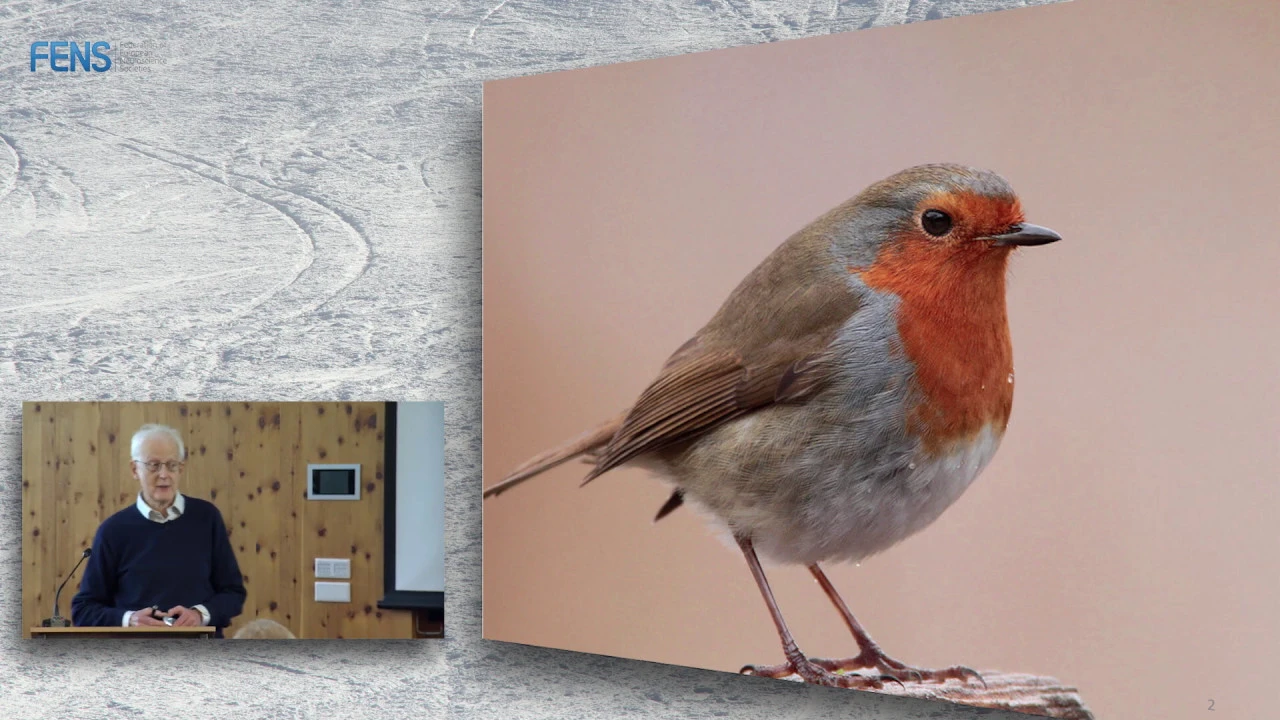














Birds navigate using Earth's magnetic field through a quantum mechanical process involving cryptochrome proteins in their eyes; these light-sensitive molecules generate radical pairs whose electron spins respond to magnetic fields, with migratory birds possessing more magnetically sensitive cryptochrome variants than non-migratory species.
Quantum Mechanics in Bird Navigation: Cryptochrome Explained
Added:Basic principles of Quantum Mechanics, specifically the concepts of electron spin, superposition, and quantum entanglement.
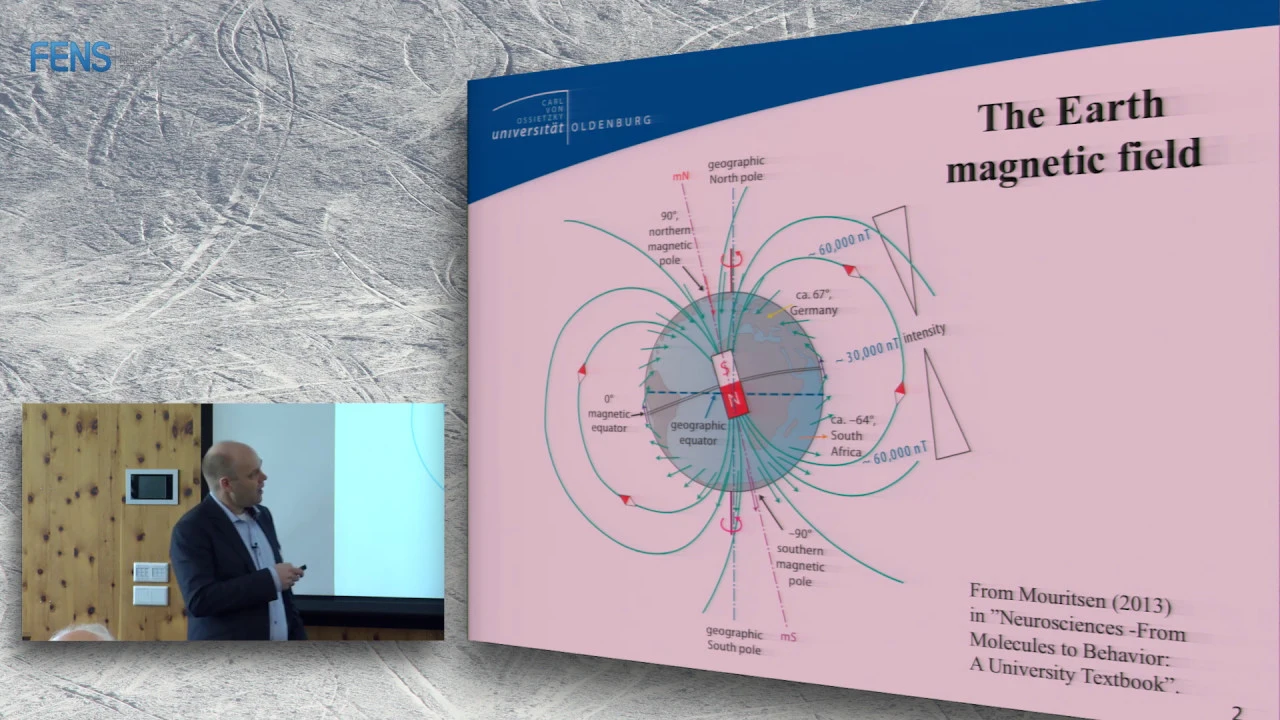
An understanding of Earth's geomagnetic field, including its polarity, intensity, and how it varies across the globe.
Fundamentals of biochemistry, particularly the structure and function of proteins and photoreceptors (light-sensitive proteins).
The chemistry of radical pairs, including how electron spin states (singlet vs. triplet states) influence chemical reaction outcomes.
The broader field of Quantum Biology, examining other quantum phenomena in nature such as coherent energy transfer in photosynthesis and quantum tunneling in enzymes.
The neurobiology of magnetoreception, focusing on how chemical signals generated by cryptochromes are translated into neural impulses and processed by the avian brain.
Biomimetic quantum sensors, exploring how engineers are attempting to replicate the radical pair mechanism to create highly sensitive navigational technologies.
The evolutionary history of cryptochromes, comparing their functions in circadian rhythm regulation across different taxa (such as plants, insects, and mammals) with their specialized role in avian navigation.
274.5K views10Klikes6:21Original Release: 2021-06-23
we have eyes for vision we have ears for hearing but we have no organ that we know of that's involved in magnetoreception it's a complete mystery for decades researchers have tried to answer a simple question with a remarkably complex answer how do birds find their way i had never thought that i would get to a place where we would start understanding the quantum mechanical mechanism that goes on inside the bird [Music] one of the greatest mysteries in sensory biology is how animals are able to sense the earth's magnetic field and to use it to navigate researchers have shown that some animals can indeed sense earth's magnetic field using it to navigate but how birds like the european robin detect such a weak field has long baffled biologists it's the last sense we effectively know nothing about and the solution of this problem i would say is the greatest holy grail in sensory biology and although the answer has remained elusive researchers have put forward theories that they hope could explain this mystery over 40 years ago in the late 1970s a physicist first dreamt up the idea that a light sensitive molecule might be used by animals to sense the earth's magnetic fields this theory proposed that animals could sense magnetic fields using a quantum mechanical phenomenon called radical pairs the radical pair hypothesis suggests that you have a light sensitive molecule it absorbs light and in the end you have a radical pair so two unpaired electrons the magnetic spins of this radical pair can take on two states both pointing in the same direction a triplet state or both pointing in opposite directions a singlet state the pair swings between these two states but a magnetic field tips the balance increasing the likelihood of one of the two and it's this change in the balance of the lifetimes of the triplet state relative to the singlet state which is thought to be the basis of magnetoreception and there was only one class of molecules that people knew originally could use light to generate radical pairs in plants and they were called cryptocrops so henrik and his collaborators hunted for these cryptochrome molecules in birds and since cryptochromes need light to work they searched specifically in bird eyes we found cryptochromes in the isobirds and so did others and then the big challenge was now well how do you now test whether quantum mechanic electron spin based mechanisms goes on inside the eye of a bird the main barrier for the adoption of the cryptochrome hypothesis was that it was proposed by a physicist so the mechanisms involved were highly quantum mechanical very very difficult for biologists to to understand henrik and collaborators from biology physics and quantum chemistry have worked to shed light on this crypt chrome hypothesis we needed to have the molecule in isolation to actually measure things on it because it's very very difficult to do it inside the eye of a bird we started trying to make cryptochromes in 2004 and we now have 2021 at the moment we are the only ones who have these molecules available for testing and in oxford the groups are the only ones who can measure such molecule with the sensitivity needed to see what we have found not only could we show that the electrons jump inside the molecule exactly as predicted by the quantum chemists in theory we could also show that the photochemistry of that radical was actually magnetically sensitive now it's not a hypothesis that this molecule is magnetically sensitive we can see that it's magnetically sensitive the team were also curious how cryptochrome proteins compared between birds that migrate and birds that don't we then also made cryptochromes from an extreme non-migratory bird basically the chicken and it looks like the cryptochrome 4 from the migratory birds are significantly more magnetically sensitive than the same molecule from a chicken previous work has shown that birds process magnetic field information in the visual region of their brains and so henrik and team members believe birds may actually see the earth's magnetic field so maybe it's kind of a shadow on top of whatever else you would be seeing as a bird but what exactly the bird is seeing we do not know because we cannot ask the bird but the puzzle isn't solved the team have shown that cryptochromes are indeed magnetically sensitive but they haven't yet proven that these proteins are the critical ingredient in magnetosensing in birds the advances that the authors have made in this study has brought us a long way to understanding how magnetoreception works there's no question that the study was a spectacular piece of science but because this is a laboratory study it's not a study which has been performed on living animals it's still no actual proof that cryptochromes in general are actually used in magnetosensing we are of course going to try to get closer to the natural situation inside the eye of the bird things like that would have been utopia before you could actually make the molecule in isolation and we are very excited about the possibilities there i think having studied quantum mechanics myself years and years ago i would never have realized then or even believed i think that it would be possible that quantum mechanical effects could be actually housed within the eye of a bird that is a huge surprise and that's nothing we learned in quantum mechanics when i was young you
Up Next
12:23
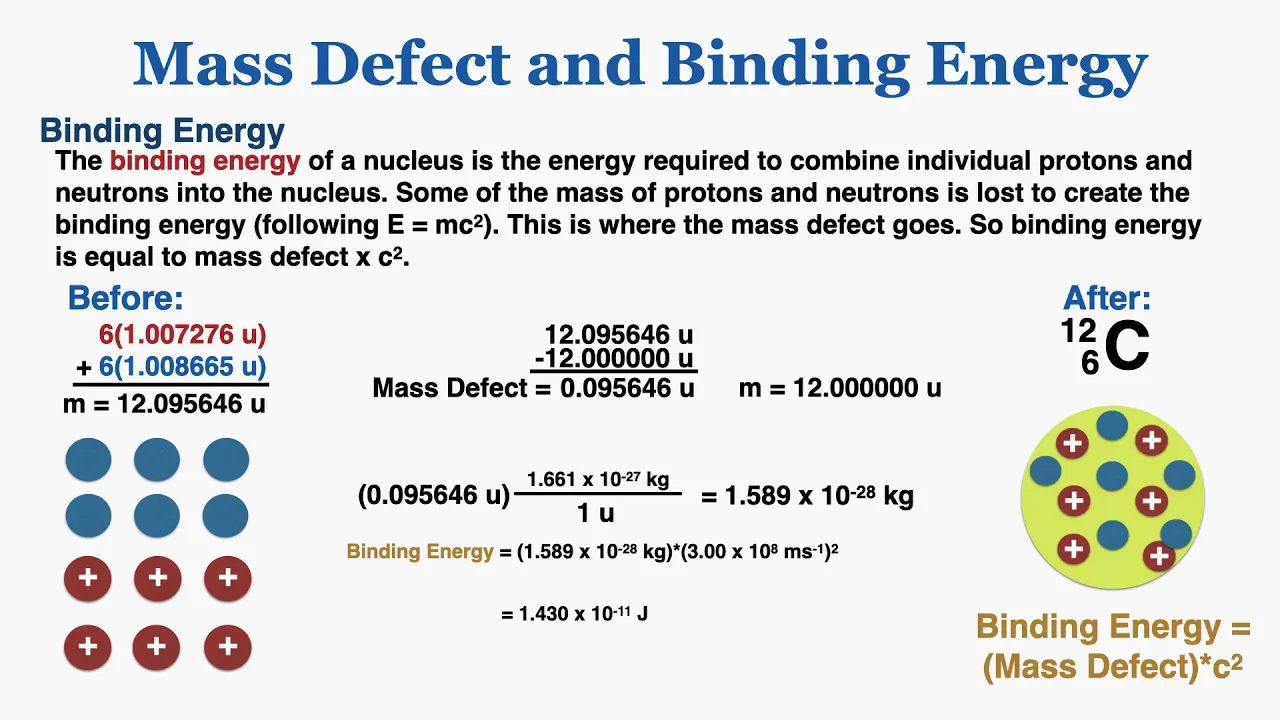
Mass Defect and Binding Energy Explained | IB Physics
@AndyMasley
39.3K views•2020-11-28

12:53
21cm Hyperfine Transition in Neutral Hydrogen: Radio Astronomy Basics
@AaronRobertParsons
12.4K views•2011-10-13

32:32
NMR Spin Physics I: Zeeman Effect, Resonance Condition & Larmor Frequency
@nptel-indianinstituteofsci8064
2.3K views•2024-01-17

27:14
Entropy and the Second Law of Thermodynamics Explained
@veritasium
27.5M views•2023-07-01
Related Study Plans & Knowledge Roadmaps
Structured learning paths in Physics
physics
Nuclear Physics (Decay, Fission & Reactors)
01Atomic Structure and the Binding Force
02Radioactive Decay and Half-Life
03Nuclear Fission Mechanics and Chain Reactions
+ 2 more learning modules
12h5 modules
Explore Roadmap
physics
Soft Matter (Polymers, Colloids & Rheology)
01Foundations of Soft Matter & Thermal Forces
02Polymer Physics and Macromolecules
03Colloids, Surfactants, and Self-Assembly
+ 2 more learning modules
38h5 modules
Explore Roadmap
physics
Analytical Mechanics: Lagrangian & Hamiltonian
01Mathematical Foundations: Calculus of Variations
02From Newtonian Mechanics to Constraint Dynamics
03The Principle of Least Action & Lagrangian Mechanics
+ 3 more learning modules
28h6 modules
Explore Roadmap
physics
General Relativity (Spacetime & Cosmology)
01Foundations of Relativity: Special Relativity
02The Geometry of Spacetime: Equivalence Principle & Curvature
03Einstein's Field Equations: The Mathematics of Gravity
+ 2 more learning modules
55h5 modules
Explore Roadmap