


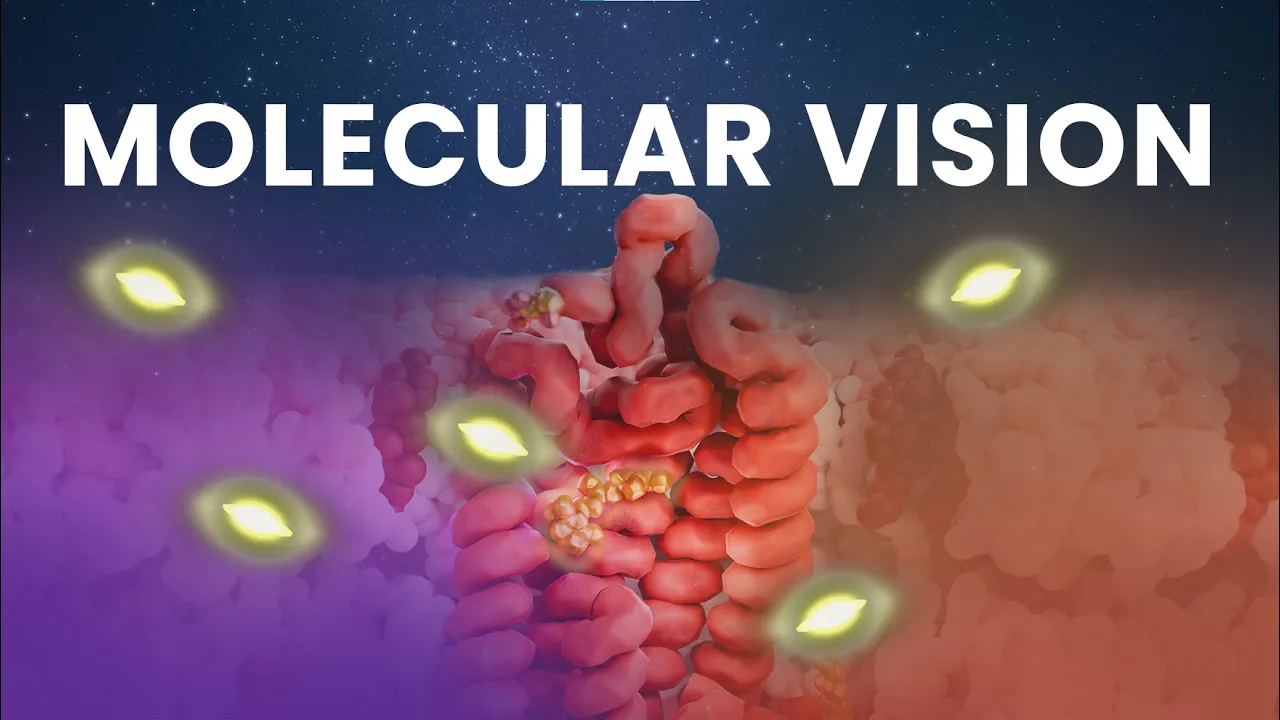








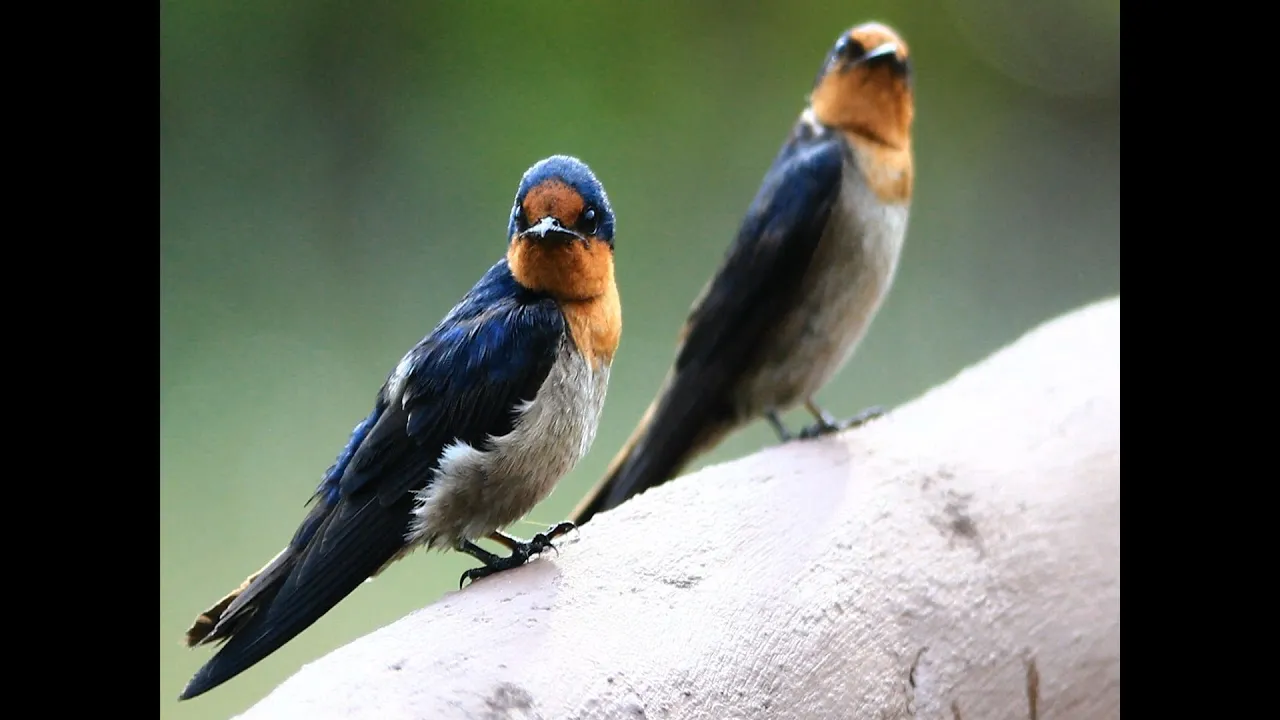


Night-migratory songbirds possess two distinct magnetic sensing systems: a light-dependent compass using cryptochrome proteins in the eyes (processed in Cluster N of the forebrain via the visual pathway) and an iron-mineral-based intensity sensor associated with the trigeminal nerve (processed in PR5 and SP5 of the hindbrain). The cryptochrome-based system uses quantum mechanical radical pair mechanisms where light-excited cryptochromes form long-lived radical pairs whose spin states are influenced by Earth's magnetic field, creating a virtual visual image of magnetic field lines. This system is wavelength-dependent (active under blue-green light but not yellow-red light) and requires Cluster N processing. The iron-based system detects magnetic intensity for north-south positioning and is independent of light conditions. Both systems work together for complete navigation, with evidence showing that Cluster N lesions eliminate magnetic compass orientation while trigeminal nerve lesions affect magnetic displacement compensation. Electromagnetic noise disrupts the cryptochrome-based system, demonstrating its quantum mechanical nature.
Magnetoreception in Night-Migratory Songbirds | Henrik Mouritsen
Added:so Peter just told you about the physical and chemical aspects of magnetoreception and now it is my job to try to tell you about the by all biology and the biological evidence we have that this mechanism suggested by Peter may be right but first I would like to remind you about the magnetic field that you have seen quite a few times in this school and that there are two aspects of the field that could be useful at least two aspects that could be useful for navigation one is the compass direction given by the inclination of the field lines with the will vert with horizontal with the Earth's surface and the other one is that the intensity changes from about sixty thousand a noticed at the poles to about thirty thousand nano Tesla's at the equator and if you can detect this you have a pretty good idea of your north-south position so magnetic field could be useful for both and as you will see now there are two competing hypotheses about how magnetic sensing works in animals one suggests that there are iron mineral crystal in the bird's it's iron mineral crystals in the upper peaks somewhere and the other hypothesis is the one you have just heard about it's light-sensitive molecules in the eyes and in this lecture I will give you some evidence that it could be that actually both are right which is often the case in biology where there are two hypotheses that has been around for a long time supported by evidence it's often because those are right to a certain degree but we will see but first I'm going to focus on this one so light-sensitive molecules in the in the bird's eyes could they be responsible for magnetic reception well theoretically they could as Peter have shown and now it's our job as biologists to try to find out if any of the things that Peter has suggested if any of those things actually exist so first of all I'm a behavioral biologist so let's start with behavior so as Peter already mentioned the Veals cause did experiments in the 90s where they showed that if you do these Emlyn final experiments where the birds are so eager to migrate that they jump in the direction in which they want to fly and then you turn the magnetic field and they start flying or jumping in a different direction if you do that experiment under white light they are perfectly fine white light has always links available and if you do it honor under limited chromatic light you will basically see that they are okay on the blue turquoise and green light whereas they are challenged on the yellow or red light they do not sleep here they can see yellow or red light because they are equally active they jump around and the funnels but they just jump in random directions from night to night and when birds can't see anything so before you ask the typical question why don't you test them in total darkness the answer is that birds just sleep if you give them total darkness okay but so it looks like they like their magnetic compass is wavelengths dependent and it's very difficult to explain without making a very long explanation it's very difficult to explain why a magnetite based compass should be light dependent because this little magnetite crystal would move to the magnetic field no matter if there's light there or not in the radical pair mechanism suggested by Peter light is essential because if you don't have any light you don't get the radical pair on which the magnetic field can work it will come okay so and then I would like no I mean it will come in five slides so I will take it in the logical order okay and basically what you have here I was asked in the break by two people actually how how can this ever be relevant when this lasts for a microsecond or maybe ten microseconds max for signalling well of course this alone cannot be relevant but as Peter already said that this is the magnetically sensitive part of the reaction this reacts to a radical pair to here which we know have a lifetime of milliseconds 10 milliseconds approximately which I will also show the data about that and as Peter say there's evidence now that this may be protonated and this leads to lifetimes of seconds so even though the magnetic effects on this step are small in a single reaction this is of course going on again and again and again and if you accumulate signaling state for a second then you can of course enhance the weak effects you have here on the microsecond scale okay now as a biologist you would like to kind of imagine how could this be perceived but what could it be to the animal and Peter already made a drawing where that is similar to this one so if you have the I it's like a half ball and now you imagine you're hammering nails into this ball from all directions and then you look into this eye and you will now have nails oriented in all possible axial directions within this half Paul and basically now you could imagine that if you now look along the magnetic field lines then in the back of the eye you could have molecules parallel to the field lines that would lead to relatively many triplets and therefore to a light pixel around the edge of the eye you would have molecules oriented perpendicular to the magnetic field lines that would lead to relatively future plants and that would then generate a dark pixel and in between you'll have a gray pixel and all together you could imagine that the bird would be seeing as shading on top of whatever else it was seeing it's like a virtual visual image that is generated by the magnetic field monment modulation on the primary visual effect okay so that's how you can imagine it now I'll show you in a few minutes why that pattern is unlikely to be true but this is just like to make it understandable to the general public we have used this for for a while this assumes of course now that you compare from different parts of the eye and that's highly unlikely as I'll come to in a moment but okay let's stay with this picture for a moment because it's easy to understand and look at now if you would be at the magnetic equator and you would look north you would see a pattern like this if you would look you would see something like this if you would look south something like this and you would look west something like that you can now see at the magnetic equator there would be an ambiguity but as soon as you move away from the equator at this point will move up because of the inclination or down okay now there is one major challenge for the light dependent magnetic section hypothesis and that is how do the birds separate between variations in light intensity and the magnetic field change this is a very important question because if we look at this reaction it is clear that if we now change the light intensity we are going to change the amount of product so this is a major problem we have to think about and that's why I don't believe that it's possible this will comparing from different parts of the eye because different parts of the eye will have different amount of light coming in unless it's completely homogeneous which is never so we you need to have two sensors close to each other and you need to have cryptochromes oriented ideally in some smart relationship to each other to be able to calculate out the light intensity just like in polarized light detection or in color detection you would need something similar and in Peter and my review we suggested that it could be that maybe the birch would use the so-called double cones for this so these are outer segments of a cone photoreceptor cells which have membranes that are running together and they are very close by each other and work from Caesar in bone Veniamin coughs group have shown that the old presumption and evidence that the fourth that the obscene molecules are basically freely rotating and floating around the membrane that now who mentioned before that is true in high light levels but it is not true at night so at night they form railway tracks this is for data from mouse not from birds and it's from rods so it's Road ops in here but in mouse rods you see long great I call the wavelet railway tracks they are basically die mayors of rhodopsins and they are like hundred to 150 rhodopsin diamonds long and they align completely parallel in the membrane relative to the insi sure that you have an east disk and this in seashore direction changes actually in most photo in writing in mouse photoreceptors this and see sure changes as you go down through the photoreceptor but what if birds would have specialized outer segments where you would have the incision in one direction in one half the one cone and in the other direction in the other cone then you could have something looking like a opponent effect like in polarized light detection or yeah yes yes that's possible but oh it would only work on the low light conditions because already when you have room light there are no tracks anymore so it's it would not work during the day okay there's also a theoretical possibility that you could somehow attach the cryptochrome to the inner segments because these are also like cylinders and but that would be more tricky and they would also be highly aligned the good thing about those discs is they are highly aligned so you could get consistent alignment and you could get anchoring that would be different in two neighboring cells that's theoretically possible this has not been proven in birds at the moment we are working with Caesar to try to find out whether this is a case in bird rods okay so basically there are different options particularly in photoreceptor cells of how you could orient these molecules so that they could sense magnetic field changes independent of light intensity changes because these photoreceptors would look at the same spot very closely the same spot in in nature and Peter's PhD student Susana Vorster basically has done a theoretical paper together with Peter and I recently where she has calculated a little bit what what the geometry should be in those two cells so that it excludes both the effect of polarized light and of light intensity because polarized light is also a problem because if you have polarized light you will have you will have more if the polarization would be in plane of the flame and you will activate the flavin more than if it's perpendicular to the flavin yeah and Susanna came up with a certain orientation which you can read in the paper and basically based on her model the pattern wouldn't look like the pattern shown in the original papers but would look like this and the intersection point here would be 90 minus the inclination so 90 degrees minus the inclination basically so that's somewhat more likely that the pattern may look like that okay so all of this is not proven this is hypothesis how this could be solved and we are trying to work out if this is actually the case so what we can ask for sure is which primary sensory molecule is responsible for light dependent magnetic section and as Peter already mentioned the cryptochrome proteins are the only class of molecules known from vertebrates which form long live radical pairs upon photo excitation this has been suggested now for 17 years in those 17 years no new suggestions has gone up nobody have been able to find another protein in vertebrates in plants there are others but in invertebrates not which formed long live radical pairs so these are the only class of proteins that can be a candidate at the moment for light dependent memory reception so the first thing I did when I started my young research group for v-not group scope in 2002 and Oldenburg was that I basically just asked a very very simple question are there cryptochromes in the eyes of birds because if they are no cryptochromes in the eyes of birds the hypothesis has a problem so we stained with antibodies against a cryptochrome one and we found that yeah there are cryptochromes in the in the photoreceptor layer in the ganglion cell layer and in some displaced ganglion cells all right that doesn't prove anything of course other than they are cryptochromes would be bad if there were none the next question we asked is okay so it's fine that there are cryptochromes but in order to be involved in magneri ception these cryptochromes must be active at night when Birds perform magnetic compass orientation under moonlight or star light conditions they are never total darkness at night just to make that clear even as a human we are not adapted to night vision we can see on an open field at night and we are not a bird is not navigate migrating in a rain forest so in the rain forest there can be times where it's almost total darkness but as soon as you're out on an open field there is always light okay so let's see with immediate early genes whether these neurons containing cryptochromes are actually active when a bird for for magnetic compass orientation and we then did see for staining and you can see that there is a very nice co-localization of cryptochrome and activity markers and what we did next was that we then took the genetic code the from the cryptochrome in a bird in a garden wobbler in the beginning and basically we asked the cell we put it into a cell culture and we express this protein so we had in our hands and then Peter basically looked at this molecule and what we hear is the absorption curve that was requested before so this is the absorption curve for this garden Warbler cryptochrome 1a and which we compare with the orientation of the birds you can see that fits were fairly well with the fact that they can't orient on the yellow or red it fits fairly well that they can orient on the blue turquoise it does not fit particularly well with them being able to orient on the green however these were not truly monochromatic light conditions they had quite some tail so but that's that's just how it stands now and you of course have to remember this is the molecule in isolation it's not in the cell it's not connected to anything which it would normally be connected to but that's basically the absorption spectrum of the Flavian went down to a protein ok the next thing we asked together with Peter was to ask do they form long live radical pairs because if they don't form long live radical pairs this mechanism is not going to work so Peter did trans option absorb transient absorption spectroscopy and could show that when you shine a short laser flash on to these cryptochromes radical pairs are formed and they have extraordinarily long lifetimes the half-life is 10 milliseconds so that's very long so that's nice for the method for for the mechanism we now know that what we thought we measured may be the magnetic radical here that's not the only thing we measure we measure probably that signaling state or or the the red rp2 the the longer lived radical okay but at least they form radicals again this doesn't prove that this is involved but it is a necessary for the mechanism to potentially be true since the first papers in in in mid-2000s much better antibodies have been made and we have now we and other groups have made very specific antibodies to the different cryptochromes from the migratory birds and I would like to say that all of you guys working in standard animals you will be terribly unimpressed with the speed in which we try we figure this out because these are migratory birds is a European robins you can buy nothing that's made for European Robin and you can't breed them in captivity so this is a slight challenge for many methods so we are a little bit slower okay but what we know now is the cry 1p so there are two splice variants of cry one in birds cry one a let's be difficult to see but you should be able to see there are a few outer segments here that are stained and these co-localize we UV option so these are the UV cones so cry 1a in these night migratory birds this is work by the Frankfort group nice night al they could show that cry 1a is only in the outer segments of these UV cones we did cry 1b and cry 1b is a unique cryptochrome splice variant for birds so far it has not been found in any other group of animals it may exist in all US but so far it has not been found and if you look at that that's found in ganglion cells displaced ganglion cells and in the inner segments of some photoreceptor cells cry 2 is found in the nucleus of almost every cell in the retina so that's highly likely to be a clock protein therefore we are not terribly interested in cry 2 and now a Nia who's here there she has a poster here and this is basically her poster on three slides so Anja look for cryptochrome for because cryptochrome 4 is a new cryptochrome that's only found in fish birds and reptiles so far and basically it's in the outer segments of photoreceptors and it's not in all photoreceptors because if you call staying with you opsin there's no overlap whatsoever if you Costain with blue opsin there's again no overlap whatsoever so which cones are these which one or or I and there's no overlap with rhodopsin either I just don't have the picture here so could this really be those double counts that we see or ethically had mentioned they could be a good candidate and this is indeed the case so the table counts have you Dobson and there is a very nice overlap with your Dobson and cry 4 so cry 4 is a uniquely located in the double cones and long wave like simple cones who also have your Dobson so it's in these two types of cones outer segments only of course you can find it in the inner segment when it's on the way to the outer segment but it's it's mainly in the outer segments that's I think this core of course is very interesting because this is actually what we kind of predicted before we knew this result so that the double cones could be quite interesting and that's actually 40% of the cones in the eye of a bird so unlike a mouse a mouse a bird only has 20% rods and 40% double cones and then there are tetrachromats plus double cones so they see very very good color okay so that's at least in line with that that's of course no proof but this is that lead interesting because people don't really know what the double cones are doing and it's 40% of the cones another interesting result that Anja achieved together will Angelica and we from our group whilst as she looked at cryptochrome expression during the migratory season of these night migratory songbirds compared to the non migratory season and what she found was that cry for were two to two and a half times more strongly expressed on the mRNA level at the same time of day of course as in the non-migratory season and that difference you do not find in chicken which don't migrate so that's of course also no proof but it's an interesting observation that cry for is the own cryptochrome which is very strongly expressed in the migratory season compared to the non migratory season so our conclusion in our group is that our working hypothesis at the moment is that cry 4 is currently the hottest candidate as a light depending my needle receptor compass molecule and now before the Drosophila and mouse people ask a question I will go to the next slide why haven't you done and knock out cryptochrome bird that's the obvious thing to do yes we started three four or five years ago with viruses and RNA AI and things like that trying to see if we can do this and so far we have wonderful constructs in cell culture that knocks it out very efficiently ninety percent knockdown which is good but so far we haven't found the right buyers to get it in to all of the cells in the eye so that's where we are standing but this is of course something that has to be done and I think it will be doable eventually okay any questions to the cryptochrome part that's just one way you check into the page because I would expect that the sensory mechanism is also in the young birds of the same species III would consider that a very risky con control the reason why we use chicken is because we had them in the lab and they are definitely non-migratory and I don't have to catch wild birds to kill for these experiments we have a significant we must consider ethics very very carefully because we need to kill a small number of birds that are wild court and therefore we have to think very much about which animals we use and how many animals we we sacrifice well we don't know and and I would say to to that old study it's from 2004 and we know a lot more since 2004 so actually that activation only shows that the activation you see it was only in the ganglion cells and that's because they are the only sport spiking neurons in the in the eye and they're the only ones that express the see fosston and and sink or arg1 so actually that experiment only shows that information is leaving the eye under these low light conditions the the the our psychic after the the importance of that I would say has diminished with time no they all that is not the important part anymore we thought at that time that it may be important but it's not that important anymore it's important that there are activity so that information leaves to the brain yeah and you cannot you cannot you see force or sink or eg1 to look at which photoreceptors involved because they don't express them yes we don't know that yet because this literally activates it's like a competing mechanism activates the further separate as with a normal photo provision then you have imagined that they would have been you know a reddish like image superimposed on the normal pattern vision of whatever is out there and then you can think of an experiment for example we provide we remember how those two experiments were done was the light available throughout the visual scene our topic you provide a point source deficit actually only you'll activate one part of reference will actually not be able to see the Magnetic there are too many assumptions behind that suggestion that has been suggested many times to us to simulate those patterns but in those calculated patterns that you see there there are many assumptions and as a lot of things we don't know about the biology yet so it would be dangerous I think maybe maybe we can we can we can discuss that I would have to say more about that idea by I think it would be difficult because the right but if you have these double cones next to each other then some of them would get both get much light there would still be this magnetic modulation and then in other paths you cannot make complete darkness in all the other parts of the eye they would just get less light input and again if you compare by two neighboring sensors that are independent of light intensity I'm not sure that would work but I would like to discuss that but I have to be convinced that it would something kind of went oh its wavelength but not in a sort of like this well I mean I may refer that question to Peter but I mean I presume that the cryptic flavor basically has a quite a broad absorption curve but Peter can precisely okay I'm going to go on and say okay so the only thing the only thing we learned about the experiment that I was asked about before is that there's information leaving the eye at night under low-light conditions so one of the next questions we asked is where in the brain is magnetic compass information processed so basically we asked Garden Warblers to orient in a round arena with a round perch and you can get them you can get them to do the migratory restlessness on the perch without bumping into the sights all the time and you have cameras to make sure they don't sleep because then the ER T 1 or C falls expression goes down very strongly and we now wait sit this took a very long time to do these experiments because we waited till the birds either showed one hour of constant migratory restlessness without bumping into the wall too often or the first was sitting still but awake in breaks of my cat restlessness for an hour without sleeping and we did this by sitting in front of the computer and making a cross for a movement of opening or closing the eyes or a head movement and it could take three four nights before we got that condition that we could take the bird but if you do that then we would expect that they would sense the magnetic field post during my cat or restlessness and in the breaks where they are still awake and therefore should get the sensory input whether they use at that time as behavior or not like if a bird said stills or not if it if it if you play a sound it will record it anyway so we thought that would be two good conditions because otherwise it would be difficult to separate potential magnetic activation from motor activity so basically what we saw was that there was one part of the forebrain on both sides of the brain name that we named cluster in that is very very highly activated this is a in situ hybridisation on mRNA level of sync or ERG one I think they call it more now and white here means activity and there's very high level of activity in a garden table in this cluster in region and this was consistent among all birds and it was strikingly active compared to the rest during the day time when these night Megatron songbirds do not migrate there is no activation of this region okay doesn't prove anything but it's an interesting observation if you now look at a non migratory bird in this case it's a sipper finch and you look at day and night you see some activation post day and night in this region but you don't see any strikingly different activation to the rest of the brain and those strikingly different activations between day and night and rebirth produced this in european robins which are not closely related to god no hablas they show the same and we also represented to see provinces and we see the same as here so okay it's in two migrants and in two non migrants okay you may be able to find all the words where it's different but at least we thought okay that's interesting what a lot is going on in this area let's see if we can guess what's going on in this area so basically we then thought okay if light dependent magnetic section is true then if you cover up the eye of the bird then this activity should go away because if there's no light you don't get the light activation and the sensor should not work and if you cover up this eye then the activity should go away in this part of the brain and if you cover this eye it should go away in this power of the brain so we've tried one eye to eye cops and basically what we see is that this is now from a European Robin s blow-up of clustering in the European Robin if they have eyes open you have high levels of activity and you've cover up the eyes the activity disappears to a large degree okay so that also doesn't really prove anything but it proves that input into cluster n is visual and that's a prerequisite for again for this to be potentially true then we thought okay so input into cluster and his visual so let's trace the neuronal connections between the eye on this and this place just to see if they are connected and this was a work of Dominic hires and he injected backward tracer into cluster N and a forward tracer into the eye and he found that they are meeting up in the GLD which is the visual salamis so actually this is the Salem of Google visual pathway and the activated read in this cluster n region is the lateral most part of the visual boost in Birds it's not the whole visual ruse but the lateral most part okay again that doesn't prove anything but it's an interesting observation again because it is that if you look at the most active parts of a bird brain when they do magnetic compass orientation at night under low-light conditions the most active neurons according to ERG one activation is the retinal ganglion cells and this cluster in and they are part of the thalamus fuga visual pathway I should say that the GLD neurons do not express either a g1 or C force so you cannot look at these with this method okay this was an interesting observation so we thought okay now we are in a new situation because now we we have a candidate region so let's try to leash in that region and see how that affects behavior and we had already at different hypothesis which you have heard about already which is that the ophthalmic branch of the trigeminal nerve is responsible for magnetoreception through maybe iron crystals that at that time people thought were real okay so we did a simple experiment we either did sham lesions of clustering and basically in a natural magnetic field the birds orient very well before you think how can I get so good orientation here compared to all my other studies the reason is which that each per 25 times in each condition because then the noise goes down because we didn't want to operate very many birds and when you turn the magnetic field hunt 240 degrees or 120 minus the bird changed the orientation with a compass in imminent forms if you lesion cluster end they become random okay interesting if you do sham sections of the ophthalmic branch of the trigeminal nerve the birds orient wonderful and when you turn the magnetic field they turn their orientation if you now cut the up Samak branch of the trigeminal nerve on both sides of the brain behind the eye they are injustice finest before they orient in the normal magnetic field and they orient when you turn the magnetic field 120 degrees so there is no difference or if you cut this nerve but if you lesion cluster n they aren't able to do it so we submitted this paper to nature and thought we were really if we were really excited and then the referees came back and said that's really interesting but and I guess we all know this but from referees so basically and the putt was maybe this is just motivation to migrate maybe this or night vision and this is not magnetisation alright I was pretty sure that it was not just night vision because the birds jump around in the finals just as much as they do down here and if birds can't see they just sleep so I was pretty sure about that but then we did some conditioning experiments with the lesion Birds control the non lesion bird and we could show that their visual detection limit for light dots was 200 times dimmer than the light we had in this experiment so they could see but the other one is more tricky the one with this is just motivation to migrate that tends to be an excuse if somebody doesn't like a study in navigation then they are basically just saying that this may be just motivation so we thought okay but we have a chance to do that because birds have three compasses they have a star compass a Sun compass and a magnetic compass this is magnetic compass information then they should still be able to use a Sun compass and their stock compass and only the magnetic compass should not work and if it's motivation to migrate all three should not work so we did that experiment so if you test them outdoors under the Setting Sun and it's spring the birds orient north the lesion ones these are all lesion birds if you test them under a planetarium in our shipping school near altenburg then and you simulate the local stars they orient nose but if you only give them the magnetic field they are completely random so this really suggests that cluster n is involved in processing light dependent magnetic compass information so these is very difficult to explain these data if cluster in is not involved in preys processing magnetic compass information and we know the pathway from the eye via the thalamus to the forebrain yes but this experiments done in the same bird so this is the same bird not oriented under the netic field they did they looked like there were many more birds in the magnetic oh okay but that's because yeah that's right we have tested many more birds in the magnetic field because if you have random you need to test many birds before you have convincing random so it's a subset let's put it that way so the the birds in the in the stars and in the Sun are this that are also in the magnetic condition but to get convincingly random we needed more animals I can tell you that I don't see this activation in non-migratory birds so I don't see it in pigeons either so I don't know but it's probably just part of the visual boost we don't know that yet but I mean the because you are going to ask me in the end where's the electrophysiology and that is not done yet okay so I don't know what it's doing otherwise but it's the visual booths so it's probably doing some of these things that the visual host is normally doing but I mean the activation here is quite striking and if you are long-distance migratory bird sensing magnetic compass cues is very very important to your life so it is actually possible that this area's is really focused strongly on that it would mean that birds would see the axis of the magnetic field lines in direct issuer's shading on top of whatever else they are seeing so to the bird magnetic sensing would just be vision like a new channel of vision okay could the birds magnetic sense really be based on quantum mechanics and as Peter pointed out one critical way of testing that is to look at radio frequency field effects on this behavior because a radio frequency field is of like a megahertz changes its orientation basically or its intensity with such a high frequency that a little magnetite crystal cannot move that fast and also the intensity of the radio frequency fields about a thousand times weaker than the actual field so even if they could follow it they would it would not turn the orientation of the magnetic wrist but for quantum mechanical reasons they were be sensible reasons why it should have an effect on the radical pair mechanism so now I will tell you about an experiment that was completely unplanned it came out of emergency so we are looking at going to look at RF noise effects but this is only because we had to look at it for other reasons so I moved from from Denmark by a Canada to Oldenburg through this young research group and then I came to altenburg and did the final experiments which have done been done in 50 different labs in the world and they didn't work they were always random this was highly frustrated 5 micro torie seasons in a row I had PhD students putting birds in two funnels every single night and getting nothing not very pleasant okay so we tried to change the food the Kate sighs the daylight cycle all the kind of things you should change no effect until one day my electrophysiology postdoc newsletter Schneider suggested why when I do recordings from nerve cells I use a Faraday cage to kind of reduce the electromagnetic noise can't we do the same with the birds and normally I would say this is complete bollocks because this is not sensible by biological material in that sense the reason why you do it for electrophysiology is a different one but i was desperate so basically this iron screening is not a good idea because iron will make the Earth's the static Earth's field inhomogeneous and it will reduce its magnitude but if you use aluminium this is good because aluminum has a very interesting property it lets static fields through undisturbed but it screens time-dependent fields if it's grounded so we screened we put aluminum walls you know our huts or wooden huts and it was like a miracle the birds oriented and this is the radio frequency intensity of the noise at the University of Aalborg if you don't screen and this is a radio frequency the magnetic component of the relative frequency noise if you scream this is the electric component and because these are different it means that you are within ten wavelengths of the source this is so-called near field effect otherwise they should be identical okay great then I went on to do this with the lesions in the brain and so on because that was what we had planned to do originally but it was immediately clear to me that if this difference in behavior was really because of the screening of the rate of frequency noise this would be highly interesting because the level of this radio frequency noise is a thousand times weaker that the EE w-h-o got maximum levels of electromagnetic noise disturbance for humans next season I get a new student and it didn't work again and I was like what now I have two screens I go out work with the student it looks like she does everything right until I go around the heart and notice that she has forgotten to connect the grounding she has basically forgotten to turn the screw then we turned the screw and then it worked again yeah so wow that's a cool experiment so at the end of that season the last two weeks of the season we were done with what we planned to do and then I said you know I would like some control data just test the birds under the natural magnetic field I want to make sure they're still oriented what the student didn't know was that every two days I connected the grounding on this hot and not on this hot and then I switched them every two days to do a darker blinded experiment and then I asked the students oh how did the birds orient and she was like yeah kind of a tendency in the right direction but it doesn't look too good okay here is APCD she analyzed again and this is a result the two first days grounded oriented the first two days ungrounded disoriented the next two days grounded in the next two days ungrounded and this was switched so one heart was so this is the first four days mixed and this is the first the second four days mixed so it means that we could turn on and off the orientation of these birds by turning a screw on the grounding I thought that's pretty cool that suggests to me that the grounding of the aluminum has some kind of causal relationship to the behavior of the animals but it still doesn't prove that it's this RF noise because maybe that does something else where's the grounding or the screen I don't know what it could be something else so the next thing we needed to do was we needed to go in and now in the screened Hut we regenerated the noise artificially okay and then they are disoriented so in the grounded Hut but with the equipment the the radio frequency generated artificially it's a little bit more constant than the natural one but that's what we could do technically they can't Orange now the problem is if electromagnetic noise from equipment is a problem then maybe just the fact that you put the signal generator in there could be a problem so we decided we need to test the same thing but with the signal generator making the minimum possible output but it's still running and then you have this level of disturbances which is almost like having no signal generator in there and then the birds orient and they turn their orientation when you turn the magnetic field hundred twenty degrees okay now I'm pretty convinced that it is reading the rate of frequency noise doing this problem and I would like to say all these experiments were done double-blind and several of the key results were rapid reproduced independently by two different generations of students then so it is really caused by this electromagnetic noise it seems so now there was this thing with the larmor frequency that's 1.4 megahertz so I thought okay no problem now we just make the signal generator cut this noise up and we'll find out where the problem lies and this will tell us a lot about the mechanism when we cut when we collaborate with Peter so this is a what we thought was a good experiment radio frequency noise up to about half a megahertz and one that starts at about half a maker Hertz up to about three megahertz but it certainly includes the larmor frequency and the other one doesn't so I expected the birds to be disoriented in one and oriented in the other but that's not what we saw they were disoriented and not in both of them and the birds were oriented if you run the same equipment but at the minimum output again as a control and it's not the same birds always so these are the same birds tested in all the conditions okay so this means that the disruptive effect on magnetic compass orientation is not limited to a specific frequency at that time that was controversial okay I still had one problem with these results what radio frequency this is middle wave radio and you can listen to the radio when you're driving your car almost anywhere so how come the birds can arrive in Africa if they are disturbed by radio frequency fields that are available everywhere well so we thought okay we need this is what happens when you when you are in the natural disturbances around the university full of electronic equipment of all kinds but what can you find a natural location where you need to screen so maybe you can find a natural location where the disturbances are much lower and this was very easy you just need to go one kilometer outside of town in a wooden or more stable then you have that you don't need to screen and then we took the birds there and without any screening or anything they orient find it so basically the radio signals are weaker than this intensity but can still be picked up by your antenna in your car so then we were convinced and the referees were convinced that basically this is really due to the radio frequency noise that these birds can't orient and this is quite important so this is just a fan to see how that can be you can maybe imagine that because I saw that I should have something on Drosophila so basically you have here the magnetic field effect wherein Peterson allergy was a fly landing on this granite block so how could you imagine what the RF fields would be you have them in all kinds of frequencies so it can basically imagine they're much weaker interactions but you could basically imagine now that a whole swarm of Drosophila basically hitting this stone from all kinds of direction at unpredictable times before the fly has the time to land this is of course also an analogy with a lot of limitations and now this broadband effect was puzzling us at the beginning because this was not what we were told should be the expectation at that time we were supposed to be find a larmor frequency effect but we didn't and people talked about these high profile interactions and already showed you grabs like this and if you now simulate already compared as Peter also show to where one of the radicals have for hyperfine interaction and one has zero you do get this very specific blah la more frequency effect but that's only if the other radical is very far away much further than it is in likely to be in real life if you start adding hyperfine interactions to the other radical you spread out this and just with one in its hyperfine interaction you don't expect an effect at the larmor frequency part at some other specific frequencies so actually this noise that we observe around the university looks pretty good like this what you actually would have with 4 & 4 and in reality they are probably more so the conclusions that we made was that magnetic compass information is processed in the visual system and birds are therefore highly likely to see the magnetic field so it's likely to be a visual input and the magnetic compass is almost certainly based on spin chemistry our mark the quantum mechanical in nature because otherwise it's impossible to get anywhere near explaining these radical radio frequency effects time-dependent electron and terminating electromagnetic field disturbs the Perth magnetic compass probably due to interferences with the electron and nucleus spins it is fair to say that the current modeling of Peter cannot explain at the moment with the two radicals we are looking at at the moment cannot explain that the radical should react to RF fields as weak as the ones they react to so there are still some additional expert 8 explanation needed to do further experiments we have built what is at the moment at least unique in the world is as a facility where it's a completely wooden house built of wood and copper and aluminium and in there we have electromagnetic noise time-dependent field screens that screen all frequencies from about a kilo Hertz up to 3 or 4 gigahertz by a factor of a million so we can really start from zero and then add the different frequencies as we as we please and we can change and because it's aluminium again all the static fields are perfectly Earth's field very homogeneous and the double grounded coils are used to manipulate the static fields so basically it looks like this right dependent Maulik like the sense molecules in the eye could really be the McNary receptors in these birds what about the other hypothesis this all wrong well I think there are several people who need to shield there are many like the Phillips that john phillips lab always screen his experiments the the check group always screened their experiment so there are many places the only place where you apparently don't need to screen is in Frankfort yes but they do field sites the Swedes don't do their orientation experiments at Lou into University they do it at field station in the middle of nowhere all my experiments in Denmark were done at field stations in the middle of nowhere all the Americans who have done these kind of experiments were doing them at field station and the reason why they do it you need to be a tip to catch enough birds to do these kind of experiments so that's the major difference it's right next to a radio tower a radio and television tower I cannot explain even their static fields just behind the wooden hots they have an iron an iron fence running and the magnetic fields in those hot sites completely on homogeneous so that experiment where they're tested on the different wavelengths is a fairly influential experiment of I mean for that potus's has that has that not been repeated under a monochromatic light or or on squeegee and Rose hasn't that one repeated that it's what I have now tried to repeat many experiments of the frankfurt group and i have been able to replicate very few cuz that particular experiment is kind of based on the wavelength needed there is an experiment by rattin mu i'm who has at least reproduced part of that so that there are some light effects that has been reproduced by rocket muon i have not really done it yet because you know i cannot make a career out of just reproducing experiments of other people i need to do some experiments of my own as well so so we have tried to rape they claim that the magnetic compass is only in the right eye we have reproduced that they can use any eye they want there has been the the this that it's only the larmor frequency the larmor frequency was predicted by austin reeds in year 2000 probably because at that time it was very difficult to calculate on realistic radicals and it now turns on our out once you start calculating on rates realistic radicals then you don't expect an effect only at the larmor frequency you expect a broadband effect and we didn't know that when we did these experiments but that's what we found and we have tried to replicate the frankfurt experiments actually with the the nominal frequent that was actually the reason that table have paid a million euro to build that building that was to replicate that experiment and basically we find weak or no effects of single frequencies at least we find much stronger effects of broadband fields and we think that one of the problems is that all other groups until we published that paper have not measured the disturbances in this entire range they have just measured very narrowly at the frequency they thought were important and now it turns out that if you do such monochromatic fields you have all the harmonics for instance which they just didn't measure so there has been a huge problem with measuring the actual stimulus in the past but I am NOT responsible for explaining what they thought they have reported in Frankfurt but I have tried to replicate some of the most important findings because I need to know for myself what I personally can see because that's important for me what way I want to continue and in all cases it was not to show that it was not the case it was because we had then the next experiment the next experiment the next experiment if this was true yeah but we have now tried to replicate for different things three of them have been published and we can't and then and we have a fourth one that we can't either but we can replicate the the inclination compass we can replicate that they actually are not oriented under the horizontal field so but there is a limit to how much of my time I can spend with the replication yes [Music] I'm sorry I'm sorry I cannot I'm very very bad at hearing a background noise so you have to tell it to me again the orientation right that's a question for Peter I think that's better college age could be interfering with the so I would like to ask the question now could it be that there's also an iron mineral-based mechanism could I be a second magnet reception mechanism because it's very rarely so that there if there are several hypotheses that are all supported by evidence that then one is completely wrong so we thought okay let's open our eyes and our minds to maybe this is still true in some way so basically the birds we had operated here some had cut trigeminal nerves we have to kill them we are not allowed to release them according to the regulations of German law so we thought instead of killing these birds for nothing let's try to see if there may be magnetically activated cells in the trigeminal system because we have the birds with these operations already and we have to kill them so let's try to do something sensible so we know that the up sonic branch of the trigeminal nerve enters the hind brain of these birds and terminates in two parts of the hind brain called P R 5 and s P 5 and so basically we we asked we exposed them to what we call a super stimulus which I told the other day it's every 30 seconds the compas direction changes 90 degrees with some very small variation in intensity and inclination and then for five minutes everything changes very strongly up to 70,000 nano test on each direction and then we had zero magnetic field in another group and we had caught nerves and not caught nerves and the results were the following in PR v this is now on the protein level er t1 staining made by Dominik hires and basically what you see here is that there is a horseshoe shaped like region with many active nuclei in the changing magnetic field with a sham operated nerve if you now make a zero magnetic field with an intact nerve this activation goes down significantly and if you take a changing magnetic field and you the same magnetic field as here but you cut the nerve there's also very little activation if we look into SP 5 you something very similar so in this medial part you see very high activation when there's a changing magnetic field and an intact nerve which disappears if you make a serie magnetic field or if you cut the nerve in the same magnetic field and quantification wise it looked like that so basically in PR v and SP v there wasn't an increase in neuronal activation well 500 neurons or something like that in PR v and there were many other recent regions where there was no difference so we of course need to check that this is not a general effects of the super stimulus on all kinds of activity in the brain and this is not the case so what's the function of this it's obviously not the compass because you can cut the nerve and then there's no effect whatsoever on the compass orientation so it cannot be the magnetic compass but there seems to be magnetically activated neurons here and then I would like to remind you just of Nikita's talk from Tuesday where we have done these displacement experiment in collaboration with Nikita or Nikita in collaboration with us because it's mainly Nikita's experiment basically we have caught birds in these are Reed Warblers so if you take them at the rubato site they go north east and if you replay displacement to Sweeney Grodd with either a real trigeminal dissection or an intact nerve then you see that the intact birds correct for the displacement and the section birds do not correct for the displacement so there seems to be necessary to have an intact trigeminal nerve to actually correct for this displacement and if you now look at the virtual magnetic displacement this is a real displacement and now we magnetically displace them but keep them in Revati again they do correct so we extinct that it's magnetic what we have not yet done in which you of course have to do is we have to do this virtual displacement with caught nerves that we have not done yet so we have not done the combination yet but this is in progress okay so currently it looks like there are two magnetic sensors in many birds there's a magnetic compass requiring light-sensitive molecules in the bird's eyes it's probably based or with very high likelihood based on a radical pair mechanism cluster n is involved in processing this information and it's compazine formation there seems to be a second magnetic sense with unknown sensors but they could very well be iron mineral based in associated with the trigeminal nerve and absurdly branch of the trigeminal nerve and that innervates the upper peak and the skin frontal skin here so it should be somewhere there and this information is at least partly processed in pr5 and sp5 in the hindbrain and at the moment we are trying to find out where the next processing stations are and this I believe but have not proven that it is probably detecting magnetic intensity which would give you north-south but not east-west and it seems that it if the birds don't get those north-south and east-west position they seem to be not correcting so there seems to be two magnet or sensory pathways one associated with the visual system and one related to the trigeminal nerve yes so there's these two areas of the brain actually involved in the map and compass sense work together say the birds are using paper magnetic sense and the magnetic compasses they're a clear area where the information is kind of integrated we are working on that okay cool yes that's an obvious thing we are working on so here are the some of the perspectives so we aim of course and I mean some people ask me then the question why would you have two different magnetic sensors why don't just one well if you want to build a sensor for magnetic direction you would also if you build a technical sensor it's completely different from one that should sense intensity because the one that detects Direction has to be independent of intensity it should give the same compass reading when intensity changes so when you move north south so it should not care about intensity the other way around and making a sensor of magnetic intensity should not care about direction because if it cares about direction then you will get a different movement a measurement depending on which way you are pointing and it's actually very difficult if you have a union a directional fluxgate magnetometer and want to measure the Earth's field to measure the total field strings because you have to orient it very very precisely to get a good reading so technically you would build these two sensors differently so I'm not terribly surprised that the birds would have two different systems for those two things yes [Music] because understand the difference between these two the songbird and because maybe this is only for two songbirds so it's not I will say my personal because then you have to say first of all those Carl results are interesting but not clear there are very low in and there are some of the birds and the different groups that does something what they shouldn't have done and that's one of the reasons why I have not been a referee but it's one of the reasons I think why that paper went through a lot of revisions before it got published because it is okay okay because it - that is a long time and you thought about it for many years ago probably okay but it is not it's a very low in and secondly gulls are mainly migrating during the day so it's also a completely different ecology and as I mentioned before we have looked in cluster n in a day and night migratory bird and if you look at that you do not see cluster n activation at day time in a day well I don't know I mean this is like two old birds because I have also worked on albatrosses where there is absolutely no effect of magnetic manipulation so I don't think there is a universal answer and I think in the first day for those who are not here on the first day one of the most important thing I said on the first day is that birds use all information available not just the magnetic field not just olfaction not just anything it uses everything and they have many apparently redundant backup mechanisms so of course cutting the nerve in free flight they may have so many other mechanisms in free flight that they may be able to cope with not getting the information from one sense whereas in the funnel and I think that's the advantage entities advantage of the funnel the advantage of the funnel is that you really limit the sensory inputs to what you control and under those conditions the results of those displacements experiments and so on in the funnels with with the knight migratory songbirds are very very clear that I it is very possible that we've you would let them fry free you would maybe need to knock out more than one system in order to get no proper orientation because they have so many different cues they can use in free flight they end up in the desert came back white with regional Cuthbert pull it back to the breeding side so no I'm generalizing and I have set birds and I have met not midnight migratory songbirds because that's the only perch we can study in these funnels so it I'm clearly not and I think it's extremely clear with these seabirds who have 33% of their brain being olfactory bulb I mean it's absolutely clear that in those birds our experiments also suggest that magnetic experiment magnetic isn't very unimportant to them the declination provides information about position as well that will depend on a compass yes so then if you are able to take his birth to some other birds and displace them either into the location at the same magnetic intensity but a different declination and cut the ophthalmic branch of the factory nerve or to another location it's possible so the condition is not different and feel different the same species and we are doing that and we are quite far but why canonize migrating the first attested infernos by anyone why can you only test for migrating the nights migrating songbirds and funnels are they all like my great Anatomy yeah most not all these small insect eating songbirds they are night migrating ok so that so all these small birds that are easy to put in a funnel their night migratory and if you try to use that a few small birds that are also de migratory and a few that's all only de migratory but all of those migrating flocks they don't migrate along the de migratory ones so that's a little bit difficult and as I say we have tried tried one of the really few birds that do both and this is the meadow Pipit it migrates at night and continues until like 11:00 in the morning so there it's already light and we looked is there cluster n activation in those birds at night and day and that paper is totally overlooked apparently nobody is interested but anyway I think it's a very important finding because what we found is that cluster n is only activated at night and remember I said before that in the in the night you have these rayray tracks in the in the outer segments a day you don't have them at the daytime in the cones they are highly active involved in color vision and all kinds of things and they are much fewer cryptochromes than there are options so it would be very difficult from my thinking how they would ever be able to detect the weak magnetic field effect on top of color vision I I think that would be very difficult to imagine but at night the cones are silent the cones are not the the the the color vision is not going on during the night so it could really be that it's specialized for nighttime navigation because during the daytime the Sun is always most important there's not such a need not such a dramatic need for a magnetic compass as if your night my night migratory so this is all speculation but it there's at least some trends that come together that suggest something in that direction so what we aim is of course to understand exactly how the magnetic sense works on the biophysical principles and molecular mechanisms all the way to the perception and behavior of the intact bird and we also would like to answer this fundamental question whether there are four fundamentally quantum mechanical effects in biology because this is quite important because as Peter showed you if you use these spin chemistry effects then you can in principle sense stimuli in the world that are a million to ten million times weaker that what we think is a current limit of biological sensory systems so that can be quite significant and therefore we want to understand that finally I would like to make since I have I'm very impressed by the quality of the students I take the liberty to advertise a little bit something because the University of oldenburg has decided to make magnetoreception and animal navigation one of its main focuses in the next decade at least and as part of that we have made a big application where we tried where we want to study magnetic reception and its integration in navigation from the quantum mechanics via signals transduction processing in the retina processing in the brain now whom is involved with with the spatial cell types in the paths which do perch fish and bats until navigation behavior in the lab to nab behavior in the wild so we have studies of birds and fish in the wild and we don't know yet if we will get this for sure but we are through the first round so our chance now is seventy to eighty percent to actually get it and the university has therefore agreed that we can recruit at at least two young research group leaders over the next one to three years so we are very interested if somebody is interested to joining this community and this approach and I think there are many potential candidates in this room so this is why I'm saying it so basically what in Germany there are some systems that you can apply for they are called a menorah for Wi-Fi guys or similar these are great funding opportunities I had one of these as a young researcher they are more or less identical to ERC starting grants you get one to one and a half million euro for five years to build up your own group you are independent you have to come up with an original suggestion that differentiates you from the rest and you have to integrate into a community and so at a university where it makes sense to integrate your type of research and especially excellent young female scientists are particularly of high chances to get these because the universities of Germany of course would like to increase the number of female scientists that does not mean that highly qualified male scientists don't have a chance I'm just saying this to make that clear and another one is that if the SFP the sound of fortunes the Reich is finally granted we will write out two new we 2/3 three professorships in animal navigation research in the next years and if it's not granted we will at least get one position in animal read ecology related to animal navigation which we will announce in the next two to three years and if anybody could be interested in any of these things please come and talk to me and with this I would like to thank all my collaborators of course what we have done have you have not done alone we have done it through many many many collaborators and I've had the experience that now whom told about yesterday that because this is quite a cool system that you can explain to almost anybody it's quite easy to recruit collaborators who are able to do something I can't do so therefore many things we have done in this area have been in collaboration with researchers who were very very good at methods that we didn't know about because I don't have a method I have a question so I want to understand my fellow reception from a biological perspective and I need new methods all the time and you cannot be a specialist in all these methods at the same time so therefore you need collaborations and I'm very very happy to have been able to collaborate with many different people around the world and of have having had fantastic postdocs and PhD students who have done all these experiments because as we all know once the group get a certain size its limited what chance you get to do the experiments yourself unfortunately in particular I would like to thank Peter with whom I have collaborated now for more than 10 years and there's no way I could do the quantum mechanics and Peter is a brilliant mind in thinking about potential solutions to potential problems and also Erich Jarvis was particularly important in the in the searching for cluster in because he is one of the developer of that whole sink and ERG one method so when we had to learn that we went to his lab and we collaborated with him but I also did a lot with martin wild Elia salafiyyah from Owens and Onuaku neroon's lab in Bochum so with this I would like to I would like to thank the false wagon system because they paid my bills for 13 years so thank you very much for your attention [Applause]
Up Next
Richard Dawkins: Science, Flight, and the Selfish Gene
@TheOriginsPodcast
266.1K views•2022-08-26
Bacterial Communication: Quorum Sensing and Biofilm Formation Explained
@JHUAAP
12.6K views•2011-06-28

Enteric Nervous System Explained: The Gut's Brain | Neurobiology Lecture
@alumniu6029
438 views•2018-09-12

Bacteriophages: Earth's Deadliest Killers and Future Antibiotics
@kurzgesagt
34.6M views•2018-05-13
Related Study Plans & Knowledge Roadmaps
Structured learning paths in Biology