



















Wildfire is a natural force that has shaped Earth's ecosystems for over 400 million years, emerging after the Great Oxygenation Event (3.7 billion years ago) when cyanobacteria increased atmospheric oxygen, and the Devonian period (440 million years ago) when wood first appeared as fuel; modern humans mastered fire approximately 1 million years ago, using it for migration, cooking, and technological advancement, which fundamentally altered human evolution by enabling smaller digestive systems and larger brains, though today's mega-fires—driven by climate change and fire-adapted ecosystems like eucalyptus forests and pine plantations—exceed human suppression capabilities, requiring coordinated aerial and ground firefighting strategies to combat.
The Science and History of Wildfires: How Fire Shapes Our World
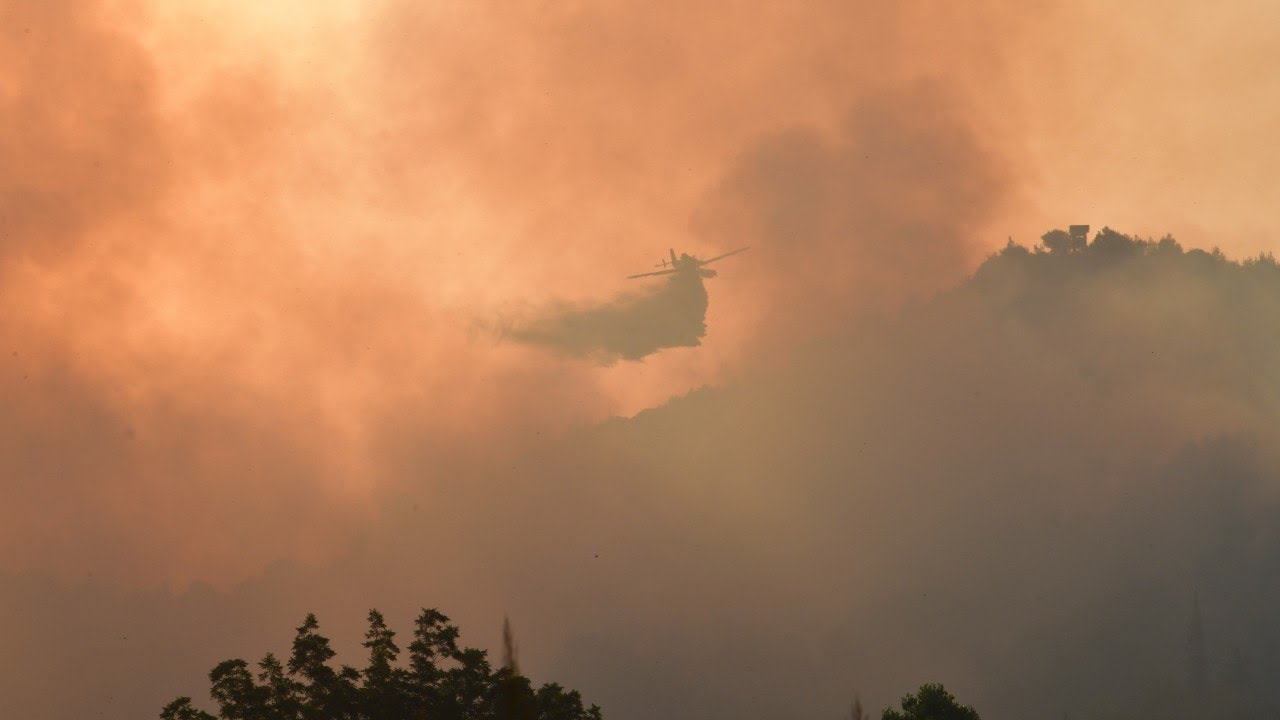
Added:all life on earth is predicated on a fine ecological balance everything works in symphony changes in atmospheric pressure between ocean and earth create a weather system that drives the planet's seasons and for 440 million years since the first plants produced oxygen the atmosphere has maintained just the right conditions to nurture all life in abundance yet in this time fire has also irrevocably shaped the landscape whole ecosystems have adapted to survive and propagate out of the ashes [Music] but it's only been four hundred thousand years since homo erectus first mastered the art of making fire this caused a crucial turning point in the cultural evolution of modern humans with fire our ancestors could venture into colder regions for the first time and forge stronger tools in the heat of a flame nowadays whole cities are run off the energy from coal-fired power plants while our automobiles and airplanes rely mainly on gasoline our entire lives are powered by combustion [Music] but fire is a far older and more nuanced force than most of us understand it is responsible for sculpting the planet we inhabit and molding the organisms we share it with it is even responsible for shaping us in this episode we will take an in-depth look at what wildfire is and how it came to be traveling back in time to the earliest building blocks of planet earth and witnessing how each step in natural history would lead us incrementally to the present moment one that has been formed in an age of fire for the truth is we live on a flammable planet and it's only getting hotter [Music] wildfire an untamed titan in its most brutal form let loose on the world few forces of nature can rival its destructive power it is a primordial expression of energy that has shaped the planet as we know it carving its signatures into the foundations of the very ground on which we stand this wildfire has taken hold in a mountainous region outside the city of cape town south africa it is an exemplar of wildfire in its most enduring form much like the perfect storm there are certain conditions that can create the perfect fire strong winds urge the flanks of flame onwards as they climb through inhospitable landscape and devour the dry terrain [Music] each wildfire is unique an expression of its surroundings and conditions capable of change in an instant and always carrying fatal potential the task that lies ahead of the team of firefighters is a daunting one wildfires like this one hold an ever-present capacity for catastrophe in order to curb the destruction wrought by the inferno they will need a deft understanding of the makeup and workings of mega fires in their natural setting they will battle the blaze through the night knowing they are facing one of the planet's oldest forces this is raw elemental power in its ultimate form but it hasn't always been here there was a time when fire didn't exist on earth and things looked very different to understand the beginnings of our flammable planet we have to look way back in time to a most unexpected place and a most unassuming entity [Music] these are stromatolites they are the oldest fossil evidence of life on planet earth dating as far back as 3.7 billion years these ancient structures are formed along the intertidal zones of oceans by cyanobacteria [Music] they may not look like much but they are vital to the narrative of how our world came to be and what makes them so important to the wildfire story has to do with the process in which they were formed the cyanobacteria in stromatolites were the first organisms to perform oxygenic photosynthesis when they did this they increased the amount of oxygen in the earth's atmosphere it took about a billion years for this oxygen production to make any significant difference but when it did the change was immense we know it as the great oxygenation event [Music] and because of it our planet became shrouded in oxygen allowing all of the organisms that we know today to exist and this was a crucial step in the evolution of fire on a chemical level fire is an exothermic reaction commonly known as combustion it is an energy releasing type of oxidation that needs three things to take place fuel heat and oxygen these combine to form what is known as the fire triangle after the great oxygenation event the planet had enough oxygen for fires to spark but it was not until 440 million years ago that the third arm of the fire triangle fuel would be fulfilled this was called the devonian period and it was then that wood first appeared on the planet plants first developed wood as a means of transporting water later it would become a support structure for trees [Music] when wood arrived conditions were perfect and for the first time in history a fire broke out and it's been raging ever since [Music] it's only in wilderness areas that we are able to get a peek into how fire has functioned through the ages [Music] it is here that we can witness how it moves and interacts with the landscape disintegrating and reshaping the natural materials it encounters this wildfire has burned through into a second day devouring much of the south african mountainside the chief reason for its size and ferocity is the sheer volume of dry woody vegetation that it has to burn wood and fire are the ultimate partners in this primal dance of earth and element wood combusts when it reacts with oxygen to produce heat energy only gas has the ability to combust so for fire to occur the wood needs to be heated until the point that it releases gas from its surface when a solid object is heated until it becomes a gas it is known as pyrolysis when wood reaches 150 degrees celsius the heat decomposes the cellulose material that makes up the wood which then releases pyrolysis gas when these gases become hot enough the molecules break apart into fragments that bind with oxygen in the air they form hydrogen dioxide and carbon dioxide molecules otherwise known as fire [Music] for the firefighters the job is to break the fire triangle if they can interrupt the flow of oxygen heat or fuel they will defeat the blaze their first mission target the fuel without fuel there can be no fire the team has opted to try and physically remove the woody shrubs ahead of the fire's path for the fire cannot burn what is not there the topography of the land is an important consideration when targeting the fuels because this influences the amount of solar radiation received hotter fuels burn easier because half the job has been done before the fire has even arrived the direction the mountain is facing known as the aspect is crucial in this regard in the southern hemisphere slopes with a northern aspect create the most devastating fires because they receive the most sunlight the sun has the ability to pre-heat the ground priming it to a point where even the slightest provocation can cause catastrophe today the situation is at its worst waves of fire four stories high whip across the road engulfing whole swathes of forest for the firefighters almost all the odds are stacked against them [Music] this wildfire is too large and widespread to fight head-on and as it consumes everything in its path it only grows in fervor and aggression but understanding the apocalyptic force of fire is only one side of the story wildfire is equal parts destructive terror and creative artisan we owe planet earth as we know it to fire fire prone ecosystems cover 40 percent of our land surface today since fire first scorched the earth species began evolving to use its destructive potential as a means for furthering life this area known as the southern cape of south africa is one of the most fire prone places on the planet in the last year 91 000 hectares of land have been raised to the ground the biomes that exist here carry with them a multitude of adaptations that use fire's power as an agent of creation rather than devastation the predominant vegetation type is called feinboss shrubland the feinboss biome consists of approximately seven thousand species and many of these have ingenious techniques for using fire to flourish following the desolation of a wildfire new growth explodes in abundance from plants known as fire ephemerals seeds that have remained dormant in the earth sometimes for years suddenly emerge and begin anew there are many different ways that plants use fire to create new life but there is one particularly inventive method that has remained a mystery to scientists for years until very recently [Music] and the secret lies in the smoke of burning leaves [Music] as leaves burn special chemicals known as kerakins start to form these chemicals don't occur naturally within the plant but are only produced when the carbohydrates in the plant are heated this releases kerakins in the smoke after the fire has subsided the carrot cans seep into the soil where dormant seeds lie when the caricans reach these seeds they trigger an alarm bell that signals it is time to germinate [Music] as they do so the new seeds burst through the ground and flower leaving more seeds behind to wait for the next fire to trigger their awakening in this way burning plants send a smoke signal to the next generation informing them that their long sleep is over and that it is time to breach the surface of the earth environments that are adapted to thrive in the presence of fire are more disposed to burn and this is another reason that this particular fire is moving so ferociously it has taken hold in three different vegetation types that are naturally primed to combust the main body of the fire is burning in feign boss but in its southernmost flank it has crept into a pine forest these trees thrive in heavy fires the flames contribute to spreading pine seeds faster because this is part of their propagation strategy pine trees originate from the northern hemisphere and are ubiquitous in north america the u.s has suffered a spate of catastrophic fires in recent years wildfires have caused an estimated 5 billion worth of damage in the last and decade on average more than a hundred thousand fires burn across the country every year and pine has a big role to play pine cones form a thick shield that encases the tree's seeds inside the fire aids the trees in two ways firstly it breaks open the cones releasing the seeds into the earth and secondly it removes any obstructions to sunlight that other surrounding trees would have otherwise caused this strategy allows young pine trees to grow without any competition fire is a critical aspect of their evolution so they tend to spark easily and further to the east the fire has latched onto a stretch of eucalyptus forest there are more than 700 species of eucalypts in the genus all of which are designed to burn eucalyptus trees come from australia a country plagued by devastating and deadly fires a recent surge of fires leveled two million acres of land and eucalyptus trees are often at the base of these conflagrations in portugal a quarter of all of the country's forested land consists of eucalyptus plantations because the tree's pulp is one of the country's biggest exports but when 18th century botanists first introduced the species they could never have known its fatal legacy [Music] recently a single scourge of eucalyptus fires killed more than a hundred people and caused one billion euros worth of damage [Music] fire is an essential part of the life cycle of the eucalyptus tree their leaves and sap are highly flammable when fire catches in the trees the bark fuels the flames encouraging them to climb up to the crown after the fire has decimated the landscape the burnt seed capsules open up and thrive in the ash-rich soils [Music] this single south african wildfire is being propelled by three separate forces of combustion organically engineered from three opposite corners of the globe [Music] it is a microcosm for the global wildfire story and it's only via a view of the planet that wildfire's true significance can be understood in recent years indonesia canada america chile south africa and russia have all been wrecked by major blazers whilst the number of fires in europe has increased by a full 40 percent indeed if we were to step outside and look at the planet from outer space we would see that the whole earth really is on a fire while there are many reasons for this that pertain to human activity one reason that cannot be ignored is the fact that fire is at least in part a natural state of planet earth and this is because the conditions that allow fire to exist are also the very same conditions that allow us to exist fire has been present on planet earth for more than 400 million years it has crafted and shaped the world as it has burnt it as we track fire through the ages we can see how it leaves its imprints on all of the organisms that have evolved to thrive in the flames but there is one very modern life form that has an ambiguous relationship with fires us the control of fire by early humans changed the course of our species forever the earliest evidence of humans using fire emerges from a cave site in south africa dating back one million years ago fire would allow our ancestors to migrate from africa to colonize the far colder european continent 790 000 years ago humans then moved to the top of the food chain because we could burn whole landscapes fireplaces and ovens emerge in the timeline 200 000 years ago by the iron age we began marrying fire and metal this would lead to our early forges and factories by 1860 the western world became entirely powered by coal fire then became an agent of our wars fire gave rise to our cities fire allowed us to leave the earth and step out into space without fire we would have been unable to power the human brain fire even changed the very structure of our genome forever it prompted our guts to be smaller and allowed our heads to be bigger because we could cook food for the first time being around smoke also forced a genetic mutation in modern humans that allowed us to metabolize certain toxins at a safe rate [Music] this evolutionary advantage is only found in homo sapiens and it is a direct result of being around fire [Music] as humans we owe what we are to fire [Music] but our relationship with it is far from one-sided there are various forms of fire and while we have been able to manipulate and master many of these to our benefit there is one that we have never been able to control wildfire ever since the first fire brigade was established in rome in 6 a.d humans have been trying to put out fires in as much as they have been lighting them firefighters now have a range of techniques built on centuries of knowledge with which to face this ancient force handheld beaters are effective at smothering the fire's oxygen supply the firefighters have to fight shoulder to shoulder otherwise they will fan the fire rather than suffocating it water is an effective fire fighting mechanism because it targets the fire's heat supply this is because it takes a tremendous amount of energy to heat water up a single liter of water absorbs three megajoules of energy before it turns into steam by wetting the ground firefighters force the fire to expend massive amounts of energy to heat its fuel source to a temperature that it can ignite and when firefighters target their hoses onto burning substrate the fire has to work harder to retain enough heat to keep its combustion reaction going how firefighters attack a fire depends on a number of variables the size of the flame the type of fuel being burnt the topography of the land and the atmospheric conditions all play a major part in forming a fire suppression strategy this wildfire is proving itself as a worst case scenario in all major considerations [Applause] a fire's best topography is densely wooded steep and mountainous the worst possible terrain for firefighters to do battling and it is here that the wildfire is thriving but aerial support is a massive ally in our battles against the blazes humans have been using aircraft to try and put out fires from as early as the 1920s [Music] but it was not until the 1950s that they became fully functional fire suppression tools modern firefighting helicopters are equipped with buckets that can hold up to 3 000 liters of water these are filled with a nearby source and then moved to the battle zone aircraft are most efficient at combating the fringes of the fire this is because they are more effective on fires that are still small and growing [Music] spotter planes are used to orbit the fire and relay key information to the control base they act as an eye in the sky which is often a vital help in coordinating an attack when a fire has grown to a considerable scale the aerial combat strategy is one of indirect attack aerial firefighters surround the fire and outflank it as they drop retardant on the ground they box the fire in making it more difficult for the inferno to grow even with all of the advantages that airplanes and helicopters provide they cannot win the war by themselves big blazers require a unified attack on all fronts in order to be curtailed and it is only through the precise coordination of both aerial and ground forces that this particular wildfire can be faced the firefighting team has identified a key point at which to attack the enemy [Music] in order to try and outmaneuver the fire they need to defeat the growing fire line on the top of the mountain helicopters are used to transport the ground troops to this inaccessible battlefield [Music] if the flames are below one meter high the fire may be controlled directly at the head the fire line is comprised of a light fuel load which means that the most effective form of attack is hand hand-to-hand combat highly targeted physical strikes are used to extinguish sections of the growing line step by step they removed the fire's fuel sources whilst simultaneously smothering the flames the stand on the mountain has been successful but this fire has taken its toll on the landscape the once fertile mountains are now an apocalypse of char and ash and not everything that has been burnt will grow back if a fire burns above 300 degrees celsius it incinerates all of the organic matter in the underlying soil meaning that even though the flames may be out anything that was once living has now been scorched [Music] the firefighting team further down the mountain has a far more daunting enemy in front of them fires that are this well developed become near unstoppable juggernauts when they reach this size they start to feed off the processes they themselves have created as hot air rises it is replaced by cooler air that is sucked in from the surrounding area this begins the circle of reinforcement increases in the wind intensify the fire which increases the wind which further intensifies the fire fires of this magnitude even generate their own weather [Music] pyrocumulus clouds [Music] these form when the extreme heat from the flames forces air to rise rapidly [Music] as the fire burns vegetation it causes the water inside it to evaporate into the rising air where it condenses around smoke particles in the atmosphere above when these clouds form intense burning and an unpredictable spread of fire in all directions is likely to occur it has now become the ultimate wildfire capable of creating its own climate and spreading by its own volatile will these infernos function outside of the predictable patterns of ordinary fires as the smoke plumes increase the firefighter's job gets progressively harder the smoke obscures their vision and obstructs their breathing as the team battles through the haze trying to stall the fire it climbs ever higher through the mountains it is the earth's gravitational pull that dictates how fire spreads if you were to light a fire in zero gravity it would form a sphere but owing to gravity the hot gases in the flame are less dense than the surrounding air so they rise towards lower pressure this places the fire on a continuous upward trajectory meaning that the nighttime fight is going to be a difficult one when the sun dips the true magnitude of the enemy ahead is revealed [Music] as dusk arrives on the battlefield the team prepare themselves for the final stand in the mountains fighting fire at night is a different story altogether [Music] the ability to judge distance is severely compromised the size of the fire becomes overestimated and the proximity between yourself and the flame becomes underestimated and in firefighting there is a very crucial reason why this shouldn't happen the killing zone [Music] heat is responsible for killing most people in fire tragedies heat moves through space as energy waves [Music] it travels in straight lines at the speed of light this is why when facing a fire you can only feel heat from the front and as you get closer to the fire the heat increases the killing zone is an area in front of the fire where the radiant heat will be enough to kill a firefighter it can be calculated as the height of the flames multiplied by three and it is here that the team must do battle god when firefighters enter the killing zone the most important thing is that they don't panic panic consumes energy and that can lead to death another important consideration is that the firefighters stay together [Music] most firefighters who die die alone nearly half of those that perish in the line of duty succumb to heart attack caused by the human body being unable to cope with the radiant heat energy of fire the team works tirelessly to battle the blaze but this fire has become too dangerous they are forced to retreat wildfires that are this big cannot be fought from within and they cannot be beaten by human hand [Music] when fires reach this intensity they become more powerful than all of our collective suppression tools combined [Music] if the heat energy reaches beyond 70 degrees celsius even one second of unprotected exposure to the flames is enough to char human skin instantly water too is useless because it turns to steam before it can affect the fire's heat supply and under these circumstances it is too dangerous to fly planes and helicopters at night when a fire reaches this size the only thing that can defeat it is fire itself back burning also known as counter burning is the principle of using fire to fight fire but conditions need to be absolutely perfect before it's even attempted if the wind is not blowing in the correct direction or the topography of the targeted hill isn't perfect the back burn could create even greater catastrophe with the wind fanning towards the blaze and the main fire moving at a slower pace down the mountain the firefighters decide to take the carefully calculated risk [Music] back burning is another way of targeting the wildfires fuel source by the time the wildfire has descended the mountain the man-made fire would have burnt everything in its path leaving nothing for the wildfire to consume with the wind fanning it the back burn moves quickly up the hill racing to meet the oncoming wall of fire [Music] and just like that peace finally falls across the charred south african landscape [Music] when fire first sparked on the surface of our planet everything changed a force emerged that could topple the tallest trees level mountains and leave whole landscapes barren this force did something unique something that nothing else had been able to do before it synthesized its surroundings by taking everything and making it part of its own chemical reaction through fire the oxygen in the air and the surrounding organisms were combined on a molecular level and expressed as heat and light energy this reaction was powerful enough to break apart whole entities and reconstitute them in a new form taking multiple different elements and making them one burning hole and as this happened the world began to change living organisms started using this destructive power as a means of creation wildfires leveled entire ecosystems to dust so they could be born again from the ash through the ages it has been an engine for evolutionary change this has been most recently evident within our own species fire has enabled massive technological advancements allowing us to power ourselves from antiquity to modernity but in its unchained untamed form wildfire is too great for all of our technology with fire we encountered one of nature's most brutal forces one that we couldn't always domesticate one that didn't always bend to our will the story of wildfire through the ages is the story of our planet as we know it and ultimately it is the story of us but wildfire remains a constant threat to our modern civilization and the evidence is clear things are only getting hotter in the next episode of anatomy of a wildfire we will take a look at fire and modernity delving into the nuances of what happens when humans and fire share boundaries feeling the heat of the flames on the doorsteps of our modern urban settlements [Music] [Music] you
Up Next
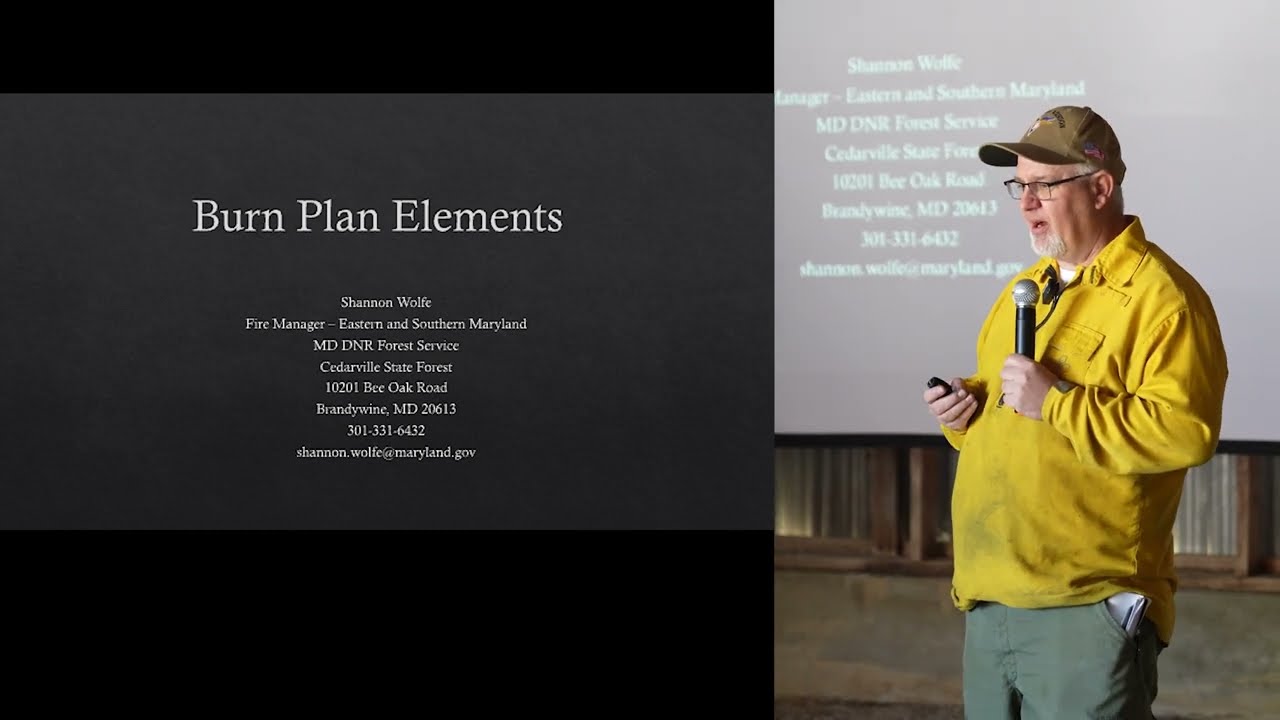
Prescribed Burn Plan Elements for Land Managers in Maryland
@land-wildlife
100 views•2025-05-26

Triumph of Orthodoxy Icon: Byzantine Art & History Explained
@BenCallan
2.1K views•2024-08-06

FastAPI vs Flask vs Django: Choosing the Right Python Web Framework
@TechWithTim
302.5K views•2024-05-26

Game of Thrones Opening Credits: A Cinematic Analysis
@gameofthrones
46.3M views•2011-04-18
Related Study Plans & Knowledge Roadmaps
Structured learning paths in General & Interdisciplinary Studies