

















A prescribed burn plan is a comprehensive document required by Maryland law for burns over one acre, covering essential elements including burn objectives (SMART goals), burn unit descriptions with fuel models and acreage, weather and fuel conditions parameters (temperature, wind, humidity, drought index, fuel moistures), smoke management, contingency planning, and safety protocols. The plan must include burn boss qualifications (two-day workshop plus three years experience or five years experience), equipment requirements, control procedures, and pre-burn notifications to agencies. The Maryland Department of Natural Resources Forest Service regulates open-air burning for resource protection, and burn plans are updated periodically to reflect technological advances and increased burning activity.
Prescribed Burn Plan Elements for Land Managers in Maryland
Added:Thank you, Shannon. Hey, thanks for running a great burn boss. Yeah, no problem. Can we give him a round of applause and all the guys who ran that worked so well? So pleased. And uh take it away. Thank you.
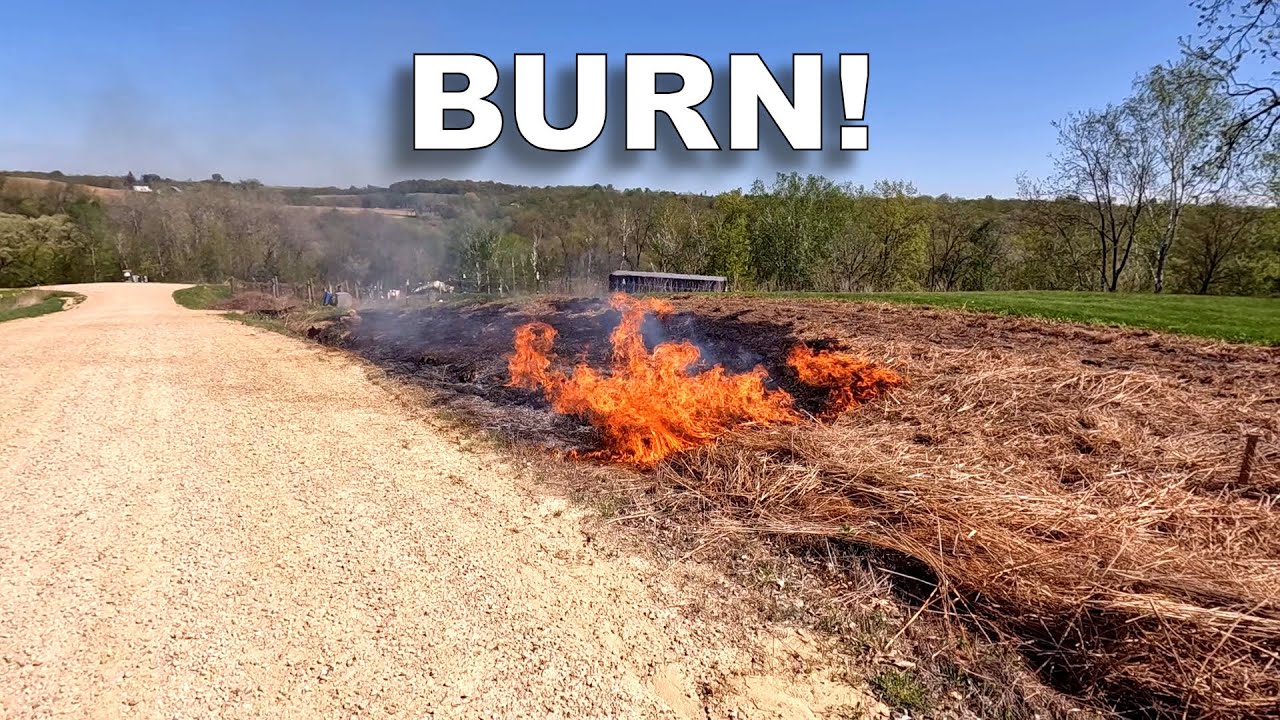
So, um we did have a successful burn today and uh why did we have a successful burn? Um, a lot of planning goes into it uh to to make sure that the conditions are right, that you have the people, that you've planned for everything that that that could or can happen and and to make this thing successful. So, uh, the document that we used for planning is is called a burn plan and and basically the burn plan is covering the who, what, when, where, why, how, and a little bit of what if. um it it it for your planning and uh and so why do we put all the planning in it to be successful? Um second because it's law.
Um the the the Maryland Department of Natural Resources Forest Service is the agency responsible for for regulating um open air burning and and the the laws that that are there for resource protection. So it's protection of natural resources from fire. So, so as part of our law, um, you know, there are stipulations on when you need a burning permit, when you don't need a burning permit. Um, and then and then when you need a burn plan, and when you don't need a burn plan. So, so by law, you can burn under an acre without a burn plan, but you still need to get the burning permit. And a burning permit is just it's just a document we give to folks that that are going to burn brush or or or or whatever they're trying to burn that that is legal to be burned in their backyard. And basically we're saying that they need 10 ft of clearance around it. They need to have somebody responsible with it. U they have to have tools and equipment from keeping the fire escape and and and all that stuff.
So if you're going to burn under an acre, you still have to follow all those rules. Um but at that point, you you don't need a perm burn plan. Does that mean you shouldn't have one? Not not in my opinion. Um if if you're burn planning to do any sort of natural cover burn um broadcast burning, you should work with your with your county's forestry service office. And each county has an office that you can work with to to get that burn plan and they'll help help you along the process.
Um and moving forward, we'll talk about some Did that go off, Luke?
Oh, yep. And as you you we move along here, we'll talk more about the the the requirements for for for being part of the plan as a burn boss. So So legally, you need a burn plan if you're going to burn over an acre. Um what's that?
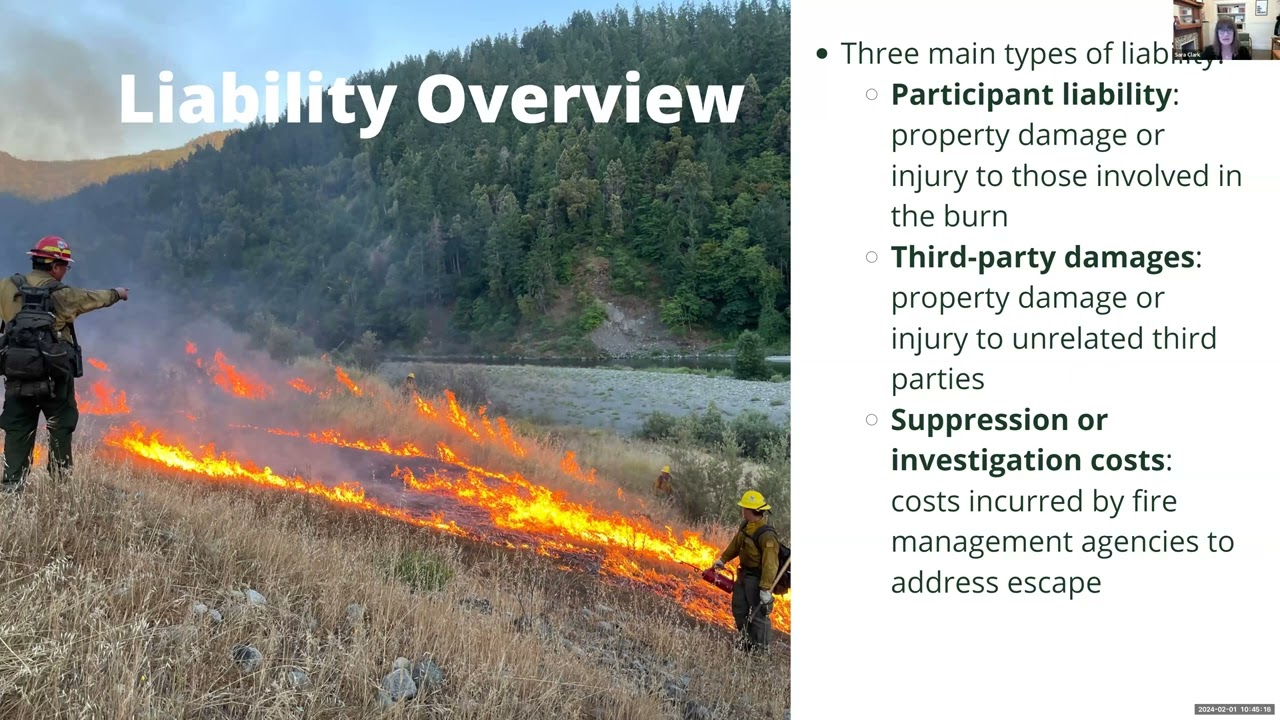
Um Department of Natural Resources Forest Service is the is the is the agency and each county has a has a forestry office. If if you go to our website, Department of Natural Resource, and under forest, there there's contact information for for each project office. So, um, so why else all the planning liability? You're you're you're putting fire on the ground. You're you're you know, fire by just by nature and and when you need to use fire during fire season, it can it can get out of control. So, so you know the liability end of that um you need to make sure that that all that that everything has been covered and that you're you're you're burning when you when you should be and how you should be. So the plan covers all that.
So, our burn plan um recently was updated. Uh the the the previous version was 2010 and and the current version just came out in January. And as technology progresses, um the need for for an update was was there. And as as more and more people are starting to burn, um, as an agency, you know, we're responsible to make sure that the the people that are burning have covered all their bases and burning as safely as possible. So, we added some stuff. Um, we streamlined some stuff to make it a better document. Um and and you know, before it was a three-page document and now we're up to five pages with some attachments, but um you know, compared to other agencies that that that you know, when they submit burn plans, they're they're they're you know, they're they're pretty they're pretty substantial and thick and and pretty complicated. Um we didn't not to say that ours isn't complicated. You still need to know um as we go through this, we'll just scratch the surface on the elements, but you still need to thoroughly to thoroughly understand the elements of the burn plan. So, basically, you know, we don't want to give you the keys to a vehicle that you don't quite know how to drive. So, the burn plan, when you write the burn plan and submit the burn plan or we're working with you for the burn plan, you know, we're getting an idea, you know, are you speaking the language? Do you do you do you is everything look right to us before we'll approve the burn plan and do you have somebody qualified to lead that burn and we'll talk about that a bit more. So just to just go through the burn plan itself the the first part of it first element is uh the burn plan number. See where the pointer is on it.
Oh The burn plan number goes there and when it's approved a number will be assigned to it. That that's the number of that plan for that year. Each one is individual. It helps us reference that.
It helps when you're reporting for us to reference what what what was burned. Um who it was prepared by prepared by submitted by and approved by would be the fire manager. Um for eastern and southern regions it would be me. For central and western regions it would be Tim Cole.
Um the next part is just for state land.
Um just looking at you know their particular lands that that require particular uh approval from the restoration ecologist with the wildlife and heritage service. So um that's that's a state land thing. Um if you are burning on state land and you're not sure if it's an ESA or not, you can you can contact myself and I I'll help you through that process.
environmentally sensitive area. Okay, so ownership pretty basic.
Where are you burning?
You know, it these are all dropped down.
The region, the county, is it private land, is it state land, the property owner, if there's a land manager that that's writing the plan or or managing the property, their information would go there. And latitude and longitude, just basic information with the first element. So, the purpose and objective.
So the purpose we have uh the most frequently used here um you just check box you know today we would have used warm season grass maintenance wildlife habitat improvement would have been picked another purpose may have been training for the workshop um for us sometimes we'll use uh training for for our people. So, so those are the purpose of why you're burning. The objective is a specific reason for what what you're trying to do with that fire. And we we call it a smart objective, meaning that it's specific, it's measurable, it's attainable, relevant, and and time time bound. So, we want to specifically know what you're what you're planning to do with the fire. I'm trying to, you know, consume 100% of the grass. I'm trying to kill a certain percentage of the overstory trees specifically. What are you doing? So when you're done the burn, we can determine was it successful or unsuccessful. The third element is the burn unit description. And this is new to this burn plan. Before we just had one one entry here, and now you can submit several different burn units. But we want a description um of the burn unit. And then and then this has a a little when it's on the computer, you can just add lines here. And basically for each burn unit, you can have a separate line. So when we were when we were burning our burns, the areas that have a fire line around it, that's a burn unit. So we burnt one, two, three, four, five units today. And then under each of those units be the acreage. And then the fuel model. The fuel model we burnt today was grass, could be understory, um, could be marsh. So, it just depends.
And there's a drop down menu to help you select. So, we want to know what the slope is. Um, and you know, this is for statewide. So, um, not super applicable here on the shore, but western Maryland, pretty important. Um, aspect, uh, I will say for aspect on flat ground, we usually use south. That's the driest slope, so the most applicable. and then percentage of the overall burn. So if you had a burn unit that was 50% grass and 50% timber, um you would have you would have the it would be the same burn unit, but here it would be grass and 50% of it was grass and then another line same burn unit number uh understory and percentage 50%. So that that's just what that percentage of the burn means. adjacent fuels. When we're when we're looking at the at the plan, we want to know what's surrounding it. You know, it helps us understand, you know, what the risk is of burning there. Is it is it grass with grass beside it, which if it slops over, it's going to take off? Is it brush? Is it logging slash? So, that's what that's for. And then again, this is just showing you different burn units and and and and numbered on a map there. and and each one of those units are different different fuel type or or uh some of them are the same but just different units. So this is uh weather and fuel conditions. So we were talking about our prescription today and and this is really the parameters and kind of the meat and potatoes of of the conditions that you need to have to to successfully can do your burn. And with uh the amount of time we have here today, we don't really have time to do a deep dive into what what each of these should be. Um you know, we could spend a week just talking about the parameters.
Essentially, we want to know what the temperature is and the in the wind speed, the wind direction, the humidity, um how many days since last uh measurable rain, what's the drought index and the fine dead fuel moistures, which the fine dead fuel moistures are the real fine smaller fuels on the surface that are actually carrying that fire. Um the fine dead fuels and then the one hour or the 10-hour fuels and 100 hour fuels. So the these are just the fine deads are real fine things, needles, leaves, grass, things like that. 10 hours is a little bit bigger branchwood. Um you know, just a little bit larger. And then 100 hours you're starting to look at logs and things like that. And you know, we were burning in grass today. So we would have we would have a measurement in there that we're that we need to follow, but we didn't have any 10 and 100 hour fuels. So, so those would be blank for for a grass fuel model. If you were doing understory negative negative in advance, no, we're setting the the the parameters are set. So when you look at a burn, when you look at what wind directions are acceptable, this is just telling you the window to Yes. Yes. This is the window. This is your prescription.
Yep.
You would need to tell me. It's it it is complex. It's a lot to understand, which is, you know, what we did today may may have looked simple enough, but it's when you're looking at understory and brush and and tall thick grass, you really need to understand um this information. You need to understand how the temperature and relative humidity work together and how when they work together, they decide what your fine dead fuel moisture is and how the wind speeds are affecting what you're burning. There's a lot to understand there. And yep, I have not read through Luke's, but but yeah. Yep. Yep.
So yes, the the parameters in the in the burn in the in this the people at the county offices again, you can work with those and they can help you with with some of these numbers. Again, we're when you come in, we're we're judging. Do you know what you're doing? like we're not going to spoon feed you the information to put in there if we're not sure that that that you understand the information that we're giving you. So that when we want we want people to be able to burn, but they have to burn responsibly. And and and as a as a group and as a prescribed burn association, if we're conducting burns and they're getting out of control and the fire departments have to come handle them and and and we have to become involved, you know, at that point it starts to give it that prescribed burning a bad name if it's not being done responsibly.
blah blah blah. Right.
Right.
So, so she's asking how how do you know what those parameters should be like a month ahead of time or several months ahead of time like wind direction. So we know generally in our area, you know, generally comes from the west or northwest, but we do get south and east and and it just depends. So So when you're looking at wind direction, what what is that affecting? That's affecting the the hottest side of the fire. What are the fuels on the other side? It affects smoke direction. If you have a burn here, and then a quarter of a mile away or or less, there's a there's a chicken house, for instance. If you're have your smoke direction going towards that chicken house, then then you could you could create a problem with with your smoke and you're responsible for your fire and your smoke. So So all all this stuff works together and it is well your preferred is going to depend on your site. It's very sight specific.
So, if if if you have your property, right, and and you have your field, if there's a house on the south side of it, you're not going to want a north wind blowing right straight to into your neighbor's window. Yeah. So, so all these numbers are very specific to your site. You can't just write a prescription for every property, you know, as a as a generic prescription. Very specific. Any other questions? I know that's difficult and to go deep into this we would be here for a week.
So the smoke So Yep. Is there a timeline how far out supposed to? Yeah, that's a good question. Um we we prefer two months ahead of time. That gives me a chance to review it. I'll say that that I try to stay on top of that. Um I you know when people are because there are things that are last minute. If you submit me a burn plan, you call me and say, "Hey, I submitted this, but I need to burn next week." If I can do it, I will and I'll let you know. But if if if you know, if I can't get it, two months is about right. So, just as a follow question to that specifically on the previous page, it had last measurable precipitation. Yep. So, if you're filing two months in advance, y during a drop period of rainfall after that, who is making the or cannot be. You know, if you're approved in two months, a lot can change in two months, right? So, so, so let's go with the drought side of it. You have the drought index and we know when people start to have problems with with with ground fire and situations like that. And that index is going to determine that. So, we know, you know, that's a hard line that, you know, around the drought index of 400, you know, you're going to start to have problems no matter what you what whatever you're burning. So, so this time of year, you know, the drought index is usually pretty low. It's usually not a problem, but when it is a problem, you can't burn. And that's why we set the limit. There's a limit to to being able to burn based off of whatever the conditions are. like we want you to burn when the when they're when the drought index is below X. So it it doesn't matter, you know, you're not trying to guess what the weather is in in a month or two months.
You're just trying to set the parameters in which you can safely burn. Yeah. I guess my confusion is just that it seems like the parameters for your maximum minimum would change based on those conditions. Nope. No. Because what determines fire behavior? fuels, weather and topography. So your your fuels your minimum maxes on the floor. Okay, that is a good question because then it would tell me that like I should be shooting for my preferred range. So the the reason we we did used to have a span we just had the minimum and maximum. So this preferred window is the ideal conditions for what you want to burn. This is what your prescription is. But there are days where you get where where where you you would get like a lower relative humidity but no wind. So we've added a minimum and maximum so that when when you're looking to burn you know you a lot of your stuff is preferred but but only only one or two are in the maximum range. You know that the fire behavior is enhanced but not dangerous. If you're completely in the maximum, you're burning on the hot end of your prescription. Or conversely, if you're burning with all on the minimum, you're probably not going to meet your objectives to burn.
But but there are strict parameters that that you know all this stuff works together to influence the the fine dead fuel moisture, the moisture that's in the fuel, the temperature and humidity and and days since last rain. All that is affecting these numbers. And these numbers are what is determined if you're going to have moderate fire behavior that you control or extreme fire behavior that you probably can't control. And I need to know that the the parameters of each and it changes for grass to understory to logging slash.
There is no there is no cookie cutter that you know for that information.
Yep.
just kind of seems like there's a lot of specific workshop where you can understand how things kind of there are there a lot of training there's there's training available online through the national wildfire coordination group there's the S190 which is uh basic wildland fire behavior so that that information will will educate you on 10-hour fuels and find dead fuels and and how wind and temperature and humidity are are affecting fires. Yeah, I'll guide each of these sections that we have text closer.
addition.
Okay.
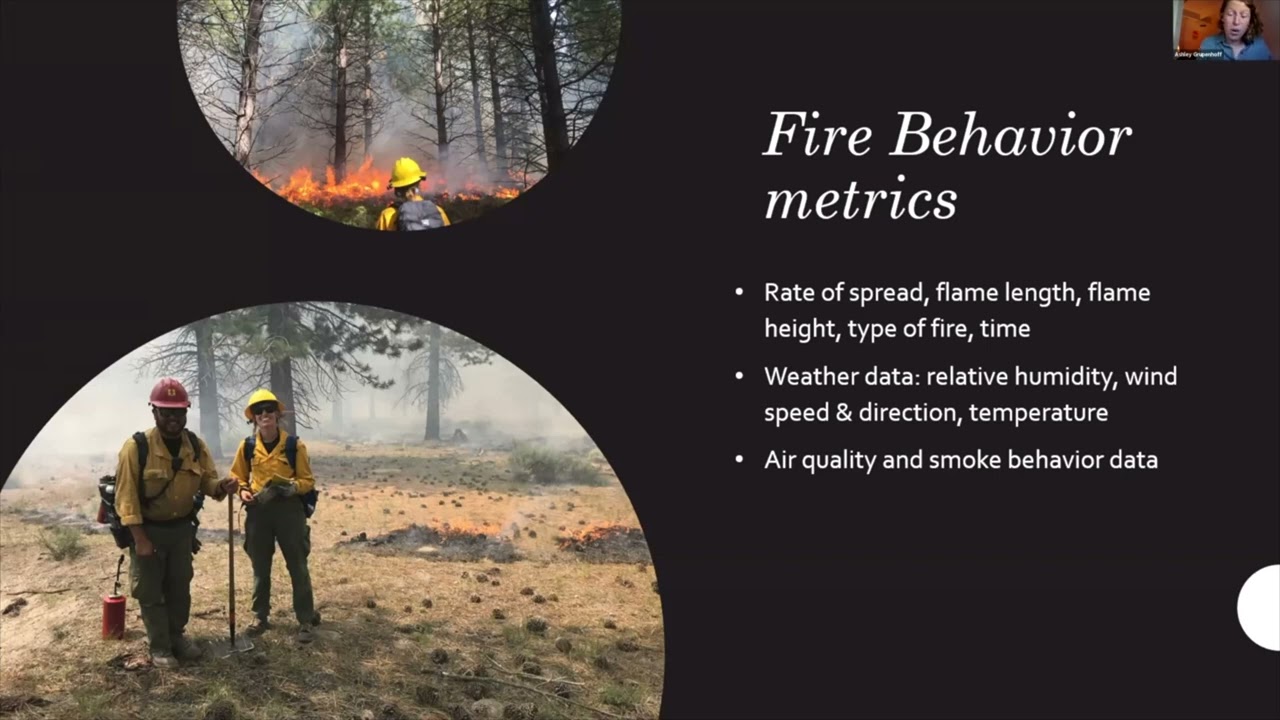
No, but but as part of the burn plan, you have to submit maps and and I'll look at the site and and and in the next section, for instance, you know, we have humidity, wind speed, all that information. You need to be able to calculate the the the through the minimum and maximum pre preferred from above. You need to calculate the rate of spread and the flame length for a head fire and for backing fire and and there is a program behave plus is a computer program that's free free to free to download and use and it has inputs and outputs. There's some YouTube training on how to use that program. It's it's not it's it's it's it's not simple, but it it it you can kind of figure out the basics of it to get the information that we were looking for there. Burn duration, estimated time. Um there we're going to be looking at if you had 200 acres of understory, um do you have enough time to complete that in one day? um or or or is it going to go into nighttime? And if it's going to go into nighttime, you know, what are what are those those considerations? So, so if you are have big acreage, it's it's advantageous to split that up into smaller units to try and try and handle and burn smaller units.
I want to ask question. Yep, you're good. So while we were out there today, I was asking the question, you know, what is the estimated burn time, you know, for this acre field when we're looking at it? Y and I was given the, oh, well, it just varies based on conditions. It does. So how is that correlating to you experience? I mean, you're essentially drawing out your imagined plan, right? But then you're just at the mercy of what goes on, assuming it was safe to burn them, right?
Feels a little bit like nonsense just to be completely really. Well, that I can ask somebody out in the field. Yeah. And they can't give me a projection on the field. Well, they know off of experience. They've burned. So, they should be able to fill this out. Yeah.
Right. So, in theory, by my asking them, they should be able to know that number based on experience. Like, this will probably burn in 20 minutes, right? You see what I'm saying? Well, it would burn in 20 minutes with control lines like that. But say you went to to a different a more narrow. Yeah. But if the if the control line is narrower, it's going to take longer to burn because you're going to have to go slower. And and if that acre acreage is like today, under any circumstances, you could burn that in a in a in a few hours. If that was a thousand acres, then I'm going to look harder. It, you know, does it need to be broken up into several areas so that you can burn in in one day's period?
That don't look like I answered that for you. I didn't do a confident answer that you just gave. It's experience. You didn't bring an example of today's burn plan with you to show us, right?
I think that would have been really beneficial for us to see today's burn plan, right? To understand how you're measuring parameters real time. You can have ours. Yeah, ours is I think we have I think we have our burn plan.
It does kind of feel well we're we're getting to get a little further. Again, prescribed burning is complex. I'm not I'm not debating that.
I would say my frustration with what I'm seeing based on the questions and answers I feel here. I need to know how quickly I expect When I literally asked somebody who's experienced in the field, their answer was it varies. Not based on the conditions today, I expect this will burn in 20 minutes or in 10 minutes. I think I think generally speaking, we could have looked at that field and determined if you could have done it in eight hours or not in eight hours. So, you're just saying I didn't get an answer because somebody to give me Well, I don't know who you asked. I don't know who asked. If you'd asked me, I'd have said you could do this in one day. So you could put eight hours on there and you'd be fine. Oh lord. Go ahead. Right.
You would get it. Can you get it? Yeah.
Each county has a a forestry office that you could go to and and they'll help you with with with this information.
about in the field. Would you assist in the field? Uh, no. Well, no. No. We We could do it for you, but but the state only has so much personnel and so much time to burn so many private land owners, which is why like that prescribed burn association is going to be important thing for you all. You work together to to get to learn this information and to get your burns done.
include like staff assist.
Yeah. Well, I mean the the forestry office isn't there to roadblock you from being able to burn. The forestry office is there for resource protection to make sure that that you have are armed with the knowledge and experience to do the burn that you're planning to do. And this burn plan is is standard for us for for the Nature Conservancy for across the country. You can't burn without a burn plan. And it is complex, but fire behavior is complex. Fire weather is complex. It's it's all complex. And and and you know, you can't have the keys to a vehicle that you're not quite sure how to drive. And and again, we're our our standpoint is resource protection. So, um Oh, wait a minute. There was one more question. Yep. Go ahead.
Yep.
So today's the first step. Um you you come you've gained some knowledge. We scratched the surface. This is some base information on how to move forward now.
So so now you need to to to gain the experience. The prescribed burn association again is a group of land owners that with varying degrees of of of experience that are all going to be burning on each other's property and and you can go and and gain that experience working with them.
Yeah. Can I I'd like to add some other things like there's a few different agencies as well and Bob Long is back there. Uh he's the quail upland gameberg guy. So, Wildlife and Heritage also does burns mostly on their WAS, but they can't commit to saying, "We will help all private land owners." But if you contact these guys and you say, "Hey, we want to do this. We're going to set this up. We've got disc lines." And you and you build a relationship, you you work with them, they say, "If we have openings, we can maybe fit you in." I'm I'm not speaking for you. I know Bob mentioned that, you know, they they will work with private land owners, and they have done that in the past. So, and the prescribed burn association is another avenue for experienced people to gain that too. But yeah, it is a chicken and the egg thing, which is something that people are talking about, but I need experience to do this. Um, but how do I get experience without experience? You can't conduct the burn if you're not a certified burn. False. Correct. But how do you burn association? Who is documenting your credit that you're spending time doing this? It's being worked out in the bylaws how to do that.
And I'll go over the law. Like I haven't got to that part of it, but I'll talk about burn boss here in a second. So, um, equipment required on site. So, this is what you're going to have there the day of the burn. We had the UTVs with suppression tanks. Uh, you could have a water tank for a supply source. You could have a portable pump that you can you could set up in a stream as a water source. uh bladder bags, hand tools, first aid kits, the the things that you you need on s site to safely conduct that burn. Control procedures. This is just how you're going to keep the the the fire under control. And generally that is done with your control lines and the amount of fire you're putting on the ground. Um and you're able to control the fire behavior. mop-up procedures is is is when when you're ready to clear that fire to for the day, how how much mop up are you going to do? So, for this grass burn, we burned today and because it's fine fuels and grass, it it went out pretty quick. If if we were doing an understory burn and the perimeter of the fire was still smoldering there logs and things that burn, generally we're looking for what are your standards like how much of that perimeter are you going to completely extinguish before you leave it like like leave it for the day or for the night. So that's the mopup procedure.
Special precautions are is there anything in the burn itself that that requires special attention? Are there telephone poles? Are there wooden bridges? Are there are what is in that burn that you need to consider that uh that is going to going to change the complexity or or way that you're firing that burn uh contingency plan. And you know, you have to imagine too, these plans are not just written for for for grass burns on flat ground. You know, there are are prescribed burns that they they do for instance in western Maryland that are few hundred acres that that include topography and they are complex. So, we need to know if that fire does go over the control line or it does spot, like what what is your plan to control that?
Is is there are there roads above it? Um have you put in leaf blower line above it in case it spots over? So, so that's what contingency planning is. Contingency resources are just generally like what is backup for for your burn. Um, it can be it could be the the Maryland Forest Service. In a lot of cases, that's what it is. If you had a problem and you were burning, you could call us. Um, and in just about all the time, if you were if you were to get a fire that goes across the line, um, your contingency resources could be 911 in the local fire department. Um, it could be the wildlife division if you're working with them. It could be it could be a myriad of things.
It could be other people in the prescribed burn association staffing post burn plan. Um, essentially what we're looking for there is these fires that do that are in logging slash or in understory that are smoldering for a long period of time.
you know, are you going back in and and checking that, making sure that that the the fire is completely secure before you call it out and done for for for that fire medical plan. This is just generally for for for this is in here for the purpose of safety and generally if there are safety hazards present you know you can list those and then you can list the mitigations to mitigate that hazard. So so you it may be things like like burns from fire or or refueling drip torches you know and the mitigation would be to bring the drip torches away from the fire before refueling. And basically, you know, this is if it's predictable, it's preventable. What's where are they going to meet you at? Um, if applicable, landing zone location.
And remember, again, these are for these are for low complexity and high complexity burns. It's a it's it's a burn plan that fits all that. So, for a landing zone for you, it's just going to be determined for for land owner. It's just going to be whatever the fire department or EMS decides. If we're burning on the side of Dan's Mountain, we may have a predetermined landing zone that we would take somebody if they were to be injured. Burn crew organization. Um, today we we lined out who the burn bosses were, who the firing boss and holding boss is. The burn boss is the person who is in charge of the fire. And the qualifications for a burn boss currently is um for non- agency for non-forest service for our own personnel the criteria is is much higher before you you can step into that position. For non- agency personnel it is having attended the two-day prescribed burn workshop 16 hours and and three years of experience.
uh you could you could also have five years of experience and have not attended the workshop. So either one of those suffice. Um the firing boss and holding boss there are no criteria for the qualification on that and there may be circumstances on lower complexity burn where the burn boss is holding all of these positions. You don't necessarily need a different person for each one of them. You could have one person handling all that. And this excerpt is taken from the from the regulation of of what is required for for a burn boss. Pre-burn notifications. We talked earlier about notifying your your neighbors if you're burning, whoever. Um this is for your benefit. Um I don't get overly critical. uh just whoever is directly adjacent to what you're burning you would want to have listed there.
This part is critical. Your air quality officer for the county. Um the fire manager, which would again be me for eastern and southern uh land manager, this is for state burns and ESA again for state burns. Notifications the day of the burn. The county 911 center. Uh we called them before and after we burned today to let them know what we were doing. So if it got turned in, you know, they're not they're not tying up emergency resources coming out to the fire. And then your your local forestry office. So if you let your forestry office know the day of your burn, they see the smoke column. They're not going to not going to come looking either. And attachments, some of these are are optional, some of them are necessary.
Um, you know, we need a we need a map of the fire that has the burn units on it.
Um, that shows the the different fuel types. Aerial photography works great for that. Uh, again, that one mile smoke impact map, five mile smoke impact map, uh, contingency map is optional. Um, the pre-ignition go no go checklist, and these are all attachments that are right a part of this package. And the the go no-go is just asking all the necessary questions. Are you are are you in in in in the parameters of your burn plan? Do you have the personnel you said you were going to have? Um have you made all the notifications? Yeah. So, and then again, uh other stuff that that is helpful prescribed burn agreement is just for the Maryland Forest Service. So that's that's not applicable to you all. And then the prescribed burn evaluation which is is is is not mandatory for private land owners but recommended. And these are just those those attachment documents and again Luke will have these available. This is the prescribed burn reporting. Um, you can do it with a QR code that takes you to the program or if this is downloaded, they have they have the link that you can click on for reporting. What type of tracking is there? I can understand like how how do you track that person that type of experience? How do you justify that?
That is a good question and and you know I I didn't write the law but but I follow it and right now there is no definition of what makes up a year of experience.
And like is it mainly from what it seems like just like you get an impression of how much experience someone has just back and forth talking with them specifically like understanding the interaction of all these different factors and like can understand someone knows what they're talking about when they submit the plan. I can usually look at it pretty quick and if the numbers aren't lining up and nothing is you know I can usually tell pretty quick that that and I don't get a lot of them.
Yeah. And and again, we're not trying to block you. We're trying to help you get this path to to get where you need to go. So that that local forestry office will work with you to get you from A to B. And and there are circumstances where we will take volunteers to help us burn.
Um that's not across the board because we their liability and and and you know, each I would say that's case by case.
But but you know, again, we're we're we're we're here as a service to kind of get you from A to B and safely. Yep. So, is the forestry office going to be your connection to find a network of burn bosses that you hire to do this with you? Uh there are are you mean to pay somebody to do your I can't you know I can't fill this out and go burn this because I don't have the credential to be a burn. Right. So, as a property owner, I would need to employ somebody at least in that capacity. So, how does a land owner find a burn boss to come work with them to work through this process? Yeah, that's I point you to the uh prescribed Sorry, I'm over here. Uh the prescribed burn council is a good resource. The prescribed burn, if you're on the Eastern Shore, prescribed burn association, they also know they know these networks, right? So, um, Chase, uh, Chase Mlean over there, he's the, uh, I think the director. He's he's leading that effort. He's plugged into the whole network. So, you can find contractors and things like that. Y, we are coming up on lunch. One final question. One last question.
Sure. And then I'll leave you alone.
That's all right. So, is the burn boss the one filing the plan or is the property owner the plan? Uh, it can be either or or somebody. It could be the land manager like like I you know I'm just looking at the plan. It may come from anybody as long as it's written and it and and everything lines up and it has has a qualified person there. That's that's all I'm looking for. I like we're strictly resource protection. I'm not looking to, you know, make it hard for somebody to do something. I I want to lead them to the right way to do it.
And I think there are also ways like there are ways in which you can people can pay the forest service a fee to also get burning done. There's a certain limited capacity and I will say we do our absolute best to to do that for land owners and to get to everything. We have pretty limited staff but you know we we work pretty diligently with land owners to to to to do burning for them and and you know wildlife probably probably does the same.
I found like like most like many things in life a lot of things are relationships. So it's build meeting people like this meeting Bob Wong talking to people uh you get plugged into the network.
concern is having property we are within parameters on you know let's talk about how they want they want to spray approved to spray under it's not just any registered applicant but because there's so much tension on the system by the time you get a person out of the window so what is it so working through again is why I'm know is not working for the forestry service. How do I find this person?
Well, especially if I'm not located on Sure. Yeah, I contact any of us. We'll be able to get in touch. and the local forestry office. Those guys know, you know, who who work there's very limited number of people that work that work local, but but they their companies have, you know, networks themselves and people that work seasonal for them and they bring them on and in a lot of cases it's probably wildland firefighters that are generally in the summer out fighting fire. Well, let's thank Shannon. Thank you so much. Um, there is a lot that goes into this. Not not easy. And it took us a lot to develop our
Up Next

Prescribed Burning Techniques: Ignition Patterns & Fire Behavior
@nswrfshkdistrict6843
7.3K views•2023-03-27

Triumph of Orthodoxy Icon: Byzantine Art & History Explained
@BenCallan
2.1K views•2024-08-06

FastAPI vs Flask vs Django: Choosing the Right Python Web Framework
@TechWithTim
302.5K views•2024-05-26

Game of Thrones Opening Credits: A Cinematic Analysis
@gameofthrones
46.3M views•2011-04-18
Related Study Plans & Knowledge Roadmaps
Structured learning paths in General & Interdisciplinary Studies