




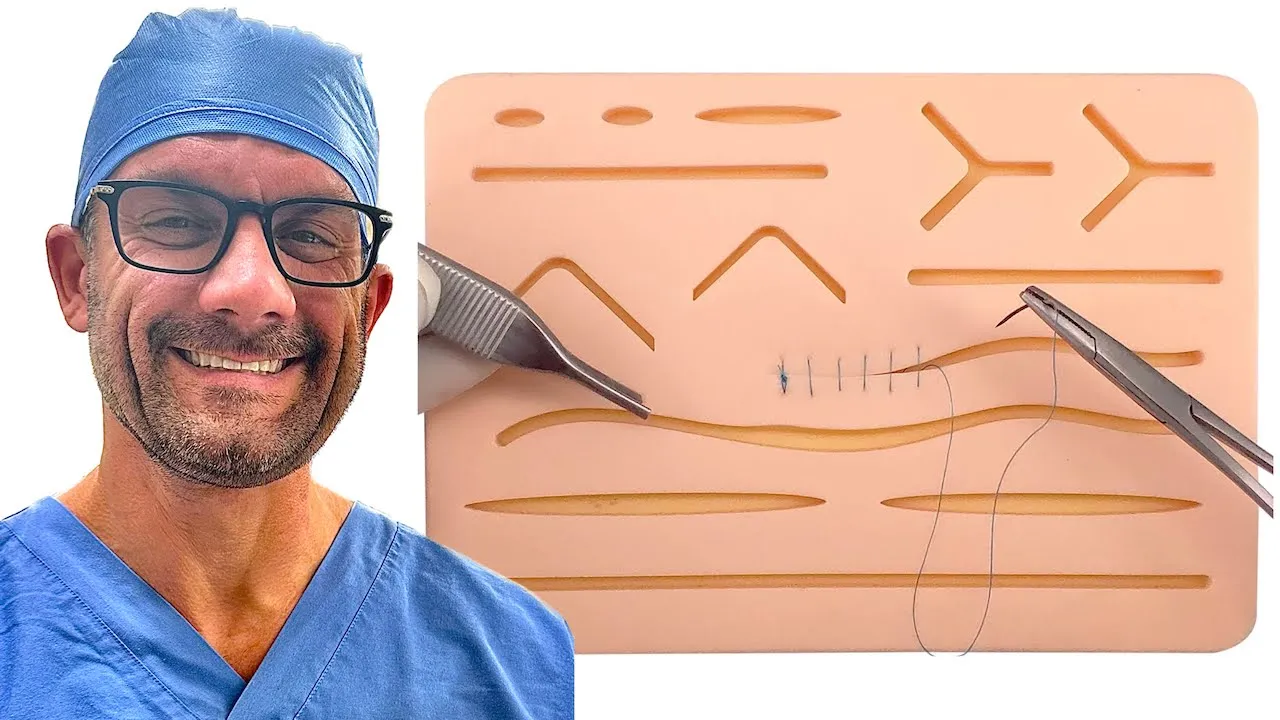




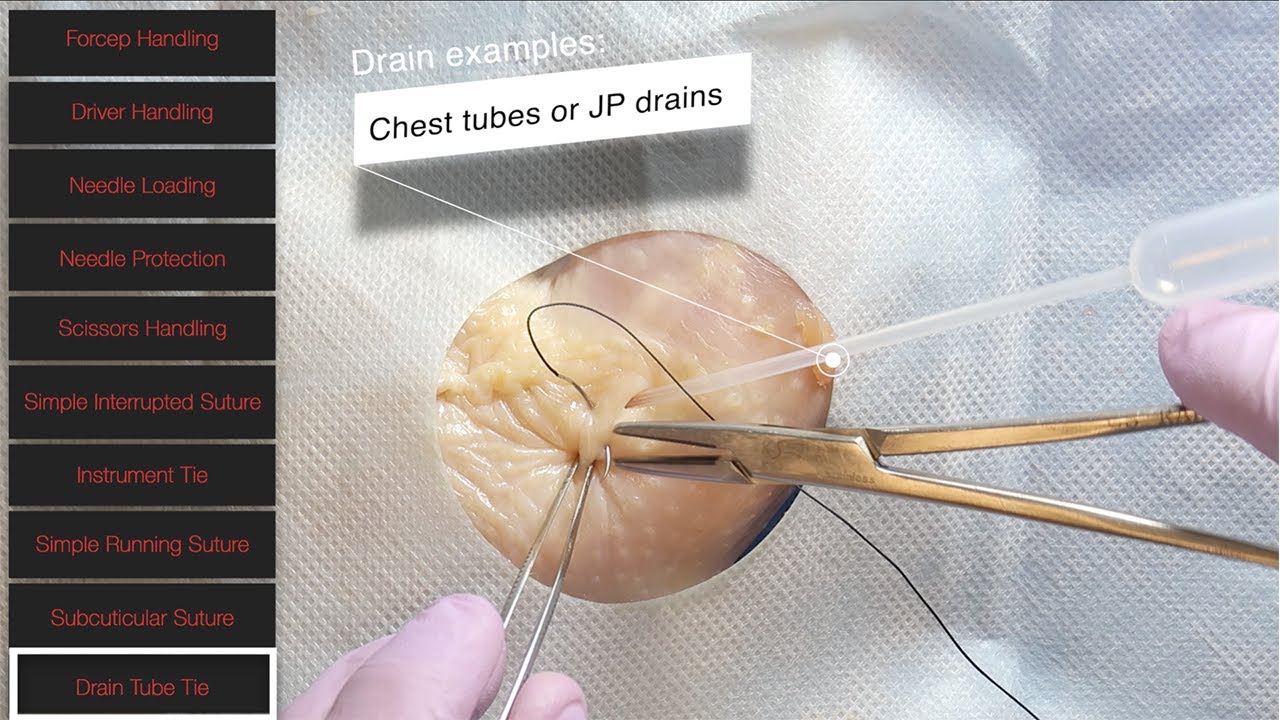


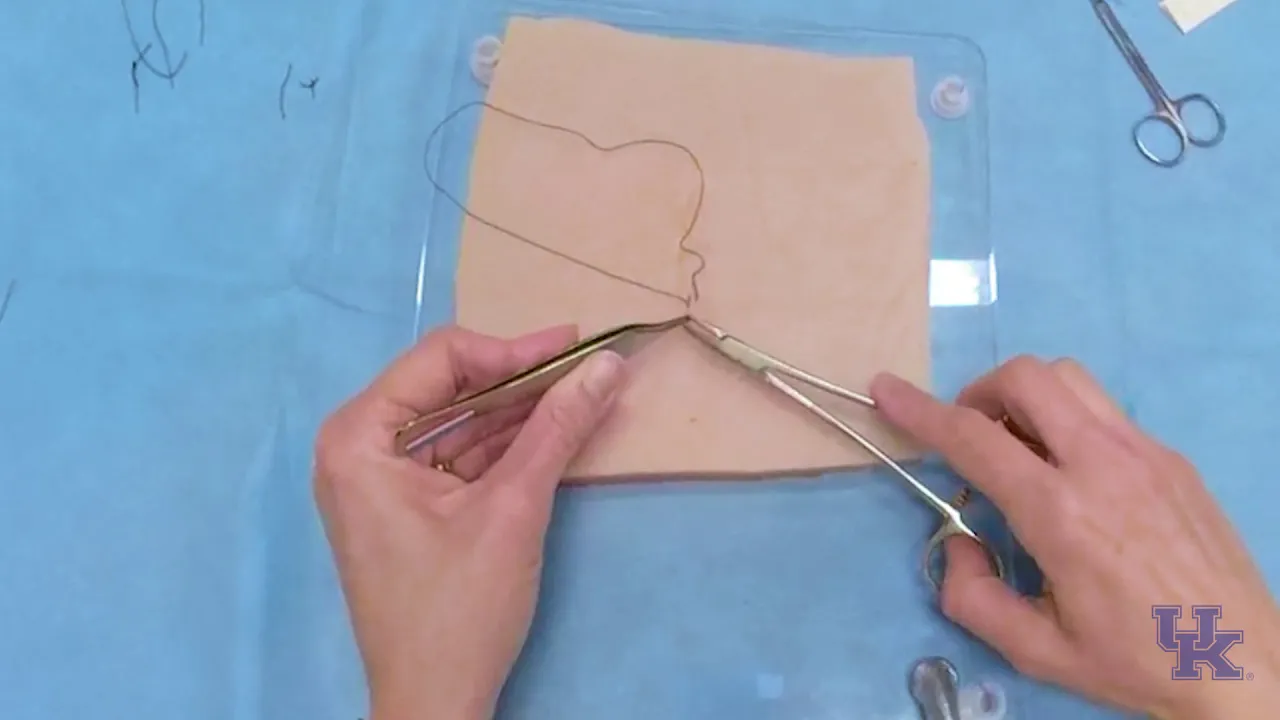








This video demonstrates the inverted simple interrupted suture technique for deep tissue closure using absorbable suture (such as Vicryl), which involves passing the needle from underneath the tissue to ensure the knot ends up beneath the fascia rather than on top, preventing interference with skin healing; the technique requires hand-tying a square knot with both suture tails positioned on the same side as the knot, and the knot is secured by cutting the tails directly over it so it sinks beneath the fascia during tension.
Deep Tissue Absorbable Suture Technique: Inverted Simple Interrupted Tutorial
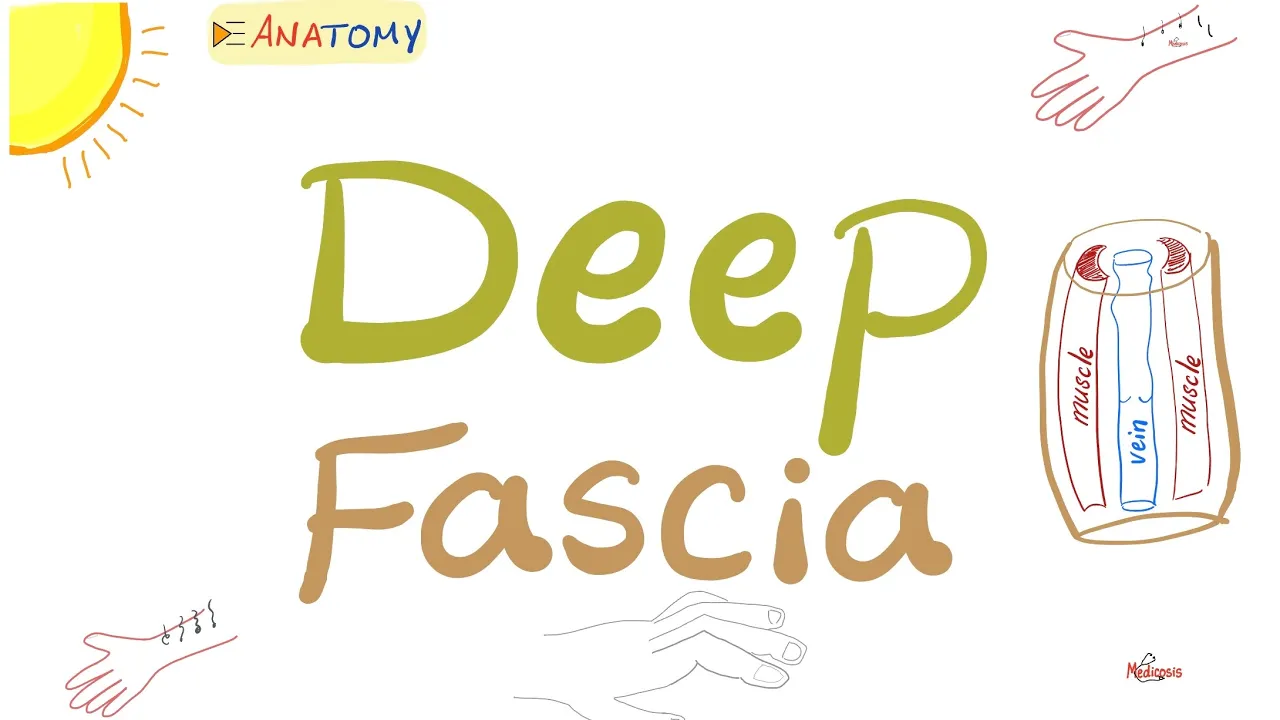
Added:Understanding of basic soft tissue anatomy, specifically the layered structure of skin, subcutaneous tissue, and deep fascia.
Knowledge of suture material science, particularly the differences between absorbable (e.g., Vicryl, Monocryl) and non-absorbable sutures.
Proficiency in basic hand-tying techniques, specifically the mechanics of throwing a reliable flat square knot.
Familiarity with standard surgical instrument handling, including the proper use of needle drivers and tissue forceps.
Mastery of superficial skin closure techniques, such as the running subcuticular suture, to complete the multi-layered closure.
Exploration of advanced deep dermal techniques, including the buried vertical mattress suture, to optimize wound edge eversion.
Study of wound tension-management strategies and how deep sutures prevent scar widening (widened scars) in high-tension anatomical areas.
Understanding the clinical assessment and management of suture-related complications, such as 'spitting' knots, suture extrusion, and deep tissue infections.
504.3K views4.7Klikes5:15Original Release: 2016-07-19
hi everyone I wanted to show you how to throw a deep vical suture or any other kind of an absorbable suture that you might be using in a a deeper skin closure especially in the operating room so uh this is a vcil suture vcil is an absorbable suture that um especially in neurosurgery uh for for my experience um we're using it uh to you know close the deeper layers of tissue because you can't just close the skin and if your incision uh or you know is is deep through fascia and through a lot of subcutaneous or or a lot of through a lot of adapost tissue then you need to help pull that together and most often we're going to use something like a vcil or another form of an absorbable suture okay now on our tension base here uh with this surgal example um we we do have the opportunity to uh uh suture some deep fascia okay so this is stronger tissue that's underneath underneath our subcutaneous fat and if we need to get a closure there then we want we'll want to use some absorbable suture like vicro so I wanted to point out a couple of things this can be done in a way similar to uh simple interrupted where you you know you might come here take a bite and then reach across and grab the fash and take another bite and then exit and then pull it through and and do your tie and that would be just fine the only concern that you really need to think about though is to is if the subcutaneous tissue here in the skin is not very thick if your vical knot is on top of the fascia and this tissue is not very thick you might be running the risk of having your VI knot get in the way of your healing skin okay and that will interrupt the healing of the skin so often times we're going going to throw our vical suture as an inverted throw and what I mean by that is it's going to be like a simp simple interrupted but upside down so that when we're all said and done and our knot is tied it is the knot is deep the knot is on the opposite side of the fascia okay let me show you how we do that so instead of grabbing over here on the right side first we're going to grab on the left but we're going to grab it from underneath okay so we're going to grab like this come up through the tissue like this okay and I'm going to grab my needle there pull it through so notice how I'm my my first throw is deep and then on the other way I'm going to load my needle not just uh so I'm going to be loading it backhanded but I'm going to be holding it in a way that I can hit it uh hit this other side at a downward Direction okay so don't don't uh so we're going to go from bottom to top and then top to bottom so that both of our tails of vicro in the end are deep to the fascia so I'll hit here go deep two straight across and then I'll be exiting there uh in between in the middle okay so I'll push this through a little bit there now um you want to make sure that see now I I if I pull this up I've locked it in place I've got to have both my tails on the same side as the of the knot or of my past does that make sense so I've got to be able to pull it like this rather than having one on one side and one on the other okay now our a lot of the suture that we use like this for uh in the operating room is going to be a vcal pop off so then you can just quickly pop off the the needle so now I've got two open ends of vcel see this and then I'm going to be able to do this with a uh tie this with my hand I'm going to tie it with a square knot tie where I push it deep into the tissue like this and to hold that in place while I throw a one-handed square knot and lock this in so I've got a video for you on one-handed square knots and how to tie this type of a deep suture but as you can see now if you look closely and I'll try to open this up for you my knot is underneath the fascia okay so as I pull this up tight I want to cut my Tails right down on top of the knot and as that happens the knot is going to sink down underneath the fascia and see now I don't have to worry about my knot being up here above and getting in the way of the skin healing so does that make sense so it's an inverted simple interrupted a vical that you hand tie because an instrument tie that deep in the tissue is is very difficult so with vro we we tie it with a hand tie whether it's a one-handed or a two-handed square knot so um but hopefully uh that was a a simple demonstration to follow and um thanks for watching thanks
Up Next

12:17
Subcuticular Running Suture Technique: Step-by-Step Guide
@minimedlessons
3.2M views•2016-07-19

12:54
Triumph of Orthodoxy Icon: Byzantine Art & History Explained
@BenCallan
2.1K views•2024-08-06
6:40
Vertical Mattress Suturing Technique: Step-by-Step Guide
@minimedlessons
186.6K views•2016-07-19

1:42
Game of Thrones Opening Credits: A Cinematic Analysis
@gameofthrones
46.3M views•2011-04-18
Related Study Plans & Knowledge Roadmaps
Structured learning paths in General & Interdisciplinary Studies
general-studies
Elevator Engineering: History, Physics & Cities
01From Hoists to Safety Brakes: The Dawn of Vertical Lift
02Hydraulic vs. Traction: The Engineering Physics of Elevators
03Modern Speed, Safety, and Algorithms
+ 2 more learning modules
12h5 modules
Explore Roadmap
general-studies
Rubber: Material Science, History & Geopolitics
01Origins of Natural Rubber & Mesoamerican History
02The Chemistry of Natural Rubber & Vulcanization
03The Geopolitics of the Rubber Boom & Colonization
+ 2 more learning modules
12h5 modules
Explore Roadmap
general-studies
Containerization: Evolution, Logistics & Trade
01Ancient Trade & Bulk Cargo: Amphorae to Barrels
02The Industrial Revolution & Cardboard Packaging
03The Containerization Revolution: Malcom McLean
+ 2 more learning modules
12h5 modules
Explore Roadmap
general-studies
Textile Tech: Evolution, Labor & Global Impact
01Pre-Industrial Textiles: Handloom & Cottage Industry
02Mechanization: The Spinning Jenny to the Power Loom
03The Factory System & Global Labor Transformation
+ 2 more learning modules
10h5 modules
Explore Roadmap