






![[#킬링타임 100분] 영화에서나 보던 좀비 도시 상황이 '실제로' 일어났다❗️ 최초로 마약과의 전쟁을 선포했던 미국 대통령😱 | #벌거벗은세계사](https://i.ytimg.com/vi/GFzoxvsstMs/maxresdefault.jpg)














Barry 'Flash' Foy, a 28-year-old bootlegger who stole $3 million in a single night across 12 cities using telegraphs in 1923, demonstrated that the old architecture of American law enforcement—siloed agencies, jurisdictional turf wars, and no shared financial tools—could be gamed by someone with geography, patience, and a private rule book. His 'gentlemen smuggler' operation, which operated from 1971 to 1986, forced the US government to redesign federal law enforcement in real time, leading to Attorney General Order 951-81 (1981), the FBI-DEA merger (1982), the creation of OCDETF task forces, expanded civil forfeiture, and the kingpin statute. Despite being convicted under the kingpin statute and serving 11 years in federal prison, Foy's story illustrates how competence can outlast institutional power, as he later founded a legal cannabis brand called 'Gentleman Smugglers' after marijuana became legal in many states.
Barry Foy: How a Smuggler Reshaped Federal Law Enforcement
Added:October 4th, 1923. Federal agents storm a Manhattan penthouse and find it empty, except for a Western Union machine still clicking out messages. Every wire leads to Barry Flash Foy, a 28-year-old bootleger who just pulled off the impossible, stealing $3 million in a single night across 12 cities simultaneously. He's not using guns or muscles. He's using telegraphs. Foy built the first criminal network in American history that moves faster than law enforcement can respond. By 1924, he's coordinating rumrunning ships, bribed cops, and warehouse networks across 40 states with split-second precision. Local police chase his trucks while he's already moved the shipment three states over. Prohibition agents raid his warehouses and find them cleaned out an hour before because Foy tapped their own telegraph lines. But here's what makes this case historic.
The FBI doesn't even exist yet. Jay Edgar Hoover is watching one man make the entire federal government look obsolete with 1920s technology. One bootleggger's telegraph empire literally rewrote how the United States fights crime. How did he stay ahead of every cop in America? And why did his own network destroy him?
Barry Foy is 21 years old, old enough to vote, [music] not old enough to buy a beer in most states. And in 1971, he sailed to Jamaica and brought 400 lb of marijuana back to Florida. 400 lb fills 40 duffel bags, [music] stacks to the ceiling, perfumes your skin for days, worth enough to make a 21-year-old feel he'd found a cheat code in the American economy. That first run is a rounding error compared to what follows. [music] But it wires something permanent into his thinking. Every system has a map and every map has blind spots.
>> [music] >> Learn the map. Own the blind spots. He studies tides down to halfhour windows.
He memorizes weather patterns by season.
He logs Coast Guard patrol cycles until he can predict shift changes. He learns who looks the other way at a dock and more importantly how long purchased blindness lasts before the price goes.
Barry understood that the people chasing him only knew what their own [music] systems told them. He won by knowing more. And in 1970s South Carolina, the system chasing him had a problem much bigger than one smuggler. It was fighting itself. He also [music] watches Florida change. Cocaine arrives in the late 1970s like a chemical invasion. The money triples. The murder rate climbs with it. Guys who smoke joints on sailboats start carrying Mac 10s in gym bags. Miami turns into a shooting gallery wearing a white suit. Barry looks at that future and makes two rules that will define every year ahead. No guns, [music] no cocaine. That sounds moral. It's strategic. Cocaine is lighter, richer, and faster, but it magnetizes automatic weapons and 3:00 a.m. executions. Marijuana is heavy, pungent, [music] and logistically brutal. But nobody shoots you over a bail of weed. Not usually. So, he builds something strange. A smuggling operation [music] staffed by southern men with college degrees and low country childhoods. guys who can navigate tidal creeks in pitch darkness [music] because they spent their teenage summers doing it for fun. Reporters start calling them gentlemen smugglers. A label half mocking, half admiring [music] that sticks because nobody has a better name for educated outlaws who refuse to carry [music] pistols. Their real edge isn't charm, it's terrain.
South Carolina's low country coast is not a beach, it's a labyrinth. barrier islands, oyster bed inlets, marsh grass tall enough to swallow a 30-foot boat.
Waterways fork and rejoin like capillaries. If you don't know this coast, it drowns you. If you do, it swallows you whole, and nobody finds you until you want to be found. A nautical chart tells you the shape of it. It doesn't tell you which channels hold depth at a minus tide, and [music] which ones turn into mud traps that grip a hull like a fist. It doesn't tell you how the current shifts at the mouth of a hidden cut or that the bent lobly pine on the third island marks the [music] only safe turn at night. Barry runs without lights on moonless nights. No spotlight, no radar signature, just a hull slicing black water between darker banks of Spartina. He reads the current through the wheel the way a driver feels a car drifting on ice. Federal agents bring nautical charts. Charts don't tell you how the water smells two turns from safety, so the operation scales. 400 lb becomes 4,000.4,000 becomes 40,000.
The money crosses from nice to absurd and absurd money creates a problem that no one warns you about. How do you spend it without filing a confession? A beach house on Hilton Head paid in cash. A cigarette boat registered to a cousin's cousin. A Porsche bought with a grocery bag of 20s at a dealership where the salesman doesn't blink. Every purchase is a signal flare. But in the late 1970s, a young southern guy with too much money and no visible job just looked like an eccentric with a family trust fund. They throw weekn night cookouts that run until sunrise. They enter king mackerel tournaments. They buy rounds for strangers. They look like rich weirdos, which in coastal Carolina is [music] practically a social class.
The longer they spend freely, the louder the question gets. If half the low country knows who the smugglers are, why can't anyone arrest them? Because in America, gossip isn't evidence. And evidence is useless if the agencies chasing you can't share a filing cabinet. Which brings us to a twist that makes this personal. The man who finally comes for Barry Foy isn't a faceless federal agent transferred in from Virginia. He's from Colombia. Same town, same air, same coast in his blood. And his name is about to land on campaign posters.
July 21st, 1981.
Washington issues a piece of paper that sounds like nothing. Attorney General Order 951-81.
Every US Attorney's office must establish a law enforcement coordinating committee. In plain language, the Attorney General is sick of federal agencies behaving like rival fraternities. He orders them FBI, DEA, Customs, IRS, state police to sit in the same room under the US attorney's chair and coordinate. This is a quiet redesign of how American law enforcement functions. And the timing is surgical.
Ronald Reagan took office in January 1981, promising to be the toughest drug war president in history. In South Carolina, he installs a new US attorney, Henry McMaster, the first one Reagan appoints anywhere in the country.
McMaster is 34, born in Colombia, University of South Carolina undergrad and law school, a former legislative aid to Senator Strom Thurman. He grew up in the same city as Barry, breathed [music] the same low country air. He knew the same coast. He's ambitious the way building foundations are ambitious. You don't notice until the structure is already above you. When McMaster starts pulling threads on low country smuggling, he discovers something scarier than any kingpin. He discovers a broken machine. From the outside, federal law enforcement looks imposing.
Badges, helicopters, wiretap warrants, and prison sentences measured in decades. From the inside, it's a jurisdictional traffic jam. The Coast Guard chases boats but doesn't build financial cases. The DEA chases drugs but can't touch tax returns. The IRS chases money but doesn't run stakeouts on marinas. Customs guards borders but has no mandate to prosecute enterprises.
They don't share databases. They don't match case files. They don't always return each other's phone calls.
Meetings are chaotic, priorities conflict, and important intel dies in memos nobody reads. One agent gathers mountains of evidence only to discover another agency already filed it elsewhere.
Coordination is optional and the gaps are enormous. Gaps that smugglers like Barry exploit every single day. If you're enjoying this and want more stories where one person breaks an entire system, subscribe because the next one cuts even deeper. Picture the first joint meetings. An IRS forensic accountant who thinks in spreadsheets sits across from a narcotics agent who thinks in title [music] charts. One wants bank records. The other wants boats. One counts deductions. The other counts bales. They're staring at the same target through completely different lenses. Tension simmers as old habits clash. Agents whisper complaints about jurisdiction. Leaders mediate, trying to extract results from a workforce that barely understands each other's rules.
Meanwhile, Barry operates calmly in the shadows, [music] aware that these bureaucratic skirmishes are part of his protection. He doesn't need speed.
[music] He only needs the systems inertia. And right now it moves slower than he does. And Barry Foy is standing in the gap between those lenses.
Comfortable because gaps are where he's lived his entire career. McMaster realizes the sickening truth. Barry doesn't need to outrun the FBI. [music] He doesn't need to outsmart the DEA. He just needs to outlast their inability to work as a single organism. [music] And he has for a decade. So McMaster does what every reformer does when the system doesn't fit the problem. [music] He reshapes the system. He pulls agents from every agency into one office with shared desks, shared files, and a shared mandate. Follow the money, not find the boat, not flip the deck hand. Trace who is living decades beyond their tax returns and force them to explain the gap. It sounds obvious now because every crime show depicts it. In 1981, it's borderline heresy. Meanwhile, Barry is doing [music] something that will make McMaster's new machine look small. He's leaving the Atlantic. He's leaving the Caribbean. He's crossing the Mediterranean to a country where normal smugglers don't go because normal smugglers prefer breathing. Lebanon, civil [music] war, and a product that commands higher prices because it's stronger and rarer. Hashish.
If McMaster is building the first real net around Barry Foy, why does Barry keep acting like the net doesn't exist?
And what kind of man sails into a war zone on purpose?
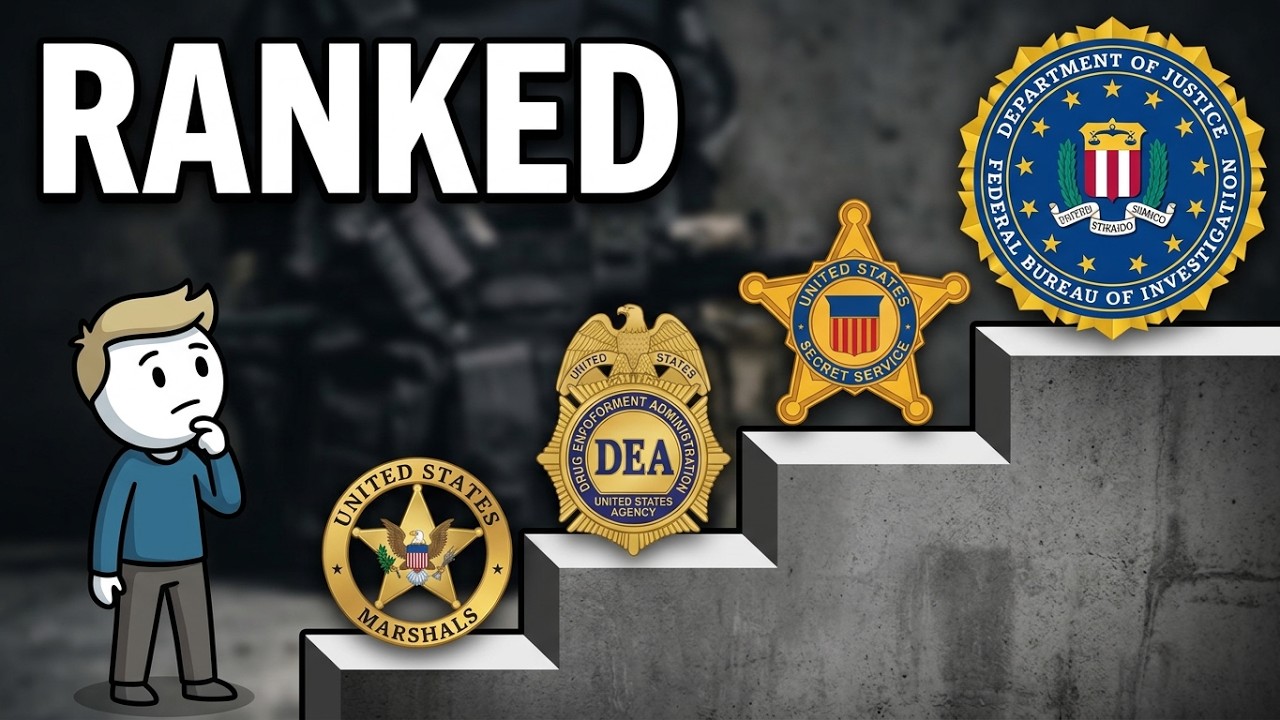
January 1982, another quiet detonation inside the federal bureaucracy. The Attorney General announces a reorganization of drug enforcement. The FBI formally joins forces with the DEA.
The DEA remains the lead drug agency, but its administrator now reports to the FBI director. The FBI gains concurrent jurisdiction over drug crimes. Federal drug enforcement staffing expands from roughly 1,900 agents to nearly 10,000.
Absorb that number. A five-fold increase in manpower aimed at drug trafficking.
It means a smuggler can no longer assume the agent watching the marina doesn't handle narcotics. It means a phone call that used to die [music] in a jurisdictional dead zone now gets routed to someone who cares. Every pier, every dock, every suspected [music] warehouse now has eyes. No corner of the Low Country is truly invisible. The old assumptions Barry relied on. Secrecy, slow communication, agency silos are suddenly obsolete. The landscape he mastered is changing beneath him, faster than tides shift, and every smuggler's rule book has to adapt or collapse. And yes, [music] it's an extraordinary force for marijuana. That's the confession buried inside the escalation. Overkill is an admission that the old system [music] failed. The same year, the Department of Justice creates the Organized Crime Drug Enforcement Task [music] Forces, OCDETF, a formal nationwide prosecutor-led strategy for dismantling major trafficking networks and their financial infrastructure. Operation Jackpot, the investigation McMaster is building in South Carolina, becomes one of the early flagship examples of this model at the district level. [music] This is what building a new FBI looks like. Not a new headquarters, not a new logo, a new permission [music] structure, a new appetite, a country rehearsing for a long war it will never declare over and inside South Carolina. The experiment sharpens. McMaster's task force doesn't just want arrests. [music] It wants to strip the smugglers down to their tax returns. So, it reaches for the weapon that will terrify anyone who turns cash into lifestyle. Civil forfeite. The mechanism matters because it inverts everything you assume about American law. In a normal criminal case, the government convicts [music] a person, then seizes the spoils. Civil forfeite targets the property itself, the boat, the car, the beach house, arguing the assets are tainted by crime. The property becomes the defendant. The money is guilty until proven clean.
Congress expands federal drug forfeite in 1978 through the Psychotropic Substances Act, adding language that allows seizure of drug. In 1984, [music] Congress widens the aperture again, reaching real property used to facilitate drug felonies. You don't have to admire this tool to understand why it terrifies smugglers. It attacks the only reason smuggling exists, the life it buys. A Porsche becomes a liability. A beach house becomes evidence. A bank account with no matching [music] W2 becomes a prosecution exhibit. So McMaster's people stop acting like cops and start acting like auditors. They pull property records in three [music] counties. They map shell companies layered two and three deep. They note who buys a house with no mortgage and no [music] employment record. They interview luxury car dealers who accepted duffel bags of cash so casually it bordered on comedy. Barry's empire isn't defended by guns. It's defended by paperwork avoidance, cash transactions, handshake [music] deals. Nothing on paper that a subpoena can reach. So the government fights him with paperwork obsession, net worth analysis, ledger reconstruction, deposit pattern tracking, the slow grind of financial inevitability. And prosecutors add another weapon, [music] the Continuing Criminal Enterprise Statute 21USC section 848, known as the Kingpin statute. It's designed to punish the organizers who profit from drug operations without touching the product themselves.
Suddenly, the smuggler's entire identity hands clean. [music] No violence.
Gentleman's distance from the bales stops being protection and becomes proof of command. If you're not the guy holding the bales, maybe you're the guy above him, and that guy faces a mandatory minimum of 10 years to life.
By May 1983, prosecutors alleged the rings, led by Foy and his partner Les Riley, imported roughly 347,000 lb of marijuana and 130,000 lb of hashish into the United States.
Combined, that's about 238 tons. Picture a football field buried under bales.
Then add boats, crews, and 15 years of operations. That's the scale. And the government is finally ready to move.
Raids, [music] seizures, evidence tables photographed under fluorescent lights.
McMaster on camera because cameras love stacked cash. But on day one of Operation Jackpot, the supposed victory lap, the kingpins are missing. Where do you run when the FBI and DEA share jurisdiction, task forces are multiplying, and forfeite can strip your possessions without a conviction? You don't check into a motel. You leave the map entirely. And Barry has already tested that exit, which is why we need to go back to Beirut. Because Beirut wasn't a stunt, it was a rehearsal. If the law now targets the architect instead of the worker, how does a smuggler survive?
A smuggler's brain works like a thermostat. [music] Heat rises. He switches routes. Heat rises again. He switches countries. Heat keeps rising.
He switches continents. Barry watches America harden. New committees, new task forces, new cooperation mandates, more agents, wider jurisdiction, and does what his entire career has trained him to do. He upgrades the map. Hashish is the play. Higher margins per pound, higher risk per mile, and Lebanon is the source. But Lebanon in this era doesn't want visitors. The civil war that started in 1975 has metastasized into something no ceasefire can contain.
Militias control blockby-block territories. Syrian and Israeli forces occupy competing pockets. Neighborhoods that once shared markets are now partitioned by rubble, sniper lanes, and razor wire. So why go? Because war needs cash, ammunition, food, recruits, loyalty. Every faction hemorrhages money faster than it can extract it. And drug money spends the same in Arabic as it does in English. Barry's crew arrives at the Lebanese coast carrying cash in a proposition so blunt it strips the politics out of a civil war.
You fight each other tomorrow. Today you load my boat. Both sides agree. Both sides benefit. Now we pay off the opening image with its full weight. The shooting stops for a pickup. Soldiers who were trying to kill each other 20 minutes earlier move bricks of hashish like dock workers. Because the smuggler's cash keeps the war running.
Once the boat clears the horizon, the firing resumes. A single hashish load carries a street value around $90 million. That number explains why the ceasefire isn't charity. It's commerce.
And it reframes everything happening back in South Carolina. McMaster thinks he's chasing a regional smuggling ring.
He's hunting a man who can rent a ceasefire in a foreign civil war. Sit with that for a moment. A southern smuggler from Colombia isn't just exploiting cracks in American bureaucracy. [music] He's exploiting the basic physics of conflict. Everyone needs money and the man with the most money sets the schedule. And once the indictments drop, the fugitives don't scatter randomly.
They choose jurisdictions where American paperwork chokes. Costa Rica, Antigua, St. Barts, Australia. A domestic drug case mutates [music] into a global argument about whether US law can cross oceans. One courtroom battle changes the rules for everyone who believes distance is a defense. Australia, two key [music] defendants, including Les Riley, are arrested there around the time of the 1983 indictments. Then the legal fight begins and it [music] lasts years.
Australian courts wrestle with a question no Commonwealth court has fully [music] resolved before. Is America's kingpin charge, a statute designed to punish enterprise level drug leadership, extraditable at all under [music] existing treaties? The question isn't did they smuggle. The question is can America export [music] its definition of a criminal mastermind to a sovereign nation's courtroom. Australian [music] courts ultimately rule the Kingpin statute constitutes an extraditable offense. A decision whose precedent ripples across roughly 40 nations in the former British Commonwealth. A legal door swings open. Not just for [music] this case, for every future fugitive who assumes a Commonwealth passport and a long flight are enough to outrun American law. But feel the contradiction. If a government has to rewrite international extradition norms to catch marijuana smugglers, is [music] it winning or is it confessing that it was never built for this kind of opponent?
Back to May 24th, 1983.
Operation Jackpot hits the Low Country.
Boats, houses, cars, bank accounts, everything becomes evidence. Defendants cycle through court. Some caught overseas, others extradited, some surrendered. One walks into a prosecutor's office and turns himself in like he's reporting for a job interview.
This is the part of a crime story where the narrator exhales. The music softens.
The bad guy kneels. Not here. Because the real ending of Operation Jackpot isn't an arrest. It's time. The hunt stretches. Years thicken into decades. A crackdown designed to produce [music] clean headlines becomes a 25-year tale with fugitives surfacing long after the cameras leave. In 2007 and 2008, fugitives are caught decades later [music] with false documents. Maximum sentences 5 years. Evidence degrades, witnesses scatter, [music] and cases that once demanded task forces end as paperwork. That's the real cost [music] of victory. and Barry. Depending on the retelling, he runs for roughly 2 years before the trap closes. But the capture scene is consistent [music] across every source because it's too perfect to forget. LaGuardia Airport, 1986. A trap sprung through a monitored phone call. Federal agents waiting at the gate. Barry arriving with his wife and two young children. And Barry wearing a fulllength mink coat, still dressing for a life that's about to collapse under him. He's convicted under the Kingpin statute, sentenced to 18 years, serves 11 in the same Atlanta federal penitentiary that once held Al Capone, a marijuana smuggler from South Carolina doing time in a cell built for the most famous gangster in American history.
The irony writes itself and nobody laughs.
11 years is long enough to miss your children, for friends to fade, for the war on drugs to become permanent.
Meanwhile, McMaster's career climbs.
Operation Jackpot gives him national visibility. Reagan's first appointed US attorney delivering Reagan's first showcase drug bust. McMaster parlays that reputation into decades of political ascent. He chairs the South Carolina Republican Party for 9 years.
He wins election as the state's attorney general in 2002, serves two terms, then wins the lieutenant governorship in 2014.
In January 2017, when Governor Nikki Haley leaves for the United Nations ambassadorship, McMaster steps into the governor's mansion. He wins re-election twice [music] and still holds the office as of early 2026.
A prosecutor chasing pot smugglers became governor of the state. The case laid the foundation for his [music] career. Reagan praised Operation Jackpot in 1986 as a major breakthrough in the war on drugs. Here's the dark joke delivered quietly. When a president calls something a breakthrough, the war [music] usually keeps going, the prisons keep filling, the drugs keep arriving, and the country drifts [music] toward a destination that would have sounded like satire in 1983.
As of early 2026, marijuana is legal for adult use in 24 states and Washington, DC. Medical cannabis is legal in roughly 40 states. Public opinion has swung so [music] hard that most Americans now live somewhere with legal marijuana.
Federal rescheduling efforts gained real political [music] traction in late 2025.
Still short of full federal legalization, but a crack in a wall that once looked permanent. You can feel the punchline building [music] itself. Barry Foy went to federal prison for moving marijuana and hashish. After his release, he comes back to the same plant legally.
In September 2022, a cannabis brand launches in Massachusetts under a name that sounds like a dare. Gentleman Smugglers, co-founded by [music] Barry Flash Foy. Same mythology, same wink, different paperwork. He's not hiding in Marsh Creeks anymore. He's on company websites, in press interviews, [music] on podcast tours. Surviving smugglers still gather at the felons [music] Balman indicted together, imprisoned separately, now released into a world that legalized what they went to prison for. The punchline, the party itself.
Now zoom out far enough to see the whole shape. What did Barry Foy do to the United States? He didn't just smuggle drugs. He demonstrated that the old architecture of American law enforcement, siloed agencies, jurisdictional turf wars, no shared financial tools, no crossber reach could be gamed by someone with geography, patience, and a private rule book. He didn't crack the system with violence.
He cracked it with competence. And competence is the one thing a bureaucracy can't prosecute.
So, the government rebuilt. It ordered coordination committees across every US attorney's [music] office. It merged FBI and DEA drug jurisdiction. It created prosecutor-led multi- agency task forces as a national doctrine. It expanded civil [music] forfeite so money itself could be weaponized. It pushed extradition law until distance stopped being protection. All of that in the name of winning. And it still took more than two decades to close the book.
[music] Remember Beirut? Remember the rifles tilting down so a boat could load Hashish?
That moment wasn't about Barry's reach.
It was a mirror held up to every institution that [music] tried to stop him. Because Barry's story shows what happens when governments mobilize entire systems, agencies, laws, treaties, and budgets to stop one man only to watch him outlast the war [music] built against him. Sometimes power doesn't collapse criminals. Sometimes it creates legends. Victory and failure can blur until no one remembers which side actually [music] won. And if you want to see the most extreme version of that pattern, watch our video on Kung Saw, the jungle warlord who once controlled nearly half of the world's heroin supply and died rich and untouched by American justice. It's the story of how a single man beat a superpower.
Up Next

Hearsay Rule in Evidence: Hearsay Fundamentals (Module 6)
@LawShelf
16.8K views•2021-07-02

US Secondary Sanctions Impact on EU Businesses and Blocking Legislation
@Bureauvandijk
1.6K views•2019-03-20

Forensic Phonetics: Speaker Identification in Legal Cases
@nptel-nociitm9240
539 views•2025-03-19

Police Interrogation Tactics: False Confessions & Legal Reform
@LastWeekTonight
7M views•2022-04-18
Related Study Plans & Knowledge Roadmaps
Structured learning paths in Law