

![فيزياء السادس العلمي 2025/ بعض المفاهيم الأساسية في الفيزياء/ المحاضرة [0]](https://i.ytimg.com/vi/dhI05j8tTjM/maxresdefault.jpg)







![[전기기초 3편] 전기가 처음이라면 꼭 봐주세요! - 전기기능사, 전기산업기사, 전기기사](https://i.ytimg.com/vi_webp/fZ5-GOOnJzM/maxresdefault.webp)


![[CURSO - AULA 01] - INTRODUÇÃO À ANÁLISE DE CIRCUITOS ELÉTRICOS](https://i.ytimg.com/vi/VAWoApZr_d8/maxresdefault.jpg)
![전기기능사 필기 기출문제 적중! ⚡전기기능사 전기이론 최신기출 90제[1편]⚡](https://i.ytimg.com/vi/4mDEFcbB1GQ/maxresdefault.jpg)
![Diody LED | #4 [Podstawy]](https://i.ytimg.com/vi/LkdkVUZNorI/maxresdefault.jpg)










![[ 전자회로 왕초보자를 위한] 전자회로 기초 강의 7 [로케이에듀] - 다이오드 비선형 특성을 이해하자](https://i.ytimg.com/vi_webp/pSjQgX4ADlA/maxresdefault.webp)

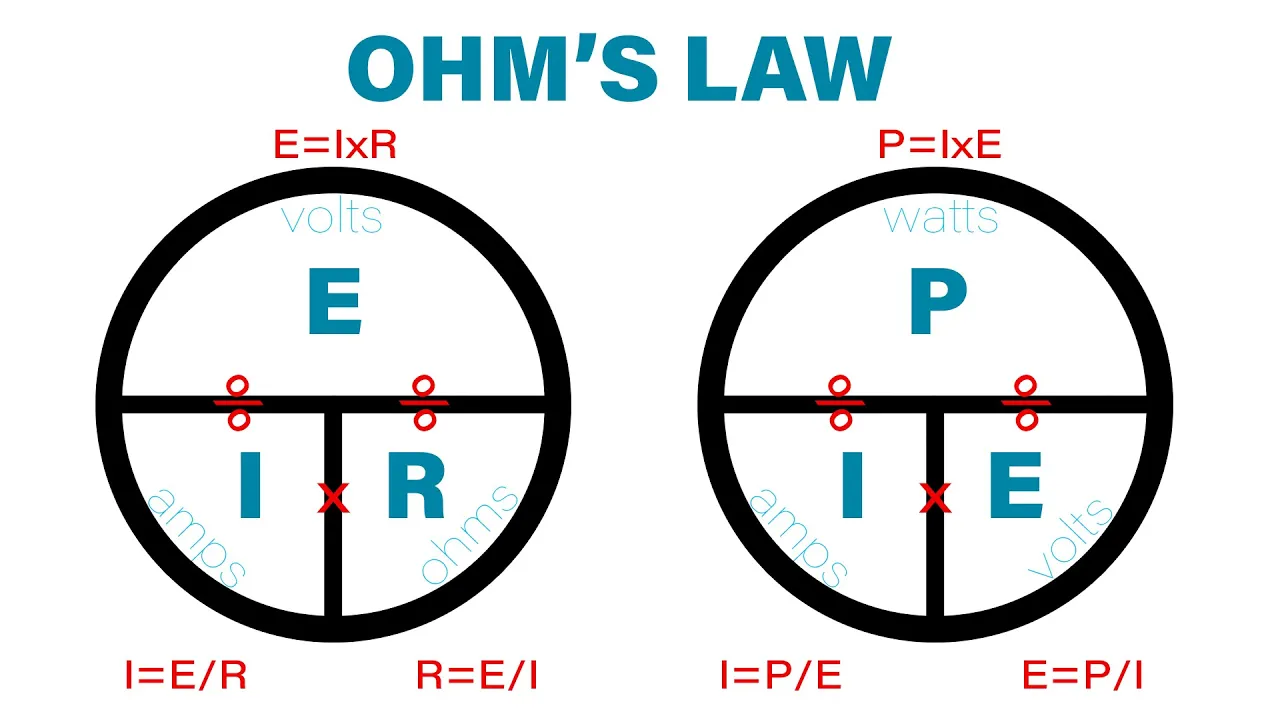
Electrical resistance opposes the flow of current in a circuit, measured in ohms (Ω), and can be calculated using Ohm's Law (V = IR), which states that voltage equals current multiplied by resistance; to safely operate an LED, calculate the required resistor value by subtracting the LED's forward voltage from the supply voltage and dividing by the desired current, then select a resistor with appropriate tolerance (typically ±5% for home electronics).
Basic Electricity: Resistance and Ohm's Law Explained
Added:Basic understanding of electric charge and what electric current (measured in Amperes) represents.
The concept of voltage (potential difference) as the driving force in an electrical circuit.
Familiarity with the components of a simple closed-loop circuit, such as a power source and conductors.
Basic algebraic skills to rearrange simple equations, such as solving V = I * R for I or R.
Analyzing series and parallel resistor circuits to calculate total equivalent resistance.
Understanding electrical power (measured in Watts) and how to calculate power dissipation in resistors to prevent overheating.
Introduction to Kirchhoff's Voltage and Current Laws (KVL and KCL) for analyzing more complex circuit networks.
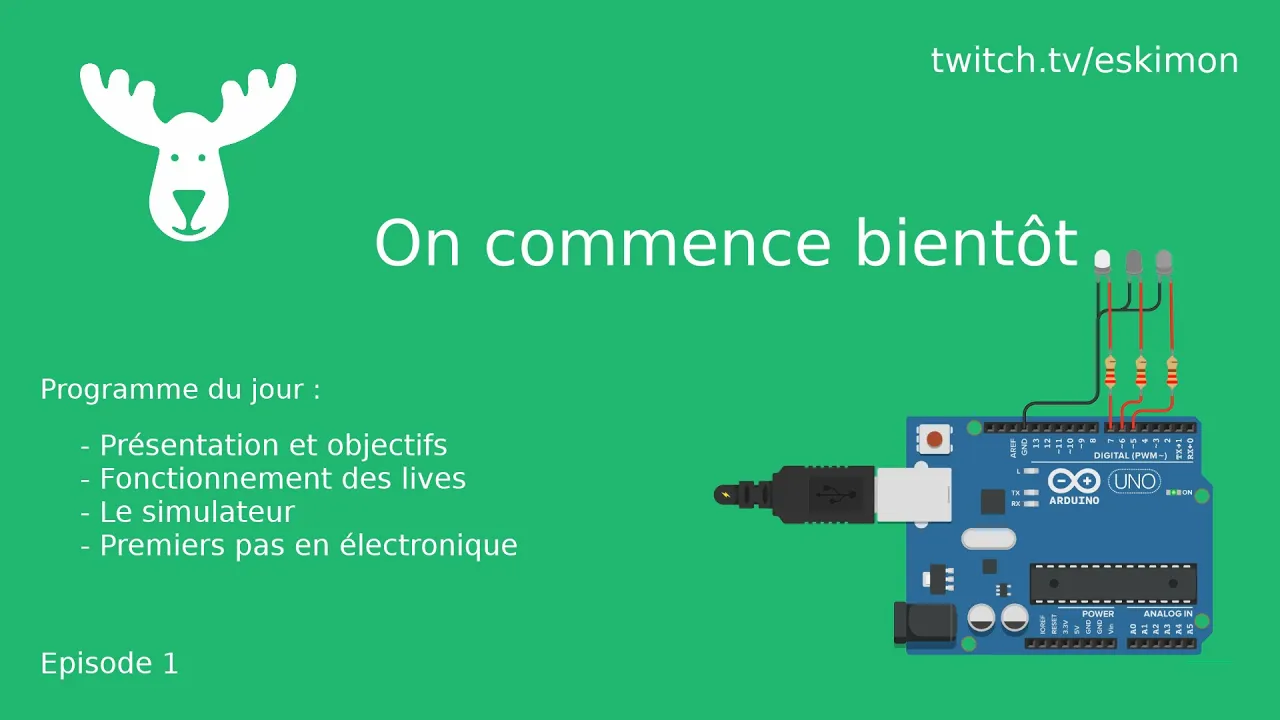
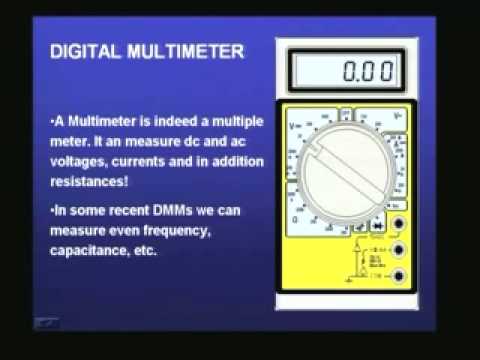
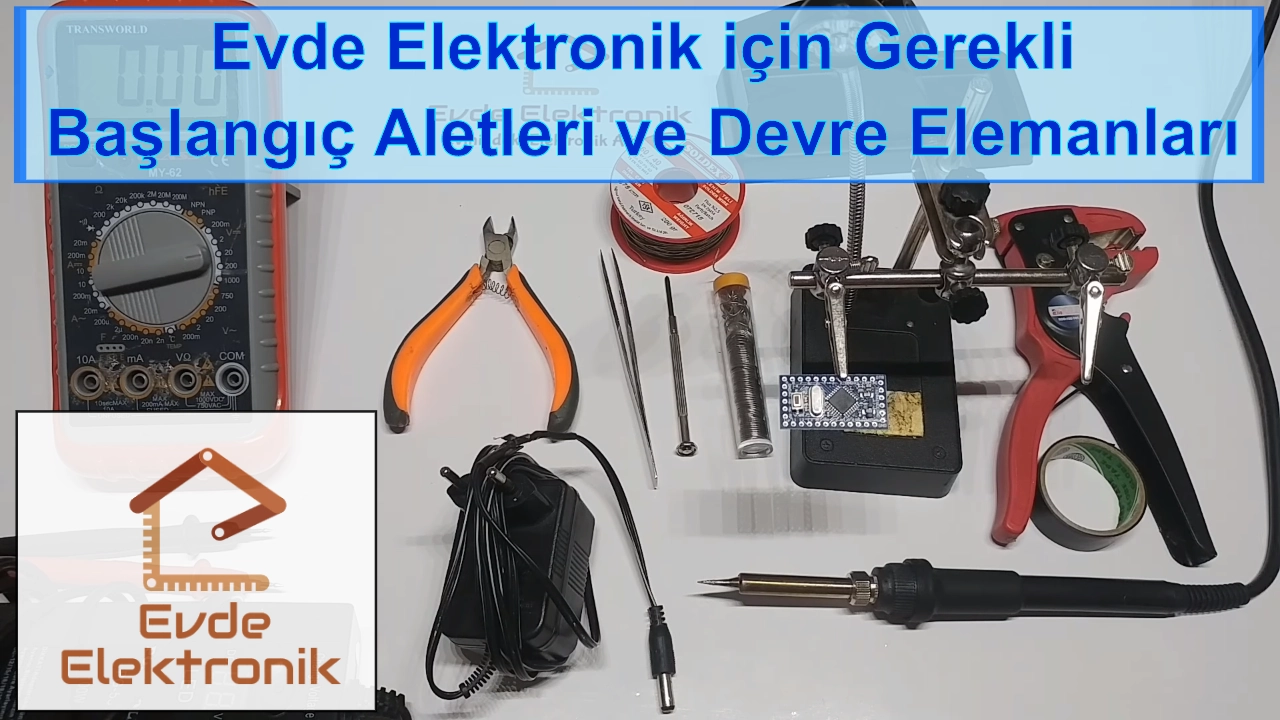
Practical circuit prototyping using breadboards and measuring electrical properties with a digital multimeter.
Exploring the operational characteristics of non-linear semiconductor components like diodes and transistors.
2.7M views42Klikes9:10Original Release: 2016-11-07
In this video I'm going to talk about electrical resistance, ohm's law, and how to pick a resistor to limit current in an LED circuit.
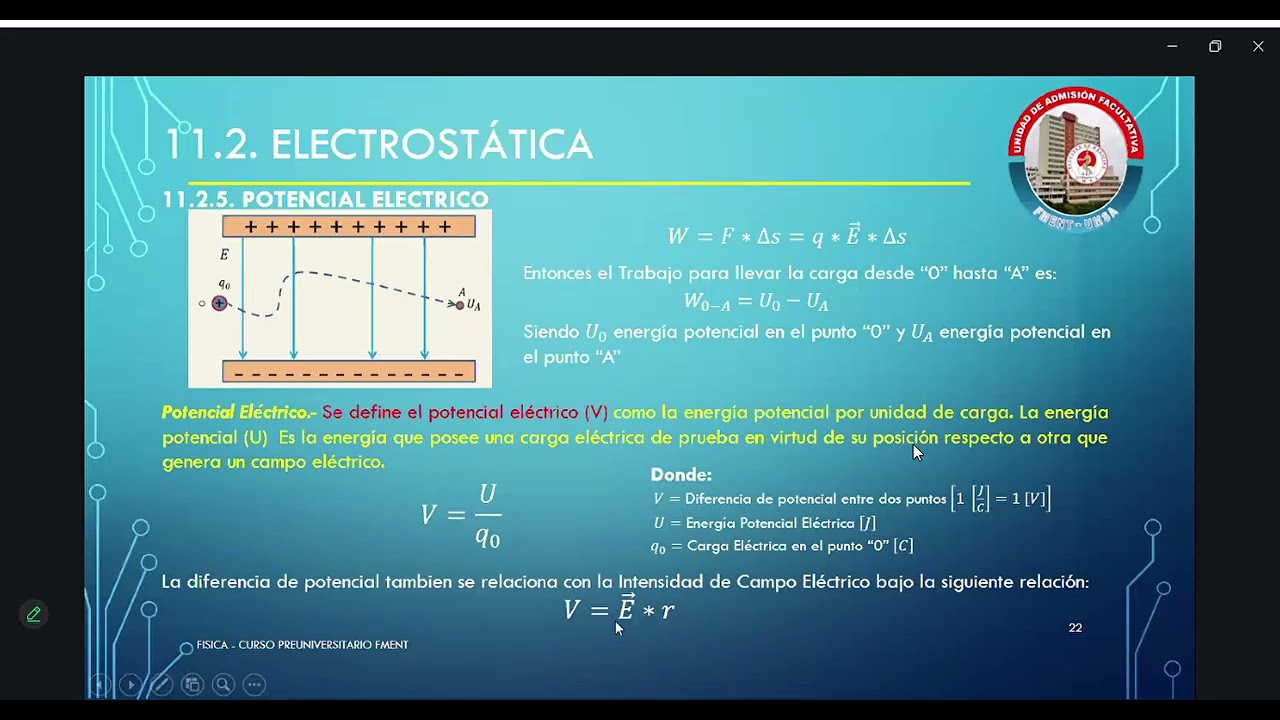
In previous videos I talked about how voltage can behave like a pushing force, pushing electric current around a circuit.
But in one example I connected an LED straight to 7.5V, way too much current flowed, and the LED blew up.
So you can see how it would be useful if there was something that could resist the flow of electrical current.
Something that could tame the flow in a controlled way.
That device is called a resistor, and here are some examples of what resistors can look like.
We've got a very basic resistor over here, which is the kind of resistor that most hobbyists would use at home when constructing circuits.
And over here we have a tiny surface mount resistor.
This is something you'd expect to see in a small device like your phone.
And this big resistor is the type of thing you'd use large power supply.
So how do these resistors work?
Remember how in my video about current, I talked about electrons jumping from atom to atom, all at the same time, like a conga line?
Well in reality this process is not 100% efficient.
The atoms in a material like copper wire are always vibrating around just a little bit, and this is because of the heat energy they have.
When electrons try to move through the wire, sometimes they'll bump into an atom that's in the way, and effectively the flow of current gets resisted.
As this happens, some of the kinetic or movement energy from the electrons gets converted into heat.
This is the fundamental principle behind how electric heaters and incandescent light bulbs work.
But it's not just metals that have the property of resistance, resistance can exist simply from the fact that some materials just don't have a suitable arrangement of atoms for electrons to flow through.
And some materials just don't have enough free electrons floating around for large amounts of current to flow.
Keep in mind this is a huge simplification and this is not how actual atoms and electrons are going to look and behave at the subatomic level.
Nearly everything on earth has some resistance to electrical current, and metals tend to have the least resistance.
Sorry, I had to put it in the video somewhere.
We measure the amount of resistance with a unit called ohms.
The symbol is the greek letter omega.
To give you a sense of scale, a resistance of under 1 ohm is considered to be a very low resistance.
That's something that you'd expect to see from a piece of wire that's good at conducting electricity.
1 million ohms, or 1 megaohm, is generally considered to be a very high resistance.
That's something that you might expect to see from a bad conductor of electricity like this dried out piece of carrot.
This thing that I am using to measure resistance is called a multimeter, and it can measure the resistance of almost anything.
I have a separate tutorial on multimeters, and I recommend you watch it as soon as possible to learn more about this important tool.
Now if you're playing with electronics at home, you'll be using resistors that look like these.
They have colored bands on them, and there's a special code that lets you translate the colors into a resistance value.
For example these red, violet, brown and gold bands mean this is a 270 ohm resistor.
Now you can memorize the color code, but it's a lot easier to just use one of the many resistor calculators out there.
Just search for resistor color calculator on Google or in your phone's app store.
By having resistors with specific resistance values we can carefully control the amount of current that flows in a circuit.
Today, let's start out with everyone's first simple resistor circuit, using a resistor to limit the current going through an LED.
Make sure you've already watched my LED tutorial and have bought some LEDs and resistors, which I am going to link again in the video description section.
In order to do the math for this circuit you need to know about the mathematical relationship between voltage, current and resistance.
Here's an old comic that I've always liked that illustrates the relationship on an intuitive level.
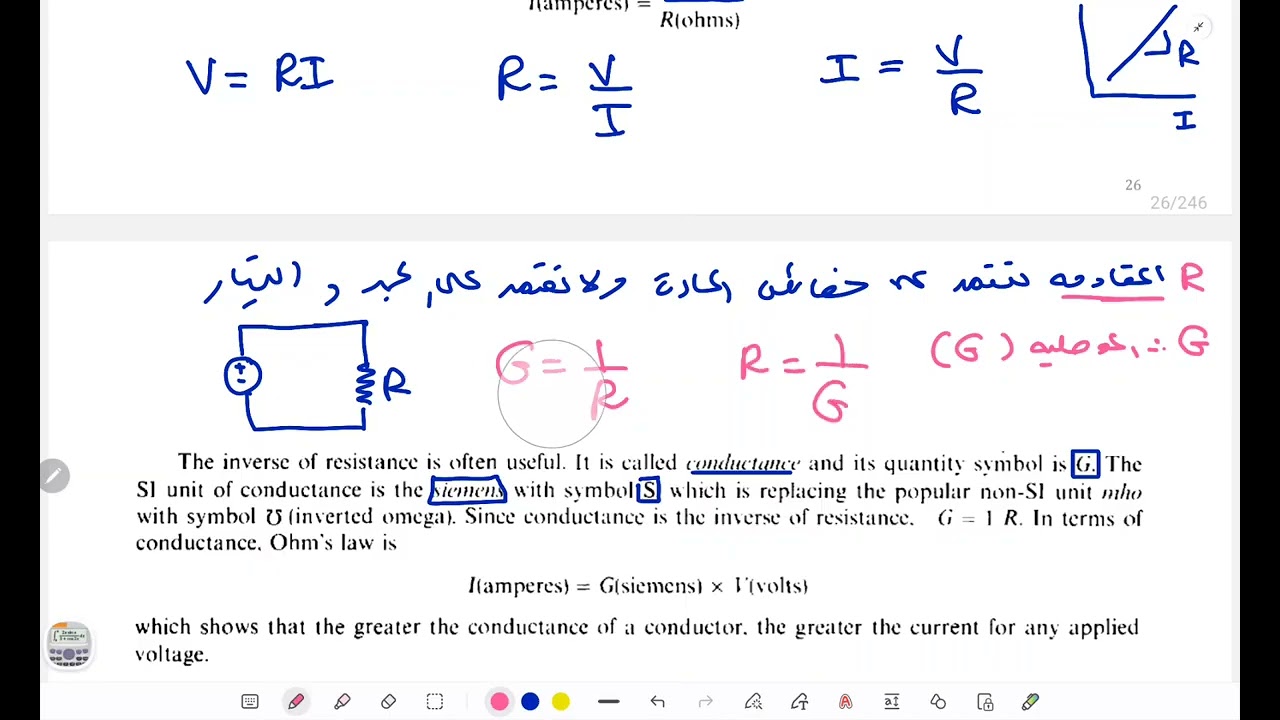
More formally, we use this equation.
Ohm's law.
In textbooks you usually see it written as V=I times R. Or voltage = current times resistance.
If you use a little algebra you can rearrange the equation to calculate any of the variables as long as you know the other two.
Although it's important to understand that all these versions of the equation are exactly the same thing, our LED circuit is going to be using this version, so let's focus on that.
Let's say we have a 10 volt power source, and we want to make sure that no more than 10mA flows from it.
We can use ohm's law to figure out what resistor will accomplish this.
The answer is really simple, just take the voltage, divide it by the desired current, and we get the answer of 1000 ohms.
So now we can either use the resistor color code, or a resistor calculator app to figure out what a 1000 ohm resistor looks like, and it turns out to be brown, black, red.
The 4th color band all the way on the right refers to the tolerance of the resistor.
A real world 1000 ohm resistor might actually have a resistance of 1020 ohms, or 998 ohms, and for most circuits you play with at home +/- 5% will be good enough.
So let's double check our math in real life.
I've got my power supply set to 10 volts, it's hooked up to a 1k resistor, and as you'd expect, 10mA is flowing from the power supply.
It's also important to know that ohm's law is a linear relationship, meaning that for a fixed resistor value, if you double the voltage, you double the current.
Here's 20 volts going into the same 1000 ohm resistor, and as you'd expect, the current doubles to 20mA.
I want you to understand that only pure simple resistors obey Ohm's law.
The relationship between voltage and current for most electronics is a lot more complicated than this.
In a lot of cases things will work fine up until their recommended voltage level, and if you exceed that then things suddenly blow up.
But for now, resistors are good enough to help us limit current in a simple LED circuit.
Let's start out with a 9 volt battery, a resistor, and an LED connected with the correct polarity.
And notice that it doesn't matter which way we connect the resistor - unlike the LED, polarity doesn't matter for resistors.
We want to find out what resistor will let us safely use 9 volts with this LED.
In my previous video about LEDs we talked about forward voltages, and for this particular white LED the forward voltage is 3 volts.
That means that when the LED is on, there is going to be a 3 volt drop across it.
So... what is the voltage across the resistor?
Remember that voltage is all about differences in electrical potential between two points.
Our power source is a 9 volt battery, so we've got 9 volts between here and here, and we've got 3 volts across the LED.
So this must mean that we've got 6 volts across this resistor, because 9 - 3 is 6.
Ok so we've got our voltage.
Now the current in this circuit is going to be whatever we want to it to be.
But the recommended maximum current for this LED is 20mA, so we're going to use that.
And notice that I am using conventional current here which moves from positive to negative.
That's what you are going to see in every single electrical engineering situation, theoretical physics classes might use negative to positive electron flow.
So let's apply Ohm's law now.
6 volts divided by 20mA gives us a resistance value of 300 ohms.
Now I don't have a 300 ohm resistor in my parts collection, but a 330 ohm resistor will be good enough.
If you are messing around with LEDs at home it doesn't matter if you get the current wrong by 10%.
Ok, so here I have my 9 volt battery and a 9 volt battery clip.
The red positive wire is going to one side of my 330 ohm resistor, and that's going to the LED's anode.
Then I'm just connecting the negative wire from my battery to the LED's cathode.
9 volts, roughly 20mA, and no exploding LEDs!
Finally!
If we increase the resistance to, let's say, 18 kiloohms, we'll get less current, and as you'd expect, the LED is dimmer.
In general, this is the equation you can use to calculate the resistor for a simple LED circuit.
But... there is a limitation!
I've got another power supply here set to give me 140 volts, and that's enough to mess you up so don't do this at home.
Let's put 140 volts into this equation, we've got 3 volts for our white LED, and we want to stick to the 20mA current limit.
So we get a resistance value of 6,850 ohms.
I've got a 6.8k resistor in my parts collection, which is very close to our theoretical value, so let's see what happens.
Huh.
Now instead of the LED getting toasty, the resistor gets too hot.
So what's going on here?
To answer that you need to learn about electrical power, which will be the subject of my next video.
Finally, I can't make a video about ohms without mentioning Ohmnilabs!
It's a company run by a few friends of mine that make some pretty cool robots.
Check them out at ohmnilabs.com.
Thank you for watching, subscribe and check out the video description section to learn more about electronics!
Up Next

8:29
How BCS Theory Explains Superconductivity
@love-to-learn
75.2K views•2022-12-29

12:53
21cm Hyperfine Transition in Neutral Hydrogen: Radio Astronomy Basics
@AaronRobertParsons
12.4K views•2011-10-13

32:32
NMR Spin Physics I: Zeeman Effect, Resonance Condition & Larmor Frequency
@nptel-indianinstituteofsci8064
2.3K views•2024-01-17

27:14
Entropy and the Second Law of Thermodynamics Explained
@veritasium
27.5M views•2023-07-01
Related Study Plans & Knowledge Roadmaps
Structured learning paths in Physics
physics
Nuclear Physics (Decay, Fission & Reactors)
01Atomic Structure and the Binding Force
02Radioactive Decay and Half-Life
03Nuclear Fission Mechanics and Chain Reactions
+ 2 more learning modules
12h5 modules
Explore Roadmap
physics
Soft Matter (Polymers, Colloids & Rheology)
01Foundations of Soft Matter & Thermal Forces
02Polymer Physics and Macromolecules
03Colloids, Surfactants, and Self-Assembly
+ 2 more learning modules
38h5 modules
Explore Roadmap
physics
Analytical Mechanics: Lagrangian & Hamiltonian
01Mathematical Foundations: Calculus of Variations
02From Newtonian Mechanics to Constraint Dynamics
03The Principle of Least Action & Lagrangian Mechanics
+ 3 more learning modules
28h6 modules
Explore Roadmap
physics
General Relativity (Spacetime & Cosmology)
01Foundations of Relativity: Special Relativity
02The Geometry of Spacetime: Equivalence Principle & Curvature
03Einstein's Field Equations: The Mathematics of Gravity
+ 2 more learning modules
55h5 modules
Explore Roadmap