









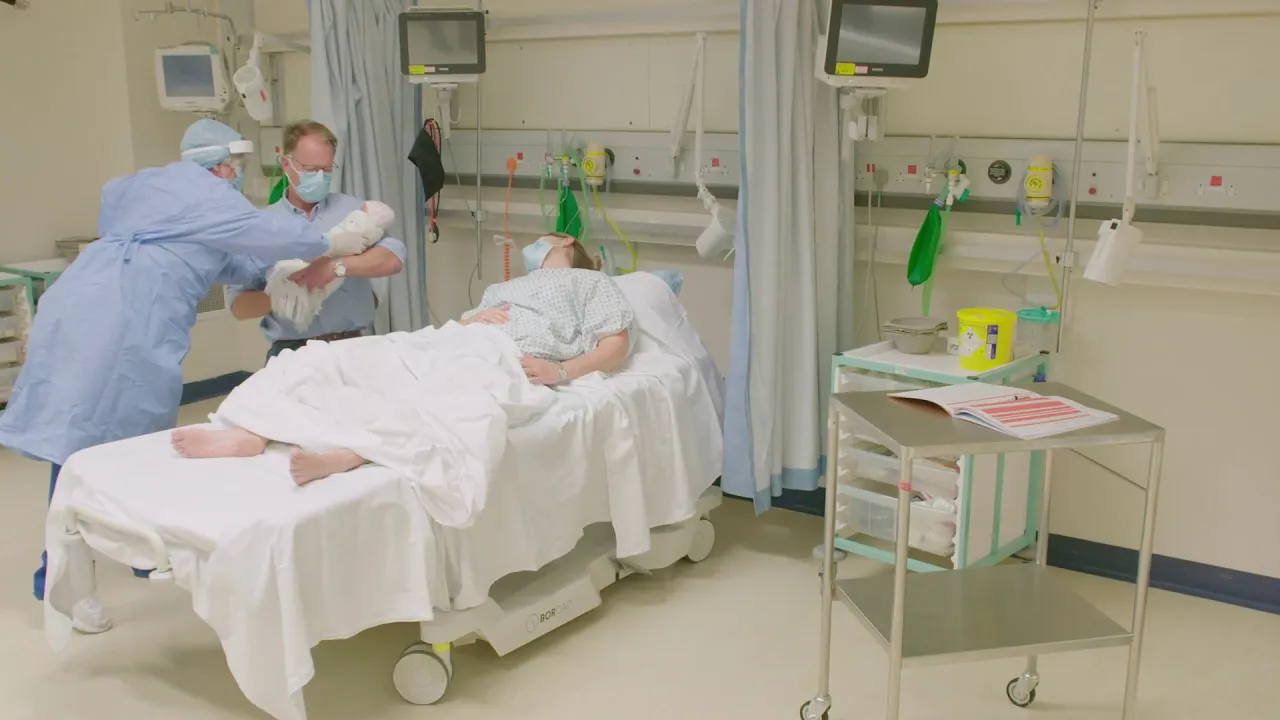



![TERRIFYING birth complication during apocalyptic baby boom… [Station Eleven]](https://i.ytimg.com/vi_webp/Fd78SxzJr2Q/maxresdefault.webp)
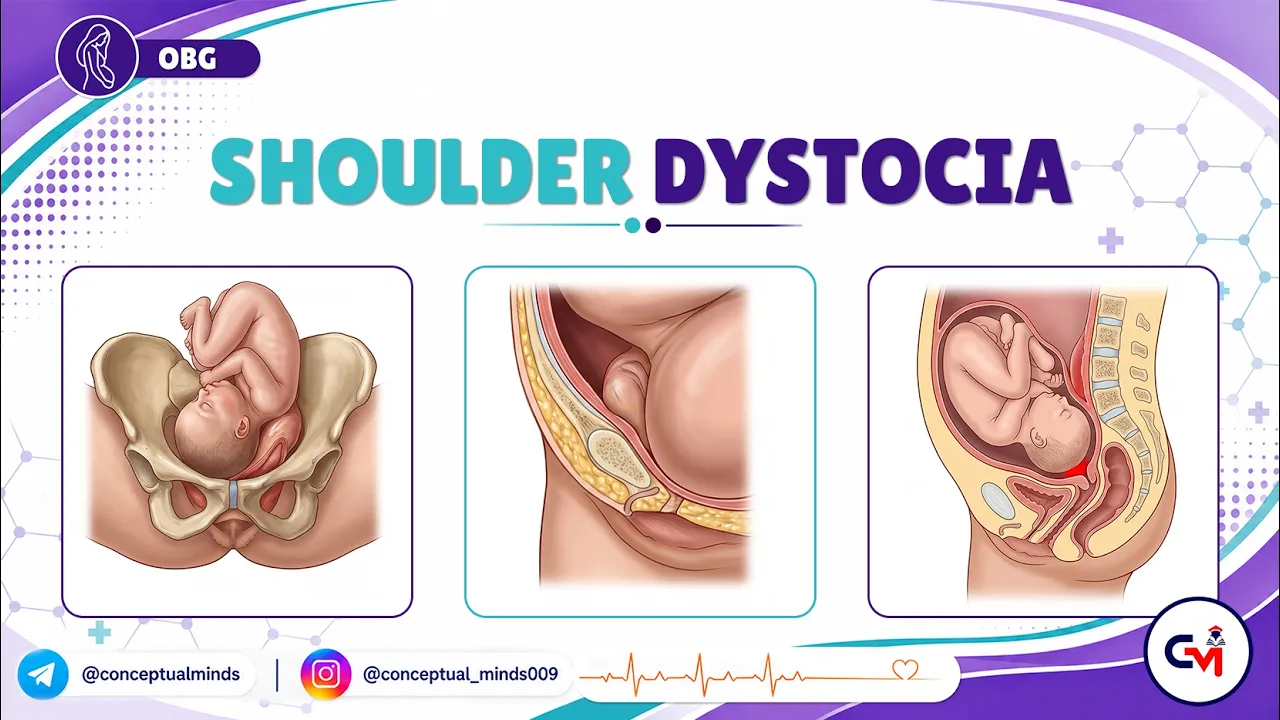











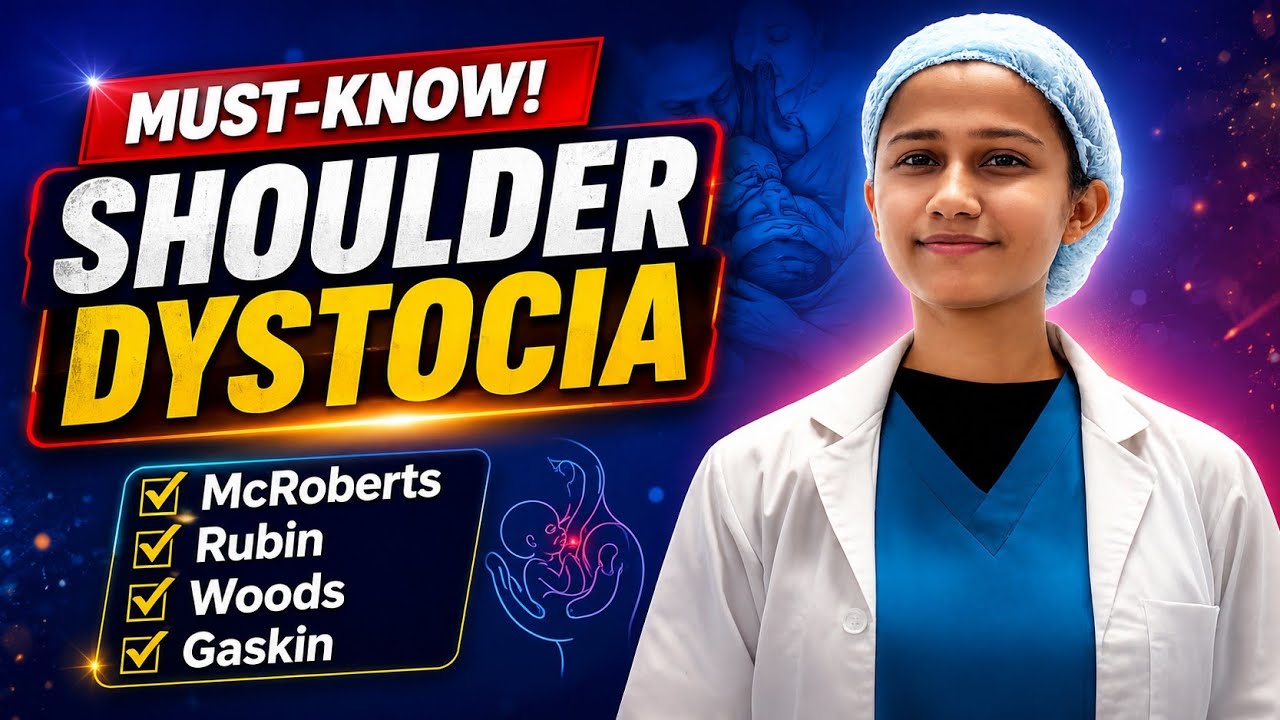
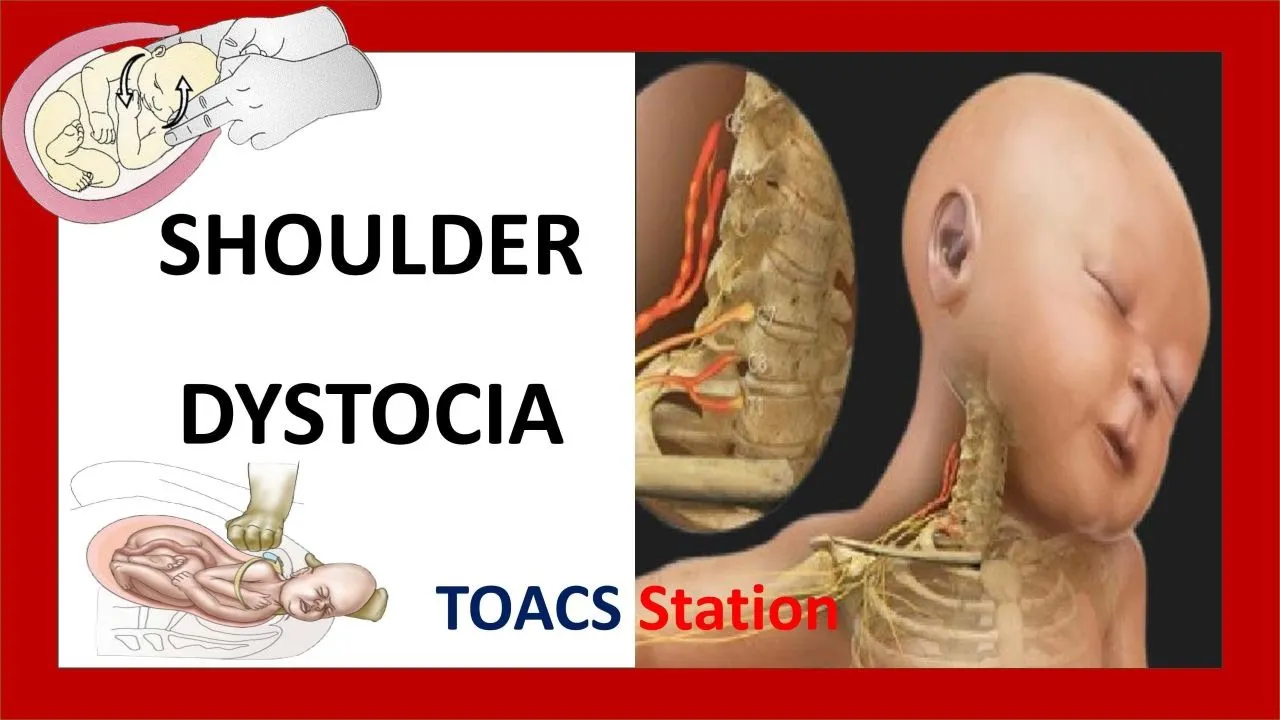
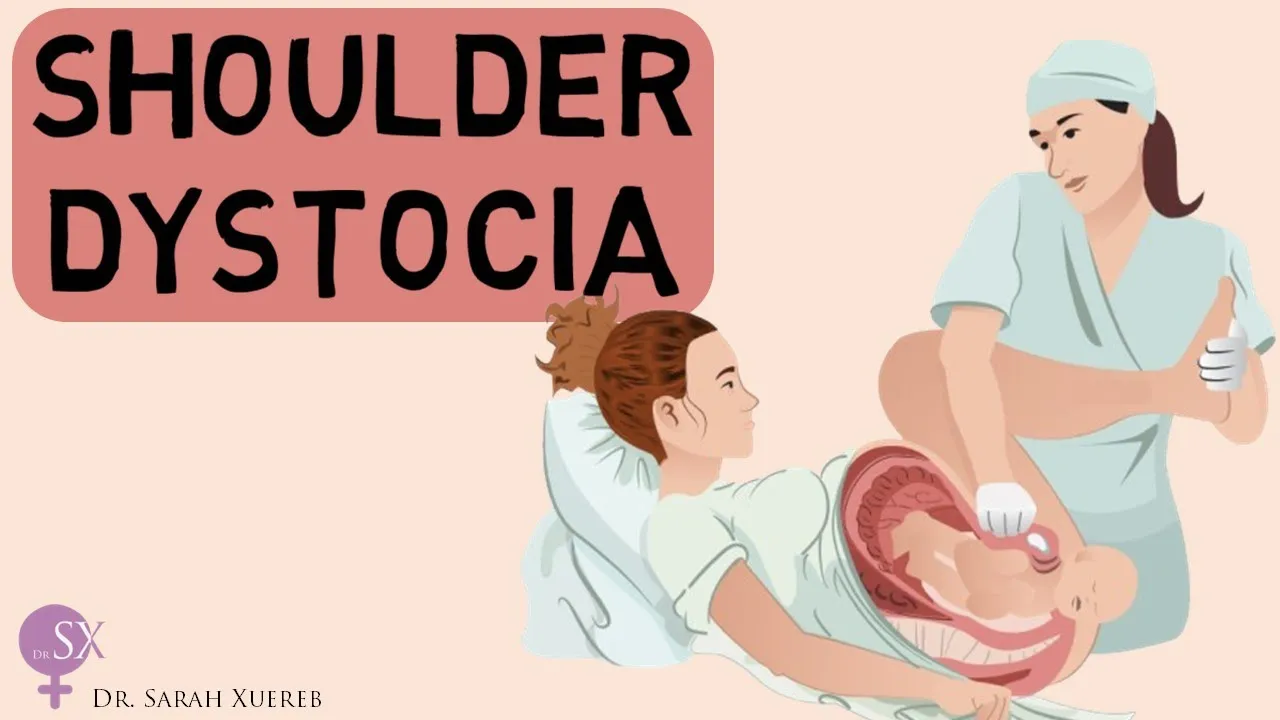
Shoulder dystocia is an obstetric emergency requiring additional maneuvers beyond gentle lateral traction to deliver the anterior shoulder; the management protocol begins with McRoberts maneuver (abducting and hyperflexing the mother's thighs) combined with suprapubic pressure, which resolves approximately 90% of cases, followed by Rubin maneuver (vaginal finger pressure on the anterior shoulder), Wood screw maneuver (reversed finger pressure), posterior arm delivery, and all-fours position, with surgical intervention (Zavanelli maneuver or cesarean section) reserved for refractory cases.
Shoulder Dystocia Maneuvers: Obstetric Emergency Step-by-Step
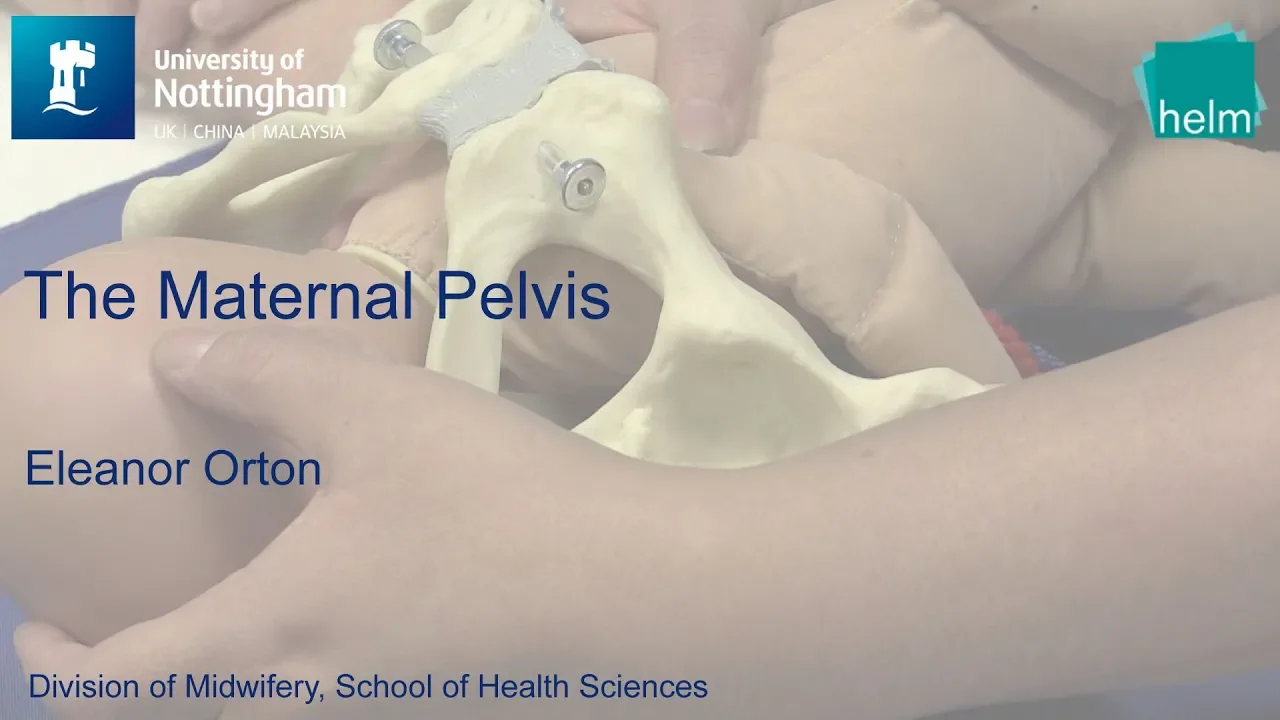
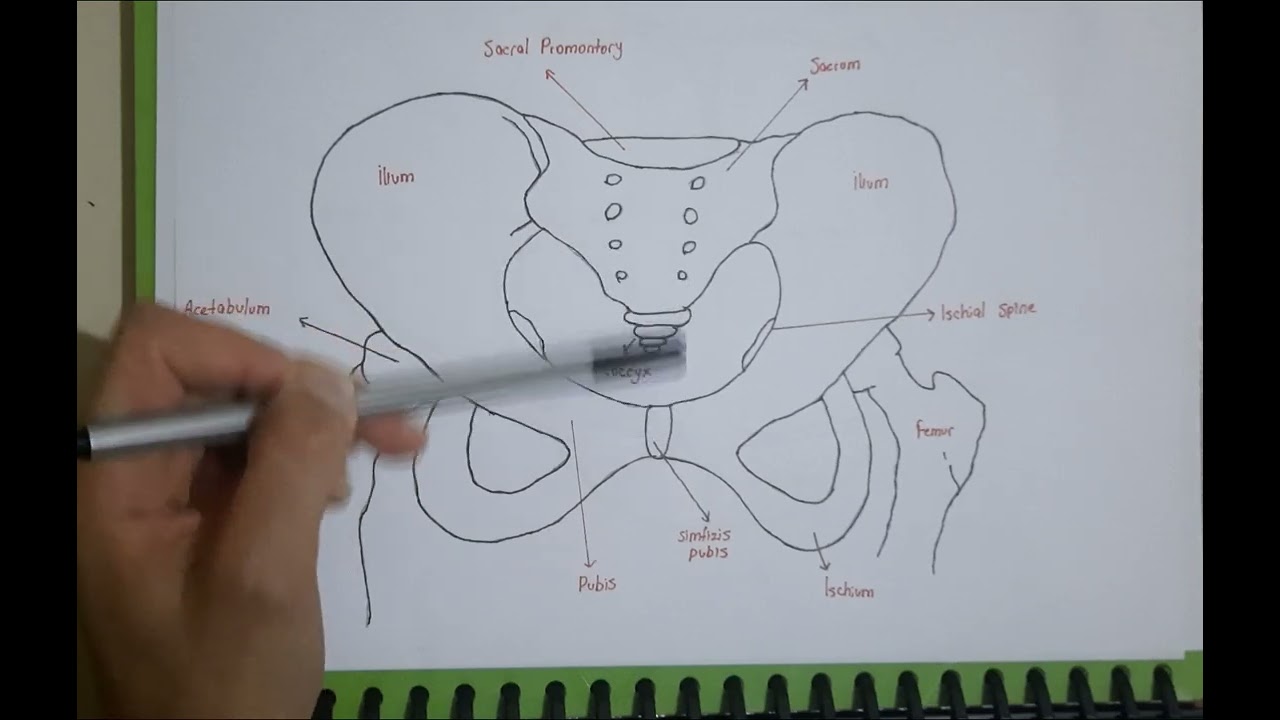
Added:Anatomy of the maternal pelvis (including the symphysis pubis and sacral promontory) and the fetal skull and skeletal system.
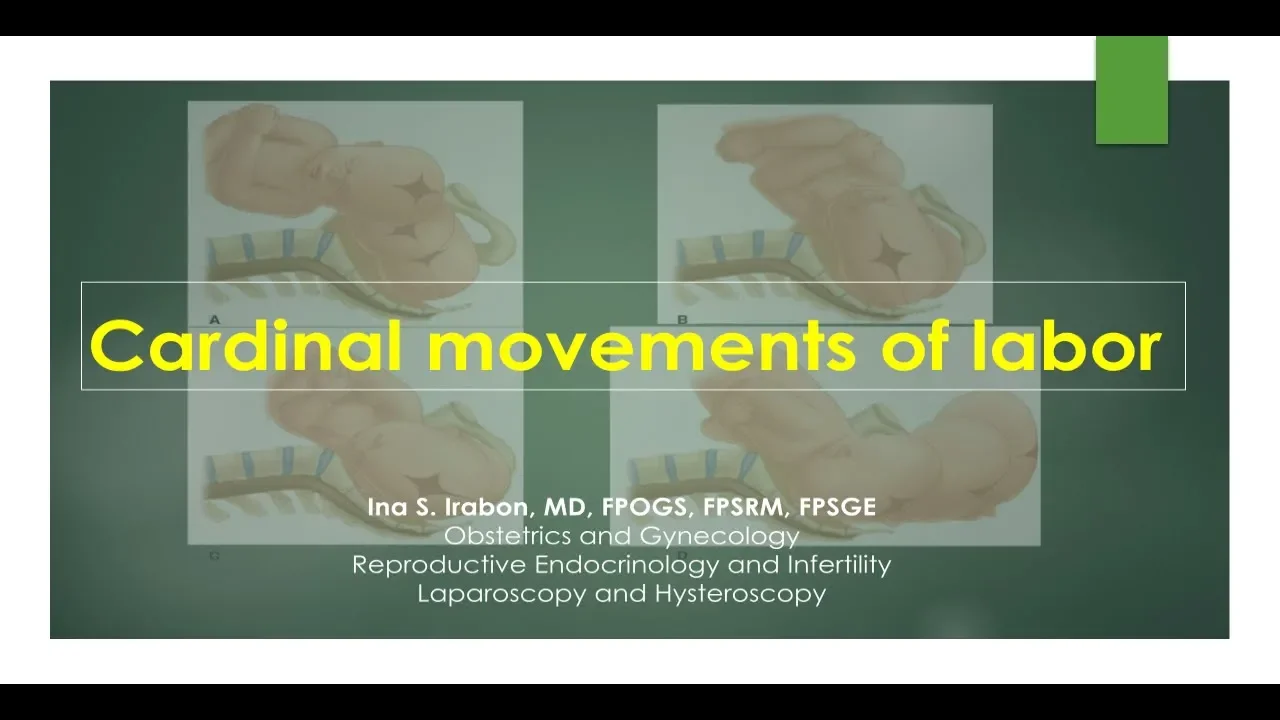
The normal cardinal movements of labor, particularly external rotation and restitution.
Definition and clinical recognition of shoulder dystocia, including the 'turtle sign' and risk factors such as fetal macrosomia and maternal diabetes.
Basic principles of obstetric emergency triaging and team communication protocols (e.g., calling for extra assistance and anesthesia).
Advanced and last-resort maneuvers for refractory shoulder dystocia, such as the Zavanelli maneuver (cephalic replacement), intentional clavicular fracture, and symphysiotomy.
Assessment and management of neonatal complications resulting from shoulder dystocia, including brachial plexus injuries (Erb's palsy), clavicular fractures, and neonatal hypoxic-ischemic encephalopathy.
Identification and management of maternal complications, particularly postpartum hemorrhage (PPH) and third- or fourth-degree perineal lacerations.
Best practices for precise clinical documentation and timeline tracking during an obstetric emergency, which are critical for medico-legal purposes.
Participation in multidisciplinary, high-fidelity simulation drills (such as the HELPERR mnemonic training) to improve hands-on coordination and response times.
286.6K views3.4Klikes5:03Original Release: 2014-06-12
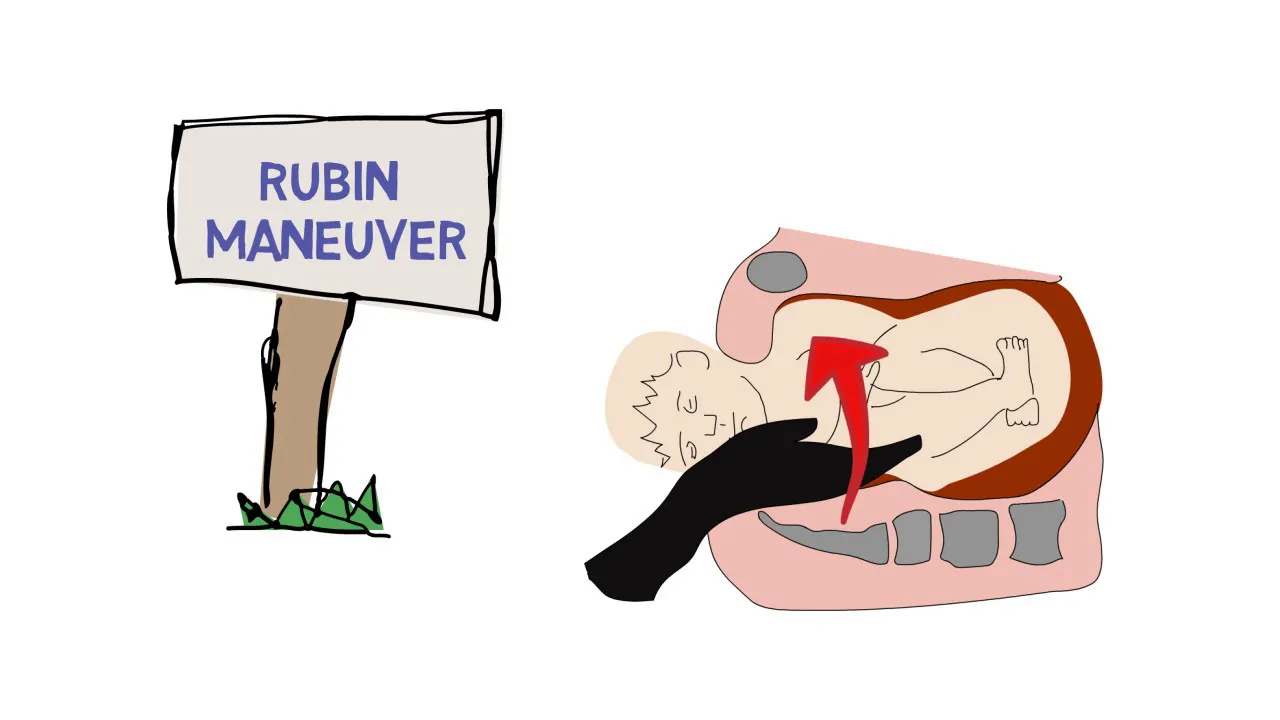
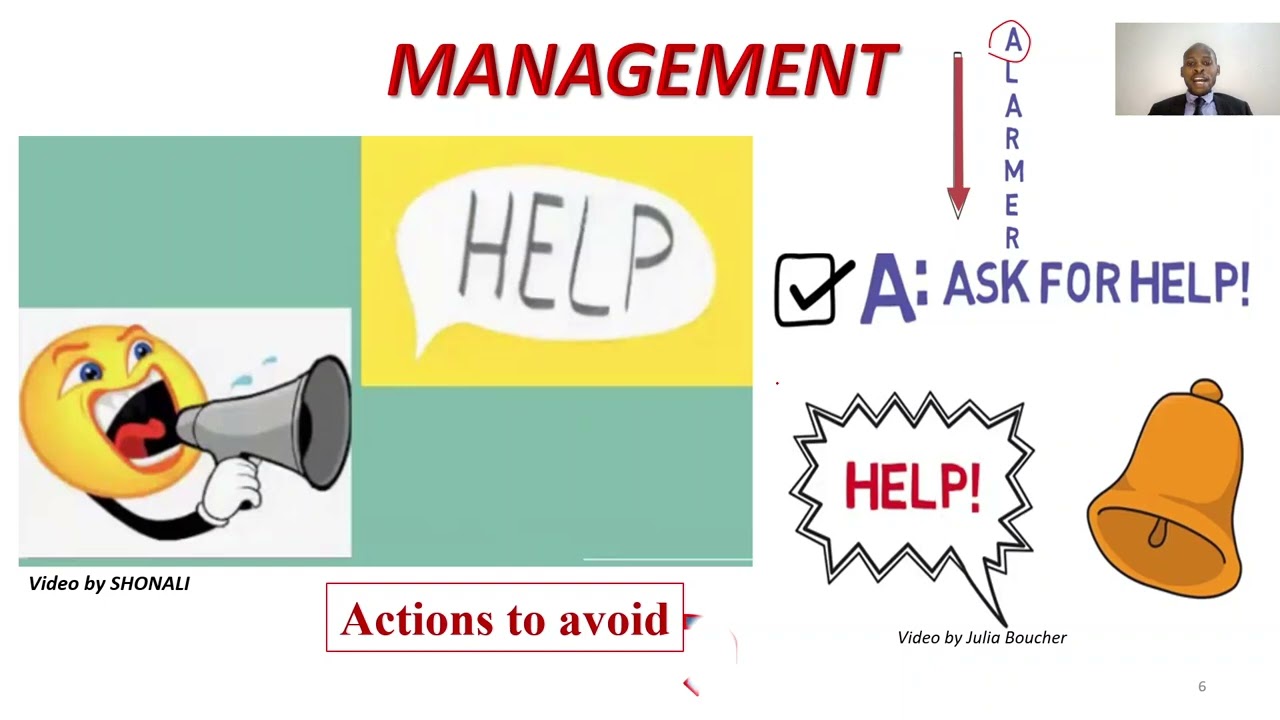
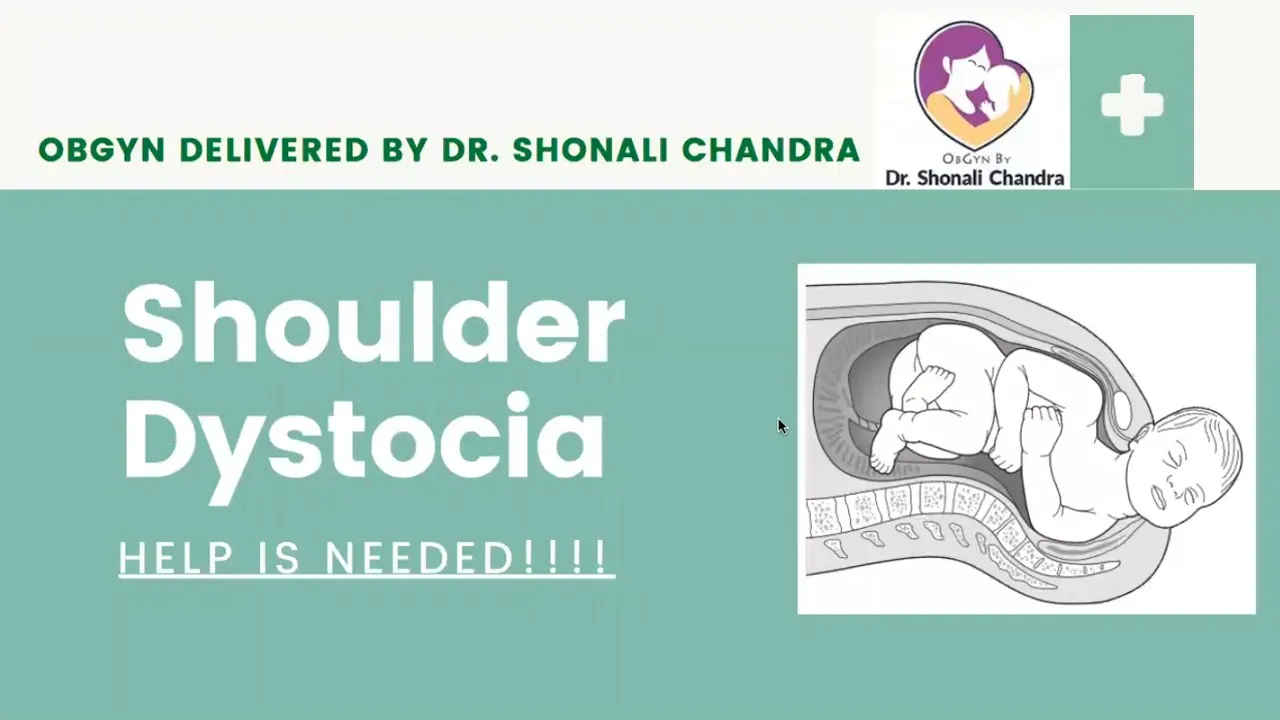
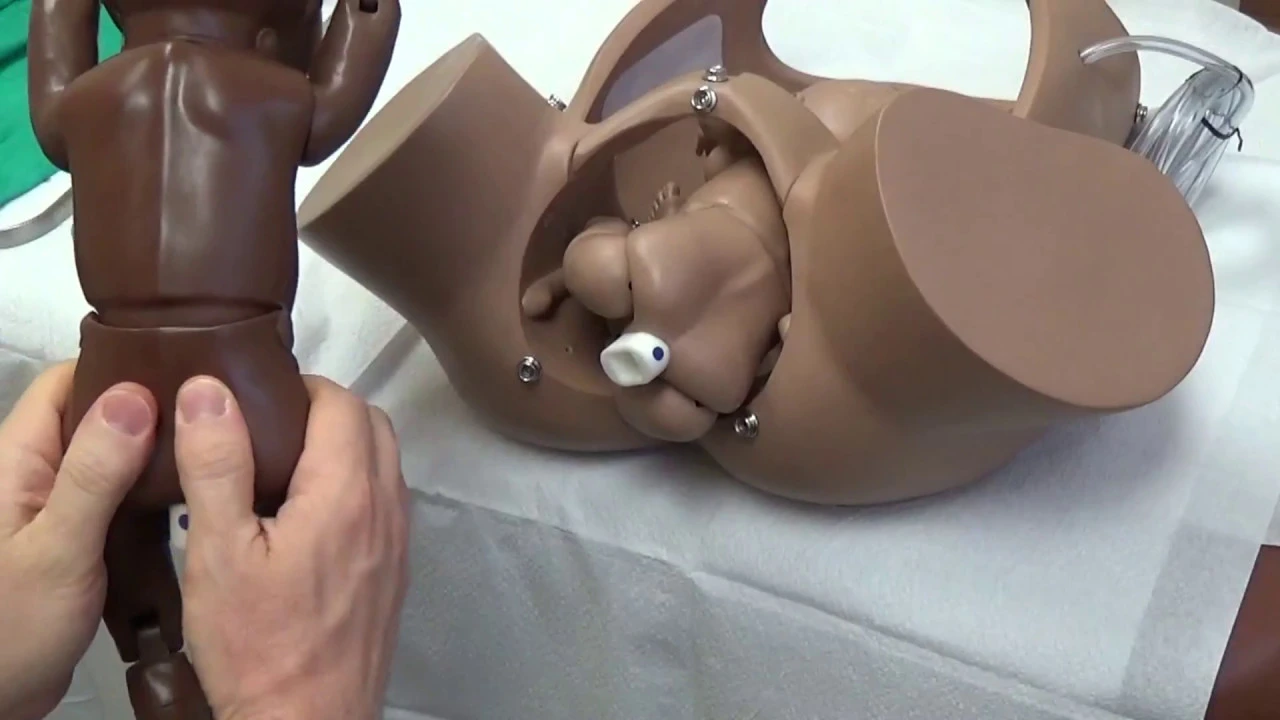
uh all right we now we'll discuss the Maneuvers for uh delivering a baby with shoulder dystocia uh the basic definition of shoulder dystocia is when when you need additional obstetric Maneuvers to deliver the shoulders uh rather than the simple gentle traction or lateral traction that is usually uh sufficient to deliver shoulder the shoulder in most normal deliveries uh so initially when uh the baby the head comes out and the shoulders don't come out and uh you are called to manage the situation uh you recognize that shoulder dystocia as an emergency it's an obstetrical emergency so you have to call for help and call as many assistants as possible and of course call the uh senior obstetrician and gynecologist uh after that you put the patient on a flat bed and in a low position uh the flat bed will make the lumbosacral area more flat and this will enlarge the area for to facilitate the delivery uh more and the low position to well facilitate the the delivery on your part uh other than that you should empty the bladder again to facilitate the delivery and have a generous otomy uh all of these have obvious benefits uh now after that the the assistants come so the first thing to do is to do McRoberts maneuver uh one assistant on each site they will abduct and a hyperflex the thighs of the mother on her abdomen this will again further flatten the the lower back and will further facilitate the delivery uh and with this while they are doing this uh below what you're doing is to do a lateral traction on the head in order to deliver it okay so this is report and this by itself can deliver a very large proportion about 90% or so uh of all the shoulder dystocia so you don't need the next steps but for the remaining 10% this will not be sufficient so we switch to another maneuver an an assistant will be pushing through the lower abdomen in the suprapubic area so if the baby is like this of course you don't see this uh in normal patients uh so the the assistant will be pushing on the posterior aspect of the anterior shoulder anterior shoulder is the shoulder that is closer to the front of the mother's abdomen so they'll be pushing like this okay and you will you on the other side will'll be doing the traction again okay so you do the traction with all of these Maneuvers now this pressure can be constant or it can be in a in a rocking way I can either do this constantly and the other one is doing the lateral traction or I can do it in a rocking maneuver okay that is intermittently and I'm doing the traction so we suppose that again this is not useful so we switch to the next maneuver and by the way all of these Maneuvers so the McRoberts alone the super pubic pressure and each of the next ones each should not take more than 30 seconds if it reaches 30 seconds and it's not useful we switch to the next one so the next one to switch to is called Rubin you go through the vagina and by two fingers you push on the posterior aspect of the anterior shoulder kind of like the Supra pubic but you're doing it through the vagina and again you'll do traction to deliver the baby if this is not useful after 30 seconds you keep this pressure and you add the other two fingers and push on the anterior aspect of the posterior shoulder and then try to deliver the baby this is called wood screw okay wood screw if this is not useful you reverse your hand so you push on the anterior aspect anterior aspect of the uh anterior shoulder and the posterior aspect of the posterior shoulder and you reverse the pressure and try to deliver if this is not useful so we switch to the next one first we will try to deliver the posterior arm that is the arm that is close to the back of the mother the posterior arm okay so we deliver this now in order to deliver this one as well we will rotate the baby in the direction of the face and the uh chest and abdomen so we'll rotate the baby like this okay and then we'll deliver this is of course outside and then we'll deliver the uh the other arm as well and this may facilitate the delivery suppose that this is also not useful in that case we have to put the mother on all fours that is on her hands uh and on her legs okay uh and what we can do in that position so let's assume that the mother is now on all fours uh in this case we can either uh exert the traction downward traction on the on this shoulder this is the posterior ior shoulder because it's close to the back of the mother so you can exert downward traction here and then take it out or we can exert upward traction on the anterior shoulder and then also take it out if even this is not useful then you you have to go to operation either in the form of symphysiotomy uh or in the form of cesarian section thank you uh one thing I forgot uh is that the cesarian section that you do it's uh well before that's it's called zanel maneuver you have to push the head back into the uh uh into the uterus and then you do the ciss section
Up Next
11:45
Vaginal Breech Delivery: A Systematic Approach | Obstetrics Guide
@obstetrics.education3466
391.1K views•2018-05-18

48:47
Graphic Medicine: Comics for Collaborative Healthcare Communication
@nationalpatientadvocate
189 views•2023-12-04

10:28
Neuroanatomy: Central and Peripheral Nervous System Divisions Explained
@AKLECTURES
136.2K views•2014-09-20
3:05
Stages of Labor and Vaginal Birth | Childbirth Animation
@nucleusmedicalmedia
52.1M views•2017-08-18
Related Study Plans & Knowledge Roadmaps
Structured learning paths in Medicine
medicine
Abnormal LFTs: Diagnostic Workup & Pathology
01Liver Anatomy and Basic Physiology
02Introduction to Liver Function Tests (LFTs)
03Hepatocellular vs. Cholestatic Patterns
+ 3 more learning modules
12h6 modules
Explore Roadmap
medicine
Analyzing Blood Smears: RBC, WBC & Platelets
01Introduction to Blood Components & Smear Preparation
02Normal Morphology of Blood Cells
03Erythrocyte Pathologies & Morphological Variants
+ 2 more learning modules
12h5 modules
Explore Roadmap
medicine
Mechanical Ventilation: Waveforms & Alarms
01Anatomy and Physiology of Breathing
02Introduction to Mechanical Ventilation & Core Modes
03Ventilator Settings and Waveform Interpretation
+ 2 more learning modules
12h5 modules
Explore Roadmap
medicine
Neuro Exam: Localization & Stroke Syndromes
01Foundations of Neuroanatomy and Vascular Supply
02The Neurological Examination: Step-by-Step
03Principles of Neurological Localization
+ 3 more learning modules
18h6 modules
Explore Roadmap