














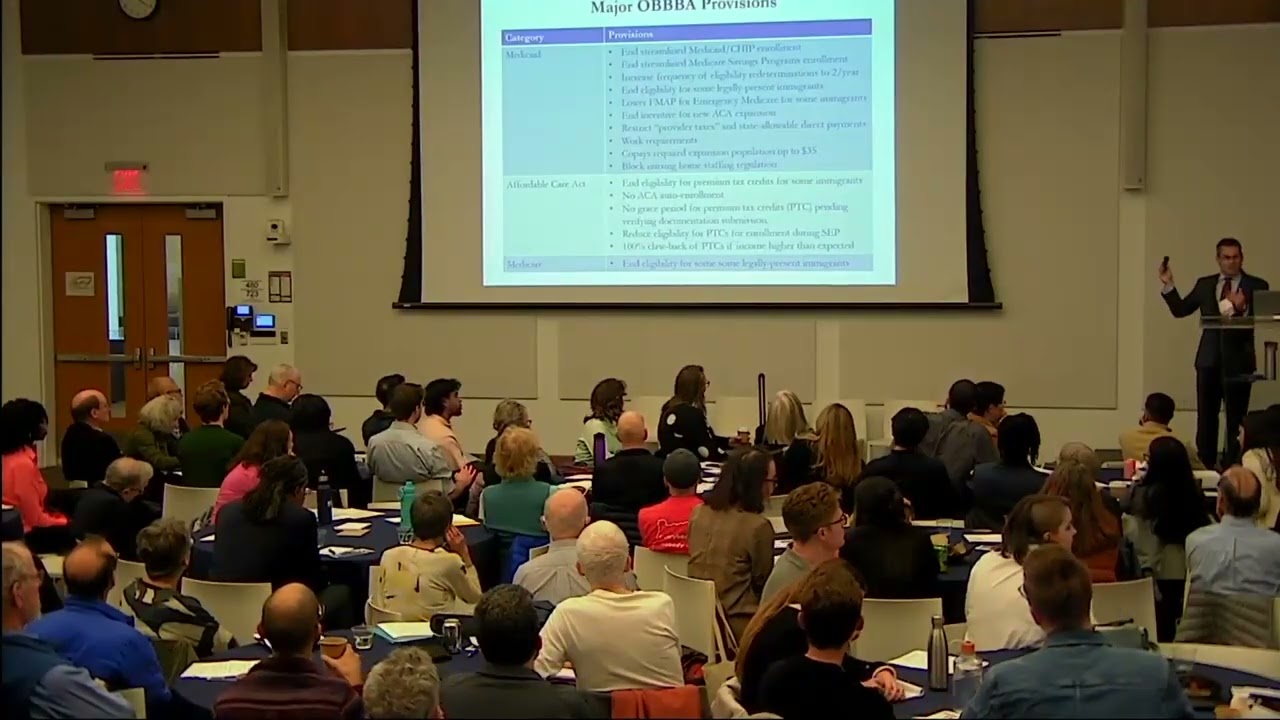












The Affordable Care Act (ACA) fundamentally transformed the U.S. health care system by addressing two major problems: high uninsured rates and discrimination against people with preexisting conditions. Before the ACA, insurers could deny coverage or charge excessive premiums based on health status, gender, or occupation. The ACA standardized the individual insurance market by limiting premium variations to age, location, tobacco use, and family size, while prohibiting coverage rescission and benefit exclusions for preexisting conditions. The law also introduced premium tax credits to help low-income individuals afford coverage. However, the ACA's primary focus was on making coverage affordable for individuals rather than controlling overall health care spending, which remains high at approximately 20% of GDP. Current challenges include potential expiration of enhanced tax credits, which could cause premiums to increase significantly for middle-income consumers, and changes to income verification rules that may create financial burdens for those near the subsidy eligibility threshold.
The Affordable Care Act's Future: Premiums and Politics Explained
Added:Julie Rovner: Hello from KFF Health News and WAMU Public Radio in Washington, D.C. Welcome to “What the Health?” I’m Julie Rovner, chief Washington correspondent for KFF Health News.
Usually, I’m joined by some of the best and smartest health reporters in Washington, but today we have a special episode. We’re taping this week on Monday, Nov. 3, at 10 a.m. As always, and especially this week, news happens fast, and things might’ve changed by the time you hear this. So here we go. Today, we’re going to explore the state of the Affordable Care Act with one of my favorite experts, KFF’s Cynthia Cox, who’s a vice president and director of the program on the ACA. Open enrollment for 2026 health plans began on Saturday, Nov. 1, and there is so much confusion. I thought it would be helpful to see where we’ve been and, possibly, where we’re going.
Cynthia, thank you so much for joining us. Cynthia Cox: Yeah, thanks for having me, Julie. Rovner: I want to start by reminding everyone how the Affordable Care Act changed the health care system, what problems the law tried to solve, what problems were left for another day. I feel like people have either forgotten or never knew what things were like pre-the ACA. Cox: It has been quite awhile, so let’s, I guess, rewind 15 years or so. There were a couple of big problems that the ACA was trying to address in the U.S. health care system. One was that there were a lot of people who were uninsured. And that was partly because of cost reasons and partly because of the second big problem that the ACA was trying to solve, which was that people who have preexisting conditions were often denied access to health insurance.
And to explain that a bit more, what that looked like, was if you had a serious illness like cancer or diabetes or some other illness that might require expensive treatments, and if you had any gap in your coverage — say, you left your job and then needed to find some other health insurance after a period of time — then the insurer would often just deny your application and say they wouldn't insure you. And if you had a less severe condition, maybe even something like acne where you needed Accutane treatment or something, then they would still give you insurance, but they could charge you more. They would charge a surcharge for covering that preexisting condition. And then still another issue with preexisting conditions was that insurers didn't have to cover your treatment for a condition, too. So, you might get a health insurance coverage for certain treatments but, say, it might exclude mental health treatment or even pregnancy care or prescription drugs or other things that didn’t need to... There was no minimum standard for what needed to be included in these health insurance plans that were sold to individuals. Usually, insurance that was sold to larger businesses or that larger companies offered was pretty comprehensive.
The ACA did make some changes to those plans, too, like setting out-of-pocket limits and prohibiting lifetime caps. But most of the changes were in what was called the individual market, where people would buy their own health insurance on their own, usually when they were between jobs, or between school, or maybe a stay-at-home parent, or that sort of thing.
Rovner: Or even a self-employed individual, which was... Cox: Yes. Exactly. Rovner:... growing in the early parts of this century. Cox: Yeah.
Rovner: I think people don't remember how much of a wild West the individual market really was at that point. The Congress had regulated the employer market in 1996 with HIPAA [Health Insurance Portability and Accountability Act], which was about a lot more than confidentiality. But that’s for another day. But the individual market was so crazy that you could get insurance — it wasn't really insurance — or you could get charged more just for being a woman, right? Cox: Exactly. You could even be charged based on what your job was. People who had risky professions might’ve been excluded from health insurance, too. There were very few rules or standards in this market, it was... One insurer might have insured you, and another insurer wouldn't have. And there was no way to really know what was going to be available to you without having to maybe apply to multiple companies and go through a lengthy underwriting process, too.
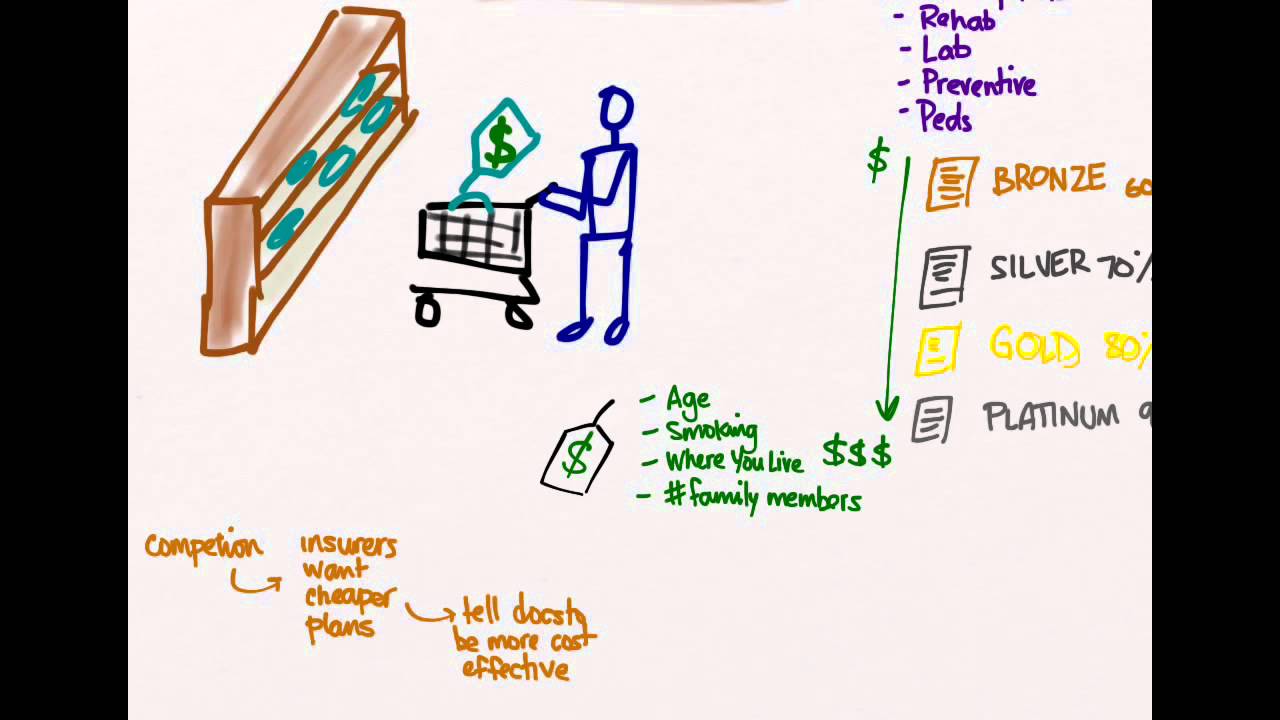
Rovner: How did the ACA change that? Cox: The ACA created a lot of standards, and the way that it did that was to say: Here are the only ways that you can vary premiums.
Rather than having rules about every single little thing that could have been covered, the ACA was basically like, OK, here are the only ways that insurers can change things.
The only ways that insurers can change premiums are based on how old you are, where you live, and if you smoke cigarettes or used tobacco, and then also, just how many people are signing up for the coverage. So basically, if your whole family is signing up, then obviously that’s going to be more than if just you is signing up. And then it basically prohibits all those other things, like you can’t rescind coverage based on preexisting conditions or exclude coverage based on preexisting conditions, or... It basically is saying: If you have a preexisting health condition, that is not a reason for an insurance company to charge you more or deny you coverage or carve out certain benefits. So now the health insurance that is sold to individuals — which now we’ve started calling these the ACA marketplaces or Obamacare markets or that sort of thing — so that coverage that’s sold there looks a lot more like the coverage that had been available to people with large employer coverage before the ACA.
Basically, it was trying to bring the standards for individual insurance coverage up to what already had been the standards for employer coverage. And, in doing so, it made health insurance more expensive in the individual market because when health insurers have to pay out claims for people who are sick, then that brings up their average costs, which they have to spread out, meaning higher average premiums that they’re charging.
Those premiums today are no more expensive than the premiums that employer plans have.
They cover similar benefits. It costs about the same, but when you get coverage through work, your work is paying for a large part of that premium. And when you pay your premium, it’s usually with some sort of tax benefit, too. So I think a lot of us who have employer coverage just don’t realize how expensive employer coverage is. And the ACA... Rovner: We also don’t realize how much we’re getting subsidized by the government because that’s... Cox: That, too. Yes.
Rovner:... one of the big fights. It’s like: Why are we giving these people subsidies? It’s like: You're getting a subsidy, too, if you have employer coverage.
Cox: Yeah, exactly. Yeah, it’s a tax benefit.
And so basically, in the individual market or Obamacare markets, the premiums — the raw total gross, whatever word you want to say, how much the insurance company is charging — is about the same as in the employer market, and it covers about the same services. It’s very similar coverage, and that’s why it’s expensive. But that’s also why there are tax credits that are available to help individuals afford coverage. Because if you’re low-income, there’s no way you’re going to be able to afford full-price health insurance. Rovner: And the tax credits have been a big boon to this market, right? Including... Cox: That’s right.
Rovner:... the expanded tax credits from 2021.
Cox: Yeah. The ACA included premium tax credits to begin with. But the enhanced tax credits — which is what Congress is debating right now — those were passed in 2021, and those basically just boosted the amount of financial assistance that people were getting.
When the ACA was first passed in 2010, there was a lot of talk about, well, how do we make health insurance affordable, but also how do we define what affordable is? There was not really a standard against which to say, OK, this is what a low-income person can afford to pay. This is what a higher-income person can afford to pay. And so there was a table basically in the law that said, at the time, that a low-income person would pay 2% of their income for a premium, and a higher-income person would get no financial help, but a middle-income person would pay 10% or so of their income. And it turned out that that definitely helped people afford coverage.
But a couple of issues that existed in the early ACA were that those higher-income or even middle-income people were priced out of health insurance if they didn’t get a tax credit. And those were often small-business owners, or entrepreneurs, or self-employed people who were a pretty vocal group about how they were being harmed by higher premiums and not getting any financial help to pay for their costs. This was a group that got a lot of media attention and was really part of why we were even talking about repealing or replacing the ACA. It was that group of people who did not get any financial help but had higher premiums that were really, arguably, harmed by the ACA, especially if they had been healthy and had been able to get insurance before the ACA. That was one issue. And then the other issue was just that take-up was not as high as what expectations had been, and I think a lot of that was even for lower-income or people who were getting a tax credit, maybe they just weren't getting enough financial assistance to make that coverage affordable or attractive.
Rovner: And we should talk about the mandate, because that was the big fight over the ACA … the idea was if you were going to let all these sick people into the individual market, we needed to get more healthy people into the individual market. And maybe the tax credits wouldn’t be enough, so we’re going to require people to either pay a tax penalty or buy insurance. And that was so controversial that it got repealed. Cox: Yeah. The idea here was, well, if you’re going to allow people with preexisting health conditions to come in and buy health insurance, what’s to stop them from waiting until they get sick to get that coverage? And if they do that, then there was this word that suddenly everyone became a health economist back in 2010 and heard about adverse selection or death spirals. And so the concern was that if you wait until you’re sick to get health insurance — if everyone waits until they’re sick to get health insurance and only sicker people are buying health insurance — then basically that makes premiums astronomically high. No insurance company is going to want to even participate in a market like that because it could lead to what’s called a death spiral — meaning the premiums just get higher and higher and higher and higher until no one can afford to purchase that coverage.
And so the individual mandate, sorry, was one way in which people were basically compelled to purchase insurance and not wait until they were sick. Basically, there were carrots and sticks in the ACA. The sticks were the individual mandate and also this short open enrollment window. So if you didn’t sign up during open enrollment and you found out you had some serious illness after open enrollment ended, you would have to wait until the next open enrollment to sign up. And then the carrot was the tax credit, basically making coverage affordable.
So when the individual mandate penalty was reduced to $0 — effectively getting rid of the individual mandate — there was a lot of concern that that was going to lead to a death spiral or adverse selection at least. It didn’t really play out that way, I think, because what really mattered was the carrots. The open enrollment window is still there as a stick, but I think people want health insurance. It just needs to be affordable enough for them to get it.
And so the tax credits are really key there to making the coverage affordable and attractive for someone to buy it even if they are not sick. Rovner: And the enhanced credit just made the carrot that much bigger, right? Cox: Yeah. It basically supersized the carrot. That’s when you see when these enhanced tax credits rolled out, people started buying this coverage a lot more. The markets doubled in size. It went from about 11 million people signed up to over 24 million people signed up just within a few years of these enhanced tax credits being available.
Rovner: So there were also some things in the ACA that were supposed to help dampen, if you will, the acceleration of health care spending. The consensus is those didn't work quite as well, but they were there, right? It’s not that [the] law just ignored the cost of health care.
Cox: Yeah. The law did not ignore the cost of health care. But I will say, I think the primary emphasis was on making health insurance affordable for individuals rather than making it affordable for our society. There were some measures put in place to slow the growth of health care. And actually, another thing that President [Donald] Trump did in his first term was use authority from the ACA to implement price transparency rules for hospitals to try to get at hospital prices.
And there were, of course, other efforts, too, but I would say nothing that really made a huge impact on total health care spending as a nation. We have seen health care spending has slowed.
It’s not growing as quickly as it was before the ACA in general. I don’t know if you can attribute all of that to the ACA, though, but we still are, as a nation, spending about 20% of our GDP [gross domestic product] on health care. Whereas other countries that are large and wealthy, like the United States, spend closer to 10, 11, 12% of their GDP, and that’s regardless of whether they’re a single-payer nation or not. Even countries that have multiple payers will still spend significantly less on health care than the United States does.
Rovner: But the Republican talking point that this is all, that health care spending has gotten out of control because of the ACA isn’t true. Cox: Yeah, no. In fact, I think health care spending growth has slowed since the ACA. When you look at the individual market, which is where so much of the emphasis has been in changing how preexisting conditions are covered and that sort of thing, yes, premiums are higher today in the individual market than they were in the pre-ACA individual market. But individual market premiums today are really similar to employer premiums today, where the ACA, really, barely touched those plans.
I think the issue is that health insurance is just really expensive in this country, and it’s really expensive because we spend a lot on... we pay high prices for doctor’s visits, hospital stays, prescription drugs. And the ACA did do some things to try to address those underlying reasons why health care is so expensive in the U.S., but it wasn’t really the main focus. I think the main focus of the ACA was to subsidize coverage and make it affordable for individuals. But that still means that it’s expensive for society. Rovner: So who are the individuals in the ACA individual market, if you will? There’s — what? — 24 million of them?
Cox: Yeah. There’s 24 million of them, and about half of them are either small-business employees, or owners, or self-employed people, and that’s because a lot of us get coverage through work. But we work at bigger companies where that company offers a benefit as part of your total compensation package. You get your salary, and you also get your health insurance. Smaller companies often do not offer health insurance. They’re not required to, especially very tiny companies like mom-and-pop shops or that sort of thing.
Also, even people who are not affiliated with a small business are still usually working or in a working household. They might just be working part-time, or they might be a stay-at-home parent where their spouse works, and they just don’t get health insurance for themselves.
And so generally speaking — because you have to have an income of at least the poverty level to be getting a subsidy in this market — these are working individuals or working families. Also, a lot of farmers and ranchers rely on the ACA marketplace because, again, that’s a field where they don’t necessarily get health insurance through work. So that’s a big part of it.
The other thing that’s pretty common is pre-retirees or early retirees. So basically, people who are not quite old enough to be on Medicare — since you have to be 65 to get on Medicare — you see a lot of 64-year-olds buying ACA marketplace coverage.
Rovner: I think the thing that confuses most people, at least the most people that I talk to, is that we keep hearing that ACA premiums are going up an average of 17% next year, or 30%, or more than 100%. And all of those numbers are actually correct because they’re referring to different things. So what’s the difference between premiums the insurers charge and the premiums consumers have to pay? Cox: Yeah, there are too many percentages out there for a normal person to keep track of, so I will do my best to explain it.
Basically, there’s two ways to think about premiums in the individual market. There’s how much the insurance company is charging for their premiums. That’s the revenue that the insurance company is bringing in. But a lot of that is not paid by individuals. The federal government is paying a large share of that in the form of a tax credit.
So then the other way that people think about premiums in this market is how much individuals are paying out of their own pockets for their premiums. And if you’re just a regular person shopping on healthcare.gov, that’s what you see as your premium payment is how much you have to contribute as an individual. The amount that the insurance companies are charging, we have a couple of different numbers on that. We have what they requested to state regulators was an 18% increase on average. Four percentage points of that, they were saying, was this extra premium increase that they weren’t otherwise going to charge. But they were saying, we think that when these enhanced tax credits expire, that healthier people are going to drop their coverage, meaning we’re going to be left with a sicker group of enrollees, so we’re going to have to charge even higher premiums than we otherwise would have. Either way, even if the enhanced premium tax credits had been extended, insurers in this market still would’ve been raising premiums by double digits. That’s the steepest increase that we’ve seen in many years in this market. But we’re also, I think, looking at double-digit premium increases for employer plans, too. It’s just an expensive year coming up. That’s how much... And then we have newer data that just looks at silver plans. This is super wonky. But basically, a certain plan that is the benchmark against which subsidies are calculated. The insurers are actually charging 26% more on average for that plan. So I think that these requested rates might’ve understated how much insurers are actually charging. And so these are really significant premium increases. But... Rovner: I would say a really important piece of this is that if the tax credits weren’t changing, people wouldn’t be paying these increases. Right?
They would be absorbed... Cox: Exactly.
Rovner:... by the tax credit. Cox: Yeah. Nine out of 10 people in this market get a tax credit right now. And if the tax credits were extended, people would pay the same next year that they do this year. Their out-of-pocket premium payment would be held relatively flat. They would not be paying these increases that insurance companies are charging.
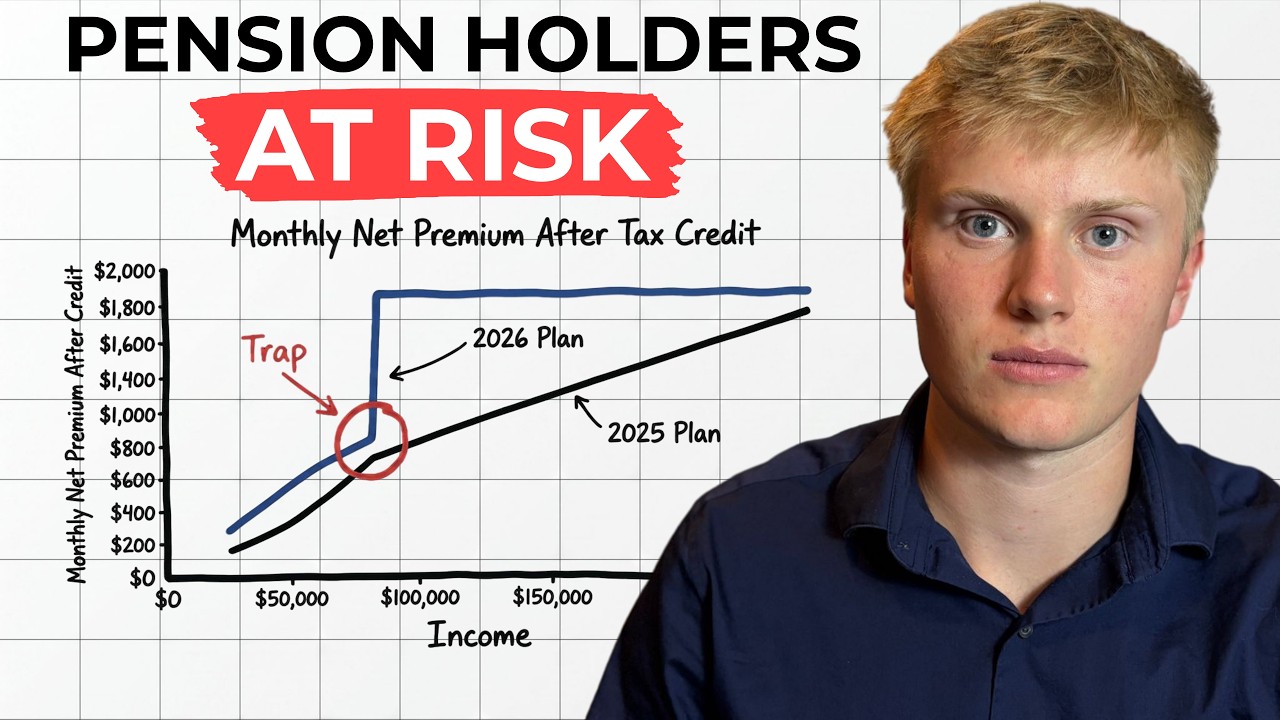
Looking into next year, there are people who will lose the tax credit altogether if the enhanced tax credits expire. These are the middle-income, small-business owners who we were talking about before. They will lose the tax credit. So they will get less financial help or no financial help, and then they will also have to pay this double-digit premium increase that insurers are charging. So that’s this double-whammy effect for that group of people.
But even the people who continue to get a tax credit, they’ll just get a smaller tax credit next year. They’re still also going to see their premium payments go up, not because of what the insurance company is charging, but because of Congress not extending the enhanced premium tax credits. So that means that they have to pay a larger share of their income. So a low-income person, instead of paying nothing each month, will have to start paying 2% to 4% of their income. A middle-income person, instead of paying maybe 6% to 8% of their income, might pay 8% to 10% of their income. Again, for most people, this is not a function of what the insurance company is charging. It’s actually a function of what Congress sets the law to be and how much of a tax credit they get. Rovner: If the tax credits do expire, as currently scheduled, is there any way for people to offset that increase, like buying a less generous bronze plan instead of a silver plan? And what would that mean for their out-of-pocket spending on health care? It’s a trade-off, right? Cox: Yeah. Our analysis shows that if people stay in the same plan, they would see a premium increase of 114% on average. But for many people, it could be an option to switch to a lower level of coverage. So maybe instead of buying a silver plan, they buy a bronze plan. But the issue there is, a lot of the people who are buying ACA marketplace coverage right now are so low-income that they’re getting really generous financial help for their deductibles, too. It’s not just their premiums. So instead of a silver premium having a deductible of a few thousand dollars for that person, their deductible might be less than a hundred dollars now. And so if they were to switch from a silver plan to a bronze plan, they might still be able to keep a zero premium payment, or near-zero premium payment, but their deductible would be $7,000 more than it is today. Either way, they’re going to see their costs go up. It’s just, do they see them go up when they go to the doctor, or have an emergency, or have a hospitalization, or fill a prescription drug? Or do they see their monthly costs go up for each month that they’re paying their premium?
If you’re young and healthy, it might make sense to take the risk and get the bronze plan. But if you’re pretty sure you’re going to use some health care next year, then it makes sense to just pay the higher premium so that you can keep that low deductible.
Rovner: Yeah. One of the main Republican talking points is all these people who have insurance but don’t file claims every year, which they say is evidence of widespread fraud. But isn’t it also possible that some of those people don’t use their insurance because they literally can’t afford these four- and five-figure deductibles? Cox: Yeah. It’s also... There’s a lot of reasons why someone might not use their health insurance. We certainly know whether you’re getting your coverage through work or through the ACA marketplaces. If you have a high deductible, then that can be a significant cost barrier. Also, lower-income people face other non-cost-related access barriers, like getting time off of work, or just the ability to find an appointment.
But also the market has gotten younger. And with enhanced premium tax credits attracting more people to buy coverage, this was part of the whole idea was that you get younger, healthier people to sign up for coverage and not wait until they’re sick. And so that also can make it look like there’s less utilization of care. But if you're just young and healthy, then you might not be going to the doctor either way. And also just... Rovner: It’s the opposite of the death spiral, right?
Cox: Right. A health spiral is what some people have called it.
But I think there’s also just some issues with the data source that was used to do that. I won’t go into all those details, but I think ... there’s something there. There is fraud.
There’s no question that there’s fraud in this market. And it’s being committed mostly by agents and brokers who are signing people up either without their knowledge, or switching their plan, or switching the name of the broker so they can get the commission. But I think the scale of the fraud has been exaggerated. Rovner: Something else I think has gotten pretty lost in the fight over extending these additional tax credits is that it’s not the only change coming to the Affordable Care Act for 2026. Republicans made some major alterations to the law in their big budget bill that they passed last summer. Let’s start with the changes to how much people might have to repay if they estimate their income incorrectly. What’s that change?
Cox: I think this is probably one of the biggest changes aside from the expiration of the enhanced premium tax credit, and it hasn’t gotten a lot of attention. So I’m worried that people who are buying their own coverage might not know about this.
Congress has basically repealed any limits on how much you would have to repay when you file your taxes the following year after you enroll in ACA marketplace coverage. The idea is that when you sign up for ACA coverage, you have to project what you think your income will be by the end of the next calendar year. That can be really hard for someone who, say, gets their income from driving Uber or working shifts at a restaurant, or so on and so forth. Or even a small-business owner might have a hard time projecting exactly how much their income will be next year. And so, if you guess wrong — in other words, if you say, now I think I'm going to make $50,000 next year, but you end up making $60,000 next year — then you might have to repay a significant amount of the tax credit. The other simultaneous thing is that with the enhanced premium tax credits going away next year — if that actually does come to be — then this subsidy cliff will come back, meaning that if you make just a dollar too much, meaning just over 400% of the poverty level, then you’ll have to repay the entire tax credit, which could be thousands, if not tens of thousands, of dollars. And so people who are right around that cutoff will need to be really careful about if they have control over their income. For some people, it might make sense to make sure that your income is below four times the poverty level. Or you can also adjust your tax credit midyear or decide to wait and get the tax credit at the time you file your taxes instead of getting it up front. Rovner: Yeah, I think this is a big deal. And also there’s going to be less help available for people to actually sign up for coverage, even though there’s all these big changes happening. Cox: Yeah. When the ACA was first passed, there was this idea that it was going to be like going online and booking your own hotel, or airplane, or whatever, and that’s just not how it has panned out. Most people need help signing up for health insurance. It still is a complicated process. And so they turned to agents, brokers, and what are called navigators, who are nonprofit organizations that have helped people buy insurance. But the Trump administration has cut funding for the navigator program really significantly, and so there’s going to be fewer of those folks to help.
Also, I think this is just going to be probably one of the busiest and most chaotic ACA open enrollment periods ever, probably, and so many... Rovner: 2013 wasn’t great but... Cox: Yeah. But there weren’t so many buying it back then. Rovner:... where the website didn’t work.
Cox: Yeah, yeah. I remember that well, but also, there were not that many people shopping. Now, there’s three times as many people shopping for coverage.
Rovner: True. Cox: I don’t know if there are more agents or brokers than there were back then, but I suspect not. But there’s just going to be busy people. And so if you need to make an appointment with an agent or broker, then go ahead and do that as soon as you can. Rovner: Yeah. This is the trade-off here. On the one hand, people want to wait and see if Congress maybe comes to some deal on these expanded subsidies. On the other hand, it’s going to be really hard to sign up at the last minute.
Cox: Yeah, yeah. So if it were me — and I obviously would feel more comfortable signing up on my own without the help of someone — but I would personally prefer to wait and see what happens. I wouldn’t wait too long, but I might wait till Thanksgiving or early December and wait to make a decision about my plan until then. But you can’t advise everyone to do that because if you need an agent or broker to help you, maybe get that appointment as soon as you can. But maybe also just keep an eye out on things and decide before Dec.
15 if you want to change your plan. Rovner: So it’s not just the expanded tax credits. There’s also [a] new restriction on who’s eligible. There are a lot of people who are immigrants — who were here legally — who have been eligible for tax credits who no longer will be, right? Cox: Yeah. There has been a lot of talk about undocumented immigrants getting this coverage. And just to be clear, the ACA marketplaces are not where undocumented people come to get health insurance. You can’t even buy this coverage without a subsidy if you’re undocumented.
Up Next
Canada's Single-Payer Healthcare System: An Analysis
@healthcaretriage
753.1K views•2014-02-23

Impact of Yuan in Indo-Russian Trade Amid Sanctions
@WION
261.9K views•2022-07-01
Behavioral Economics Explained: Rationality, Nudges, and Risk
@crashcourse
1.1M views•2016-03-12

The Age of Easy Money: Fed & Inflation | Full Documentary
@frontline
21.2M views•2023-03-15
Related Study Plans & Knowledge Roadmaps
Structured learning paths in Economics