


![2 Powerful Tools to Create Healthy Connections | The Mel Robbins Podcast [ENCORE]](https://i.ytimg.com/vi/2rJ9n6Wix3Q/maxresdefault.jpg)























Attachment triggers are present-moment situations that activate childhood wounds or past relationship patterns, causing disproportionate emotional reactions; to manage them, pause and notice the trigger, name the feeling, communicate your experience gently without blame, and offer self-soothing to your inner child, recognizing that triggers indicate your nervous system is carrying old stories longing for healing rather than something being wrong with you or your relationship.
Attachment Triggers in Relationships: Why Small Moments Feel Big
Added:Introduction to Attachment Theory: Understanding the foundational work of John Bowlby and Mary Ainsworth, including the four primary adult attachment styles (secure, anxious-preoccupied, dismissive-avoidant, and fearful-avoidant).
Fundamentals of Emotional Regulation: Understanding how the nervous system responds to perceived threats, specifically the roles of the amygdala (fight/flight/freeze) and the prefrontal cortex in processing emotions.
The Concept of Psychological Triggers: Knowing what an emotional trigger is, how it differs from a rational reaction, and how past conditioning colors present-day interpretations of events.
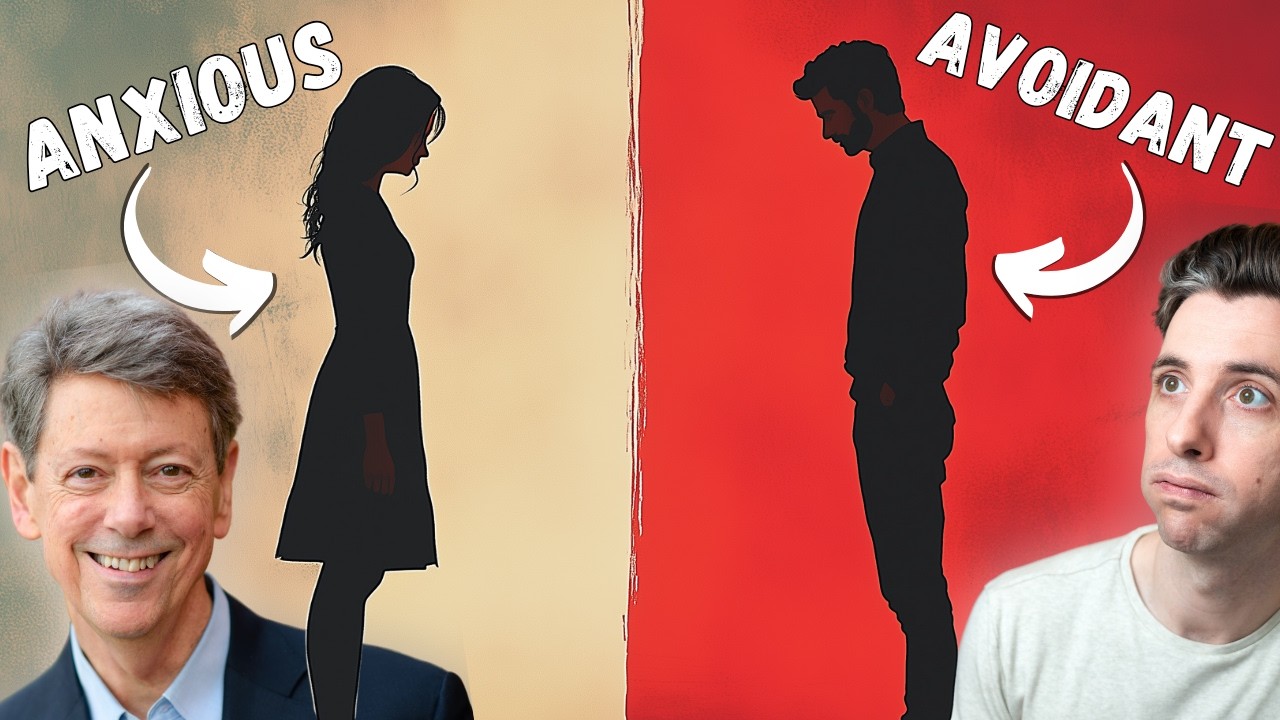
The Pursuer-Distancer Dynamic: Analyzing how contrasting attachment styles (e.g., anxious and avoidant) interact in relationships to create repetitive conflict cycles.
Developing 'Earned Security': Exploring the psychological processes and behavioral shifts required for an insecurely attached individual to transition toward a secure attachment style over time.
Nonviolent Communication (NVC): Learning structured communication frameworks to express core attachment vulnerabilities and needs without triggering defensiveness in a partner.
Somatic Experiencing and Body-Based Regulation: Exploring how attachment trauma is stored physically in the body and utilizing somatic techniques to soothe physical arousal during active triggers.
2K views2likes3:23Original Release: 2025-09-19
Hi and welcome back. Today we are diving into something many of us have felt but don't always understand. Why tiny moments in relationships can feel so huge. Have you ever felt upset because your partner didn't text you back quickly or hurt when they seem distracted while you were sharing something very important? On the surface, this seem like everyday small moments, but emotionally they can feel very overwhelming. Why? Because these moments aren't just about what's happening right now. They are about what's been happening inside of us for a very long time. These are called attachment triggers. Situations in the present that activate all wounds often from childhood or past relationships.
For example, if you felt unseen or unheard as a child, a partner not listening closely may trigger that old wound of invisibility. If you experienced abandonment early on, even a delayed reply can awaken the fear of being left again. If criticism was constant in your past, even gentle feedback from your partner might feel like rejection. The key to remember, your reaction is often bigger than the situation itself. You're not just responding to your partner, but you're responding to an old part of yourself that once felt unsafe, unleft, or unworthy. So, what can we do when attachment triggers show up? Pause and notice. Ask yourself, is this reaction about now or does it feel familiar from before? Name the feeling. Simply acknowledging, "I feel anxious because this reminds me of being ignored," can help separate the past from the present.
Communicate gently. Instead of blaming, "You never listen to me." Try sharing your experience. When I don't feel heard, I notice I get really sensitive and I think it comes from old experiences. Offer self soothing. Your inner child might be the one reacting.
Comfort that part of you with grounding practices like breathing, journaling, or gently reminding yourself, I'm safe right now. Attachment triggers don't mean something is wrong with you or your relationship. They mean your nervous system is carrying old stories longing for healing. Noticing these patterns helps from transforming relationships from a battlefield into a space of growth and deeper connection. Take a few minutes to explore these prompts. What is one recent moment in my relationship where I reacted strongly to something small? Does this reaction remind me of an earlier experience? Maybe from childhood or a past relationship. What does my younger self need to hear in that moment of hurt? How can I communicate this need more openly and gently in my current relationships?
Writing about these moments often brings clarity and softens the intensity of triggers. Thank you for listening. If this episode resonated, take a moment to reflect on your own attachment triggers.
And remember, awareness is where healing begins.
[Music]
Up Next
63:18
Healing Attachment Wounds: Becoming Securely Attached
@ForrestHanson
166.6K views•2023-07-03

68:32
Cognitive Skills for Differentiated Instruction | Teacher PD
@BrainWareLearning
631 views•2017-12-17

9:55
Thinking, Fast and Slow: Daniel Kahneman Animated Book Summary
@FightMediocrity
2.3M views•2015-06-05

6:40
The Nocebo Effect: How Beliefs Can Cause Real Harm
@CGPGrey
10.4M views•2013-12-23
Related Study Plans & Knowledge Roadmaps
Structured learning paths in Psychology
psychology
Neuroscience of Creativity: Networks & Training
01Foundations of Creative Cognition
02The Cognitive Neuroscience of Insight & Fixation
03The Triple Network Model of Creativity
+ 1 more learning modules
15h4 modules
Explore Roadmap
psychology
Imposter Syndrome: Etiology & CBT Framework
01Defining the Imposter Phenomenon
02Socio-Developmental Etiologies
03CBT Fundamentals & Thought Distortions
+ 2 more learning modules
15h5 modules
Explore Roadmap
psychology
Adult ADHD: Executive Dysfunction & Scaffolding
01Neurobiology of the ADHD Brain
02The Core Triad of Executive Deficits
03Executive Dysfunction and Emotional Regulation
+ 2 more learning modules
12h5 modules
Explore Roadmap
psychology
Loneliness: Evolution, Neurobiology & CBT
01Evolutionary Origins of Human Connection and Loneliness
02The Neurobiology and Physiology of Chronic Loneliness
03Maladaptive Social Cognition: The Psychological Loop
+ 2 more learning modules
12h5 modules
Explore Roadmap