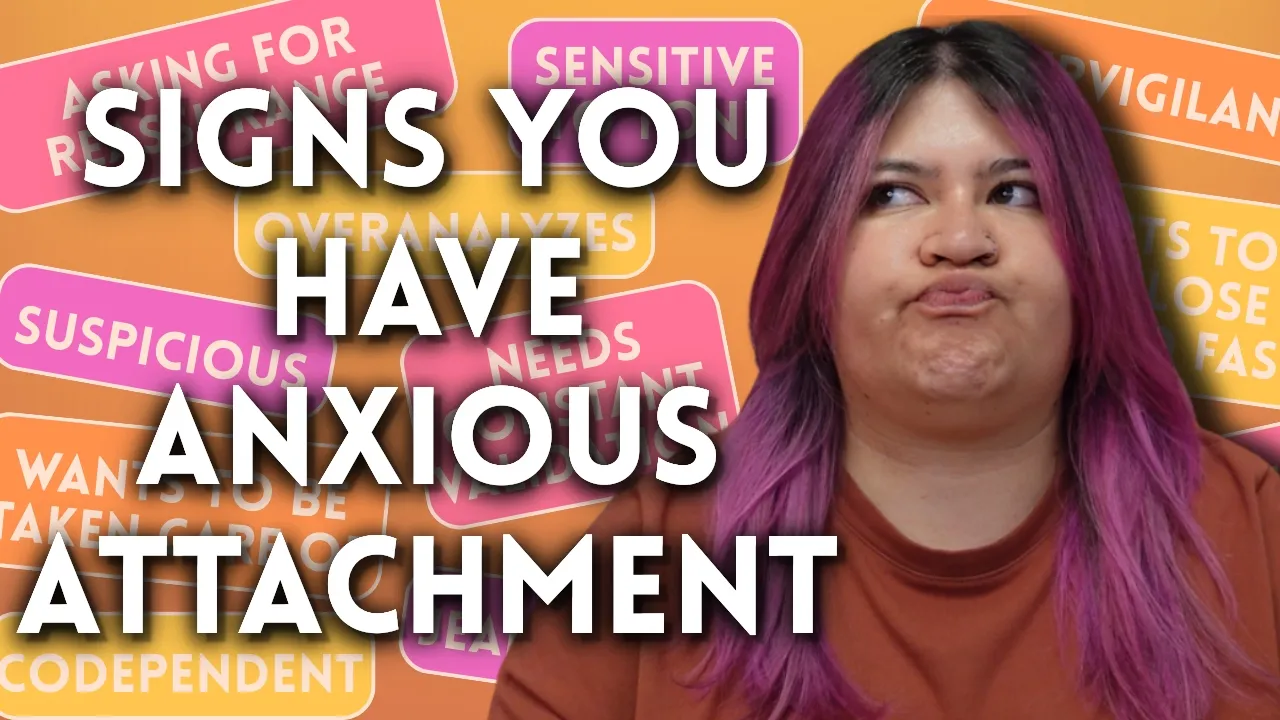













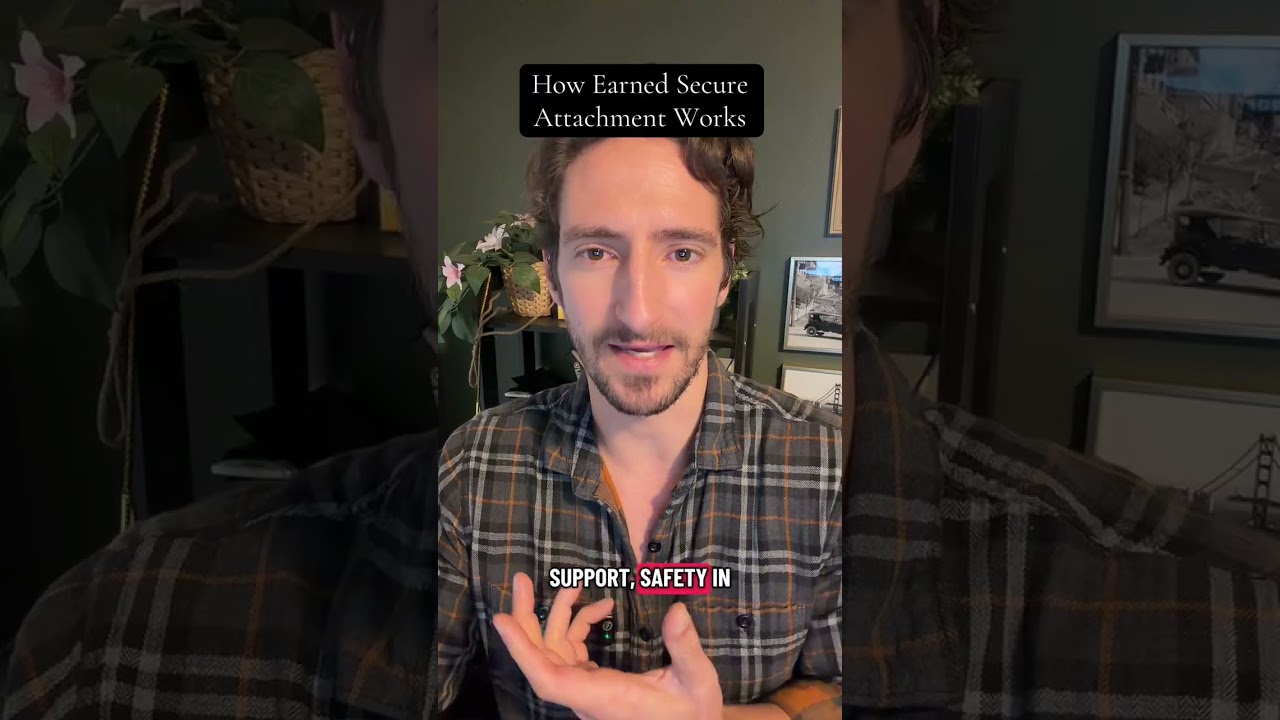











People can become more securely attached over time through a four-part process: developing a coherent narrative about their childhood experiences, seeking corrective emotional experiences (being included, seen, appreciated, liked, and loved), internalizing these positive experiences, and acting differently in relationships; this transformation involves moving from unconscious incompetence to conscious competence, where individuals learn to recognize their attachment tendencies, reduce their influence on behavior, and cultivate healthier relational patterns through self-compassion, allyship with oneself, and deliberate practice of new relational skills.
Healing Attachment Wounds: Becoming Securely Attached
Added:Foundational Attachment Theory: Understanding the four primary attachment styles (secure, anxious, avoidant, and disorganized) formulated by John Bowlby and Mary Ainsworth.
Childhood Development Dynamics: How early interactions with primary caregivers shape an individual's internal working models of relationships and self-worth.
Basic Emotional Regulation: The concepts of hyper-activation (anxious response) and deactivation (avoidant response) as coping mechanisms for emotional distress.
Relational Self-Awareness: The ability to identify one's own repetitive behavioral patterns and triggers in romantic or interpersonal relationships.
Earned Secure Attachment: Studying the psychological process and neurobiological changes involved in developing a secure attachment style later in adulthood.
Emotionally Focused Therapy (EFT): Exploring clinical therapeutic frameworks designed to restructure attachment bonds in couples.
Somatic Experiencing and Polyvagal Theory: Investigating how attachment trauma is stored in the nervous system and how to heal it through body-based therapies.
Intergenerational Transmission of Attachment: Understanding how parenting styles influence the attachment patterns of future generations and how to break dysfunctional cycles.
Advanced Relational Skills: Mastering non-violent communication, active boundary-setting, and vulnerability in long-term partnerships.
166.6K views5.2Klikes1:03:18Original Release: 2023-07-03
hey everyone welcome to being well I'm Forrest Hansen if you're new to the podcast thanks for listening today and if you've listened before welcome back a topic that we explore regularly on the podcast is attachment Theory which is a great framework for understanding how people relate to each other because whether we're aware of it or not our attachment patterns shape our ability to trust other people give and receive love and ultimately find fulfillment in our relationships today we're going to be focusing on one of the most common and most important questions that we get about attachment can we heal our old attachment wounds and become more securely attached over time to help us learn how to do that I'm joined today as usual by Dr Rick Hansen Rick is a clinical psychologist he's a best-selling author and he's also my dad so Dad how are you doing today I'm appreciating the qualities are new for us that can tolerate and accept my mistakes mistake on a recording just before doing this one and uh that's one of the things that helps us to be securely attached to others who you know are not too horrible when we mess up I just want to thank you for letting me be attach to you oh well that's that's very sweet Dad yeah we had a little recording staff who for a previous episode there was no we about it it was a pie it was me it's you know there are a lot of buttons to push and sometimes you just don't push all the buttons that's the way it goes I've lived that life I mean we've only lost I think one recording ever and you're right it's a good good opportunity to to uh display a little secure attachment to not punish you too harshly for your understandable mistake and you know to be accommodating get to show love even so so okay so what what's your theory about how to repair and how to maintain secure attachment relationships if you've grown up with insecure attachment well tables turn baby I think a big part of what we're going to be talking about in this um that I'm going to kick to you a little bit more later as our resident actual psychologist uh but I suppose one of the things that I've bumped into in like my reading about the topic and things like that is that a lot of this comes down to reparative emotional experiences which is one of the things people talk about a lot people are imperfect uh we don't get things in our early experiences that we wish that we had gotten there's unfortunately not a lot that we can do about that uh children don't have a lot of agency in their lives and there are people also who just pop out a little bit more avoidant a little bit more anxious by Nature I think that I had a pretty secure attachment relationship with you and Mom and nonetheless I think I'm a little anxious by nature and we need to come to terms with that and the way that we typically come to terms with that is by having examples in our experience that are antidote examples to that where we uh we have the opportunity to feel securely attached to another person I go through the experiences in my life where a friend really comes through for me and then I deliberately go out of my way to as you've written about over and over again to take it in and to allow it to be reparative for me and it's a two-step process you have to have the experiences and then you also have to allow the experiences to be reparative and I think that's a huge Crux of a lot of what we're going to be talking about today that's a fantastic summary Forest we grow up and we develop these models of relationships that people call attachment systems and um hopefully we grow up in an environment where parents are available and responsive and sensitive and you know appropriately guiding when necessary but it's not horrible and there's in a context in which a child can increasingly feel secure right rather than insecure and then of course we have other childhoods in which parents are whatever preoccupied emotionally unavailable maybe they're dealing with some kind of depression or physical health issue or issue with their partner or they're just frankly kind of mean and in those contexts as you know many kids like myself developed what could be called a more insecure attachment style in which they don't feel so secure and they manage it typically one of two major ways either they manage the insecure environment by making their needs very minimal and avoiding asking for much at all from their caregivers or they go the other way and they become more demanding more insistent more reproachful more beseeching and a kind of a more anxious sort of way then there's a third not so common form of insecure attachment in which people are more disorganized or it's sort of a combination of those two and then what do we do then what do we do when we come into adulthood right so based on that perimeter I wanted to add something to what you said in addition to internalizing corrective emotional experiences forming a coherent narrative a coherent account in which you really name what was good and what was not so good about your childhood you have a sense of proportion about it kind of a larger understanding in a context in which you're really kind to yourself you're not downplaying what was difficult in your childhood while also having a kind of perspective about it those two together the formation of a coherent narrative and the internalization of many many many many many many corrective emotional experiences then can enable a person to be someone who as an adult feels less wounded or burdened by all that happened and is also more able to be a person that other people today can form secure relationships with yeah that's a great summary and we're going to be doing this episode with the basic assumption that you The Listener have a general sense of what attachment theory is in part because we've talked about it a whole bunch on the podcast in the past to just hit a couple of the important points if you happen to be a little bit less familiar there are like Rick said kind of three different insecure Styles anxious avoidant fearful anxious is more of a fear of distance avoidant is more of a fear of closeness and then fearful is kind of a combination of both it's a general view that the world is scary and people are unreliable and these attachment Styles come from some combination of nature or nurture it's kind of fuzzy and murky they're often dictated by nurture but it appears that there is some kind of nature component at least loosely associated with it but the key point in all of this is that as we get to adulthood we're still carrying around those early patterns of behavior they essentially set the script for our future relationships and over time as attachment theory has become popularized and you've got podcasts like ours doing episodes on attachment Theory you've seen this kind of expanding out of it to be not just about primary caretaker relationships but all kinds of different relationships with all kinds of different authority figures so Dad to ask a pretty important question here do you think people can actually change their attachment Style yes [Laughter] pause and some caveats associated with it I'm guessing yeah so I I'm really quite familiar with the attachment literature and then having been familiar with it I find myself kind of stepping back from it the answer is definitely yes now to get to that yes typically there's a combination of self-understanding effort some guidance sometimes if only in reading a book or listening to a podcast as well as potentially a therapist but the answer is definitely a yes and I think that that yes has four components to it anyone which are good and all four are even better one component of the yes is a comfort width and a full capacity to enter into the depths of vulnerable intimacy as appropriate with other people second component of the yes is the capacity in relationships to be really yourself differentiated individuated authentically self-expressed really being you fully and fearlessly not as a jerk not as a pompous bully but fully and fearlessly that's the second component a third element of the yes is becoming someone that other people can securely attach to in that you can unlearn and become free of the internalization of how others treated you which tends to be the way that we treat others ourselves so for example if someone was raised by a parent who has a dismissive style a distance saying fending off pushing away punishing bids for closeness in a toddler say a person then tends to develop avoidant insecure attachment and then as an adult tends to operate in that same distancing dismissive at arm's length kind of way so in this third element of the yes can you outgrow that can you heal that so you're no longer replicating now your mom or dad or the other kids treated you and then the fourth element of the yes I think is part of the development of the secure apartment this coherent narrative and these reparative experiences in which you kind of come to peace with all that happened with your mom your dad your siblings and and your peers it's it's not that you don't win sometimes when you pull up certain memories it's not that you change uh your clarity about what the facts were that actually happened but you kind of get to a place of resolution about it that's a real shift inside so any one of those forces any one of those four is good and the more the better well that's a that's a great framework for starters to add I'm not sure if I've ever heard it even on our podcast like quite brought together like that and I think that was really well done um thanks yeah for sure and I think that one of the things that stands out to me about attachment Styles but really all also just like relating to ourselves holistically as full people is that there's a difference between what our what our Tendencies are and what our Behavior ends up being and a lot of life is about recognizing and coming to terms with our tendencies and then lowering the influence that those Tendencies have on our Behavior over time so we can increasingly be at choice and really what we're talking about here with becoming more securely attached is we're talking about being more at Choice like so that the long shadow of your childhood experience or your your deep nature whatever it is like doesn't have as large an influence over you so that you can make the choices that you want to make in the here and now in your current adult relationships um and I think that one of the big things with attachment Styles is recognizing that it can be really hard to fully change an attachment style but it's really okay to not cover all of that distance and to just get to a point where you're functional and you've worked with your attachment wounds to a level where they're just not as disruptive of your relationships in the here and now and that's an enormous accomplishment so I just want to hold that up it's like a very obtainable goal post for people and one that is extremely valuable on its own right I wouldn't say that my attachment wounds were particularly severe I wouldn't refer to myself as somebody who is like profoundly traumatized or had a had a really anxious attachment style and even so I know my tendency is to be anxious that's my tendency I'm probably gonna die with that tendency and that's okay but I've kind of come to terms with it and I have an awareness of it so it doesn't affect me as much yeah you're getting at uh the classic four stages of growth uh that we've talked about right uh unconscious incompetence yeah conscious incompetence uh conscious competence and then unconscious competence in other words in the beginning we're just doing our let's say avoidant or anxious or otherwise insecure way of relating to others we don't even realize it and then we learn about it and we want to stop it but we can't it's our habit we acquired it we're designed to learn especially in childhood from relational experiences that are negative there you thank you mother nature yeah but then over time you start to realize that it's almost as if there are two things going on in your mind at the same time and this is a totally dumb metaphor but it's as if in reality you are in the movie Mary Poppins or pick your favorite happy you're it's all fine but in the background you're hearing the soundtrack to Jaws the shark in the water but actually you're not in the water and there's no shark but how is that soundtrack loud that's the third stage of growth where the Tendencies still arise but you understand them more and more and you don't act on their on the basis of them and then in the fourth stage yeah you've just moved on it you know it's no longer the habit of your heart you've just really moved on so that's helpful for people to appreciate it's a progressive process yeah I think that that's great dad and I I think part of what I'm kind of pointing to is that it's really okay to have the third stage be the target yeah and particularly with stuff like um these very formative experiences that we have and the long shadow that they cast Over the rest of our life that's as far as we can go is to conscious competency and whether or not we're able to get to unconscious is just about almost the vagaries of fate and the unique experiences that you happen to to go through as a young person so as you've done this work with people dad have you seen kind of a general process that people go through or kind of a general framework that helps people get to conscious competency here a key first step is to acknowledge the electric wire fences that bound what people are comfortable with and for people to move into greater intimacy or greater autonomous self-expression or even to operate with other people in a way that enables those other people to have secure attachment with them there's often an initial fear that I if I step outside of what I've learned it's going to hurt I'll mess up I'm going to be in trouble it's very poignant and I find that's one of the very first things we bump into because for example as a therapist I'm sitting there attempting to be someone that a client can securely attach to and then when it starts to happen is that as I be in that way uh their Tendencies to rest in insecure attachment modes of relating even though they're painful and they're coming to therapy to change those Tendencies almost get stronger as a kind of resistance to the subtle gravitational pull for me there's a defensiveness yeah yeah to operate in different ways of being so this is one of the very first things that tends to get surfaced and it can feel kind of painful like oh as a client you're failing or the therapist doesn't think you're doing a good job or it can seem particularly hard hard at first but it's really important to accept that it's understandable it's understandable and then you get into it you you on you you get underneath the defense or the inhibition right the the maintenance of the bars of the cage and you start to realize oh wow that's why I'm this way you know and I think there's a second thing I just want to call out here a kindness for yourself as a kid a compassion a kindness of course you did that of course you stepped back of course you clung right of course you fussed a lot because that was the only way you got your dad's attention yeah whatever it might be that of coarseness okay so I'll just stop right there for those two awareness of the defense the inhibition the resistance the fear and as part of the solvent that can dissolve bricks and mortar you know those defenses uh really understanding of yourself as a kid with a lot of compassion and kindness yeah and those those two parts I think really directly relate to that coherent narrative which is something that we've talked about on the podcast many many times but I do totally think is is the first step here for a lot of people just like coming to terms with what happened in the past and understanding and seeing clearly the impact of those events today in the Here and Now yeah and then from there when people are talking about this that's when they often start to turn towards those corrective emotional experiences that I was mentioning in the intro so but I wanted to ask you about this dad because this is the typical pathway that people lay out we've got that coherent narrative kind of Step One all those parts and then step two oh you just gotta have those corrective emotional experiences with people right have more good positive relational experiences take those in let them build you up you will develop more secure attachment paradigms over time but doesn't this create kind of a catch-22 for people because people who are less securely attached are less likely to have positive experiences with other people and so if they're not having a lot of those positive experiences how can they take in positive experiences to like heal their attachment wounds and I'm I'm sure this is not your first time hearing this so I'm wondering what you would recommend that people do this is something I've thought really deeply about because it's okay and it's so important uh the way I look at it first of all is that the more you have been let down by other people the more that healthy social experiences are really a thin soup in your life the more important it is to look for those nutrients wherever you can find them it's kind of like the more that you're starving the more important it is to look for any kind of food and I think of this in a way at like five levels from mildest to to most intense look for the facts of being included in simple ways you're part of a group maybe you experience being in common cause with others to help the planet maybe you're part of a team in some way you're included you belong simple thanks second a feeling seen other people are attentive they're listening to you they're trying to understand you they may not be perfectly empathic but they're they're trying and maybe succeeding to some extent third appreciated when are you factually respected or chosen or valued or when is their gratitude for you or when are things about you um appreciated and and honored okay fourth liked simple forms of friendliness healthy affection ordinary kind of banter with other people you know messing around joking it's not a 10 on the friendship scale but it's at least a one friendliness and then fifth loved when are you factually loved you can do this for the present you can also do it for the past and then it's important to be on your own side to help these these facts become feelings and then when you have moved from the fact to the feeling really slow down to take it in this practice that I just described there for us I would describe this as probably one of the top five healing practices for people I know the repeated looking for uh factual evidence that you're cared about in one true way or another and then taking it in and the reason I put this up in the top five Loosely of all that I know is because we're so immensely social and our wounding is mainly in relationships on average and our healing is mainly in relationships on average and so looking for that healing based on what things that are actually authentically true is really really important finishing I often bump into a yes but at this point yeah I was just about to ask you about that basically because uh it's so natural for when you hear a list like that for I'm just putting myself in the position of somebody listening to be like well I don't see feel seen or I don't feel appreciated or and so on and so on yeah I find that people are nodding along at the logic but if I could see the thought balloon over their head their heads would be shaking no way yeah yeah I get it uh first unless someone is living in utter social isolation and a period we are routinely surrounded with everyday uh factual opportunities to feel included and seen and even appreciated just in the ordinary life that people have walking down the street getting a meal interacting with other people social media those are those are there second even if in a person's life they're pretty thin there are things we can do to Foster them and one of the simplest ways to foster them is to rest in a kind of benevolence yourself a kind of good will good wishes being basically benign looking for the good in others approaching people in a supportive kind of way in in very simple terms immediately other people will respond to that which gives you then opportunities to take in a sense of healthy connection I find that the issue for most people is not a lack of actual caring toward you even though yeah it would be good to get more caring coming towards you in its various forms and to find better relationships and all that I find honestly that the lack is that people don't recognize the caring that's there and they when they recognize it they don't feel it and when they feel that they don't take it in and the issue around all that is motivation motivation how do you mean yeah it's getting on your own side and tipping over to feel that this is the medicine I need whether I deserve it or not it's the medicine I need and I'm going to go after the medicine I need in a mo in a motivated kind of way I'm wondering if this relates dad and you're thinking to something that I've heard you talk about a good bit recently that that has actually made an impact on me and it's it's kind of here uh the way that you generally introduce it on a podcast episode is by saying you know I'm gonna do the crotchety old man shaking the Fist of the cloud routine yeah um you know the whole thing but really you're emphasizing the role of individual effort yeah over and over again as a as a key step in this whole process and the way that I've thought about this is that we can do a lot in our life to make certain kinds of experiences less painful for us and that's a lot of what we're really talking about when we talk about healing attachment wounds or dealing with attachment issues if you're a more avoidantly attached person it's about becoming increasingly comfortable in vulnerable relationship with other people if you're a more anxiously attached person it's about becoming increasingly comfortable on your own securely attached to yourself you might say knowing that you can deal with your own problems and achieve the things that you want in your life just by yourself whatever it is you know I'm simplifying with this we can do things to make the uh the painful experiences less painful we can do things to make the uh the positive experiences that that close secure relationship feel more positive but even as we lower the pain and increase the reward value as it's sometimes referred to in habit formation there is nonetheless going to be a speed bump for people in this process that will emerge somewhere and then it becomes about okay can you apply enough executive function can you apply enough will to get over that speed bump because there's always going to be some speed bump but are you able to apply effort to over combat and can we make the speed bump small enough and the pot of gold at the end of the rainbow big enough and all these different things but you still gotta get over the speed bump is that like a fairer restating of some of the stuff that you've talked about with the stat yes and the driver fundamentally of sustainable motivation has got to be a kind of allyship with yourself um a kind of loyalty to yourself determination on your own behalf maybe they're warm-hearted qualities in this of friendliness and kindness toward yourself warm-hearted support of yourself it's on the basis of this warm-hearted quality of being on your own side being for yourself that's really fundamental I think if it is the pilot light without which any amount of gas won't matter uh on the basis of that then it naturally tends to follow to make efforts over time there is a place for a sort of Steely strong top down will that just says essentially this sucks I don't want to do it I know it's good for me I'm going to do it there is a place for that Steely determination but mainly for me the foundation for this is um really really getting on your own side and honoring the implications maybe that's a little bit of my cranky cranky doubt on the lawn thing it's honoring the implications of being on your own side and um going for it yeah just think about the qualities we respect and others when we go to a restaurant or a plumber comes to our home diligence resolve determination you know including the determination that underlies the the feeling that you know I got wounded in my childhood things were missing and I want to help myself here you know and then the diligence and resolution gets applied to that I find it so honorable I think of a kind of a Plucky person I think of a wounded puppy you know journeying back home again uh there's something just so honorable and kind of noble about someone who's been hurt and didn't get all they needed uh picking themselves up and encouraging themselves forward down the down the road of life and that's that's really what I'm talking about so what I would like to do at this point is break this into two main attachment styles that people are often wrestling with more anxious more avoidant um understanding that fearful exist too and represents about 10 to 15 percent of the population but fearful is really a melding of these two Styles so if we deal with each of them individually we can start to kind of think about what that might look like from for somebody who has more of a fearful tendency for somebody who has more of a anxious style what have you seen help people with that tendency become more securely attached over time it's like the the Crux for them yeah yep so people that style are often very good at pulling social supplies from others the problem is they don't swallow in other words they they have them but they don't internalize they don't consume them yeah so then why and there are different reasons that I find can be very interesting to be aware one is the understandably the the child inside thinks that if essentially if I'm not um needy you will not come through for me and as soon as you the caregiver detect that I'm self-sufficient you'll abandon me catastrophically and I will not exist in your mind anymore and despair and Devastation will follow understandably so uh there that's that's one block another one is a kind of habit of reproach that word reproach is is a good word it's it's like a kind of melancholic grievance kind of sorta where you just feel uh let down and you're reproachful maybe there's a little anger in it but it's mostly um you let me down and it's like a clinging complaint and that can become a mode of relating for people uh it's important to appreciate that so-called insecure attachment it's a mode of attaching it's a way of forming relationships and so there too you can focus on what are the payoffs what are the secondary gains in that style of reproach a clinging complaint and realize over time that the costs are a lot greater than the benefits and then you start shifting to a different mode so I find basically for someone who's in that kind of anxious insecure obstructions to internalization of reparative experiences really key really key and addressing the terror that they will not exist in the minds of others if they're self-sufficient wow do you think so that's a that's a barrier for people at a primal level huh yeah this is really interesting yeah this is the kid who had the experience that the parents showed no interest unless the child was upset about something so the fear being that if I'm not upset about this or if I don't have a of a basis for complaint and then someone with this child can be motivated to look for a basis for complaint which unfortunately can have the paradoxical result of actually driving other people away you know if you're someone that is very difficult to actually satisfy in a relationship and you're drawn to people who will try to satisfy you and and they're drawn to sometimes people who want to be satisfied and yet if they ultimately can't succeed at that if you're endlessly disappointed and you know reproachful at the end of the day after a while they kind of give up and they leave and that's not good at all so do you mind kind of going back through the things that you said and sort of summarizing for somebody with an anxious style what tends to be really helpful first off it can be embarrassing two feel needy or to be seen as needy and it's very important to recognize that this is a natural way to be insecure anxious kind of clingy and there's nothing wrong with you that you're like that in relationships really important because there's often a very fragile sense of self-worth that comes with that particular attachment style uh it it's a kind of self-worth that tends to be excessively dependent on the feedback of others while unfortunately the feedback of others is seen as transient unreliable always on the bubble and about to pop giving yourself the kindness and the stability and the unconditional steadiness of caring and support that you long for in others is really foundational here this is a good thing that I'm talking about and if you're anxiously insecure attached you know what I'm talking about second when the supplies come digest them slow it down take them in and address your fears about internalization such as fears that if you are seen as someone who becomes increasingly self-sufficient someone who is actually gradually internalized feeling cared about so that you're no longer so needy address the fear that you'll be abandoned then that you will no longer exist in the minds of others address that also address the extent to which perhaps of a clinging reproach has become a kind of habit and even with a certain secondary gain in it that for some ways it's it's a way to feel strong or better than others to kind of rest in the complaint that they let you down so when you say um I I'm sorry if I'm drilling down here a little bit dad but uh but wouldn't you say something like address that how does one address that you know that that's kind of the whole Crux of it right because of course the the idea is nice but the the the the What's the phrase I'm looking for here the um the proof was in the pudding yeah yeah some similar or whatever yeah yeah okay so uh and yeah I'm kind of summarizing what could be for somebody a very legitimate several year Journey yeah I'm just trying to name the headlines yeah okay so let's suppose that you're afraid at the level of a four-year-old inside or a pre-verbal year old infant you're afraid that if you actually become self-sufficient in a relation in a relational kind of way that you'll be abandoned yeah I'm getting relationship yeah yeah they're only coming to you because you're crying in the corner for example great question I'm glad you slowed me down here one look for people in your life who are actually reliable they don't have to be perfectly reliable but they're decent people who are not alarmed by the fact that you have needs and are going to be stably available for you in relationships very often what we do in adulthood is we seek out people who will play familiar roles in the scripts we learned in childhood so we may well seek out people in adulthood who are actually unreliable or who are responsive to a lot of neediness let's say but as soon as we seem self-sufficient they'll just sort of spin out and ignore us instead of that look for people who can become a secure attachment figure for you maybe it's a therapist maybe it's a person with whom this is important you can have a kind of circumscribed relationship that's not a life partner soulmate kind of relationship but in the context of that relationship they're actually securely available and they're fine with you becoming more self-sufficient yourself so you can explore what it's actually like uh maybe with a neighbor that you go for a walk with or maybe it's a somebody at work that you like each other and you do projects together of some kind you know you can feel in that relationship where the stakes are mild to moderate that you can be self-sufficient and you can receive and internalize the sense of being routinely included in their mind without needing to beseech them for that it's a kind of beseeching a kind of pleading um kind of a pleading complaint that's sort of at the heart I think of a lot of anxious attachment um you could do that uh you can also recognize if you do have a romantic partner that when they tell you that they're okay with you being kind of emotional and demanding and upset about things that also they're here for you really try to let it land let it land so you don't feel so untrusting you know so uneasy when you do feel uneasy in these relationships with reasonably reliable people ask yourself is there actually a basis for this uneasiness and maybe you're overreacting yeah maybe they looked away when you were talking with them and maybe their eyes you know glanced over an attractive person on the other side of the restaurant and maybe that stirred up this feeling inside of being abandoned but actually they hadn't abandoned you they were just mildly distracted for a few seconds as people are and still they're present with you I don't really really notice that really notice when people try to repair you know part of the issue in a funny kind of way of thinking about it is that insecure attachment occurs in a context of poor repair by caregivers [Music] so when repair is actually good these days notice it let it land you know um these are some of the things I would suggest to people yeah well I think that's a great list and it's interesting that in that you you didn't really say a lot about what I sort of would have thought which is essentially just like becoming more uh internally resourced in a variety of different ways more confident on your own more of a sense of your own agency your own skillfulness and so on but I think that the reason for that was what you said earlier which is that often the block for that with people with a more anxious style is the fear that if they do that they will no longer actually get what they need from a relationship which is just like a really really interesting kind of far-reaching point because normally when people talk about anxious attachment Styles they really emphasize all of the like self-efficacy side of the spectrum without talking about what the actual blocks to those feelings or the development of those skills are and that's what you were really focusing on here yeah you know there's a lot of psychoanalysis stuff that's actually deep and in part because in their way Freud and others and people like Melanie Klein and and the neo4dans and the rest they were imagining their way into the mind of an infant the infant we all once were and so here I'm kind of drawing on some of that when I'm trying to get at the the primal underpinnings of yeah of people's odd behavior like why do people cling and complain like Napalm I think Napalm is gasoline and glue the combination more or less that's what it is right it's a clinging complaint why do they do that when in fact that inevitable result will be to drive people away it's because it's Primal it's Primal yeah yeah so that's the anxious attachment style then flipping over to the other side of the coin the avoidant attachment style and this is generally characterized by somebody who feels like they can take care of their own needs just fine and really is not that interested in other people being a part of that process because other people are fundamentally unreliable I can deal with my own problems why would I want to uh you know leave myself open to suffering by relying on somebody else here paradoxically of two useful things to notice if you're avoidantly attached is first how actually sensitive you probably are to interpersonal experiences routinely I would see clients and often there's this combination in which you've got someone who's the pursuer and someone the distancer distancer avoidant pursuer anxiously insecure okay and the pursuer routinely will say things like well my partner's so cold or and uncaring I think he it's usually he he has Asperger's I want you to diagnose him with Asperger's Doc and what okay so we start there and actually it turns out that the more distancing partner is extremely sensitive interpersonally and really affected by little upsets and including their partner uh being unhappy about this or that with a desire to immediately because it's so upsetting that their partner is unhappy about this or that they then want to problem solve and shut down their Partners upset to kind of manage the upset inside themselves that resonates with the upset of their partner and so one paying attention to how interpersonally sensitive you actually are which is an interesting reframe that's often quite helpful in relationships and second to really honor how important relationships actually are for you because if they weren't important you wouldn't have to distance from them it's because you care so much that it's so painful to be pushed away so you try to dial down the caring so it doesn't hurt so much to be pushed away and then that strategy takes on a life of its own I think that was a awesome summary of a of a thing that is just a very very common pattern in relationships um and then also it's just kind of a huge misunderstanding and how we talk about things in the culture with that that Paradigm you were talking about with like oh the the one partner dragging the other into therapy and it's like he's a stone person it's because he doesn't feel anything like well okay maybe it looks that way to you but the question then is like why is that behavior emerging in that person yeah and sometimes it's because they are a stone person but more often than not it's you're totally right it's like a defense against vulnerability yeah um and that's really what you kind of see over and over um and so emphasizing that part of it I think is just such a such a huge key in this yeah it it's kind of being honest with yourself if you're the more avoidant person like how important other people are to you and I've I mean I'm just recalling with some emotion here situations where seemingly you know very stoic and I've seen the gender of this flip and I haven't worked with a lot of um same-sex couples but I imagine there's a kind of similar Dynamic that that's been reported to me by friends of mine you know who are in same-sex relationships uh in which the person who seems so stoic and Stony just starts to break and fall apart and start crying when they start to actually name out loud how important their partner really is to them and and I'm just hearing it's like a little girl or a little boy inside um who's admitting in ways that are really scary sometimes how actually important other people are to them um so there's this and so then to be able to do this uh you know takes self-awareness mindfulness you know support for the inquiry yeah all that this to me is a huge bucket of Tears thing like as as somebody who you know I said earlier I think that if I have an orientation I have more of an anxious orientation that's totally true but I definitely developed aspects of this particular coping strategy around strong emotions um becoming and and that was sort of my retreat into my head the very top-down process very logical very rational very kind of like arms length I had a friend who used a phrase that was something like you know force my relational style is a smile with a stiff arm you know it's like there's always that arms length you can almost feel the bubble around the person yeah um and I kind of had that for a while um they were saying that with regards to themselves but I was like yeah I feel you uh and because it was sort of a similar thing and for me it was a a very vulnerable process like often when people kind of break through that shell and they start to do that emotional and earthing work it's just there's a lot of emotion involved in it and that is a lot of the time the kind of reparative process I learned a lot um from Masterson I was in a case conference with a teacher and friend of mine Carla Clark to give honor where it's due uh that was extremely valuable and Masterson is really good on avoiding attachment styles and it helped me to realize that there were major components of that in my own psyche it was really useful to come to terms with and one of the key insights I got from that work had to do with the notion of optimal distance in which or orbiting I'm I'm an optimal distance person I I live in the world of optimal distance yeah yeah my version of that smile and the stiff arm is the person who reaches out their hand to shake it while leaning back sure yeah yeah yeah and um so and that's a person who neither fully lands in intimacy nor fully breaks free and escape velocity into full self-expression in thus orbits attachment figures of different kinds uh and so the opportunity then for a more avoidingly attached person is to strengthen both of those polls to become more comfortable with closeness and to become if you think about the original um dismissiveness that that was kind of the basis for this the the unlearning and the counter learning is to realize that other people will tolerate your closeness without punishing bids for closeness or without pushing you away and it's therefore important to find friends uh lovers mates who are okay with you resting in a kind of closeness with them because if they have an avoidant Style you know that's going to tend to push you away on the one hand on the other hand to become increasingly comfortable with full self-expression with just being you because there are two the avoidantly attached 15 month old in the strange situation the classic Paradigm in attachment theory that you were talking about um does not full it does not express their distress at the parent leaving the room nor when the parent returns does the avoidingly attached toddler Rush forward to to hug the parent complaining you know as a toddler would appropriately that the parent left them alone in this scary room okay neither neither expression authentically of what they really feel which is that their heart rate is spiking you know they check these things out in these scientific paradigms their heart rate is spiking they're really stressed but they don't display any of that they don't reveal it nor do they move into connection so you want to be able to do both as an avoidingly attached person and look for opportunities on the point I'm making here to express yourself more and more fully in a variety of ways maybe this is a natural yes but that people would come up with when faced with this sort of thing but the reality is that people are unreliable and when I say people I'm also referring to ourselves we are unreliable you know humans are human they make mistakes and so there's always going to be an example that a person can point to if they're anxious of the person letting them down or of their of if they're avoidant you know the person being unreliable in some ways and I can only really truly trust myself um you're always going to have that evidence to point there too out there in the world you're always going to be able to find an example what do you think helps people Orient less to those examples and look more for the examples where they're actually getting their needs met or um just in general kind of not buy into that internal voice as much over time it's a fantastic question and it's very clinically relevant and I think it has two kinds of answers the first kind is I believe that it really is possible in an ordinary stressful pressured kind of life with imperfect other people to find uh good enough interactions kind of like the notion of the good enough parent you can find good enough interactions with other people such that in those interactions you can start pushing the boundaries of your normal of your learned attachment Style you really can and it's interesting that in the context of many not being parented not soulmate not high stakes intimate friendships you can still relax into a kind of ordinary friendliness and Rapport and empathy and closeness with other people at work on your softball team just hanging out with a buddy that can feel perfectly good and be very healing and reparative hmm the other kind of answer gets at something that I've been reflecting on for us while we've been talking here and it has to do with my firm conviction that innately we're capable of intimate closeness with people on the one hand and natural authentic honest full expression on the other this is our own deep nature and there's a place I think for working with your mind shaping it sculpting it kind of like we're talking about repairing inside your own mind and there's a place I guess this goes to the fundamental model of growth as like a cart with two wheels following two tracks and there's a track of gradual development and then there's a track of true nature already and our true nature is naturally capable biologically of closeness and intimacy and our true nature is naturally capable as young children are of just authentically being themselves there's a place I think for contacting that underlying nature that's available for relationship rested in the heart wishing others well on the one hand and the place deep inside of just being you the okayness of being you and living on the basis of that out into the world and I'm not trying to be I guess a Pollyanna of sorts about it I'm you know pie in this guy I really believe this and I think sometimes the unwitting result of people like me uh is to draw people excessively into the fix it repair it you know work on it improve it orientation and there's there's a lot to be said for just trusting yourself and giving it a whirl um yeah I think my reflection on this is that for most of the things that we talk about on the podcast you can find a reason not to do it almost always you can find a reason to not trust other people or to not develop self-efficacy or to whatever you can always find a reason um and so a lot of this comes down to what's the voice inside of you that you're going to listen to and what's the part of you that you're gonna allowed to have their hands on the wheel that day great I'm reminded of talking to Terry real when we had our conversation with him I absolutely love Terry Terry's great and uh he referred to internal parts and then like an ifs framework you know younger Parts who have these more problematic desires and he was like you know I listen to him I Pat him off the on the top of the head and I get their grubby hands off the wheel I think was his slide about it I get their sticky fingers off the wheel of the car if I can you know you can sit shotgun but you can't drive and you know it's a it's a great little visual visual metaphor there but also I just think it's a really powerful way of thinking about this in general that's fantastic that's totally true today I had a great time talking with Rick about what we can do to become more securely attached and I started by offering a little bit of framing around attachment Theory we got into this episode with the assumption that you at least kind of knew the basics of it or maybe had heard of attachment theory in the past and you were familiar with anxious and avoidant attachment Styles and from there I asked Rick a question that set the stage for the rest of the conversation can we actually change our attachment Styles over time and become more securely attached and he said yes with maybe some caveats associated with it the truth is that it's really really hard for a person to fully transform their attachment style so what we're really focused on are the ways in which our attachment Tendencies or Tendencies towards anxiety or our Tendencies towards avoidance Maybe show up in the here and now and affect our relationships and ways that we would rather they not right so the question is not so much what are our Tendencies but rather how do we relate to those Tendencies and he introduced a great model which is kind of the competency model to think about this where people transition from unconscious incompetence to conscious incompetence to conscious competence all the way up to unconscious competence and a lot of people hold up that unconscious competence as the end of the journey you know you figured it out when you are just doing the right thing without thinking about it but when it comes to our psychology a lot of the time what we're shooting for is not Enlightenment but rather becoming what's known as a normal neurotic a normal person with some anxious Tendencies or some avoidant Tendencies or some neurotic Tendencies but one who is able to manage those Tendencies and get the most out of life regardless and I think that framework is just really helpful whenever we tackle these kinds of problems because people can really let the perfect be the enemy of the good here from there we went practically into what people can do to become more securely attached over time and Rick introduced a couple of Frameworks that he's seen really helped people generally when people progress towards secure attachment they go through a series of steps and the first is that they tend to form a coherent Narrative of what happened to them in the past what happened why it happened and what's the impact on them today and then second they start to have corrective emotional experiences and these are the positive relational experiences with other people that essentially become the evidence to us that we don't need to abide by the old rules that our attachment style is saying that we should Orient toward and then third people who are successful here tend to go out of their way to really take those experiences in and internalize them and then finally the fourth step acting differently there is a behavioral Dimension to all of this if your tendency is to withdraw you can do all of these things to make withdrawal less rewarding or make connection less painful but ultimately there comes a moment where connection is still kind of painful and withdrawal is still looking awfully appealing over there but man you just have to exercise the will and get over the speed bump that's in front of you in order to have some of those positive experiences that can hopefully over time lead to better underlying Tendencies and then we basically spent the rest of the episode talking about the Practical House of all of this in particular the yes but that tends to come up for people during this process where you give that list to them and they say something like well yes but I have these Tendencies and these Tendencies make it really hard for me to have positive emotional experiences with other people so how can I take in positive emotional experiences that I'm just not having or a different kind of yes but well yes but other people really are unreliable and I really can't trust them to show up for me in these variety of ways and I have all of this evidence that when I've done that in the past it's gone poorly and the hard part of this is that the person almost always when they say that is absolutely right you are absolutely right people are unreliable you are absolutely right uh people will let you down people have not responded to your anxiety well whatever it is and then the question really becomes what voice inside of the Mind do you want to Ally with do you want to Ally with that voice or do you want to Ally with a part of you that believes that there is the potential for growth and change in the future and that sounds very simple when I put a kind of a b like that but the truth is that this is often a very long and involved process for people it's not obvious and it's really hard then Rick shared a number of things that somebody with a more anxious style can do and somebody with a more avoidance style can do I just want to flag one of each for the anxious person what he really focused on was super interesting to me it's what's the barrier that they have to becoming more capable becoming more sturdy becoming more okay on their own and that was a really interesting interesting way of framing it to me because most of the time when people talk about this they focus on oh just become develop more self-efficacy and become more capable and become more self-reliant but they don't necessarily talk about what the incentive structure might be for a person to not become those things and what Rick really focused on was how for people with an anxious attachment style they normally have that style because the only time they got attention was when they were in complaint with their caregiver and so you need to really fill yourself up and understand that people will still be present for you even when you're not complaining about something and then for the more avoidant attachment style what he focused on was how just because somebody is avoidant does not mean that they aren't sensitive and a lot of the time people become avoidant because they have such a depth of emotional sensitivity to them and I thought this was a fantastic Point uh also because it's drawn a bit from my own experience I really kept people at arm's length emotionally for a huge part of my life because I was really vulnerable to emotional wounding and I was a really sensitive guy in a lot of different ways and so you can go through this deliberate process of unearthing that emotion becoming increasingly comfortable with it when you start to feel it and to use a phrase that my dad likes a lot you empty the bucket of Tears a spoonful at a time so I hope you enjoyed today's episode we covered a lot of ground during this one if you've been listening for a while and you somehow haven't subscribed to the podcast yet please hit the Subscribe button it would really help us out you can also find us on patreon patreon.com beingwell podcast and for the cost of just a few dollars a month you can support the show and you'll receive a bunch of bonuses in return until next time thanks for listening and I'll talk to you soon awesome [Music]
Up Next

35:28
Reparenting Inner Child: Secure Attachment Strategies
@DocSnipes
111.9K views•2022-10-24

68:32
Cognitive Skills for Differentiated Instruction | Teacher PD
@BrainWareLearning
631 views•2017-12-17
82:32
IFS Model: Trauma Healing and Self Strengthening | Richard Schwartz
@ForrestHanson
88.2K views•2024-01-15

6:40
The Nocebo Effect: How Beliefs Can Cause Real Harm
@CGPGrey
10.4M views•2013-12-23
Related Study Plans & Knowledge Roadmaps
Structured learning paths in Psychology
psychology
Neuroscience of Creativity: Networks & Training
01Foundations of Creative Cognition
02The Cognitive Neuroscience of Insight & Fixation
03The Triple Network Model of Creativity
+ 1 more learning modules
15h4 modules
Explore Roadmap
psychology
Imposter Syndrome: Etiology & CBT Framework
01Defining the Imposter Phenomenon
02Socio-Developmental Etiologies
03CBT Fundamentals & Thought Distortions
+ 2 more learning modules
15h5 modules
Explore Roadmap
psychology
Adult ADHD: Executive Dysfunction & Scaffolding
01Neurobiology of the ADHD Brain
02The Core Triad of Executive Deficits
03Executive Dysfunction and Emotional Regulation
+ 2 more learning modules
12h5 modules
Explore Roadmap
psychology
Loneliness: Evolution, Neurobiology & CBT
01Evolutionary Origins of Human Connection and Loneliness
02The Neurobiology and Physiology of Chronic Loneliness
03Maladaptive Social Cognition: The Psychological Loop
+ 2 more learning modules
12h5 modules
Explore Roadmap