

















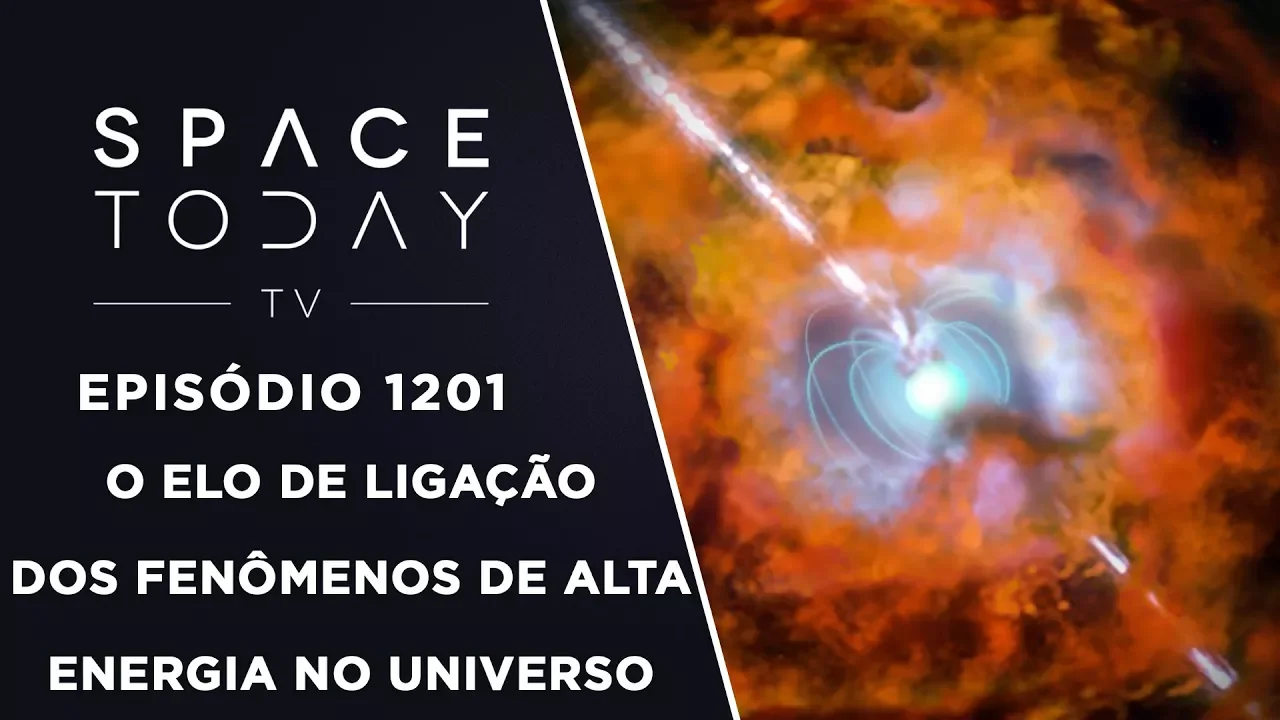



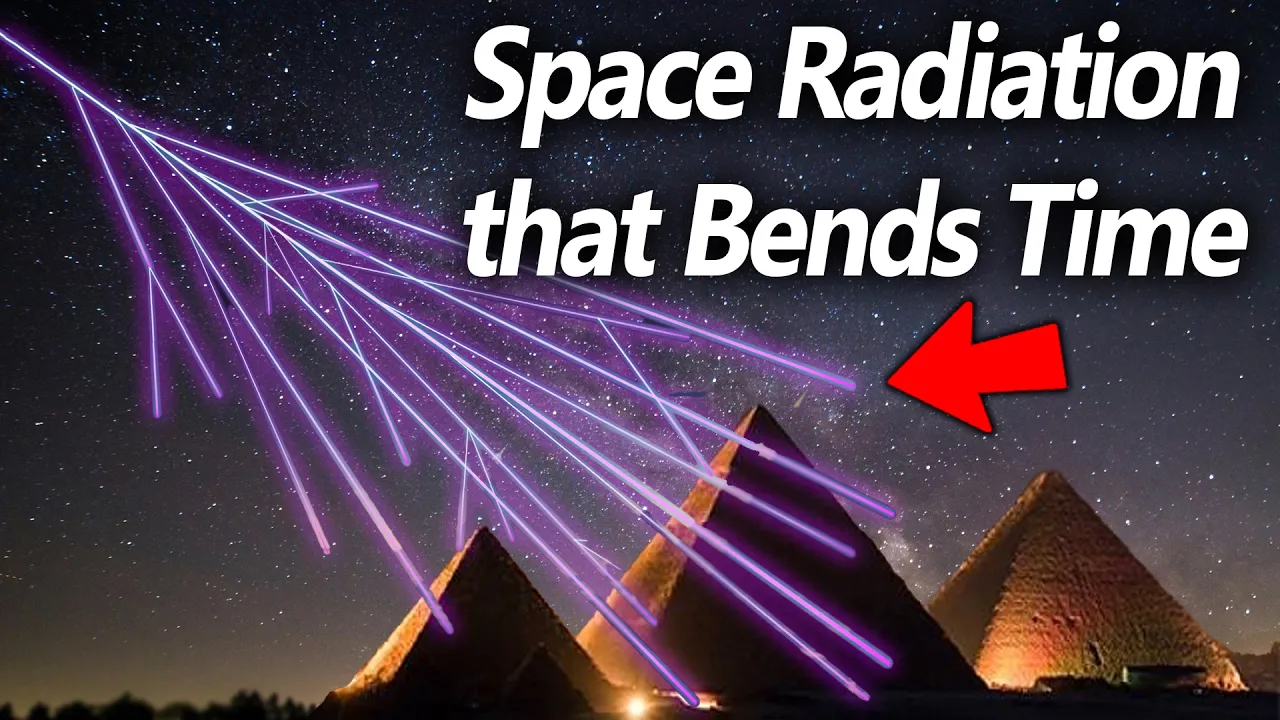


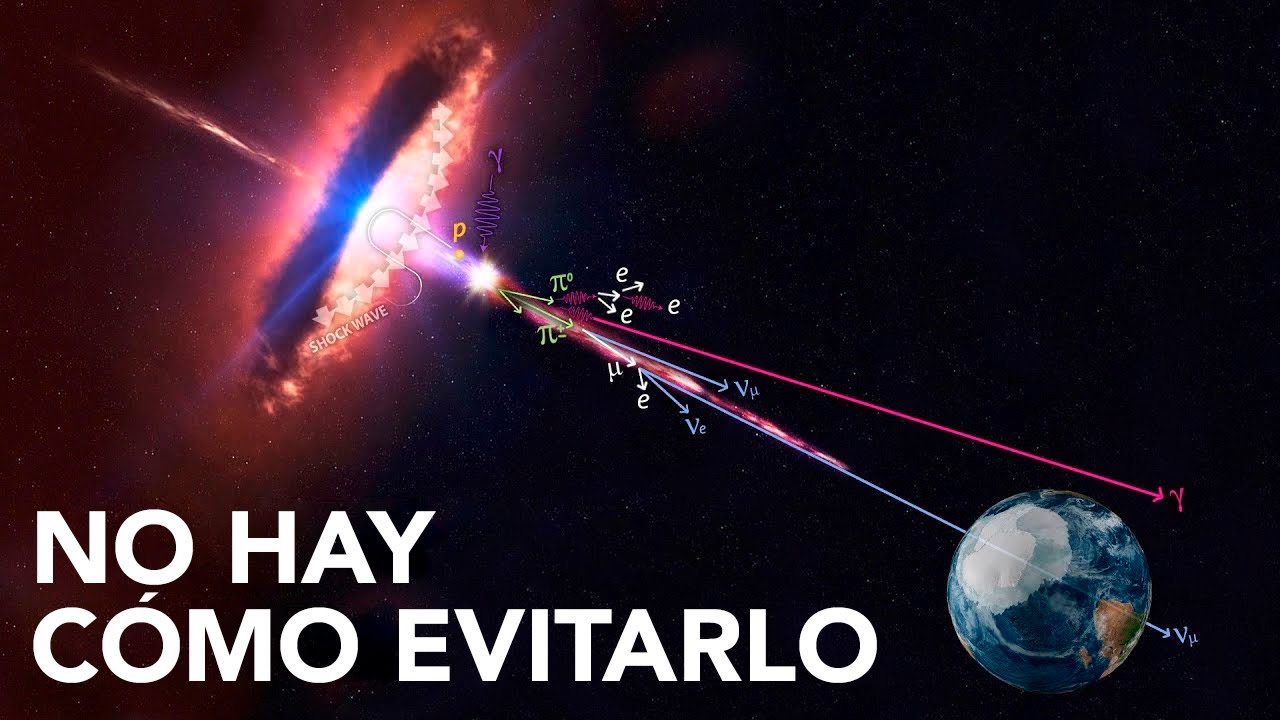


Ultra-high-energy cosmic rays, such as the famous 'Oh My God Particle' discovered in 1991 traveling at 99.99999% the speed of light with over 2 million times the energy of particles from the Large Hadron Collider, remain one of science's greatest mysteries because no known astrophysical mechanism can explain their extreme energies, suggesting either new cosmic objects or unknown physical processes exist in the universe.
Cosmic Rays: Explaining the Universe's High-Energy Particles
Added:Understanding of subatomic particles, particularly protons, electrons, and atomic nuclei.
Basic electromagnetism, including how magnetic fields deflect charged moving particles.
The concept of kinetic energy and the electronvolt (eV) as a unit of energy in particle physics.
A basic understanding of Earth's atmosphere and magnetosphere as protective shields.
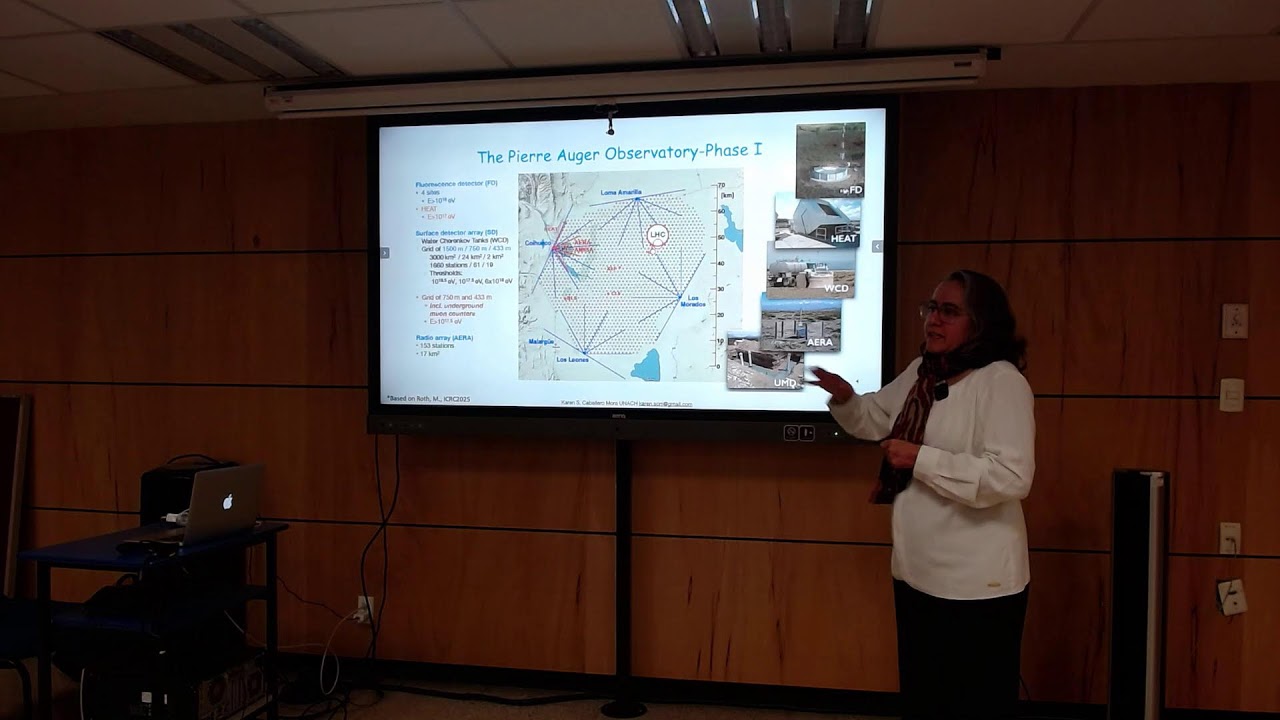
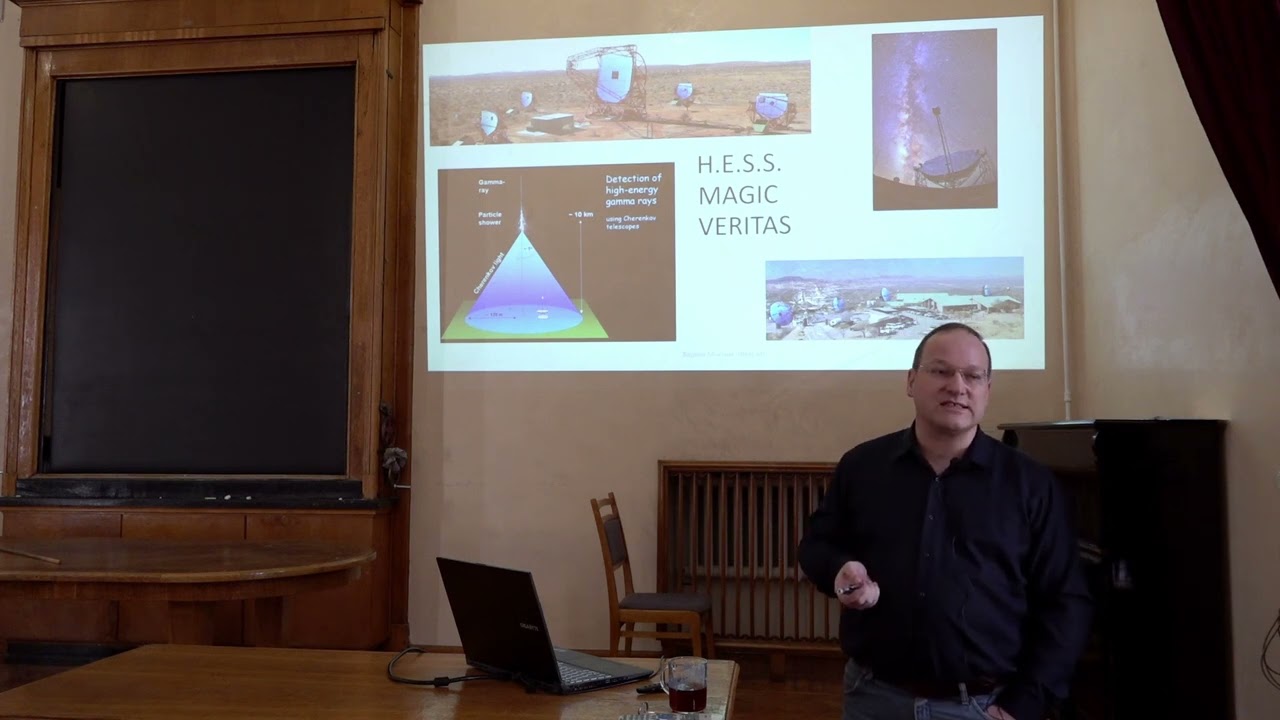
Deep dive into the Pierre Auger Observatory and other ground-based detector technologies like Cherenkov telescopes.
The study of high-energy astrophysical phenomena, such as Supernovae, Active Galactic Nuclei (AGN), and Gamma-Ray Bursts.
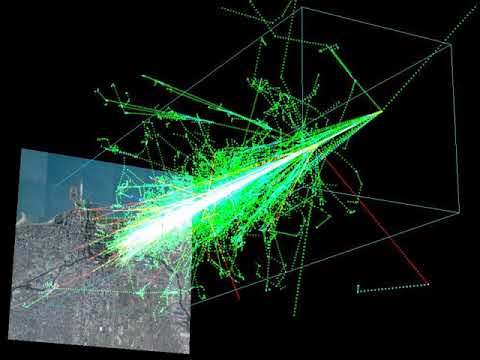
Introduction to particle astrophysics and 'air showers' (the cascade of secondary particles produced in the atmosphere).
Real-world implications of cosmic radiation on space exploration, satellite electronics, and aviation safety.
219.6K views10.2Klikes7:49Original Release: 2017-06-21
[Music] this episode is brought to you by curiosity stream okay Dad I want to talk about the mystery metal thing what do you remember about that well I remember pretty clearly um I was I was coming back from The Sawmill and um I just heard a loud bang in the back of my truck I looked in the back and there was a a round piece of metal that was kind of uh it wasn't hot it made a dent and uh I have no idea what where it came from maybe it was from something nearby like it had fallen from a a building nearby no there were no buildings this is what I remember okay my 10-year-old memory you had brought this piece of metal in and you gave it to me and so I was imagining like oh my God it's a meteor or it's like space junk and so this was my prized possession when I was a kid the other thing dad is that you came and took it away and you were like this might be radioactive we need to test it and I'll test it in the lab and then I'll give it back to you well I'm sure it's still around I know it's definitely not around I don't know we've looked I so wish we had it so that I could show a picture of what this looked like we still don't know what it was and it's still a mystery it is and it may always be a mystery so why am I telling you about 10-year-old Diana's deep unsolved mystery because Mysteries are awesome they're almost as good is free food oh my God but I also wanted to prepare you for this other intriguing mystery in physics and it also starts with things falling from the sky like sprinkles on a cupcake and here to help me tell that story is Daniel Whitson and Jorge Cham in the 1980s physicists built a facility in a high altitude desert in Utah it was basically an observatory except instead of looking for stars they were looking for the flashes of light that occur when mysterious particles hit the atmosphere and on October 15th 1991 boy did they find one of these particles they found one with unimaginable amounts of energy this thing was traveling at 99.99999% of the speed of light the world record for speediest and most energetic particles on Earth are at the enormous large hron collider in Switzerland this particle had more than 2 million times the energy of those fools this submicroscopic sprinkle around the size of an atom's nucleus hit with enough energy to lift a bag of 50 cupcakes a meter off the ground nobody had ever seen anything like it physicists started calling it The oh my God Particle the oh my God Particle it's a good thing physicists don't name Pokémon so these mysterious particles scientists were searching for are called cosmic rays the name's kind of misleading because cosmic rays aren't actually rays of light they're particles protons and atomic nuclei that might get ejected from stars like the sun or even from supernovas outside the solar system here on Earth cosmic rays are constantly raining down on us like sprinkles on a cupcake a cupcake sized part of the atmosphere gets about 50 cosmic rays per second these particles have a lot of energy enough energy to strip electrons off of molecules in the atmosphere and make them glow like neon signs that that's what causes the northern lights but there's a pretty big range of energies some sprinkles just dust Earth some hit a little harder and sometimes just a handful of times a year one super Goliath Incredible Hulk blew well of a cosmic ray hits Earth and the Mystery is that no one knows where these things come from nobody knows after scientists found the oh my God Particle they found more and we don't know of anything in the universe that's capable of making such high energy highspeed particles just ask an astrophysicist to come up with an estimate for the highest speed a particle could ever go anywhere in space which sounds kind of hard and it is which is why they come up with crazy situations like particles surfing on exploding supernovas or black holes swinging particles around like slingshots the highest energy a cosmic ray should ever have no knowing what we know now about the universe is 10 to the 17 electron volts the oh my God Particle blows past that estimate with a, times more energy so that means there must be a new kind of object in the universe that we don't know about yet so that's where we're at we don't know what kind of object could make the oh my God Particle but we can speculate one possibility is that they were made by a super massive black hole as black holes inhale everything within reach they cause a huge mass of gas and dust to swirl around which has been observed to generate incredibly energetic radiation but scientists are a little doubtful on this one because they don't seem to see that cosmic rays come from the areas in space where we know super massive black holes are another possibility is that there's some unknown force in the universe we don't know about yet and then there's my favorite possibility what if these cosmic rays are the result of alien experiments sounds crazy but it's possible I mean creativ is the key to revolutionary ideas the oh my God Particle could be pollution from Alien experiments listen I know you're just as disappointed as me that there's no resolution to this mystery yet but get on my excitement level because we have a clue cosmic rays slow down as they travel through space because they interact with the cosmic microwave background which means that they have to be made by something close by so we're going to have to detect a lot more of these to figure out where they came from Unfortunately they only arrive about one every square kilometer every thousand years that's why cosmic ray observatories like the pier o observatory in Argentina is huge so that they have a better chance of detecting one and imagine this a small particle detector that everyone could fit in their pocket and everyone around the earth could carry with them at all times sounds crazy but it's smart phone but seriously the camera in your smartphone can be used as a particle detector so scientists have come up with the idea that if enough people ran a particle finding app we'd have a much better chance of finding these crazy energetic particles so maybe one day I'll be able to help solve a space junk mystery finally thank you for watching and by the way this video was inspired by a chapter in the book by Daniel whiton and Jorge Cham called fittingly we have no idea you should check out happy physicing this episode is brought to you by curiosity stream a subscription streaming service that offers documentaries and non-fiction titles from some of the world's best filmmakers including exclusive Originals I recommend checking out exoplanets get unlimited access today and for our audience the first two months are free if you sign up at curiositystream.com physicsgirl and use promo code physics girl during the sign up process what I've been asking about this for like 20 years and you found it well let me see it whoa
Up Next
12:19
The Oh-My-God Particle: Ultra-High Energy Cosmic Ray Mystery
@pbsspacetime
1.2M views•2017-04-19

12:53
21cm Hyperfine Transition in Neutral Hydrogen: Radio Astronomy Basics
@AaronRobertParsons
12.4K views•2011-10-13

9:24
How to Build an Acoustic Levitator: Physics of Sound Levitation
@physicsgirl
689.7K views•2017-12-14

27:14
Entropy and the Second Law of Thermodynamics Explained
@veritasium
27.5M views•2023-07-01
Related Study Plans & Knowledge Roadmaps
Structured learning paths in Physics
physics
Nuclear Physics (Decay, Fission & Reactors)
01Atomic Structure and the Binding Force
02Radioactive Decay and Half-Life
03Nuclear Fission Mechanics and Chain Reactions
+ 2 more learning modules
12h5 modules
Explore Roadmap
physics
Soft Matter (Polymers, Colloids & Rheology)
01Foundations of Soft Matter & Thermal Forces
02Polymer Physics and Macromolecules
03Colloids, Surfactants, and Self-Assembly
+ 2 more learning modules
38h5 modules
Explore Roadmap
physics
Analytical Mechanics: Lagrangian & Hamiltonian
01Mathematical Foundations: Calculus of Variations
02From Newtonian Mechanics to Constraint Dynamics
03The Principle of Least Action & Lagrangian Mechanics
+ 3 more learning modules
28h6 modules
Explore Roadmap
physics
General Relativity (Spacetime & Cosmology)
01Foundations of Relativity: Special Relativity
02The Geometry of Spacetime: Equivalence Principle & Curvature
03Einstein's Field Equations: The Mathematics of Gravity
+ 2 more learning modules
55h5 modules
Explore Roadmap