





![How Does a Laser Work? Quantum Nature of Light - [3]](https://i.ytimg.com/vi_webp/Gbfj_FlEjI4/maxresdefault.webp)






![59. Class 10 | Science | Unit 10 Wave[EN]](https://i.ytimg.com/vi/y0hbO1sRzS4/maxresdefault.jpg)




![[Nanophotonics] 2. Electromagnetic waves - part 2](https://i.ytimg.com/vi_webp/6YK8PozhaKo/maxresdefault.webp)
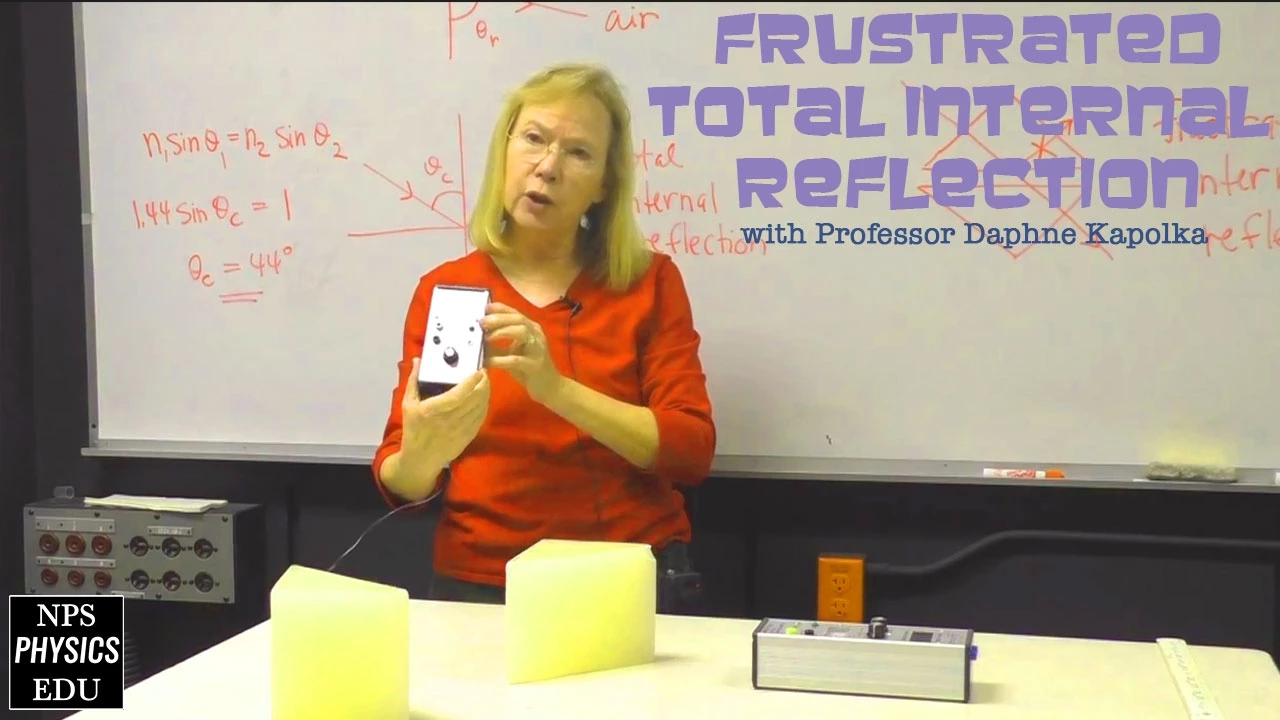
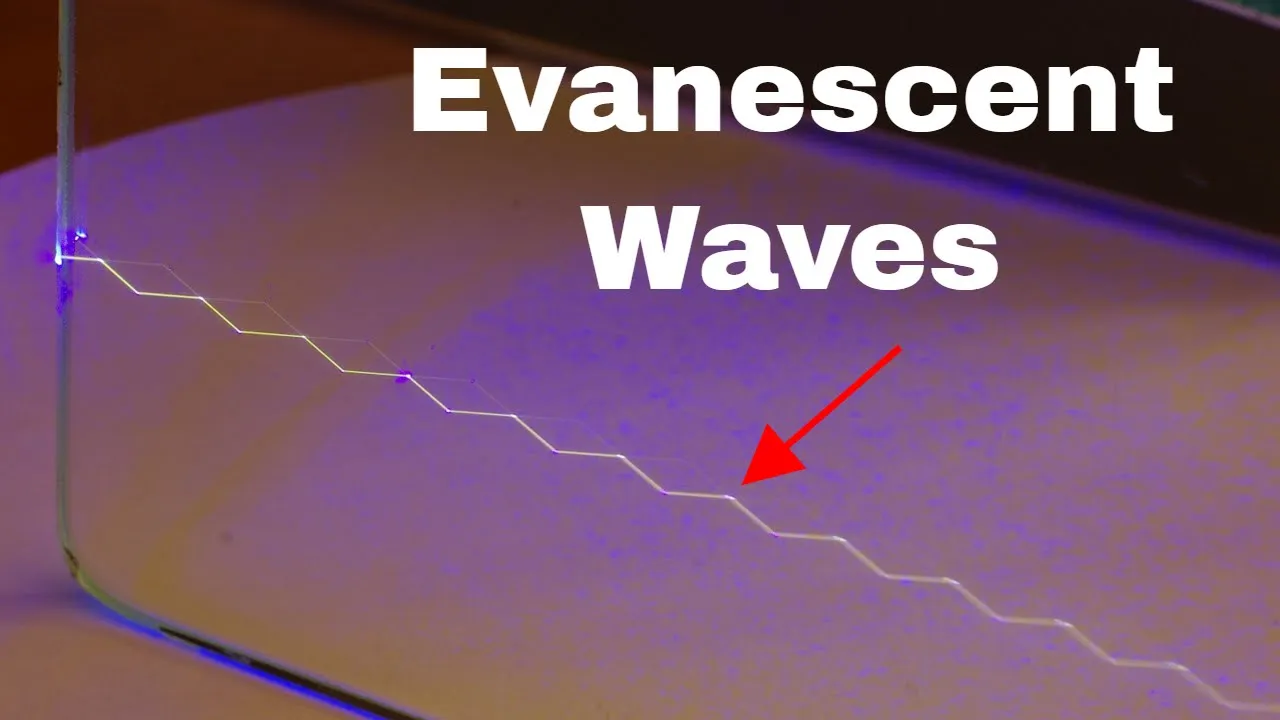
Light can be controlled and guided through water streams using the principle of total internal reflection, where light bounces off the water-air interface at angles below the critical angle, keeping it trapped within the stream; this same principle enables fiber optics technology, where extremely thin glass fibers confine and transmit light signals at speeds of approximately 200,000 km/s, forming the backbone of modern internet infrastructure that connects continents through undersea cables.
How to Control Light with Water: Total Internal Reflection Experiment
Added:The concept of refraction and how light bends when traveling from one medium to another with different optical densities.
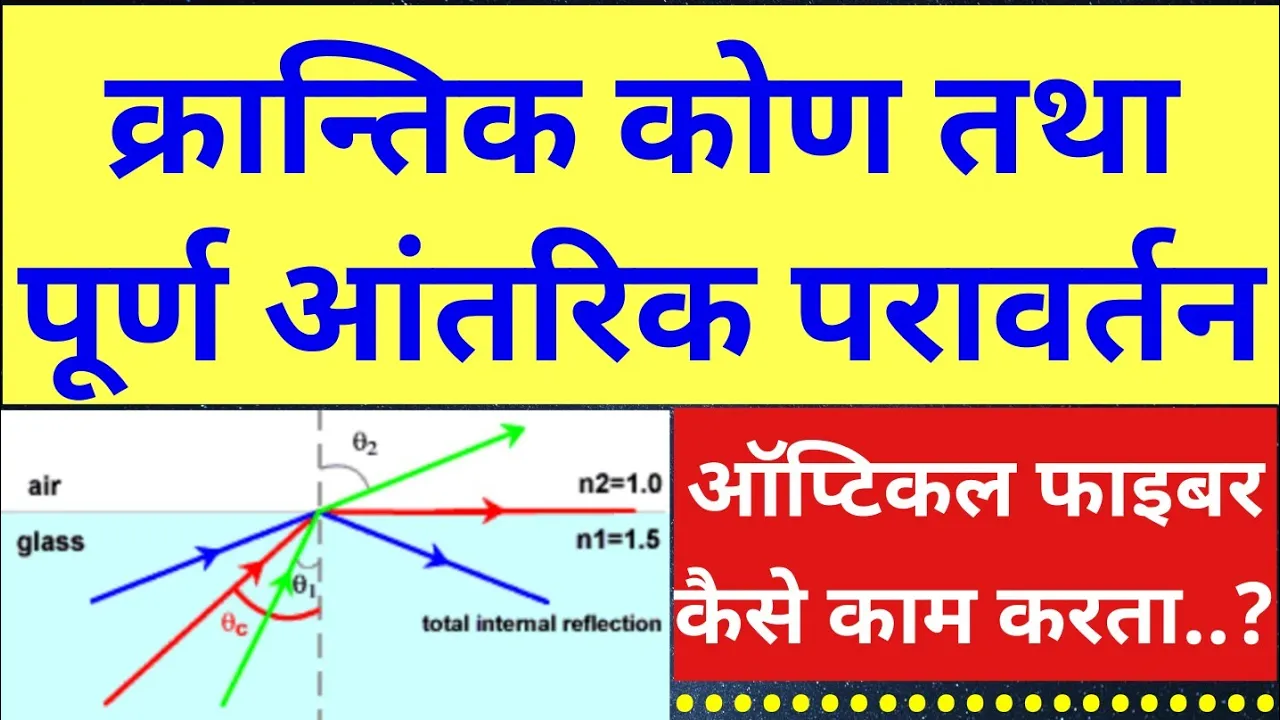
The definition of the refractive index (n) of a material and how it determines the speed of light within that medium.
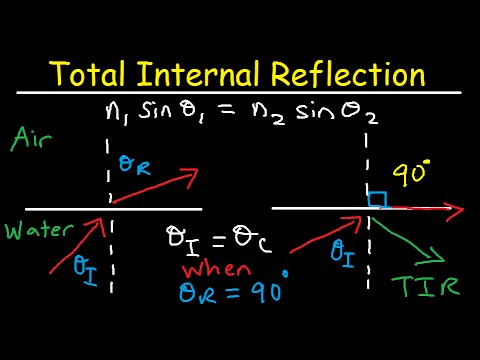
Snell's Law, which mathematically relates the angles of incidence and refraction to the refractive indices of the media.
The basic properties of laser light, particularly its collimated and monochromatic nature, making its path easy to visualize.
The engineering of modern fiber optic cables, including the concepts of core, cladding, and signal attenuation.
Practical applications of waveguiding in medical technology, specifically endoscopes and internal imaging devices.
The mathematical calculation of the critical angle for various boundary interfaces (e.g., glass-to-air, water-to-air).
Advanced wave optical phenomena such as evanescent waves and frustrated total internal reflection (FTIR) used in biophotonics.
232.1K views9.1Klikes10:18Original Release: 2016-12-22
hello physics friends I'm Diana physics experiment at home you do it I do it let's do it I have a 2 L bottle that we drilled a circular hole in took a little while to get it right and a green laser pointer I'm going to shine the laser beam through one side of the bottle and align it so it's going out the hole on the other side and you can see there's a beam shining straight through on my leg now I'm going to fill up the water bottle with water and we're going to see what happens when I shine it in the same way oh no is it working really I wonder if it'll get better as that gets less turbulent oh yeah I mean yeah like that's well you moved it there we go W the light follows the water down the stream and no longer travels straight it's trapped it just works better when there's less water yeah what is it is it following the water yeah yeah it's cuz it keeps oh cuz it keeps bouncing off the the surface is oh that's sick yeah it's sick as Jamie noticed the inside of the water is acting like a mirror letting almost no light out as it follows the stream but light can escape water which is why I can see this lime inside of a bowl of water but when I go below a certain angle it's so crazy it looks like there's a you got two limes in there yeah it looks like it on here it looks like there's a Floating Lime Light is weird there's a point when light can't escape water and we decided to try to find that angle with the laser beam look oh cool dude sweet the laser beam is coming up through the water until it hits the surface and reflects back down into the water at what point at what angle do you think it start to escape good question Jamie there's a certain angle where all the light reflects it's called the critical angle if we shine light steeper than it some of the light starts to escape and at a more glancing angle all the light stays in in a phenomenon called total internal reflection yeah it just gets fainter and fainter oh there we go there oh so that's like about the angle right there and now it's all the way back in yeah yeah yeah that's right there where the critical angle is this critical angle depends on the index of refraction of the materials here water and air and it plays a hugely important role in our water experiment and as we'll see in fiber optics in the Stream you can see light bouncing off the inside at a glancing angle it's not getting out because it's below the critical angle and we can guide the light in a curved line being able to control the direction of light is a big deal especially in communication think about this if I wanted to communicate with my parents in Hawaii from my home in San Diego I could send them a postcard which would get tossed in a truck and then put on a plane and then toss in another truck and so on over a couple of days but light would take a hundredth of a second to travel that same distance which is about the same amount of time it takes for sound to go from my mouth to someone else's ear in a regular conversation side note it always confused me why Harry Potter sent mail using owls which just goes to show you that our muggle technology has long surpassed The Wizarding World you can't even encrypt owl post I digress so you can send information using light without controlling the Direction all you need is a radio tower and everyone nearby can tune in and rock out to some Foo Fighters I'm looking for something to help me burn out right can't play the actual clip copyright but if you wanted to live stream the Foo Fighters concert in 4k you would need a tricked out decked out radio tower on steroids but if you can confine and guide the light like we did with the stream of water you can make the signal go much farther this is how the various servers of the internet send information back and forth except instead of using water streams they use fibers made of extremely Pure Glass sometimes as thin as the width of a human hair the these are called Optical fibers or fiber optics we're confining light here with a clear material it's cool light travels about 2/3 the speed it would in the vacuum of space but still about 200,000 km/ second now I was thinking about Communications one day and I wondered how do we send signals across say the Pacific Ocean is that all Wireless through satellites surely we don't have fiber optic cables running across thousands of miles of open ocean but we do engineers for telecom companies which to be honest I haven't historically spent much time thinking about have linked the continents of the world by doing this incredible set of things they load up their ships with thousands of kilometers of fiber optic cable wound up in reels they start burying the cable on land near the coastline at a place called a landing site in New Jersey Florida Oregon Alaska California Hawaii you name it then a ship will use an underwater plow to dig a trench about a meter under the ocean floor it'll pull the fiber optic cable through that trench and then bury the cable when these cables need maintenance and repair occasionally due to the wrath of angry sea creatures they use underwater robots talk about infrastructural Feats of humanity now how does light traveling through a fiber become information now if we were living in the 1840s you would send short flashes of light for dots and long flashes of light for dashes and someone at the other end would write it all down and translate a morse code of light if you will you will but we live in a post-modern muggle era so we have electronics and computer chips to do the flashing and blinking and translating for us okay but the real question here is how much longer does it actually take to send the postcard by mail versus a message on the internet I took to Twitter and I found a Communications expert as you do I'm n I'm a PhD student at the University of elang and nberg I work at the audio department I asked Neils what happens when you send an image file and about how the information might not not take the path you'd initially think and he sent me back this amazing comprehensive email with references I was so happy when I got that how long will it take to send that postcard like you know you've got your image file which you know compresses maybe about a megabyte how long is it going to take from when you click Send until it gets received on the other end the biggest Factor there is actually the connection at your home because as we said it's uploading stuff is the slowest we talked briefly about why upload speed on your internet is typically slower than download speed and it turns out it's just out of necessity most people are downloading video files and watching Netflix and so internet service providers have given priority to downloading so it's only those of us that upload a lot to YouTube or stream on Twitch that get annoyed back to it so that's the slowest bit and if we say we have 5 megabits of upload speed let's say it will take about 2 seconds to upload the the postcard from your connection but after that all the other links from each note to the next even across the Atlantic or the Pacific they're much much much much faster so they don't play a big role anyways so the slowest part is your home 10 times less than that for downloading on the other end and then while it's traveling across the fiber optic Network it's fractions of a second like hundreds of a second and so overall your postcard takes really just the time it takes to upload so about 2 seconds plus you know a couple fractions of a second more versus the 4 days it took to send by mail so now that we got the timing out of the way there's so many other interesting things that are going on when you send your data over the Internet like your postcard data gets split up into packets and then those are sent from node to node across the network of the internet number one why is it encoded in packets and number two do those packets all travel the same path so you're the exclusive user of the the last bit of the connection to your home but you're sharing all the other connections with everybody else what they can do is they can transmit a lot more packets than you can transmit so they're basically mixing your tiny packets with everybody else's tiny packets and so you're sharing the connection one packet after another it sometimes happens or it could happen that your packets not all go down the same route because each individual note so if you you basically switched from one node to the next each of them has to make the same decision where to send your package next and if it just so happens that the next node is is slow or not reachable or whatever it just sends it down a different path so that's all the redundancy that's built into the internet basically so so like the analogy with your postcard sending in a truck it's like you tear it up and put it in different trucks yes exactly and yeah they're widely different trucks and they could go in different speeds different directions they could be different trucks as well so one could go over a satellite the other one could go through a cable it's oh I didn't even think about that yeah this for me was a fascinating look at how your data is sent and there's even more like how the data gets weaker as it goes through Fiber Optic Cables so there's physical systems that boost the signal and have nothing to do with reading and resending your data very cool stuff thanks to Neils I think optical fiber might be an underrated technology I love my smartphone from the bottom of my heart but let's face it we're never going to be fully wireless satellite communication is just too slow you have to beam the signal up to 35,000 km and with wait for it to come back down and then there's the thing of installing them with Rockets So when you make a Skype call halfway around the globe or you watch an awesome YouTube video it's optical fiber that makes it possible so the messenger of the future is not going to be smoke signals or postcards or even electrons it's going to be fiber optics thank you for watching this video and now go forth into the world and enjoy the physics thank you again for watching this video and if you click me here right now you can get the opportunity to check out PBS's new channel called infinite series all about math I know you've wanted more math in your life and they've already got some really cool videos out looking at the different sizes of Infinities and the important questions like can two people have the same number of body hairs so it's worth checking out click me or I've got a link in the description
Up Next

16:33
Tidal Heating in Enceladus and Io: Celestial Mechanics Explained
@lukashoermann
3.8K views•2013-10-15

12:53
21cm Hyperfine Transition in Neutral Hydrogen: Radio Astronomy Basics
@AaronRobertParsons
12.4K views•2011-10-13

9:24
How to Build an Acoustic Levitator: Physics of Sound Levitation
@physicsgirl
689.7K views•2017-12-14

27:14
Entropy and the Second Law of Thermodynamics Explained
@veritasium
27.5M views•2023-07-01
Related Study Plans & Knowledge Roadmaps
Structured learning paths in Physics
physics
Nuclear Physics (Decay, Fission & Reactors)
01Atomic Structure and the Binding Force
02Radioactive Decay and Half-Life
03Nuclear Fission Mechanics and Chain Reactions
+ 2 more learning modules
12h5 modules
Explore Roadmap
physics
Soft Matter (Polymers, Colloids & Rheology)
01Foundations of Soft Matter & Thermal Forces
02Polymer Physics and Macromolecules
03Colloids, Surfactants, and Self-Assembly
+ 2 more learning modules
38h5 modules
Explore Roadmap
physics
Analytical Mechanics: Lagrangian & Hamiltonian
01Mathematical Foundations: Calculus of Variations
02From Newtonian Mechanics to Constraint Dynamics
03The Principle of Least Action & Lagrangian Mechanics
+ 3 more learning modules
28h6 modules
Explore Roadmap
physics
General Relativity (Spacetime & Cosmology)
01Foundations of Relativity: Special Relativity
02The Geometry of Spacetime: Equivalence Principle & Curvature
03Einstein's Field Equations: The Mathematics of Gravity
+ 2 more learning modules
55h5 modules
Explore Roadmap