













![Three-Dimensional Mid-Air Acoustic Manipulation [Acoustic Levitation] (2014-)](https://i.ytimg.com/vi/odJxJRAxdFU/maxresdefault.jpg)
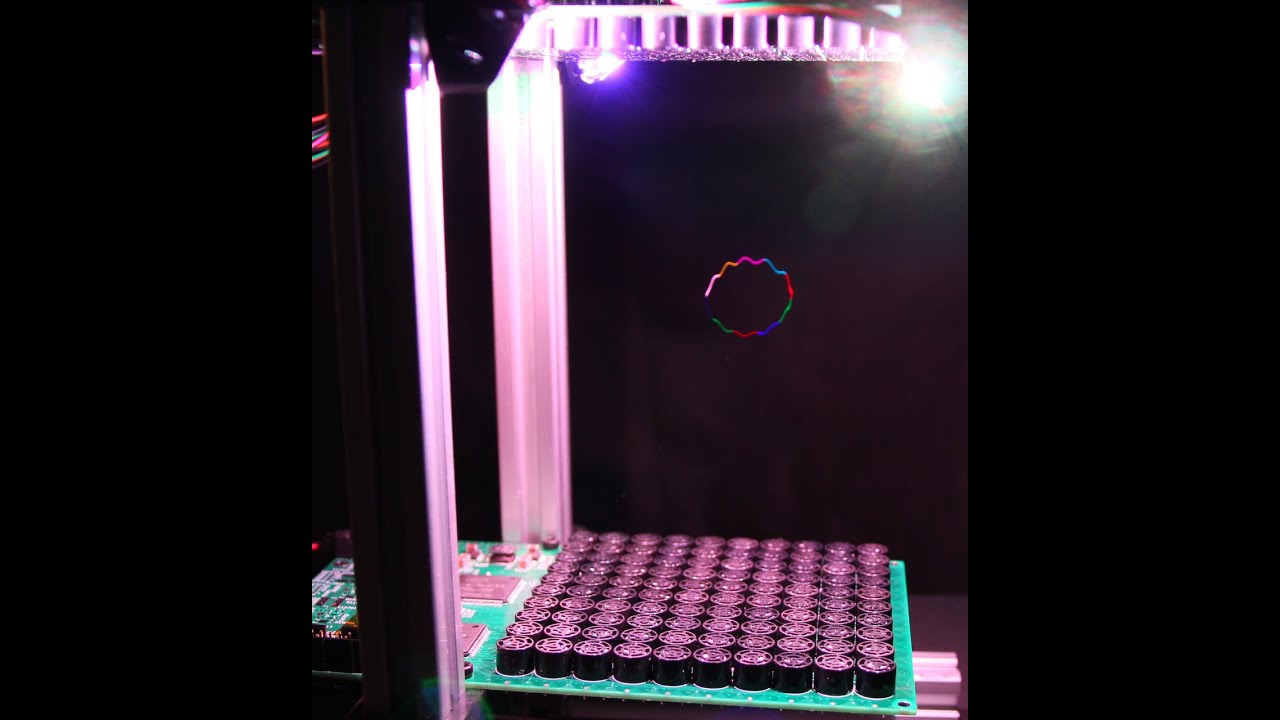

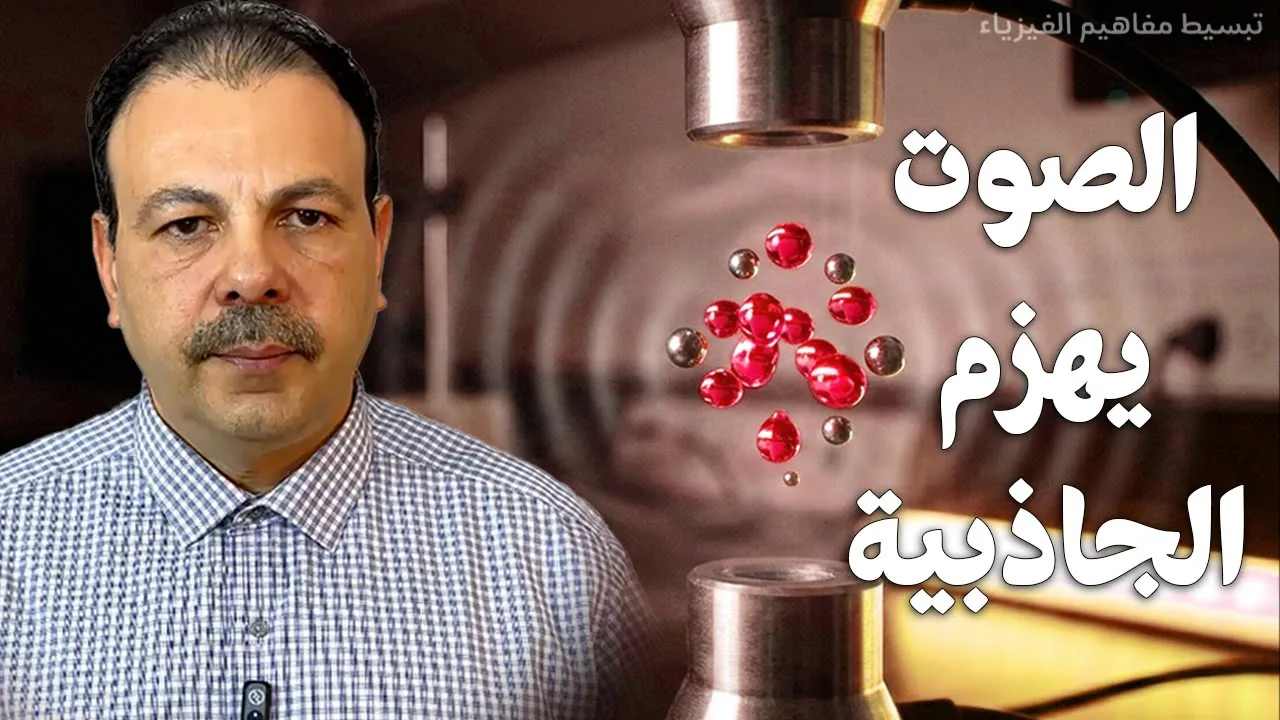

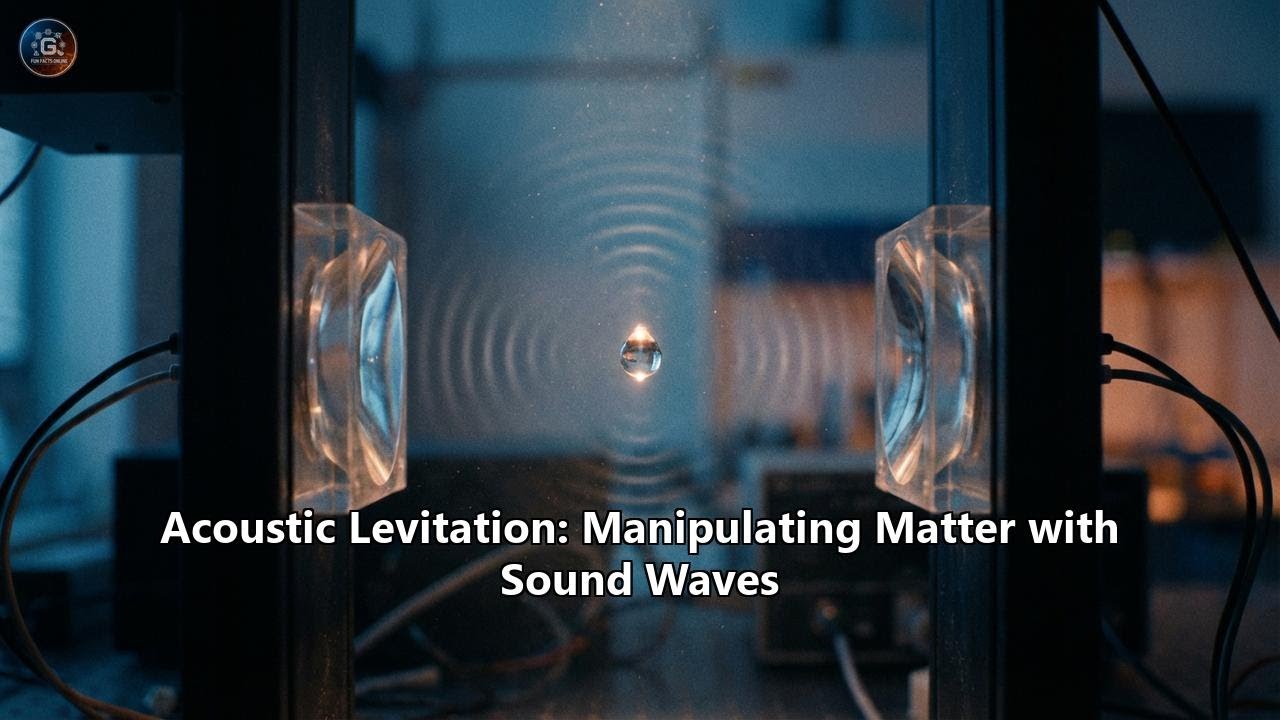




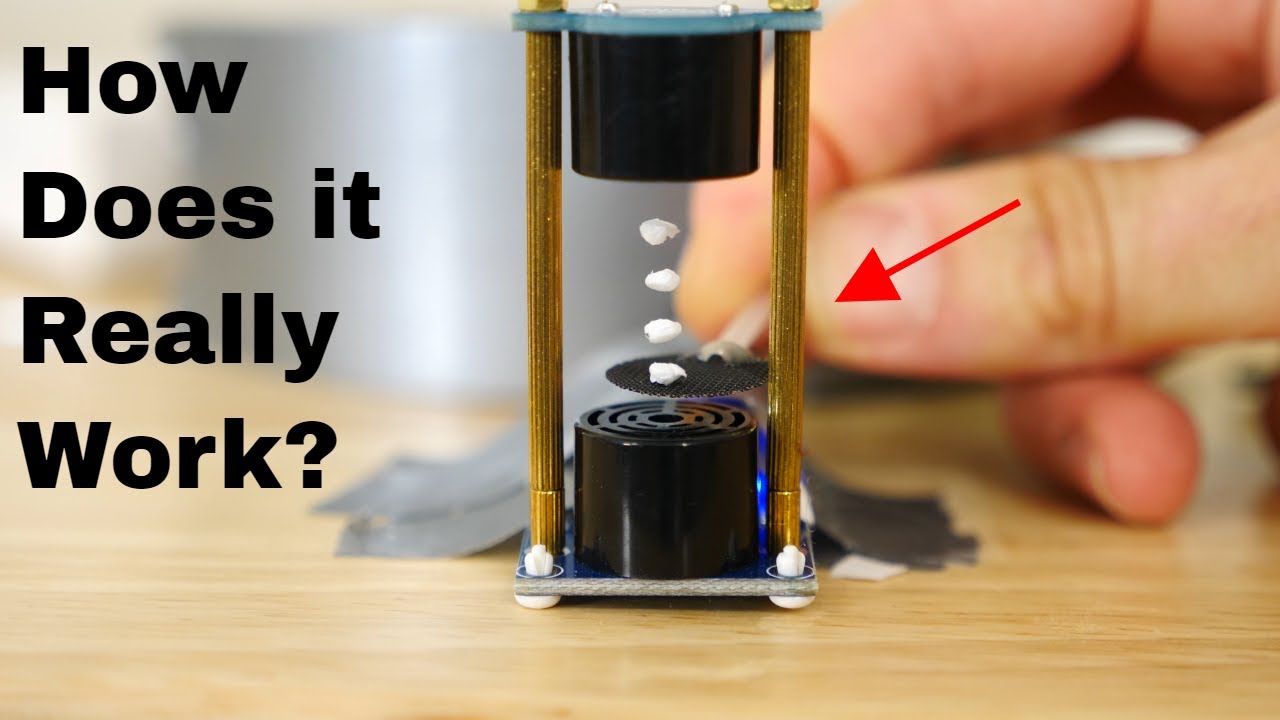
Acoustic levitation uses standing waves created by multiple speakers emitting sound waves at specific frequencies and angles, which generate nodes (points of zero air movement) where objects can be suspended mid-air; the 3D printed bowl-shaped structure focuses acoustic power to create these stable nodes, allowing any material to levitate as long as its density remains below the acoustic pressure threshold.
How to Build an Acoustic Levitator: Physics of Sound Levitation
Added:Basic wave mechanics, specifically understanding wavelength, frequency, amplitude, and the speed of sound.
The physics of standing waves, including how constructive/destructive interference creates nodes and antinodes.
The nature of sound as a longitudinal pressure wave consisting of compressions and rarefactions.
The concept of ultrasound, representing sound frequencies above the human limit of hearing (typically above 20 kHz).
The quantitative physics of acoustic radiation pressure and the mathematical calculation of Gor'kov forces.
Dynamic acoustic manipulation, such as using phased transducer arrays to move levitated objects in 3D space.
Applications of containerless processing in chemistry, biotechnology, and pharmaceutical development to prevent contamination.
A comparative study of other levitation physics, including magnetic levitation (diamagnetic and superconductive), electrostatic levitation, and optical tweezers.
689.7K views27.1Klikes9:24Original Release: 2017-12-14
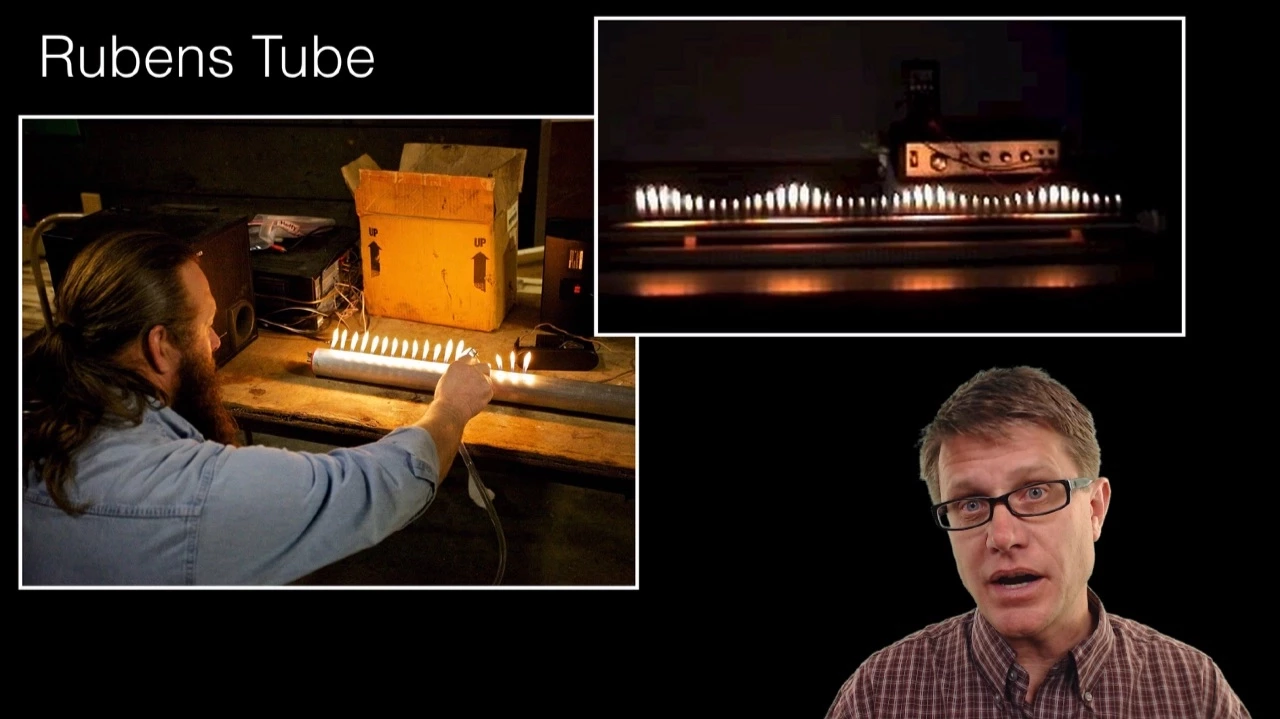
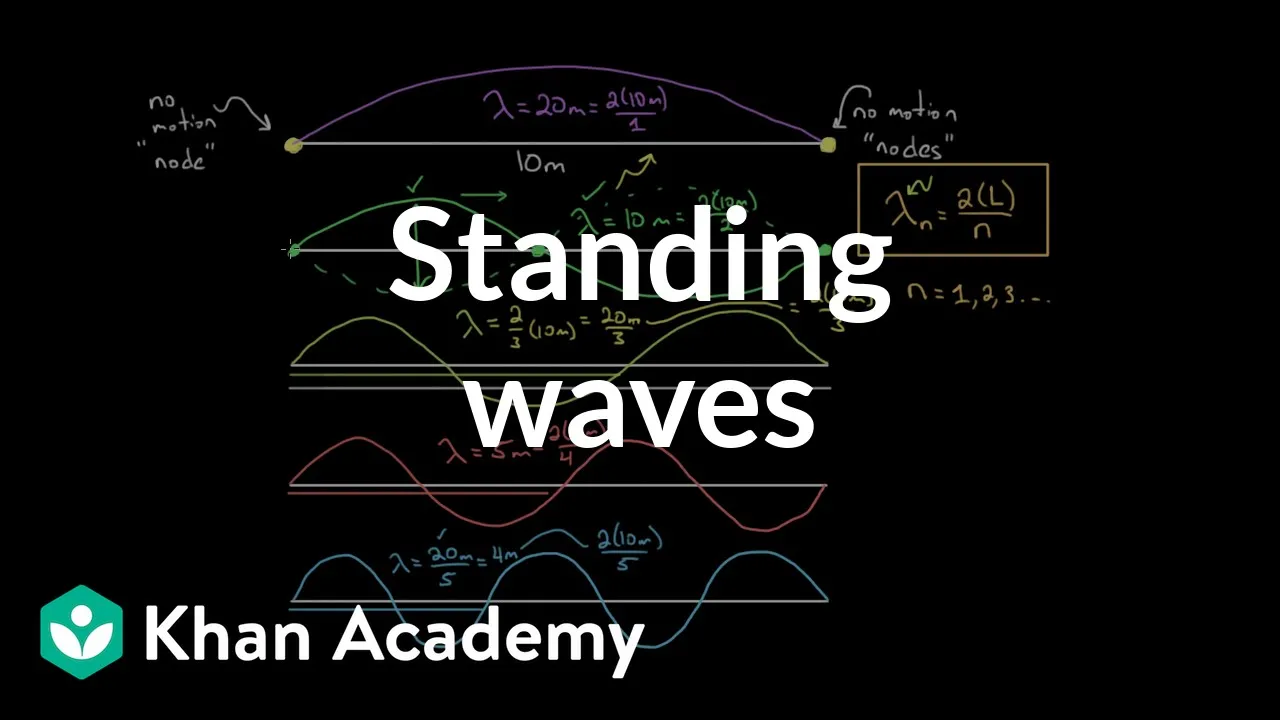
[Music] thank you to 23andme for supporting PBS Digital Studios it sounds terrible to us I guess no more that way we might want to try that's why these wires to you know hey I'm Diana we're gonna get through this I'm Diana you're watching physics girl and that was us trying to make a levitator a few months back I got this email out of the blue from the University of Bristol about this DIY making at home acoustic levitator kit have you ever heard of an acoustic levitator what if I haven't yes I have yeah yeah I thought it was some sort of guitar that like flew up in the air magic again it you may not have heard of this but the idea is that you use sound waves from a bunch of different speakers pointed in different directions focused on a point and you can levitate something at that point in midair this is real yo I showed one of these from another research group at the University of Tokyo three years ago in a video but this email was saying that anyone can make one of these at home I was skeptical we're in America this is a problem you suddenly have limitation we just made this happen here it's gonna get ripped apart are you guys excited how do you feel this is half of the spacing we had oh cool yeah the technology behind this has been around for decades and I'm gonna explain it later in this video for those of you who are like me and cannot go through the rest of your life without understanding how something works but the genius of this little at-home project is making it available for everyone why did the original group from the University of Bristol designed this don't get me wrong I'm appreciative this is super dope but that was the mystery to me and so I traveled to the University of Bristol in England to ask my name is here Martha I'm a research assistant at the mechanical engineering department and I always work with a gifted levitation it's open for everyone they can be lit at home and experiment as they wish but that's the good thing about democratizing the technology you know it's out there and everyone can do with it whatever they want some people had very nice suggestion like a could we put a seed and germinate it while it's levitating or can we do that an egg of an insect and will it hatch while it's levitating acoustic levitation in practice seems complicated so how is it possible to make a kit that someone like me and Dan and Kyle could make in three hours though I should confess den is a physicist Kyle's an engineer and all three of us have at least some electronics in soldering experience but we're not frequent hobbyists we just like making things that inspire us to say I don't know if this is actually gonna work but it does work so let's see how the main concept here is standing waves standing waves are not normal waves they need very special condition a regular wave in physics is just a disturbance traveling through a medium like when you disturb a slinky at one end the disturbance or wave travels to the other end if I then constrain or bound the slinky at the other end the wave will reflect back you can test this out by being that weird person that yells at Kenyon's your vocal disturbance reflects back now if I send wave after wave down the slinky they continue to reflect back and what I get is two waves one moving at me one moving away from me but obviously the slinky can't be in both places at once so the waves combine the interfere they add when they're on top of each other and they subtract when they're not and something very special can happen when the two waves interfere at just the right conditions you can get a wave that doesn't appear to be moving in any direction that's a standing wave the places along the standing wave that aren't moving at all are called nodes remember the nose they're important y'all standing waves can happen anywhere you use the right frequency on a confined medium they can also happen in two dimensions by vibrating or sending waves along a 2d plate with the right frequency on a confined medium the places where the sand collects are the nodes remember the nodes now in three dimensions I think you see where this is going we need a 3d medium we can send waves through air and we can create a three-dimensional wave profile with nodes the nodes here are the places where the air is not moving even though it's moving a lot everywhere else around the node the nodes are the Xen zones if you're at the node you can chill there anywhere else and you'll get knocked away so in our levitator are little pieces of styrofoam and lint hang out at the nodes they get held there at the nodes because if they're anywhere else they'll get pushed back in or pushed out and there you have acoustic levitation it's more like acoustic tweezers acoustic straitjackets mosh pits metaphors are failing today so how is it possible to make an acoustic levitator with a perfect 3d wave profile in your home the key is this 3d printed shape all these speakers they need to be at a specific position and within a specific angle and one way of achieving that is to designed this base and 3d printed if you try to put them in a flat surface it wouldn't work as well you can see that there is only one signal going to all the top transducers and that's possible because the focusing is done because the shape this has a bowl shape that naturally focus all the acoustic power in the center of the levitator and if you have sources in a flat surface with the same face that would not create levitation the structure puts all the transducers at just the right distance so that all the waves add and cancel in just the right way I had been curious about why they designed this DIY kit and as dr. Marceau said it was so they could democratize the technology and plus it's super cool which I think should be the only prerequisite for doing science you can quote me on that but there are other practical reasons for perfecting levitation with sound people are very familiar with magnetic levitation and it's good because it's very strong but it has a big limitation and that's the materials that you can levitate they need to be ferromagnetic diamagnetic or paramagnetic with acoustic levitation you can levitate any sort of material so it could be liquids it could be powder with the electronic components insects basically you name it any material with a certain limiting density yeah so you want to be able to levitate any kinds of materials although there is a limit with current technology in size and density of things that you can levitate so I was also curious about what other kinds of research they'll be doing into acoustic levitate errs all the navigators that we have seen they are standing wave levitate o meaning that there are waves coming from the top and weight coming from the bottom they interfere and create a standing wave this one is different there is only one wave this one can still levitate particles because it grease I have filled that looks like a pair of fingers holding the particle it doesn't create a standing wave but it can still levitate a particle as I said we have the challenge of size can we liberated particles bigger than half the wavelength that's something that we are working on and another challenge is manipulating multiple particles individually having a group of particles and they are all moving independently from one each other that would be so cool to have like synchronized dancing of bugs fake ones the last thing if you want to do this at home I've got just some tips and tricks that we figured out dr. Marcy's team put up a really easy to follow Instructables project online I will link to that in the description and when you get to the step where he says check the polarity of these turns Doozers the plus and minus heed that warning they're marked plus and minus but we tested them all and they were completely random don't trust the manufacturer also make sure all of your soldering connections are good we were not able to get water to levitate with this one yet we need an oscilloscope to test that all the transducers are working and we didn't have one in time to make this video but that just means that our 3d wave profile in here is not ideal oh my gosh yes if you're filming this thing your microphone may not be happy these transducers are putting out 40,000 Hertz which is above human hearing it's about twice the frequency of the top of human hearing but some microphones pick it up so be aware of that and yeah have you levitating and thanks for watching and happy physics thing I want to thank 23andme for supporting PBS Digital Studios 23andme comes from the fact that human DNA is organized into 23 pairs of chromosomes 23 meat is a personal genetic analysis company created to help people understand their DNA and understanding your 23andme results may even help you gain a newfound appreciation for your family after learning about your shared genetic connections for example if you and your family have received your results you can compare who you share your Neanderthal DNA with 23andme has a special holiday offer now through December 26 you can go to 23andme calm to check out their holiday offer and order kits for your family show your support for this show by going to 23andme comm slash physics colonel [Music]
Up Next
32:35
Build an Ultrasonic Levitator: A Step-by-Step Physics & Electronics Guide
@Science.Buddies
15.4K views•2025-07-31

12:53
21cm Hyperfine Transition in Neutral Hydrogen: Radio Astronomy Basics
@AaronRobertParsons
12.4K views•2011-10-13
10:24
The Physics of Wine Tears and the Marangoni Effect
@physicsgirl
702.1K views•2019-10-25

27:14
Entropy and the Second Law of Thermodynamics Explained
@veritasium
27.5M views•2023-07-01
Related Study Plans & Knowledge Roadmaps
Structured learning paths in Physics
physics
Nuclear Physics (Decay, Fission & Reactors)
01Atomic Structure and the Binding Force
02Radioactive Decay and Half-Life
03Nuclear Fission Mechanics and Chain Reactions
+ 2 more learning modules
12h5 modules
Explore Roadmap
physics
Soft Matter (Polymers, Colloids & Rheology)
01Foundations of Soft Matter & Thermal Forces
02Polymer Physics and Macromolecules
03Colloids, Surfactants, and Self-Assembly
+ 2 more learning modules
38h5 modules
Explore Roadmap
physics
Analytical Mechanics: Lagrangian & Hamiltonian
01Mathematical Foundations: Calculus of Variations
02From Newtonian Mechanics to Constraint Dynamics
03The Principle of Least Action & Lagrangian Mechanics
+ 3 more learning modules
28h6 modules
Explore Roadmap
physics
General Relativity (Spacetime & Cosmology)
01Foundations of Relativity: Special Relativity
02The Geometry of Spacetime: Equivalence Principle & Curvature
03Einstein's Field Equations: The Mathematics of Gravity
+ 2 more learning modules
55h5 modules
Explore Roadmap