![Measuring Inequality & The Formal Economy [AP Human Geography Unit 7 Topic 3] (7.3)](https://i.ytimg.com/vi/HQ4EmaXuNZA/maxresdefault.jpg)

![[LANGSUNG] #NiagaAWANI | 20 April 2026](https://i.ytimg.com/vi/Q9SGmDFivew/maxresdefault.jpg)
















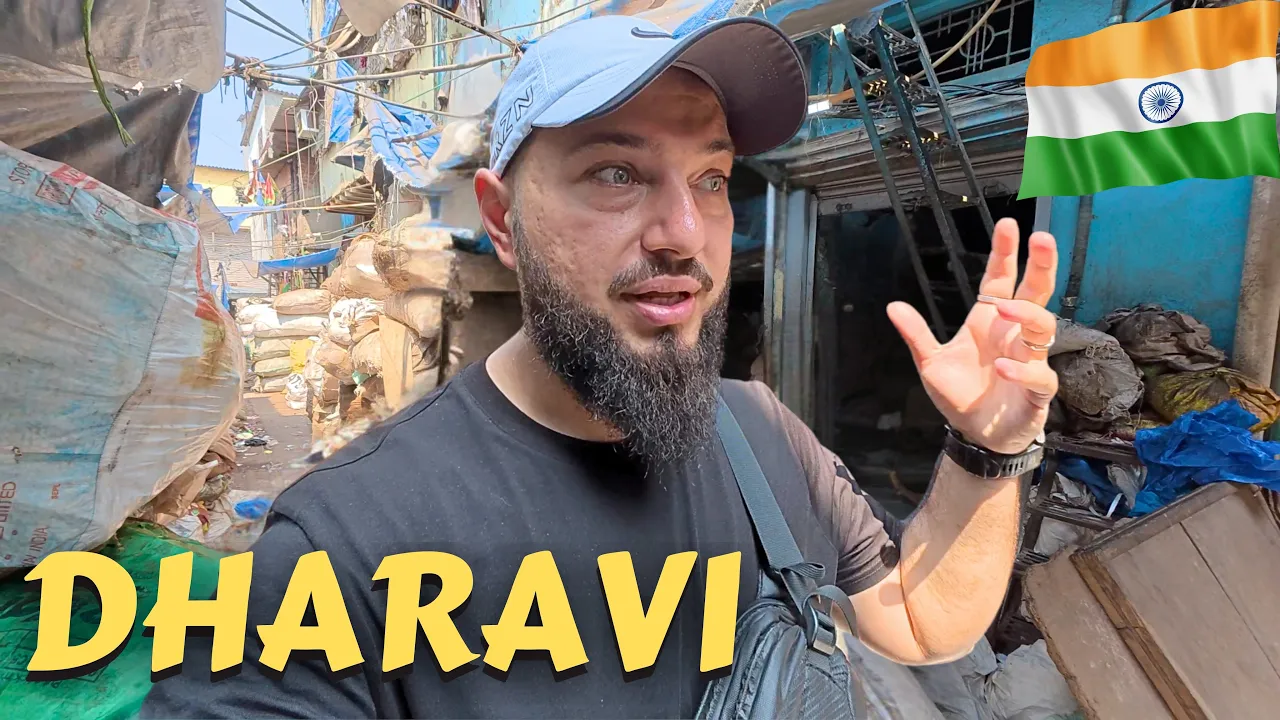



The informal economy, also known as System D, is a vast global network of unregulated economic activity involving approximately 1.8 billion people worldwide, representing two-thirds of the world's workforce and generating an estimated $10 trillion annually—making it potentially the second-largest economy in the world after the United States; this economy operates openly and aboveboard, providing essential employment opportunities and serving as a crucial driver of economic development in emerging markets, with major corporations like Procter & Gamble and MTN actively participating in and profiting from informal distribution channels.
System D: The Informal Economy's Global Power
Added:Understanding the difference between the formal economy (regulated, taxed, and officially recorded) and the informal economy.
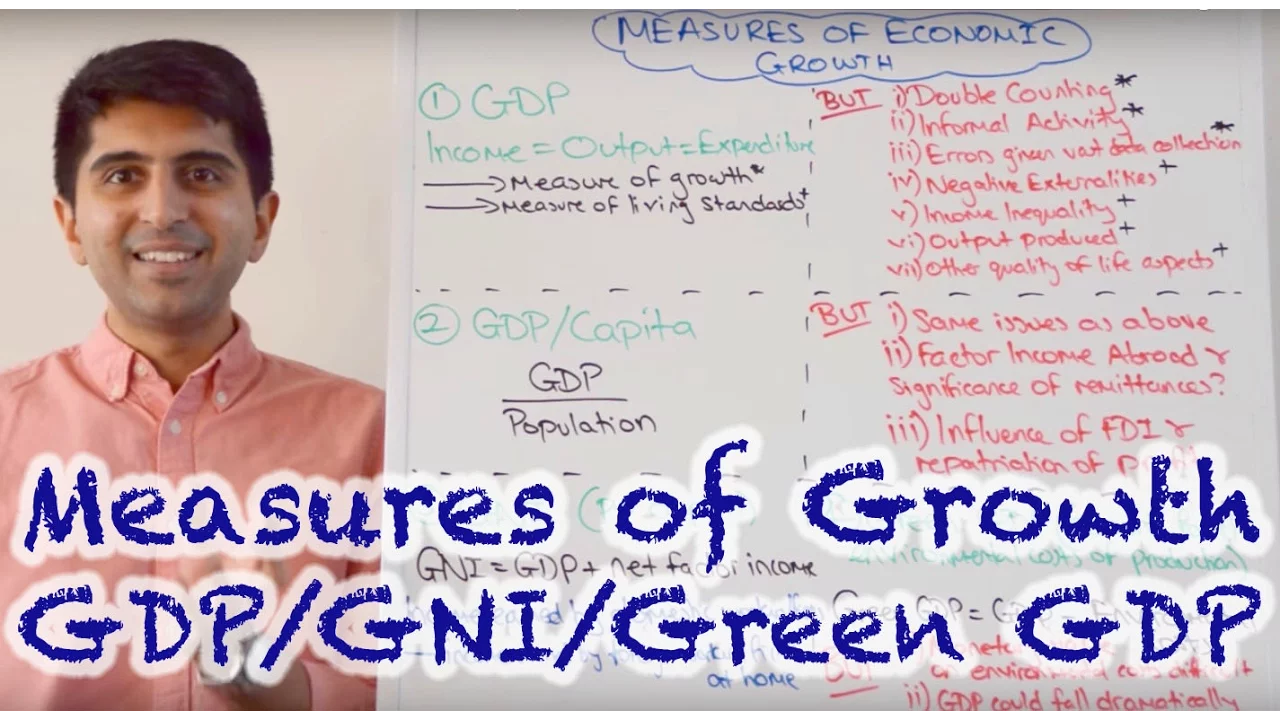
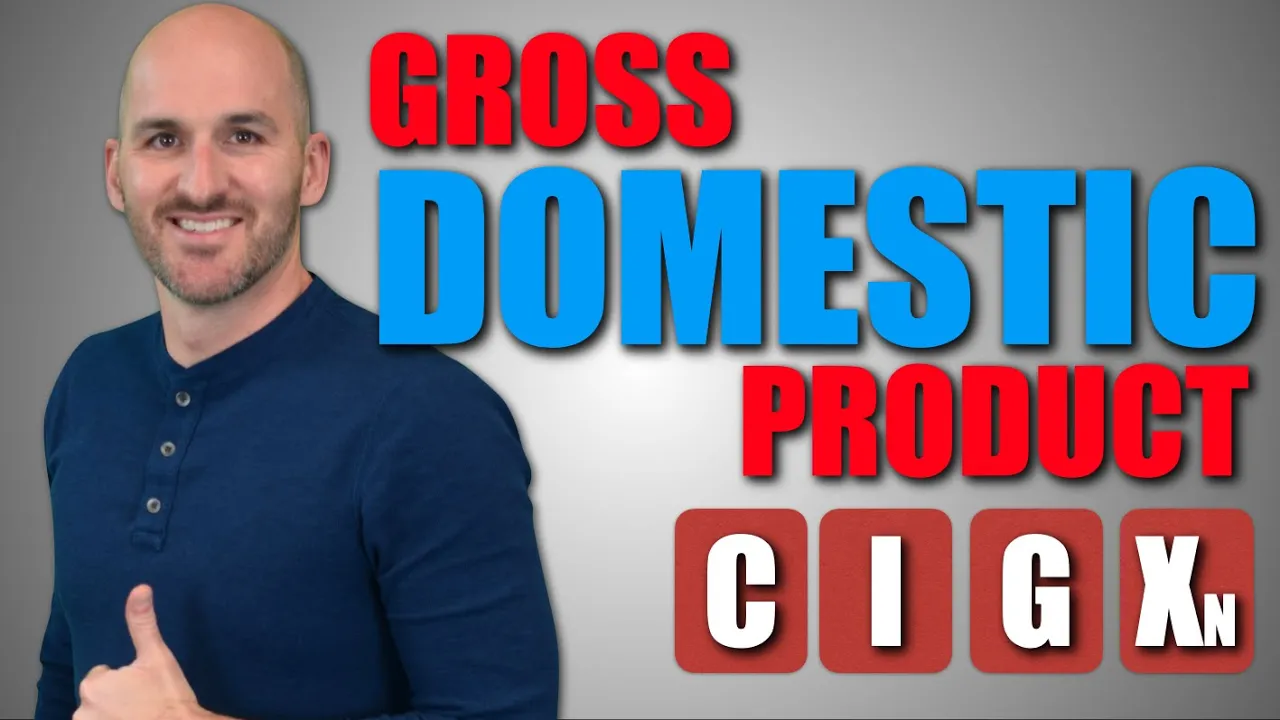
Basic knowledge of how Gross Domestic Product (GDP) is calculated and why informal economic activities are typically excluded from official statistics.
Familiarity with the concept of regulatory barriers to entry, such as licensing, compliance costs, and taxation, which drive businesses underground.
An introductory grasp of developmental economics and the role of micro-entrepreneurship in emerging markets.
Evaluating Hernando de Soto's theories on property rights and how securing legal titles can unlock capital within the informal sector.
Analyzing government policy strategies aimed at formalization, balancing the need for regulation with the preservation of entrepreneurial dynamism.
Exploring the intersection of the informal economy with the modern 'gig economy' and digital payment systems that facilitate off-grid transactions.
Investigating the supply chain integration between multinational corporations and informal distributors in developing countries.
108.6K views1.4Klikes12:30Original Release: 2012-09-05
Translator: Joseph Geni Reviewer: Morton Bast In System D, this is a store, and what I mean by that is that this is a photograph I took in Makoko, shantytown in Lagos, Nigeria.
It's built over the lagoon, and there are no streets where there can be stores to shop, and so the store comes to you.
And in the same community, this is business synergy.
This is the boat that that lady was paddling around in, and this artisan makes the boat and the paddles and sells directly to the people who need the boat and the paddles.
And this is a global business.
Ogandiro smokes fish in Makoko in Lagos, and I asked her, "Where does the fish come from?"
And I thought she'd say, "Oh, you know, up the lagoon somewhere, or maybe across Africa," but you'll be happy to know she said it came from here, it comes from the North Sea.
It's caught here, frozen, shipped down to Lagos, smoked, and sold for a tiny increment of profit on the streets of Lagos.
And this is a business incubator.
This is Olusosun dump, the largest garbage dump in Lagos, and 2,000 people work here, and I found this out from this fellow, Andrew Saboru.
Andrew spent 16 years scavenging materials on the dump, earned enough money to turn himself into a contract scaler, which meant he carried a scale and went around and weighed all the materials that people had scavenged from the dump. Now he's a scrap dealer.
That's his little depot behind him, and he earns twice the Nigerian minimum wage.
This is a shopping mall.
This is Oshodi Market in Lagos.
Jorge Luis Borges had a story called "The Aleph," and the Aleph is a point in the world where absolutely everything exists, and for me, this image is a point in the world where absolutely everything exists.
So, what am I talking about when I talk about System D?
It's traditionally called the informal economy, the underground economy, the black market.
I don't conceive of it that way.
I think it's really important to understand that something like this is totally open. It's right there for you to find.
All of this is happening openly, and aboveboard.
There's nothing underground about it.
It's our prejudgment that it's underground.
I've pirated the term System D from the former French colonies.
There's a word in French that is débrouillardise, that means to be self-reliant, and the former French colonies have turned that into System D for the economy of self-reliance, or the DIY economy.
But governments hate the DIY economy, and that's why -- I took this picture in 2007, and this is the same market in 2009 -- and I think, when the organizers of this conference were talking about radical openness, they didn't mean that the streets should be open and the people should be gone.
I think what we have is a pickle problem.
I had a friend who worked at a pickle factory, and the cucumbers would come flying down this conveyer belt, and his job was to pick off the ones that didn't look so good and throw them in the bin labeled "relish" where they'd be crushed and mixed with vinegar and used for other kinds of profit.
This is the pickle economy.
We're all focusing on — this is a statistic from earlier this month in the Financial Times — we're all focusing on the luxury economy.
It's worth 1.5 trillion dollars every year, and that's a vast amount of money, right?
That's three times the Gross Domestic Product of Switzerland.
So it's vast. But it should come with an asterisk, and the asterisk is that it excludes two thirds of the workers of the world.
1.8 billion people around the world work in the economy that is unregulated and informal.
That's a huge number, and what does that mean?
Well, it means if it were united in a single political system, one country, call it "The United Street Sellers Republic," the U.S.S.R., or "Bazaaristan," it would be worth 10 trillion dollars every year, and that would make it the second largest economy in the world, after the United States.
And given that projections are that the bulk of economic growth over the next 15 years will come from emerging economies in the developing world, it could easily overtake the United States and become the largest economy in the world.
So the implications of that are vast, because it means that this is where employment is — 1.8 billion people — and this is where we can create a more egalitarian world, because people are actually able to earn money and live and thrive, as Andrew Saboru did.
Big businesses have recognized this, and what's fascinating about this slide, it's not that the guys can carry boxes on their heads and run around without dropping them off.
it's that the Gala sausage roll is a product that's made by a global company called UAC foods that's active throughout Africa and the Middle East, but the Gala sausage roll is not sold in stores.
UAC foods has recognized that it won't sell if it's in stores.
It's only sold by a phalanx of street hawkers who run around the streets of Lagos at bus stations and in traffic jams and sell it as a snack, and it's been sold that way for 40 years.
It's a business plan for a corporation.
And it's not just in Africa.
Here's Mr. Clean looking amorously at all the other Procter & Gamble products, and Procter & Gamble, you know, the statistic always cited is that Wal-Mart is their largest customer, and it's true, as one store, Wal-Mart buys 15 percent, thus 15 percent of Procter & Gamble's business is with Wal-Mart, but their largest market segment is something that they call "high frequency stores," which is all these tiny kiosks and the lady in the canoe and all these other businesses that exist in System D, the informal economy, and Procter & Gamble makes 20 percent of its money from that market segment, and it's the only market segment that's growing.
So Procter & Gamble says, "We don't care whether a store is incorporated or registered or anything like that.
We want our products in that store."
And then there's mobile phones.
This is an ad for MTN, which is a South African multinational active in about 25 countries, and when they came into Nigeria — Nigeria is the big dog in Africa.
One in seven Africans is a Nigerian, and so everyone wants in to the mobile phone market in Nigeria. And when MTN came in, they wanted to sell the mobile service like I get in the United States or like people get here in the U.K. or in Europe -- expensive monthly plans, you get a phone, you pay overages, you're killed with fees -- and their plan crashed and burned.
And they went back to the drawing board, and they retooled, and they came up with another plan: We don't sell you the phone, we don't sell you the monthly plan.
We only sell you airtime.
And where's the airtime sold?
It's sold at umbrella stands all over the streets, where people are unregistered, unlicensed, but MTN makes most of its profits, perhaps 90 percent of its profits, from selling through System D, the informal economy.
And where do the phones come from?
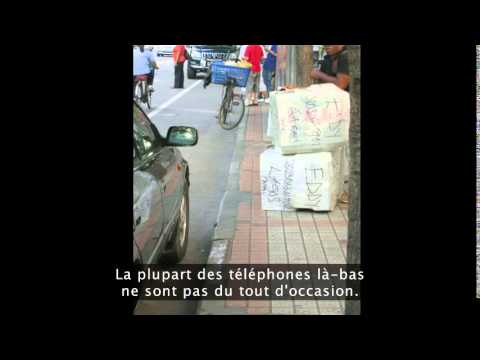
Well, they come from here. This is in Guangzhou, China, and if you go upstairs in this rather sleepy looking electronics mall, you find the Guangzhou Dashatou second-hand trade center, and if you go in there, you follow the guys with the muscles who are carrying the boxes, and where are they going?
They're going to Eddy in Lagos.
Now, most of the phones there are not second-hand at all.
The name is a misnomer.
Most of them are pirated. They have the name brand on them, but they're not manufactured by the name brand.
Now, are there downsides to that?
Well, I guess. You know, China has no — (Laughter) — no intellectual property, right?
Versace without the vowels.
Zhuomani instead of Armani.
S. Guuuci, and -- (Laughter) (Applause) All around the world this is how products are being distributed, so, for instance, in one street market on Rua 25 de Março in São Paulo, Brazil, you can buy fake designer glasses.
You can buy cloned cologne.
You can buy pirated DVDs, of course.
You can buy New York Yankees caps in all sorts of unauthorized patterns.
You can buy cuecas baratas, designer underwear that isn't really manufactured by a designer, and even pirated evangelical mixtapes. (Laughter) Now, businesses tend to complain about this, and their, they, I don't want to take away from their entire validity of complaining about it, but I did ask a major sneaker manufacturer earlier this year what they thought about piracy, and they told me, "Well, you can't quote me on this, because if you quote me on this, I have to kill you," but they use piracy as market research.
The sneaker manufacturer told me that if they find that Pumas are being pirated, or Adidas are being pirated and their sneakers aren't being pirated, they know they've done something wrong. (Laughter) So it's very important to them to track piracy exactly because of this, and the people who are buying, the pirates, are not their customers anyway, because their customers want the real deal.
Now, there's another problem.
This is a real street sign in Lagos, Nigeria.
All of System D really doesn't pay taxes, right?
And when I think about that, first of all I think that government is a social contract between the people and the government, and if the government isn't transparent, then the people aren't going to be transparent either, but also that we're blaming the little guy who doesn't pay his taxes, and we're not recognizing that everyone's fudging things all over the world, including some extremely respected businesses, and I'll give you one example.
There was one company that paid 4,000 bribes in the first decade of this millennium, and a million dollars in bribes every business day, right?
All over the world. And that company was the big German electronics giant Siemens.
So this goes on in the formal economy as well as the informal economy, so it's wrong of us to blame — and I'm not singling out Siemens, I'm saying everyone does it. Okay?
I just want to end by saying that if Adam Smith had framed out a theory of the flea market instead of the free market, what would be some of the principles?
First, it would be to understand that it could be considered a cooperative, and this is a thought from the Brazilian legal scholar Roberto Mangabeira Unger.
Cooperative development is a way forward.
Secondly, from the [Austrian] anarchist philosopher Paul Feyerabend, facts are relative, and what is a massive right of self-reliance to a Nigerian businessperson is considered unauthorized and horrible to other people, and we have to recognize that there are differences in how people define things and what their facts are.
And third is, and I'm taking this from the great American beat poet Allen Ginsberg, that alternate economies barter and different kinds of currency, alternate currencies are also very important, and he talked about buying what he needed just with his good looks.
And so I just want to leave you there, and say that this economy is a tremendous force for global development and we need to think about it that way.
Thank you very much. (Applause) (Applause)
Up Next
7:26
Unlocking Africa's Informal Economy: Hidden Growth Opportunities | Niti Bhan
@TED
79K views•2017-12-11
5:07
Impact of Yuan in Indo-Russian Trade Amid Sanctions
@WION
261.9K views•2022-07-01

17:10
The Art of Listening in Aid and Entrepreneurship: Ernesto Sirolli
@TED
849.1K views•2012-11-26

113:18
The Age of Easy Money: Fed & Inflation | Full Documentary
@frontline
21.2M views•2023-03-15
Related Study Plans & Knowledge Roadmaps
Structured learning paths in Economics
economics
Sovereign Debt: Defaults, IMF & Restructuring
01Introduction to Sovereign Debt & Government Bonds
02Debt Sustainability & Credit Ratings
03Anatomy and History of Debt Crises
+ 2 more learning modules
12h5 modules
Explore Roadmap
economics
Market Design: Matching Theory & Gale-Shapley
01Introduction to Market Design and Price-Free Markets
02Two-Sided Matching & The Gale-Shapley Algorithm
03School Choice Systems and Mechanism Design
+ 2 more learning modules
10h5 modules
Explore Roadmap
economics
Impossible Trinity: Forex, Capital & Policy
01Introduction to Monetary Policy and Central Banking
02Exchange Rates and International Capital Flows
03The Mundell-Fleming Model
+ 2 more learning modules
8h5 modules
Explore Roadmap
economics
Healthcare Economics: Market Failures & Systems
01Introduction to Healthcare Markets and Market Failure
02Asymmetric Information and Adverse Selection
03Moral Hazard and Insurance Design
+ 2 more learning modules
12h5 modules
Explore Roadmap