














![Hamilton Galindo: "What are the Effects of Informality on Wealth Distribution?" [16.09.21]](https://i.ytimg.com/vi/roVcz115lmc/maxresdefault.jpg)



The informal economy in Africa, often mistakenly criminalized as smuggling or illegal activity, actually consists of skilled proto-SMEs (small and medium enterprises) that drive economic growth—these entrepreneurs create jobs at four times the rate of the formal sector and represent fertile seeds for legitimate business development, yet remain invisible to data gatherers and excluded from financial systems due to lack of recognition of their legitimate occupations.
Unlocking Africa's Informal Economy: Hidden Growth Opportunities | Niti Bhan
Added:Definition and characteristics of the informal economy versus the formal sector in developing nations.
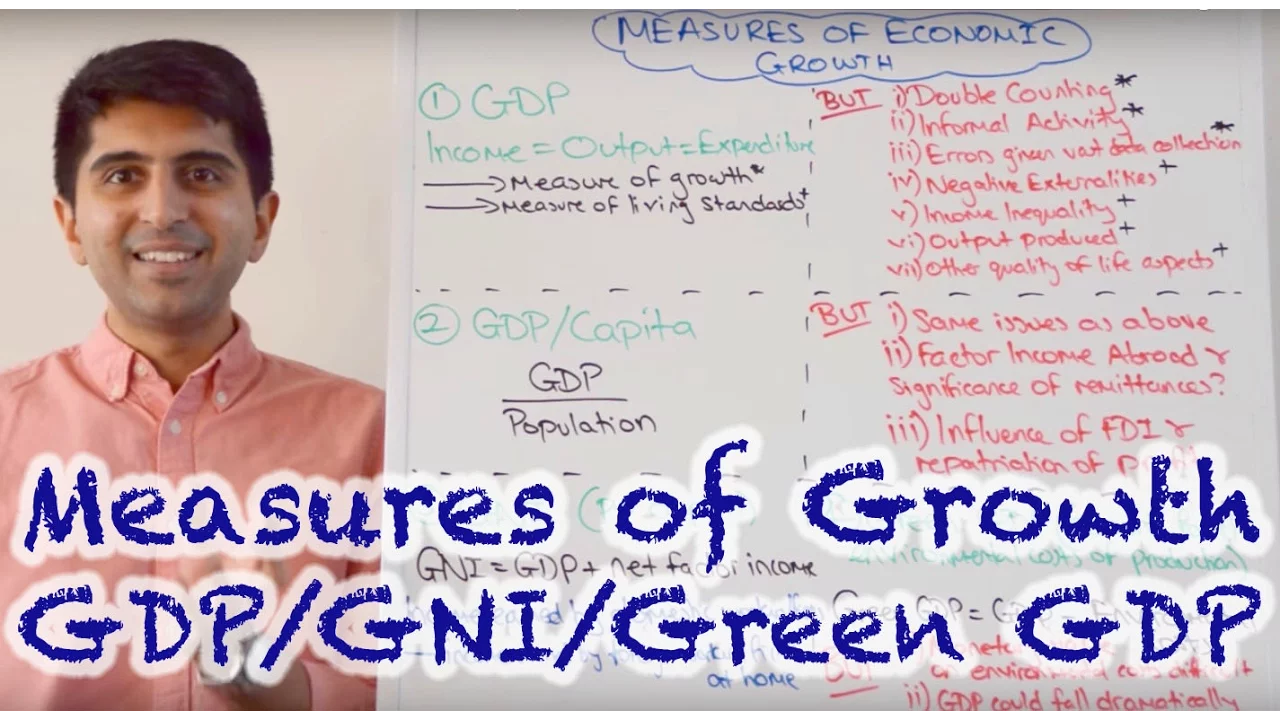
Basic principles of economic development, particularly how gross domestic product (GDP) measurements often overlook unregistered economic activity.
The concept of financial exclusion and the structural barriers faced by unbanked populations in emerging markets.
Understanding the role of micro-entrepreneurship and subsistence livelihoods in sub-Saharan Africa.
Strategies for inclusive economic formalization that protect and support, rather than penalize, informal traders.
The impact of fintech innovations, such as mobile money platforms, in empowering and scale-linking informal market ecosystems.
Comparative analysis of informal economies across different developing regions, such as Latin America and South Asia.
Policy design and urban planning frameworks that successfully integrate informal markets into modern municipal infrastructures.
79K views1.3Klikes7:26Original Release: 2017-12-11
The informal markets of Africa are stereotypically seen as chaotic and lackadaisical.
The downside of hearing the word "informal" is this automatic grand association we have, which is very negative, and it's had significant consequences and economic losses, easily adding -- or subtracting -- 40 to 60 percent of the profit margin for the informal markets alone.
As part of a task of mapping the informal trade ecosystem, we've done an extensive literature review of all the reports and research on cross-border trade in East Africa, going back 20 years.
This was to prepare us for fieldwork to understand what was the problem, what was holding back informal trade in the informal sector.
What we discovered over the last 20 years was, nobody had distinguished between illicit -- which is like smuggling or contraband in the informal sector -- from the legal but unrecorded, such as tomatoes, oranges, fruit.
This criminalization -- what in Swahili refers to as "biashara," which is the trade or the commerce, versus "magendo," which is the smuggling or contraband -- this criminalization of the informal sector, in English, by not distinguishing between these aspects, easily can cost each African economy between 60 to 80 percent addition on the annual GDP growth rate, because we are not recognizing the engine of what keeps the economies running.
The informal sector is growing jobs at four times the rate of the traditional formal economy, or "modern" economy, as many call it.
It offers employment and income generation opportunities to the most "unskilled" in conventional disciplines.
But can you make a french fry machine out of an old car?
So, this, ladies and gentlemen, is what so desperately needs to be recognized.
As long as the current assumptions hold that this is criminal, this is shadow, this is illegal, there will be no attempt at integrating the informal economic ecosystem with the formal or even the global one.
I'm going to tell you a story of Teresia, a trader who overturned all our assumptions, made us question all the stereotypes that we'd gone in on, based on 20 years of literature review.
Teresia sells clothes under a tree in a town called Malaba, on the border of Uganda and Kenya.
You think it's very simple, don't you?
We'll go hang up new clothes from the branches, put out the tarp, settle down, wait for customers, and there we have it.
She was everything we were expecting according to the literature, to the research, right down to she was a single mom driven to trade, supporting her kids.
So what overturned our assumptions?
What surprised us?
First, Teresia paid the county government market fees every single working day for the privilege of setting up shop under her tree.
She's been doing it for seven years, and she's been getting receipts.
She keeps records.
We're seeing not a marginal, underprivileged, vulnerable African woman trader by the side of the road -- no.
We were seeing somebody who's keeping sales records for years; somebody who had an entire ecosystem of retail that comes in from Uganda to pick up inventory; someone who's got handcarts bringing the goods in, or the mobile money agent who comes to collect cash at the end of the evening.
Can you guess how much Teresia spends, on average, each month on inventory -- stocks of new clothes that she gets from Nairobi?
One thousand five hundred US dollars.
That's around 20,000 US dollars invested in trade goods and services every year.
This is Teresia, the invisible one, the hidden middle.
And she's only the first rung of the small entrepreneurs, the micro-businesses that can be found in these market towns.
At least in the larger Malaba border, she's at the first rung.
The people further up the value chain are easily running three lines of business, investing 2,500 to 3,000 US dollars every month.
So the problem turned out that it wasn't the criminalization; you can't really criminalize someone you're charging receipts from.
It's the lack of recognition of their skilled occupations.
The bank systems and structures have no means to recognize them as micro-businesses, much less the fact that, you know, her tree doesn't have a forwarding address.
So she's trapped in the middle.
She's falling through the cracks of our assumptions.
You know all those microloans to help African women traders?
They're going to loan her 50 dollars or 100 dollars.
What's she going to do with it?
She spends 10 times that amount every month just on inventory -- we're not talking about the additional services or the support ecosystem.
These are the ones who fit neither the policy stereotype of the low-skilled and the marginalized, nor the white-collar, salaried office worker or civil servant with a pension that the middle classes are allegedly composed of.
Instead, what we have here are the proto-SMEs these are the fertile seeds of businesses and enterprises that keep the engines running.
They put food on your table.
Even here in this hotel, the invisible ones -- the butchers, the bakers the candlestick makers -- they make the machines that make your french fries and they make your beds.
These are the invisible businesswomen trading across borders, all on the side of the road, and so they're invisible to data gatherers.
And they're mashed together with the vast informal sector that doesn't bother to distinguish between smugglers and tax evaders and those running illegal whatnot, and the ladies who trade, and who put food on the table and send their kids to university.
So that's really what I'm asking here.
That's all that we need to start by doing.
Can we start by recognizing the skills, the occupations?
We could transform the informal economy by beginning with this recognition and then designing the customized doorways for them to enter or integrate with the formal, with the global, with the entire system.
Thank you, ladies and gentlemen.
(Applause)
Up Next
17:35
The Informal Economy: System D, Global Markets, and Economic Power
@poptech
12.7K views•2011-11-17
5:07
Impact of Yuan in Indo-Russian Trade Amid Sanctions
@WION
261.9K views•2022-07-01

12:30
System D: The Informal Economy's Global Power
@TED
108.6K views•2012-09-05

113:18
The Age of Easy Money: Fed & Inflation | Full Documentary
@frontline
21.2M views•2023-03-15
Related Study Plans & Knowledge Roadmaps
Structured learning paths in Economics
economics
Sovereign Debt: Defaults, IMF & Restructuring
01Introduction to Sovereign Debt & Government Bonds
02Debt Sustainability & Credit Ratings
03Anatomy and History of Debt Crises
+ 2 more learning modules
12h5 modules
Explore Roadmap
economics
Market Design: Matching Theory & Gale-Shapley
01Introduction to Market Design and Price-Free Markets
02Two-Sided Matching & The Gale-Shapley Algorithm
03School Choice Systems and Mechanism Design
+ 2 more learning modules
10h5 modules
Explore Roadmap
economics
Impossible Trinity: Forex, Capital & Policy
01Introduction to Monetary Policy and Central Banking
02Exchange Rates and International Capital Flows
03The Mundell-Fleming Model
+ 2 more learning modules
8h5 modules
Explore Roadmap
economics
Healthcare Economics: Market Failures & Systems
01Introduction to Healthcare Markets and Market Failure
02Asymmetric Information and Adverse Selection
03Moral Hazard and Insurance Design
+ 2 more learning modules
12h5 modules
Explore Roadmap