![Measuring Inequality & The Formal Economy [AP Human Geography Unit 7 Topic 3] (7.3)](https://i.ytimg.com/vi/HQ4EmaXuNZA/maxresdefault.jpg)


![[LANGSUNG] #NiagaAWANI | 20 April 2026](https://i.ytimg.com/vi/Q9SGmDFivew/maxresdefault.jpg)




![F5 EKON - Tutor Shun Hui [English] 2025 Mid Term Exam Seminar](https://i.ytimg.com/vi/TxjFwqrcGQE/maxresdefault.jpg)











The informal economy, which operates outside legal frameworks and is estimated to involve 1.8 billion people (half the world's workers) with a value of $1 trillion, is growing faster than the formal economy and represents a significant force for economic development in developing regions; rather than criminalizing this sector, policymakers should embrace and develop it as a legitimate pathway to poverty reduction and economic opportunity.
The Informal Economy: System D, Global Markets, and Economic Power
Added:The distinction between the formal economy (taxed, regulated, and officially recorded) and the informal economy (unregulated and cash-based).
Basic principles of global supply chains, trade routes, and international commerce.
Traditional macroeconomic indicators and how governments typically measure economic growth and Gross Domestic Product (GDP).
The concept of 'institutional voids' and how markets self-organize in areas with weak state governance or infrastructure.
Comparative analysis of major informal economic hubs globally, such as Alaba International Market in Lagos, Tepito in Mexico City, and Yiwu in China.
Policy frameworks for integrating the informal sector, analyzing the debate between formalization versus preserving entrepreneurial flexibility.
The role of mobile money (e.g., M-Pesa), digital payments, and microfinance in scaling and legitimizing System D enterprises.
Economic research methodologies used to measure and estimate the shadow economy, such as electricity consumption or currency demand approaches.
12.7K views96likes17:35Original Release: 2011-11-17
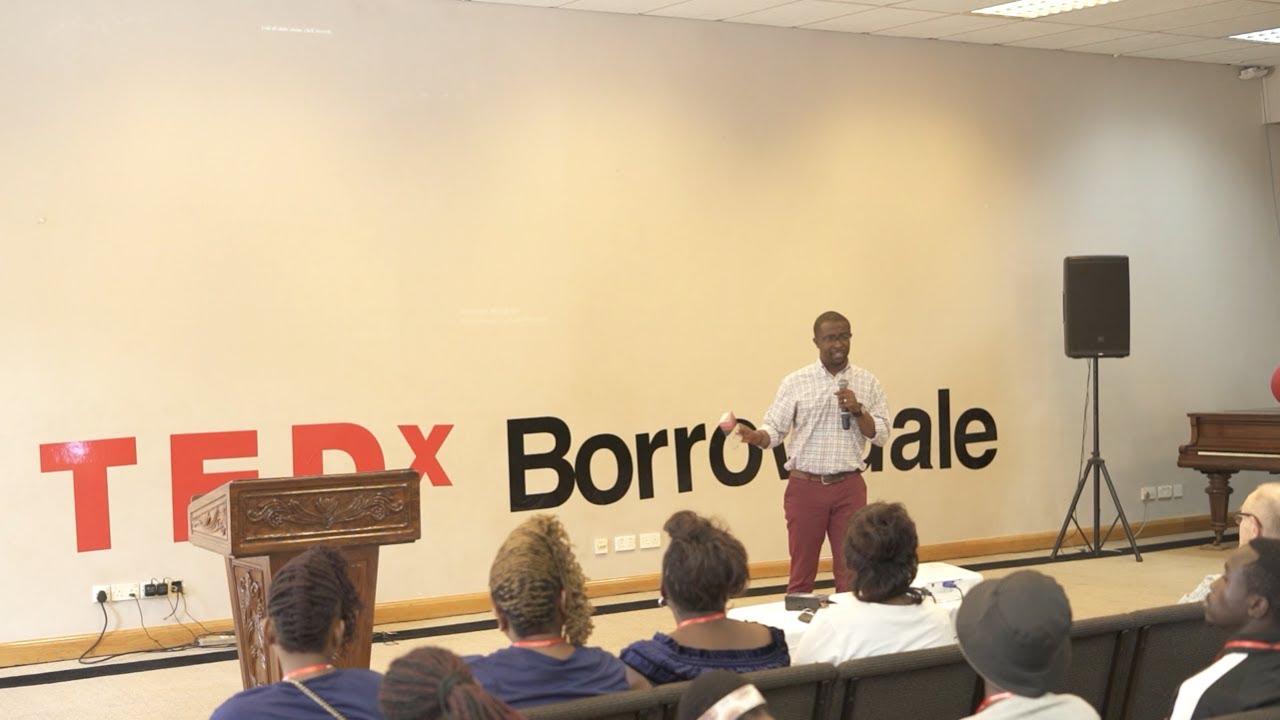
um yeah so um my new book which was uh just published two days ago um is called stealth of Nations and I couldn't believe that uh in 235 years after Adam Smith published his book no one had taken that title um which is probably why I sold the book in the first place um so at any rate this was uh one of my possible titles before I thought of uh stealth of Nations and basically what I'm trying to do here and it's great uh to speak after such an inspiring talk because um of course reframing doesn't mean that every frame's correct and every frame is going to make that Utopia we're always in search of utopia and so what I'm trying to do here with the reframing is expand the frame and as Andrew said to look at something that is normally not looked at by uh the economic power that be so basically what my whole talk can be summarized in two slides and it depends what you think of these two slides this is osodi Market in Lagos Nigeria in 2007 and it's an image I took that I think of as I think of osodi at that period of time as an Alf Jorge Luis bores wrote the short story the ALF and the ALF is a point in the world where absolutely everything exists and O shodi was a point in the world where absolutely everything exists it's total commercial cacophony the traffic there is actually moving albeit very slowly and um people are just selling every kind of product and it had its own sound it was the combination of the mass murmurings of thousands and thousands of people um it was just an amazing place and two years later this is what osod looks like um it's the opposite of the ALF it's the point in the world where absolutely nothing exists um and it really depends everything about my talk depends on whether you think the second image which is serer is uh better for the economy and the people of Nigeria than the first image um so this is belan Market in Legos Nigeria I'm going to run you through some statistics and some photos of markets uh belan Market in Legos Nigeria is a fabric market and 80% of the working people in Nigeria are in what I've started referring to not as the informal economy because I think that word has a bit of stigma to it um but rather system D which I've pirated from the french-speaking Africa and Caribbean where people refer to the informal economy as economy deard and to be a debard is to be self-reliant and so this is kind of the DIY economy of the world which I think is a less judgmental phrase than informal economy um there are 1 8 billion people half the workers of the world on the planet who are now working off the books and in system D and um that number is rising so by 2020 it'll be 2third of the planet um what does that mean for the world well it means that the total value if you compute it based on percentages of DD GDP is $1 trillion and that's an astounding figure because if you think about if all of the Street Markets and other informal businesses and I'm not including criminality here I'm only talking about legal products sold in the Quasi legal way I'm not talking about drug dealing I'm not talking about organ harvesting I'm not talking about human slavery or anything like that Nils will handle all that later um but um $10 trillion is a massive amount of money and if it was combined in a single political entity right call it the USSR or bizar estan it would be the second largest economy in the world Numero Uno is of course the United States um so this is an amazing thing this is a huge entity of Enterprise that's vastly important in the majority of the world and and combine that with this fact that in the next decade and a half the majority world the cities of the majority world will create 50% of the world's economic growth so what we're really looking at is that bazaran the USSR will probably catch the United States at some point and depending on what happens with China and the value of the Yan um China may be more or maybe less but it's hard to tell but at any rate it's an amazingly powerful force of enterprise of the world so put all this together we're in a McRee world and what does that mean concretely it means that squatter communities and I urge you to go back and hear my pop Tech talk from five six years ago uh squatter communities are growing faster than legal areas it means that the informal economy is growing faster than the formal economy and that rationality is now irrational and we have to get used to it so in my Journeys around the world I had to get used to the fact that this is a huge Marketplace and an employment generator and I learned that from Andrew saboru who spent 16 years in that smoke and Haze Scavenging on the garbage dump to turn himself into a contract scaler where he was paid by a dealer to go and weigh the stuff that his fellow scavengers were selling and finally 3 years ago into a dealer himself and he now works the dump buying from the people the scavengers that he used to be one of and he contends the future is bright he wants to grow this business and he's pried himself out of the slums and into a nice one room apartment in a very nice neighborhood of town and he sees himself as an entrepreneur in fact his business name when he gave me his business card and yes people who work at the dump have business cards in Nigeria um his business name was Righttime Investments so he's ready for anything um and this in that new world is a store when your community this is makoko uh which is a lagoons side squatter community in Lagos when your uh Community is on the water uh the food and stuff has to come to you and so this woman is a store bringing grains and things like that to people in the community this is a global business this is also in Mako that's gundo and she smokes fish for a living she gets the wood from the nearby Sawmill and I asked her where's the fish come from and I wasn't prepared for the answer because she told me it comes from Europe so it's caught in the North Sea trucked down to Lagos Nigeria where it's trucked into one of the worst slums in the city where she smokes it and it's sold on the streets uh for pennies um so Global business and this is a shopping mall this is Kara the largest squatter community in Nairobi and this is Main Street um hugely commercial you can see there's dozens and dozens of stores and this goes on for miles and miles through the community so there's a tremendous amount of Commercial Energy involved in this now of course you're going to say well these are all small businesses and they don't amount to very much and I just wanted to point out this is the abasa alako shoe and boot and bag Market in Legos it's under a highway overpass so that the shoes don't get wet all the time um and uh the average Lego shoe Merchant has a higher profit margin than pay less shoes um smaller business higher profit margin but you could scale it up so it also has impacted legitimate businesses which are figuring out that they need to do business in the systemd or informal way and what's interesting about this photo is Gala sausage rolls which are ever present in on the streets of Lagos but only on the streets Gala is produced by a century old company called UAC Foods that's traded on the Nigerian stock market and is the definition of Highly formal it owns Gas Stations it owns restaurants it owns all sorts of stuff but this one product Gala sausage rolls it has decided it doesn't sell in stores it only sells through Hawkers on the street and has parlayed that to huge profits Gala is you know the everpresent go-to snack it's like peanuts or something um you just buy it everywhere you just roll down down your car window and call one of these guys over and buy a Gala um and similarly a whole industry has evolved on the back of systemd and what I'm thinking about here is the ad there this is from 2007 so they had Obama's campaign slogan before he did um this is MTN MTN is a global multinational mobile phone company they're based in South Africa they're active in about two dozen countries around the world multi-billion dollar company the definition of formal and they first came into Nigeria they wanted to get into Nigeria because Nigeria is the big dog in Africa it actually is the largest country by population in Africa and one in six Africans is Nigerian and they're early adopters of mobile technology everyone has a mobile phone in fact most people many people have two mobile phones or three to have simultaneous systems going at once because it's cheaper to do that and so um MTM desperately wanted to come in they came in with the kind of goldplated system that they have in the UK or that we have here monthly plans you buy your phone from the company and uh it crashed and burn no one wanted it so they threw it all out took a loss on it and came back in with new plan which is we don't sell you the phone we don't sell you the plan we let you buy a SIM card from anywhere and we sell you airtime and that's how we make our money and where did they sell you air time from Little umbrella booths at the side of the road and this one that says 25 naira on it is an umbrella Booth they sell recharge cards and all the recharge cards for all the mobile phones the pay as Hugo mobile funds are all sold by this informal labor force now that had an impact in another way because where do you get the mobile phone where do you get the handset if MTN isn't selling you the handset and the answer to that is here this is guango China and it looks very uh nonchalant and kind of empty uh because the real business is through the back door and upstairs this is the guango dash secondhand mobile Trade Center um but in reality they don't sell secondhand phones there at all they sell pirated name brand mobile phones and these guys carrying the boxes I followed them outside and where are they going they're going to Eddie in Legos and there's his mobile phone number um all of this is done with no visas no uh uh uh customs duty it's completely smuggled from China into Nigeria and it's a huge business and indeed you know uh I bought a Nokia 1110 mobile phone in Nigeria great phone but you know too primitive for today's kind of mobile technology um but it lasted forever it was a wonderful phone I paid $40 you can buy it in China for 10 so the profit margin is huge if you can just figure out how to you know sneak it back into Nigeria um now there's always been an informal economy this is uh 1675 in London the population was 350,000 and 5% of the population was Street Peddlers um so this existed for a really long time 1902 in Hong Kong uh 1940s the Maxwell Street Market in Chicago um this is uh idumota in Lagos and I love the umbrella full of bras um if you have an umbrella you can be a store um and uh and this is the early morning Market on of Ino de Maro in s Pao Brazil um so it's always existed and it's always been maligned it's been treated as totally criminal and indeed there are criminal aspects of it so in China you can get Versace without the vowels joani instead of armman and SGI um my favorite I I I didn't have a camera to take a picture of it when that day when I was visiting but in the leather Market there was a store selling uh keychains and other leather items under the brand name Alisha Keys um and you see this reflected around the world so here this is in Brazil they're selling pirated designer sunglasses for three pairs for five fre ice which is about a couple of bucks um and they're selling clone cologne and they're selling PIR DVDs um these are you know all the fake Calvin you ever wanted this is in China and uh baseball caps Yankees caps in whatever pattern you think of and even pirated Evangelical CDs um so yeah there's a criminal aspect to it a quasi criminal aspect to it and yet there's also criminality in the legal economy you know between 2001 and 2007 there was one company that paid $1.9 billion in bribes and and that was look at the numbers two bribes every day right worth half a million dollars each and what company was that it was the German electronics giant seens totally formal Totally Above board totally legit right so the informal economy system D certainly doesn't have any hold a candle to the kind of criminality that uh seens was engaged in in its totally legal businesses around the world um so basically to conclude I want to look at at what's the frame change here 75 years ago John manard kanes wrote this all right the outstanding faults of the economic society in which we live in are its failure to provide for Full Employment and its arbitrary and inequitable distribution of wealth and income he was right then he's even more right now right um and my argument would be after looking at all these informal economies and how they operate is that we don't have to Simply mime the American model of formality and suggest just that you know I like this picture because like you know don't go to the USA to eat but um we don't have to just mimic a A system that we've come to expect is the dominant system and the only one that has to be broadcast all over the world um in fact we can emulate the flea market and the philosophy of the flea market I'll just suggest a couple of things that will make it different one is the concept of fairness okay and nii put it best that in the great work of money the Shilling of the laziest man is more lucrative than that of the poor and industrious so if we believe in the labor value of uh money then uh The Lazy Man's money is worth more um so we have to consider fairness we have to consider that all the definitions of our economic system are developed by the people in power in the economic system and I look at this through the philosopher of science Paul fire Robin who said that facts come negotiation from from negotiation between different parties what we think are facts are actually things that are set supposedly in stone by the powerful interests um Brazilian lawyer and philosopher Roberto mangaba anger pointed out that the market can be looked upon as a cooperative and I think the growth of cooperatives and there are a lot of bottomup cooperatives in the informal economy are uh is a very positive one and finally um looking at even cashless or moneyless uh barter type uh Arrangements which are growing in the United States Alan Ginsburg wrote when can I go into the supermarket and buy what I need with my good looks so um I think there's a lot of ways of adjusting the frame here to accept that we have this vast economic system that is keeping half the workers of the world alive and employed and growing and we have to figure out a way to interact and work with it to that end the solution that they did in Legos to go back to those first two slides by criminalizing Street trading is I think a big mistake I think the way forward for the majority world is to develop the informal in some way and encourage it in some way so that it grows and thrives and becomes a major source of economic development that can bring people out of poverty and into a better life and with that I'll end it and say thank you
Up Next

61:23
Cooperative Economics: Pathways to Shared Ownership Futures
@NPQ
279 views•2022-09-15
5:07
Impact of Yuan in Indo-Russian Trade Amid Sanctions
@WION
261.9K views•2022-07-01
10:33
Behavioral Economics Explained: Rationality, Nudges, and Risk
@crashcourse
1.1M views•2016-03-12

113:18
The Age of Easy Money: Fed & Inflation | Full Documentary
@frontline
21.2M views•2023-03-15
Related Study Plans & Knowledge Roadmaps
Structured learning paths in Economics
economics
Sovereign Debt: Defaults, IMF & Restructuring
01Introduction to Sovereign Debt & Government Bonds
02Debt Sustainability & Credit Ratings
03Anatomy and History of Debt Crises
+ 2 more learning modules
12h5 modules
Explore Roadmap
economics
Market Design: Matching Theory & Gale-Shapley
01Introduction to Market Design and Price-Free Markets
02Two-Sided Matching & The Gale-Shapley Algorithm
03School Choice Systems and Mechanism Design
+ 2 more learning modules
10h5 modules
Explore Roadmap
economics
Impossible Trinity: Forex, Capital & Policy
01Introduction to Monetary Policy and Central Banking
02Exchange Rates and International Capital Flows
03The Mundell-Fleming Model
+ 2 more learning modules
8h5 modules
Explore Roadmap
economics
Healthcare Economics: Market Failures & Systems
01Introduction to Healthcare Markets and Market Failure
02Asymmetric Information and Adverse Selection
03Moral Hazard and Insurance Design
+ 2 more learning modules
12h5 modules
Explore Roadmap