



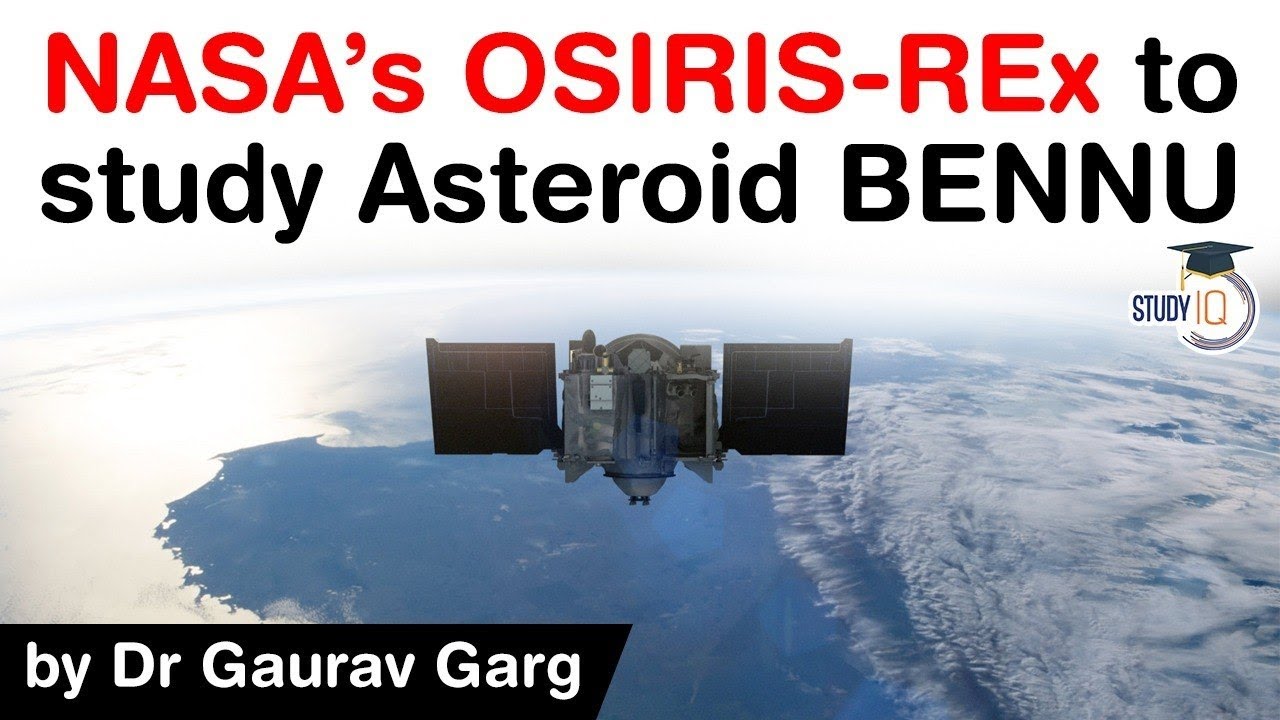

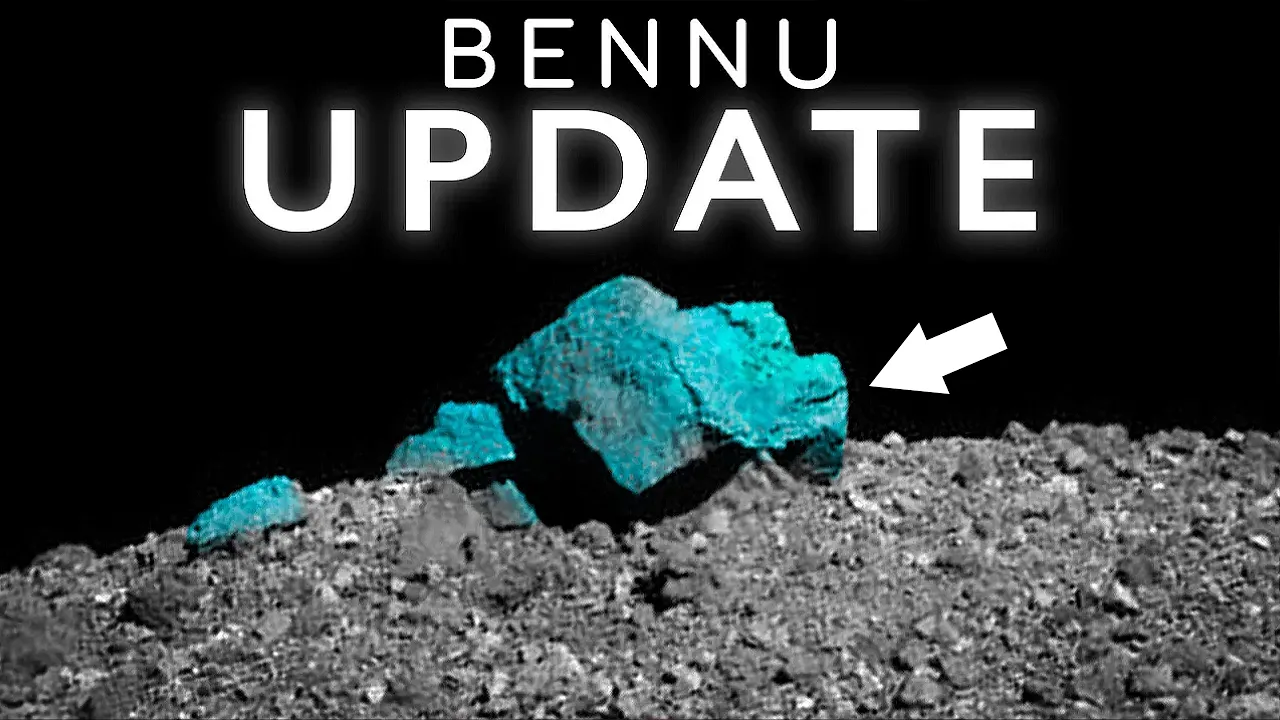



















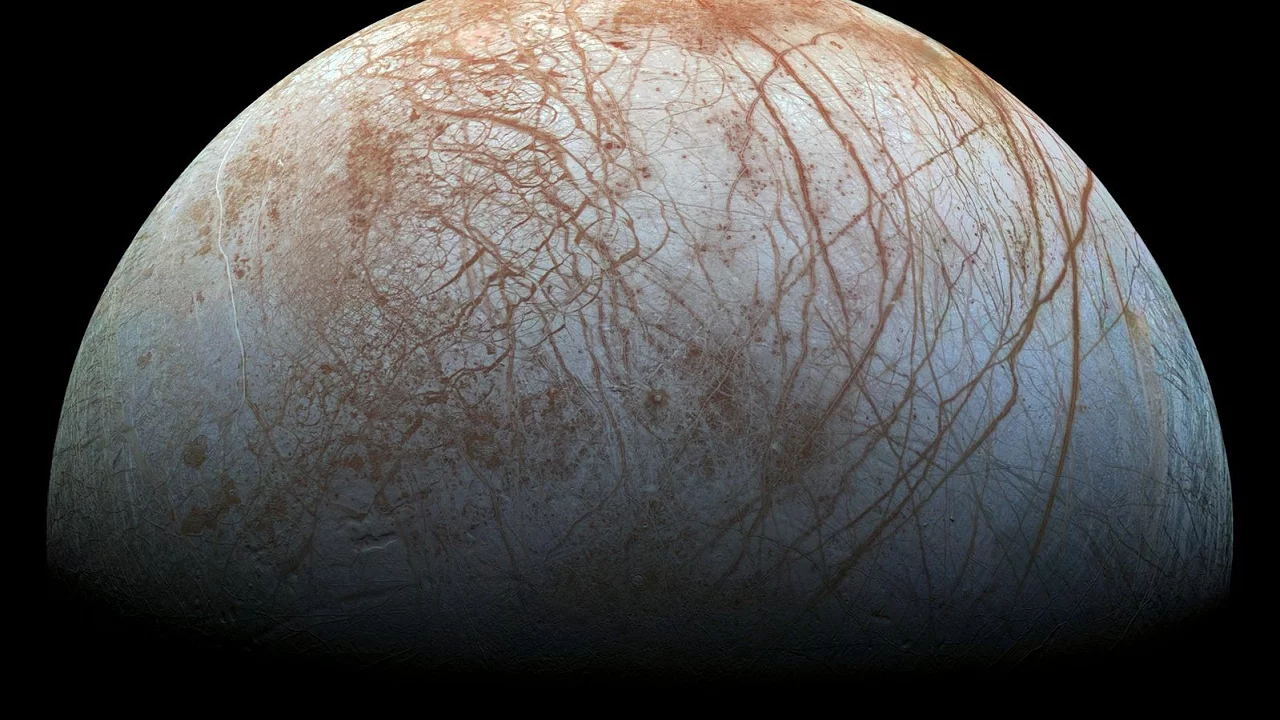


NASA's OSIRIS-REx mission returned samples from asteroid Bennu revealing that this space rock contains organic compounds essential for life, including sugars like ribose and glucose, 14 amino acids (including tryptophan), nucleotides for RNA/DNA, and complex nitrogen-rich molecules, along with ancient stardust predating our solar system; these findings support the theory that life's building blocks were delivered to Earth from space, while also raising new questions about extreme magnetism, oversized carbon structures, and unusually high nitrogen levels in the asteroid's material.
Asteroid Bennu Samples Reveal Life's Building Blocks in Space
Added:Basic biochemistry concepts, specifically the roles of amino acids, sugars, and nucleobases as the fundamental building blocks of DNA, RNA, and proteins.
The objectives and history of NASA's OSIRIS-REx mission, which successfully mapped, sampled, and returned material from asteroid Bennu.
The differences between asteroids, comets, and meteorites, and why carbonaceous asteroids are considered pristine time capsules of the early solar system.
The fundamental theories of abiogenesis (how life arises from non-living matter) and panspermia (the hypothesis that life exists throughout the Universe, distributed by space dust, meteoroids, and asteroids).
Advanced laboratory techniques in cosmochemistry, such as mass spectrometry and gas chromatography, used to analyze trace organic compounds in extraterrestrial materials.
The field of astrochemistry, exploring the physical and chemical conditions under which complex prebiotic molecules form in interstellar space.
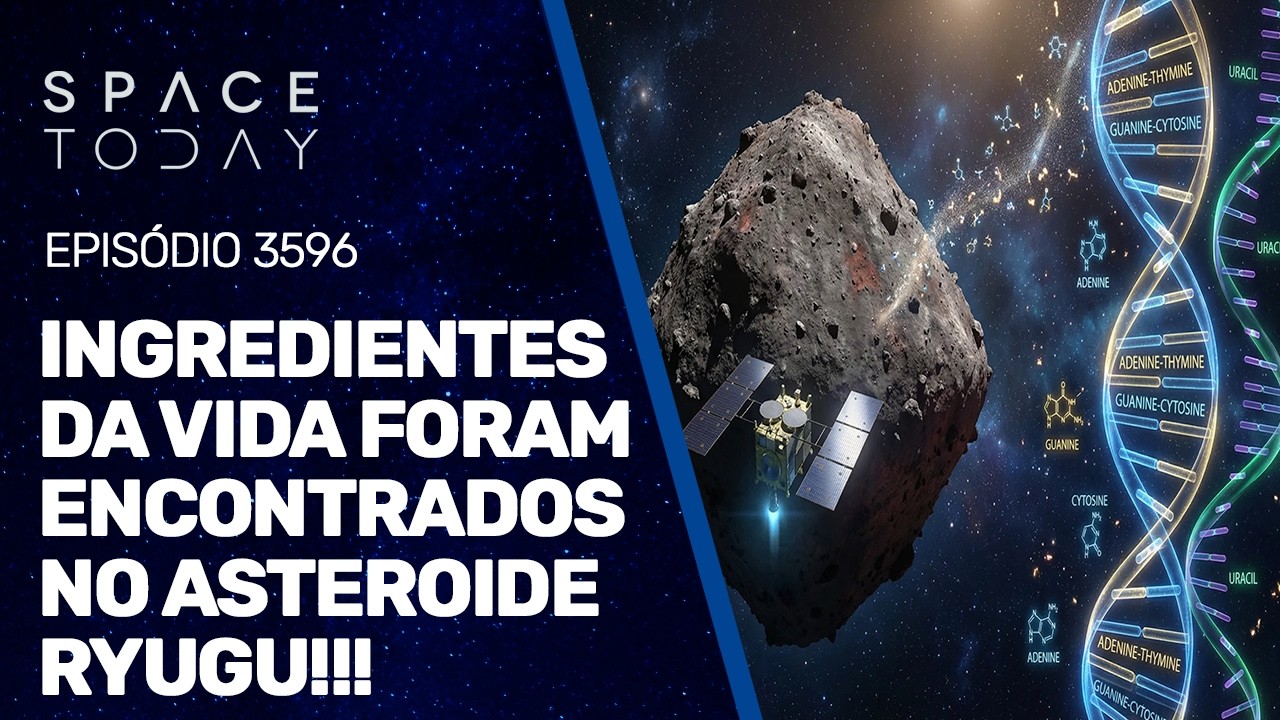
A comparative analysis of Bennu's sample results with those of other asteroid missions, such as JAXA's Hayabusa2 mission to the asteroid Ryugu.
The implications of these findings on planetary habitability models, biosignatures, and the search for life on Mars, Europa, and Enceladus.
207.8K views14.5Klikes16:56Original Release: 2025-12-04
Hello for this is Anton and today we're going to discuss some of the recent discoveries and recent somewhat exciting announcements about the asteroid Bennu.
The asteroid that was visited by NASA back in 2020 in order to retrieve pristine samples from its surface. And the asteroid that's just like Ryugu visited by Japan potentially represents material left over from the formation of the solar system and may contain some of this ancient stuff that our solar system was made from 4.6 6 billion years ago.
But in just the last few months, there's been quite a few announcements and quite a few unusual discoveries, including things that really nobody expected. And so, let's talk about what scientists discovered inside this rock in a bit more detail. And of course, why this matters. But everything here really starts with a very simple but profound question. Where exactly did ingredients for life on Earth come from? So, basically, why do we exist? And why did life start on our planet? And well, one of the leading theories here suggests that many of these building blocks possibly arrived to Earth from outer space, either through the cosmic dust or from various meteoroids and various asteroids striking the planet. And in the modern era of space exploration, there is at least one small space rock that seems to provide us with a lot of comprehensive answers. This is of course the rock you're looking at, although this is what it used to look like back in 1999. These are a series of ghost on radar images showing us Benno as it rotates. And so it was really only last year in 2024 that NASA finally reported some of its initial findings from the Osiris Rex mission whose goal was to collect samples from this rock because it seems to represent some of the most pristine material from the birth of the solar system. And here even the first discoveries were quite surprising. A lot of different fundamental components for life were already present here, including the evidence for ancient liquid water and even stardust that seem to be older than the sun itself, which almost right away made these samples priceless. But now, after just over a year, we have new results and even more unusual data. But first, why this asteroid? And why is this so important?
Well, because this is what's known as a near Earth asteroid. It's extremely close to our planet and may even one day collide with our planet and represents a group of asteroids that very likely did the same. They were orbiting close to planet Earth and eventually landed on the surface delivering a lot of stuff in the process. Also, unlike other asteroids, it's relatively small, approximately half a kilometer in size and has a very stable orbit that brings it close to Earth every 6 years. So, it's actually pretty easy to send a mission here and to retrieve any samples. But once again, this is also technically a potentially hazardous object which might one day collide with our planet. And this is also what's known as a rubble pile asteroid. It's not just one chunk and not just one rock, but it's actually just a bunch of snowballs and tiny rocks all stuck together with gravity and electrostatic forces. And along with the other asteroid, Ryugu, that looks very similar and that was visited by Japan. This is part of the Pana family of asteroids which exist in the main asteroid belt between Mars and Jupiter and all of them were very likely formed the same way. A large asteroid collided and shatter it eventually creating a bunch of debris that then coalesed forming these new objects. So all of them are basically a result of a major collision most likely billions of years ago. And so 9 years ago, NASA launched Osiris Rex, a mission that took a few years to reach this asteroid and then once it collected samples, took a few years to return to Earth. And here, this mission became pretty famous back in 2023 because scientists had a lot of trouble trying to open the capsule. But after a few months, they finally did, retrieving the samples. And the reason why it was done this way and not any other way is because researchers really wanted to avoid any possible contamination. They wanted these samples to be as pristine as possible. And so this was literally like a time capsule letting scientists look back to what solar system was like before any planets existed and when the solar system was still developing. And so by studying these samples, it can then allow us to figure out what sort of ingredients and what sort of elements were already present back then and then start to make conclusions about where life possibly started and how it started and where all of the life ingredients came from. But the initial analysis and the initial surprise was the fact that a lot of stuff on Benno seems to have been changed by water billions of years ago.
And that's because samples here contained phosilicates, basically clay-like minerals. Minerals that can only form in the liquid water, confirming that water must have existed inside the Beno's original parent body before it collided with something else.
And here up to 80% of everything seemed to contain signs of liquid water interaction, implying that this body was quite water enriched. And it was really this water-driven chemistry that suddenly made this object super exciting because here scientists started to find signs of various building blocks of life. As a matter of fact, just a few hours ago from when I'm making this video, NASA made a new announcement indicating they found even more stuff on Beno that nobody thought would exist here. And in this case, stuff that once again just doesn't really make sense.
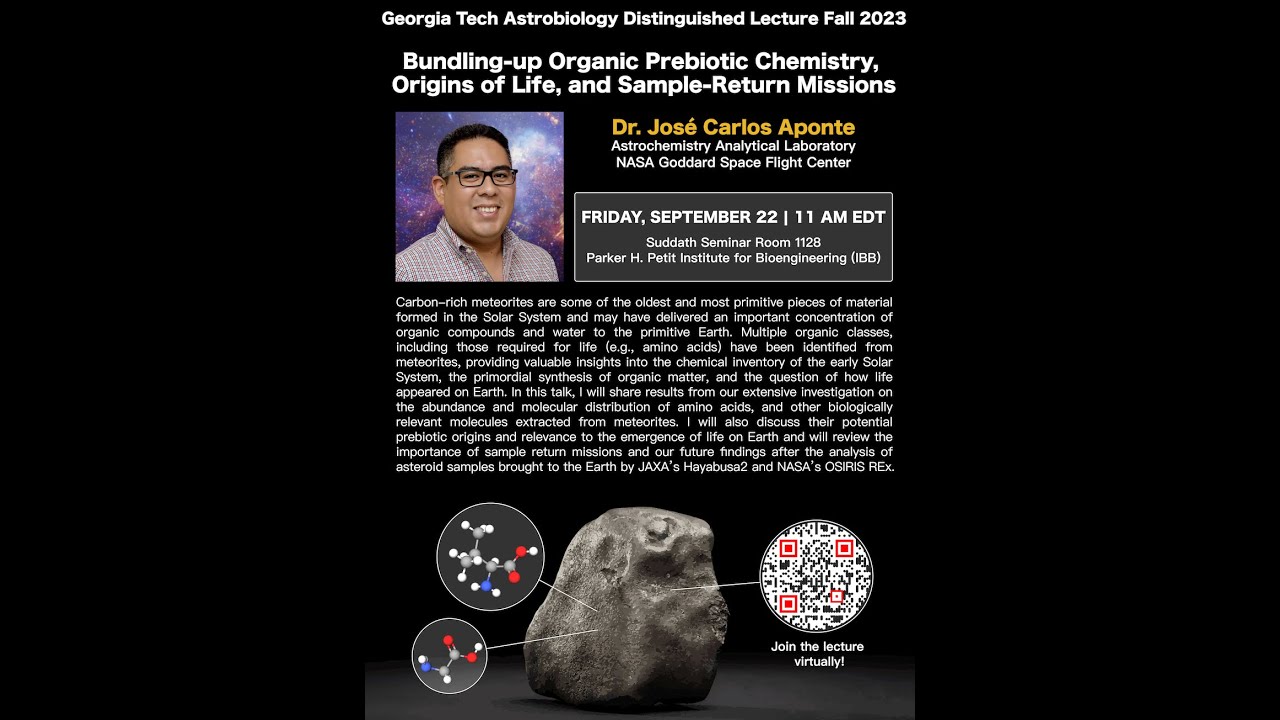
For example, when it comes to these sugars here, there was definitive signs of ribos and glucose which as you know life uses for energy even today and ribos is obviously one of the parts of RNA. But there was absence of deoxyibbos which is what DNA contains which in this case actually supports something really important. The idea we've discussed previously referred to as RNA world hypothesis or basically that life might have started with RNA and DNA came much later. You can learn about this in one of the videos in the description. But then there was that bizarre gum. No, like chewing gum, but basically a flexible nitrogen oxygen rich polymer that was kind of similar to some kind of a space plastic. Okay, just to clarify, not aliens. Do not make a fuss about aliens. This is just a chemical element that seems to have been formed early on Bennu's parent asteroid and could have even been some kind of a chemical precursor that helped trigger life on Earth and maybe even other objects. It was actually reported in this study you can find in the description with the particle itself referred to as particle 33 resembling something like this. And so here this particular particle demonstrates that asteroids like Beno seem to contain a lot of complex nitrogen rich organic molecules that could have easily assisted life on Earth to form early on. But that was just the beginning. We also had several other studies from a few weeks back that definitively confirmed the presence of 14 different amino acids which are the building blocks for proteins. once again in pristine conditions and existing in relatively large amounts. As a matter of fact, the most recent study even detected the traces of 15th amino acid, tryptophan. So yeah, that stuff that's supposed to make you sleepy if you eat turkey, which as far as I know is actually an urban legend. But importantly, tryptophan has never been definitively found in any of the extraterrestrial material before with Beno essentially being the first object where this amino acid seems to exist in at least small amounts. And in case you're wondering though, this is roughly what one of these samples looks like.
And this is what the scientists had to work with. But in addition to amino acids, something else was found here as well. A lot of samples also contained five nucleiobases. These are of course the important components that make up RNA and DNA. And so the fact that we found building blocks for proteins and DNA and RNA or basically genetic blueprints is an extremely exciting discovery and basically provides a lot of evidence that most of the stuff that eventually give birth to life possibly came from outer space. Not to mention scientists have also found additional stuff like different salts including phosphates which are also critical for DNA and are also crucial to metabolism.
And so many of these ancient compounds were extremely likely formed through chemical reactions inside the ancient brine or a very salty liquid inside the parent body which might have been perfectly suited to kickstart soundies precursors for life that would then delivered to planet earth. And so here the findings expand the evidence that prebiotic organic molecules that eventually resulted in early life could have actually been formed inside these primitive space bodies extremely early on as far back as 4.5 billion years ago.
And because of various collisions between each other and then eventually planet Earth, many of them got deposited on the surface of various objects. With most evidence from both Ryugu and Benu confirming this and suggesting that for life to exist on the planet, a lot of this material has to come from outer space. But while discovering these building blocks of life is super exciting, there were some actually additional discoveries that were just as interesting. specifically in regards to the assumptions about the history of the solar system. Here there were also discoveries of stardust that seems to be older than the sun and that's because Bennu is not made purely of material from the solar system. Its parent body was formed from a mixture of material from close to the sun and very likely far away from the sun itself that possibly even contains stuff from other stars. And so here the samples seem to contain ancient stardust. So basically greens that predate the formation of the solar system and seem to be older than 4.6 billion years old. And scientists confirmed this dust by examining its age and by discovering its unique isotopic composition. Basically the reach of certain isotopes was different from what we find in the solar system. And that means that the original cloud of gas and dust that eventually formed the sun and the planets most likely already contained pieces of other stars that must have gone supernova or shed their outer layers long time ago. And compared to other asteroids, Bennu seems to contain at least six times more supernova pre-olar grains than what we've seen in other asteroids, which means that Bennu must have had origin in a very dustenriched protolanetary disc region that seems to have preserved some of this ancient material. And so this additional study on the abundant supernova dust confirms the existence of this ancient stardust and grains that predate the formation of the solar system by at least a few hundred million years. But the mysteries do not end there. They also discovered strange magnetism. A lot of Bennu samples seem to possess very strange magnetic properties with one scientist even noting that he has never seen anything so magnetic before. And so when comparing Benno material to other meteorites using a magnet, the Beno samples would literally race across the V and climb up the side. And that by itself is also kind of unusual. Right now, scientists are trying to work out exactly why Beno acquired such extreme magnetic properties. But at the moment, this is actually one of the bigger mysteries. What's actually happening here? Likewise, scientists were also surprised by the sheer size of some of the carbon structures discovered inside, including tiny hollow blobs of carbon referred to as nanoglobuials. And so here in Beno, these nanoglobules were actually stuck together to form structures referred to as macroolelecules. And in some cases, hundreds of times larger than expected.
Some of these clumps were so large they could actually even be seen with the naked eye. Normally they can only be seen with a microscope. And so here the analysis suggests that this probably formed in extremely cold environments, possibly around the same time as the sun was just forming as well. But importantly, scientists also believe that some of these robust macroolelecules possibly served as protective bubbles, shielding some of the other elements, including more complex organic molecules, allowing them to survive long enough to one day be delivered somewhere else, like for example, planet Earth. But at the moment, why these nanoglobuilles are so large is also a mystery. And last but not least, there's also a mystery of extreme nitrogen levels. Within some carbon compounds, the nitrogens is just a little bit too high. As a matter of fact, some particles contain insane amount of nitrogen up to about 20%. And at first, scientists believe this might have been contamination, they eventually confirmed this nitrogen to be extraterrestrial. But quite a few of these nitrogen-rich particles discovered in various samples. And so here this finding points at a volatile rich carbonatous asteroid that most likely experienced a lot of temperature variations and very likely involved very specific ammonia type brines which is where nitrogen probably came from. But overall definitely paints a super intriguing picture of this parent body that seems to have contains a lot of exciting conditions inside producing so much stuff that life requires to start somewhere else. Although one question that needs to be addressed here is of course also the idea behind space weathering. How much did some of the stuff on Bano changed over time by just being exposed to outer space? And well, normally for these types of asteroids, space weathering is primarily caused by tiny micrometeoroid impacts and a lot of solar radiation. But because here scientists could compare Beno samples with the Japan's Ryugu samples, they eventually discovered that it was the micrometeoroids that seem to play the most role in most of the space weathering. And so for instance, Benos surfers particles showed the signs of various impacts through miniature melting structures in at least 20% of material, which was dramatically higher than in Rugu that only had about 2%. And so this kind of shows us that a lot of these rocks still actually undergo a lot of transition and evolution over time as they orbit the solar system for billions of years. But the overall conclusion from all of these studies is that Bennu definitely contains an extremely complex mix of stuff. It includes ancient material from before the solar system was born. It includes organic material formed inside the original body and it also includes some of the solids formed closer to the sun and through the interaction with micrometeoroids. But importantly, most of the evidence right now from both Bennu and Ryugu still presents these asteroids as essentially these delivery tracks for building blocks of life that possibly resulted in Earth eventually becoming habitable. So basically a lot of raw chemistry required for life might have come from these but it's really only been two years and I'm sure there are going to be more discoveries as these samples are analyzed even more and as researchers discovered additional stuff and so in the next four or 5 years we might actually have additional answers or might even discover something else that nobody expected that may once again change some of these conclusions and present us with a new story.
Nevertheless, at least for now, when it comes to trying to find life somewhere out there, the chance of life existing somewhere else has now actually increased just a little bit. Mostly because these types of rocks landed elsewhere. Quite a few of them landed on Mars, for example, and quite a few of them impacted some of the objects orbiting Saturn and Jupiter. And so there's a very high chance that some really exciting stuff is happening on, for example, Europa, Ganymede, or Titan that one day we might be able to discover. But until we learn something else or until we discover something else from either Beno, Yugo or similar asteroids, that's pretty much all I wanted to mention. These are definitely exciting discoveries for the search for extraterrestrial life. But right now, we don't have any definitive answers yet.
Thank you for watching. Subscribe. Come back tomorrow to learn something else.
Support this channel Patreon where you can find additional videos, videos without any ads, and where you can DM me directly or by joining a channel membership that grants you early access.
You can also support this channel by buying the wonderful person t-shirt in the description below. Stay wonderful.
I'll see you tomorrow and as always, bye-bye.
Up Next
6:00
Asteroid Bennu: A Journey Through Solar System History | NASA
@NASAGoddard
752.3K views•2014-11-18
61:17
First Billion Years of the Universe with the Square Kilometre Array
@iaaudc
121 views•2022-05-26

14:59
JWST & ALMA Reveal New Planet Formation Secrets
@whatdamath
82.3K views•2024-03-13
6:10
Gamma-Ray Bursts: Cosmic Snipers Explained | Astronomy
@kurzgesagt
15M views•2016-07-31
Related Study Plans & Knowledge Roadmaps
Structured learning paths in Astronomy
astronomy
Reionization: Pop III Stars, IGM & 21cm Line
01Foundations of Cosmology & the Early Universe
02Population III Stars & Cosmic Dawn
03Physical Mechanisms of Reionization
+ 2 more learning modules
17h5 modules
Explore Roadmap
astronomy
Planetary Rings: Dynamics, Roche & Resonances
01Foundations of Gravity and Orbital Mechanics
02Tidal Forces and the Roche Limit
03Structure, Composition, and Collisions
+ 2 more learning modules
10h5 modules
Explore Roadmap
astronomy
Asteroseismology: Stellar Waves, Ages & Cores
01Foundations of Stellar Astrophysics & Wave Mechanics
02Stellar Oscillation Modes: P-modes and G-modes
03Mathematical Framework of Asteroseismology
+ 2 more learning modules
35h5 modules
Explore Roadmap
astronomy
Adaptive Optics: Physics, Engineering & Control
01Foundations of Wave Optics and Wavefronts
02Atmospheric Turbulence & Optical Distortion
03Wavefront Sensing Technologies
+ 3 more learning modules
35h6 modules
Explore Roadmap