



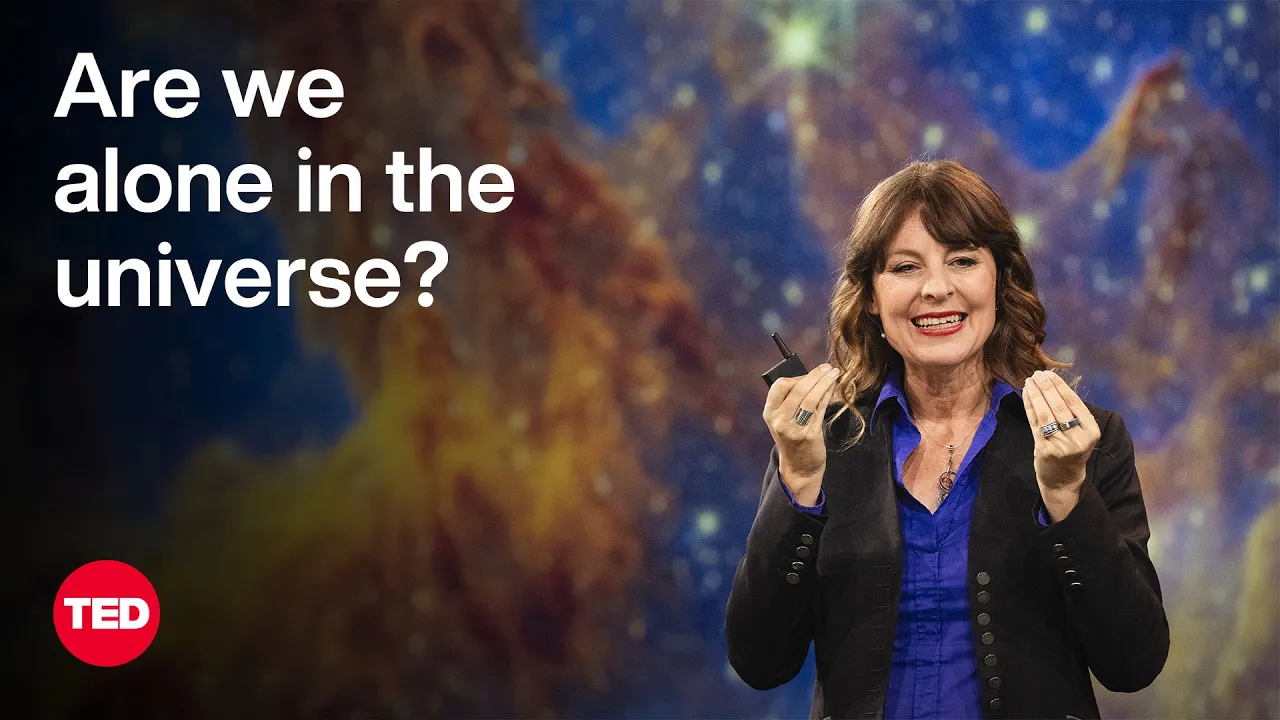















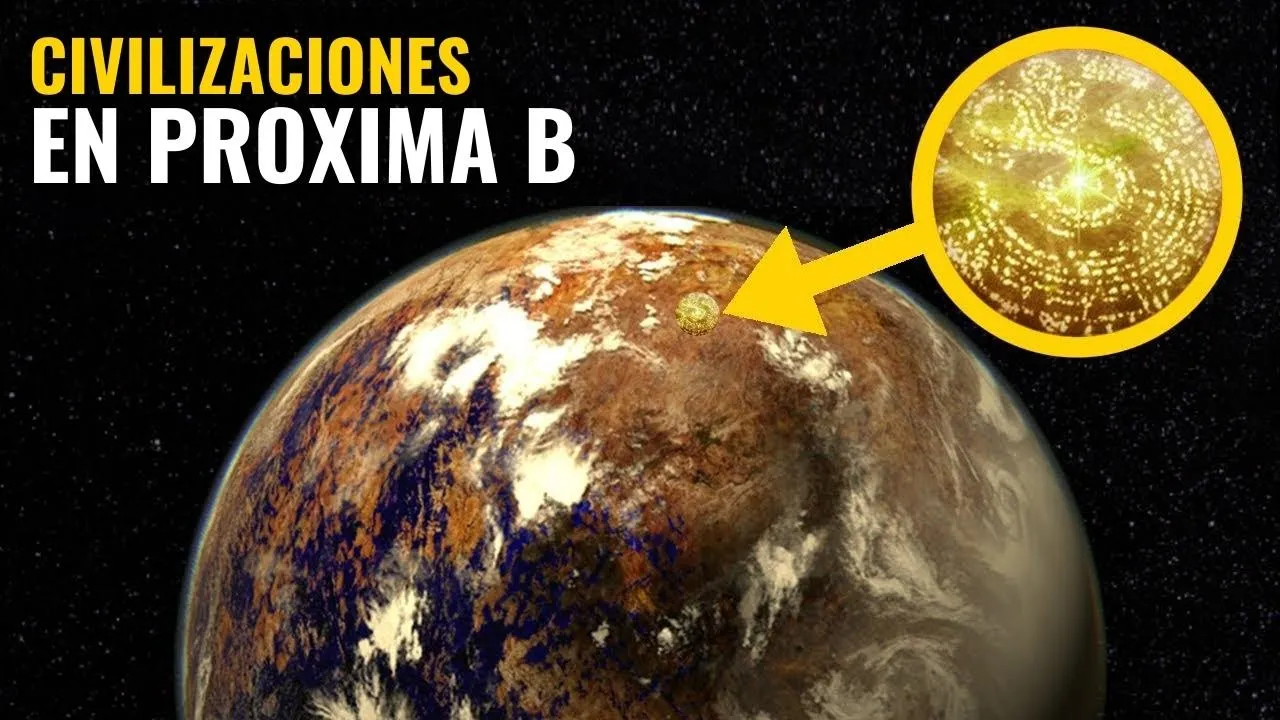


Life on exoplanets can be detected by identifying chemical disequilibrium in planetary atmospheres, where the presence of certain molecules like methane alongside oxygen indicates biological activity because such combinations cannot naturally exist in thermodynamic equilibrium without life processes maintaining them; this method was first tested in 1990 when the Galileo spacecraft observed Earth from space, detecting water, oxygen, methane, and other biomarkers that revealed Earth's abundant life, and will soon be applied to search for life on potentially habitable exoplanets using advanced telescopes like the James Webb Space Telescope.
Detecting Life on Exoplanets: The Galileo Experiment's Legacy
Added:Understanding the principles of spectroscopy, specifically how light absorption and emission spectra are used to identify chemical compounds.
The concept of thermodynamic and chemical disequilibrium, and why it is a key indicator of biological activity.
Basic knowledge of biosignatures, particularly gases like oxygen, ozone, and methane, and how they relate to life on Earth.
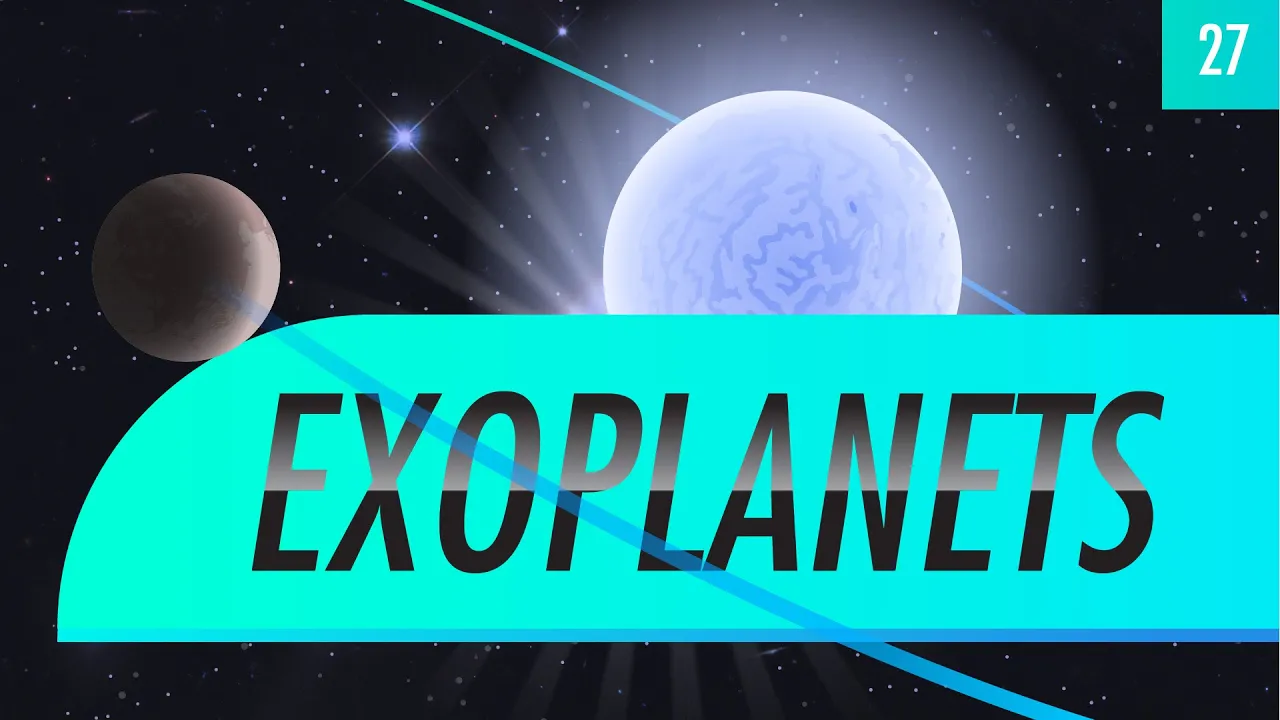
Familiarity with the concept of exoplanets and the primary methods used to detect them (such as transit spectroscopy).
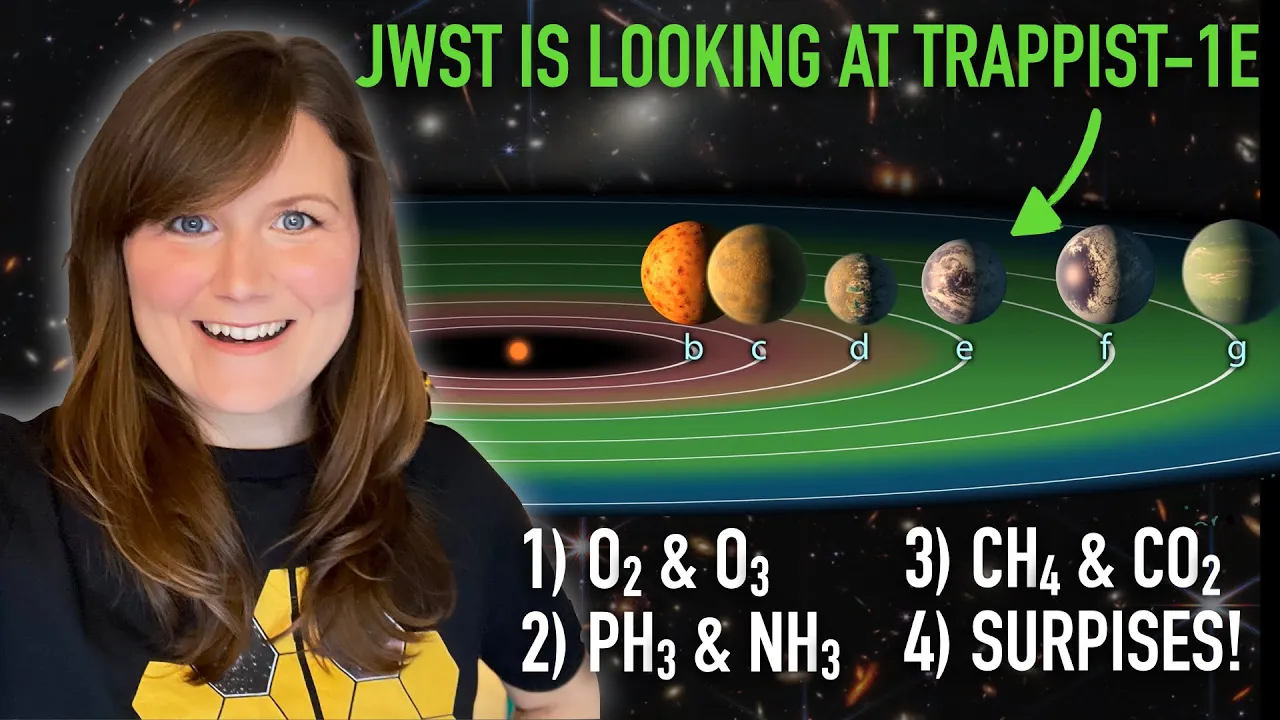
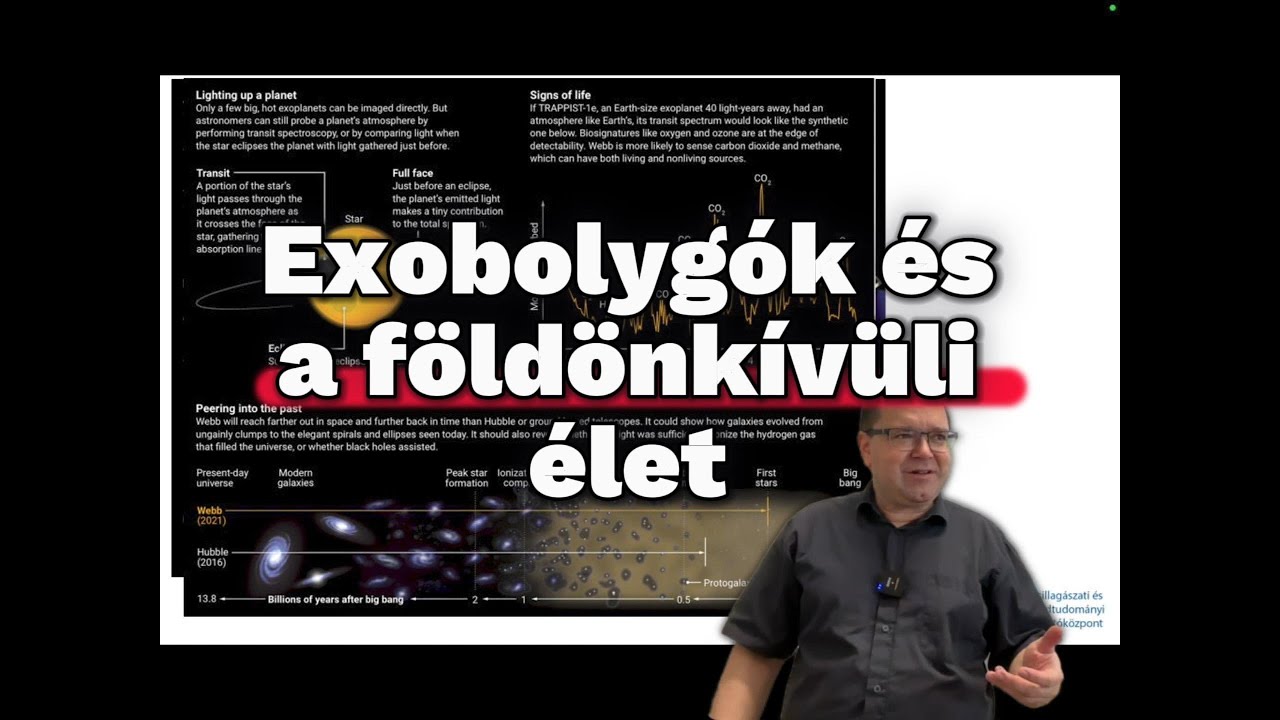
Analyzing recent observational data from the James Webb Space Telescope (JWST) regarding exoplanetary atmospheres (e.g., the TRAPPIST-1 system).
Studying the challenges of 'false positives' in biosignature detection, where non-biological planetary processes mimic biological signatures.
Exploring technosignatures, such as the detection of artificial greenhouse gases (like CFCs) or laser transmissions.
Investigating the 'Vegetation Red Edge' (VRE) phenomenon and how future direct-imaging missions aim to detect surface pigments on alien worlds.
Understanding the mission profiles and technology of planned observatories, such as the Habitable Worlds Observatory (HWO).
1.2M views23.3Klikes11:41Original Release: 2017-08-24
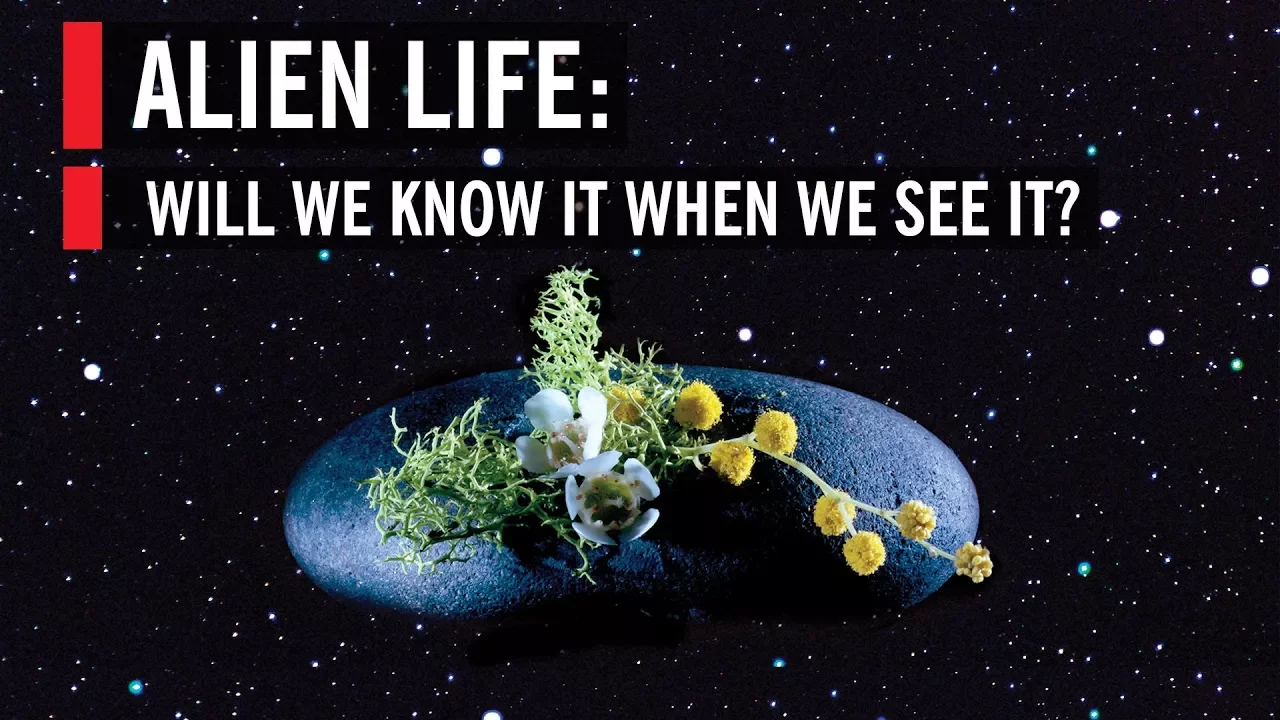
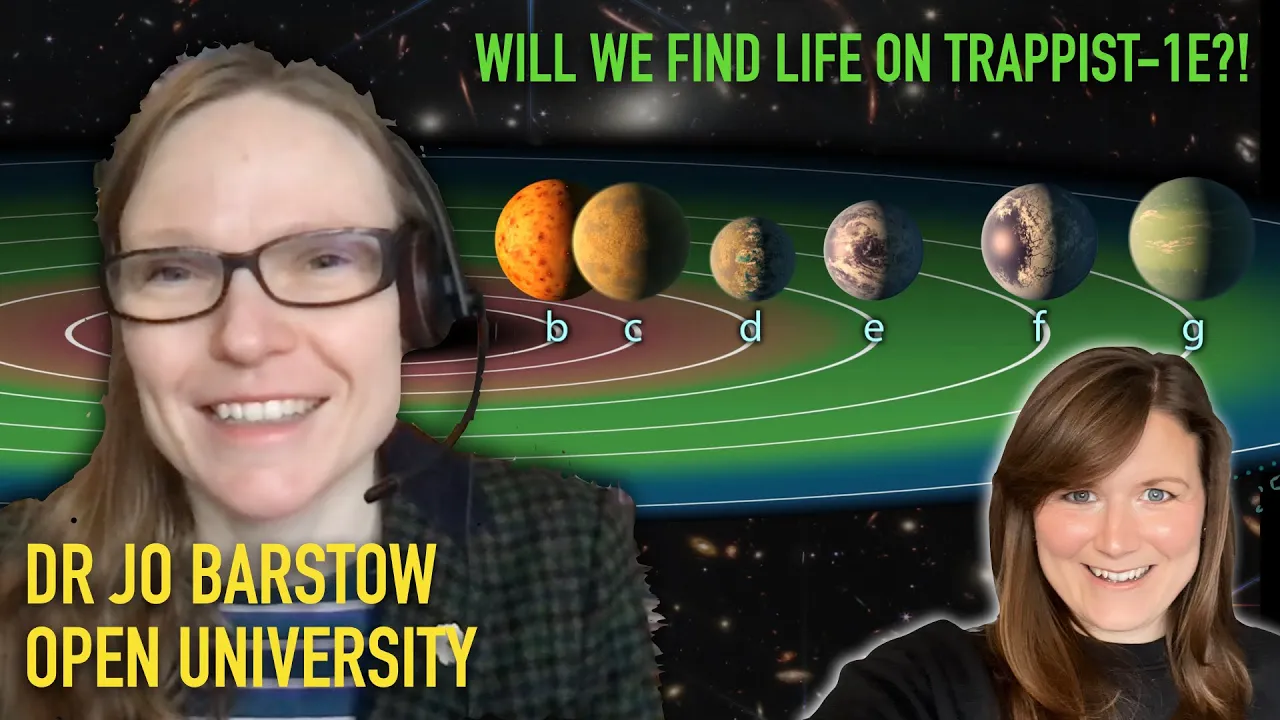
[Music] this episode is supported by LegalZoom in 1990 an experiment conceived by Carl Sagan was performed using the Galileo spacecraft the purpose to detect life on a planet based on measurements by a space probe the experiment was successful and abundant life was unequivocally confirmed that planet the earth now a quarter of a century later were on the verge of conducting that same experiment on a world orbiting another star in December of 1990 during its first gravity assist flyby the Jupiter bound Galileo spacecraft turned its eye towards the earth in a plan devised by among others Carl Sagan Galileo would measure the spectrum of Earth's atmosphere take pictures and look for radio emission during this brief flyby window the aim would be to test if such a probe could positively detect life on a world using only data taken from space and with as few prior assumptions as possible the data and conclusions from these experiments were published in nature in 1993 in this paper Sagan itaú provides a framework for finding life on other worlds decades before our technology would allow a similar experiment beyond our solar system but that technology has finally arrived but first let's talk about what life on Earth looks like to an observer in space the easiest and so probably the first way will spare alien life is by its effect on his planet's atmosphere in particular the chemical content of that atmosphere so let's look at what Galileo saw looking at the spectrum taken with its near infrared spectrometer you can see these deep dips that result from molecules in Earth's atmosphere absorbing specific wavelengths of light from what would otherwise be the smooth heat glow of the atmosphere those dips absorption features are undeniable signatures of certain molecules we see strong absorption from h2o and - apparently there's water and oxygen in our atmosphere that's a relief water is essential to life and oxygen is essential to us but also an indication of the presence of photosynthesis going to longer wavelengths we see carbon dioxide nitrous oxide methane ozone and well more water well some of these molecules are known to arise from life on earth their presence isn't enough to confirm life on another planet see an important and necessary condition for claiming a detection of life is a clear departure from thermodynamic equilibrium that is the natural chemical balance that an atmosphere should fall into without something weird like life messing it up it's definitely not enough to find molecules associated with life like water carbon dioxide or methane these can arise from non biotic processes geological processes alone can produce lots of interesting chemical reactions a set of non equilibrium chemical abundances must be observed that can't possibly be explained without life as Sagan puts it life is the hypothesis of last resort it's never aliens until it's aliens as an example methane in the presence of oxygen is a big giveaway given how quickly methane oxidizes into water and carbon dioxide there should barely be a single methane molecule in an oxygen-rich atmosphere yet there is impossibly more than the thermodynamic equilibrium abundance so where is all of that methane coming from well we know that around half of it is from natural biological systems like methane bacteria and throw purch annex AUSA's account for the other half including burning fossil fuels and as Sagan puts it flatulence from domesticated ruminants yep Carl Sagan published a nature paper about how to detect alien cow farts nitrous oxide also appears in high disequilibrium it's destroyed by solar ultraviolet light in the atmosphere with a half-life of around 50 years but that means it has to be continuously produced in order be seen well there are non-biological ways of making nitrous oxide like lightning these aren't nearly enough to account for the amount observed on earth we know it comes from nitrogen-fixing bacteria and algae of course these are just the disequilibrium that we find on earth alien life might have very different chemistry and so result in other Disick Willa Bria however given a decent understanding of chemistry geophysics and XO meteorology we can be pretty sure when something we see is out of whack there is one molecule that we want to find in high abundance regardless of alien chemistry or even equilibrium values we want to find liquid water well water is basically everywhere we look in the universe liquid water is a little harder to come by it's incredibly important for evolutionary chemistry even if we ignore the fact that all birth life requires it water is by far the best substance in the universe for brewing up and supporting life the water has a high dielectric constant which means it's good at storing electrical energy this allows it to easily break apart ionic bonds such as those found in salts this makes it a powerful solvent so it's great at facilitating chemical reactions it also has a high heat capacity it takes a lot of energy to cause it to change temperature that means it can exist as a liquid over a large temperature range and grants temperature stability for the delicate organisms living in it or made of it if you see water in the atmosphere and the temperature is right it potentially exists as a liquid on the surface Galileo also observed the spectrum of Earth's surface and took color photographs of course these revealed strangely green land masses due to chlorophyll absorbing red light and reflecting green light now these wouldn't be considered proof of life on an alien world but may be a strong indicator especially in the presence of atmospheric signatures Galileo even captured radio signatures from earth it discovered the artificial looking modulated narrowband transmissions of technological civilization the Galileo flyby was a major success it proved the existence of life on Earth that's a questionable scientific value on its own however this experiment gives us a roadmap for what to look for in other star systems decades before it became possible to do so we are still a long way from sending a probe like Galileo to another solar system but we're working on it programs like breakthrough starshot as discussed in this video promised the first close-up observations of a new world in several decades time while we need to travel far to get high-rez pics of an exoplanet we finally succeeded in taking spectra of their atmospheres without leaving home we do it by enjoying lovely exoplanet sunsets to be more precise we analyze the light of a distant star as it passes through the atmosphere of one of its planets this only happens for transiting exoplanets those that happen to be aligned so that they pass in front of their parent star from our point of view only a tiny fraction of the star's light passes through the planet's atmosphere when this happens but by carefully subtracting most of the star's lights we're left with a set of absorption features from the planetary atmosphere itself take HD one 897 33 B for example this is a so-called hot Jupiter a gas giant even larger than Jupiter that orbited star closer than the orbit of mercury the parent star was observed using the hubble and spitzer space telescope's during a transit the spectra revealed the presence of water methane and carbon dioxide and however given the planners blazing 700 degrees Celsius surface it's unlikely that extraterrestrial life would be found there is too hot for liquid water and the methane is likely from other non-biological sources we've looked at Neptune sized objects like H ATP 11 B detecting clear skies and water vapor we've even started to look at super Earth's like into 55 Cancri detecting hydrogen and helium we don't quite have the technology to analyze an earth like atmosphere around an earth-like planet those planets are just too small and their atmospheres too thin for any current telescope but that will all change next year in 2018 the James Webb Space Telescope will launch its gigantic 6.5 meter diameter mirror an incredibly sensitive infrared spectrograph coupled with the clarity granted by being in space will enable us for the first time to perform Sagan's 1990 experiment on an earth-like alien world for example we should be able to detect the atmospheric compositions of the seven exoplanets around Trappist one assuming they actually have decent atmospheres this is facilitated by the fact that the star itself is very dim making subtraction of its light easier three of these worlds EF and G lie in the habitable zone the distance from the star where liquid water is possible now there are other reasons to think that the Trappist one planets are not ideal for life but who knows perhaps our first detection of alien life is only a couple of years away there are billions and billions of potentially water-bearing earth-like planets in our galaxy alone the prospect of the being life on other worlds seems very very good our first evidence of it is likely to be found in the disequilibrium of alien atmospheres and if life is common that evidence will probably be found within our own lifetimes in fact we may even discover alien life in the next few years this would answer one of the oldest questions in science and philosophy are we alone in the universe perhaps that answer is already traveling to us in the light of a distant planets atmosphere calling to us from across space-time thanks to LegalZoom for sponsoring this episode LegalZoom helps you take care of your legal needs if you own a business they can help you with the right formation plus provide you with many of the tools and resources you need to run it if you have a family they can help you create your estate plan through their products and network of attorneys you can also schedule an attorney consultation for business or personal legal advice through their independent network of attorneys without having to leave your home LegalZoom is offering space time viewers 15% off their next purchase from LegalZoom goto legalzoom.com slash space-time or clicking the link in the description to learn more
Up Next

11:15
New Biosignature Gases for Detecting Alien Life with JWST
@JohnMichaelGodier
70.7K views•2022-12-30
61:17
First Billion Years of the Universe with the Square Kilometre Array
@iaaudc
121 views•2022-05-26
13:37
Starstuff: The Cosmic Origins of Elements and Supernova Chemistry
@pbsspacetime
480.3K views•2016-04-06
6:10
Gamma-Ray Bursts: Cosmic Snipers Explained | Astronomy
@kurzgesagt
15M views•2016-07-31
Related Study Plans & Knowledge Roadmaps
Structured learning paths in Astronomy
astronomy
Reionization: Pop III Stars, IGM & 21cm Line
01Foundations of Cosmology & the Early Universe
02Population III Stars & Cosmic Dawn
03Physical Mechanisms of Reionization
+ 2 more learning modules
17h5 modules
Explore Roadmap
astronomy
Planetary Rings: Dynamics, Roche & Resonances
01Foundations of Gravity and Orbital Mechanics
02Tidal Forces and the Roche Limit
03Structure, Composition, and Collisions
+ 2 more learning modules
10h5 modules
Explore Roadmap
astronomy
Asteroseismology: Stellar Waves, Ages & Cores
01Foundations of Stellar Astrophysics & Wave Mechanics
02Stellar Oscillation Modes: P-modes and G-modes
03Mathematical Framework of Asteroseismology
+ 2 more learning modules
35h5 modules
Explore Roadmap
astronomy
Adaptive Optics: Physics, Engineering & Control
01Foundations of Wave Optics and Wavefronts
02Atmospheric Turbulence & Optical Distortion
03Wavefront Sensing Technologies
+ 3 more learning modules
35h6 modules
Explore Roadmap