

![[고졸 검정고시]😎혼공합격 - 도덕 4, 6단원](https://i.ytimg.com/vi/2FjbgHM_0dk/maxresdefault.jpg)




























Anthropocentrism is the dominant human-centered ethical perspective in environmental philosophy, which holds that the environment matters because of its effects on humans; this view has historical roots in Aristotle's distinction of three soul types (vegetative, animal, and rational), Descartes' mechanistic view of nature, and Kant's argument that we oppose animal cruelty because it reflects poorly on human character; contemporary anthropocentrism can extend moral consideration to future generations and justify environmental protection through human survival interests, though critics argue it lacks rational grounds for human moral supremacy over other species.
Anthropocentrism Explained: Environmental Ethics & Human-Centered Views
Added:Basic concepts in normative ethics, including the definitions of moral agency and moral considerability.
The philosophical distinction between intrinsic value (inherent worth) and instrumental value (usefulness to humans).
An introductory understanding of environmentalism and the history of human impact on global ecosystems.
Familiarity with foundational ethical frameworks, such as Utilitarianism and Deontological ethics.
Alternative environmental ethics frameworks, specifically Biocentrism (life-centered) and Ecocentrism (ecosystem-centered).
The debate between Deep Ecology (radical holistic preservation) and Shallow Ecology (reformist resource conservation).
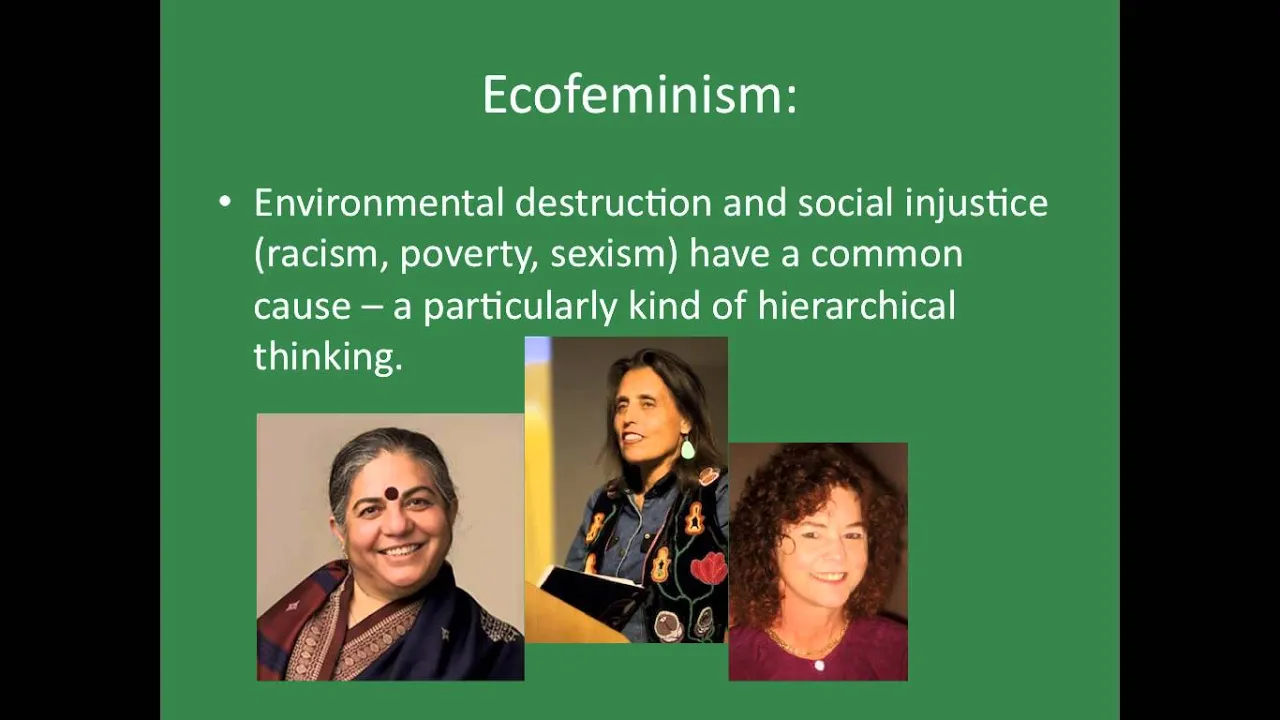
The study of Ecofeminism and Environmental Justice, examining how human oppression of nature intersects with social inequalities.
Real-world application of environmental ethics in law and policy, such as the 'Rights of Nature' movement and sustainable development models.
31.5K views469likes8:59Original Release: 2022-01-02
Hello everyone, welcome to my philosophy channel, as you already gathered from the title, we are going to talk about environmental ethics, a topic that for the past decades has been getting more and more attention.
The aim of this short series of lectures is to simply educate about the different philosophical positions about what ethical commitments we truly have to the environment.
In other words, people nowadays do largely care about the environment, but I want to look at why it is that we should.
The answers to this question can be generally divided into three world-views; one is human-centered, or to use the ancient Greek term for human, it is anthropocentric – meaning that we should care about the environment because of the effects it has on humans; the second one is animal-centered, also called zoocentric – suggesting that we should care about the environment both because of its effects on human and non-human animals; and the third one is life-centered, deriving from the ancient Greek term for life, it is biocentric – meaning that we should be caring about life in general, regardless of whether it possesses consciousness.
I will accordingly divide this lecture into three videos.
In this one, which is the first one, we will talk about anthropocentrism, because through history, this has been the dominant view.
Aristotle, for example, has said that nature was made specifically for the needs of humans, who have a right to use all the resources that they find.
In his biological studies, he distinguishes between three kinds of life, one being the vegetative soul, which relates to an organism's growth, the animal soul, which relates to an organism's movement and feeling, and the rational soul, which is an organism's ability to think.
Correspondingly, plants posses only the first kind of soul, animals posses the first two, while only humans have all of the three.
Given our supremacy over the other two, humans can do with animals and plants as they desire, with no ethical considerations over the well-being of anything other than human life.
This view achieves its height in the 17th century, when the new science of mechanics offers a framework to explain the behavior of plants and animals in terms of non-oriented physical movements.
Given this insight, the philosopher Rene Descartes argued that plants and animals are not a form of life, but rather inanimate objects that work like an intricate clockwork mechanism.
In that view, the squealing of an animal in pain is nothing more than a machine making noise.
Removing the vegetative and animal souls from the picture, only the human soul remains, because according to the 17th century view at least, a human’s behavior is too complex to be accounted by anything other than the idea of free will, which incidentally is also what God has given us in order to make us choose between love and sin.
Accepting this picture, Descartes influenced a whole new wave of anthropocentrism, which looked at animals and nature as something with absolutely no moral standing.
Nonetheless, many thinkers observed that when we see someone torturing an animal, for example, it feels very wrong.
Why would that be, if we don’t care about animals?
The 18th century philosopher Immauel Kant proposed that what’s truly going on, is that we are appalled by the pointless cruelty of the human torturing the animal.
What we truly care, is not that the animal is hurt, but that such a cruel person shows a disposition to also act in such a way towards a human.
Kant concludes that we shouldn’t torture animals, not because of the welfare of animals, but because of ourselves, because such behavior would strengthen our disposition towards being cruel to other humans.
Aristotle’s suggestion that nature was made for humanity, echoes in the Judeo-Christian commandment that God has given men dominion over nature.
Historically, this view has definitely contributed to our careless treatment of our environment, although the Church itself is lately not favoring such an interpretation of the Bible.
Rather, the view is adopted that we are merely stewards, whom God entrusted with his creation.
Hence, it is out moral responsibility to take good care of the world.
As we read in Pope Francis’ 2015 encyclical, titled “Praise be to you, my Lord!”: If we approach nature and the environment without /…/ openness to awe and wonder, if we no longer speak the language of fraternity and beauty in our relationship with the world, our attitude will be that of masters, consumers, ruthless exploiters, unable to set limits on their immediate needs.
(section 11) Since this view attributes actual value to the environment itself, namely to God’s creation, it can be called an instance of weak anthropocentrism – meaning humans are still given special moral standing, but not exclusively so.
According to this view, we have to value both the welfare of animals and the equilibrium of the environment, although value it less than we value humans.
A modern defender of anthropocentrism can argue that when we talk about environmental concerns, we are mainly doing that because of our concerns for humans.
It is also not true that if we only care about humanity, we won’t care about the environment at all.
Our existence, after all, is closely tied to the environment being (and staying) inhabitable.
Hence, only shortsighted logic would let us harm the environment indefinitely for our own purposes; this would, and probably will, backfire drastically.
A human-centered ethic can also extend moral considerations to humans that haven’t been born yet, thus extending our commitments to the environment so that Earth will remain inhabitable in the future.
Thus it seems, that in principle, a solely human-centered ethic can prescribe great care to the environment.
Hence, we can see some people going vegan, not because of their care for animals, but because of how the meat industry affects humans through water pollution, CO2 emissions and resource consumption.
It has been argued, for example, that abolishing the meat industry would free up enough resources so that we would eradicate human malnourishment altogether.
To this day, anthropocentrism remains the default and most popular ethical perspective.
As we will see in the following two videos, however, it is being widely contested.
On the one hand, critics will argue that our moral intuitions go far beyond concerns for just other humans, and furthermore, there seems to be no true rational ground on which to argue for the moral supremacy of human beings over other animals.
If we care about humans, the thought goes, there’s no reason to draw the line around our species to exclude other ones.
On the other hand, we will see that some thinkers argue that not only humans and other animals have some kind of moral standing, but also plants and the environment on itself do.
What are your thoughts on anthropocentrism and its relation to environmental ethics?
I always love to read your comments, I don’t get many, so you can trust that I read every one of them, and I’m especially happy if a discussion evolves, so you’re warmly invited into the comment section below, let’s talk.
Until next time!
Up Next

103:28
Climate Crisis in Social Thought: Chakrabarty on Capital & Planetarity
@harvard
5.3K views•2014-02-13

164:01
John of Damascus on Holy Images: A Theological Defense
@BannedBooks
139 views•2026-04-25

68:32
Should We Destroy the Machines? Big Tech Surveillance Critique
@TheStoriesWeTell303
167.9K views•2025-11-30
4:57
The Myth of Sisyphus: A Greek Legend of Eternal Punishment
@TEDEd
8.6M views•2018-11-13
Related Study Plans & Knowledge Roadmaps
Structured learning paths in Philosophy
philosophy
Frankfurt School: Critical Theory & Culture
01Foundations of the Frankfurt School and Critical Theory
02Horkheimer & Adorno: The Critique of Instrumental Reason
03The Culture Industry and Mass Deception
+ 2 more learning modules
12h5 modules
Explore Roadmap
philosophy
Philosophy of Language: From Frege to Austin
01The Linguistic Turn: An Introduction to Language in Philosophy
02Gottlob Frege: Sense and Reference
03Early Wittgenstein: The Picture Theory of Meaning
+ 3 more learning modules
15h6 modules
Explore Roadmap
philosophy
Feminist Epistemology: Standpoint & Injustice
01Introduction to Epistemology and Feminist Critiques
02Sandra Harding and Standpoint Theory
03Donna Haraway and Situated Knowledges
+ 2 more learning modules
12h5 modules
Explore Roadmap
philosophy
Environmental Philosophy: Ethics & Deep Ecology
01Foundations of Environmental Ethics & Anthropocentrism
02Biocentric Individualism and Animal Liberation
03Ecocentric Holism and Deep Ecology
+ 1 more learning modules
10h4 modules
Explore Roadmap