




![[수면다큐] 135분 우주 특집🪐|137억년 전, 우주의 탄생부터 시작해, 숨겨진 우주의 비밀을 파헤치다|당신은.. 곧 잠에 듭니다|다큐프라임|#골라듄다큐](https://i.ytimg.com/vi_webp/lumM4x1vImA/maxresdefault.webp)












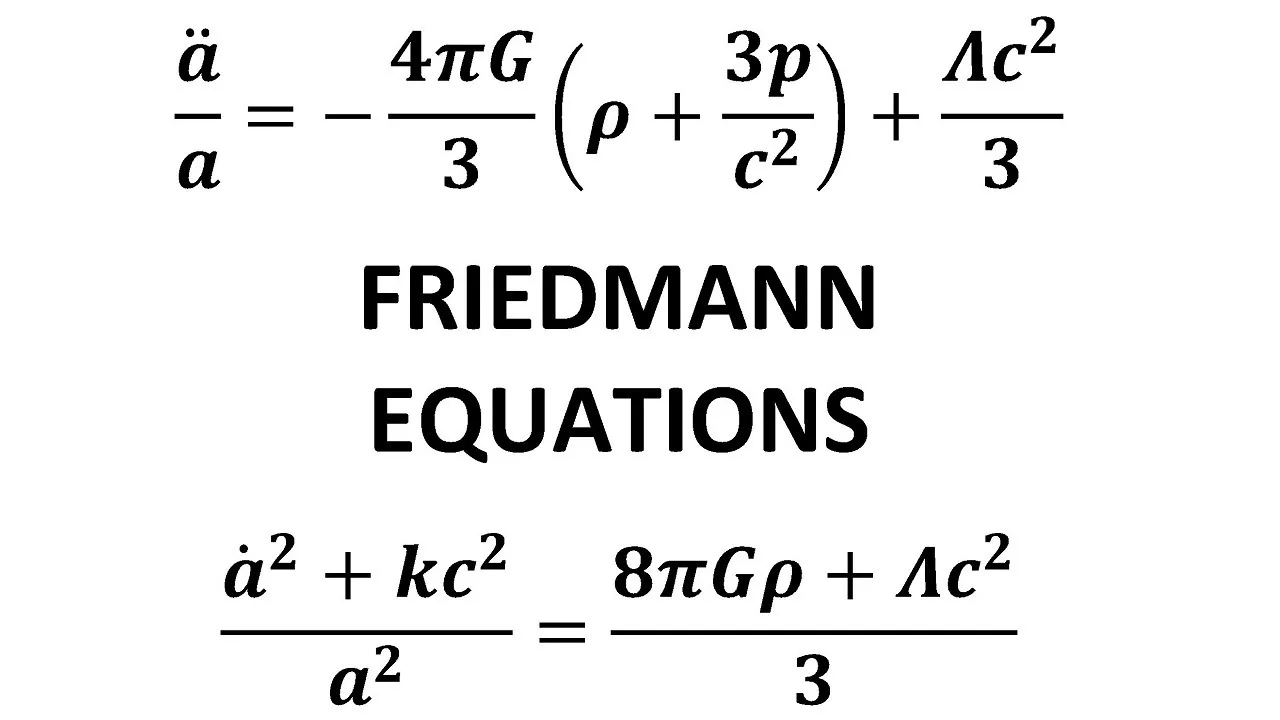









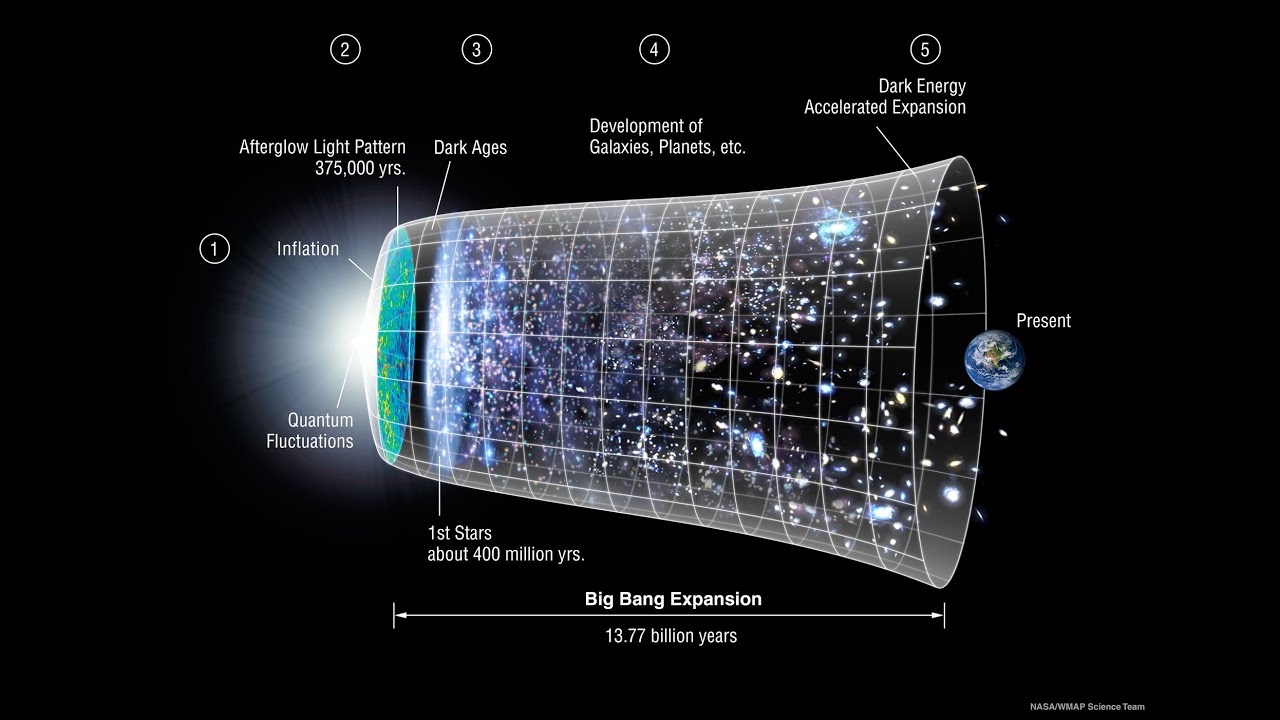

By applying Newton's laws to a homogeneous, isotropic universe using comoving coordinates, we derive the Friedmann equation: a''(t) = - (4πG/3)ρa(t), which shows that a static universe is impossible and predicts that the scale factor a(t) evolves as a(t) ∝ t^(2/3) for a matter-dominated universe at critical density, demonstrating that cosmic expansion naturally follows from Newtonian physics when properly formulated.
Cosmology Lecture 1: Expansion of the Universe
Added:Classical Mechanics: A solid grasp of Newtonian gravity, gravitational potential energy, and basic kinematics.
The Doppler Effect and Redshift: Understanding how wave frequencies shift with relative motion, which is crucial for interpreting galactic light spectra.
Basic Astronomy: Familiarity with the scale of the universe, the nature of galaxies, and cosmic distance units like parsecs and light-years.
Introductory Calculus: Comfort with rates of change and simple differential equations to follow mathematical modeling of space expansion.
General Relativity and Cosmology: Transitioning from Newtonian approximations to Einstein's description of spacetime curvature.
The Friedmann Equations: Studying the relativistic equations derived from General Relativity that govern the expansion of the universe.
Dark Matter and Dark Energy: Exploring the modern Lambda-CDM model and the physical phenomena causing the accelerated expansion of the cosmos.
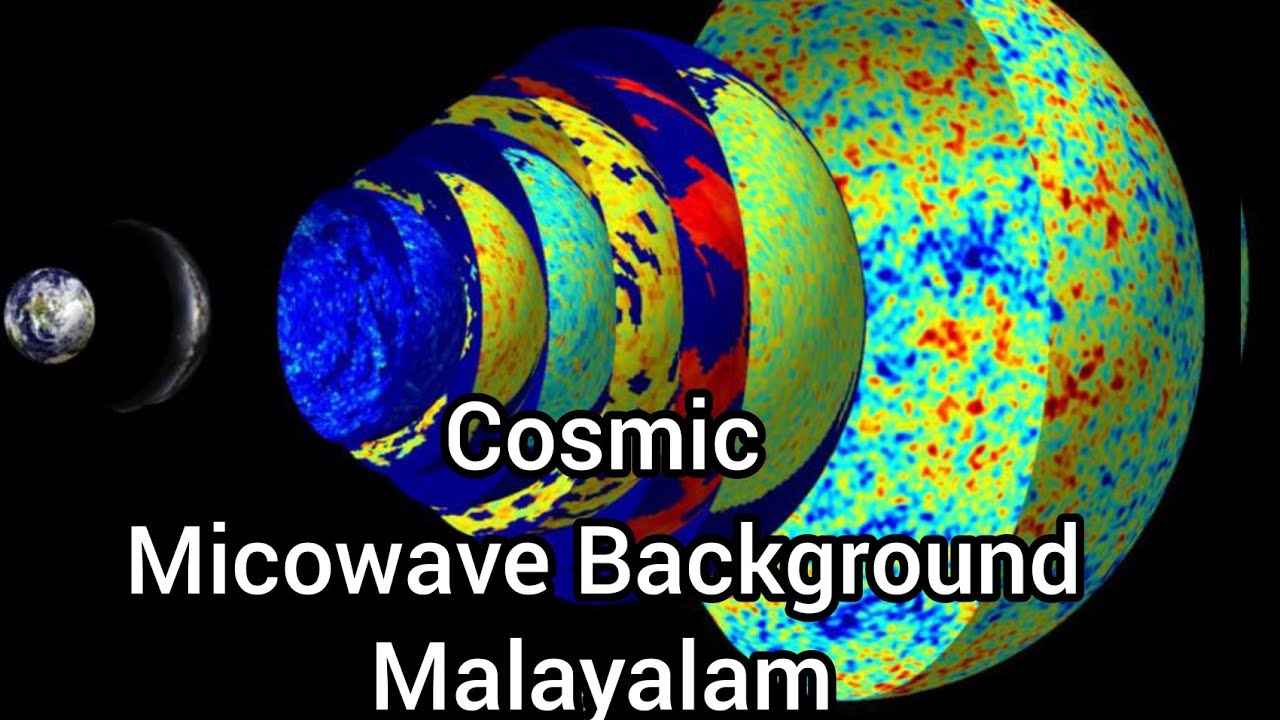
The Cosmic Microwave Background (CMB): Investigating the relic radiation from the Big Bang and what it reveals about the early universe's composition and geometry.
1.3M views13.6Klikes1:35:46Original Release: 2013-01-29
[Music] Stanford University okay let's uh let's start this uh this quarter's subject is cosmology cosmology is of course a very old subject uh it uh goes back thousands of years but I'm not going to tell you about thousands of years of cosmology but I say thousands of years I'm talking about the Greeks of course uh but we're not going to go here back thousands of years we're going to go back at most to some time in the second quarter second quarter of the uh 20th century when Hubble discovered that the universe is expanding but uh let's just say a few words about the science of cosmology the science of cos mology is new it or at least what we know about I a minute ago I said it was very old yes in a sense but the modern subject of cosmology is very new it really dates to well after Hubble it dates um to the discovery of the Big Bang the 3 degree microwave radiation that was discovered as uh as the remnant of the big bang and that happened you know sometime in the 60s so I was I was a student I was a young student and before that um cosmology was in a certain sense less like physics and more like uh being um Natural Science like what a naturalist does studies this kind of thing studies that kind of thing you find a funny Star over there you find a Galaxy over there that looks a little weird you classify you name things you measure things to be sure but the accuracy with which things were known was so poor that it was extremely difficult to be precise about it and it's only fairly recently that physicists physicists were always involved but they were involved because many of the things that you see many of these strange creatures funny Stars uh galaxies and so forth of course are physical systems and to describe them properly they have angular momentum they have all the things that physical systems have uh there's chemicals out there and so uh physical chemists were involved but thinking of the universe as a physical system as a system to study mathematically and um with a set of uh physical principles and a set of equations of course there were always sets of equations way back but wrong equations right equations and accurate equations things which agreed with observation that's relatively new um more or less more or less over the history of my career in physics which is 50 years something like that and that's what we're going to study we're going to study the universe as a system in other words a universe as a system that we can study with equations so if you don't like equations you're in the wrong place all right so where do you start you start with some observations now the first observation which may not really turn out to be absolutely true for reasons uh that uh it's not absolutely true but it looks like it's approximately true is that the universe is what is called isotropic isotropic means that when you look in that direction or that direction or that direction or that direction now of course if you look right at a star it looks a little different than if you look at the away from the Star but on the whole averaging over patches in the sky and looking out far enough so that you get away from the immediate foreground of our own Galaxy the universe looks pretty much the same in every direction Direction okay that's called isotropic same in every direction right now if the universe is isotropic with one exception that I'll describe in a moment if it's isotropic around us then you can bet with a high degree of confidence that it's also pretty close to being homogeneous homogeneous doesn't mean it's the same in every direction it means it's the same in every place if you went out over there and you looked around from uh from uh uh 16 galaxies over and you looked around what you would see you would see about the same thing you saw here so first of all what's the argument for that why does being isotropic which means the same in every direction tell you anything about why it would be the same if you moved away to a very distant place and the argument is very simple um imagine that there's some distribution of galaxies you know incidentally at least in the first part of uh of this study here it's not going to matter very much whether what we're talking about are whe whether we call them galaxies or whether we just call them particles they're just effectively Mass points distributed throughout uh space for the moment I might even lapse into calling them particles from time to the time now you must mean when I say particles I mean literally galaxies but uh but unless I otherwise specify okay so the universe has a lot of them anybody know how many galaxies are within the visible uh about 100 billion 10 to the 11th just there some nice numbers to keep track of incidentally it's a good idea to keep track of a few numbers within what we can see within what we can see with telescopes uh out to as far as astronomy takes us about 10 to the 11th galaxies each Galaxy about 10 to the 11 Stars altogether 10 to the 22 Stars if each star has roughly 10 planets that's 10 to the 23 avagadro's number of uh planets out there a mole right planetary planetary mole right all right now imagine that when we're over here and every direction that you look in it looks pretty much the same well then I maintain that not only must it be the same in every direction but it must be the same from place to place what would it mean for it not to be the same from place to place well if it's isotropic the the only way it could not be homogeneous is if it uh if it somehow formed rings of some sort it's got to be such that would that it looks the same in every direction but it's not the yeah shells I think somebody said shells it have the geometry of some sort of shell-like structure why it doesn't literally mean shells it just means yeah so if that was the case if that were the case and you went someplace else and you looked around clearly it wouldn't look isotropic anymore so for it to look isotropic unless by accident we just happen to be at the center of the universe if we happen to be at the very center where everything just accidentally or not accidentally Maybe by Design happens to be nice and rotationally symmetric about us if we don't want to believe that then we have to believe it's pretty much the same everywhere and that it's homogeneous so homogeneous means that as far as we can see space is uniformly filled on the average with particles uniformly filled okay that's called the cosmological principle now you can't why is it true well how could it not be true it's the cosmological principle right and uh sometimes people argue like that it's true because it's been observed to be true to some to some degree of approximation now as was mentioned in some media that I don't know how to evaluate some astronomers apparently claim to see structures out there which are so big if the Blackboard here was the whole visible Universe they would stretch across great big patches of it and that seems to be a little bit counter to this idea of uh complete uniformity and of course certainly the the idea of complete uniformity is not exact just the fact that there are galaxies means the not the same over here and over here and in fact there are clusters of galaxies and superclusters of galaxies so it it appears it's not really homogeneous but it tends to come in of clusters which on some big enough scale like a billion light years roughly maybe a little bit less if you average over that much it looks homogeneous okay so that's the basic fact that we're going to begin with now what's the first step in formulating a physics problem know your variables that's a good yep know your variables usually the answer is sharpen your pencil okay after you sharpen your pencil you the next is know your variables but um a good step I'm not sure whether it comes after that or before that is Professor could the um uniformity of the cosic micro be an argument oh you bet you bet you bet but we're going back I'm purposefully going back a few decades uh to sometime around uh the 60s or something like that 50s 60s 40s uh uh the the idea of the cosmological principle was put forward before people had any real right to uh to put it Forward they just said oh well let's just say it's homogeneous we'll call it the cosmological principle and if people ask us why it's true it's because it's a principle all right but then you know with more and more astronomical investigation and then finally the cosmic microwave background really nailed it and in some sense uh the primordial distribution of matter was extremely smooth extremely smooth but we'll get to that all right so here we have a uniform gas if you like it's a uniform gas and that gas is interacting it's a gas of particles it's interacting each particle is interacting with the other particles now galaxies on the whole are not electrically charged they're electrically neutral but they're not gravitationally neutral they interact through Newtonian gravity and that's the only important force on big enough scales on big enough scales where matter tends to be electrically neutral uh the only really important force is gravity right so gravity is p either pulling all this stuff together or it's doing something to it but it's a little bit confusing what uh what happens to this point over here does it accelerate toward the center because at the center there's a whole bunch of matter there or does it accelerate out to here because after all there's as much matter out there as there is on this side in fact it sort of looks like it oughtn't to move anywhere it ought to just stay there because there's as much on one side is on the other side right so it'll just stay there well what about this one over here same thing because every place is the same as every other place so the natural thing to guess is that the Universe must be just static it must just sit there because nothing has any net force on it and so there's nothing pulling it one way or another that's wrong we're going to work out tonight the actual Newtonian equations of uh of cosmology but you may have heard that the expanding Universe somehow fit together especially well and wasn't really understood until general relativity until Einstein that is simply false uh it may be so historically I mean in terms of years yes it is true that the expanding Universe was not understood until after Einstein had created the general theory of relativity that is a fact about dates it's not a fact at all about logic Newton could have done the expanding Universe since Newton didn't do it we are going to do it here the way Newton should have done it if only Newton was a little bit smarter okay all right so the first thing know your know your variables for sure but the first step is usually to introduce a set of coordinates introduce a set of coordinates into a problem and that means exactly what it always means take space and Rule it into coordinates three dimensions for sure but I'm only going to draw two in other words introduce fictitious a fictitious grid of coordinates now what shall we take for the distance between neighboring lattice points on this grid we could take it to be 1 meter we could take it to be 10 meters we could take it to be a million meters we could take it whatever we like but there's a smarter thing to do than to just fix the distance between the points the smarter thing to do is to imagine these points of been chosen so that the grid points always pass through the same galaxies in other words that the galaxies here provide a grid provide a grid in such a way that no matter what happens since the galaxies are nice and uniform no matter what happens this galaxy over here here will always be at that point on the grid that Galaxy over here will always be at that point on the grid and that means that if the universe indeed either expands or contracts the grid has to expand or or let me say it differently if the galaxies are moving relative to each other perhaps away from each other or closer to each other then the grid moves with them let's choose coordinates so that the galaxies are sort of Frozen in the grid now it's not obvious you can do that it's not obvious you can do that if the galaxies were such that some were moving this way over here some were moving that way over here some were moving that way over here a sort of random kind of motion then there would be no way to fix the coordinates by attaching them to the uh to the galaxies because even at a point different ones would be moving in different ways but that's not what you see when you look out at the at the heavens what you see is that they're moving very coherently exactly as if they were embedded in a grid with the grid perhaps expanding perhaps Contracting we'll come to that but the whole grid being sort of Frozen any motion that takes place is because the grid is either expanding in size or Contracting in size that's an observation about the relative motion of nearby galaxies galaxies over here and over here which are relatively nearby are not moving with tremendous velocity relative to each other they're moving in a nice coherent way as I said so that uh so we can choose coordinates we'll call them X Y and Z standard names for coordinates x y X Y and Z but x y and z are not measured in length they're not measured in length because the length of a grid cell may change with time okay so we've labeled the galaxies by where they are in a grid and now we can ask the question Let's uh let's say the distance let's take two point let's start with two points separated by an X distance over here let's call that X distance Delta X how far apart are they well I don't know how far apart they are yet but I'm now going to postulate that the distance between them the actual distance in meters or in some physical unit that you measure with a ruler could be a light year on a side it could be a million light years on a side but a ruler that the actual distance is proportional to Delta X the distance between these two people over here is half the distance between these two is a third the distance between these two so it's proportional to Delta x times a parameter that's called the scale parameter the scale parameter may or may not be just a constant it may just be a constant if it were just constant then the distance between galaxies fixed in the grid would stay constant with time but it may also be time dependent so let's allow that that would say the distance between two galaxies let's say this is Galaxy a this is Galaxy B the distance from A to B is a of T * Delta xab where Delta X is the X distance is the coordinate distance between them let me write it more generally if we have two galaxies or arbitrary positions on the grid then the distance between them daab is equal to a of T the same a of T and then the square root of Pythagoras's Theorem Delta x^2 plus Delta y^ 2 plus Delta z^2 in other words you measure the distance along the Grid in grid units and then multiply it by AF of T to find the actual physical distance between the two points as I said AF may or may not be constant in time well of course it's not if it was constant in time that would mean literally the galaxies were just Frozen in space and they didn't move and that's not what we see we see them moving apart from each other okay so let's calculate now the velocity between Galaxy a and Galaxy B here's the distance between Galaxy a and this of course should be Delta AB the distance the coordinate grid distance let's just use the simpler formula up here let's forget Pythagoras and just take them to be along the x- axis it doesn't really matter okay here's daab what's the velocity between what's the relative velocity of the ab galaxies it's just the time derivative of this right just the time derivative of the distance is the velocity so the velocity between A and B is just equal to the time derivative and the only thing that's changing for A and B A and B are fixed in the grid so Delta X is not changing that's fixed the only thing that's changing perhaps is a so the velocity is just the time derivative of a a DOT means the time derivative of a a DOT time Delta X all I've done is differentiate this formula with respect to time now I can write that the ratio of the Velocity to the distance I'll leave out the a well let's let's put them in a the ratio of the Velocity to the distance is just the ratio of a DOT to a notice that Delta X canel out well that's interesting it means that the ratio of the Velocity to the distance doesn't depend on which pair of galaxies we're talking about every pair of galaxies no matter how far apart no matter how close no matter what angle they're oriented in the relative velocity between the two of them relative either separation or the opposite of Separation the ratio of the Velocity to the distance is a DOT over a what the what what's the name for this thing anybody know the Hubble constant it's called the Hubble constant let's call it h now is there any reason why it should be a constant what do we mean when we say it's a constant there's no reason for it to be independent of the time and in fact it's not what we find here is that it's independent of X it doesn't matter where you are it doesn't matter which two galaxies you're talking about the same Hubble constant at a given time so the Hubble the Hubble constant is a kind of misnomer the Hubble Hubble the Hubble parameter the Hubble function the Hubble function is independent the position but depends on time and now I just write this in the standard form that the velocity between any two galaxies in the universe is equal to the same Hubble parameter times the distance between them and that's the derivation of the Hubble law excuse me question um don't you sort of start out almost assuming what you're trying to show by saying the D equals one function AF that's independent yes yes yes indeed absolutely yeah I mean you would never would have written this if Hubble hadn't discovered that the that the that the Hubble law was right but the other The Hub law is in some sense not all that surprising all it's you know some witty person said you shouldn't be surprised that the fastest horse goes the furthest okay right uh the faster you move the far far farther you go so that's all this thing says however it's interesting the connection between this formula and the Hubble formula is as you point out a close one but as what it says is everything is moving on a grid and it's the grid itself whose size scale may may or may not be changing with time but of course it is changing with time and the Hubble constant is just the ratio of the time derivative of a to a itself okay that's that's the facts those are the that that's the facts those are the facts as Hubble discovered them and as theoretical cosmologists then had something to work with all right let's uh let's say a few more things about this what about the mass within a region let's take a region of size Delta X Delta y Delta Z and now I mean a region which is big enough so that uh I don't know what happened to my universe I had my universe here but uh big enough so that we can average over the small scale structure how much mass is in there okay well that the amount of mass that's in there is going to be proportional to Delta X Delta y Delta Z the bigger the region that you take the more mass and so let's just say the amount of mass or call it new new is nothing but the amount of mass per unit volume of the grid but volume not being measured in meters but being measured in X all right so let's say that's the mass in a given region of coordinate volume Delta X Delta y Delta Z on the other hand what's the actual volume of that region let's take this volume of the same region the volume of the same region is not Delta X Delta y Delta Z why because the distance along the x- axis and the Y AIS and the z- axis is not Delta X it's a * Delta X so that means the volume of that same cell that same cell is a cubed time Delta X Delta y Delta Z right that's because the length along the XA is a * Delta x a * Delta y a * Delta Z and so now let's write a formula for the density of mass the density I mean the physical density of mass now how much mass is there per cubic kilometer or cubic Lightyear or whatever units we haven't specified units yet later on we'll specify units uh meters are fine meters seconds and kilograms are fine mass measured in kilograms volume me measured in cubic met what's the density so let's write let's call the density a standard terminology for density is row I don't know where it came from row stands for density let's write it over here density and density means the number of kilogram per cubic meter if you like it's the ratio of the mass to the volume it's the ratio of the mass to the volume and it's just as new here divided by a cu M that's a that's a formula that we have nude ided a cubed now the amount of mass in each cell in here stays fixed why does it stay fixed because the galaxies move with the grid so the amount of mass in a given region in the grid stays the same that's just something I've called new the Greek letter new and I divided it by the volume to get the density and of course if a changes with time the density changes with time that's obvious if the universe grows the density decreases if the universe collapses the density increases and so this is a Formula that we will use from time to time all right so far we've done nothing that uid himself couldn't have done all right we didn't even need Newton yet now enters Newton and Newton says look let's not play games let's forget all this all right we'll take into account that the universe is homogeneous and all that stuff but Newton was a very very self-centered person he always believed that he was at the center of the universe and so it was very natural for him to take the perspective that I Sir Isaac Newton am at the origin now of course we know and Newton also would have known that if he's clever he'll get the same equations no matter where he places himself but there's nothing wrong with choosing the grid such that Newton and we are at the center of the grid right then surrounding Newton and moreover Newton will also say I'm not moving not moving why well I'm standing still so Newton is at rest at the center of the universe as far as uh for for mathematical purposes and now he wants to ex and and of course we're talking about on a scale so that everything is nice and uniformly distributed now he looks out to a distant Galaxy he looks out the Galaxy over here and he wants to know how that Galaxy moves well that Galaxy moves under the assumption of Newton's equations Newton's equations say that everything gravitates with everything else right but there's something special about Newton's there's a theorem Newton knew this theorem in fact it's called Newton's theorem what Newton's theorem says is that if you want to know what the gravitational force on a system is given that everything is isotropic doesn't even have to be homogeneous for this given that everything is isotropic you want to know the gravitational force in a frame of reference like I've drawn here you want to know the gravitational force on that particle then draw a sphere with that particle on the sphere centered at the origin and then take all of the mass within that sphere and pretend that it's just sitting at the origin Just Pretend We're not we're not literally moving it just pretend that the only only mass in the universe within this sphere is at the origin and what about the outside the mass is on the outside ignore it Newton's theorem says that the force on a particle in a isotropic world like this all comes from the sphere inside the uh the radius of the particle and nothing from the outside I think we may have proved that in previous classes in classical mechanics I don't remember but it's a true it's a true theorem it's a true theorem and it's the reason that we here uh in evaluating the gravitational field on this pen here why we can pretend that all of the mass of the earth is at the center of the earth when I evaluate the gravitational field here uh keeping in mind that the Earth is a sphere keeping in mind in mind that it's pretty uniform and so forth I can just pretend that all of the mass was at the center of the earth until of course the pen hits the floor then they'll say no the mass wasn't the but until it hits the floor pretend that all the mass was concentrated at the center and furthermore the masses outside Beyond this even though there's a lot more out there incidentally there's a lot of mass out there I'm not talking about the ceiling of the the building I'm talking about all the galaxies out there there's a lot more but the pen doesn't feel them only feels the things on the inside of the sphere so Newton says what I'm going to do is I'm going to take this galaxy which is at a certain distance away what's its distance here its distance is D its distance is the square root of x² + y^2 + z^ 2 X2 and y^2 and z^2 that's the coordinates of this point over here time a the distance from the center can you read the is it easy to read the red I don't know why I started the red I just uh lapsed is the red readable okay all right squ X2 + y s + e s that's Pythagoras and you multiply by a to find the actual distance I can call that let's call that D equals a of T and let's just call this thing here r capital r r is not measured in meters it's just square root of x s + y sare + z^ S that's the distance from the center to the Galaxy in question now Newton's equations are about forces and accelerations so the first thing is let's calculate the acceleration of X of the point x of the Galaxy at the point x relative to the origin well first the velocity the velocity is V is equal to a DOT of T * R and what about the acceleration the acceleration is just differentiate again acceleration is equal to a double dot of T time R do we have to worry about whether R is changing with time no because the Galaxy is at a fixed point in this expanding lattice R was fixed for that Galaxy and so this is the acceleration we could multiply it by the mass of the Galaxy if we wanted to but I don't need to it's just the acceleration and what are we going to set that equal to we're going to s that set that equal to the acceleration that we would get from all the gravitating material inside here okay so let's see what how much first question is how much mass is in there well let's just call it the mass the mass that's this is the mass that's inside this sphere the formula that we're going to compare this with is Newton's gravitational formula force is equal to mass time Mass which mass is this little one here G that's the Galaxy the mass of the big one which one is that that's all a mass on the inside and the distance between well the distance squared and I'm missing couple of things two things I'm missing Newton's gravitational constant 6.7 * 10us 11 in some units I'm missing one more thing anybody know what it is minus sign the minus sign indicates that the force is attractive pulling in all right that's the convention Force pulling in is is counted as negative Force pushing out is counted as positive all right this is the force of gravity on a particle of mass m what is the acceler ation of gravity the acceleration of gravity is just drop the mass just drop this out to get the mass here the the acceleration is the force per unit mass and right that this is the acceleration M minus mg / c^2 that's the acceleration of that uh that g what's that don't you want to use the small no okay no no no I divided out the small M okay good so that's the acceleration due to the presence of all this mass in the interior here and that had better be equal to Able dot of T * R God knows where this is going but we're just following our nose writing equations and you know that's always the way do it you you start out with some physical principles you write down the equations and then you blindly follow them for a way until uh until you need to think again so we we're on autopilot now we're just doing equations let's let me rewrite it down here a do R is equal to minus m g over D2 okay let's uh let's plug in this guy over here the distance is a * R so maybe we can maybe maybe who knows at some point we might have actually discovered something that looks interesting at the moment it's just a blind uh a of t^2 or just a s let's just call it a s a 2 time d^2 no a 2 time R 2 right okay now excuse me but I'm just going to I'm going to divide by R here see I I secretly know where I'm going right maybe you do too but that's all right a r Cub I divide it and I'm going to divide by another a makes this a cubed okay now this is good this this will do but next question what's the volume of the sphere let's write the volume of the sphere this is this is Newton's equations Now volume of the sphere what's the volume 4/3 4/3 pi now is it R cubed no D cubed which means a cubed * R cubed right because distance is really a * R that's the actual physical volume when I say the volume I mean the volume is measured in some standard unit like meters that's a volume now look here we have a cub * R cubed here let me write that as volume 3 over 4 Pi volume is equal to a cub R cub oh maybe I'm being dumbb maybe I shouldn't yeah that's that's dumb let's not do that let's just look at this formula here notice that we have a cub R cubed downstairs let's multiply by four over 3 Pi or divide by 4 over 3 pi and multiply by 4 over 3 Pi 4/3 pi what I did here I undid here but now I have M over the volume what's M over the volume the density o something something nice may be happening a do over a is equal to minus 4/3 piun Newton's constant times the ratio of the mass in that sphere to the volume volum in that sphere and that is the density now that's a nice equation notice that it really doesn't depend on R anymore if we know what the density of the universe is and the density of the universe does not depend on where you are the density of the universe does not depend on R the left hand side R has dropped out the right hand side no memory of R it means this equation is true for every Galaxy no matter how far away same equation had we done a different galaxy we would have gotten the same equation the only way that this equation had any memory of which Galaxy we were talking about was because of R but R dropped of the equation that's of course a good thing because if we want to think of a as something which doesn't depend on where you are then it had better be that uh that it drops out so Newton uh confirms what he might have expected that the equation for a is a universal equation for all galaxies yeah seems like something seems a little off because um we picked the origin it was arbitrary supposedly it was that again it we would have gotten exactly the same thing no matter what origin we picked but I mean it says the whichever origin we pick pick then we get the force going toward that origin right that's right and so something doesn't add up there well it has added up but the answer doesn't depend on which uh no you have to no no no the point is you have to do the the transformation carefully you have to do the transformation carefully you go to another origin and in your frame Newton could have said let me work this out from my frame of reference which I will put myself at the origin but let me study now the relative motion of some galaxies relative to some moving some Galaxy which is moving he would have found exactly the same equations but he would have had to do the transformation carefully so we finessed that and got away from it by just putting ourselves at the center but as you can see the final formula doesn't care where you are it confirms the fact that nothing really depended on which Galaxy we thought of as our home but the direction of the force would if if we really look at the direction of the gravitational force that's always toward the origin right there's a relative Force you the right way to think about it is really a relative Force no yeah yeah yeah yeah yeah yeah yeah yeah yeah yeah yeah yeah yeah in in this way of thinking about it the force is always toward the origin right but had we stationed ourselves on some other Galaxy that was moving and did all the Transformations remember when you go to a a a moving frame there are fake forces inertial forces fake forces that you have to add in so from the point of view of this guy over here this galaxy over here has a Force which could be thought of as being Tor here plus a fake Force the fake Force being an inertial force due to his acceleration but we got around that by just saying let's position ourselves at the center no acceleration no velocity we just sit at the center so the only test question the only question is do we get an answer which doesn't depend on who we are and which Galaxy we're on right okay so that that's that's part of main message of this the answer doesn't depend on which Galaxy you're on and so it really didn't depend on Newton's assumption that he was at the center can we go back to the equation for Mass would anything have changed if we had assumed that new was not a constant oh yes yes yes new things would have changed if new was not a constant could we say we've kind of made it happen by making an assumption made what happen um the end result me a con in space yes to say that it's a constant in space is the principle that the universe is homogeneous hinges on absolutely everything hinges on the homogeneity of the universe right and that the right the N right that the number of the mass per unit volume is the same everywhere in space okay yes everything hinged on that and uh okay so here's one equation it's a central fundamental equation of cosmology and it's a differential equation it's an equation for how a changes with time now there's a number of things to look at but the first interesting thing to look at is it's impossible to have a universe which is static static means that a doesn't change with time unless it's empty empty means row equals zero only if it is empty so that this side is zero can the time derivative of a or the second time derivative in this case be zero so we derive the fact that the universe is not static all right one more thing we could do to make this uh to make this an equation that we could solve is to replace row by the constant new / a cub now new is literally a constant it's the number of galaxies times the mass of a galaxy uh in a unit coordinate volume it doesn't change with time because the galaxies are frozen in the grid and so we could write this equation one more step able dot not surprising that there's an able dot why is there an able dot because because Newton's equations are about acceleration and uh not surprising that there's an able dot equals -4 over3 < * gtimes the density but the point is now the density is not a constant new is a constant but new over a cub is not because a is changing with time and so we better put that in here new / a cubed okay so there's a lot of constants here minus the minus sign is a constant 4 pi over 3 G Newton is a constant and we can pick new also to be a constant so everything out here is constant a is not constant but we have a kind of differential equation it is a differential equation a kind of equation of motion in terms of one constant 4 Pi G new over 3 we have an equation of notion for the scale factor for the scale factor a is a function of time uh who was the first to discover this equation it was actually discovered in the context of the general theory of relativity it was discovered um I think fredman Pro Alexander fredman in uh um before he got himself killed in World War I I think was it using the the general theory of relativity was consistent with what Einstein should have done but it's perfectly possible there nothing in it that wasn't just good old Newtonian mechanics okay yeah do you need to keep Thea and the denominator on the left hand side well I can multiply it if I like a con a s sure you can do that it's just it's traditional to write it this way it's just a tradition yeah so does that negative sign not tell us anything about whether we're expanding or Contracting it doesn't tell us whether it's expanding or Contracting okay so let me explain why let me write forget that now now we just have the Earth let's compare this with something else we have the Earth and we have a particle over here let's put it on the xaxis on the x-axis all right there's an equation for that particle it's the same equation let's call it now um let's call it X but X doesn't stand for these coordinates now it just stands for the standard position coordinate the height above the Earth that satisfies some equation x dot is equal to the gravitational force whatever the gravitational force is uh mg um over x^2 minus uh that's it something like that okay does this equation this what this equation tells us is that the particle is accelerating toward the Earth the minus sign tells us that the acceleration is toward the Earth but whether it whether it's moving away from the earth or toward the Earth is a question of velocity not acceleration is the velocity that way or is it that way well you can imagine somebody over here taking this particle and ejecting it that way it will have a positive velocity it will be moving away from the earth you could also Imagine the same person pushing it that way it'll be moving toward the Earth X is decreasing but the acceleration will be the same in either case the velocity will have a negative acceleration which means if it's going this way it'll turn around or may turn around if it's going this way it'll increase the in velocity um whether it turns around or not depends on what initial conditions and the initial conditions or whether it's above or below the escape Velocity but in either case the acceleration is toward the Earth so knowing that the acceleration is toward the Earth as it is for this pen does not tell me whether it's moving up or moving down it can move up and then move down and uh and you get the point okay so no this equation doesn't tell us whether the universe is expanding or Contracting but it tells us that the second derivative is negative so it means that even if it's expanding it's tending to slow down if it's expanding it's tending to slow down if it's Contracting it's tending to speed up its contraction there is an analog here of whether you are above or below the escape Velocity and we'll come to it all right so uh I was asked a question which uh I will just point out um all sorry art but I'm going to I'm going to use your name art asked me well he looked at this and said this is negative and he looked at what is this he looked at this and said this is positive if the universe is expanding H is positive how come this one's negative but that's because he didn't read carefully there's two Dots here and only one dot here this is velocity this is acceleration not hard for acceleration to be negative you know you're you're in your uh in your Ferrari and you're going down the uh down the autoban or whatever and uh you uh press down on the brake your acceleration is negative but your velocity is positive right okay you're slowing down but you're still going ahead now in fact the universe is not slowing down this we're make we're we're really doing what Newton would have done and what all cosmologists thought the right thing to do was until about 15 years ago okay so 15 this is Newton's model of the universe and it is the model that would have been called the standard model or close to it the standard model of the universe until until the accelerated Universe was discovered this is the decelerated universe you see but the universe accelerates so there's got to be something else in this equation well there is there are several other things in that equation but we'll come to them uh some parts don't do have to do with Einstein okay let's talk about um not cosmology but just particles rocks stones thrown upward from the surface of the Earth equations are very similar but let's just examine them for a minute and uh take home a couple of lessons about it here's the Earth and we might as well think of it as a point because Newton uh Newton proved the theorem that said we can think of it as a point we're outside we're we're above the surface of the Earth so and here's right here's the Earth here's our particle over here oh no where should I put it put it over here no put it over here x-axis put it on the x-axis and what are its equations the equations of Newton's equations but there's actually a more useful version of Newton's equations which is just energy conservation just energy conservation let's write down the energy of this particle over here and write down that it's conserved in fact it's a uh it's a more useful equation than this one over here energy the energy equ or more useful than f equals ma what is the energy of this particle here it's moving outward it has some velocity the velocity could be negative it could be moving inward but what is the total energy of this particle the total energy of it is its kinetic energy plus its potential energy kinetic energy one half the mass of the particle not the mass of the Earth the mass of the particle times its velocity squared which we could call X do squ if we wanted well let's just leave it as velocity squared for moment but what about the potential energy remember the potential energy potential energy is minus Little M Big M Newton's constant divided by what R not R squ just R say it again x x x yeah X C now this can be positive or negative believe it or not the energy does not have to be positive for example supposing this particle over here is at rest I don't know how it got there it got there it's an initial condition it got here at at some time T it's at rest but at a positive value of x x is really always positive it really stands stands for the distance from this from the earth not from the uh not the x coordinate so X is always positive this is always negative this can be zero if the uh if the particle is at rest and so the energy is negative in that case the energy can also be positive supposing we now take the same particle at the same position but give it a velocity if the velocity is big enough then this can outweigh that this can outweigh that simply when if I write the equation down I'll write it down in a minute when this is bigger than this when the kinetic energy is bigger than the potential energy and then the total energy is positive now if the total energy is positive this thing cannot turn around it cannot you might say well let's see this particle could go out and turn around why can't it turn around if the total energy is positive incidentally energy of course is conserved so whatever the energy is at one instant it's the energy at every instant energy is conserved let's suppose it turned around at that point what would its velocity be at that point zero so what would its energy be negative right so therefore if it turns around it's negative the energy is negative if it doesn't turn around the energy is positive energy equals zero is a sort of edge of a parameter space if the energy is positive the particle just keeps going and going and going it escapes if the energy is zero that's exactly the escape Velocity we'll ask later whether it escapes or not if it's exactly at zero what is the escape Velocity the escape Velocity is the solution of the equation that this is equal to zero so let's write it out 12 v^2 I'm dropping the M because it cancels from both sides to Little M 12 V ^2 is equal to Big M Big G divided by X and now we can just multiply by two and that gives us a formula for the escape Velocity that's the formula for the escape Velocity when the energy is exactly equal to zero in exactly the same manner the universe can be above the escape Velocity below the escape Velocity or at the escape Velocity we we're going to work that out in a minute but all it means is if it's above the escape Velocity it means that initially at some point the outward expansion was large enough that it doesn't turn around if it's below the escape Velocity then the universe turns around and Rec contracts okay so that's the main reason for showing you this and the escape Velocity is kind of the edge the escape Velocity is also the velocity at which the energy is equal to zero keep that in mind escape velocity same thing as energy equal to zero all right now let's concentrate on this particle over here now for all practical purposes this particle over here all it knows is that it's moving in the gravitational field of a point mass at the center where the point mass is capital M so for all practical purposes we can replace this problem over here by this one over here in fact it's exactly the same problem so let's work out the energetics the kinetic the potential energy of this particle and keep in mind that it's constant it's constant because for all practical purposes this particle is moving a exactly as it would be if all there was was a mass at the center and in that case energy would be constant so we can just lift the things that I wrote before but let's uh let's work them out can I a Qui question yeah isn't a capital m in this case changing As you move out further and further outside this continuous density no no uh no the whole the whole thing is growing but the but remember the grid everything moves with the grid everything moves to the grid the only thing that's changing is a the amount of mass in this sphere stays fixed in other words the number of galaxies that this fellow over here sees within this sphere stays fixed right good okay so no so we don't have to worry about the mass changing all right let's work out now the energy the kinetic well the kinetic plus potential energy in the in Newton's frame in Newton's frame we'll work out the K all right so what is it 1 12 mv^2 again 12 the mass of this galaxy times the velocity squared but that's a do squar R 2 right same R where is it same R uh same yeah same r d is equal to a * R distance is a * R velocity is a do * are this is 12 mv^ 2 and then minus Little M Big M G divided by distance right just divided by distance that's the potential energy m m mg and what is the distance the distance is a Time R right let's do the and that's equal the energy of this uh this guy here that's its energy now for Simplicity and because it's uh because of Simplicity and also because I'm getting a little tired I think I will just do tonight the case where the energy is exactly equal to zero what does that correspond to exactly the critical escape velocity that case the other case is just as easy but let's um let's do that case all right so that's the case where the universe is sort of just on the edge not clear whether it's going to turn around and fall back or whether it's going to keep going uh and it's on the edge of the the cusp of doing one or the other all right so we're going to set this equal to zero let's work out that equation let's work out that equation using the various things we know okay first thing to do is to get rid of the Little M here why should we get rid of the Little M because it appears in both terms here and the whole thing's equal to zero so I divide it out I'll also multiply by two next I'm going to divide by R 2 you know why why am I dividing by r s I want to get R cubed down here because I know that R cubed is has to do with a volume and the volume I'm going to get a density I'm I'm trying to get this thing in terms of density all right so I divide by R SAR and and that gives me an R Cub downstairs that's nice because there's a mass here and an R cubed downstairs it looks like I'm getting the density but not quite because the volume of the sphere is a cub * R cub not a * R cubed so what do I do I just divide the equation by another a s a cubed okay that's good ah a cub * R Cub a cub * R Cub what do I do next well if I'm smart I will multiply this by 4 over 3 * pi that'll literally make this a volume but I'm doing something illegal unless I multiply it here also 4 over 3 * pi equals zero right equals zero we're almost there let me rewrite it a DOT over a squared remember what a do over a is it's the Hubble constant so this is the square of the I take it back it's not it's not a constant the Hubble thingy a DOT over a squ that's the Hubble thingy squared and that's equal to I'm just transposing this to the right hand side there's an 8 pi 3 famous 8 2 * 4 is 8 8 piun over 3 there's a g and now there's an M divided by the volume of the sphere that's why that's why I went to this effort here to put another couple of factors of A and R downstairs so that I would get a divided by the volume of the sphere and that's row that's the mass density Row the actual mass density a do over a^ 2 = 8 piun / 3 G * row that is the Freedman equation that's the freedoman equation the way that it's usually written it's equivalent to this equation this one over here is energy conservation also set the energy equal to zero this one over here is Newton's equations but the same physics the same physics the Newton version of it the conservation of energy version of it this one is more useful as I said it's called the Freedman equation it's not completely General because we did set the energy to zero we did set it to just exactly the critical escape velocity so this universe is not going to recollapse but it's gonna what what does happen if you shoot something out at exactly the escape Velocity what happens to its motion as time goes on doesn't it slow to zero at Infinity yeah it just asymptotically gets slower and slower and slower but it never turns around this universe will ASM totically get get slower and slower and slower in its expansion but never turn around for the same reasons okay so that's our that's our Freedman equation I'd like to solve it but I don't know enough yet the reason I don't know enough is because there's row over here and I don't know what to do with row except we do know what to do with row remember the equation that row is equal to the constant new incidentally the constant new can be said to be anything you want it does it doesn't it's not it's yeah okay it's the mass per unit coordinate volume by changing your coordinates you can change the amount of mass that's in your in a coordinate volume so actually new never really comes into anything important but row is equal to new / a cubed remember that okay so we can now write an even more useful version of this a do a 2ar is equal to 8 piun over 3 G new and new is a constant new does not change with time divided by a cubed I think we have it right all of this junk here is just a constant 8 Pi new over 3 * G is just a constant in fact I could if I like have chosen new so that 8 Pi go new over 3 is just the number one there's not nothing interesting in it the the basic equation the basic equation the basic form of the equation is just that a DOT over a squared is equal to some constant but let's just choose that constant to be one just for Simplicity is 1/ a cub if we can solve this equation we can if we can solve this equation we can solve this one it's uh not hard to go from one to the other so we'd like to see how to solve this equation now notice first of all that the right hand side is always positive in fact it never quite goes to zero no matter how big a gets it's always positive as a gets really really big it gets smaller and smaller so that tells us that a do over a never becomes equal to zero a do equals a do equals z would be the universe turning around that would be the place where the universe turned around when the when the expansion rate inre went to zero so this tells us the expansion rate never goes to zero Hubble constant never changes sign or at least the square of the Hubble constant never goes to zero so if it doesn't go to zero it can't change sign and but it does slow down the Hubble constant gets smaller and smaller and smaller with time so it's as if the universe just gets tired of expanding but it never gets tired enough to stop okay we can try to solve this um I think I will just take the it's getting late and I get tired about this time so I will take the easy way of solving it but we will come back to these kind of equations we'll come back to these kind and this this type of equation this is absolutely when I say not this type of equation this type of equation is absolutely Central to all of cosmology and we can solve them we can solve them quite easily let's just look for a solution of a particular type okay or look for a solution rather than to solve the equations let's look see if we can find a solution where a is some constant times time to some power we don't know that that's a that that that we can solve it this way but we can try we can take a trial solution a equals a proportional to T would just what would a proportional to T mean that would just mean a grows in proportion to time in a very simple way we don't expect that to be right and it's not because the thing slows down but we can look for a solution of this type so let's try it out let's see if we can if we can use the equation to see what whether we can solve for C and P okay so what's a DOT a DOT is c p t to the P minus1 right that's just differentiation now a do over a that's easy we just have to divide by a so we have to divide this by c t to the P C's cancel neat the constant here cancels and what's t to the p minus1 over t to the p p over T right that's the left hand side p over T oh sorry we have to square it this p^2 over t^2 that's the left side p^2 sorry p^2 over t^2 now what about 1/ a cub let's see what that is 1 over a cubed that's 1 / C cubed t to the 3 p do I have that right I do all right now we can read off how to match the two sides let's get rid of this over here and let's match the two sides in the denominator we have a power we also have a power over here this is 1 over T ^2 this is 1 over T to 3 p but I haven't told you what p is yet so if we want to match I've just said let the let's look for a solution of the form CT to the p and see if we can figure out what C and P have to be well the first thing we learned is that 3 p had better equal two otherwise these things can't match there's no way that t to 4th here can match t^2 here so the first thing we learn is that 3 p has to equal 2 we'll come back to it in a minute all right that will guarantee that the t^2 and the t^2 agree on this side on the other hand we also have to match the constant and the constant tells us that p^2 = 1 / C Cub so that tells us there was really only one constant that we had to worry about either P or C once we know p and we do know P we know P from here and therefore we know the constant the constant is not so interesting what's interesting is p because what does p say it says that a expands like T to the 2/3 p is equal to 2/3 some constant time t^ 2/3 power that's the way a nutonian universe would expand if it had if it was right at the critical escape velocity it would expand with a scale factor and everything all galaxies separating as time to the 2/3 power that's a quite a remarkable derivation I think I think you know Newton I don't know why he didn't do it it really it annoys me that he didn't do it he should have done it and uh uh I think he went went to the mint at this point or something I'm not sure what happened to him oh that was this must have been the year that the the the the year of the um plague no it was the year of the Tulips when he lost his shirt on tulips yeah what he did lose his shirt on tulips you know yeah yeah he was one of the one of the suckers who got suckered by the the Tulip bubble it's true so you know SM H yeah but I think he got I think he got stung did like know there was a universe I mean that that no but he should have predicted that there's a universe oh yes he did and he worried about the fact that a homogene IUS Universe oh yes he uh he most certainly had speculated enough that he was right on the threshold of doing this he had asked all the questions about it and didn't quite carry it out so yeah does um does he have any assumtion on yes this this is actually not um but uh yes that's a good question we've done a completely Newtonian theory in Newtonian Theory space is flat if space is flat it just goes on and on forever so yes the Newtonian Universe would have been infinite it would have been spatially flat it wouldn't have had an interesting einsteinian geometry of any kind although it would have been expanding or Contracting uh and um it would have in entirely Newtonian all right so I I did this just first of all because it's easy second of all because uh it contains a lot of the physics that we're going to be dealing with in uh in a simple form um and it gives us a model Universe it gives us a model Universe with a scale factor that increases like the 2/3 power of the time excuse me is everything that you said here still true in the case where we don't have the escape Velocity zero uh not quite no no then there's another term in this equation there's another term in this equation uh and um we will come to that other term okay so the the formula above no it it can't be because if you were if you had negative energy it would recollapse right so there's another term and next time we'll take up that other term and we'll talk about the three possibilities less than zero in other words we collapse greater than zero that means the universe just uh expands without even thinking about it and this this which is the critical point where it uh uh slows down in a certain way another diagram that people always draw for this kind of thing looks something like this you've probably seen diagrams like this you plot on the vertical axis you plot a the scale factor and on the horizontal axis you plot time okay now a equal T there's no there's no sensible cosmology that does that but let's just draw it in here's AAL T now what does it mean that a decelerates that the acceleration is negative that the that it decelerates is a statement that the curve is um bent over this way as opposed to this way the second derivative is negative the curve goes this way and 8 to the 2 8 to the 2/3 looks approximately like this and of course it keeps it keeps growing what about a Rec Contracting Universe what if the universe Recaps a collapsing Universe would look like crash and a un this does not approach a straight line incidentally okay it does not approach a straight line it just keeps bending over slightly more and more and the universe of positive energy would look pretty much the same and then go off on a straight line on a straight line those are the three cases that uh that we'll we'll describe did I get that right no wa I take this back this is not quite right I take that back it's uh um no no no that's not that's incorrect well we'll do the case of positive energy but in any case in all of these cases the tendency is to curve over because the acceleration is negative the real Universe does not look like that the real Universe starts out looking like that and then starts to curve upward it's accelerating real universe is accelerating yeah um so we we got this CT 2/3 because we tried Solutions of a certain form what because we tried Solutions of a certain form yeah if we were have just sit down and experiment with other solutions would there be others that gave us a different result we'll solve the equation in detail though this is it this is it that's uh this is the solution um yeah we'll uh yeah no this is the only solution um but we can change the energy we can change the energy away from zero and if we do we can generate uh uh other kinds of solutions okay any questions I'm uh I'm kind of tired but uh yeah the critical density Universe does it bend over till it's horizontal no no no no well sorry yeah the derivative gets smaller and smaller 8 to the 2/3 all right so let's see what do we know yeah no we've already done it yeah um let's t t to the 2/3 is a and a DOT is equal to 2/3 1/ t^ the 1/3 right so the slope goes to zero the slope goes to zero as T gets larger right but it's always positive okay so this is the sense in which it's getting tired the slope is uh is yeah right and you can see now why Einstein failed to be able to describe a static universe so well we'll come to it I'm I'm getting ahead of myself yeah I don't want to get ahead of myself good okay good let's uh very old if it was very old and it's case right if it was what very old does get I think that Newton was prej yeah um let's see yeah see Newton had this idea that the Universe was 6,000 years old and this wasn't fitting together with this yeah yeah yeah Newton Newton was a Believer so I think he had some I I think the reason he probably didn't do it is because he couldn't make it fit with his Prejudice about the age of the universe it's true did you write about his what's that did he write papers about his thinking and philosophy and stuff like that no unfortunately he did yeah yeah sure he did yeah he wrote more about religion than he did about yeah wrote more about yeah more about more about religion I think and and Alchemy than he did about physics so yeah he was prolific writer you started with Einstein field equations I see that g there yeah is that I know that same 8 Pi G compon what's that yeah is that yep yep yep not surprising since this is about energy yep yep absolutely is this kind of stud Sy with what you might call cosmological Con like no this is this is the Theory without a cosmological constant the cosmological constant is what has to do with the acceler ation this is the Theory without the cosmological constant in fact this is called a matter dominated Universe a matter dominated Universe for reasons that I will explain uh when uh when we come to it yes so well we know that the universe is expanding overall like the entire universe are there some galaxies in between that could be contracting well certainly yes our overall calul yes yes yes on the average average on the average out to the largest observable distances it is expanding but individual little portions there are places for example our galaxy is uh Contracting together with Andromeda Andromeda is not receding away from us uh but uh you know that that's on large enough scales the Hubble law is not exactly true for all possible distances it becomes accurate as distances get larger uh it's certainly not accurate for the uh for things which are bound together things which are close enough together that they're really bound together by gravity or any other Force maybe being pulled together uh so as it happens it's not unique but on the average everything is moving away from everything else but here and there you can find galaxies which have peculiar motion the term peculiar motion is a technical term it is it's a technical term and it means it means what it says sort of away from the average so in an overall calculation we should avoid those little galaxies and just try and look straight we should average over large large enough volumes that uh that these little fluctuations don't matter right right it's the same kind of thing when you say the air in the uniform the the air in the in the room is uniform well that's not really true there are places where there's a fluctuation where it's more dense and a fluctuation where it's less dense but when averaged over a sizable region uh bigger than many molecules the room is uniform same thing holds here so you mentioned Andromeda moving toward the Milky Way is that just motion Within an expanding Universe yes yes yes the Andromeda just happens that for whatever reason I I don't know if it's really um I don't know if the complete history of the Andromeda Milky Way Dynamics is is uh probably is however it was formed it was formed in a pocket which was dense enough that just and slightly out of the ordinary it was dense enough that these two galaxies had Mass to uh to overcome the effect of the expansion yeah right so it's a it's a fluctuation away from the norm yeah there's I think people describe space Exel expanding carrying things with it is there an empirical way of determining whether it's really that or it's just the velocity no no no they're identical they mean the same you asked me that the last time I remember to was it 7 years ago I think I think you asked me the same question no there's no there's no difference you see you either take the position that the galaxies are moving away from each other or you take the position that they're embedded in this grid and the grid is expanding it's a mathema it's a it's a mathematical artifact yeah yeah and perhaps in Einstein's of thinking about it it it's a little more natural to think of it as space expanding but they are equivalent yeah yeah one more question yeah uh is there any cooperating evidence other than the brightness of the distant type 1 a supernova for the accelerating universe oh uh yeah there's uh yes there is from uh from a cosmic microwave background yeah there is and uh we will come to it right it's it's a it's a sort of network of different um different observations the Supernova mostly Supernova and uh and Cosmic microwave background fit together just precisely for more please visit us at stanford.edu
Up Next

22:30
Rotational Spectroscopy: Quantum Rigid Rotor & Selection Rules
@ProfMelko
7K views•2020-04-22

12:53
21cm Hyperfine Transition in Neutral Hydrogen: Radio Astronomy Basics
@AaronRobertParsons
12.4K views•2011-10-13
98:07
Classical Mechanics: Angular Momentum and Poisson Brackets
@stanford
139K views•2011-12-16

27:14
Entropy and the Second Law of Thermodynamics Explained
@veritasium
27.5M views•2023-07-01
Related Study Plans & Knowledge Roadmaps
Structured learning paths in Physics
physics
Nuclear Physics (Decay, Fission & Reactors)
01Atomic Structure and the Binding Force
02Radioactive Decay and Half-Life
03Nuclear Fission Mechanics and Chain Reactions
+ 2 more learning modules
12h5 modules
Explore Roadmap
physics
Soft Matter (Polymers, Colloids & Rheology)
01Foundations of Soft Matter & Thermal Forces
02Polymer Physics and Macromolecules
03Colloids, Surfactants, and Self-Assembly
+ 2 more learning modules
38h5 modules
Explore Roadmap
physics
Analytical Mechanics: Lagrangian & Hamiltonian
01Mathematical Foundations: Calculus of Variations
02From Newtonian Mechanics to Constraint Dynamics
03The Principle of Least Action & Lagrangian Mechanics
+ 3 more learning modules
28h6 modules
Explore Roadmap
physics
General Relativity (Spacetime & Cosmology)
01Foundations of Relativity: Special Relativity
02The Geometry of Spacetime: Equivalence Principle & Curvature
03Einstein's Field Equations: The Mathematics of Gravity
+ 2 more learning modules
55h5 modules
Explore Roadmap