


![[KUOCW] 한정현 컴퓨터그래픽스 (2장-수학 기초)](https://i.ytimg.com/vi_webp/774mc7tC594/maxresdefault.webp)


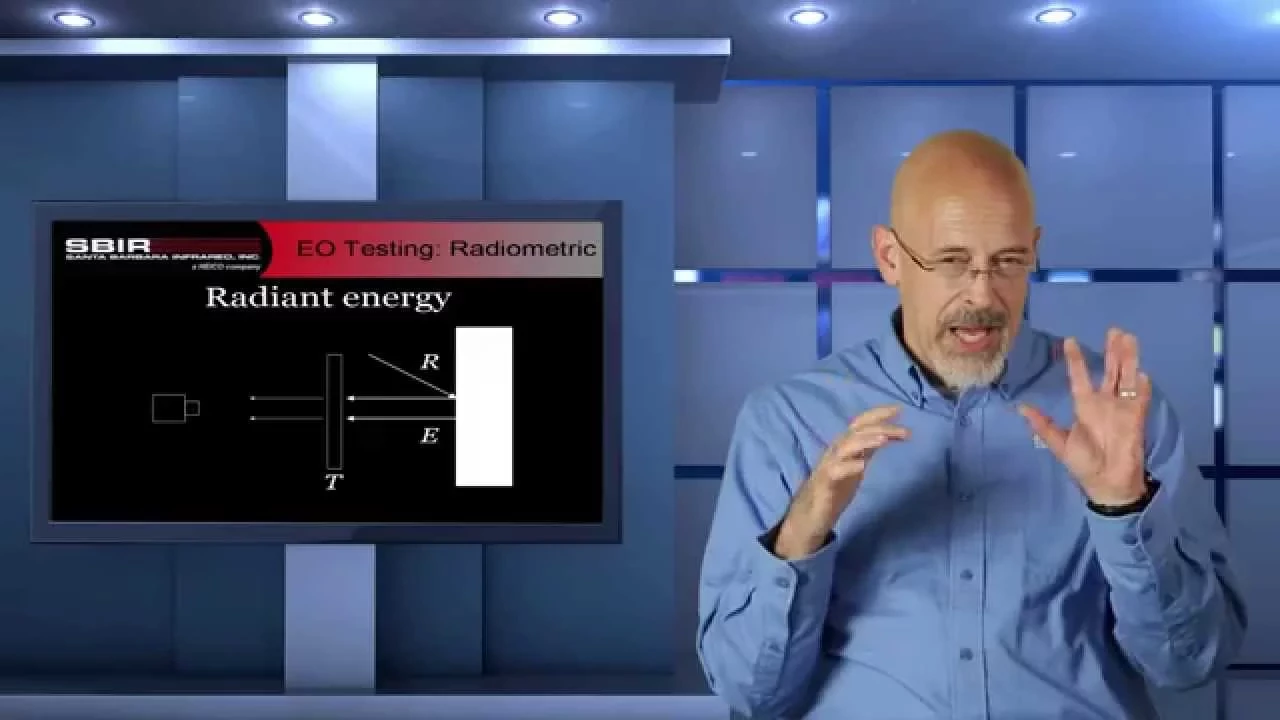





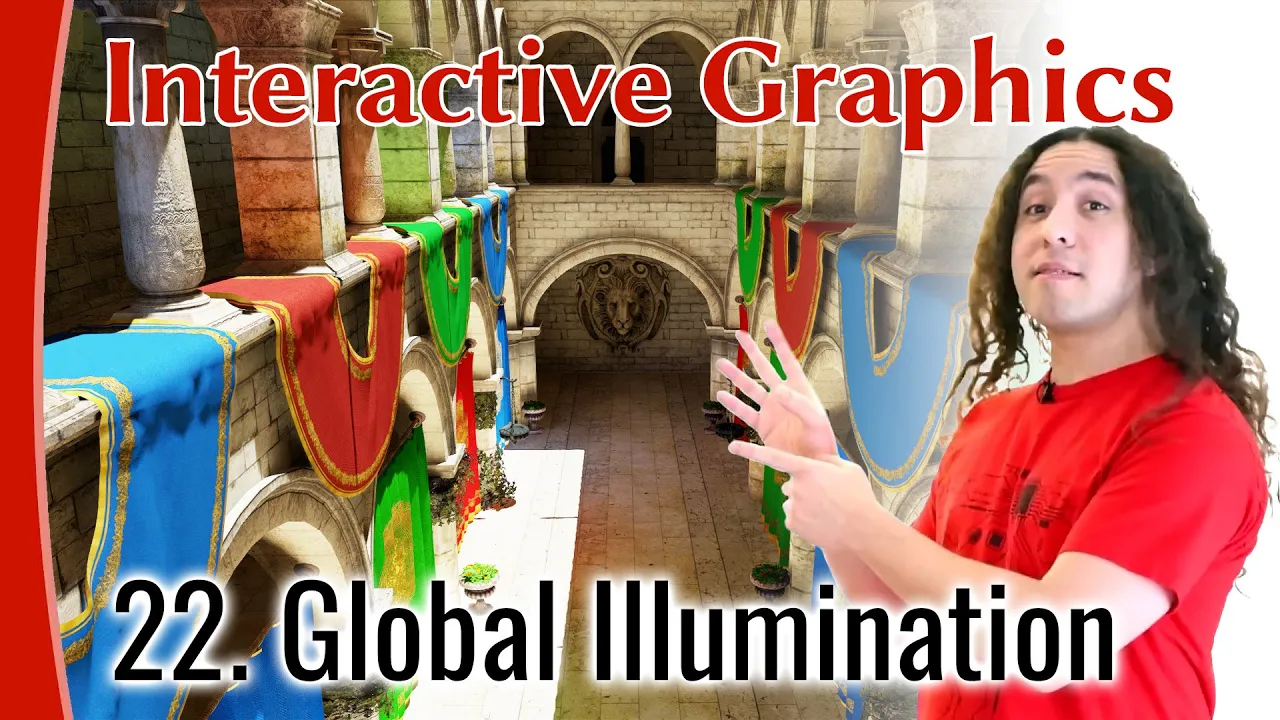
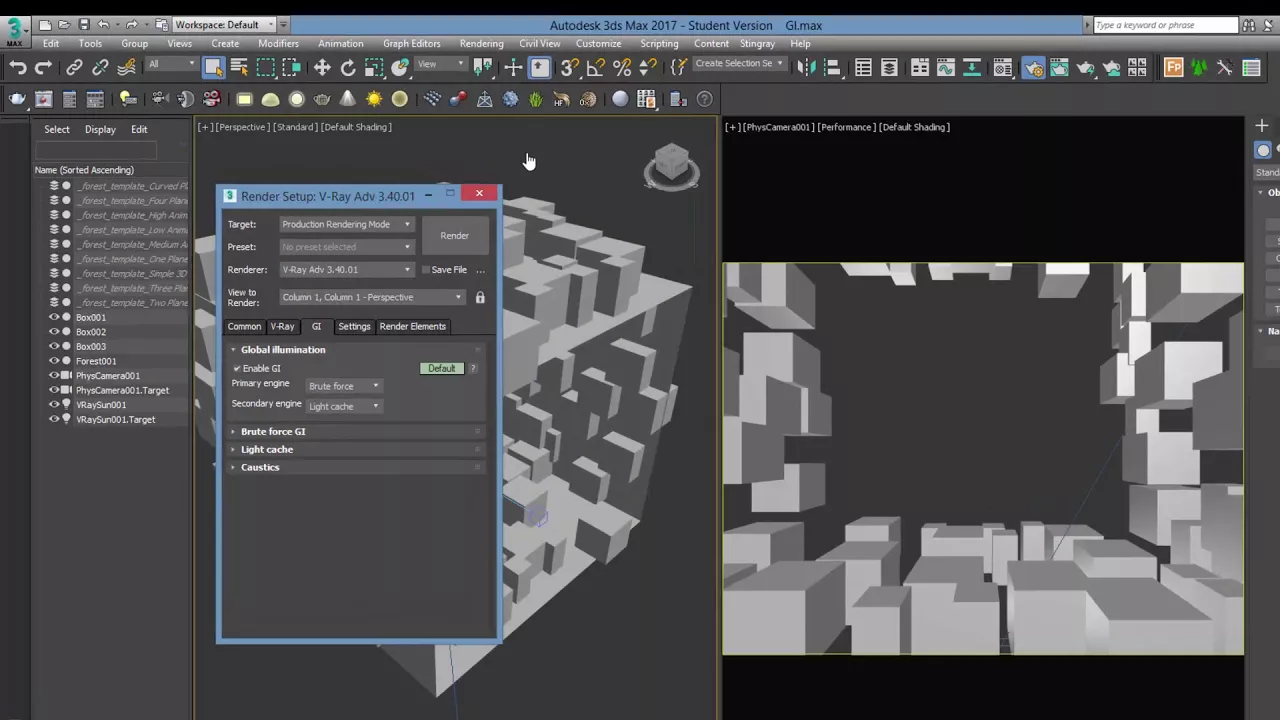
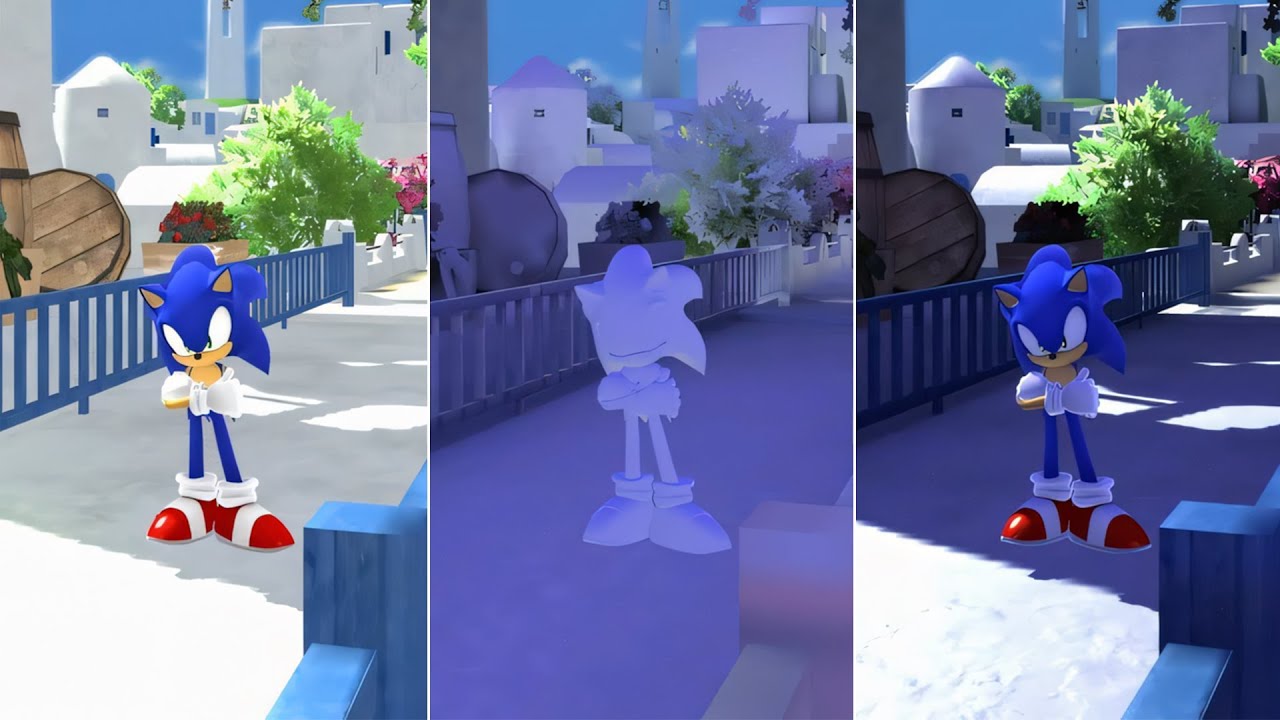







Computer graphics rendering simulates light transport by treating photons as particles that travel in straight lines, bounce off surfaces through reflection (specular or diffuse), and eventually reach the eye; this process involves understanding light's physical properties including its wave-particle duality, quantization, and interactions with matter, while rendering techniques like rasterization and ray tracing approximate these physical phenomena to create realistic images, with modern approaches increasingly moving toward physically based rendering that accurately models light-material interactions including global illumination and soft shadows.
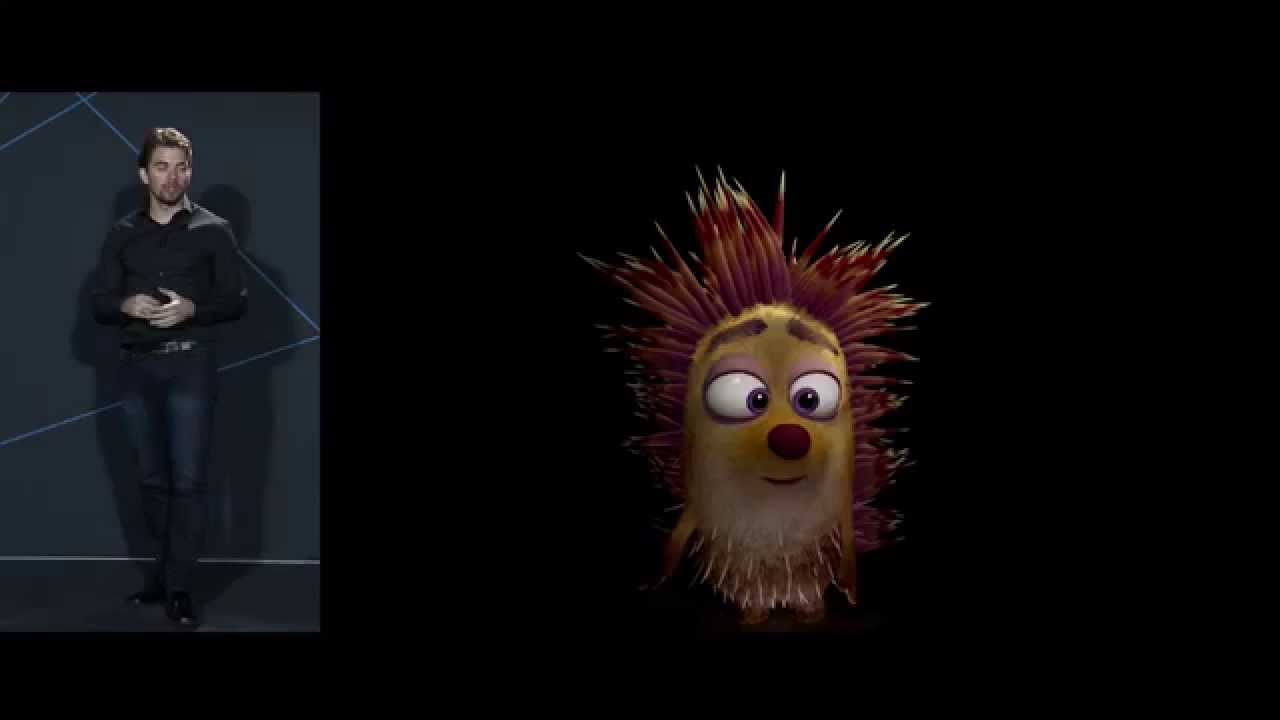
The Physics of Light and Rendering | John Carmack Talk
Added:Basic Physics of Light: Understanding geometric optics, electromagnetic waves, and how light interacts with physical matter through reflection, refraction, and absorption.
Linear Algebra for Computer Graphics: Mastery of vector mathematics, matrix transformations, dot products, and cross products used to calculate surface normals and light directions.
The Classic Graphics Pipeline: Familiarity with rasterization-based rendering, coordinate spaces (model, world, view, projection), and basic vertex and fragment shaders.
Introduction to Radiometry: Basic comprehension of radiometric quantities such as radiant flux, irradiance, and radiance, which underpin mathematical rendering equations.
Physically Based Rendering (PBR): Deep-diving into microfacet theory and Bidirectional Reflectance Distribution Functions (BRDFs) to simulate realistic real-world materials.
Real-Time Ray Tracing (RTX): Studying modern hardware-accelerated ray tracing APIs (like DXR and Vulkan) that have made real-time global illumination practical.
Global Illumination (GI) Algorithms: Exploring advanced light transport simulation algorithms like Path Tracing, Photon Mapping, and modern dynamic GI solutions.
Virtual Reality (VR) Rendering Constraints: Investigating latency mitigation techniques, asynchronous timewarp, and foveated rendering designed for head-mounted displays.
Neural Rendering and AI-driven Upscaling: Examining how machine learning models (such as DLSS, FSR, and Neural Radiance Fields) are transforming real-time image synthesis.
249.8K views5.9Klikes1:32:00Original Release: 2013-08-04
hello everybody yeah good wa we have a good crowd for John's second talk it's very exciting this is the first year that uh John will be talking twice um couple things to um uh to know John will talk for for about an hour or so and then we'll have 30 minutes for questions the mic is right there that's actually just right there and um uh so just line up uh when we get to the questions try to keep your questions on what John talked about if you get up and ask when Doom four is coming out I'm going to kick you in the knee so right there uh so um I will uh not waste any more time but you guys in the back because John's going to write on the board and we have plenty empty seats here you can you can file in it's you know don't worry that there's reserved seats there just go ahead and sit in them um all right I will uh give you guys uh Mr carac okay okay so I guess this is sort of going to be like a school room session I had diluted myself for a little while that this would be the first talk where I ever actually made slides to present but it didn't actually come to pass so it's going to be notes and talking and some scribbling on the board again so Mo almost all of what we do in game development is really more about Artistry it's about trying to appeal to people but there's the small section of the small section of what goes into the games that's drawing the pictures on the screen that you can at least make some ties to the you know the hardest of hard Sciences and while you know it's great that people are researching the psychology and the different ways that people think about compulsion loops and some of these other game design topics uh the raw physics that goes into rendering uh just kind of goes through the heart of physics where you know it goes through the kind of the allstar list of physics with Newton's Optics and Maxwell's equations and Einstein's relativity and it's kind of neat to think that this is sort of brought to bear in the the techniques that go into sort of making the games that we play So at the St at the start you think well okay we see light so what actually is light and we've got a definition now that lights the sliver of the electromagnetic spectrum that we can actually perceive but that has a really long and complicated history for how we sort of reach that conclusion and how it's not really as clear-cut as most people would like you know would like it to be uh you know Optical research started kind of all the way back with a lot of the Greek philosophers but uh Newton did a whole lot of work with breaking light up with prism seeing how white light was actually composed of all the different colors of the spectrum and they add together to make what we perceive as light uh and then for there was a centuries long debate about whether light was a particle like this little tiny billiard ball these photons that you shoot out or a wave effect like all the things that you see in waves in water and waves in matter so on and finally we reached the conclusion that well it's a wave particle duality of that quantum mechanics talks about and this is very unsatisfying when you begin looking at this uh but it's really pretty much irrefutable there are these straightforward experiments that can be done to show that you look at it one way it's a wave you look at it another way it's a light uh or it's a particle so luckily for computer Graphics we hardly care at all about that only when you start looking at some aspects of surface reflectance models do you start caring at all about some of these quantum mechanical properties of light for the most part we can look at light as zillions and zillions of little billiard balls shot out from lights and bouncing off of things and eventually reaching our eyes so that we can perceive them uh there's a lot of simplifications that well that have to happen when you when you talk about simulating this the uh there's a lot of engineering disciplines like thermal management uh radio engineering that do simulations of the electromagnetic spectrum just other parts of it how they they Bounce Around interact with things and this is done all the time and it works it really is science so you can say rendering an image or deciding how much Light reaches a particular area is about as basic of a science as it comes there's not a any artistic measure in here there are tons of other aspects once you get into perception that do become questions about well maybe there is artistry that goes into producing something when you've got an impression that you want but when you're talking about simulating an environment which most of what we do in sort of the hardcore FPS type games is we we are pretending that we've got this virtual world and we're running a camera through it and we're trying to simulate what's happening in various ways and nowadays we know what we would have to do to make that almost perfect we just have nowhere near the the Computing capacity to do uh really really high level simulations but we can trace it's useful even if you're not going to do the right thing to at least understand what the right thing is and then understand which tradeoffs you're making and make them with sort of a clear head rather than accidentally backing into tradeoffs that may or may not be really the best way to to go about things so so many that it took a long time for people to realize that these other phenomena things like radio waves and there's a lot of confusion in 19th and 20th Century physics about like which things were particles and which things were rays and we still have kind of mixed up terminology when you talk about cosmic rays that are actually particles and you talk about uh you know Alpha radiation and beta radiation and these things that are particle based rather than being Rays from the electromagnetic spectrum but we use this stuff all the time for radio waves uh you know your Wi-Fi has 2 gigahertz I you know uh frequencies you know the uh the visible light rays are up in the you know the terahertz re many terahertz I am but they're basically the same thing they just differ in how they interact with matter they're produced in somewhat similar ways but the different things change they behave differently when they interact with other uh things based on their wavelength which is why x-rays can shoot through things radio waves can go through some things that that visible light pretty much bounces off of so another important critical thing really is that photons the little bundles of light that we talk about they are absolutely quantized it's Again part of the the quantum weirdness that you can't send off this arbitrarily divisible amount but there is a an almost unbelievably large number of them a given light that's throwing out is you know can just say zillions with a straight face because it's a very large scientific notation number it's not trillions it's not quadrillions it's even more than that that are coming out in terms of these bundled little uh quanta of energy uh now they do have characteristics to them if we treat them as the little billiard balls in computer Graphics we are generally looking at only a few different spectrums of a few different wavelengths in the spectrum of light and that has to do with an aspect of the human visual system while there are this incredibly divisible spectrum of light that goes out we're only susceptible to three sort of styles of light and they're not even individual frequencies that's why we can get by with red green and blue for uh for our monitors emissive spectrums because we only have three types of color receptors in our eyes and I often think how it would be really interesting if you could look at all these other spectrums bouncing around and that's what thermal imaging and some of these other things let sort of get a peak into it and that's only light that's very that's em radiation that's very close to the visible spectrum the infrared uh it it's it would be much more bizarre and interesting to be able to visualize radio waves in a real- time space to like see all the multi- paath that's causing your Wi-Fi to be weird in specific ways why you know moving something over here causes the I you know the the radiation to change so much at your antenna to make a difference in your reception strength and these are all things that that have a bearing to what you do with light transport as well as other wave phenomena like audio like really really high-end audio processing is the exact same thing as what we treat light processing uh you send out energy it bounces off of all sorts of things in the world and eventually arrives at something that's going to perceive it which would be your ears in that case versus your eyes so to kind of start with the the path of a photon of what it would take I you've got something creates the the photon and for the longest time in our human existence about the only thing that we saw creating photons was a great deal of heat uh you heat things up hot enough and photons start coming off of them you heat it up enough it starts glowing a dull red you heat it up more it starts getting more yellowish and towards White as more and more of the colors of the spectrum are emitted from these uh uh hot things and obviously the sun is a very hot thing where you've got a fusion reactor going and the uh the light that comes off of that is all of these uh these ATS giving up some energy so photons carry energy away from uh where they came from and this is radiative uh radiative heat transfer where something gets hot if you leave it all by itself there it glows and it eventually stops glowing it cools down going down through the Spectrum getting cooler and cooler until you don't see any visible light because it's actually lost much of its heat uh on Earth radiative heat transfer is the least effective form of heat transfer you get much more from conduction where it just kind of goes through the actual physical contact uh into other areas as the heat spreads out or convection where moving currents of air or water take the heat away but in space radiation is the only way you lose heat and in aerospace engineering this is extremely important things like the areas like the International Space Station and spaceships they have to worry a whole lot about thermal management because the only tool they've really got is radiation you see you see these enormous solar panels where they collect solar energy but a lot of space vehicles have to have enormous radiators where they actually let the energy go you know go out from the vehicle otherwise they would get hotter and hotter so the uh it's important to note that even if it's not glowing so that we can see it everything's still radiating so you don't see the space station glowing red hot it's just glowing at whatever its normal temperature is which can be perceived with infrared sensors but it slowly loses energy and it eventually reaches a balance that's why something stuck out in the Sun in space doesn't get hotter and hotter eventually it reaches the point where the light that's coming in and hitting it is equaled by the radiation that's leaving it and there are I like you can make uh We've made rocket engines that are radiatively cooled where they burn 5,000 degrees or so inside and they get so blindingly white hot on the outside that all of the energy that's not going out the nozzle that's soaking into the walls is radiated away as a whole lot of light and this is essentially what old style incandescent light bulbs were you had a Tungsten filament you made it really hot by pushing electrons through it and it got hot enough and it started glowing and if you watched closely if it was a very like a heavy filament you could watch it warm up or especially shut down it would go through kind of ramp through the temperatures you would see it be red and get up to White hot and then when you shut it down it would cool down through yellow and then back through red before finally settling uh settling back to radiating in non-visible regions at sort of room temperature eventually nowadays we have a lot more efficient ways to create photons with uh fluorescence and LEDs things that are tuned carefully to just barely nudge the uh the electrons in the atoms out to an excited state let them collapse back down and spit a photon out for the most part Photon emission is random in terms of which direction it goes when you look at Radio engineering there's huge bodies of literature for intenna design that determine how you can make make it slightly stronger weaker in different directions but there's still a very fundamental nature of Randomness which is again the quantum mechanics aspect of things there is at a at a very lowlevel natural events are completely random and you can't just say I only want photons that are come going to come out of the left side of this material so you get a photon that pops off in some random Direction uh it may go straight for if it's coming from a distant star it could go straight for trillions of Miles more or less just traveling through space there's little bit of general relativity with you know warping of light that can happen but for the most part it can continue on indefinitely it's a self-propagating wave so pops off of some atom somewhere maybe flies through space for a billion trillion miles or something comes in finally hits our Earth's atmosphere and then starts interacting with the atmosphere in some way every change in density that uh visible light goes through will uh will result in it bending its path somewhat this is called refraction uh the most obvious case when you look at it is things like prisms and lenses where you can see the light really strongly warped but it happens in any you know any sort of density change going from the vacuum of space to the outer reaches of our atmosphere and then every change in uh in pressure or temperature changes the density and that causes very slight and subtle movements of the changes in the direction of the light and this is actually why stars twinkle out at night if you're on a clear night and you see stars coming in from B ions or trillions of miles away it's going completely straight till it hits the upper atmosphere and then it may slightly deviate just tiny fractions of degrees and this can cause the the very small number of photons that you're seeing there to kind of come and go or move around in different ways uh but the most important thing for from a computer Graphics standpoint are the effects that happen when it hits more solid matter solid surfaces or even liquid surfaces and that's where uh it has the opportunity to to generally well it can be even gas you can wind up having the case of absorbing the photon um this happens rarely in gas you can pass through hundreds of miles of atmosphere and not have too many of the photons absorbed uh but it happens very rapidly in uh in matter in solid matter um the a typical Photon when it hits a surface might penetrate a little bit into it a surface like metal will bounce off of just the first several atoms it doesn't take many molecule or many atoms of uh of metal before you can reflect light out which is why you can make these super enormous space mirrors that are just a very tiny sputtering of aluminum on some plastic film and they can actually make solar sails or giant solar collectors and concentrators but for most other materials the light can penetrate a little bit further into it uh as it interacts with the molecules it can either be absorbed raising the temperature a little bit uh going into eventually heat making it hotter so that it starts radiating out radiating out at some level or it can redirect the photon in some way you've got the minor redirections from the refraction and much stronger ones when it interacts and bounces off of a solid surface now there's a ton of different names there's literally a couple dozen different names for the different ways that light can interact with surfaces there's all the different types of scattering uh of course reflection reflection refraction uh reflection can be split up into specular reflection diffuse reflection and there's all sorts of different subcategories I mean Optics is a huge topic there are societies dedicated to you know every aspect of it and there's huge terminologies for all of it but for the most part you can say Photon comes in if it's not absorbed it's going to be kicked out some other direction uh and then it can go and interact potentially with the atmosphere or potentially with another surface and eventually it's either absorbed well eventually it is absorbed somewhere but for the most part they're absorbed abbed into the surfaces around us but a tiny tiny fraction of all the photons that are bouncing around eventually hits our eyes and even when it gets to our eyes which are mostly transparent there's this chance that the photon hits and it specularly reflects off of our eye and you know it made it all the way out of the billions of possible traces made it to my eye and then decides to specularly reflect off some other direction but most of it that hits the eye and hits the lens gets through propagates through you Vitus and aquous humor and all little biological parts of the eye and hits receptors in the back of our eyeballs that turn those eventually into neural impulses that our brain works with now our eyes can actually be quite sensitive the I the rods the non-color sensitive part of our eyes when they're fully dark adapted if you've been staying outside for uh in a dark area for 20 30 minutes single photons can cause chemical reactions to happen in the you know inside the rod cells it takes a handful of them a couple dozen for it to turn into a neural impulse but it is possible for people that especially in the old days people watching for things on ships in uh in moonless nights that might be out all night with nothing but faint Starlight you can have cases of just handfuls of photons coming off of something being registered and showing up and people acknowledging their existence which is pretty amazing when you think about these incredible subatomic particles not even particles but incredible the scope of that being detectable by us as biological entities and uh there are limits to the uh what you can wind up detecting with light uh light has the visible light that we see has a wavelength and you can't really deal with things that are smaller than that which is why you're never going to have a real picture of an atom or a molecule because those are much much smaller than uh you know than the wavelengths of light uh you eventually use electron microscopes and then scanning tunneling microscopes and these other things that don't deal with light at all to take those super tiny pictures like the uh the boy and his Adam movie that IBM research did which was done with a little raster grid of of Adams which is really in the fundamental sense of the word deeply awesome that we are dealing with matter you know the very constituents of everything at that level and we can make a little a little movie out of it uh but those pictures have nothing to do with light nothing to do with rendering and the and basically the the techniques that I'm talking about here uh that's a completely different way of sensing what's going on at that level so uh to recap the the basic pictures of this you've got you know something a sun up here spits out some light travels through space gets to the atmosphere on the earth maybe bends a little bit maybe just goes straight through comes down hits a surface maybe gets absorbed maybe hits something else you've got walls and rooms and bouncing around in there and eventually if we're seeing it reaches somebody's eyeball inside and that's the physics of what happens it's really well understood it does come down to a lot of data acquisition and characterization when you talk about how the the critical interactions with the surfaces when you've got your basic theoretical thing if you talk about a flat surface you say light comes in what happens to it that's the question of surface response if you have a perfect mirror and and it's worth noting that to be uh you don't have to be perfect on an atomic level to be a perfect mirror you only have to be perfect at the optical level which is somewhat larger so people can make basically perfect mirrors just highly highly polished things a perfect mirror will have the photon reflect off in this exact reflection if you take the normal to the surface you wind up with equal angles there so highly polished surfaces act like this um when you get a a reflection off of something like the surface of water it'll behave like this but most of the surfaces that we look around us do not behave like this we have a a spread of the energy where it comes in and it bounces off to some degree in every direction no matter which way you look at most surfaces you see again zillions of photons coming in some of them go in every direction they just go in a Direction that's biased based on the type of surface that it is a surface that uh one of the easy things that a lot of times is approximated both in the engineering sciences and in computer Graphics is to assume that the surface reflects perfectly diffusely or it's a lambian surface and what that means is that no matter which way the light comes in if it hits it completely Edge on completely straight on it has an equal probability of going in every direction and there are some materials that are close to this if you take something like I a block of chalk white chalk that behaves almost as a perfect diffuse reflector if you light it from one position and you look at that like a little scribed out area on it from any different area around it it will appear to have about the same amount of energy coming out of it but there are uh most all surfaces are more complex than that though most of them will say for you've got light coming in here there will be more of it coming out around the reflection area and some general amount coming out in all different directions uh but these can actually get quite complicated and the simplifications that we use in graphics sort of approximate these but you can measure these with specific tools that go in and take lots of samples from moving the lights around because it depends I unfortunately this is one of the areas where it does get uh not so great for computer Graphics it depends both on the incoming Direction and the outcoming direction and those are two angles in each one so it winds up being a four-dimensional equation to say how uh light comes in here how does it come out in some other Direction and in fact it gets worse than that because very few things do reflect just off of this upper surface most of the time the light will go in go below the surface bounce around a little bit and shoot out some other direction so if you're saying well my Photon comes in here not only do you have to say if you're being really really accurate which angle does it come off of but also how far away from the original Point does it come off of or if it's a thin surface how does it come out on the backside you may have other setups coming there when you look at like a leaf in the sunshine you've got a lot of the energy bounces off the shiny top face but a lot of it diffuses through and comes out on the back side so these are not uh not pleasantly analytically tractable things they wind up being big tables of data and uh one thing that's important to remember is when you see like tables of data that are collected for things don't necessarily capture all of the important characteristics of a surface where if you take one of these sensors that you can capture uh a table of data here if you did have your perfect mirror reflector it's almost certainly not going to have the exact sample exactly where you want um so but eventually data does win just as we increase resolution on things we'll have higher and higher resolutions for our surface models uh and we'll get closer and closer to reality for what we're simulating so to go as kind of a a capsule history of computer Graphics rendering then when computer Graphics started off if you look in the 60s 60s and early 70s computer Graphics research focused on the hidden line problem you know we had uh we had line oriented displays either true Vector displays where like the old uh uh uh video game arcade games like uh I'm blanking out now yeah like asteroids is the best example uh that are actually drawn by raster beams moving around where they really are true line displays there's no raster there's no Edge aliasing and uh all the different games like that uh were what the early in the earliest computer Graphics systems were basically like that where there were Vector displays and once people learned how to draw figured out all the the basic projective math to say all right I've got my Cube here you know I want it to look like that but when I draw it I've got that on there how do we figure out which lines that we're going to erase and that was you know that occupied research for a while to figure out effective ways to do that uh without spending at the time the scary divide costs for different things and you'd have lots of interesting uh work being going on but when we eventually got raster displays where we could fill them in of course at that point people filled in the the surfaces of the cube they're all grayscale at that time so you can draw a cube and say well this will be the light face this will be the dark face but that was neat at the time but that was not sort of what things look like in reality so people started taking the steps that they could to to try and say what do we need to do to make this more approximate what we see with our eyes and this has been a path that's been driven probably more than half by sort of ad hoc approaches about just well what's what's reasonably easy for us to do that gets us somewhat closer to it while there's also been sort of a parallel path of saying well what's the physics actually doing how do we make an actual solution for it um so the earliest things that got added to the shading model for computer Graphics was if we assume that there's going to be a light that's at some point in the beginning that it wouldn't even be local you just say light is coming in from this direction so we want to be able to say what color or what shade should each individual service be based on where that light is so you've got the obvious things that if it's not facing the light no light hits it and you would draw it black so the question about things that are directly facing the light so if you've got light coming in if you have a surface completely perpendicular to it you make that your brightest color if you've got a surface that's completely parallel with it it gets no light you make that zero so you've got some curve that goes between it to say how bright something should be and it turn turns out that that's a fairly straightforward bit of math to solve where you have light coming in at a certain angle you've got the normal to the surface the amount of light that would strike a little surface there is proportional to the cosine of this angle and that's actually that's not an approximation that's actually a bit of ground truth I if you've got the light coming in and you've got something coming in at this angle a surface that's let's see if you count the number of rays that go in on something catching four of them directly turning it down only covering two two spaces there all that actually works out correct and this is the basis for a lot of the uh a lot of the real calculations for light transport not a hack actually part of real proper physics measuring so once you've got that basic approach you go back to your Cube tube and you get your light coming in and you've got a brighter face a brighter face a darker face and the faces away from it are completely black and then most people say well we don't usually see things like that so now we get into the fudging and you say well let's just brighten everything up a little bit we'll add an ambient term so you sort of just add this minimum level to everything on the back side and that helps a little bit if you've got a cube then everything looks pretty much great because it's a constant color just on the side that you might not see over there but if you've got something more complex everything that's not facing away from the light winds up being the same color and it's clearly not correct it's not what you'd like but it was all that seemed reasonable to do at the time the next step was to start looking at surfaces that are more than these perfectly diffuse reflectors if you make if you model your Cube like this it looks kind of like it was maybe carved out of chalk uh and can be a decent representation of that but very few of the surfaces that we see around us are really that simple most things have some kind of a shine or highlight on them you know as we look around you can see Reflections and highlights on on all sorts of things and the obvious bits of metal and plastic little things that you might hold in your hand I can look at all these different shines and Reflections on the plastic that I'm holding here now the observation was made that the highlights on most objects that weren't completely mirrored they tended to be something like a bright hot spot like if you had a if you had your sphere here you would have a bright hot spot that kind of faded a little bit around there and just by looking at that and saying well you know what could we do that would be kind of like that the observation was made that well if you take this sort of cosine Arrangement here this makes this nice broad fall off it makes a um you know over the entire surface of the sphere coming from that it'll fade off till Halfway Around the light but if you wanted something that was really tight uh the thought was well we can just take this value and raise it to a higher power we can just take this and go you know Square it Cube it take it to the the 20th power which can be done you know effectively mathematically quite cheaply this has no basis in physical reality at all this is a completely ad hoc approach uh but it worked out okay and this is what the uh you know the long lighting model was about where you separate it into your diffuse lighting which is the more or less what color the surface is and then your specular lighting which is what the highlights are going to look like so you had this other value to to play around with and that was the the specular power and nowadays I I regret using that in my terminology where we have power maps and nobody understands what those are they they relate to the you know the specular exponent what going to take something to a power of to to tighten it the better terminology that's used more often now is a roughness map where you have a mapping and you also do it in logarithmic space rather than linear but more or less that's still today what a lot of Graphics involves is you've got a roughness parameter which affects this exponent that you take uh this extra Vector to generate your specular highlights for and again it was uh it would make so if you're rendering your Cube and you get the the light at the right angle like if I'm looking at this here and the lights over here you know it hits that if that's at that right reflection angle then you'll get a nice bright shade on there that flat surface will catch the light and it will glint at you and that would be looked at as a as a real advance for the rendering so you've got something that looks diffuse but when it moves when it moves into the light it kind of catches a flash of light and Fades out so the facets on these solid shaded models started looking better now what uh the next thing that people wanted to do is okay we we've got enough cubes and tetrahedrons and uh dodecahedrons and whatever so we want to start making things that that look more realistic we need to have a teapot you know we need to have a curved surface in some way so you make some curved surface like this there was a lot of work in the early days on directly rasterizing curved surfaces drawing them directly but all the realtime Graphics almost all of it has been a matter of turning your curved surfaces into to approximations with flat surfaces so you've got something that is theoretically a curve a curve but really it's a bunch of facets so if you apply the the lighting model there to it you see all of these facets it stands out as like okay you've just carved this as you've carved this out with all these flat planes and it doesn't fool you into thinking that this is this smooth curved object so the next step in graphics that went on on was adding the interpolation across I you know across the the vertexes where instead of calculating a value for a face you calculate it for a given vertex for one corner and then you just average you interpolate across there so that a point here is going to be some average between three or four of the points that make it up uh and that works surprisingly well uh if you're looking again at a diffused surface it works out uh just about as good as you'd like there are some minor artifacts called mock bands that you get as if it changes too much but if your testation okay that works out all right it works out less well with the specular highlights and the reason is that uh your specular highlight if you've got uh it might show up like if you were supposed to have some hot spot right here in the middle of a surface if you calculate it at the outside this is going to be almost zero the specular almost zero and when you interpolate across it it's going to have nothing you're just not going to see it you'll only see a highlight when the specular comes up at the the very edges and this is what still to this day sort of the standard openg GL shading model is it's grow shading uh with calculations at the vertexes interpolating the colors or parameters across it so this model is still with us to this day for a lot of sort of quick uh stuff that's not visual simulation oriented if you just write something using lighting with open GL that's the model that you get if you turn on specular highlights uh in graphics where they care more about visual quality what what started happening was interpolating not the color across it but interpolating the normal sort of the curvature across each point and then applying the lighting model at every pixel and at the time this is this was like a flagrant use of processing power because we're like okay these calculations are expensive we have to these distance calculations dot products uh exponential power stuff and when you just do it at each vertex on your Cube okay so you've got you you've got a handful of vertexes that you need to calculate but even on an old school display you would have hundreds of thousands of pixels and so if you're drawing that there going from doing this maybe a few hundred times or a few thousand times to hundreds of thousands of times for a scene was you know a large use of additional processing power but it got you the good looking areas where you could have a highlight that that looked about like it should moving across the surface or sitting on a floor looking stable there as you moved around uh people that have been in following PC graphics for the last couple decades we've seen games that uh you know that do not have interpolation the different ways where the lighting would change dramatically we always had the problem of densely tessellated characters or objects and then very low tessellation on the world uh and the problem that you You' run into with that is that if you're applying one of these interpolation schemes to it you would have something that you could never have highlights in the middle of a surface only at the corners and there were also issues with perspective math and clipping that would mean that it would change as a really big polygon clipped by the edge of the screen in almost all cases the way people did it and this was one of the big things that pushed me during the Quake time frame to use light maps for the first time where instead of I had seen other games that were doing lighting at the vertexes and I didn't think it was you know it wasn't good enough you couldn't get anything resembling a shadow you had all these swimming artifacts uh with the lighting and it just didn't give the you know what I wanted to see and while Quake didn't have any specular highlights it did have uh these you had samples every 16 pixels in the light maps that we interpolated across those and that gave us the the look that was very important for it uh you we didn't get to actually it was only all the way up to Doom 3 where we would start doing per pixel operations like this to to get the the much better calculations so even with this level of Graphics at that time uh where you've just got sort of these Fong lighting simple models hacks like the uh the specular exponent in the ambient term we started to see some offline things being rendered like some movies you know early work some of the early NASA promotional work that Jim blind did were significant in the sort of growth of all of this and then we finally saw some feature theatrical films with like the last star fighter and especially Tron where you would see you go back and you look at at Tron and you have a lot of these sort of grow shaded uh solid modeled things on there with your light cycles or recognizers and so on and they were doing something they were intelligently picking a battle that could be won at the time if you said well we have to go ahead and render photorealistic humans we were nowhere close to up to that task but we could do geometric solid models that looked good enough to show on the big screen and that was you know that was a pretty big breakthrough and simultaneously with this there was an alternate approach to the way graphics were being drawn that I so most of the graph the early Graphics were done with rasterization where if you've got your your computer screen and you've got your quad on here I you would draw this on a computer by calculating these equations of the lines and then you would usually just kind of walk across building up your rows of pixels I the whole process of hidden surface removal is another step on top of this where if you've got lots of Cubes how do you know which one draws on top of the other one and this was another thing if you look back in research from the the 70s especially there was tons of work going on on hidden surface removal of these clever different algorithmic ways today we just kill it with a depth buffer we just throw megabytes and megabytes of memory and the problem gets solved much much easier but this path of rasterization is still with us today gpus don't rasterize in scan line order uh like this they they follow you know crazy winding paths to maximize memory bandwidth to fill up tiles you know to rasterize them in different pieces and they rasterize all quads at a time but it's still essentially a rasterization method where we have shapes and we figure out how to rasterize them we figure out which pixels they're going to cover and then we figure out what we want to do the alternate scheme which was also developed in the the later' 70s is Ray tracing where instead of saying all right I'm starting with my object I'm going to take these vertexes these four vertexes that are in space I'm going to take my virtual camera and I'm going to transform them and find out where they are on the screen and then fill them in rate tracing goes the other way where you start off with your camera in space somewhere and your little virtual viewing screen and through that you Rays out into your world and you intersect them with your Cube over here and if it hits that Cube first it knows it didn't hit anything behind that it's got a surface point there and it can apply whatever shading model it needs to the thing that Ray tracing gave I mean it's radically slower like hundreds or thousands of times slower than rasterization if you're doing just the most straightforward thing if you just want to draw that Cube you can draw the same thing with rasterization or Ray tracing it's just going to be a thousand times slower with Ray tracing but it allowed a couple things that were either very difficult or impossible to do properly with rasterization and the thing that you would always see in Ray tracing demos is your shiny reflective spheres so you've got a little Chrome ball and the fact that you could see the world reflected into it and then back into your eye was the thing that Ray tracing could do that rasterization couldn't do really worth a damn at all I mean you would approximate it with environment maps and different things but uh for Reflections and for refraction doing those things properly Ray tracing was you know was really the only good solution but it wasn't practical even for most offline work there are I I can remember looking at Old research papers of things that are run on decka computers and they talk about the number of hours to render these really trivial scenes just you know a few boxes and I maybe a sphere sitting there and the idea of rendering like complete worlds with it was you know was fantasy at the time but it did address some of those problems for the first time with reflection and refraction and it also much more elegantly solved Shadows which all of this stuff talking about surface interactions and the you know finding out what you hit with the light that kind of dodges one of the really hard problems which is saying that well the light light obviously doesn't reach through things if you transform something up here and you transform another another surface down here and the the lights up here this should be in Shadow because it's blocked by this but that turns out to not be a particularly trivial thing to resolve it's basically the same problem of how you view something from your point of view but viewed from the light's point of view and that can mean that well if every light in your scene has to do similar R similar rendering process to what your view does uh possibly harder because they're omnidirectional lights in many different cases and it's just a tough problem and as with so many things there's a lot of wonderful research in the 70s and 80s going through about how you do Shadows effectively with these different analytics Solutions in the end we had a brief period where stencil volumes were an effective way to do things but now it's essentially all Shadow VA Shadow buffers where we really do take every light render an image from their scene and use that to back project onto there to figure things out but that was one thing that Ray tracing had an elegant solution for again if you're already a thousand times slower who cares if you're another factor of two or three slower for every point you hit you go ahead and say I've got my light up here I'll Trace to the light or to however many lights I've got and if there's something that blocks it then that's going to be shadowed and I can take it out so rate tracing always had this uh this much clearer abstraction of what you're doing it's easy to tell that you're sending out a little array you hit something you determine whether you hit all the other lights or if you bounce or refract into something else so it's always been easy and clear it's just had this thousand times slower problem to deal with so the advances that were being made on Graphics uh kind of after this early age focused on the changes and what you can do with the surfaces as the first obvious thing and a lot of these were driven by sort of artistic and aesthetic condition concerns where we got if you pull up a 3D rendering program and you look at their material stuff there's a whole page P full of options things that you can tweak knobs you can turn check boxes you can set and each of these had some use case where somebody wanted this because it made their image generally look a certain way that they wanted very rarely were these things driven by sort of physically correct rendering uh and there was a huge plethora of these things that came out every different program had a different set of options you always had this fall back of you've got your diffuse colors your specular color your roughness this basic Fong shading model has persists to this day but now we have a ton of other things that we can I we can tag on there things that are subsurface approxim scattering approximations frel lighting uh different frequency response on uh on surfaces it's like some of the things do have physical basis to them um like one obvious thing the frenel effect is the effect that as you get more and more glancing to something the reflection gets stronger and stronger and you see this this is what makes water and glass look like water and glass if you look straight at them you pretty much see straight through them without a whole lot of reflection but as you get more and more Edge on even a surface like this where when I'm looking at this at this angle here I've got a very very strong clear sense of the slightly wavy reflection of that white line there while if I look at it right here it's barely visible so that's a physical effect in reality that you can work through the real physics equations of why this happens but people again sort of called up the trusty raise a cosine to a power and it sort of looks like what we want when we're dotting a couple vectors together I so that has that's something that's based off of plausible physics but generally only roughly approximated there are other things like that with I like the change in some metals get their metallic look because they slightly change colors as they get towards grazing angle so again you can calculate the real physics for that or you can just sign kind of say well this color sort of changes to this color at the edges and start interpolating between them uh but lots and lots of good work and lots of uh you know lots of high budget movies and so on were built with these sort of very ad hoc techniques uh but sort of in parallel with this the other big revolution that was happening was Global light transport and Global illumination the comes back to that whole hack of the ambient term this sense that obviously where okay if I'm right here the lights are only directly hitting the outside the back of my hand has no direct view to any light but it's still quite bright and clearly illuminated it's bright because all those lights hit this white whiteboard bounce off of that and wind up lighting my my hand from the back and you can see like color changes like if I move up here where it's mostly covered by the blue marker on there there'll be blue tints to it and this this recognition that so much of what we consider important in the visual field is actually indirect it's not just a matter of here's the light here's the surface what's the reaction because we come back to how much of the light gets bounced around and there's a there's a term called the albo of a surface which is what fraction of the light gets reflected versus absorbed and there's some tricky terminology with this because you can have either the total solar albo where you talk about how much energy comes off of the Sun and this is used for climate modeling and some remote Imaging and things like this where you matter but I but you've also then got the visible albo which for rendering is what we care about and the point is that the the best reflectors your chrom sphere that's mirrored or your white piece of chalk or your freshly driven snow those can reflect 90ish per of the light while your darkest surfaces your lump of black coal or I Asphalt in some cases might only reflect 5% but when when you're reflecting 90% of the light what that means is that if you're in a room that has uh mostly white surfaces a single bit of light coming out of your light emitter might bounce around a dozen times before it finally gets absorbed so it could take a very complex path before it winds up getting to your eye and this is why we could have cases like a uh a dark room illuminated only through the crack under the door but you can still wind up looking around even around corners you can go into the closet in the dark room illuminated under the keyhole and still find things somewhat lit and that's because of this many bouncing path that light can take from the light emitter coming around till it actually gets to your eye and this turns out to be a really frighteningly uh complex and expensive problem to solve uh properly the first sets of attempts at this uh dealt with radiosity approaches and a lot of this was driven by uh engineering things Beyond just making pictures because you would talk about things like heat management if you have a certain amount of energy coming in here how hot is something going to get and what's the hottest part going to be because that matters for a lot of engineering terms so you can do things like you know make a uh make a complex surface here and say energy is coming in here how much of this energy makes its way to here to here here here and it's not just a matter of what that's basic geometry calculations to say how much of this is directly impinging on that surface what gets complicated then is you say well this reflects 50% of its light and that 50% goes to all of these different ones here and this one reflects 50% and that goes to all the ones here and you know in theory you go if you're doing everything floating Point math you can keep saying you can bounce it 100 times and say you get well.1% winds up coming back uh to another spot at some point you just say it's converged well enough this solution is not going to change much on the uh no matter how many more bounces that you do so the radiosity solutions work by creating this giant linear algebra Matrix of uh coefficients where you say you identify all of your surfaces and you say how much can what form factor what fraction of the energy goes to all of the other different surfaces and then you may be solving this 10,000 by 10,000 Matrix and there were you know there was a lot of work on the optimizations that you that go into solving this more effectively uh but there are two reasons why radiosity is not a not a particularly relevant technique for computer Graphics anymore one aspect that it sort of glossed over was the notion of occlusion where if you've got a surface if this goes out here and you go around the dark corner all right we've got this surface here it's clear that it can't see this surface at all I it can see this surface this surface can see part of this surface you know a fraction of it and it can see an even smaller part of this surface over here so you have to calculate these occlusion terms where you're saying each one each surface unless you're in your you know your deformed stretch icosahedron some uh you know surface some uh solid that has no convex uh no concavities inside it you're going to have these uh these aspects of occlusion and this becomes a very very difficult thing to solve completely analytically if you're trying to stay in just analytic world and you uh you try to solve well okay we have this surface uding this surface and then another surface here and another surface here it's the potentially visible set problem uh on every polygon and it's uh it's an analytic nightmare so you wind up solving this by approximating you just say all right I'm I've got a surface here I'll throw a bunch of rays to test out here and I'll throw 20 Rays out and if 10 of them get through I'll say I'm 50% uded now a purist will will start blanching and saying yeah but there's that's random there's this Randomness you might be misestimating there could be pathological cases uh and there's you know there's some truth to that anytime that you're sampling things there are sampling cases that that can turn out pathological but the other side of that then goes it's like well we're we're tracing Rays we have another technique that involves lots of tracing Rays uh and come about it from the different route which is to say well let's start with Ray tracing and let's try and solve the global illumination problem using nothing but Ray tracing which leads to path tracing so you could make a render ing solution a rendering program where you start with your light emitter you throw photons out in all directions you have your Cube here and somewhere you have your eye you will get a physically accurate image if you throw random Rays pick a random Direction it goes down some of them go off here some of them go up here but eventually some of them wind up hitting a surface and then based on what that surface is you determine which direction the light goes out it's going to be random and again your your perfect reflector would not be random it would go off in exactly the perfect reflection Direction all other materials will throw light in essentially all directions but with different distributions they'll be more biased towards the reflection Direction there'll be a chance that they go everywhere so one of your billions of light rays goes out hits there it decides it's going to reflect up another one goes out hits here it's going to reflect over but eventually some Ray is going to come down hit a point here and then reflect at exactly the direction that goes over and hits the surface of your eye which the lens can then focus into something that you can perceive and this is has an interesting biological side to it the the larger an eye is the more light it can collect which is why animals that will generally hunt at night can have larger eyes larger openings into their eye uh and why telescopes get bigger to see more you can just this is what's happening in reality zillions and zillions of photons come off they bounce around and eventually some tiny fraction of them hit the lens of your eye or your detector or whatever you're using and can be resolved into an image so you can make an image like this people have done it it is extraordinarily inefficient uh but you can solve everything with it this is a complete and accurate Sol as accurate as your uh as your analysis of what the lights distribution is and what the surfaces distributions are this can be as good as that you can have your you know your extra surface up here where you hit the ceiling you bounce back down you hit a wall over here you bounce back over and then eventually make your way to the eye and you start thinking well you can have 10 bounces going in a random Direction and your eye is only some handful of millimeters across uh but you're projecting an area this size how many traces do you have to do well you have to do billions and billions and you wind up with a very noisy image at that but if you did enough of them this would come out with the right solution Trace array it either gets absorbed or it reflects into a different way or transmits through it you've got this whole the model that you use the the bidirectional subsurface scattering um distribution function so as accurate as that is determines what happens to the lights you can have models of the lights there are these standards like IES light tables that have I you know those particular lights you could look up what's the distribution of photons that come off of them you could look it up for all the different ones and as good as the data is uh your simulation can be as good as the G as good as what you feed it uh but it's hopelessly hopelessly inefficient what we wind up doing in different ways that can be reasonable approximations are instead of tracing throwing Rays out from the light uh which are mostly going to go nowhere near what you want you can reverse the trace and go from your eye like in the kind of classic rate tracing go to the surface and then you start getting into the cases where one of the key one of the sort of buzzwords in high-end rendering is whether a renderer is biased or unbiased a biased renderer is not necessarily perfect physics but it's almost they do it because it's going to be a lot faster like the standard thing that you do if you don't mind being a biased render you say well I have all these directions that I could go to the world I could go up to the ceiling I could go down to the floor but I know I've got all of these lights up here so I'm going to send most of my Rays towards the lights because those are almost certainly going to be the things that really make a difference so you go you hit your point and you say Trace against every light you know you've got three lights going here let's run a trace up against them check for occluders solid things blocking it off and then you start throwing random amounts of rays in different directions you can be smart and base it on what the character of the surface is um you know it it again comes down to these distribution functions where you could have Rays where it's more likely that if light comes in this way it's more likely that it's going to make it out towards your eye so it makes sense to sample that more often and there is tons of work going on to this day this is sort of where the active state-of-the-art of graphics rendering is where you how you optimize this path tracing to be more efficient in different cases but it is always then you're making your approximations on what you want to do uh because you can make like the problem with this is if you have uh if you bi if you're biased and you trace specifically to certain lights there could be uh combinations of surfaces here like you might have a surface here which is slightly emissive and if you wind up hitting that because you were tracing towards the light that's going to get over over represented based on you know versus something that's over here that wasn't in the direction of one of the lights but this approach you know it pretty much works we do uh like for the baking in ittech 5 we have a very primitive lighting solution because even though we do it offline uh we have to the surface area of one of the maps in Rage is about as much as the pixels that go into a feature film and we have turnaround time so clearly we can't do these billions of Ray traces for every what would be a frame of that we you know we have to keep these down to some credible amount of time so what we do is when we're rasterizing a surface we don't even have the viewer at all we're doing a view independent approach for the global illumination and again the terminology is problematic because we have radiosity as terminology in a lot of places as a synonym for Global illumination and technically it's not it shouldn't be that way I mean we have a visualizer called rad preview even though it it does not do a matrix calculation for radiosity at all it's uh you know it is based on this more of a tracing approach so we get our surfaces we look at all the lights that we think should be affecting us we Trace to them to get the our shadows and Sample them to make soft shadows in fact that's another important thing uh the way you get a soft Shadow is if you've got a surface and you've got an object that's going to cast a shadow if you have if you had a point light source so it was nothing but a teeny tiny point that all the the energy came out of then you would have a hard Shadow Edge it would look like Doom 3 um where you just have you've got fully illuminated and then fully shadowed in reality there's no such thing as a point light source and this is an important important thing to realize uh everything even if you look at a light bulb a dangling incandescent light bulb the photons are actually coming out not off of a point but off of the little zigzaggy filament that's inside that it has an area and the photons come off distributed from that area now the sharpness of a shadow depends on the ratio of the area of that emitter the distance that it's going across when you have a great big broad fluorescent light assembly and you've got a small uder here everything is going to be lit to some degree that you have yeah so in this case you might have only the very smallest area there that would be solid completely shadowed but as you move over you start to be able to see part of the light so it gets brighter and brighter until you get to the point over here where you can see the entire light emitter so we have uh to get the soft shadows in rages I and well so like if you looked at the original the earlier Quakes there were soft shadows in there but they weren't a matter of calculating soft Shadows they were because we made a hard Shadow calculation and then we interpolated between it which is why you got kind of the blurry stair Steppy edges there uh for Tech 5 we actually send a number of Shadow samples and this is one of those things that gets into performance tradeoffs where if a designer sets a very large area for a light source then it will have you'll have a very broad area of changing Shadow resolutions and if you only put 16 tests to it that means you only have the possibility of 16 bands of different lighting and that's in the best case if it comes out exactly sort of for your samples where they do their best good uh and it's it's completely possible to have if you got a broad area light source to need hundreds of samples for every pixel to determine how bright that should be and it can get it can get worse in a lot of cases a lot of offline rendering may use thousands of samples per uh per fragment when you get into the global illumination so what we do from the direct lighting okay obviously it's a biased uh lighting approach there because we sample directly to the lights but then we send out random Rays from the surface to see what else it hits and when it goes out and hits this surface up here then we apply a simplified version of the lighting to that we don't do all the full soft Shadows but we do basic uh lighting approaches uh we've had options to do multiple additional bounces but you know this is what we live with is some approach of sampling the global environment and we don't do it lots for each pixel what we wind up doing is uh each each point throws one or a few samples into different directions and then when we average them for this pixel we average over a broader range of pixels and these are the types of trade-offs that everybody doing rendering makes different trades like this where they uh you decide what you think is most important how much time you can afford to spend on things and you kind of you make your choices and you and you live with them after that uh but we know doing it right is just a matter of throwing billions of rays in an ideal case you have to throw lots and lots into the environment we can make decent approximations now but I we're going to soak up all the additional computing power that can be given like one of the saws in the offline rendering world is that I you know the frames will always take a half hour to render in most Studios the more power they get just the more things that they add to it uh there's hope that that that's not a law of nature that uh that we are getting to faster turnarounds kind of like the pace of hard drive hard drive size versus usage but it does seem likely that the path forward is lots and lots of rays physically accurate material uh definitions and approaches that are approximations of the sampling of path tracing we can do there are some neat demos going on uh going around today uh like the Brigade path tracing demo which is real time uh and it's doing Simple path tracing from sort of a parallel outdoor light and and it's it's noisy and fizzly as it comes in but you can stop and watch it kind of come in more crisply and eventually this is going to be the way things go uh this is the way we're going to be rendering but we still have I you know maybe a couple orders of magnitude before it's really competitive I think one more order of magnitude and performance and you'll start seeing it used for some real things but it's still you have to have a good reason to step away from rasterization but probably when we get two orders of magnitude then you start seeing it as one of the more General tools and the reason that it's winning in the offline world even though it's still slower people still care about how long their renderings take even if you're making a a feature film or a TV commercial it matters for your iteration time but the the sense is that you get more out of this being understandable with rasterization environment Maps Shadow Maps there are all these knobs that people just the the best people know what they mean but 90% of the people working in visual uh in computer Graphics you know they they have these things that they know push this this way and it kind of does something but it's a lot of black magic and a lot of things that are just not at all physically plausible and this is one of the things that I've been working with the artists at ID the last several months to start moving us towards this more physically based sense of things where if you just use your standard diffuse specular roughness you can have materials just make no sense at all in the real world you can have things that reflect more energy than come in when you've got a bright diffuse and a bright specular um and there's the real step that we've had to make educationwise is treating these maps not just as something that you paint in Photoshop but how you define the materials that are there where it shouldn't be that if you're looking at something that's a belt buckle you say okay this is metal it's going to have a high specular it's going to have a low diffuse the specular may have color in it it's going to have a high power or a low roughness depending on how your formula it because that's what it is but far too often in you know for the past decade in computer in games especially uh the maps that have been fed into these things the diffuse Maps specular Maps whether they're gloss or roughness or whatever you term it uh they're things that are painted in where a lot of times you'd see a specular map where yeah you take your diffuse map and you kind of monochrom eyesee and maybe color shift it and you stick it into the uh into the specular and you wind up with things that it yes it makes parts of it shiny and parts of it not shiny but some of these things like I don't actually think that there is a physical material that exists that has a red specular reflection color I mean maybe there is but it's certainly not common you know specular colors are are generally white except for Metals uh which can be the color or the base surface uh so there's the biggest thing that's going to be happening for making games look better is really not advancing the graphics Technologies at least for our studio it's the uh it's the matter of getting material materials that actually make sense and once you're there then you can start improving you know improving the things that you do with adding your better Global light transport I all the other cases there one more thing before I cut out from the time warning here I so the the cost of all of this billions and billions of rays one technique that has that's gotten a lot of currency in recent years is uh ambient occlusion now to explain what ambient occlusion is it's another one of those great big hacks but it works you know usefully and it's used it's kind of standard fair in a lot of offline work so if you have a u you know an object that's got some concavity here and you've got the light you know shining on it from here so you light it all up in an Ideal World you'd be doing all of this path tracing and you would say that okay some of the Rays hit here they bounce here they Bounce Around into here some of them go up here hit here and get into that so the path the tortuous path that light can take get into there that's what you really want to to deal with if you've got your white surface there you might need to take Trace 10 bounces from thousands and thousands of things the observation that ambient occlusion is based on is that when something has other things very close to it it is very likely to be uh not as bright as things that that do not have things next to it if you've got a flat surface and you're lit you know there's nothing that's going to be bra that's taking anything away from it but if you have a flat surface that you know has an uder here this area right here it might be directly seeing the light uh and it might be seeing everything in this part of the hemisphere but part of it going to be hitting this and some of that may be going and seeing the light some of it may be bouncing in different directions so ambient occlusion all it does is instead of sampling the whole world it samples just a small area around the point that you're working with and importantly perhaps even more importantly than the scope of what it's sampling when it hits things it doesn't worry about the surface model it doesn't run you know a brdf or brssd at whatever um all it does is say either I hit something close or I didn't hit something and maybe keep track of how far away it is and if you get something like this where okay there's some light coming in here I can see this but I trace out and 90% of everything around me is hitting something else sort of close so based on that I'm going to darken it down uh just on the assumption that if I did run a global illumination Trace through all of this that it would come out and say that I'm not as bright as something that's next to me that's you know that's open so something out here that'll get the full value of whatever it calculates and as you move towards here some of it's starting to to get darker until you move all the way in here we're almost all of it and it's it's a very very crude approximation of just assuming that whatever it hits isn't going to be bright and you can break that by having a cases where you know if you had if the light was coming in right here where it's directly Illuminating all of that and if that was a white surface you could have more light coming down onto there rather than less ambient occlusion would say it's got nearby things it should always be less but you could actually be getting more light from the global Illumination in those cases you know it's just one in a long line of all of these approximations that we do but the takeaway point is we know what we should do we know what we we would do if we had infinite computing power to go with it so all of the things now are approximations onto it ways that we can model our data ways that we can reduce our number of traces and optimizations in the code paths to make things go faster and there's lots of work going on with GPU accelerated Ray tracing again some of the CTIC Graphics work for optimizing it in some other ways um and there's lots of active research going on about what Corners can you cut uh and it's interesting because again we know what the right way zillions of photons coming out collect them all at your the lens of your eye and sort of make an image from that but it's going to be your research for the coming decade or more as we kind of work out what the very best approximations for this are so I ran a little bit over my one hour but I can start taking questions now so we got the microphone [Applause] there up until about maybe 5 to seven years years ago there was every year an obvious increase in uh realism in offline rendering for especially movies and I'm wondering since a lot of the things that you've mentioned here have been around for as long as I can remember I mean Po and all that decades ago um what is the main driver of that increase in in visual Fidelity or realism in the more recent years so a couple factors one is uh actually getting smarter about the materials where these uh you can throw in all of this light transport stuff and if you don't have good materials for it it won't matter you'll still get non-realistic images so better data collection some of the laser scanning and the different things that let us get really good material qualities that's been one factor but probably the biggest Factor has just been people being willing to throw that much more processing power at things I you know to go ahead and instead of letting these early cases where it could take days to render an that's never going to get used in production and all you do is see you know see some of the images in like academic research and the problem with that is while some of the academic research would get the formulas right they wouldn't have the data right to go with it where if you've got it's kind of like programmer art if you wind up with I you know the the programmer or the graphics researcher uh building the test scene for it it's probably not going to be a particularly good model of the world it's going to have too many spical cow simplifications in it and it just won't be I like what you go to a movie studio and they'll get all the grime and the Nicks and uh the dings and everything that that make it feel like a real lived in real lived in world so I think those are really the two things materials and then largely getting into the hands making it reasonable for the people that are going to put the level of craft in detail that it needs to represent the world making it feasible for them to use is that your motivation for educating the artist at ID to make it well I actually think it's necessary I think that it's uh if you're not getting with physical rendering now you're going to be left behind as an industry uh there's and there's been big it's been interesting watching the offline world where you had sort of the the masters of their domain at Pixar they because they had the very best in process and technology for a long time they were sort of stragglers to adopt many of the things with Ray tracing and physically based rendering but uh you know they've come around for the most part now still using the right tool at the right time but I can't think of many Arguments for not using physically plausible materials I don't think that there are artistic gains to be had by not doing it and there's all sorts of mindfields where you can mess yourself up thank you the very latest versions of openg GL support pixel and te and uh fragment shaders and one of the things that I'm curious about is why you don't use procedural graphics and procedural geometry more than you do okay so procedural uh procedural Graphics has been the you know the wave of the future for the last 20 years and I think that I I actually have a fairly strong uh and sound argument philosophical stance against this where in the end procedural data is is quirky hard to deal with data compression and one of the things that we are continuing to get more and more of is space you know the storage that we can get for things so while you can always pick out some niche market where you're you are going to be extremely con drained on uh on your space and you'd think well mobile should have been maybe the space where procedural stuff comes into its own but you know that's ramping through all the storage spaces uh for everything that it's really not you know all the standard methods are going on so uh it's not a par it's a good tool for making programmer art but uh when you want to put it into the hands of the the the people that are going to if you're modeling the real world you laser scan everything you go ahead and say I'm going to scan this room and I'm going to have a terabyte data and I'll just render that as some enormous Point cloud and that's that's credible even it's not we can't ship a game like that yet but that's still within sight of something that we can do and if you want to give it to an artist to create something then they're largely going to be compositing together different things and procedural sources yeah you use them for your clouds and your smoke and particle things like that but I you know this was this was Pixar's can't for a long time about doing you know they would create with uh with procedures analytic procedures rather than textures and that way lost it was really pretty conclusive that nobody wants to do that they want to throw 20 layers of effective painting on top of things and you can still come up with use cases for it but it adds a lot of complexity uh for you know for a wind that outside of poster child cases really isn't there so uh for your offline rendering have you ever considered using Progressive Photon mapping techniques and have you ever had a chance to talk with Henrik Juan Jensen about any of that so I wrote a a photon mapping version for our our system and there's an interesting a really interesting aspect to this where um so a fundamental aspect of global illumination is that there's no difference between a light emitter and a light reflector where you have to look at saying the photons that come off of this surface are just as good as the photons that come off of that light um and when you when you calculate through when you make a photon map for something you figure out how many photons you're going to send into the world uh you create a map of them and you uh use that as an accelerator for determining your your uh Global illumination solution for each point the problem that I ran into was while that works fine for a a single sort of character of a scene for an indoor scene uh I found Photon mapping to be pretty effective in a lot of ways uh I mean you still have all the problems of uh where you wind up setting things bleed throughs in some cases and they're but they're manageable problems but when I ran some numbers and I realized that uh if you're calculating an outdoor area the amount of light that falls on like one 8 and 1 half by 11 sheet of paper just holding it out in the sun all of a sudden that surface has all of the photons the same amount of photons that come out of a 100 watt incandescent light bulb and you start saying well we have acres and Acres of surfaces out here and of course we're you know we're scaling everything down so it still fits with I completely did not get to any of my output monitors get correction all that stuff I I so I mean we we have all these hacks to kind of normalize it but I found it to be I in in a situation where you had a bright outdoor area and then a dimmer indoor area you had to have so many photons in the outside to make the the dim one come out reasonably that it became pretty prohibitive the other reason that we don't do Photon Maps is that it it requires a sequencing where the the nice thing about distributed Ray tracing and the path tracing uh in its purest form it's completely embarrassingly parallel any surface can be done at the any time because we run on multi-threads you know multi-core processors and multiple systems in a cluster and if you want to do something with an intermediate step like a photon map you have to build the photon map in some hopefully parallel way and then transfer it to everything else and we at my very first Global illumination solution in the early days of Rage was GPU accelerated and I rendered little hemispheres on the GPU and built up up a uh I built up a low resolution Mega texture of the world and used that for Global illumination which is was uh reminiscent of a photon map and it was it was just one of those things that in practice turned out to really be kind of a pain and when we went to a a completely separable solution a lot of problems stopped happening I you know but I I it was interesting implementing the photon map stuff going through a few of the cases it's certainly a valid Direction right now but I think that the um uh in a lot of cases the the necessity to generate that ahead of time is a little bit of a hazard for implementation in a lot of parallel cases for running on a single system if you know you're going to just plow through it all there uh it it's got a lot of benefits it just hurts a little more on a cluster H hi so you uh talked a lot about the geometry and the ray tracing all that sort of stuff I was just curious if you could talk about how you manage the light representations specifically things like fluorescence that of yeah so yet another one of my topics that was on my list that I didn't have time to go through um so again the the classical computer Graphics light is you wind up with three Mo three models of Lights you've got a point light a spotlight and a parallel light and those are our sort of Baseline lights in the editor the um we we augment the point Lights by giving them or an area radius so we can get the soft shadows and so we can add the distributed Ray tracing to that the the biggest problem though is that these are all of our lights are completely physically implausible because they're physically bounded with the exception of the parallel light and some of this is history when we go from from Quake one I you know all the way up through especially Doom 3 we built all of our lights out of uh out of textures because Doom 3 was all Dynamic so we multiplied two textures together where you would have a a projection texture and a falloff texture so they occupied this uh you know this physical space in uh in the world which is great for for culling reasons where you can say all right in Doom 3 we tried to say no more than three lights hitting a surface because it was a linear cost every light cost more on that surface so we wound up with these lights that were were very physically implausible while you can make if you're doing this multiplying two textures together you can make a gaussian falloff light which is a pleasant light to work with that is radially symmetric but most of the lights in the game wound up being our Square light which is a a light that goes almost to the outside edge of this uh this texture just fading a little bit and then fading a little bit in the other direction so we could get kind of about as much light as we could into the world for minimal fragment cost and unfortunately we kept those through rage as most of our uh you know as our primary light style and we had some of our very best artists love this because it gave them total control they they would call it painting with light so they would be able to say I want this area a little bit brighter here so you know I'll move I'll use this different texture instead of this standard one I'll move this or I'll stretch it so it just barely goes below the floor but it has no falloff so it's going to throw all the light into it and that is largely the the type of artistic Wizardry that we need to evolve past because you will never be able to take light emitters like that and make the world feel real because the light's not real you can even have completely real materials and you could be doing it with path tracing but if your light is only coming from these things that do not resemble real lights then it's never going to be bought off as real now several years ago I made a pre a premature evidently push towards uh physically based lighting where I was trying to set all of our lights up with uh using IES light profiles which are these actual light profiles that the people that make light bulbs go and measure all of these things you can get uh you know the light that's coming at all of these different uh areas different sample points coming out of it and that's really useful although it's important to note that there are simplifications in here just like just because you see an equation doesn't mean it's true just because you see a table of data doesn't mean it's true either because you have simplifications like an IES spec for three fluorescent bulbs in uh in a fixture and yes you are sampling what the light is at all of these points but really you should be getting three shadows from it rather than you know rather than one from an area light source so there's simplifications built into that but I still you know we are not currently using that uh the main reason why it it fell through when I pushed for it originally was it comes back to the performance uh to keep the build times at a certain you know at a level that they were familiar with you wound up with these lights now are extending infinitely they're proper inverse Square falloff lights so if you've got a a level with a thousand lights in it then in theory you're tracing a th traces out at a minimum to just see whether any light gets there so you you cut this down to some rational number of samples and what that means is there's lots of noise in the images and one of the battles that's been particularly hard for all of the tech 5 stuff is trying to have a situation where the designers and artists are are willing to work with an approximation of what they uh you know what the final output is and it is you know it is just very tempting to say well I always want to look at what the final output is which means that everything is always a production quality render which means it always takes forever and if you know I I keep hoping that there will be more of an acceptance of well this is roughly what it's like I can still you know figure out what my gameplay and rough lighting and everything is but that's a battle that we fight daily on this hi John uh taking quality materials data for granted I'm curious what additional visual Fidelity you gain by uh rate tracing box lock trees and then what visual sacrifices you make and what sacrifices you have to make in terms of performance or to gain performance so the the question of what you're rate tracing against is sort of orthogonal to the the method I mean where you can uh you can rasterize or rate trce lots of different representations and there was lots of work that went into directly Ray tracing against curved surfaces and certainly spheres and some of the easy cases and for years I did think that rate tracing into some form of voxal space would be a uh an obvious thing to do because it seems that there's you know there's winds there it's certainly far simpler you can make a more regular data structure there's there's all these things but it doesn't seem to be panning out that way it does seem to be that all r ring will be against triangle meshes that you will decimate to it and there's certainly advantages to the the comfortable tool paths everything there it seems that's the way that history is flowing and that's probably the way it's going to work out when we are retracing everything you talked a little bit yesterday on the motion blur that happens on like a um the LCD screens as you're moving your head very quickly uh do you have any more thoughts on if that's a solvable problem for this generation of VR is that's going to take a a little longer so we have an existence proof of something that's good enough I mean what valve put together by packing up the uh the Samsung displays is uh is good enough if we can get 90 HZ displays that are low persistence uh that will do uh you know 120 would probably be better but uh and like my interlace scheme may be a good thing to uh to kind of add on top of that if it can be done uh but I think there's there's a good Prospect the fallback plan is uh LCD backlight flashing so it's important and I think that I I'm betting that it will be solved for sort of consumer grade VR in the the not too distant future but it's uh you know it's not there right now outside of valve's prototype than hi John thanks for the talk uh a few years ago I read an Mit paper explaining how to compute saw shadows and what they did was because uh they interpolate linearly between the parts that were lit and the parts that were not lit uh is that the approach it takes is that a linear map or nonlinear map between the Umbra and the pen Umbra and I was just hoping you could explain in detail how you calculate the intermediate levels no okay so that does fall into the uh the category of large body of work of approximations that is pretty much gone and forgotten right now our soft Shadows are done by sending a certain number of samples like it's 16 by default so you send 16 samples to different points on the light that are randomly distributed and the density of the Shadow is just the fraction of them that get through so you can crank that number up in some cases for some of the the really broad area emitters in theory you'd want it to be 256 samples so you could get a full range of you know even more on a very bright lights but we we get by with 16 there's there's an approximation that I did on that that circum instead of randomly sending to All Points in the center of the all points across the area of the light source by default we send them across the circumference of the light which gives you you know in theory can sometimes make it look a a square Factor better but it looks bad at edges so we're still tracing different things on there but in the bottom line it's just however many samples you throw that's the fraction that comes out things like that are going back through the history of graphics for 40 years there's a ton of things that were somewhat complicated analytic solutions that have just over and over Fallen to Raw brute force and I think that all of these things will as well you know when we when we are tracing billions of rays per frame uh that's when we'll be using Ray tracing and I don't think there's going to be too many intermediate steps to that thank you hello um so I know that in AutoCAD and other engineering programs of such sorts uh there are cataloges of different types of materials that you can uh test the uh effects of different uh different things on the um structure so on and so forth of just the different kinds of materials and what my question is for you is that with trying to make your artist use more accurate materials are you trying to like create a catalog of textures or yeah so right now we are very much trying to have our our Master Swatch list of I you know if we need there's the clear things about okay if you're metal you're in this range if you're paint you're in this range if you're wood you're in this range asphalt and having all of this represented as these are the the valid ranges of diffus specular roughness um and maps that you're going to have uh so we're we're still working through all of that and in terms of material libraries it's it's a little frustrating when you look at whether it's you know 3D Studio or Modo or uh B whatever uh the materialists are usually the ad hoc collection that's accreted over a couple decades of company lifespan and they're usually not a complete consistent cohesive physically based set of materials we spent a little bit of time trying to uh to backrack values from one of the the material Library sets into the things that we could use and it wasn't completely clear that they were that they were coming out in the right ranges so we're you we're building up our own set and there's lots of Studios doing that there are uh online there are sets of brdf measurements for a lot of materials that would be good to start uh drawing some of the materials from but there's we're still looking for okay what's the diffuse specular and roughness uh values going rather than this Full Table of data but eventually I expect that we all will be using this is data scanned in from the real world because over and over that's what eventually wins in the end thank you all right that looks like it John thank you thanks on time [Music] I found you out so easily one two I found in you you tonight and and I'm and I'm melting and I'm melting I'm
Up Next
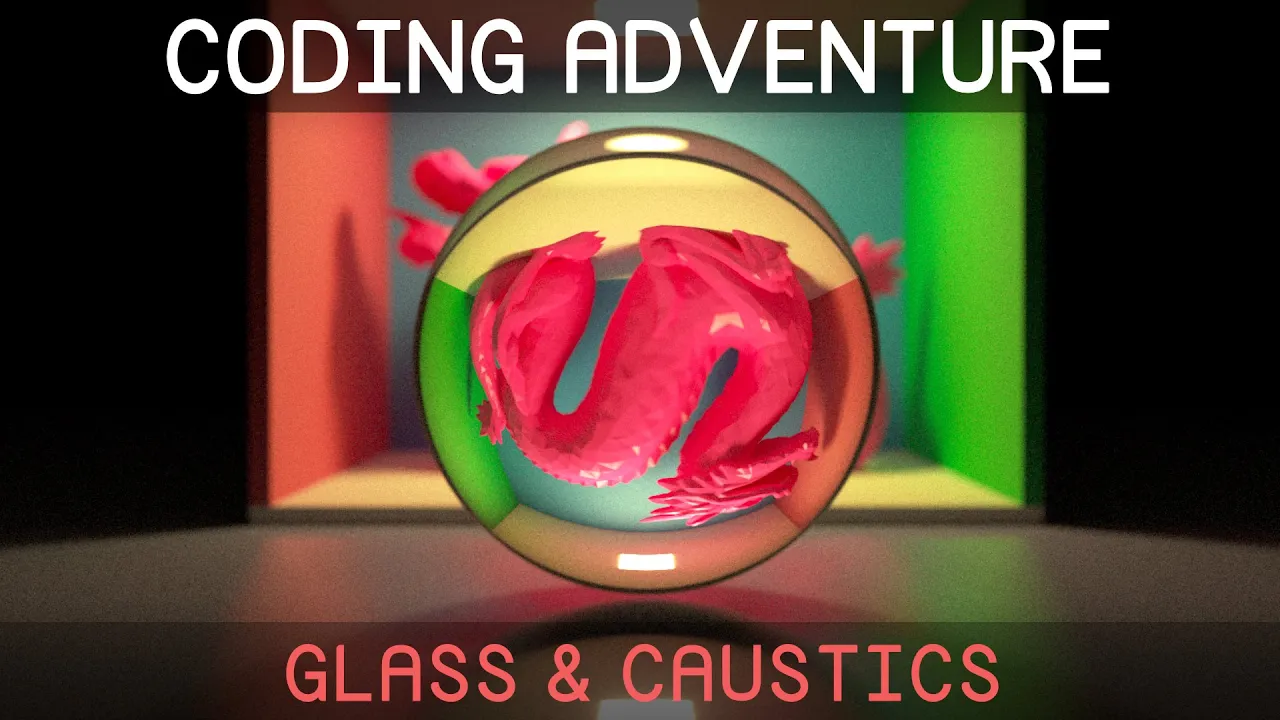
41:17
Ray Tracing Glass Surfaces and Caustics: A Coding Adventure
@SebastianLague
272.4K views•2025-08-16

87:26
Introduction to Secure Multiparty Computation with Yehuda Lindell
@fhe_org
7.7K views•2021-02-04

4:55
HTTP Requests Explained: GET, POST, PUT, DELETE
@codecademy
103.1K views•2021-10-07
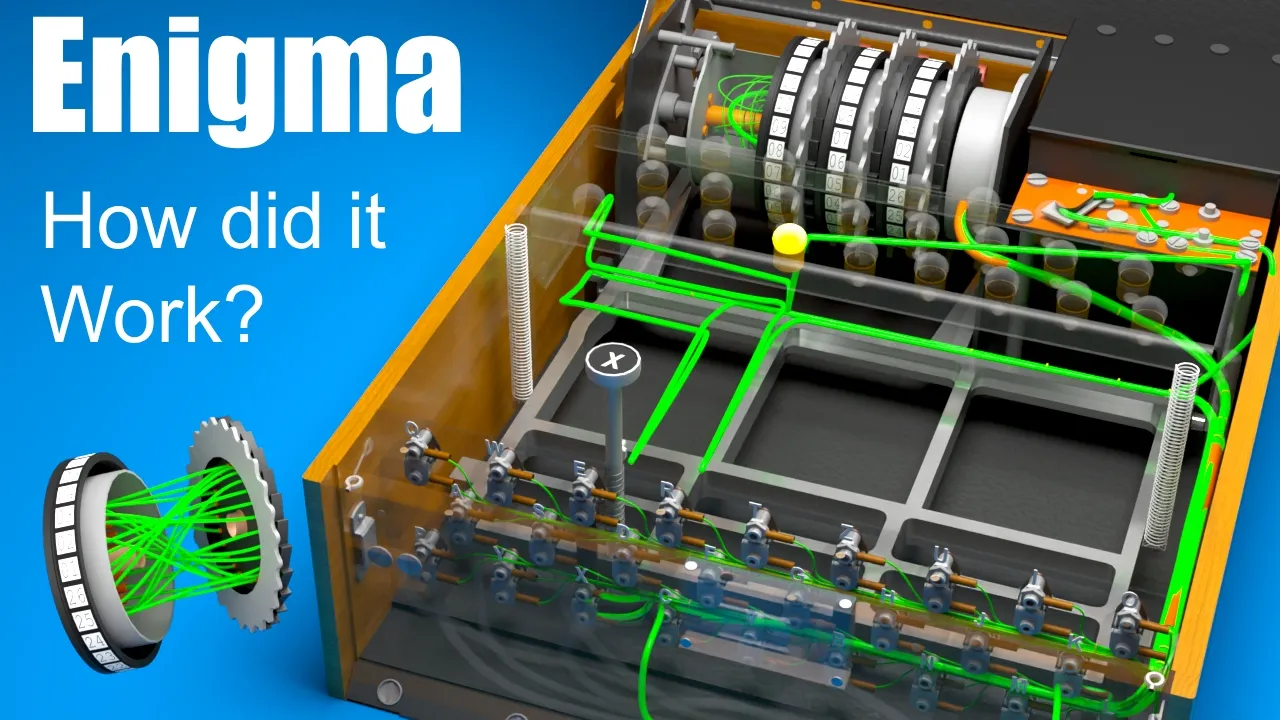
19:25
Enigma Machine Mechanics: WWII Encryption Explained
@JaredOwen
13.2M views•2021-12-11
Related Study Plans & Knowledge Roadmaps
Structured learning paths in Computer Science
computer-science
Container Runtimes: Namespaces, Cgroups & Go
01Linux Systems & Go Programming Foundations
02The Core of Isolation: Chroot and Filesystems
03Linux Namespaces: Process Isolation
+ 3 more learning modules
32h6 modules
Explore Roadmap
computer-science
Building a CHIP-8 Emulator: Rust & CPU Basics
01Computer Architecture Foundations (Bits & Bytes)
02Rust Programming for Systems Development
03CHIP-8 Virtual Hardware Specifications
+ 2 more learning modules
32h5 modules
Explore Roadmap
computer-science
Building BitTorrent: Go, P2P & Concurrency
01Go Fundamentals & Concurrency
02Networking Foundations & P2P Architecture
03Bencode Parsing & Torrent Metadata
+ 3 more learning modules
26h6 modules
Explore Roadmap
computer-science
Actor Models (C++ Concurrency & Lock-Free)
01C++ Multi-Threading Foundations
02Thread Pools and Task Scheduling
03Atomics and Lock-Free Queue Design
+ 3 more learning modules
45h6 modules
Explore Roadmap