








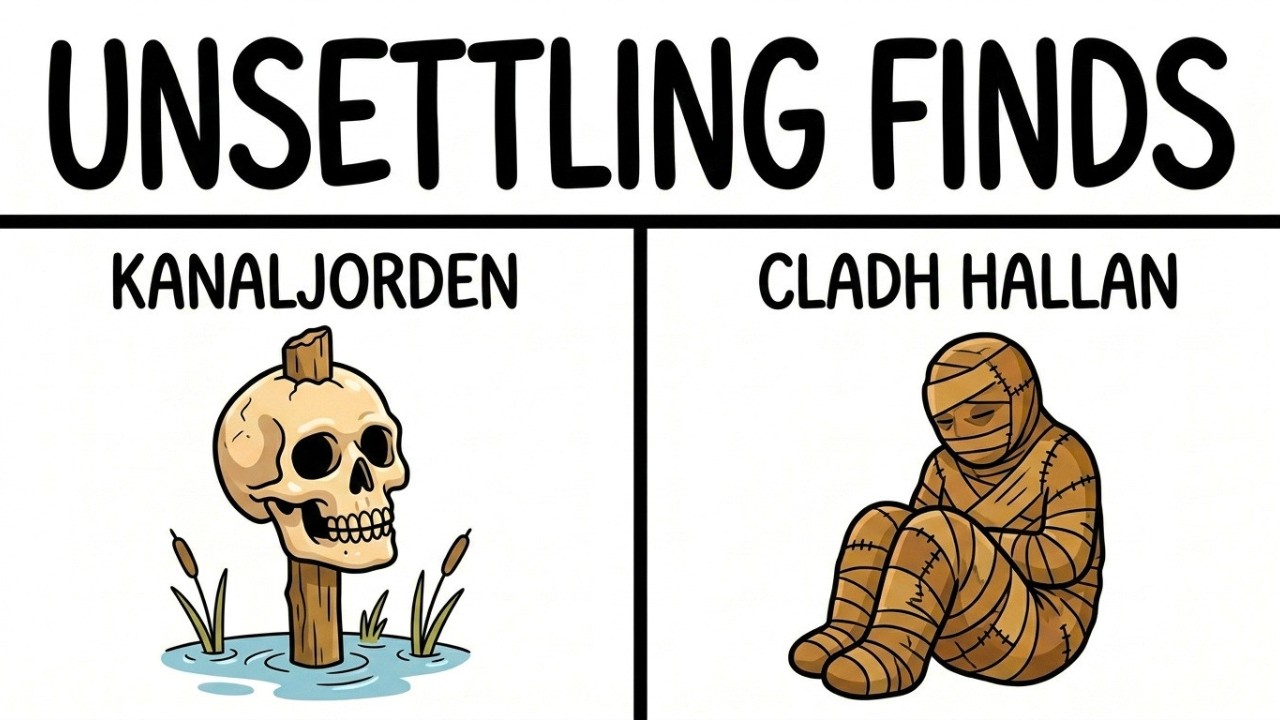








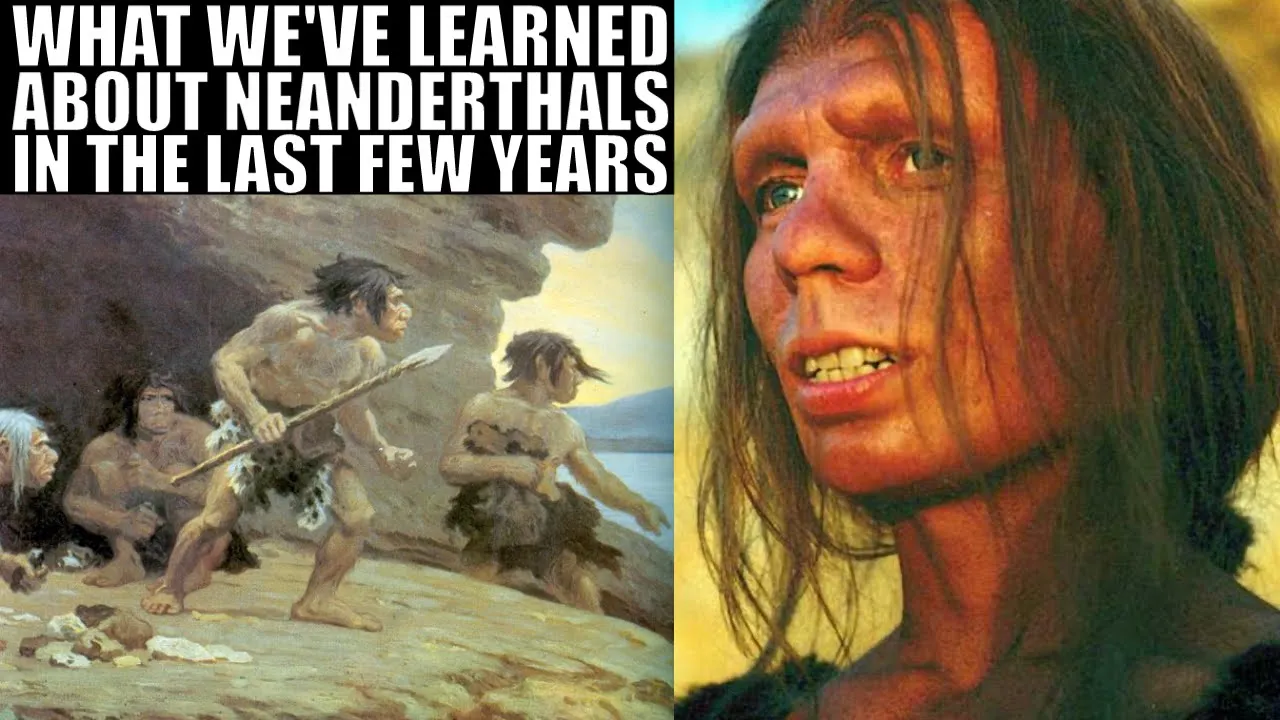
Archaeological evidence from sites like Shanidar Cave and La Ferrassie suggests Neanderthals may have buried their dead intentionally, potentially indicating symbolic thought and complex social behaviors; however, interpretations remain debated due to the difficulty of distinguishing intentional human actions from natural processes in fossil records, with some researchers arguing that features attributed to burials could result from rockfalls, animal activity, or other natural causes.
Neanderthal Burial Practices & Symbolic Thought | Paleoanthropology
Added:Understanding the basic evolutionary timeline of the genus Homo, specifically the co-existence and relationship between Homo neanderthalensis and Homo sapiens.
The archaeological definition of 'symbolic behavior' and how material culture (e.g., pigments, grave goods, personal ornaments) is used to infer cognitive complexity.
Fundamental concepts of taphonomy—the study of how organisms decay and become fossilized—which is critical for distinguishing natural deposition from deliberate human burial.
The geographical and chronological context of the Middle Paleolithic period, particularly the environment of the Levant and Zagros Mountains (Shanidar Cave).
In-depth analysis of the 'Flower Burial' hypothesis (Shanidar IV) and the modern scientific debates surrounding palynological (pollen) evidence and alternative explanations like rodent activity.
A comparative study of early Homo sapiens burial sites (e.g., Qafzeh and Skhul) to analyze similarities and differences in mortuary practices between species.
Exploring the broader evolutionary origins of cognitive traits, language, and early religious or metaphysical thinking in hominins.
Investigating recent ancient DNA (aDNA) discoveries that shed light on Neanderthal social structures, cognitive capacities, and genetic interbreeding with modern humans.
458.6K views20.6Klikes10:16Original Release: 2023-01-31
Thank you to brilliant.org for supporting PBS.
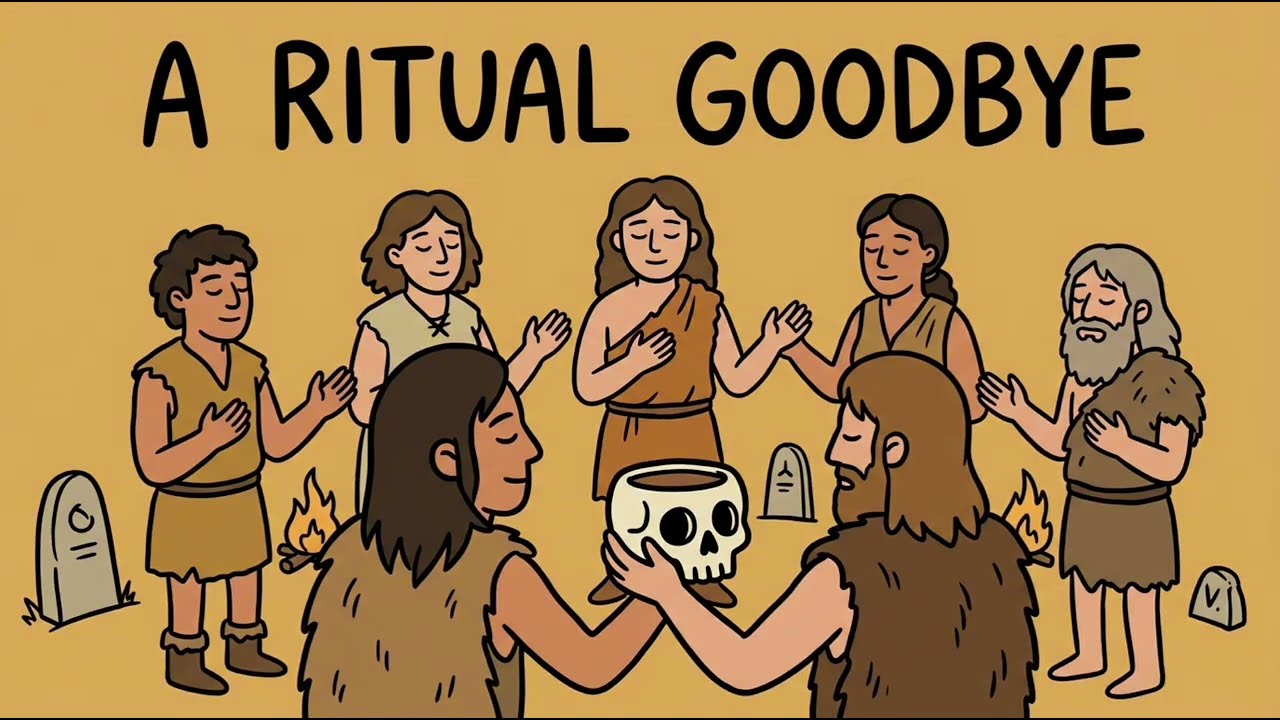
Over 45,000 years ago, a group of Neanderthals stood in Shanidar Cave, located in modern day Kurdistan. At their feet lay the body of a male Neanderthal. They are preparing his final resting place, shifting aside two female Neanderthals and an infant to make space within a hole in the cave floor caused by a rockfall. As they place him with the others, a member of the group scatters flowers around him: yarrow, cornflower, and thistle, to name a few.
This is one interpretation of the final resting place of a Neanderthal known as “Shanidar IV”, nicknamed the “flower burial.” But did Neanderthals actually bury their dead, as many cultures do today? And if they did… what would that mean?
Burial practices often involve much more than simply disposing of a body.
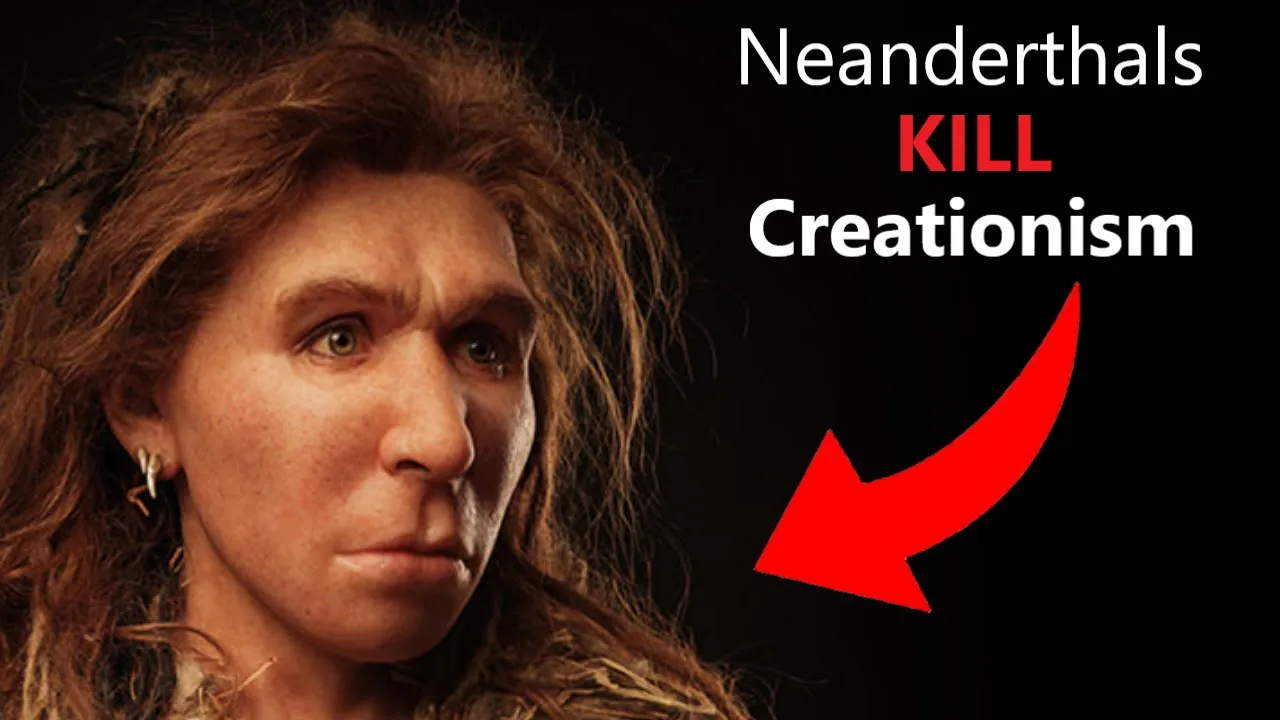
They are complicated rituals – ones that involve abstract and complex ideas of life, death, and what happens after our time on this Earth. So, if Neanderthals buried their dead, maybe they weren’t just unintelligent cavemen after all. Maybe they had more in common with us than we thought. When the first Neanderthal fossils were discovered in the mid-1800s, they were initially imagined to be what we now think of as stereotypical cavemen. Many assumed that whatever “Neanderthal culture” was, from their stone tools to their behavior, it must have been inferior to ours.
But this started to change in the 1950s, when researchers revisited the fossil evidence and came to very different conclusions from those earlier anthropologists.
Some of the physical traits that were thought to be signs that Neanderthals were inferior to us, Homo sapiens, were actually the result of old age or medical conditions. And this re-evaluation would be significant as more Neanderthal fossils were discovered – especially ones that looked like potential burials.
Ok, but why? What’s so significant about burying the dead?
First, a definition. Burial can be much more than simply placing a body in the ground – an act that can have a range of practical benefits like foiling scavengers and controlling the scent of decay. If a body is carefully and intentionally placed in the ground in specific ways, it might indicate something more meaningful, like caring among group members or concern for lost loved ones. So intentionality and purpose is at the heart of the archaeological discussions about burials. And, depending on the complexity of that burial itself– like when objects are found beside a body– this can be even more telling.
See, some archaeologists view burials as potential evidence of symbolic behavior. Because, today, actions like preparing a body for burial, positioning it in the ground, and placing goods alongside it often have a lot of symbolic significance shaped by cultural beliefs.
And because symbols represent complicated, abstract ideas, symbolic thinking has often been linked to higher levels of intelligence. In fact, symbolism has generally been assumed to be unique to Homo sapiens. So, if we found evidence that Neanderthals buried their dead, it could show that they were not unintelligent, brutish cavemen at all.
In the early decades after their 1950s image rehab, a Neanderthal child was discovered at a rock shelter named La Ferrassie in France. This individual was unearthed in 1970 and 1973, and was known as La Ferrassie 8. It was approximately 2 years old at death and was one of seven Neanderthals found at the site. The group included adults and young children, and was surrounded by odd mounds of earth. Some researchers have suggested that this may have once been a family living in the rock shelter in which they would eventually be buried.
And those strange mounds may possibly have been part of some symbolic burial rite.
Other researchers, though, have pointed out that the mounds look similar to landscape features sometimes caused by the melting of permafrost. But a closer analysis of La Ferrassie 8 undertaken recently has revealed important details about the position and the preservation of the body.
The position of La Ferrassie 8 suggests that the body was laid purposefully, with the head slightly higher than the rest of the body – an orientation that's unlikely to occur naturally.
Also, juvenile bones are generally very fragile. So, the simple fact that La Ferrassie 8 was preserved at all may be a testament to the care taken in burying the body.
When compared to animal bones found in a nearby, contemporary context, the preservation of this Neanderthal child is even more noticeable. Overall, this suggests that La Ferrassie 8 was buried intentionally. And similar preservation and positioning among the other Neanderthals at the site suggests that this may be the case for the rest of the group, too.
And this isn’t the only site with a possible Neanderthal burial.
In 1983, a partial Neanderthal skeleton was recovered from the site of Kebara Cave in Israel. Of the 23 individuals identified in the cave, this especially well-preserved adult – known as Kebara 2 – has been interpreted as an intentional burial for a couple of reasons. The fossils had no evidence of tooth marks from scavenging hyenas, for example, unlike other fossils in the cave.
And, strangely, most of Kebara 2’s skull wasn’t found.
Yet, there were no signs of broken pieces that might suggest the skull had either been destroyed or degraded over time. And there was evidence it must have been there originally - an upper tooth was found near the lower jaw, which showed no signs of being disturbed. Some researchers think that the skull was carefully removed at some point, perhaps to be buried elsewhere.
Like La Ferrassie 8, these physical characteristics of the bones could suggest that there was some sort of intentionality behind the body’s disposal.
But does this mean that Neanderthals were thinking symbolically?
Since the early 2000’s, discussions around Neanderthal cognition and their ability to use symbolism have become more complicated. On one hand, many anthropologists today agree that Neanderthals were smart and social enough to have cultural practices of their own.
We now know that they sometimes made jewelry from eagle talons, for example. This, too, points to a capacity for symbolic thought, as these don’t have a practical use.
But on the other hand, scientific advances in analyzing taphonomy – a.k.a. the things that happen to a fossil between death and excavation – have increased the skepticism of some researchers. They point to natural causes to explain some of the features that were once thought to be evidence of burial rites.
And that brings us back to Shanidar Cave. Since the “flower burial” hypothesis was published, many archaeologists have argued that the evidence is highly circumstantial, especially when you consider other explanations. For example, the proximity of the Neanderthals to signs of rockfall have led some to suggest that this was their cause of death and how they ended up preserved, rather than being intentionally buried.
And even the connection between the presence of the flower pollen and inferred symbolism has been called into question. It’s been suggested that the pollen was simply introduced by burrowing animals. And this has been supported by the observation of rodents around Shanidar Cave, as well as the identification of the same flower species growing nearby. But the picture continues to get more complicated. In 2017, new excavations revealed the first Neanderthal found in the cave in over 25 years. And although only the top part of the body was recovered, its position indicates that it may have been posed in death.
The Neanderthal’s head is resting on its left hand, and a triangular stone seems to have been placed underneath its head and shoulders, like an uncomfortable pillow.
A piece from a stone blade was also found resting against one of the Neanderthal’s ribs, which might have originally been placed on top of the body.
More work needs to be done on this discovery, but given the presence of this potential “grave good,” as well as the body’s proximity to the flower burial, this new find may help shed more light on the possibility of intentional burials at Shanidar… And the potential capacity for symbolic thinking among Neanderthals.
So, like many of the biggest questions in human evolution, whether or not Neanderthals buried their dead is still open for debate. But… does it matter? Well, yes and no.
Because, regardless of the evidence – or lack thereof – for burials, sites like Shanidar Cave helped change our mind about our closest cousins and what they were capable of.
The idea that Neanderthals could bury a member of their group was just as important as whether or not they actually did. But if we ever found more substantial evidence for the complex actions and rituals associated with burying the dead, the implications would be huge. Because it would tell us that Neanderthals had the ability to think and communicate largely abstract ideas, like death... Which is something that we’ve often considered to be what separates us, Homo sapiens, from other hominins. And if we can see ourselves in the way our ancient cousins dealt with death… what else could we have in common? Thank you to brilliant.org for supporting PBS.
Brilliant is an online learning platform for STEM with hands-on, interactive lessons.
Brilliant is for curious learners, both young and old, professional and inexperienced.
Brilliant courses teach you how to think (via interactive lessons and problem-solving activities/exercises) and solve problems with interactive lessons in STEM.
For example, Brilliant.org offers a course called Computational Biology. Computational biology merges the algorithmic thinking of the computer scientist with the problem-solving approach of physics to address the problems of biology.
Since 2000, an ocean of sequencing data has emerged that allows researchers and students to ask new questions. Here, students develop an intuition for selecting foundational problems in computational biology, like genome reconstruction, sequence alignment, and building phylogenetic trees to look at evolutionary relationships.
The course also addresses some physicochemical issues of molecular biology, like RNA folding.
To learn more about Brilliant, go to brilliant.org/Eons.
This month’s Eontologists are so wonderful, we want to bury them in thanks!
Wow! There's a turn of phrase for you!
Gale Brown, Juan M., Jacksy Weiss, Melanie Lam Carnevale, Annie & Eric Higgins, John Davison Ng, Colton, Chase Archambault, and Jake Hart. Become an Eonite at patreon.com/eons and you can get fun perks like submitting a joke for me to read. Like this one from The Burgins. A T.Rex walks into a restaurant and asks for an EXTRA juicy stegosaurus tail. The waiter winks and says, "Ok, once upon a time, there was a VERY handsome stegosaurus prince..." Keep scrolling, I want to see how the story ends... Oh, that's it.
I challenge you viewers to finish that story in the comments. What happens? And as always thank you for joining me in the Adam Lowe studio. Subscribe at youtube.com/eons for more prehistoric stories.
But given the presence of this potential “grave good,” as well as the body’s proximity to the flower burial, this new find may help shed more light on the possibility... That's the first time that I've ever, like, outpaced the teleprompter. That's my PR right there.
Up Next
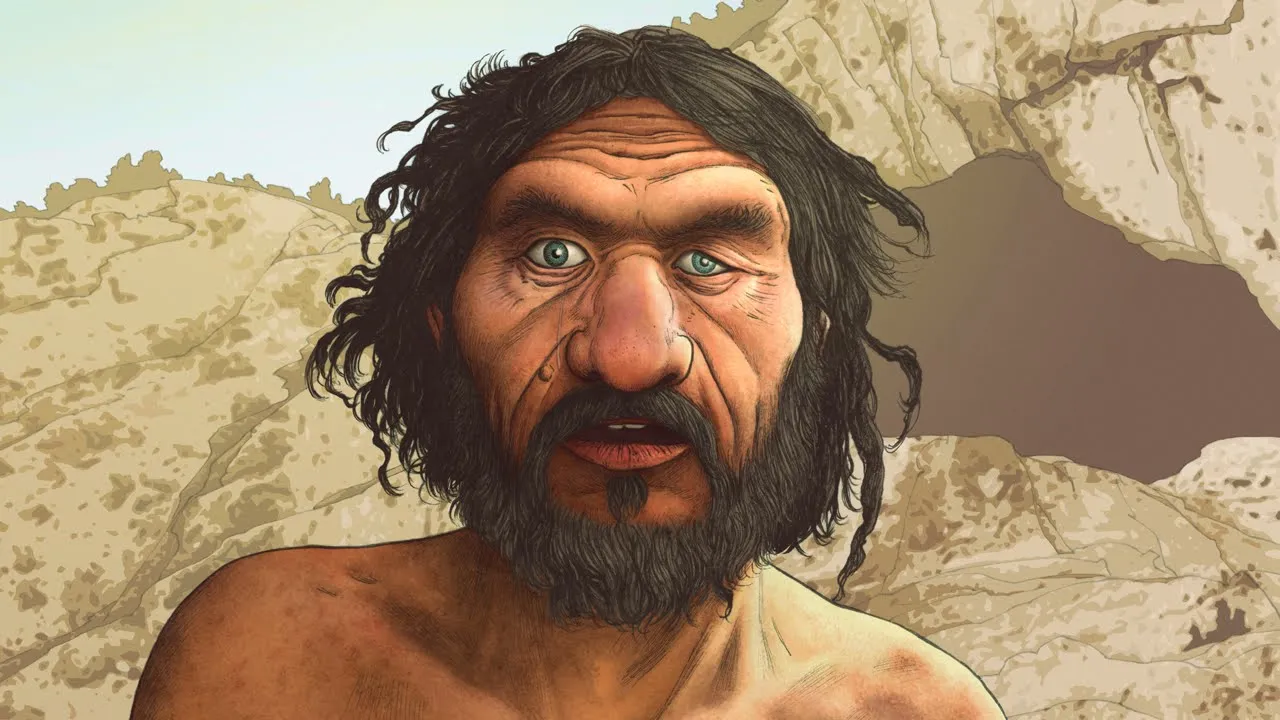
23:55
The Life and Death of Shanidar 1: A Neanderthal Story
@StefanMilo
1.7M views•2023-02-22
38:41
Astrobiology Through an Anthropological Lens: Field Insights
@georgiatechastrobiology
128 views•2021-04-14
4:45
Proxemics Explained: The Study of Personal Space
@Vox
536K views•2016-07-05
10:38
Psychology of Internet Trolling and Pranks Explained
@AzzyLand
10.7M views•2017-12-20
Related Study Plans & Knowledge Roadmaps
Structured learning paths in Anthropology
anthropology
Space Anthropology: Analogs, Culture & Habitats
01Foundations of Space Anthropology & Cosmic Imaginaries
02Extreme Isolation & Micro-Societies in Orbit
03Space Analog Habitats & Earth-Based Simulations
+ 2 more learning modules
15h5 modules
Explore Roadmap
anthropology
Legal Anthropology: Customary Law & Pluralism
01Foundations of Legal Anthropology and Social Justice
02Legal Pluralism: Coexisting Legal Systems
03Customary Law and Indigenous Dispute Resolution
+ 2 more learning modules
15h5 modules
Explore Roadmap
anthropology
Global Tourism: Gaze, Authenticity & Heritage
01Introduction to the Sociology of Tourism
02The 'Tourist Gaze' (John Urry)
03Staged Authenticity in Tourism
+ 3 more learning modules
14h6 modules
Explore Roadmap
anthropology
Modern Kinship (ART, Adoption & Chosen Family)
01Foundations of Kinship and Family
02Assisted Reproductive Technologies (ART) & Relatedness
03Transnational Adoption and Global Kinship
+ 2 more learning modules
12h5 modules
Explore Roadmap