










![[Video 3] Prakarya Kelas 8 Semester 2 - Bab 4. Pengolahan Bahan Pangan Setengah Jadi](https://i.ytimg.com/vi/Fm5CXBXF4IA/maxresdefault.jpg)




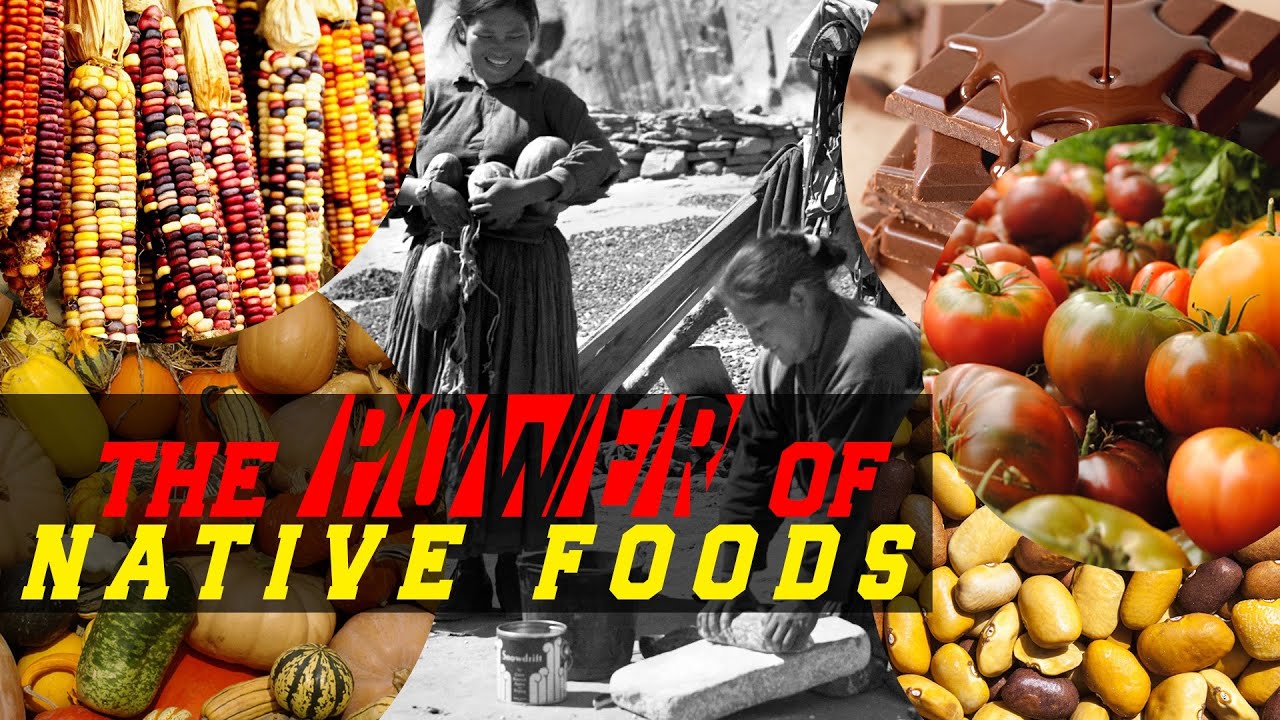







Traditional African cuisine employs sophisticated food science principles including natural thickeners (okra, garden eggs, baobab leaves) and emulsifiers that have been developed through centuries of adaptation to local environments, preservation needs, and cultural practices; these traditional techniques offer valuable lessons for modern sustainable cooking, addressing challenges like climate change, food waste, and nutritional health while preserving cultural heritage and biodiversity.
The Science of New African Cuisine with Selassie Atadika
Added:Basic food chemistry concepts, such as fermentation, dehydration, and the scientific principles behind traditional food preservation methods.
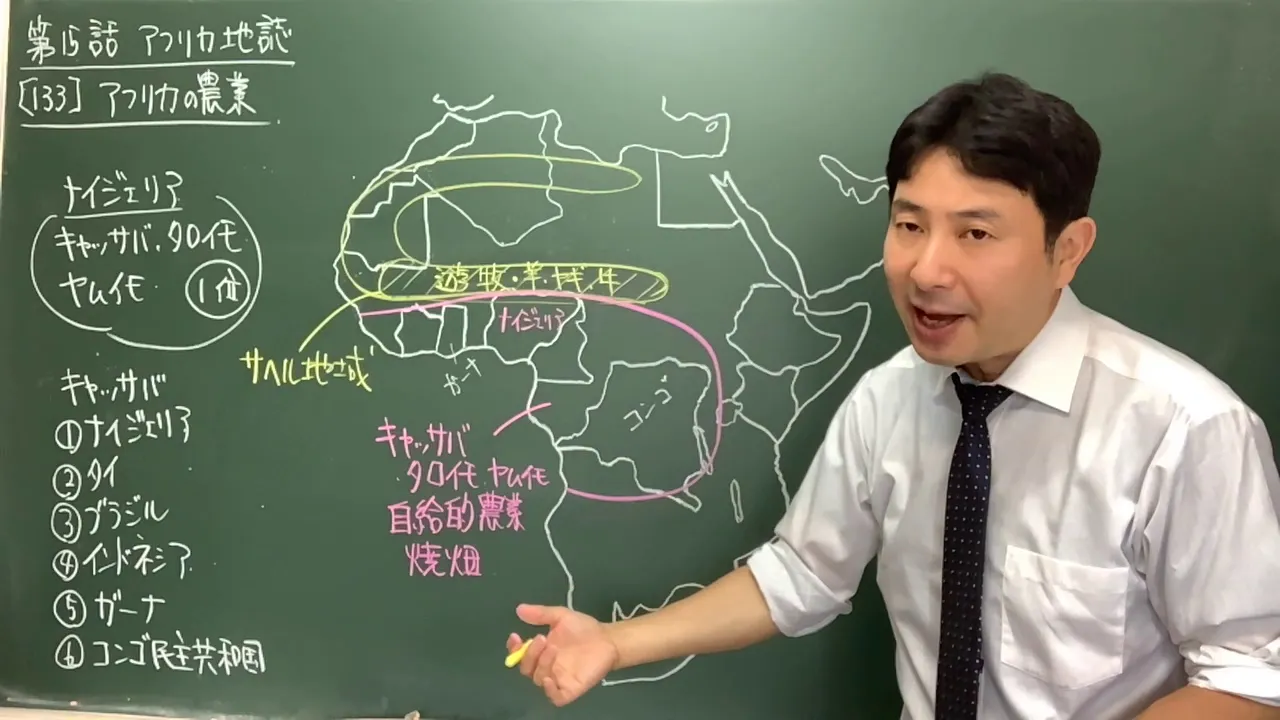
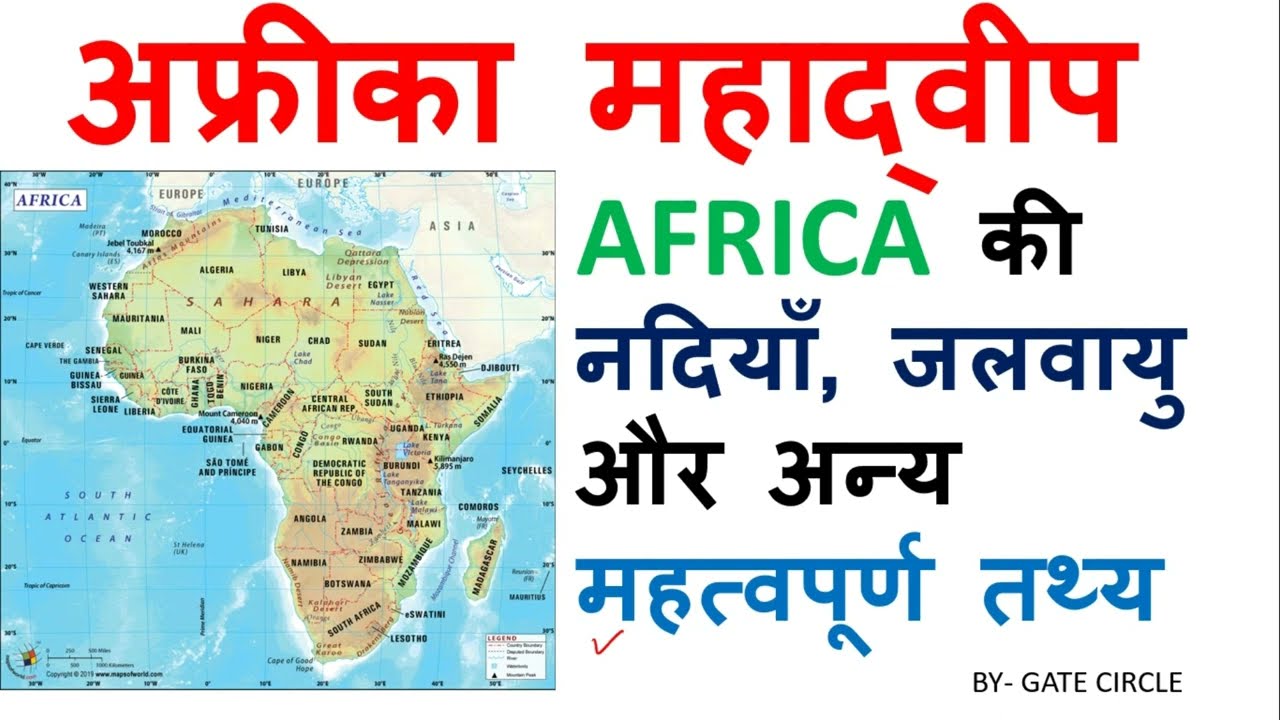
An introductory understanding of African geography and agriculture, including major ecological zones and indigenous staple crops like cassava, millet, sorghum, and yams.
The core tenets of sustainable gastronomy, including agricultural biodiversity, local sourcing, and the ecological footprint of food systems.
Standard culinary techniques and terminology, especially relating to heat transfer, braising, and starch gelatinization.
Advanced study of the molecular structure and unique physical properties of African starches (e.g., the elasticity of fufu or the fermentation of gari).
Analysis of food sovereignty and the decolonization of culinary arts, exploring how reclaiming ancestral diets addresses modern public health and environmental challenges.
The application of modernist culinary techniques (such as spherification or freeze-drying) to traditional African flavor profiles and indigenous botanicals.
Research into agroecology and climate-resilient 'orphan crops' (like fonio, teff, or bambara groundnuts) and their potential role in global food security.
41.7K views611likes1:08:44Original Release: 2020-01-06
Great.
Good.
So I'm Pia Sorensen.
Welcome to the Harvard Science Cooking public lecture series.
Great to see so many familiar faces at the end of the semester like this.
Awesome.
So very, very soon, not yet, I'm going to introduce our visiting speaker for today, Selassie Atadika, but not yet.
So first I have one important announcement.
And it's not what you thought it was.
You thought I was going to pull out the aprons, but no.
So here's the thing.
If you were a student in this class, which you're not, granted, because you're here on a Monday night.
I think for it to be November, you're also smiling too much to be a student.
But if you were a student in this class, we would at this point start to work on projects, and you would be tasked with this task, which would be to try and study and understand in some scientific terms some aspect of a recipe or some culinary invention.
Or you would try to find a solution to a culinary problem and explain why it works or how it works.
And the good news is that you too can do a project.
So last year we tried this on a very small scale.
Is anyone in the audience who submitted a project last year?
Oh cool.
Two.
Anyone else?
No?
OK.
So we did not have a lot of submissions last year.
And so what I'm hoping is that you're all going to feel the urge to dig in and find a project.
And when you do, you submit your deadline, your assignment deadline, before you get a grade.
Just kidding.
Is you submit it to this email address by December 13th, and you can win prizes.
You won prizes last year, right?
So now I'm sure you're all thinking, what can I do for projects if I want to win a prize?
And it turns out there are really questions everywhere.
So one of the things I usually recommend students to do is just go and open any cookbook, look at the recipe, and start asking why.
Why do you do this?
Why do you do that?
Why do you do this before you do that?
Why do you whisk for this long and not for that long?
Why do you blah, blah, blah, on and on.
There are lots of questions in cookbooks.
That's number one.
Number two, how could you just-- pick any food that you eat every day.
How could you improve it?
How could you learn?
How could you use the principles you have learned in this lecture series and apply it to your food and make it better?
The real challenge is to make the dining hall food better, but you don't have to deal with that.
Three, you can think of any recipe over time.
So a couple years ago, we had a student who looked at recipes for clam chowder over time and compared how the viscosity has changed.
So you could imagine doing this with all kinds of recipes.
And it turns out clam chowder has gotten thicker and thicker.
It's quite thick now.
And then the last one, and I think one of my favorite ones, and there's going to be tons of examples in today's lecture, is just think about any of the things that the chefs have done in this series, and think of how you can work more on the kinds of things they've done.
How could you make tunta, freeze dried potatoes, here at sea level?
How could you use the fermentations that Zilber and White we're doing at the Noma Fermentation Lab?
How could you do any of these things?
And just create your thing, the new thing, a new food that has yet to see the Earth.
That's the final challenge.
And then email us and maybe win prizes.
OK, anyone interested?
Maybe?
OK.
Good, good.
So I just want to say a few words to kind of put this week in context for Selassie.
So last week, who was here?
Awesome, great.
Welcome back.
Who is here for the first time?
Wonderful.
Welcome.
So last week, we talked about the concept of viscosity.
And Chef Carles Tejedor and Pere Planaguma were here.
And they did various things.
And for those of you who are new, we play this game every week where if you were here last week, I'm now going to ask you three questions.
And if you were here and you know the answer, then you raise your hand.
And if you have it right, when I point to you, you win an apron.
And we're very proud with these aprons, because they look like this.
And they have all the important equations on them that you never want to be without when you cook in your kitchen.
OK, are you ready?
So first question.
A little warm up question.
What is viscosity?
How would you describe viscosity?
Yes.
[INAUDIBLE] How thick a liquid is.
Yes.
How else would you say it?
[INAUDIBLE] Yeah, yeah, good.
The resistance to flow of a liquid.
Perfect, excellent.
[APPLAUSE] There you go.
Next question.
So Pere Planaguma thickened a garum, his fish sauce.
And the question is, how did he thicken it?
Yes?
Some polymer thickeners.
Some polymer thickener.
He called it xanthan.
He called it xanthan.
Yeah.
Do you guys agree?
Is that a polymer thickener?
Yeah, xanthan gum.
Good job.
[APPLAUSE] OK, moving into details.
So after this, Carles Tejedor used four different ingredients in four different experiments.
And he changed the texture of olive oil in all these amazing ways that people-- usually it's very hard to change the texture of olive oil, but he was able to do this.
So the question is, name four of them that he used.
Yeah, there's a person up there.
OK.
[INAUDIBLE] Glucose, water, and temperature.
That's true, but I'm looking for specific things that he added that was the reason for the texture.
[INAUDIBLE] And then he used different types.
Any ideas for what those different types were?
Yes.
He added maltodextrin.
Maltodextrin.
He added agar agar.
Maybe agar agar.
Wrong.
[LAUGHTER] You're just throwing them out there, thickeners.
He also used xanthan gum.
Xanthan gum.
Did he?
Yeah, OK.
What else?
Glycerin, good.
[INAUDIBLE] OK, we need one more.
We're going to have to cut up this apron into four pieces.
Soy lecithin.
Correct.
Good.
How are we going to do this?
Say a number between one and four.
Two.
So one, two.
That would actually be you.
I already have one.
You have one?
Who does not-- do you have an apron?
Do you have an apron?
I never brought one.
You don't have one?
Do you?
OK.
You should have one.
[APPLAUSE] I think given how many times you've come to the series, you deserve an apron.
Yeah.
OK, good job.
And here they all are.
iota carrageenan, lecithin, glycerin, albumin, inulin, maltodextrin, isomalt. Sound familiar?
You could just have kept going, throwing out thickeners, and you would have hit them eventually.
OK.
OK, so just a few words.
So last week, viscosity.
And we talked about how viscosity is the resistance to flow.
And I showed you this little cartoon, which shows you how the molecules or the particles in a sauce or any liquid flow over each other.
And the more easily they flow over each other, the more-- the sort of less viscous is the sauce.
So if they're stuck, you have a more thick sauce.
And then we talked about how when we cook, there are basically two ways that we can manipulate and change the viscosity.
And the first one is the one up here with the bubbles.
So any way that you can increase the amount of stuff you have in the liquid.
Any way you can increase it.
And we talked about it in the context of how much volume fraction, there was some stuff, and I showed you an equation which I'm not going to show you today.
And then the second way was we could add all kinds of polymers.
So the polymers you mentioned, you mentioned, you mentioned, they could all kind of keep these things in place and make sure and sort of trap them and make sure they don't flow over each other.
So you've got a thicker sauce.
And when we cook, we basically do this in various ways.
So one way is we reduce things, which is when you make a wine sauce, you just put it, heat it, the liquid evaporates, you get more and more stuff left behind.
So it's harder and harder for it to flow over each other.
Or you add starch.
You're just adding stuff into your sauce.
Makes it harder to flow over each other.
You add all kinds of polymers.
Xanthan gum, sorry, xanthan gum, agar-agar, carrageenan, all kinds of things that trap it.
So a milkshake, any kind of salad dressing.
Xanthan gum in there would stop it from moving.
And then the one we did not talk about so much is the emulsions.
And so here's a picture of emulsions.
And here I'll ask you what you think this might be.
What might this be?
Mayonnaise.
Yes, correct, it's mayonnaise.
We're out of aprons, sorry.
Is mayonnaise.
And you can see this is mayonnaise under a microscope.
And you can see all of these bubbles.
There are lots of bubbles.
Basically oil droplets that are trapped in the water, in the egg and the liquid, and they cannot move over each other.
There's so many of them.
So if you go back to this picture, you've increased this so much that your mayonnaise is super thick, and maybe you could even sort of turn it upside down and it wouldn't move.
That's what you've done.
And it's correct.
So this is quite amazing, because here you take two liquid things, and all you do is you mix them or you whisk them or you do something with them to create these bubbles, and then you basically get something that is a solid.
And it's not solid like this, but it's solid so that it doesn't move over each other.
And that's because there's so much stuff in there that you're preventing it from flowing.
So that's a great way to thicken sauces.
It can be a little fattening, but it's a great way to thicken sauces.
There is a problem, though, with this, which is that emulsions fail.
So if you've ever tried to make a mayonnaise, you may have ended up with this.
Doesn't look so good.
It separates.
If you've ever made a vinaigrette, you know that you make it, you shake it, and you let it sit, and over time it just separates.
Huge problem with emulsions.
They do separate.
All the other things are fine, the reductions, the starch, they just sit there for the most part.
Emulsions are super fragile little creatures.
So there are a number of things we can do.
We can add polymers.
All kinds of polymers.
And this kind of traps the bubbles, the oil bubbles, so they can't move so much over each other, can sort of bump into each other and sort of fall apart.
Or what else can we do?
Any ideas?
Yes?
[INAUDIBLE] You can add a surfactant.
Right.
And what is a surfactant?
Well, surfactant is any molecule that has one part that likes water and one part that likes oil.
So when you add these to the emulsion, to the mayonnaise, they naturally sit on the interface between the oil and the water.
So they sit like this.
And then when these bubbles are moving around, this will happen.
They're just moving around, but they're not crashing and falling apart, because they kind of have this shield of surfactant around them.
And this is what that would also look like.
Doink.
That's the idea of surfactants.
So the purpose of all this was basically to remind you of viscosity, remind you of how we thicken things, and to bring a little bit more background on emulsions.
So now you have sort of a complete view of viscosity of thickeners of emulsions.
And I think that some of this will be useful for the lecture.
So this is the point in the semester where not only are the concepts from today that I just talked about, the emulsions, they will be part of this.
But it's also the point in the semester when if you've been coming a lot, you will notice how a lot of the science concepts we've talked about are showing up.
Fermentation is going to be in there.
You could even sit there and sort of do a little checklist, and you'll see that so much of the science that we've talked about is in this lecture.
So with this, I'm going to introduce our speaker.
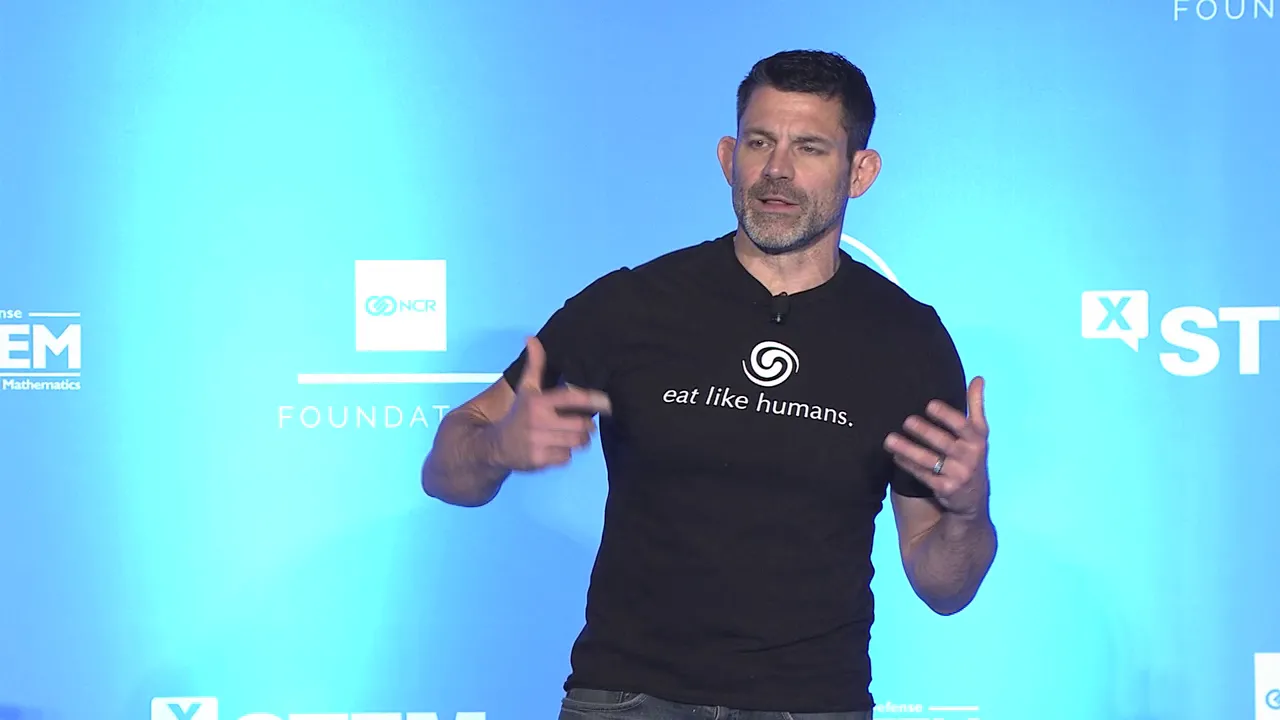
So Chef Selassie Atadika is the owner and founder of Midunu in Ghana.
And we've been talking for a big part of the day about how she is using and looking into and learning about traditional African cooking and how you can bring that into restaurants and into haute cuisine and how you can learn from it and use it for ways to kind of further modern day cooking.
So this is a huge pleasure.
Please join me in welcoming Selassie.
[APPLAUSE] Good evening, everybody.
I'm going to actually start off by asking you to close your eyes.
So if everyone could just close their eyes.
And I would like for you to think about a dish that makes you feel at home, a dish that takes you back to a wonderful space, maybe a childhood dish, something that makes you feel comfortable.
Maybe at this point, you're salivating if you're thinking about it really hard.
And imagine if this dish no longer existed.
And imagine if no one cared.
So please open your eyes.
I'm just going to maybe ask you guys what dishes you were thinking about.
Anyone want to share?
Cinnamon rolls.
Nice and buttery.
Icing or no icing?
Icing.
Anybody else?
Yes?
Potato pancakes.
Potato pancakes.
Applesauce?
Yes.
OK.
Yes.
Matza ball soup.
Nice.
Anything else?
Yes.
Moimoi.
Moimoi.
I'll come back to that in a second.
I know what it is, and I'm going to ask you guys if you know what it is.
Yes?
Chicken cordon bleu.
OK.
Anything else?
Yes?
Corn pudding.
Corn pudding.
So these are all dishes that I think maybe possibly a loved one made for you at one point and it's a comfort food for you.
I basically grew up mostly in New York, in Westchester County.
I was born in Ghana.
My family left due to political instability and moved to the US.
And I grew up eating food from my mother's kitchen, food that I had fallen in love with.
My parents are here.
And I'm happy to say that-- [APPLAUSE] When we were growing up, I think we ate out twice a year.
Your birthday and Mother's Day, isn't it?
So the rest of the time we basically ate at home and ate food from Ghana so that we could-- I mean, it was just one of the main touch points in terms of maintaining our culture that we had.
You mentioned moimoi.
Does anybody else know what moimoi is?
Yes.
What is it?
[INAUDIBLE] Yes.
So it's beans, usually cow peas or black eyed beans, that have been peeled, soaked and peeled, blended, and then a few other things added to it, and it's steamed.
And it's just a really wonderful, satisfying dish.
So I started thinking about the food that I came to love.
But after growing up, I actually went to Dartmouth, came back home, and then told my dad that I wanted to become-- actually I wanted to go to culinary school.
So I don't know how many other people here are first generation immigrants in the US.
Telling your parents that you want to become a chef was not very popular.
And I'm actually the first child.
So there is this Nigerian comedian who says, I think for first generation, you have four options growing up.
It's lawyer, doctor, engineer, disgrace to the family.
Those are the four options that you have.
So when I told my parents I wanted to go to culinary school, my dad actually specifically first was like, what's going to happen to the family?
And then what will your brother and sister do?
And then it was like, you can go when you finish paying back your school loans.
So that was a conversation we had.
So I went ahead, worked for the UN.
I had a wonderful time and career.
I actually did a lot of work on humanitarian response to disasters, both man made and natural disasters.
But at a certain point, I just, I really realized that food was what brought people together, and I'd come to fall in love with it, and I wanted to share this with other people.
So I started thinking about what makes up the foodways in the African continent.
And I worked for UNICEF mostly, in all parts of the continent, and have probably been to more countries.
It's easier for me to count the countries in the continent that I've not been to.
So I started looking at the foodways and trying to pull it together.
The definition for foodways looks at the history, culture, social, economic impact of production and consumption of food.
So when I was moving around, I started noticing-- my first degree was actually in geography.
So I started off thinking about what grows where.
So when you look at the continent, there are different biomes, and that allows us to understand what grows where it is and what we should probably be eating if we live there.
You'll see the variation.
So for example, the highlands of Ethiopia, they have a lot of cattle, and they have a lot of milk and butter.
And the butter they use is a clarified butter similar to that you would see in ghee in India.
It's clarified.
There's no water solids in there.
So there's no solids.
There's water removed from it, so it's mostly solid, and it doesn't get rancid, because the butter fat has actually been removed from it.
But if you look at West Africa, there's actually not a lot of cattle because of a disease that attacks them, and they don't survive very much.
But you will also notice that a lot of people are lactose intolerant.
So I started looking at it, trying to understand it.
Naturally as human beings, we are lactose intolerant.
So most people that live in the middle part of the planet are lactose intolerant.
But as you move further north, you'll notice that actually people are able to tolerate and have genetically adapted to dairy.
And as I started doing the reading, I noticed that actually vitamin D is what we need from dairy.
But when you live on the equator, vitamin D is not necessary.
But when you look at communities such as the nomadic populations who move with their cattle, they're drinking milk.
They're eating the byproducts.
So their bodies have actually adapted to be able to withstand that.
Then you look at cultural practices and traditions, taboos.
So in Ghana, Tuesday is a taboo day.
You will never see a fisherman on Tuesday fishing.
And even now today in 2019, if a fisherman does go out to fish, he will have to have a very serious conversation with the chief, because that's actually a traditional mechanism for preservation and sustainability of our waterways.
Preferences.
I mentioned the issue around the nomadic populations.
But something we'll come back to at the end of the conversation is we eat a lot with our hands.
We eat a lot with, in particular in West Africa, starches, whether it would be foofoo, kenkey, lots of other types of starches.
But because we're eating these starches with our hands, we need a certain level of viscosity to hold onto this starch.
So for example, if you're thinking about Italian cuisine, there's a certain type of noodle for every type of sauce.
There are certain lines on the pasta that's supposed to hold onto a certain amount of sauce.
It's a very similar concept when you look at the starches and the sauces that we use in West Africa.
Ceremonial rights.
So for example, in Ghana, there's a dish called [INAUDIBLE] and it's only eaten after Homowo, which is a festival that's celebrating the end of a historic sort of lean season.
Religious elements.
Ethiopia, because of the orthodox Catholics, they have x number of feast days every year, and those feast days are actually days that people are not-- well, people have to eat vegetarian.
So there's an amazing vegetarian cuisine that has evolved, very beautiful, tasty vegetarian cuisine similar to what you would find in India that's evolved because of the religious elements of society.
Preservation techniques.
We live in, quote unquote, "the danger zone."
So if you're in the kitchen, you know that this is a temperature where bacteria just grows, and things will spoil.
And that's actually where we live.
So we've adapted all kinds of cooking techniques, preservation techniques, to make sure we don't lose our food.
So salting is one of the major ones.
So you'll see salted fish, salted meats.
It's a way of removing the water content to allow something to last longer.
Steaming is a very quick and easy one for things that are fresh.
I had one of my aunts, who is in her late 80's, we were talking, and she was telling me that she was living by the coast.
And when she would get off work, she was a nurse, when she would get off work, she would go to the waterfront and help fishermen bring in the catch.
So she said, from time to time, a fisherman would come by the house, and she would literally hide in the house.
And so I was like, why would you hide?
She said, well, they were coming with a big bowl of fish, and I didn't have a fridge.
So I said, well, what would you do?
And she said, well, the first one I would steam and prepare in this way.
Then I would fry hard another batch so that the water would be out so I could keep it for a couple of days.
And whatever she couldn't handle at home, she would take for someone to smoke or to salt so that she could use it much longer.
And that really helped me to understand the different techniques.
Smoking we do a lot of as well, and that's also a method of actually removing the water, but it's also imparting a lot of flavor.
And fermentation, particularly in West Africa and Ghana, we do a lot of fermentation, both for beverages and for starches.
But what we do is our fermentation techniques are about three days.
I don't know why, but typically it's three days.
I think the weather is warm enough, and we're able to get what we need from the fermentation that we don't need the seven days or longer.
And then sustainability.
When you look at, for example, nomadic populations, they are on the move, but they also understand that their cattle is their wealth.
So it's actually slaughtering a cow would be for a special occasion.
So you would see that they actually don't eat a lot of meat, because that would actually be drawing down on their wealth status.
I don't know if you guys have any examples from other food cultures.
I think at the base of it, a lot of food cultures are very similar how we start out.
So we do have a lot in common in that way.
We all preserve.
I think when you look at, for example, in the Nordics, there's a lot of pickling.
There's a lot of pickling, but we actually don't have a long winter.
So we don't need to hold anything for six months or longer.
And we also don't have the climate that allows it to stay cold.
We don't have cellars.
We don't have a cool place to keep things.
So when you start looking at geography and all these other elements, things make sense.
So in terms of food and foodways, it's not just culture that it touches.
It touches so many other parts of life.
So when we look at economics, I talked about the cattle being a level of wealth and a means of trade.
But we can also look at the modern ways of trade.
So now Ghana, for example, we are trading in cocoa beans, let's say.
So we're growing a crop, selling it to get money to now buy other things.
So sometimes it actually is working to your advantage, and sometimes it's not.
In Ghana right now, if you look in the grocery store, 16% to 18% of what's in a grocery store is actually local, which actually means that in terms of the economy, we're not actually supporting a lot of producers.
Environment.
Slash and burn agriculture or slash and burn, which is still used by a lot of nomadics, is actually not necessarily a bad thing.
But when you put it into the context of high populations and agrarian versus pastoral communities, then you start getting conflict, because space and land issues are different now than they used to be.
Health and nutrition.
People are changing the way they eat.
People need food of convenience.
And what does that look like?
Arts and culture.
In many ways, what I do is not fully understood in Ghana.
When I first moved back, I was giving a talk somewhere, and someone said to me, we were in a room, and one person asked me and said, what's the difference between a chef and a cook?
Because in Ghana, a lot of people in the food industry are chefs are actually either cooks or caterers.
And so people were like, what is this chef thing that you're talking about?
And before I could answer, someone in the back of the room said, a chef's the one that cooks for people who aren't hungry.
[LAUGHTER] And it's kind of true.
I mean, when I think about what I do, I actually became a chef because I felt that there were other perspectives and angles and things that I could do using food as a medium.
So I kind of, in many ways, think about I'm not looking to feed people today but more about what does the future look like?
How are we going to be able to feed ourselves in 2025 or 2050?
And what do we need to do now and what kind of foods do we need to eat now in order for us to reach there?
So biodiversity.
Again, agriculture, interestingly, was a moment when people actually were able to produce food and store food in order to live in community.
And now we've gotten to a place where the agriculture is now mono crop or something similar and is actually reducing the fertility and reducing our capacity to eat, because we've reduced our biodiversity.
The politics and the policies, again, are there.
I'll get a little bit more into that later.
But as I started thinking about all of these things, I realized that I wanted to get more and more involved in food.
So I kind of had my big aha moment about how many years ago now?
Probably about seven or eight years ago.
I was doing work for the UN.
I was based in the Sahelian region of West Africa.
And I was in a location in Nigeria and looking at malnutrition.
And one of the therapeutic food that is used to treat malnutrition is something called Plumpy'Nut.
Plumpy'Nut is a fortified peanut butter that has so much nutrition in there and micro-nutrients in there that it's actually a medicine.
And it's literally peanut butter that's been extremely fortified, and it actually is coming from France.
So imagine we're trying to treat malnutrition in the Sahel in a place where peanuts grow, but we're purchasing the products from France.
It's coming through the port in Lagos, which has a lot of challenges, and there is a long delay for it to reach the northern part of the country.
And I said to myself, why are we doing this, and why are we not finding solutions locally?
Because these ingredients are here.
What is the issue that's keeping us from accessing the nutrition that's in front of us?
And that was, again, really for me a really big moment in terms of what else can we do?
What else can I be doing to support solutions?
So I left the UN.
I went to culinary school.
And I moved back to Ghana and started seeing and understanding some of the different things that we had talked about in terms of culture, traditional practices, sustainability, and preservation techniques at play.
But there were other things that I saw that I wasn't really expecting to see and I wasn't quite sure about.
So climate change.
There was more erratic rainfall, and farmers were actually starting to lose their yields because of this.
There are other environmental factors that were coming to play.
In Ghana, there's a lot of gold, and there's also a lot of illegal gold mining.
And the illegal gold mining that's been happening throws in a lot of toxins into the soil and actually leaves the soil contaminated and has lots of runoff that kills the things in the waterways but also keeps you from being able to plant in the soil for many decades until those chemicals have been leached out.
I was seeing lifestyle changes in the urban area.
So people were actually eating on the move and they were not eating at home.
There's a lot of fast food joints.
Not just the KFCs and the Burger Kings that you would see but also local fast food chains, because people just need food quickly and not at home.
I also noticed that there was no transition of information, ingredients, recipes, techniques, from mother to child, grandmother to-- it was not happening in the same way that you would expect.
So if you went to Accra or any other sort of urban area in Africa, you would probably be more likely to see something like this.
And it's not maybe what you expect, but unfortunately, globalization is happening, and people need solutions.
But the challenge with things like this is that the chicken is actually coming from not Ghana.
So for example, the government tried changing the policies around the chicken to say that it had to be local chicken, but the production was not catching up to the needs of the demand.
So what you would see is actually local chicken is twice as expensive as imported chicken.
Imported chicken, I was having a conversation with a friend of mine, the imported-- she's very much involved in the poultry industry.
And I said to her, oh, we get a lot of chicken legs in Ghana, and I'm not sure.
I think it comes from Brazil.
And the interesting fact was actually because the US market eats mostly chicken breast, the chicken legs have to go somewhere else, which is usually Brazil, and then that ends up coming to Ghana.
So there is a long way home.
But there's also things like the EU after five years, anything that's in freezers needs to be sent out somewhere.
And that somewhere is Africa, in many cases.
So in addition to this, 16% to 18% of local products in grocery stores, you'll actually find out that the importation bill in the whole African continent for the year 2025 will go from $35 billion to $110 billion.
And I think that number is actually quite low.
It's probably higher than that.
The challenging thing is that $110 billion is equal to what we need in order to fix our electricity gap in the continent.
So I really feel that we're on the verge, on the tipping point, of having to fix things before they kind of go too far in the other direction.
So I've been spending time thinking about how do we solve this problem?
What can be done?
How can we change the tide?
And I've come up with sort of three simple steps.
They sound simple.
But the first one is to document, to document the practices, to understand what's been happening for time in memoria what's going on in the villages, agricultural practices that have been successful.
For example, in Ghana, there's something called [? pokhara.?]
[? Pokhara?] is actually a traditional agricultural practice and it literally means leave it in the ground to rot and come back, which sounds like organic, doesn't it?
So there's a lot of traditional practices that make sense for today.
The second part is actually to educate people or re-educate people about what locally sourced ingredients look like, taste like, recipes that we can make.
There are areas where people are switching to sort of processed foods.
And when you've asked people to go back to what grows in their back yard, nutritional status of children goes straight through the roof and improves very, very quickly.
And the last part is to share with the rest of the world.
I think we need to create economies.
So it's one thing, I think it's really important for communities to learn to eat what's from there.
There's a little bit of a stigma right now in many ways saying if this is local, then it's what, quote unquote, that's kind of a chip on our shoulder.
It's kind of like what the poor people eat.
And if you have money, you buy what's from outside.
So we kind of need to shed that stigma, and not only for ourselves, but also to then understand how much we can share with the rest of the world to make sure that there's still enough nutritious information and food available for people locally but also to share with the outside world to generate economies for different populations.
So luckily, what we're doing is getting noticed.
And we are starting to make strides and move forward with our plan.
I feel that what we're doing is much more than a restaurant.
And I think for me what success looks like.
So I'm just going to try to get this to go back.
What success looks like for me is people learning how to eat traditional foods, having a lot of biodiversity maintained, and eating what is available.
It's making sure malnutrition can be solved through eating local ingredients.
It's making sure local farmers are supported through what they're doing and the lives that are in those communities and making sure that chefs in the outside communities are outside of Africa are getting this information and getting these ingredients to be able to consume and use.
So what are your takeaways and what does this mean for you?
Well, the first one is plant forward.
Actually, the African continent is the most plant forward continent there is.
There's a lot of conversations around circular cuisines, conversations around reducing our footprint and being able to feed more people.
So I believe that we use a lot of proteins, nuts, lentils, and seeds to get our protein sources in the continent.
And that's actually a lot of fantastic lessons that we can take from Africa.
Second is in no, low waste.
Again, a lot of these I can't say are groundbreaking new information.
But if we look at whether it's traditional Italian cooking, traditional French cooking, a lot of traditional cuisines very much use everything, whether it's from the plants from the roots to the leaves or animals, making sure we use everything.
There is just in this image here in the bowl up here is something called wele.
And in Ghana, it's actually the skin of the cow, and we eat that as well.
It's actually a delicacy in Nigeria.
There was a shoe company, Bata Shoe Company, that was building a factory there, and they finished building the factory.
170 million people.
Great population.
You can make the shoes there, and then you can actually send it out to the rest of the subregion.
So after they finished building the factory, they realized that, well, they weren't getting the leather.
And that's when they understood that they were directly competing with the other consumers that were using the skin.
So it's really important to understand how we can use more of everything that we are taking out of the ground or eating as animals.
Our cuisine is very bold flavors over fat.
So in classic French cuisine, you'll see creams, butters, milks, cheeses.
But in our cuisine, you will start to see a lot of the fermented items.
You will start to see the salted, smoked items put into food.
So when we go back to sort of the more plants, imagine a big bowl of a tomato braised bean with a little bit of smoked fish in there.
You don't need a lot of smoked fish, just a little bit of flavor, and it goes a long way.
So these are some of the ways that we use those preservation techniques to influence our flavors.
The next is wild and foraged.
This is a leaf called [? boma,?]
and it's a nightshade.
It's from the eggplant family.
And it's actually something that we never plant.
We never cut down trees for it.
It grows in the wild, and that's how we harvest it.
And so things like this, things like goats, snails that actually have a very low impact on the planet are things that we need to continue to use more of.
Communal.
So I lived in Senegal for six years.
My first year, I had some family friends that would invite me over on Saturdays.
And there's a dish called ceebu jen.
And normally they serve it on a big platter.
They would do two plates, one that was for the women and children, and one that was for the men.
And the group sitting around it would engage in conversation.
And I remember my very first time, I was sitting there and struggling with my French on one side.
And everyone was asking me lots of questions, and I was trying to answer them and was thinking really hard while eating.
The food just never stopped, and I was really full, but I kept looking down, and the plate was full.
And then I noticed that because I was a visitor, everybody was giving me what they felt was their favorite part of that dish.
So they had the fish balls, shrimp balls.
There was cabbage.
There's all different kinds of vegetables that were in the dish.
And everybody would take it and whatever they loved, they gave it to me.
And as I was talking, they were just kind of-- all these pieces were coming towards me.
But I think it just teaches a certain level of hospitality.
I think also when you're eating in that kind of a context, you eat healthier, because you're amongst other people.
In Ethiopia, they go as far as there's a practice where you actually hand feed the visitor.
So these are all just ways of showing hospitality.
The name of my company is Midunu, which means "come, let's eat."
And I named it that because in many ways, we never eat alone.
It doesn't matter how much someone has or how little they have.
If someone has arrived and there's food around, you always invite them to eat.
And then ancient grains.
We have taff.
We have sorghum.
There's millet.
There's fonio.
These are all grains that are drought tolerant.
They grow in poor quality soil, and they are gluten free.
So in this day and age, I think with climate change, there is a lot that we can learn and there's a lot that we can do as we start thinking about what we should be eating in 2050.
And the last one is thickeners and emulsifiers.
So as I was preparing to come here, I started thinking to myself, OK, what is there that we use?
And the list started growing and growing and growing.
And I was trying to figure out why.
But we have many thickeners that we use for our soups, particularly in West Africa.
The first that I grew up using, what my mom used to always use, was garden eggs.
Garden eggs are small, white, eggplant kind of vegetable that we let cook in something called [? light?] soup.
So my mom would cook it in the [? light?] soup, take it out.
In the US, you would blend it, but then traditionally you would actually grind it, and then put it back in the soup.
That was a very basic thickener that we would use.
Then there was something called potash that we would use, and that would actually thicken as well.
I think the other one is okra.
So we have different ways of using okra.
We had the fresh okra.
We have a dried one.
And depending on how ground it is, if it's in sort of slightly dried and then done by mortar and pestle versus milled, the milled version actually allows you to get much higher viscosity in the soup.
There is a leaf.
Mommy, what's it called?
The one for ayoyo?
It's ayoyo?
I think in English it's called water leaf.
It has a [? draw?] consistency to it.
And there's something called the dika kernel.
And all of those are actually used as thickeners.
And as I started thinking about it, a lot of people think of okra and think of it as something slimy.
And I started looking more and more at the West African context, and I was wondering why we have a lot of these sauces that draw.
And as I thought about it, that's actually when I realized we have these starches that need coating.
And you're eating with your hand, you need something that's not going to just slide right back down.
It's going to actually hold so that you can actually eat it, and it will get into your mouth.
So I actually think that there's a big space for us to understand more about these emulsifiers, think more about these thickeners, how we can use them for both food and for non-food applications.
And I also forgot there's the baobab leaves.
Both the fruit and the leaves have emulsifying properties that I think are really interesting to think about.
So this is something that we call-- so in Ghana, we have these symbols.
They're called adinkra symbols.
And adinkra symbols are symbols that talk about big concept in society.
So this particular one is called sankofa.
And what it is, it's a bird, or it's a chicken maybe, facing forward with its body, and its neck is turning back.
In its beak is a golden egg.
That golden egg is the knowledge and the information from the past that it's going to bring forward in order to move into the future with that knowledge.
And I think that's what a lot of traditional cuisines are.
A lot of these traditional cuisines have beautiful understandings of both the science and the reasoning why we did what we did.
And I think we need to make sure that as we move forward, we actually carry it with us.
So as we started in the beginning, I want you to close your eyes again.
I want you to think of that dish, whether it was the cinnamon roll, the moimoi, anything else that you were thinking of.
I want you to now picture my dish next to yours and then think about how you will protect your dish and how you will help me protect mine.
Thank you.
[APPLAUSE] Are there any questions?
Yes.
So I think this goal of preserving traditional African cuisine is an amazing goal.
At what point do you consider it traditional?
I can imagine that pre-colonial techniques in foods [INAUDIBLE] Yeah, I mean, there's both.
Food as dynamic, as it should be.
I think it's not about defining it has to be pre or post, but let's just capture what we have.
I don't want to-- I mean, if you look at the continent, you'll have in Senegal there's amazing influence of Vietnamese cuisine.
You'll find nem on almost every menu.
You'll have the cape malay in South Africa.
You've got a lot of Indian influence in East Africa.
And so it's a very fluid thing.
I think food tells a story of migration, and we need to understand and respect that as well.
So it's both.
Yeah.
Yeah?
How much of the typical [INAUDIBLE] Yeah.
There's a lot.
So on one side, there's dumping from everywhere.
There is dumping from Europe, from the US, from other parts of the world.
There's people who-- governments who subsidize, and therefore trade imbalances that are coming through.
There are policies where most of the farmers that are doing larger scale farming are not incentivized.
Well, let me put it this way.
If you are growing and you want to put in irrigation, you need electricity.
You need all these things.
And by the time you finish, it actually needs to be a larger farm, and then people automatically think foreign exchange.
So what can I do to sell something and get money, foreign exchange for it and come back to make my business profitable?
Some of the issues around that, some of it is just a lot of young people don't want to go into farming.
They haven't seen their parents successful at it.
The median age, for example, for a farmer in Ghana is in their late 50's.
And if people aren't going into farming, then it becomes difficult.
There's also issues of economies of scale.
So again, if we talk about the poultry, the poultry, the reason it's twice as expensive as imported is because 80% of that ticket price is feed, which they're bringing in from outside.
We've also got government policies from all over the world where they're trying to push a lot of the stuff that is no longer cool and hip in the US, for example, whether it's cigarettes, whether it's soda.
They need to find a new market for it, and we're the new market.
And so those items are coming in and flooding out a lot of other opportunities.
And they have the money for the advertising.
So those are some of the challenges.
There's also infrastructure.
When I talked about no waste, no waste is amazing, because our loss, our food loss, is not post consumer loss like it is in the US.
Most of our food loss is actually linked to postharvest loss.
So it's between the farmer maybe not having refrigeration when he takes it out, not being able to get it on a truck soon enough, or the truck breaking down on its way to market.
So there's a lot of different elements that contribute to it.
And then you have things where, again, as I said, it's considered village food.
And so people won't want to eat it, and they want to eat-- like my mom and I, we were saying how when she grew up, she grew up eating millet and brown rice.
She moved to Accra.
She grew up in the north of Ghana.
She moved to Accra, and then when you move to Accra, big town, big city, bright lights.
So you're going to white imported rice.
So there are a lot of different-- and that's why I think a lot of it has to also do with behavior change and understanding that actually this is just as good.
In fact, it's actually better than what might be coming from outside.
I don't know if that answers your question.
So it's complex.
[LAUGHS] Yeah?
Just to further elaborate on that, I wanted to ask you about [INAUDIBLE].. The things you were saying in response to demographic change.
You asked the question, what are you going to eat in 2050?
But the population in 2050 is tripled of what Africa's population is now.
[INAUDIBLE] So in 100 year span, ostensibly, a lot of these traditional things were built when there were literally 1/10 of the number of people in the population.
So is any of this going to scale?
Really, if you want to make everything an order of magnitude bigger, [INAUDIBLE] how do you handle that?
I think there is definitely a space for food production in terms of improvements to food production.
So even if we said we were-- let's say, millet.
Millet is great.
It manages all the erratic rainfall.
We could still use sort of a perennial millet so that we're not having to replant every season.
There's a lot of improvements that can be done to the existing, whether it's seed stock or post-harvest loss that needs to happen.
But there's also, I think, what we kind of, at least in my perspective, forget about is also behavior change.
So we actually have to get people to want to eat this food.
And behavior change is a lot slower than the technology change.
So it's going to take people a lot longer for us to be ready to eat that millet than it is for us to find the technology to grow a better quality millet.
So the environmental degradation is an issue, but I would also say that some of that soil is a bit delicate.
So in Ghana, even though we have a really good soil, the soil matter is-- the organic soil matter is still quite thin.
So there is fragility in the soil.
Those things still definitely need to be worked on.
Yeah?
How do people go about inspiring a sense of pride [INAUDIBLE] more willing to [INAUDIBLE] Yeah.
That's kind of one of the things that we're thinking about.
And I think, for me, it's how do we get young people to be excited to eat these dishes?
How do we challenge them to make them more exciting or to modify or just make them sexy?
And I think for the young people to sort of react to that, I think we need pop culture to pick some of those things up.
So for example, right now in northern Ghana, there's a fermented millet drink that's become super hip because there's like a local rapper that's singing about it.
And so everyone's really excited.
Someone's like, well, this is the moment to kind of push millet.
And I think campaigns, you need to think about it as a focused campaign.
Can we get local chefs and restaurant-- if we, for example, food bloggers.
There's a lot of food bloggers on Instagram that are in Ghana and Nigeria, et cetera.
How do we get them to be focused on pushing out content on millet?
How do we get the local restaurants to actually start consuming and putting recipes with millet?
Because once you see it in a restaurant, it's like, oh, it's cool now.
Then how do we get governments to actually become buyers?
So for example, millet.
When I came back, I became obsessed with it.
And I said, OK, let me just go to the market.
I got some millet, and then we prepared it.
My team put it together and I went and took the first bite and it was like, and it was all stones.
And so I was like, hey guys, how did you do it?
They're like, well, we put it out, we picked out all the stones.
And I'm like, but there's still a lot of stones.
And I called my cousin who grew up in the north and I was like, what do we do about the stones?
She's like, come.
So I went to her house and she had one big calabash and a smaller calabash.
She filled the first one with water, and then she filled the small one with the millet.
Basic gravity.
A little bit of water goes in.
The light stuff comes out.
The heavy stuff stays down.
So by the time you finished sifting like this, the stones are inside the small calabash and the millet has come into the big one.
And so we did that and they cleaned it.
I went back and my team was like, this one from America, what does she know about cleaning millet?
And I was like, believe me, I want to show you guys how to do this.
So we did it, and it worked.
And they were all like, wow, the stones are all here.
And then I realized there's no way a mother coming home from work at 5:00 PM who's been stuck in traffic for an hour who needs to get food on the table for her family is going to sort out the millet.
So she's going to go and get rice.
And it's going to be the imported one, because the local rice maybe hasn't been processed well enough.
So when you start thinking about that you realize that we need to create supply and demand.
How do I convince the farmer to buy the equipment, which is actually available in the US and lots of other places, to actually process the millet better?
Because right now he's thrashing it on the ground.
And then how do I find enough consumers to demand a higher quality and be willing to pay a slightly higher price to make sure he wants to do it?
And so if you had, whether it was school feeding programs, prisons, hospitals, et cetera the government was looking for large amounts, that would actually incentivize the farmer while you're getting the consumers, the domestic consumers, to pick up the trend.
And so there needs to be this sort of back and forth conversation.
But at the same time, right now, the two most popular ways of preparing millet are ground.
Why is that?
Because we had stones.
And so they had to grind it, and therefore actually you don't have to sift it.
But if you've got two recipes, all of a sudden you realize, you're very limited in your repertoire.
So how do we actually create recipes using both ground and whole so that the whole system can start moving?
So I kind of feel like we need to pick a crop at a time and then sort of say, this is the year that we're just going to really crush it with millet and then get that going and get people excited about that.
And then maybe next time, pick another grain.
But the other element is street food sellers.
So it's not all the fancy chefs that are feeding people who aren't hungry, but it's also the women that are cooking and doing lunch and breakfast for people who are on their way to work.
So there's a lot of traffic in Accra.
So people leave-- you're leaving your house at six o'clock in the morning to get your office to make sure you're there by 8:00, let's say.
So yeah.
So basically, you need someone-- what people do is they get to their office by 7:00, because they leave so early, and then they end up having breakfast somewhere close to their office.
And then because you're there, you're going to have lunch out as well.
And then on your way home, then maybe you'll eat dinner at home.
So those two meals, it's really important for us to figure out how to have a conversation with the women that are doing the street food to be ready to do these dishes, the traditional dishes.
Because right now they're doing rice and chicken.
And the reason they're cooking rice is because it's fast.
And it's all about convenience.
The traditional foods, a lot of our foods are traditional slow food.
You have to pound the foofoo.
So it becomes a Saturday dish.
Or it becomes a dish you eat when you go to your mother's house, because you live in an apartment.
And the apartment, your neighbors are going to complain if you start pounding.
And how do we get the kitchen equipment?
So another thing to think about.
You're living in an apartment.
So the apartment is using kitchen equipment that has been developed for the US market.
So that's not going to allow you to cook your food.
So actually, just by living in an apartment, you are limited to eat traditional food.
So there's other layers of what's stopping you from doing that.
Yeah?
What kind of outside partners would you like [INAUDIBLE]??
I'm looking for more partners.
So anyone that wants to, you're more than welcome.
I want it to be actually on the documentation side.
My dream is for it to be a youth to elders.
So like a intergenerational conversation.
Because if the people who are the ones that need to absorb this change are the youth, then we need them to be engaged in having these conversations and seeing the system and how it's broken down.
So right now there's one of my partners is an architect.
So we've been having this conversation about what does the Ghana kitchen look like in order for us to be able to cook these traditional dishes?
But at the same time, I need partners that are on the science side, because there are a lot of plants.
I now have a team that's doing work around tubers.
We are plant based, but we're also extremely carbohydrate heavy.
So the question I'm asking is, what did the traditional carbohydrate dishes look like?
Were they as unbalanced as we're eating now?
Because right now we eat a lot of starch, and we need to kind of balance that out with more vegetables in the urban areas.
So I'm trying to understand urban versus rural.
What does that look like and in time 50 years ago, what did that dish look like, and today what does that dish look like?
So as we're collecting that information, they're coming back from the farms with fruit, leaves that we actually don't know the names of.
The women in the village are like, we don't know the name of this one, but it comes this time of year.
And we're trying to identify it.
Or they'll say this is what we eat when, for example, there's one leaf it's like when you have blood issues.
This is what you eat.
When you go and do the research, it's actually extremely high in iron.
So that's why traditionally we give it to women after they've given birth.
So I need to get that information into the science space so that we can call it a name so that people can understand it and that people will take it more seriously.
Yeah, so I think for me, it's people in the science space, it's people in the technology space, it's people in the communications.
Because actually a lot of it is giving local dishes a new hip kind of look.
So it's almost literally like doing like a social media campaign, but not only social media, but community based conversations.
Because in urban areas, it's like, hey, that's what they eat over there, and they're super healthy.
So maybe we got to think about it.
But in the rural areas, it's like, hey, you're here, but what you have is amazing.
There's no need to change what you're doing.
And those communities are not using social media.
They're not using smartphones.
It's more community theater.
It's more radios and that kind of conversation.
So I think everybody has a role, and even chefs and people eating here, it's also a role to eat some of these ingredients but be responsible about how you buy it and who's growing it and if those communities are being empowered and still having access to it.
Yeah.
Yes?
So what's been the response to the kind of food you're trying to prepare [INAUDIBLE]?
I know in Nairobi, we have some restaurants that have picked up on traditional food and repackaged it.
We should be eating this.
But at the same time, the response is [INAUDIBLE] this is the food we eat at home.
Why should we go out?
Yeah.
So there's definitely a lot of that.
I think people are, I would say, it's been five years.
So I would say that people are coming around to it.
One of my challenges is because it is local ingredients sometimes are actually twice as expensive, it ends up being something that is a little bit for the middle or upper class.
So the work that I'm trying to do now is, how do we find solutions that fit into other budgets?
But for that, it's about how do we educate people on how to do that at home?
For what I do my in the restaurant, it's more of the techniques, the time, the presentation, the balance is different than what you would do at home.
So what I tend to do is the things that are going to take long enough that you're not going to want to do it at home.
So that's kind of how I manage it.
But I also think that, oddly enough and sadly enough, the interest of the international community to what I'm doing has actually made people now curious about what I'm doing.
So in a way, it's actually like, oh, OK, if they think it's cool, then maybe it is cool.
So that's also been another side of it.
Yes?
Do we have time?
OK, how about we have one last question?
OK, yes.
[INAUDIBLE] Are there a couple, maybe three or four dishes [INAUDIBLE].
If someone were to say, what is the Ghanaian dish?
Like if one of us wanted to learn how to cook them.
OK.
Well, right now everyone when they're talking about West Africa talks about jollof rice.
It's the closest thing, I think, you'll probably get to understand it is it's kind of like a paella in a way.
It's basically a tomato based sauce that is-- and then you put rice and let the rice cook with it.
And it's a dish that historically-- I know there are Nigerians in the room, so I'm just-- [LAUGHS] going to be careful about this one now.
It's a dish that actually comes from the Senegal Gambia region, and it has migrated throughout West Africa.
So Senegal and Gambia, that area is actually historically has been called the jollof region with a [INAUDIBLE] and then the dish is called jollof rice.
So historically, it has migrated from there.
So you won't see everywhere from Senegal, Gambia, all the way through to Nigeria there are versions of this dish.
The traditional, I guess, one that you'll see in Senegal, in Gambia, goes by [? ceeb.?] Ceebu jen.
[? Ceeb?] is the rice.
So yeah.
West Africa, you would also get a peanut soup or peanut sauce.
You get that in a lot of countries in West Africa.
There's what else?
Moimoi.
Moimoi is fantastic.
And it's protein.
It's really satisfying.
But then if you go to Southern Africa and East Africa, you'll get a lot of different dishes.
But I'll just speak from West Africa for now.
OK, so thank you all for coming out.
Thank you for all the great questions.
And thank you.
[APPLAUSE]
Up Next
14:28
Evolutionary Biology: The Reproductive Gender Imbalance Explained
@alexandergrace5350
163.2K views•2019-12-27

12:54
Triumph of Orthodoxy Icon: Byzantine Art & History Explained
@BenCallan
2.1K views•2024-08-06

3:04
Soft Robotics Toolkit: Design Fabrication Modeling & Control
@harvard
51.8K views•2014-09-19

1:42
Game of Thrones Opening Credits: A Cinematic Analysis
@gameofthrones
46.3M views•2011-04-18
Related Study Plans & Knowledge Roadmaps
Structured learning paths in General & Interdisciplinary Studies
general-studies
Elevator Engineering: History, Physics & Cities
01From Hoists to Safety Brakes: The Dawn of Vertical Lift
02Hydraulic vs. Traction: The Engineering Physics of Elevators
03Modern Speed, Safety, and Algorithms
+ 2 more learning modules
12h5 modules
Explore Roadmap
general-studies
Rubber: Material Science, History & Geopolitics
01Origins of Natural Rubber & Mesoamerican History
02The Chemistry of Natural Rubber & Vulcanization
03The Geopolitics of the Rubber Boom & Colonization
+ 2 more learning modules
12h5 modules
Explore Roadmap
general-studies
Containerization: Evolution, Logistics & Trade
01Ancient Trade & Bulk Cargo: Amphorae to Barrels
02The Industrial Revolution & Cardboard Packaging
03The Containerization Revolution: Malcom McLean
+ 2 more learning modules
12h5 modules
Explore Roadmap
general-studies
Textile Tech: Evolution, Labor & Global Impact
01Pre-Industrial Textiles: Handloom & Cottage Industry
02Mechanization: The Spinning Jenny to the Power Loom
03The Factory System & Global Labor Transformation
+ 2 more learning modules
10h5 modules
Explore Roadmap