








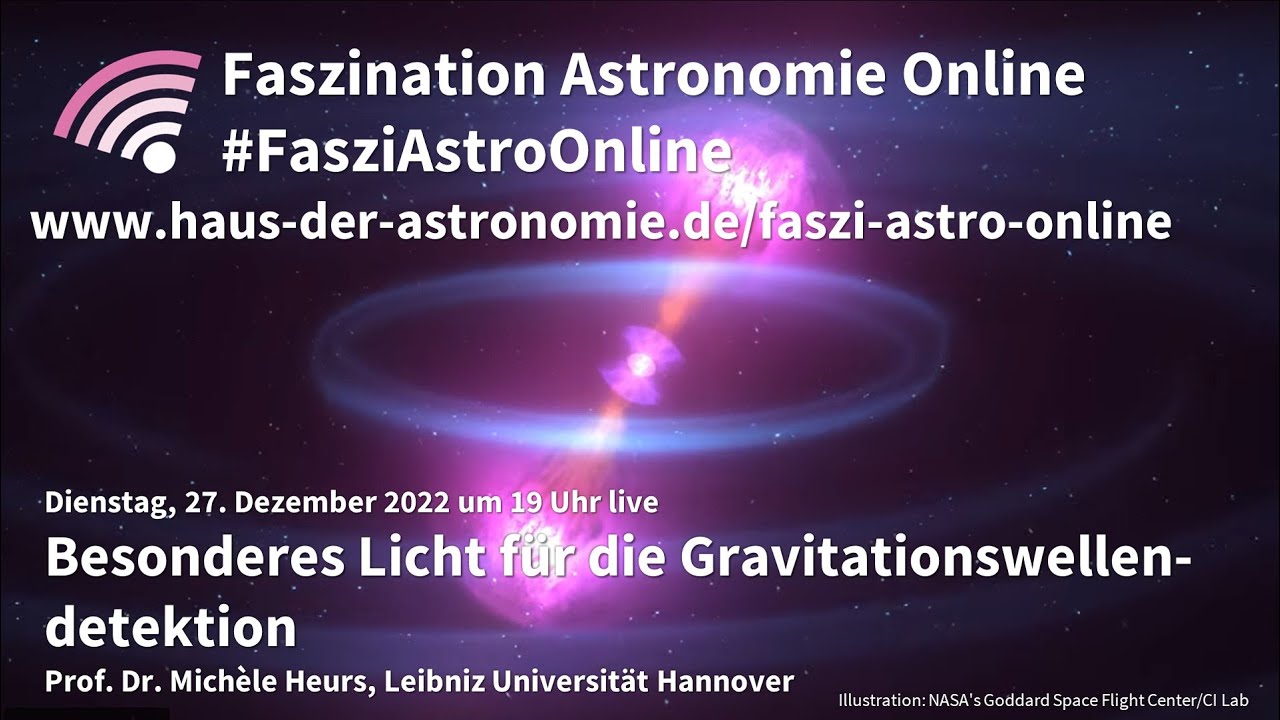








Quantum squeezing is a technique that reduces quantum noise in gravitational wave detectors by manipulating the quantum properties of light, thereby improving the sensitivity of these instruments and increasing the detection rate of gravitational waves by approximately 50%; this technology addresses the fundamental challenge that photons (the basic units of light) are inherently 'fussy' and produce background noise that can drown out the extremely weak gravitational wave signals from cosmic events like black hole collisions.
Gravitational Waves & Quantum Squeezing Explained
Added:The fundamentals of Einstein's General Theory of Relativity, specifically how accelerating massive objects create ripples in spacetime known as gravitational waves.
The operating principles of Michelson interferometers, including how laser light phase interference is used to measure extremely small changes in distance.
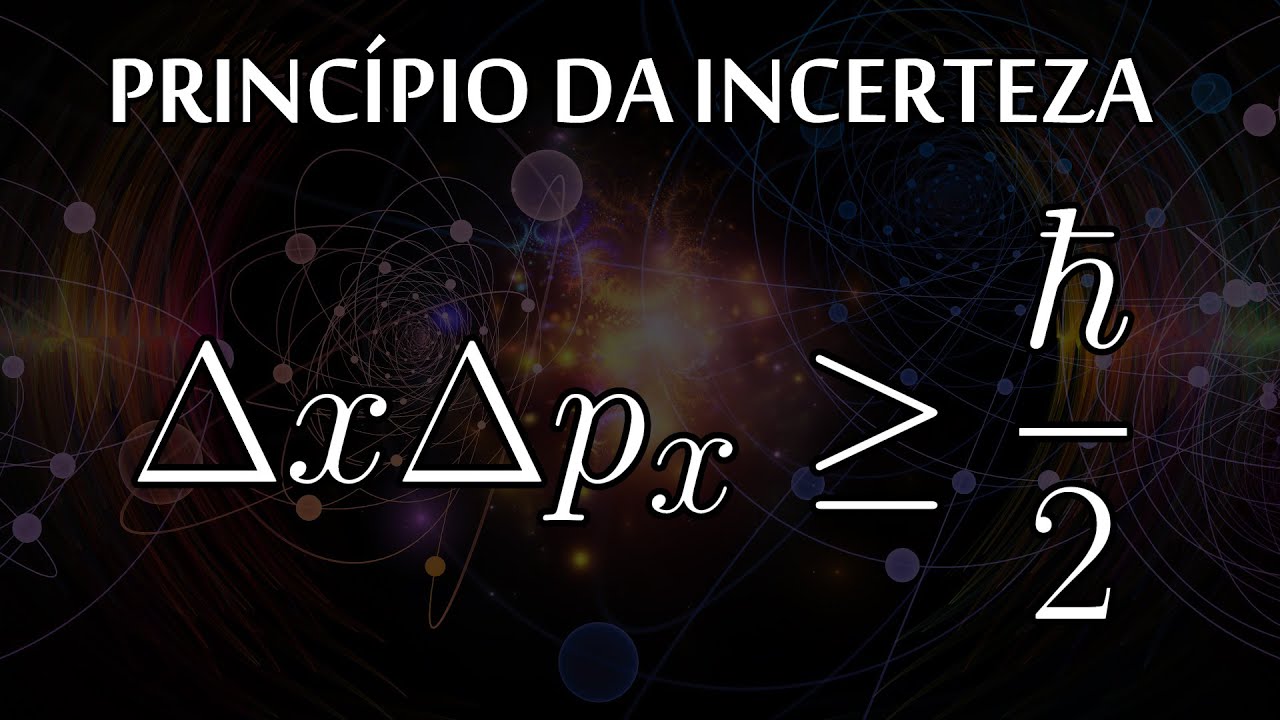
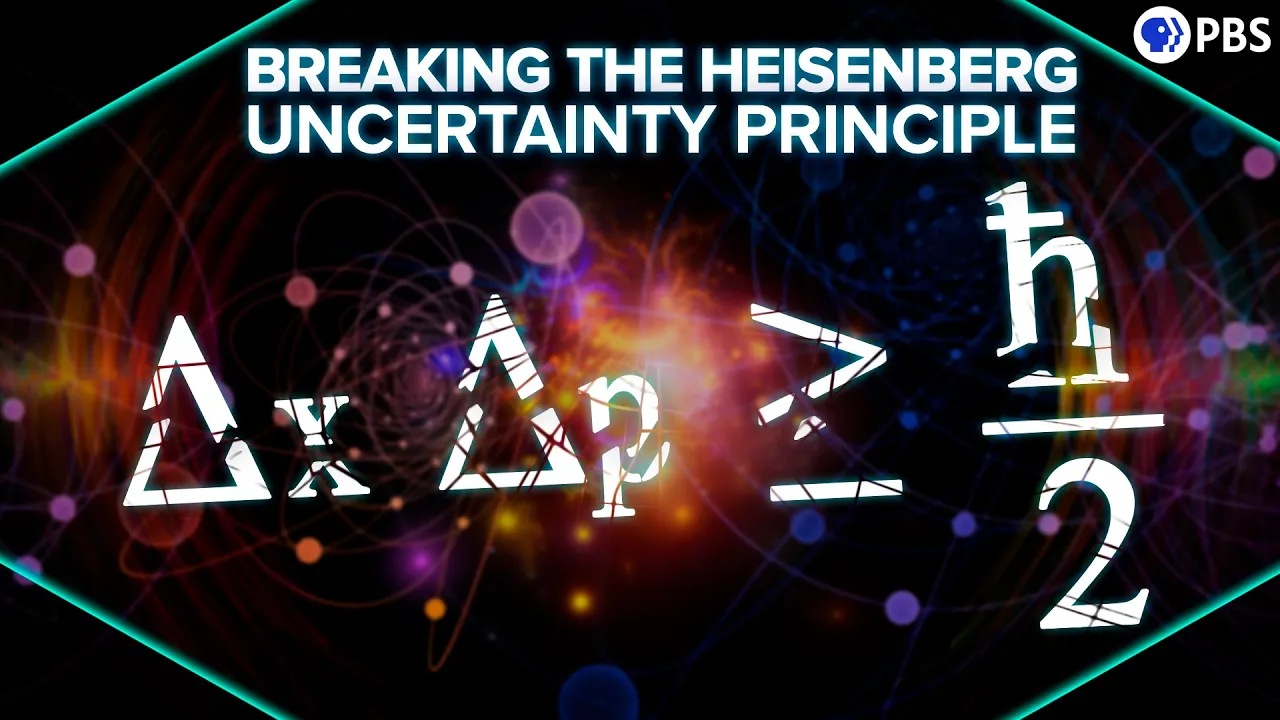
Basic quantum mechanics, particularly the Heisenberg Uncertainty Principle and how it establishes fundamental limits on simultaneous measurements of conjugate variables.
The concept of quantum noise in optical measurements, distinguishing between photon shot noise and radiation pressure noise.
The mathematical formulation of quantum squeezed states, focusing on how phase or amplitude uncertainty of light can be manipulated below the standard quantum limit.
The engineering of optical parametric oscillators (OPOs) and nonlinear crystals used to physically generate squeezed vacuum states of light.
The design specifications of next-generation gravitational wave detectors, such as the Einstein Telescope and Cosmic Explorer, which rely heavily on advanced quantum squeezing.
The broader field of quantum metrology, exploring how squeezed light is applied to enhance the precision of atomic clocks, magnetometers, and biological imaging.
162 views9likes11:25Original Release: 2021-08-05
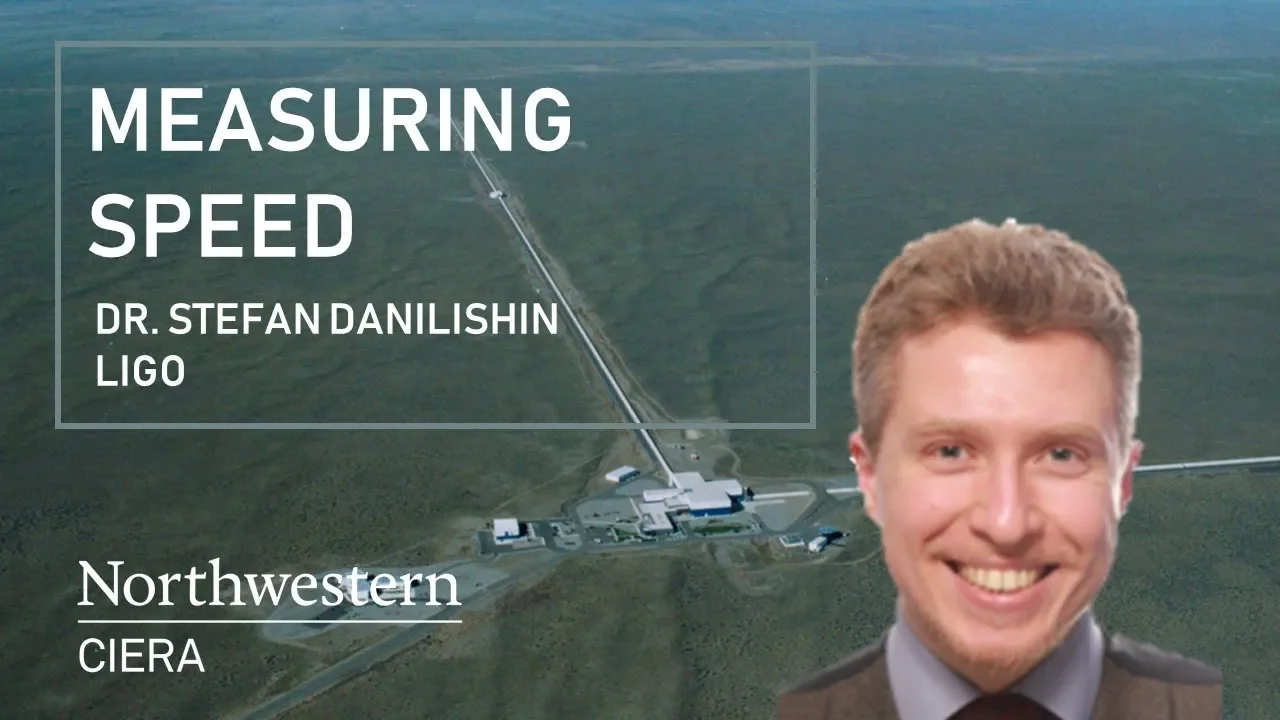
welcome to the fill up on science science in the pub series of talks today we have a fascinating talk from natsuni kibunchu featuring her hand-drawn cartoons about quantum physics and how that relates to the search for gravitational waves these talks are about getting scientists out there being creative and reaching an audience they wouldn't normally see with their educational talks i want them to be creative so that we can spread the value of scientific method and evidence-based policy much further and get the trust it deserves if you're interested in science communication i run courses as well there's a link below and i'll also be breaking down nuts and his talk a little more at the end of this video but in the meantime a big hand for natsune kibwenshu [Applause] cool thanks guys for all welcome my name is natsuni i'm a physics phd student here at the australian national university and i work on quantum optics and yeah i more than half of my thesis involved working on one of these glycosides this is like a laser interferometer gravitational wave of surgery these are gravitational wave detectors and they made headlines back in 2015 for detecting the perturbation in space-time for the first time and prove that einstein was right again wow and i my job was to make the world more sensitive instrument even more sensitive and i spend most of my time particularly here at lyco hanford and particularly in that corner i don't go anywhere else which ones are you uh actually this one's me that one's me those are photos i took what i took on the photos yeah usually the nicer ones are the one without me because i'm a photographer with a nice camera and why do we care about gravitational waves actually hands up if you know what gravitational waves are ah that's a good chunk of you thank goodness uh for those who don't i will explain in a little bit uh gravitational wave is a new way to probe the universe actually so instead of just looking at the sky with the traditional telescope just seeing lights now we're listening to the to the perturbation of space time and if you imagine you and this piece of pi being a universe we only know about five percent of it and the rest is just like what the hell yeah like dark matter dark energy like who knows what goes there and by opening up a new window to your universe using gravitation with me i'm hoping to be pushing the youngest five percent a little bit and yeah hopefully someday we'll slowly slowly get to know the other 95 and uh let's talk about uh quantum realm a little bit when so quantum mechanics is about studying a really really small things like the tiniest thing that makes us what we are and i think i speak faster than this animation anyway so and when we talk about quantum mechanics some of you might have heard of schwinger's cancer today i'm going to try to debunk some of the myths that you might have heard before some of you might have heard the version that schroedinger put cat in the box with radiate radioactive material that have 50 chance of killing you that is actually not true if you know cats at all you would know that cats would just jump into the box by itself without any help of any scientist actually just a thought experiment to illustrate the complete the weird paradox of quantum superposition more about that in a little bit so what is trainers cat trying to tell us in the realm in the quantum realm things can be described in terms of probability and distribution for this hypothetic hypothetical cat for example it would have either be dead or alive or in another word it's dead and alive at the same time until you open the box and observe it but the cats are actually not quantum objects so let's go for a more accurate example like atoms shelling and atom sharing unit electrons you can't really tell although i think high school you might have learned this more model of electrons where you know where electrons are at any given time but in reality you can't really tell where these electrons are at any given time but instead the position of these electrons can be described in terms of this fussiness probability like they're all in these rings all at the same time you don't know until you actually look at it so yeah the things to take away home today is that tiny things of fussy and uh we're gonna switch to talking about something a little bigger like you and me we exist in a fabric of space time every time you move you send perturbation into space-time like when you throw a rock into a pond and yeah but problem is space-time is really stiff though so instead of view it actually takes a massive optics like light holes and neutron stars colliding out there for scientists to actually be able to detect any of it even as stein thought that you know we we could never detect it but well we did and for those who haven't seen this plot or heard it before this is the sound of the two black holes colliding so how many of you have seen this before all right plenty of you awesome and that so the the lower pitch is actually what came straight out the detector and the higher pitch is the the frequency was doubled by a factor of two so that you can hear it a little better the way light will detect gravitational waves or detect perturbation in space time is by using light and so as the gravitational wave passes through the earth the one arm contracts and the other arm gets longer causing the intellectual interference captain of light to change a little bit at the sensor and that is how we generated the signal you just heard earlier and uh the problem is though we already established that tiny things are fussy and fly is made of photons and photon is a basic unit of light and it is fussy and you can't see this but you can hear it so i'm gonna show you right now what photon sounds like [Music] ladies and gentlemen you just heard the sound of the quantum realm if there's one thing i want you to remember tonight that was it it just is so it's not as exciting as the ant-man movie not us to believe unfortunately but yeah this hiss is actually causing problems it's drowning out the very small gravitational wave signal so my job and my goal was to build this thing called a quantum squeezer which will clean up this hiss so that the signal can come through a little better and as you can see from this animation here anytime now yeah it's a hypothetical gravitational wave yes and this over there is a quantum squeezer and you can see that what it does is clean out these hiss so that it reveals that the gravitational waves is hidden inside so we thanks yeah so we so after after this was installed we actually got five times more no yeah we got the rate of the detection increase by 50 percent so this is a uh so this is what you're about to hear is the background noise from the actual detector and i have inserted the gravitational wave in there just you can kind of hear the effect of the squeezer like what happens when the squeezing is turned on oh is it nice so now it's just an addicted please you can kind of hear it but not very clearly now you can hear it a little bit because the background noise has dropped by a certain amount of db that the squeezer has improved and uh yeah thank you guys for listening in and if you like to see more of my comics please visit anti-matter with comics if you like my talk so much buy me beer please visit my patreon account and tidy present thank you so much wasn't that a lovely talk from natsuni i love her little hat she has a very cute persona and she connects with the audience really nicely lots of pauses for laughter and really joined in when the audience was laughing so that was great and i i'm so impressed with the with her drawing skills and the effort she went to to illustrate what she was talking about some of those uh like the gravitational wave and the squeezing uh animation that was beautiful uh i did feel that maybe she just jumped in a little too fast with the big words for example you know the 5 95 she talked about dark matter dark energy but she didn't actually mention what the five percent was so for someone who really wasn't familiar with that uh you have to make sure you wind it back a bit the other thing that would have really helped with that is to get more connection from slide to slide each individual slide was lovely and the way that you get better connections is you know what's coming up and you actually start talking about it before you change to it or you at least give a sense of why this next slide needs to be shown whereas i felt nuts any maybe was clicking the slide and then looking and going okay now i'm going to talk about this and that leaves the audience a little bit puzzled as to why is this slide here okay now let's talk about it so if you can just get that takes a bit of practice to know what's coming up and lead into it that really gives you that beautiful smooth feeling but very entertaining talk and so good to have some demos on stage i'll never think of the same way
Up Next
3:45
Black Holes, Gravitational Waves, & Interstellar: Kip Thorne & Brian Greene in Conversation
@WorldScienceFestival
262.1K views•2025-12-05

12:53
21cm Hyperfine Transition in Neutral Hydrogen: Radio Astronomy Basics
@AaronRobertParsons
12.4K views•2011-10-13

32:32
NMR Spin Physics I: Zeeman Effect, Resonance Condition & Larmor Frequency
@nptel-indianinstituteofsci8064
2.3K views•2024-01-17

27:14
Entropy and the Second Law of Thermodynamics Explained
@veritasium
27.5M views•2023-07-01
Related Study Plans & Knowledge Roadmaps
Structured learning paths in Physics
physics
Nuclear Physics (Decay, Fission & Reactors)
01Atomic Structure and the Binding Force
02Radioactive Decay and Half-Life
03Nuclear Fission Mechanics and Chain Reactions
+ 2 more learning modules
12h5 modules
Explore Roadmap
physics
Soft Matter (Polymers, Colloids & Rheology)
01Foundations of Soft Matter & Thermal Forces
02Polymer Physics and Macromolecules
03Colloids, Surfactants, and Self-Assembly
+ 2 more learning modules
38h5 modules
Explore Roadmap
physics
Analytical Mechanics: Lagrangian & Hamiltonian
01Mathematical Foundations: Calculus of Variations
02From Newtonian Mechanics to Constraint Dynamics
03The Principle of Least Action & Lagrangian Mechanics
+ 3 more learning modules
28h6 modules
Explore Roadmap
physics
General Relativity (Spacetime & Cosmology)
01Foundations of Relativity: Special Relativity
02The Geometry of Spacetime: Equivalence Principle & Curvature
03Einstein's Field Equations: The Mathematics of Gravity
+ 2 more learning modules
55h5 modules
Explore Roadmap