






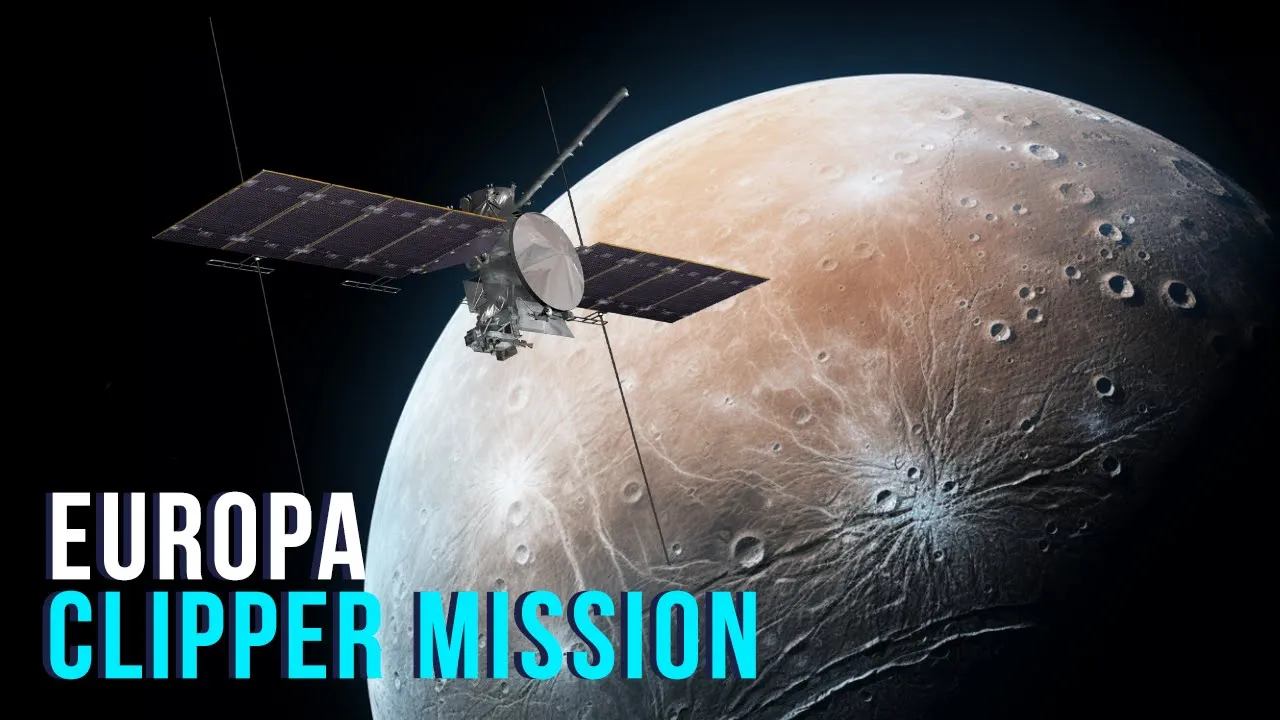








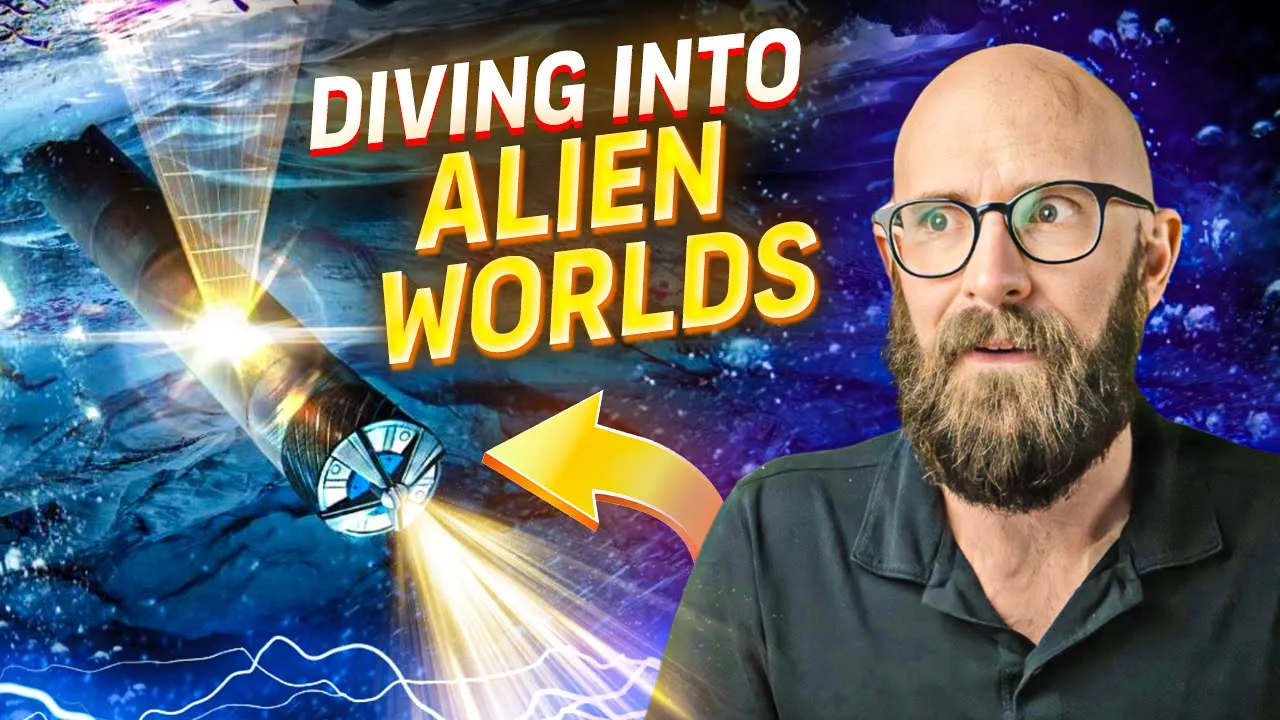
NASA's Europa Clipper mission will carry the MASPEX mass spectrometer, a sophisticated instrument developed at Southwest Research Institute that uses high-resolution mass spectrometry to analyze Europa's exosphere—detecting chemical compounds that may originate from the moon's subsurface ocean by weighing ions with precision down to 0.004 atomic mass units, enabling scientists to search for potential biosignatures and assess habitability conditions on this icy Jovian moon.
NASA Europa Clipper MASPEX: Sniffing for Alien Life
Added:The fundamental principles of mass spectrometry, specifically how molecules are ionized, separated by mass-to-charge ratio, and detected.
The basic environmental conditions required for habitability, including liquid water, chemical building blocks (CHNOPS), and a source of energy.
The physical characteristics of Jupiter's moon Europa, specifically how gravitational tidal heating sustains a massive subsurface liquid ocean.
An overview of NASA's Europa Clipper mission, including its trajectory, primary objectives, and payload suite.
Methods for distinguishing between abiotic organic compounds and true biogenic signatures in space-probe data.
The strict protocols of Planetary Protection, which aim to prevent Earthly microbes from contaminating pristine alien environments.
Future mission concepts for the direct exploration of icy moons, such as landing crafts, cryobots, or underwater submersibles.
Comparative astrobiology of other icy ocean worlds in our solar system, such as Saturn's moons Enceladus and Titan.
414 views0likes15:40Original Release: 2023-03-15
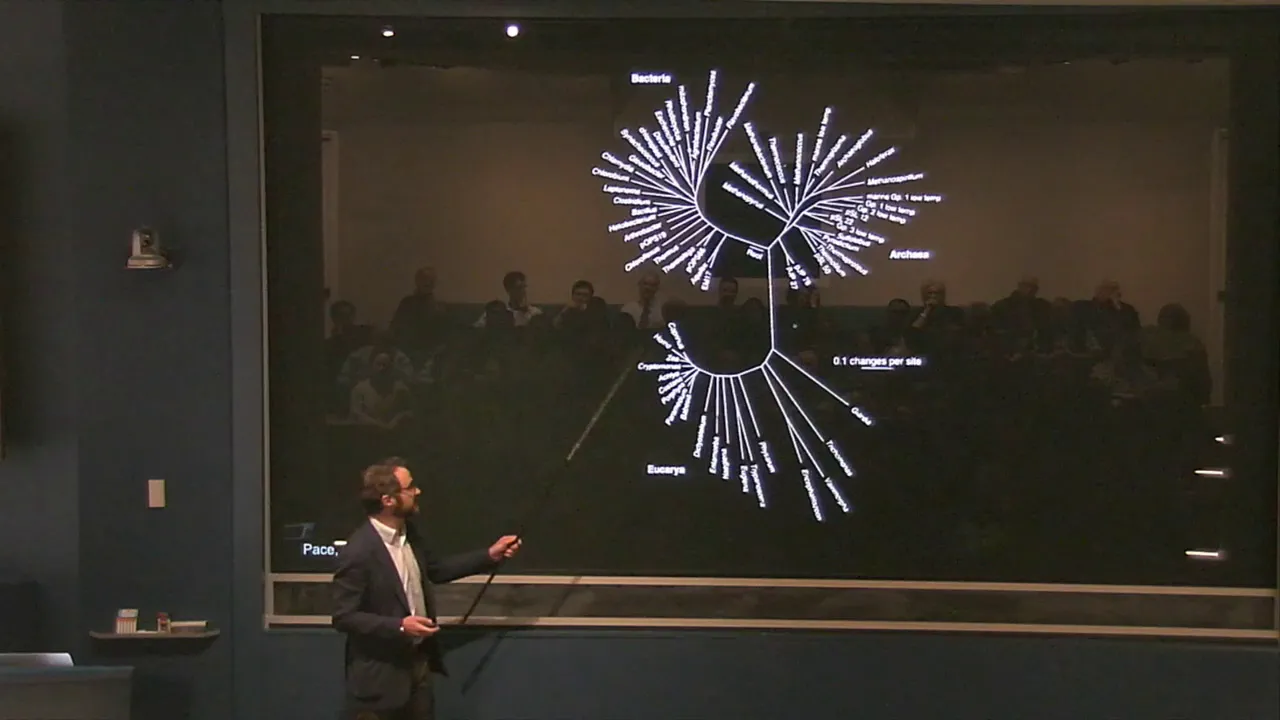
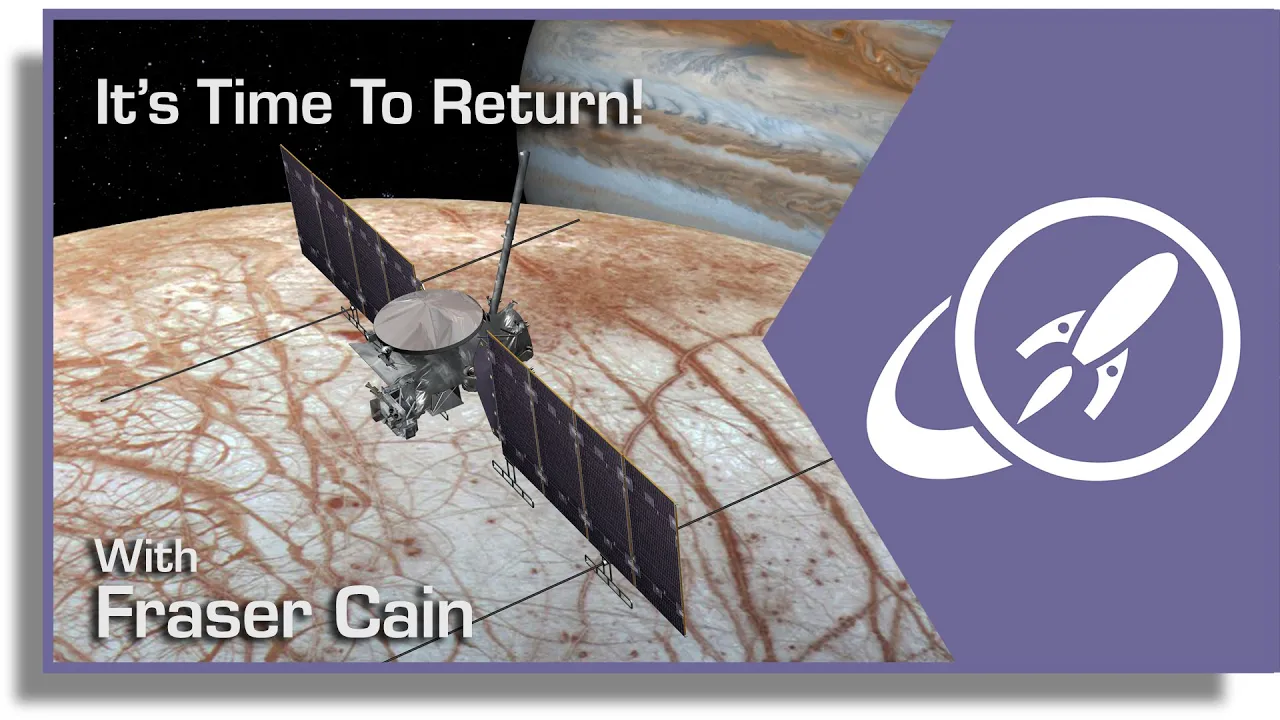
Dr Kelly Miller begins our presentations today by describing a groundbreaking new Mass spectrometer set to launch next year aboard NASA's Europa Clipper spacecraft the spectrometer is one of nine instruments that make up the science payload aimed at revealing the secrets of Europa an icy moon of Jupiter believed to Harbor a subsurface ocean tell me great thank you when I tell people in my daily life that I'm a planetary scientist I usually get one of three responses surprisingly several people will ask me what my favorite plant is and I'm partial to cactuses so that works pretty well living here in San Antonio the second group of people will ask me what my favorite planet is and I always respond that just as a parent loves all of their children a planetary scientist loves all planets the third group of people asks if Pluto is a planet and that's a great conversation starter to talk about all kinds of exciting places in the solar system that aren't technically planets but are still really interesting to explore so one of the places that I'm most excited about right now is a moon named Europa and while it's not a planet I still love it Europa is one of the four Galilean satellites the largest moons of Jupiter and it was discovered in 1610 by Simon Marius and Galileo Galilei you can see here a page from Galileo's notebook where he tracked the movements of the moons around Jupiter from night to night and determined that they were in orbit around Jupiter you can see them in order here IO Europa Ganymede and Callisto and if you have a pair of binoculars at home when you when you get back home tonight or later this week if you go look at about 8 P.M or so in the west you should be able to see through your binoculars Jupiter and also the four satellites and you can think about Marius and Galileo and how they attract these movements of these points of light 400 years ago about 27 years ago NASA sent the Galileo mission to explore the Jovian system and it made a big discovery which is that the magnetic field of Europe of Jupiter is disturbed by Europa and we Now understand that this is caused by a salty subsurface ocean that's underneath europa's crust scientists also discovered that Europa has a really young surface so if you look at the surface here from the image that the Juno Mission took last year you'll see that there are relatively few craters on europa's Surface and if you look at an old surface like Earth's moon for example the craters really stand out and those craters are caused by impactors that hit over time and accumulate these craters so when we see a crater free surface like this that tells us that there's an active geologic process that's erasing those creators and creating a blank slate um there are also a lot of interesting features on your of the surface like linear and Chaos terrain and by studying these features scientists have discovered that parts of the crust appear to be going underground and taking chemical compounds from the surface with them so there are a lot of really interesting features about Europa and in fact it sparked a new subfield of planetary science studying ocean worlds and one of the reasons that planetary scientists are so excited about these ocean worlds is because they're a really tantalizing opportunity to answer that Millennia old question are we alone so this question dates back at least to the ancient Greeks and it has profound implications for origins of life on Earth and our understanding of our place in the universe and either answer yes or no is going to have a huge impact not only on science but also culture and philosophy in our current search to find the answer to this question one of the areas that we're focusing on is habitability and understanding what environments in our solar system could be habitable and by habitable I mean could support life from evolutionary biology we know that all life is related and so we really only have one example of what life is and what it requires but from that example what we understand is that there are four key ingredients the first is chemical building blocks like carbon hydrogen nitrogen and oxygen the second is a liquid medium like water that can move those building blocks around the third is energy to arrange those building blocks and combine them and all three of these need to persist together at the same time for a long enough time to support growth ocean worlds are one of the best places in our solar system to find all these ingredients together the video here shows a clip from Earth's ocean floor of a hydrothermal vent you can see plumes of hot water carrying dissolved carbon and other elements ejecting into the cold ocean water and the contrast and temperature and chemical composition creates an imbalance that can be exploited by life forms to get energy and so you see this thriving ecosystem and we think that it's possible there could be geologic settings like this at europa's ocean floor could Europa support life to find out NASA is sending the Europa Clipper Mission and it'll launch in October 2024 and begin the first of about 50 close flybys of Europe that surface in 2031. so it's a pretty long journey but a relatively short amount of time to try and find answers to the 2500 year old question they're going to be nine instruments on the scientific payload and of those nine two of them were built here at swri one of them is the ultraviolet spectrometer which you can see here and it's part of a family of instruments that has already explored out past Pluto even to help us understand our solar system the other instrument Mass specs will be making its very first journey Mass specs is a homegrown success story it was started in 2003 with internal research funding by staff scientist Greg Miller and then it was matured over five generations before being proposed for the Europa Clipper Mission by Hunter Waite and Tim Brockwell that proposal was selected in 2015. since then the flight design was finalized and the flight and Engineering model instruments were built you can see Greg here with the first spectrum that was taken on the flight model instrument my role in the project is an instrument calibration and in 2021 and 2022 we conducted three month-long campaigns to collect the calibration data set so Mass specs is a type of mass spectrometer and you can think of it kind of like a nose so if you have dogs like I do then you know that they love to go for a ride and the best part of it is to stick their heads out the window and take a big sniff as the world goes by and they can learn a lot about their environment doing that and that's essentially what we're going to do with mass specs we're going to sniff Europa as we fly by and learn as much as we can about that environment and just like a dog can tell between beef and broccoli with its nose Mass spectrometers can tell between different types of chemical compounds and we do that by weighing them very accurately and from that weight we can determine what their chemical formula is to weigh them there are four different steps so first the instrument sniffs in that ambient neutral gas in the environment and then it removes an electron from those uh from those analyte molecules and turns them into ion and once you remove that electron it has a charge on it and so you can control it with electric and magnetic fields and we use that property to accelerate it down a flight path using an electric field and the lighter ions are going to go faster and the heavier ions are going to go slower and so we can separate them out by their Mass through that acceleration down the flight tube and at the end of the flight tube they hit the detector and the impact creates a signal that we can record and so if we we record the signal over time then we get a Mass Spectrum with those lighter ions coming faster and the heavier ions coming slower space flight Mass spectrometry has been in use in the Apollo program in the 1960s and the 1970s but one of the ways that mass specs really stands out from the crowd is in terms of mass resolution or its ability to distinguish between two very similar masses so you can think of those ions kind of like runners in a race and if you wanted to tell which of the two Runners were faster if their speed was very similar you'd do better to have them run a marathon instead of a 50-yard Dash because the amount of time between when they cross the finish line is going to be a lot longer with a marathon it'll be easier to tell who crosses first and so that's what Mass specs does we can have our ions run a 50-yard Dash or have them run a marathon and when we want to use our high mass resolution capabilities we run the marathon we do that with two reflectrons that are at either end of that flight path and so we can put the reflectrons on and the ions will bounce back and forth so that it's a longer flight path that they travel and then send them to the detector to detect them here you can see a video where we demonstrated this in one of the calibration campaigns and you can see as the one Peak separates into two peaks as the length of that flight path increases so most space flight Mass spectrometers can only tell the difference between one atomic mass unit and the the Peaks here in this final Spectrum are separated by only.004 atomic mass units so this is quite an improvement upon past space flight math spectrometers and that.004 AMU that's equivalent to about 10 electrons or so so we're talking very tiny masses that we can distinguish between here and in order to achieve this these ions flew 560 laps which is about half of a mile that they traveled back and forth in that flight tube and they were going about 40 miles per second the whole time so it's a pretty impressive instrument as the Clipper spacecraft flies past Europa Mass specs will sniffen the ambient shell of gath that surrounds it and this thin shell of gas which is called the exosphere is mostly created by the impact of charged particles that Jupiter's magnetic field accelerates into the surface and when these charged particles impact the surface they sputter these molecules from the surface into that exosphere so that Mass Effect can sniff them as it flies by the surface may be covered with compounds that come from that subsurface ocean and have traveled through that active icy crust so we'll be looking for things like food that alien microbes could eat we don't really expect with this mission to find alien microbes themselves but we'll certainly be keeping an eye out and setting the stage for a future mission to directly look for those we'll also be looking for conditions like how acidic the ocean could be or what temperature it is so that we can better understand that habitability some aspects recently reached a huge milestone and after years of hard work and troubleshooting it's been delivered to the jet propulsion laboratory out in Pasadena California and it got loaded up into a truck and then arrived there on December 16th of 2022 and here you can see Pi Jim Birch and some of the other team members from math facts with the flight instrument at the receiving lab there in California so now that it's been delivered the next step is for it to get integrated onto the spacecraft with the rest of the scientific instruments and this is a process that you can actually follow along with over the course of this year at home if you would like using that URL at the bottom of the screen or you can just Google Europa Clipper live view or live stream and you can find a link very easily this is a clip from that live stream from just a couple of weeks ago so here they're working on preparing that spacecraft integrating the instruments onto the payload and then they'll test the whole system before they ship it out to Florida and then in October 2024 it'll launch for the next phase of its Journey on a falcon heavy rocket in the meantime the mass specs team will be busy working with the engineering model here at swri to prepare for our arrival at Europa our team will also be busy thinking about the future of space flight Mass spectrometry um so there's still all kinds of places for us to explore in the solar system and future possible NASA medium size missions could include flying through the plume of Enceladus to search for habitability or exploring a centaur which is a time capsule from the birth of our solar system or flying through the Carbon Haze and Titan's atmosphere to understand how that complex body evolves planetary scientists also want to go back to Uranus we've had one mission to Uranus and it was 10 months before I was born so it's time to go back um and so we can answer all kinds of important questions about ice giants with a mission like that all of these missions are going to inspire the next generation of scientists and engineers and so whatever the next adventure is mass specs will be ready to sniff for alien life and the origins and evolution of our solar system thank you [Applause] all right we have a couple of minutes for questions any quick questions for Dr Miller yes Jeff um uh yeah so the question is during that sputtering uh where where charge particles impact the surface of Europa is there are there processes that change those chemical compounds um and that's that's a good question yes we do expect that that will cause some changes to the chemistry um and um yeah so so processes like that will change those ocean compounds um and so we'll need to to support our measurements with um with laboratory studies for example of you know sputtering of Isis um to to see how those changes affect the compounds one more Dr Rankin oh go ahead uh tens of kilometers we don't we don't know for sure what the thickness is actually that's one of the big questions and we're sending a radar there to try and constrain the thickness because it affects how much of that Ocean material we're expecting to see but probably on the order of tens of kilometers now yes so if you say there's an ocean that means there is time between and oxygen um yeah that's yeah less water is made by something else yeah so so the water um the water probably uh was was part of the original materials that formed Europa we do see hydrogen and oxygen in that exosphere when we look at it with telescopes for example um and um and some of that's from that that sputtering processing that generates the hydrogen and the oxygen from the water very good thank you Dr Miller Kelly Miller and uh Kelly will be available at lunch
Up Next
12:04
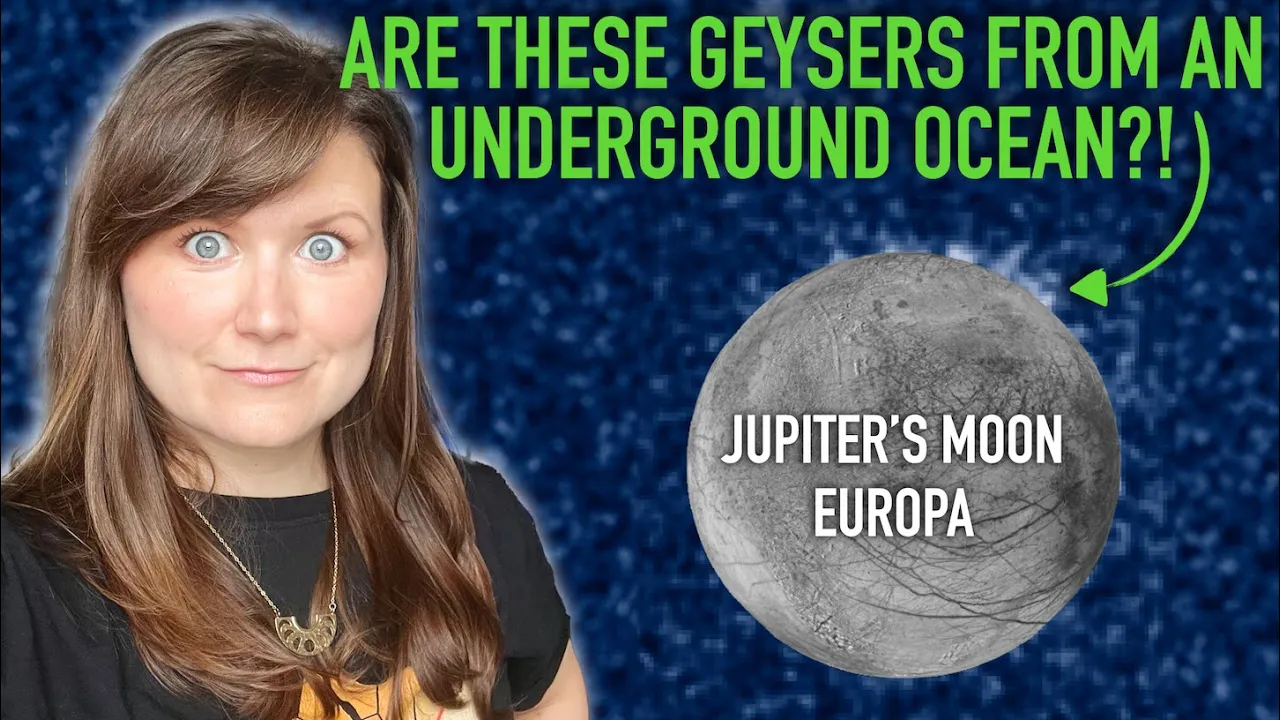
Europa Clipper Mission: The Search for Life on Jupiter's Moon
@DrBecky
128.8K views•2024-09-12
61:17
First Billion Years of the Universe with the Square Kilometre Array
@iaaudc
121 views•2022-05-26

6:25
Kepler's Laws of Planetary Motion Explained (Educational Astronomy Video)
@Peekaboo_Kidz
404.9K views•2023-02-17
6:10
Gamma-Ray Bursts: Cosmic Snipers Explained | Astronomy
@kurzgesagt
15M views•2016-07-31
Related Study Plans & Knowledge Roadmaps
Structured learning paths in Astronomy
astronomy
Reionization: Pop III Stars, IGM & 21cm Line
01Foundations of Cosmology & the Early Universe
02Population III Stars & Cosmic Dawn
03Physical Mechanisms of Reionization
+ 2 more learning modules
17h5 modules
Explore Roadmap
astronomy
Planetary Rings: Dynamics, Roche & Resonances
01Foundations of Gravity and Orbital Mechanics
02Tidal Forces and the Roche Limit
03Structure, Composition, and Collisions
+ 2 more learning modules
10h5 modules
Explore Roadmap
astronomy
Asteroseismology: Stellar Waves, Ages & Cores
01Foundations of Stellar Astrophysics & Wave Mechanics
02Stellar Oscillation Modes: P-modes and G-modes
03Mathematical Framework of Asteroseismology
+ 2 more learning modules
35h5 modules
Explore Roadmap
astronomy
Adaptive Optics: Physics, Engineering & Control
01Foundations of Wave Optics and Wavefronts
02Atmospheric Turbulence & Optical Distortion
03Wavefront Sensing Technologies
+ 3 more learning modules
35h6 modules
Explore Roadmap