








![GTA 5 THE HILLS #158 NINA JTO OBUDZIŁA?! [S3]](https://i.ytimg.com/vi_webp/uNrR8dbhIEM/maxresdefault.webp)












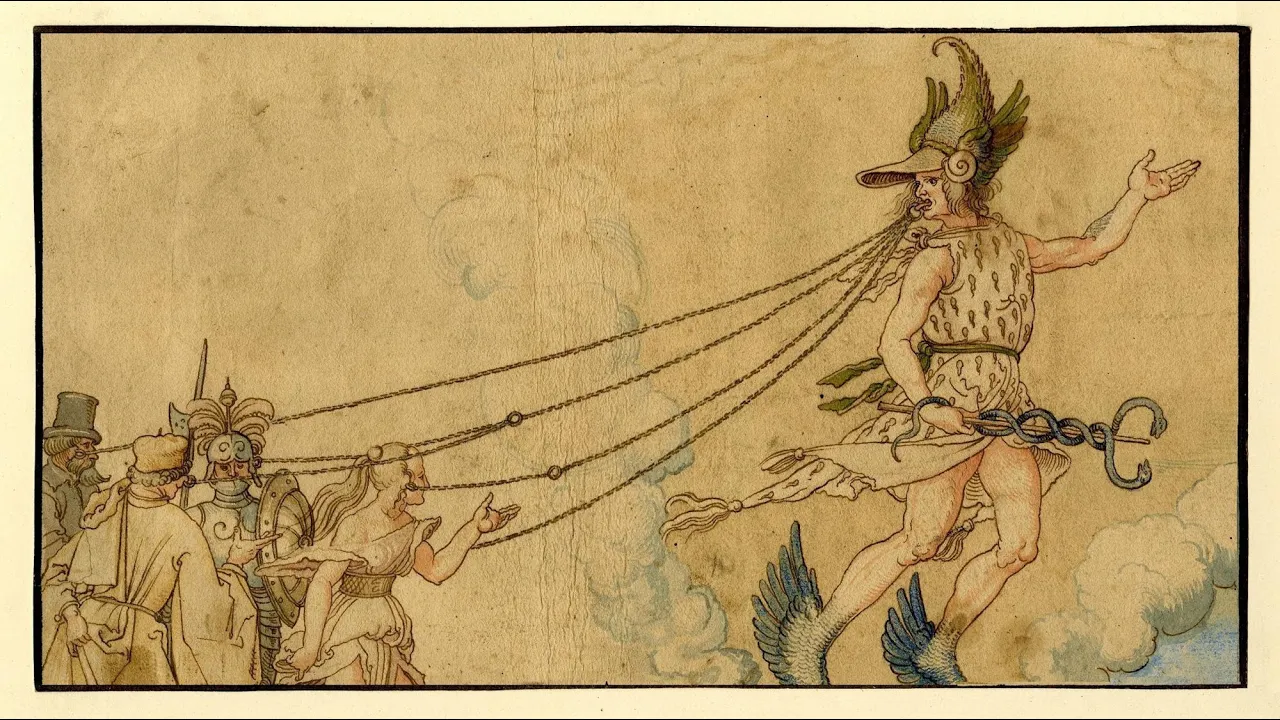
Throughout history, leaders have systematically developed and refined visual persuasion techniques—from Darius I's political logo (the Archer) to Alexander the Great's lifelike portraits and Augustus's deceptive imagery—to manipulate public perception and consolidate power, demonstrating that the fundamental psychological mechanisms of visual influence remain remarkably consistent across millennia.
The Art of Persuasion: How Leaders Use Visual Imagery
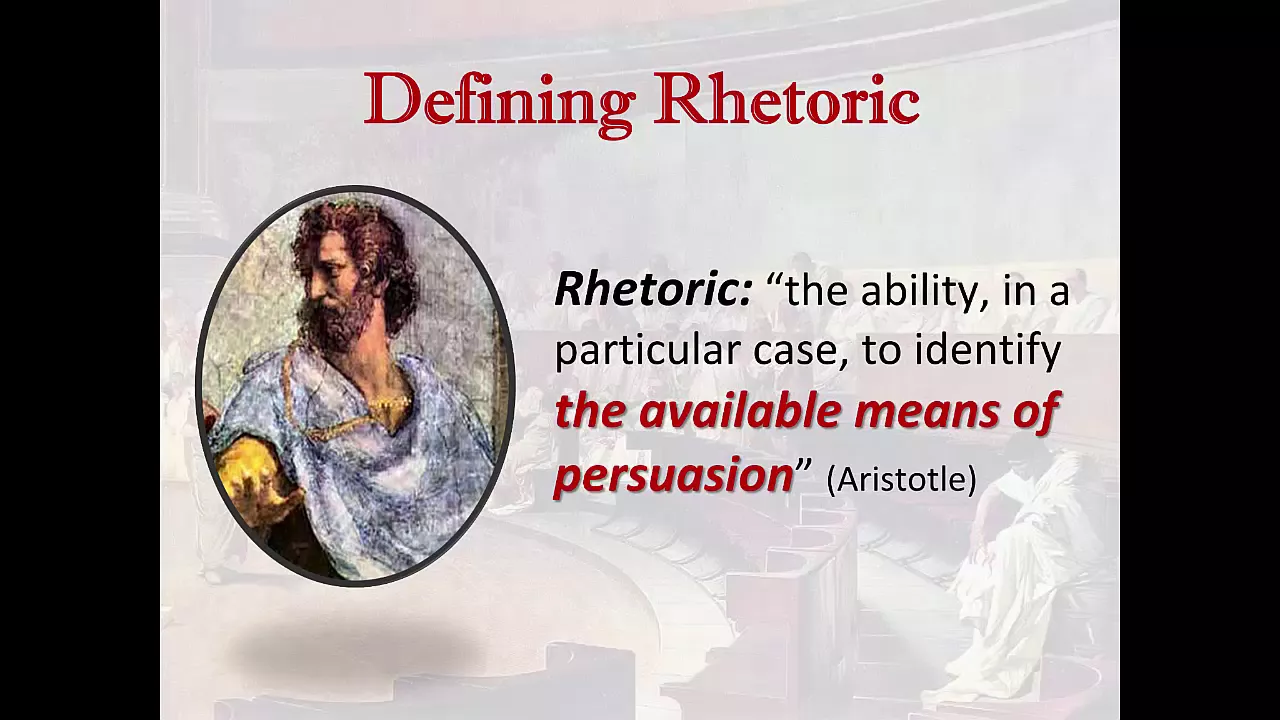
Added:Introduction to Rhetoric: Understanding the foundational concepts of persuasion, specifically Aristotle's triadic model of Ethos, Pathos, and Logos.
Basic Semiotics and Visual Literacy: Familiarity with how symbols, signs, and icons carry cultural meaning and communicate messages without text.
Historical Context of Power: A general understanding of how ancient civilizations utilized monumental architecture and art to project authority and divine connection.
The Concept of Political Legitimacy: Knowing how leaders throughout history have established and maintained their right to rule through cultural and social constructs.
Modern Propaganda and Mass Media: Analyzing how 20th and 21st-century regimes have utilized film, posters, and television for mass psychological persuasion.
Digital Visual Rhetoric: Investigating the role of memes, social media algorithms, and deepfakes in shaping modern political discourse and voter behavior.
Cognitive Bias and Visual Perception: Exploring the psychological mechanisms, such as the framing effect, that make visual imagery highly persuasive to the human brain.
Critical Iconography and Deconstruction: Learning advanced methodologies to critically analyze and deconstruct contemporary corporate branding and state-sponsored visual campaigns.
3K views8likes58:55Original Release: 2015-05-27
[Music] New York September 2004 the race for the White House was reaching a dramatic climax the candidates were neck and neck in the polls both were now desperate to seize any advantage over the [Music] other President Bush was heading for his party's convention at Madison Square Garden this was effectively his last opportunity to get ahead his advisers knew that everything depended on how he was presented they needed an iconic image to convince the American electorate that he was their man and that would mean exploiting the power of Art well although they didn't know it the techniques that they turned to weren't of the modern day the methods they would use had been invented thousands of years ago because the political power of art was discovered by Kings and Emperors in the ancient world it was these leaders who first used IM imery to manipulate their subjects and today our modern politicians are exploiting those same visual strategies this is the story of how those ancient leaders created techniques of visual persuasion so powerful they've still got a hold on us today [Music] inside Madison Square Garden the delegates eagerly awaited the high point of the convention the president's speech his advisers knew they needed something memorable and dramatic they decided to exploit the most potent political images of his presidency his presence at Ground Zero among the ruins of the World Trade Center he'd looked strong and commanding and yet he still appeared caring and warm these were the pictures that defined his [Music] presidency if his advisers could only tap into the power of these iconic images they'd give their man a huge Advantage with just 12 hours to go they ordered the original stage to be ripped out and a brand new one built in its place what they came up with was a modern [Applause] Masterpiece the president's team Drew on a set of visual techniques that leaders had been using for thousands of [Applause] years he walked to the stage alone a commanding leader confident and in control the set was simple but dominated by the symbols of his power he was raised slightly above the crowd but still stood amongst them and they ensured that the cameras captured the conviction on his face the effect was electrifying here was a man who was strong but caring a powerful leader close to his people the compassionate head of a family at War thank you all his advisers had succeeded the scene recreated those iconic images so familiar to every American I can hear you the rest of the world hears you and the strategy worked George Bush shot ahead in the polls and he stayed ahead until the election was won [Applause] but why did it work how do politicians use images to persuade us often without us even knowing it the only way of understanding this is to uncover how these powerful visual techniques were invented by leaders thousands of years ago there was a time when our ancestors lived in small communities leaders were the heads of families or Clans everyone knew [Music] them they had little need of any artistic device es to communicate their [Music] power so what happened how did imagery come to be used as a political tool well it's a process that happens at different times in various parts of the world but in one of those parts Britain archaeologists believe that they've recently hit upon the time and the place it's new light on one of the country's oldest and best known monuments Stonehenge [Music] this is the biggest prehistoric monument in Europe something extraordinary must have happened here for a structure of this size to be built by people living in small isolated communities this was one of the great Mysteries of the ancient world now through our understanding of the persuasive power of art we may have found an answer it all began with the chance discovery of a burial site near [Music] Stonehenge archaeologists expected to find a Roman burial ground common in this part of the world what none of them knew at the time was that they had stumbled into one of the most momentous archaeological discoveries ever made in Britain I knew straight away that the grave wasn't Roman because it had a kind of pottery in it that dates to the beginning of the Bronze Age so it was almost 2,000 years older than the Roman Graves so we knew he had something very different Andrew Fitzpatrick and his team had uncovered the skeleton of a man dating back nearly 4,500 years and next to it dozens of objects it was the sheer scale of the find that suggested there's this was no ordinary grave and no ordinary man it's normal in a burial of this age to find just one or two objects and we would have called a grave maybe with 10 things in it rich but as the numbers mounted and mounted it was clear that this grave was of exceptional importance and as the numbers got to almost 100 we realized it was the richest grave not just in Britain but in Continental Europe as well an examination of the objects revealed further surprises there were a number of fine objects designed for personal display like a stone belt buckle a wrist guard used by an Archer and some tiny copper knives but in amongst all of these there was something very special two identical pieces of gold [Music] as they examined these more closely they realized they were in fact ornaments probably hair clasps both beautifully crafted they may not look very much now tiny with just a very simple pattern around the edge but at the time when these were created and worn that's nearly 4 and a half thousand years ago these were probably the greatest treasures that anyone possessed in the British Isles for the first time gold had been melted and shaped and then transformed into an ornament this was a new kind of art and the first of its kind in Britain the big question then was whose was [Music] it archaeologists needed to examine the skeleton in more detail and what they discovered was that this man was not from the Stonehenge area he'd come from Central Europe he was a foreigner who'd made an epic journey to get to Britain it's a journey without compare at this time and across the sea he would only have had a Dugout canoe or a coracle it's a long and very dangerous [Applause] Journey how was it that a stranger from hundreds of miles away had come to be buried with all the trappings of a great and revered leader [Music] people would have known him as an exotic and an important person he had something that nobody else had and he had the skills to transform raw metal into these finished objects he had knowledge and he had power it was the gold so Exquisite and rare that had created the image of a leader these would have been like the crown jewel R strictly reserved for a leader of great importance art Fit For A King just imagine how he would once have appeared to his subjects our king would have looked magnificent dressed in a splendid leather tunic his body and face lit up by shiny metals never before [Music] seen the people who lived around Stonehenge would have worn nothing but simple animal skins this man's appearance alone must have mesmerized [Music] them what this individual had discovered was something that we today take for granted art as personal adornment enhances your status it lifts you above your peers and our King was the first leader in Britain to exploit what would become a universal human trait and it's something that leaders from the time of Stonehenge to the present day have exploited the adornments of office enhance your [Music] power this power of art may now finally explain how such a colossal Monument came to be built it must have taken a leader of great power to all organized the hundreds of people needed for such an [Music] undertaking our Foreigner arrived with his gold around the time that Stonehenge was [Music] built and it's likely that it was he who organized its [Music] construction what's more he may well have intended Stonehenge as the ultimate symbol of his [Music] power if our King did indeed build this the most impressive prehistoric temple in Europe then adornment had played a crucial role in his achievement art had become a political tool it was the dawn of a new era [Music] and it wasn't just in ancient Britain in other parts of the world from Egypt to Mesopotamia leaders were also discovering the power of [Music] art Kings competed to wear ever more dazzling adornments and to build ever more fabulous structures the images had a magical effect on those who saw [Music] them but there was a catch kingdoms were growing in size but the bigger they became the harder it was for leaders to communicate their power their new subjects simply couldn't see them around 500 BC this problem was particularly acute for one king above all he'd taken control of a kingdom so large it was the world's first Empire he needed to find a new to impose his power across all of this vast territory he was daras the great the king of the Persians and his Capital was [Music] pepolis pepolis is in Iran one of the wonders of the ancient [Music] world 2,500 years ago it stood at the heart of dias's vast Empire an Empire that stretched thousands of miles from the Mediterranean in the west to India in the east from here daras ruled over millions of people across more than 20 Nations he carved the names of the most far-flung Nations on a block of solid gold and buried it under pilis for [Music] posterity but how on Earth could he rule over so many diverse peoples daras came up with a plan a new kind of political leadership which he outlined in a series of inscriptions their message was Radical rather than war and brutality dasas offered peace and cooperation in a war between two Nations I intervene to protect the weak I am Justice and have been asked by God to promote happiness well it's Visionary stuff the challenge to dasas however was how to communicate this to everyone else his Empire was one in which very few people could read also one in which there were dozens of different languages so how was he going to spread the word dias's brain wave was the beginning of nothing less than an artistic Revolution the walls of pepolis are covered with or inspiring images but there was something unusual about them these Stone reliefs are not just from one artistic style but combine elements from all over the Empire the most spectacular reliefs of all are those decorating the staircase that leads to the Great Hall of dasas once a year dasas would invite ambassadors from every nation within his Empire to join him here and as they arrived all the ambassadors passed up this staircase for Their audience with the king so this was their approach to one of the most imposing monuments in the ancient [Music] world the ambassador's eyes would have been drawn to these figures the conquered peoples of the Empire all are shown in their National costumes bringing tributes to the [Music] king no scenes of war and retribution they're happy to honor dasas so daras had found an inspired solution to his problem a way of communicating his political Vision through ART the international language of images the ambassadors would have left here and traveled home with one message clearly etched in their mind that King dasas valued and respected them a new benevolent political era had dawned [Music] the ambassadors would have grasped dias's message but of course there were still millions of ordinary subjects across his Empire who would never Glimpse the vision of peace and prosperity inside the palace so how could he communicate this message to them once again daras found his solution in art towering above the desert just off the main highway to ppis is a huge political billboard and carved on it for all the passes by to see is dias's vision of his new leadership style it looks very impressive but it's rather weathered now not easy to make out the details Let's Get Closer it is a p what up all right I got it y [Music] okay okay okay good that's well that's better 200 ft above the desert face to face with the tomb of dasas there's a lengthy inscription describing his benevolent rule but it's the depiction of deras himself that's so intriguing there's one thing that you can see from up here which you just couldn't spot from down below it's that dasas is carrying a bow The Bowman would have been an image familiar to all Persians they'd have known precisely what it meant which is why daras chose it as the symbol of his kingship to the Persians the Archer was symbolic not just of military prowess but of wisdom leadership the good Archer had a sense of balance and control qualities that were Central to the concept of kingship developed by dasas dasas the Archer there you have it the first ever political logo and having invented the political logo daras went one better he discovered a new way to communicate it to his [Music] subjects leaders throughout history would profit from his genius [Music] daras had unified A desperate Empire one of the world's great [Music] Civilizations for for 150 years after his death his successors continued to use his logo and to build on his [Music] achievements but it was destined not to last because someone on the western fringes of the Empire had his sights on ppis he was Alexander the Great Alexander was a brilliant military strategist in just a few short years he defeated the Persian armies and captured the city but that was just the start of his Ambitions Alexander wanted much more than simply to conquer he needed a way of uniting the Persian Empire behind him but how as a foreign Invader would he ever win the hearts and minds of his new subjects Alexander understood the power of the visual techniques used by dasas but he had to come up with an image all of his [Music] own archaeologists had always known how Alexander had won the war but what still remained a mystery was how he had planned to win the peace where did his image come from the image he would use to win hearts and Minds the obvious place to start the search was where he had planned his campaign his homeland Macedonia Macedonia is now part of modern Greece but back in the 4th Century BC it was an independent Kingdom with a warlike reputation the problem for the archaeologists was that little remained of Alexander's palaces they hadd already been destroyed so they turned to the Royal tombs underground here again it was a similar story of destruction tomb after tomb was discovered but each one had already been ransacked by Raiders then in 1978 a team of Greek archaeologists at last found one that was intact it was one of the great archaeological discoveries of our time they came across a tunnel leading deep underground it revealed the face of a tomb still [Music] intact the moment the tomb opened it was like a dream I had no idea of the significance of our Discovery it was just a miracle [Music] they had discovered the secret tomb of Philip of Macedon Alexander's father its walls were still covered with the traces of magnificent paintings and what awaited them inside was a huge Treasure Trove [Music] the centerpiece was a gold sarcophagus with the symbol of the Macedonian [Music] King he was surrounded by incredible riches The Riches of a king they showed he was a man of Exquisite taste these are really the most beautiful objects of their kind we have ever discovered these were rich trappings but perhaps what you'd expect from a great Dynasty lots of gold but what light did it shed upon the secrets of Alexander's success well then amid the dust and debris on the tomb floor the archaeologist picked up something which at First Sight looked rather inconspicuous [Music] it was a delicately crafted Ivory carving as they dug deeper they found [Music] more they were tiny fragments most less than an inch long pieced together they formed a hunting scene but as they examined them more closely one of the faces stood out this was the face that would appear on busts and paintings for hundreds of years throughout the [Music] Mediterranean now suddenly a face emerged of someone we recognized it was the face of a real person we had discovered the image of the man who was at the center of ultimate [Music] power they were looking at the face of Alexander the Great and this was the earliest image of him ever discovered it was also the first lifelike representation of a king up until now Kings had been portrayed by characterless depictions created to a [Music] formula but this marked the moment of another artistic Revolution the birth of the political [Music] portrait as a portrait it really captures his political power and strength it marks the very moment a new artistic idea was [Music] born but the most significant aspect of this little Ivory head was when it was made it was placed in this tomb that means that it was made before Philip died and before Alexander became king King in other words archaeologists realized for the first time that Alexander's image had been designed for him before he fought a single battle against the Persians between them philli and Alexander had already come up with a winning image an image to Take On The World but how exactly would Alexander exploit the power of this image and portray himself as a leader strong enough to unite an Empire the answer to that was found buried under tons of lava at the foot of a volcano the volcano that buried the Roman town of Pompei Mount [Music] Vesuvius the Romans loved Greek art and in one of the Villas in Pompei was a mosaic the copy of an original Macedonian painting from Alexander's time it's now in the archaeological Museum of [Music] Naples the Mosaic depicts a famous battle in which Alexander finally defeated the Persian armies this is Alexander charging full Full Tilt into the thick of the battle his eyes are fixed on his mortal enemy the Persian king Alexander is shown in the heat of action leading his troops spear in hand he wears no helmet his hair flying back a Fearless hero leading from the front and the impact of this image is even greater when you look across to the other side of the Mosaic look at the face of the great Persian king it's a study of panic and fear he can't get away quick enough and so the whole of this political poster offers us a Clear Choice do you go for the Braveheart or the coward the hero or the villain it's a collision of values in which Alexander is predestined for victory Alexander had discovered he could use his portrait to persuade his new subjects that he was invincible it was an image to inspire admiration and respect here was a man who could unite the Empire and was worthy of replacing faing the King of Persia [Music] himself while dasas had discovered the power of the logo Alexander had gone one better and replaced this image with that of the [Music] face no king before him had exploited a charismatic portrait of his face in that [Music] way today the power of the human face may seem obvious how can it be such a powerful tool in the hands of politicians for the answer we have to turn to modern science [Music] we asked a psychologist to design an experiment to test which is the more effective image the logo or the face what he came up with was an election he began by inventing two different political candidates one was publicized using my face the other fictional candidate was publicized using a logo both had identical manifestos their message arts for all the question now was would the face or the logo have more [Music] appeal please go for him please come out it's important that you come out and work for Nigel if you want art promoters of these two images then descended on the students of Imperial College London there Bowman he does art and he now we have someone who will do make art accessible to everyone and that's what n is all about making art for everyone at the end of The Campaign the vote was held [Music] identical candidates identical manifestos distinguished only by their two very different [Music] images which would win the face or the [Music] logo well of the 100 voters 40 opted for the logo but 60 went for the [Music] face the experiment confirms what Alexander had instinctively understood humans have evolved to be influenced by what they see in a [Music] face so effective was his discovery that throughout his rule he continued to refine it hundreds of statues were made of his heroic physical [Music] presence Alexander may have had the perfect image but it was useless unless he could get it circulated to the people who mattered most his new subjects today we take it for granted just how easy easy it is to distribute an image at the Press of a button you can send a picture to vast numbers of people almost anywhere in the world but for Alexander of course things weren't so simple he needed to find a way of giving his subjects a daily reminder of who was in charge charge his solution was quite literally to put his face in the palm of their hands this is what he came up with a face on a coin he established 30 mints producing thousands of these throughout his Empire and on each one that had a head closely resembling his own Alexander had found a powerful way to spread His Image throughout the empire for Generations Alexander's successors would produce coins with his face on them any association with Alexander would also give them Authority it was a brilliant idea and one which leaders ever since have used as a daily reminder to us all of who's in [Music] charge and of course the power of the human face continues to shape our political landscape today [Applause] [Music] [Applause] [Music] [Applause] [Music] by Alexander's time leaders in the ancient world understood just how susceptible a human mind was to the persuasive power of Art and they'd used images to promote themselves and their message but there's a more ruthless type of leader in the modern world who aims to wield the power of images in another way it's something more ambitious than just self-promotion something far darker much more Sinister it's the power to persuade us to think what they want us to think and to see things the way they do and even to deceive us so how did Art go from being a tool of political promotion to being an instrument of mass deception to find out we need to discover just how and why imagery was first used to tell a political lie that weapon was invented here in Rome 40 years before the birth of Christ ancient Rome was on the point of collapse for decades a civil war had divided the city and the city was split not just politically but culturally too a split that manifested itself even in people's appearance it seems hard to imagine today but it was as if you could tell everyone's political allegiance simply by seeing how they were [Music] dressed it would be as if today Rome were divided into two camps each with their own distinctive [Music] uniforms suppose one group dressed in an old-fashioned and conservative way they were the Republicans they believed that the great traditional Roman families should rule Rome as they had for centuries they dressed in traditional and auster clothes [Music] and suppose the other group were more like today's trendy although it seems strange this group were monarchists they wanted to replace the traditional families with a powerful and ostentatious King they wore more flamboyant clothes to parade these exotic sympathies [Music] these two groups were locked in a struggle for the control of ancient Rome neither side was prepared to compromise it looked like the two tribes would be forever divided that was until a new Contender appeared on the scene he was young and he had no great political or military experience but he was wise to the political potential of images he would unite Rome not by the force of an army but by the power of art his name Octavian or as he would become known Augustus Augustus came from the monarchist camp although half of Rome supported him the Republicans remained deeply suspicious to win them over Augustus needed to persuade the Republicans he posed no threat to the power of the traditional families he had a problem this was his image the typical trendy big-haired look that the monarchists favored and the Republicans [Music] hated to get their support Augustus would need to reinvent himself this is what his artists and sculptors came up with something far more humble hair flattened the face more gentle and mature all a lot less [Music] threatening this was the look that Augustus finally approved frowning serious I humble a man of the people a look that was calculated not to antagonize the Republicans and having created this image Augustus had it copied hundreds and hundreds of copies went out all around the Empire his strategy began to work the Empire prospered and with it his own power and [Music] fame but Rome itself remained tense the Republicans were still suspicious that he was accumulating power for his own personal ends and they believed he had plans to sweep the traditional ruling families aside and grab all the power for himself [Music] Augustus feared assassination to win over his enemies he needed to come up with an image that would persuade the Republicans once and for [Music] all this is the Vatican City not only the center of the Catholic church but also home to one of the greatest collections of Roman anywhere in the world and within that collection one piece is outstanding as the most complete example of how Augustus used art as a political tool it was a very subtle work of art something that would eventually help bring peace to Rome but its success would have Sinister consequences [Music] and here he is I think even if you knew nothing about Augustus you'd instinctively recognize this as a powerful image of authority [Music] it's this image that would finally win over the Republicans for here Augustus meets their fears headon while it shows him as a powerful General there's much more to it than that [Music] although he's wearing a military breastplate there's no actual suggestion that he's ready for [Music] action if this were just a military statue the outstretched arm would be brandishing a spear but here it's more like a gesture of statesmanlike command you'd expect military boots on the feet but here they're bare more like a sign of humility than power this is the ultimate in political art something in it for everyone of whatever political persuasion with this statue Augustus found a way of making military power attractive to those who feared it most the Republicans but that wasn't all emblazened across the center of his breastplate was a scene that was designed to quell any lingering doubts [Music] the images are of Augustus accepting the surrender of Rome's sworn enemy the parans it was his greatest Triumph and the gods are shown looking on with [Music] approval the message is clear Augustus was simply fulfilling the will of the Gods [Music] and now the war that had divided Rome was over so the statue offers emphatic reassurance Augustus is strong but he's not threatening he's the leader who guarantees his people a new golden age it's the Pax austa the Augustine piece and and even the gods [Music] approved Augustus had achieved his greatest ambition he'd unified the two camps of Rome and he' done it using the power of Art [Music] one story tells how as an old man in his 70s Augustus took a boat Journey out of Rome must be the last trip of his life on his way he was spotted by a group of foreign traders who spontaneously burst into Applause and cheered their leader they shouted out that it was to him that they owed their lives their freedom and their prosperity Augustus was overwhelmed to him it came like final proof that he'd succeeded he was the unifier of Rome and the savior of his people Augustus was the hero sent by the gods to save Rome it did seem like the beginning of a new golden [Music] age but all of this was built on a lie the people had been duped while portraying himself as a peacemaker Augustus was eradicating all [Music] opposition while preaching humility he and his family lived and behaved like corrupt royalty and while boasting that he was handing back power to the people Augustus was a king in all but name in reality he had founded a system of dictatorship that would last for 400 years Augustus had used images to manipulate people into believing one thing when in fact the very opposite was true so he discovered how to use art to tell a political lie it was a technique that would be embraced by dictators down the [Music] ages they too would turn to Art to deceive their people through ART they would persuade their people to hate to turn on their foreign enemies and even on their own Neighbors [Music] and worse to persuade them to believe that some people were less than [Music] human over thousands of years leaders in the ancient world discovered the extraordinary power of art to persuade they realized its potential to promote themselves and their ideas and with Augustus they learned to exploit art for more Sinister purposes today's politicians are using techniques very similar to those invented by leaders thousands of years ago both exploit the same Universal human traits the leaders of the past used paint and marble and today's politicians digital technology but we humans remain as vulnerable now as we ever were to the persuasive power of Art [Music]
Up Next
14:22
Creating Airfoil Wing Designs in Fusion 360: A Step-by-Step Tutorial
@cadcamstuff
78.7K views•2018-01-16

12:54
Triumph of Orthodoxy Icon: Byzantine Art & History Explained
@BenCallan
2.1K views•2024-08-06

9:49
FastAPI vs Flask vs Django: Choosing the Right Python Web Framework
@TechWithTim
302.5K views•2024-05-26

1:42
Game of Thrones Opening Credits: A Cinematic Analysis
@gameofthrones
46.3M views•2011-04-18
Related Study Plans & Knowledge Roadmaps
Structured learning paths in General & Interdisciplinary Studies
general-studies
Elevator Engineering: History, Physics & Cities
01From Hoists to Safety Brakes: The Dawn of Vertical Lift
02Hydraulic vs. Traction: The Engineering Physics of Elevators
03Modern Speed, Safety, and Algorithms
+ 2 more learning modules
12h5 modules
Explore Roadmap
general-studies
Rubber: Material Science, History & Geopolitics
01Origins of Natural Rubber & Mesoamerican History
02The Chemistry of Natural Rubber & Vulcanization
03The Geopolitics of the Rubber Boom & Colonization
+ 2 more learning modules
12h5 modules
Explore Roadmap
general-studies
Containerization: Evolution, Logistics & Trade
01Ancient Trade & Bulk Cargo: Amphorae to Barrels
02The Industrial Revolution & Cardboard Packaging
03The Containerization Revolution: Malcom McLean
+ 2 more learning modules
12h5 modules
Explore Roadmap
general-studies
Textile Tech: Evolution, Labor & Global Impact
01Pre-Industrial Textiles: Handloom & Cottage Industry
02Mechanization: The Spinning Jenny to the Power Loom
03The Factory System & Global Labor Transformation
+ 2 more learning modules
10h5 modules
Explore Roadmap